10 Results for "

proteomic studies

" in MedChemExpress (MCE) Product Catalog:
Products (10)

10 Results for "proteomic studies" in MCE Product Catalog:

1
1 Cited Publications
Cat. No.: HY-129047C
CAS No.: 9002-07-7
Research Areas:  

Infection

TPCK-treated Trypsin is a trypsin whose activity is inhibited by tosyl phenylalanyl chloromethyl ketone. TPCK-treated Trypsin reduces autolysis and nonspecific proteolysis during experiments, exhibits stability in storage and handling. TPCK-treated trypsin can be used in proteomics research . TPCK-treated Trypsin renders the virus hemagglutinin active, which allows multicycle replication of the virus. TPCK-treated Trypsin can be used for the study of influenza virus .
loading...
    loading...
Cat. No.: HY-149461
CAS No.: 1956368-15-2
Purity:  99.81%
Research Areas:  

Others

KB-05 is an electrophilic fragment molecule that can be used in DIA-based quantitative chemical proteomic screening studies.
loading...
    loading...
Cat. No.: HY-D0006
CAS No.: 1662-01-7
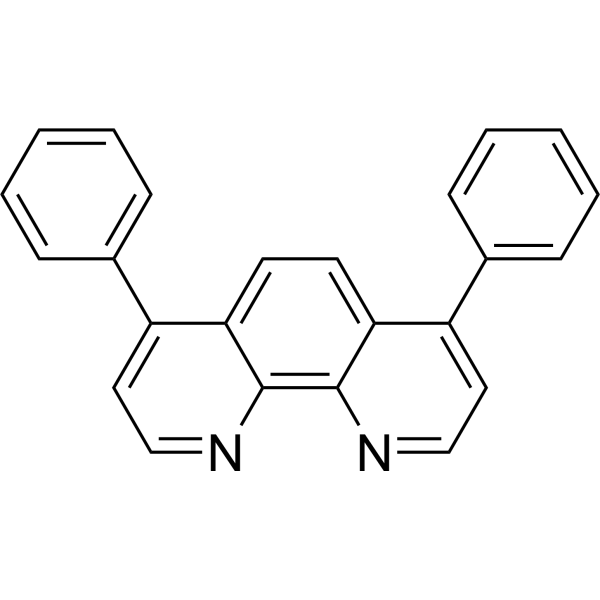
Bathophenanthroline is a nitrogen-containing organic ligand that can form stable complexes with transition metal ions such as Ru 2+. In proteomics, Bathophenanthroline is often used for in-gel protein staining. The negatively charged sulfonic acid groups of Bathophenanthroline interact electrostatically with the positively charged amino acid residues of proteins, thereby achieving specific binding to proteins and enhancing the fluorescent signal of detection. Bathophenanthroline can be used for protein separation and detection in SDS-PAGE gels in the field of proteomics, as well as other fluorescence studies[1]. Ex/Em=532 nm/610 nm[1].
loading...
    loading...
Cat. No.: HY-P11306
CAS No.: 247068-92-4
Target:  

Proteasome NF-κB

Research Areas:  

Inflammation/Immunology

Biotin-(Oaa)3-epoxomicin is a biotin-labeled form of Epoxomicin (HY-13821), prepared by conjugating Epoxomicin with biotin via three hydrophilic oxaacetyl amino acid (Oaa) linkers. Biotin-(Oaa)3-epoxomicin is primarily used in proteomic studies for the capture, identification and target validation of proteasome complexes, to determine the intracellular targets of epoxomicin. Epoxomicin acts as a proteasome inhibitor and NF-κB inhibitor, which effectively blocks inflammatory responses in mouse ear edema assays. It inhibits proteasome activity via covalent binding to catalytic subunits including LMP7, X, MECL1 and Z, with the strongest inhibitory effect on chymotrypsin-like activity, and does not interfere with non-proteasomal proteases such as trypsin and papain .
loading...
    loading...
Cat. No.: HY-E70574
Research Areas:  

Others

Trypsin/Lys-C complex protease (MS grade) combines Trypsin and Lys-C, two recombinant proteases, to achieve efficient peptide bond hydrolysis. Trypsin specifically cleaves the C-terminal peptide bonds of arginine (R) and lysine (K), while Lys-C specifically cleaves the C-terminal peptide bonds of lysine (K). This combination overcomes issues such as the slower digestion rate of lysine and arginine by rTrypsin, PTM changes on lysine, or hydrophobic C-termini (such as proline) that can lead to missed cleavage. Trypsin/Lys-C complex protease (MS grade) can be used to process complex protein samples that are difficult to enzymatically digest. Trypsin/Lys-C complex protease (MS grade) can be used for protein characterization, single-cell proteomics and large cohort proteomics studies.
loading...
    loading...
Cat. No.: HY-147084
Purity:  98.20%
Target:  

ADC Linkers

Research Areas:  

Metabolic Disease Cancer

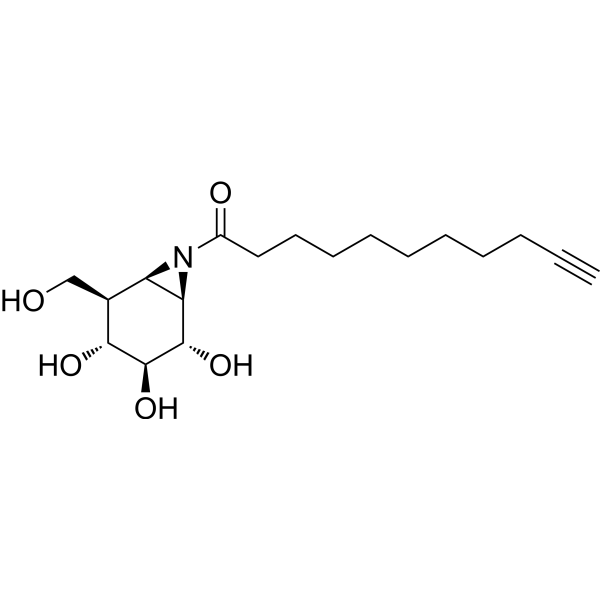
KY371 is a click chemistry reagent containing an alkyne group. KY371 is a broad-range glycosidase inhibitor. KY371 can combine with proteomic analysis of targeted protein to study glycosidases .
loading...
    loading...
Cat. No.: HY-179669I
1.5M Tris-HCl Buffer, pH 8.8 is a plant protein extraction buffer. 1.5M Tris-HCl Buffer, pH 8.8 can isolate cytoplasmic proteins from Marchantia, but the protein yield is low and the SDS-PAGE band profile is poor. 1.5M Tris-HCl Buffer, pH 8.8 can be used for proteomic studies on the liverwort Dumortiera hirsuta .
loading...
    loading...
Cat. No.: HY-134654
CAS No.: 2490716-96-4
Purity:  99.60%
Target:  

Ras

Research Areas:  

Cancer

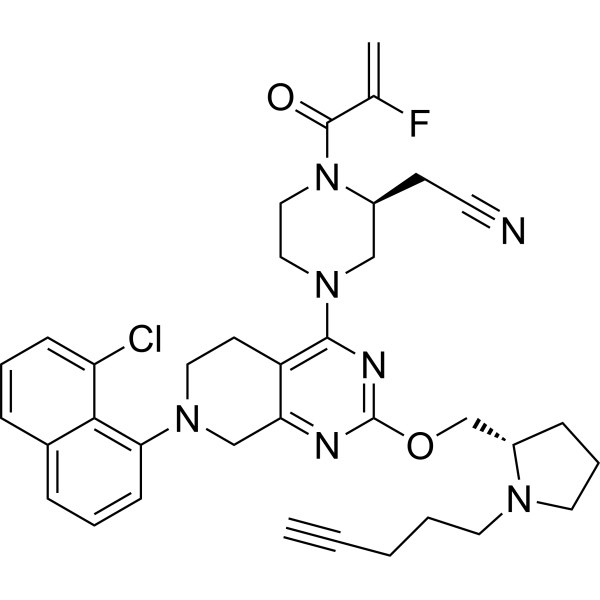
MRTX849 analog 24 is a KRAS G12C inhibitor with a human IC50 of 140 nM. MRTX849 analog 24 binds to KRAS G12C, forms a covalent interaction, and acts as a click probe to bait the protein target in proteomic studies. MRTX849 analog 24 exhibits cellular activity in cancer cells. MRTX849 analog 24 can be used for the research of kras G12C-mutant cancer .
loading...
    loading...
Cat. No.: HY-W127719
CAS No.: 96087-38-6
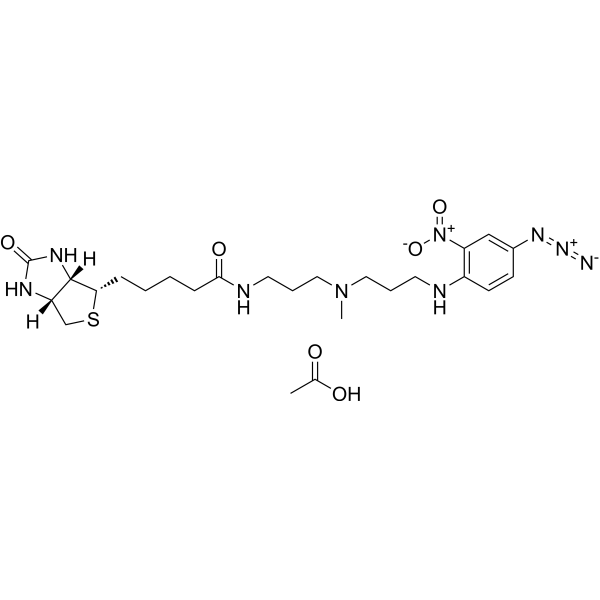
Photobiotin (acetate)It is a biological probe used to study biochemical processes such as protein interactions and enzymatic reactions. It is a molecule containing a photosensitive group, which can be combined with specific target molecules (such as proteins, nucleic acids, etc.) through photochemical cross-linking technology, so as to realize the labeling and detection of these molecules. During the photosensitive crosslinking process, Photobiotin (acetate)Can participate in the formation of covalent bonds and form stable compounds. In addition, the compound also has high biocompatibility and biological activity, so it is widely used in the field of biomedical research, such as enzymatic research, proteomics, western blotting and other aspects. Photobiotin (acetate) is a click chemistry reagent, it contains an Azide group and can undergo copper-catalyzed azide-alkyne cycloaddition reaction (CuAAc) with molecules containing Alkyne groups. It can also undergo strain-promoted alkyne-azide cycloaddition (SPAAC) reactions with molecules containing DBCO or BCN groups.
loading...
    loading...
Cat. No.: HY-186281
CAS No.: 2231747-83-2
Research Areas:  

Others

MAUra-DTB is a 1-methyl-4-arylurazole (MAUra) chemical probe conjugated with desthiobiotin, which preferentially labels tyrosine residues exposed on protein surfaces under photocatalytic or laccase-catalyzed conditions (). The desthiobiotin moiety of MAUra-DTB supports affinity enrichment based on streptavidin or NeutrAvidin. MAUra-DTB enables proteome-wide labeling in cell lysates, and after enrichment of labeled peptides by NeutrAvidin, the labeling sites can be identified via nanoLC-MS/MS. MAUra-DTB can be used for photocatalytic proximity labeling, target protein identification and proteomic studies .
loading...
    loading...

