21 Results for "

semiconductor

" in MedChemExpress (MCE) Product Catalog:
Products (21)

21 Results for "semiconductor" in MCE Product Catalog:

Cat. No.: HY-W540000
CAS No.: 143334-20-7
Graphitic carbon nitride is a metal-free photocatalyst with a semiconductor absorption wavelength of 460 nm. Graphitic carbon nitride can be applied to photocatalytic water splitting, degradation of organic pollutants, and carbon dioxide reduction .
loading...
    loading...
Cat. No.: HY-N2048
CAS No.: 1081-34-1
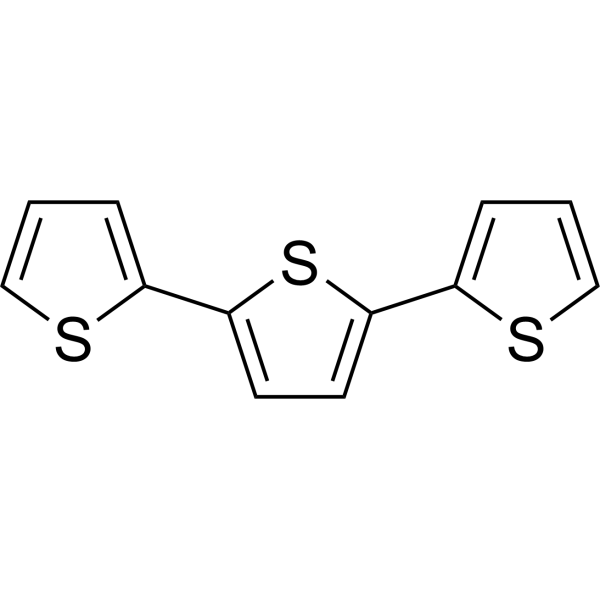
Synonyms: α-​Terthiophene; α-Terthienyl; Trithiophene
2,2':5',2''-Terthiophene (α-Terthiophene) is an oligomer of the heterocycle thiophene. 2,2':5',2''-Terthiophene has been employed as building block for the organic semi-conductor polythiophene.
loading...
    loading...
Cat. No.: HY-W133953
CAS No.: 108-65-6
Synonyms: Propylene glycol monomethyl ether acetate
1-Methoxy-2-propyl acetate (Propylene glycol monomethyl ether acetate) is utilized as solvent, especially in the electronic-grade semiconductor industry .
loading...
    loading...
Cat. No.: HY-109116
CAS No.: 613-11-6
Synonyms: Leukomethylene blue
Hydromethylthionine (Leukomethylene blue) has a very active photochemically active reagent, especially in its interaction with dissolved oxygen. The photochemical activity of Hydromethylthionine is mainly regulated by the reaction of its triplet state with dissolved oxygen, which reacts with dissolved oxygen to form Methylene Blue (HY-14536) and hydronium ions under ultraviolet light. Hydromethylthionine can be used for the photodegradation of model pollutants in semiconductor photocatalysis and for the study of indicators in chemical analysis .
loading...
    loading...
Cat. No.: HY-W011009
CAS No.: 128-69-8
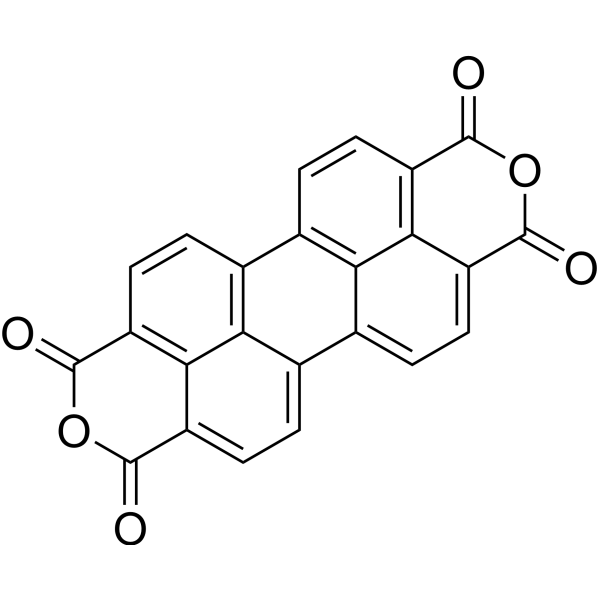
PTCDA is an organic dye molecule and an organic semiconductor .
loading...
    loading...
Cat. No.: HY-W035133
CAS No.: 14527-51-6
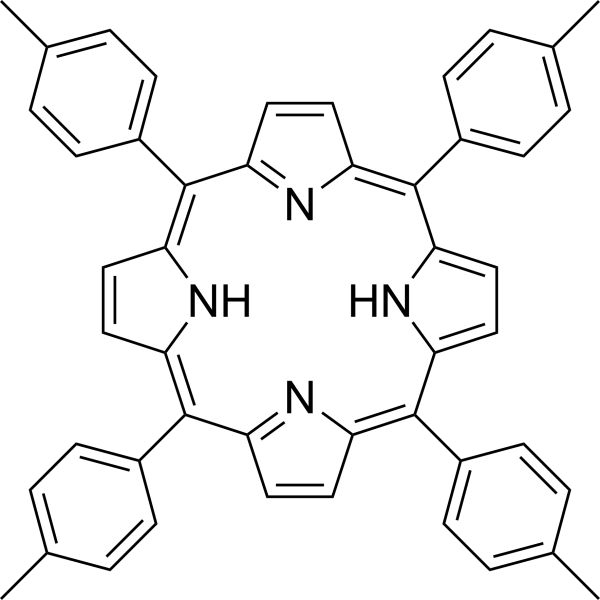
Synonyms: 5,10,15,20-Tetra-p-tolyl-21H,23H-porphine
5,10,15,20-Tetrakis(p-tolyl)porphyrin (TTP) is an organic compound belonging to the class of porphyrins, a cyclic molecule composed of four pyrrole rings linked together. TTP is a synthetic porphyrin commonly used as a sensitizer for dye-sensitized solar cells and a catalyst for organic reactions. Due to its unique structure, TTP has a series of interesting properties, including at specific wavelengths and its potential as a catalyst for various chemical reactions. In dye-sensitized solar cells, TTPs help convert sunlight into electricity by absorbing photons and transferring electrons to the semiconductor layer of the device. In organic chemistry, TTP is often used as a catalyst for various organic compounds in reactions such as oxidation and reduction. Its ability to selectively bind certain substrates makes it a useful tool for synthesizing complex molecules and studying their properties.
loading...
    loading...
Cat. No.: HY-Y0407A
CAS No.: 4499-86-9
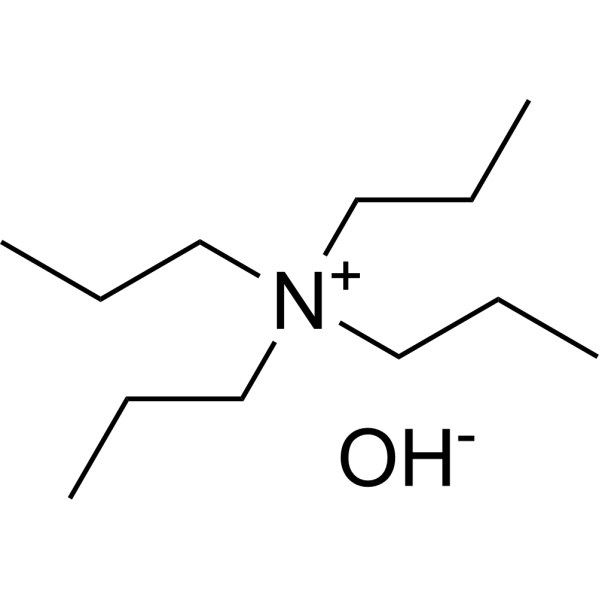
Synonyms: TPAOH (40% w/w in water)
Tetrapropylammonium hydroxide (40% w/w in water)It is a compound belonging to the class of quaternary ammonium compounds and is a strong base with cationic properties. Tetrapropylammonium hydroxide (40% w/w in water)It is usually used as a phase transfer catalyst to promote the transfer of reactants between immiscible phases in various organic synthesis reactions. It is also used in the production of semiconductors, especially the manufacture of thin-film transistors and other electronic devices.
loading...
    loading...
Cat. No.: HY-W116336B
CAS No.: 1314-13-2
Zinc oxide, 99.99% metals basis is a versatile wide-bandgap semiconductor with superior comprehensive properties. Zinc oxide, 99.99% metals basis serves as raw material for Schottky diodes, functional nanostructures, sensors, energy harvesters and photocatalysts for hydrogen production. Zinc oxide, 99.99% metals basis acts as a non-toxic antibacterial agent and selective cytotoxin against multiple bacteria, fungi and spores. Zinc oxide, 99.99% metals basis induces cancer cell death. Zinc oxide, 99.99% metals basis is applicable to drug delivery, biosensing, bioimaging and researches on cancer, microbial infections and skin diseases .
loading...
    loading...
Cat. No.: HY-W004606
CAS No.: 6267-02-3
Synonyms: DM-AD
Research Areas:  

Others

9,9-Dimethyl-9,10-dihydroacridine (DM-AD) is an electron-donating group with hole transport mobility, which serves as a building block for the synthesis of organic semiconductors and light-emitting emitters. 9,9-Dimethyl-9,10-dihydroacridine can form donor-acceptor-donor type thermally activated delayed fluorescence emitters. 9,9-Dimethyl-9,10-dihydroacridine undergoes oxidation to form radical cations, which further participate in dimerization or oligomerization reactions .
loading...
    loading...
Cat. No.: HY-114856
CAS No.: 165190-76-1
Purity:  99.77%
Research Areas:  

Others

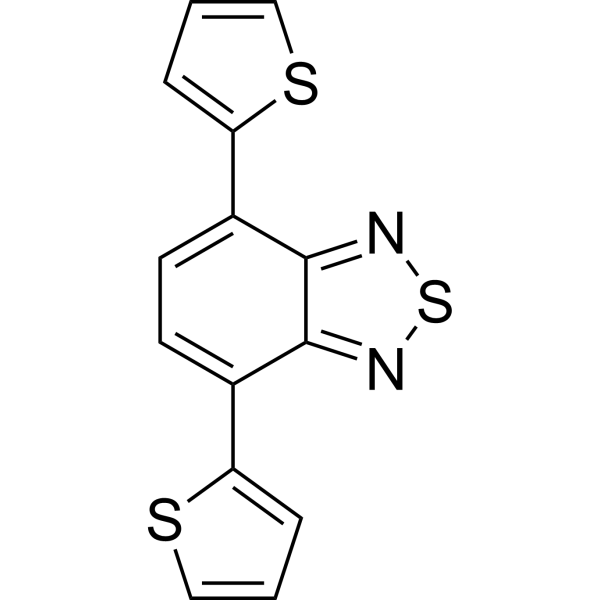
DTBT is a six-membered heterocyclic ring that is commonly used in the preparation of organic electronic devices, such as P-type organic semiconductors (OFETs) and P-type organic photodiodes (OLEDs). DTBT has good performance in electron transmission and photoelectric conversion. DTBT polymerizes to form donor-acceptor polymers, which are used to prepare solar cells .
loading...
    loading...
Cat. No.: HY-W112090
CAS No.: 72076-09-6
Synonyms: PdTFPP; 5,10,15,20-Tetrakis(pentafluorophenyl)-21H,23H-porphine palladium(II)
Target:  

Fluorescent Dye

Research Areas:  

Others

Palladium meso-tetra(pentafluorophenyl)porphyrin (PdTFPP) derives from palladium(II), acting as a fluorescence-quenched optical probe and high-performance oxygen concentration sensor with outstanding photostability and antioxidant capacity. Palladium meso-tetra(pentafluorophenyl)porphyrin exhibits reduced luminescence intensity as dissolved oxygen concentration rises. Palladium meso-tetra(pentafluorophenyl)porphyrin can be applied for real-time monitoring of live-cell respiration, hypoxic tissue imaging, and nanofibrous organic semiconductors in photodetectors for ambient oxygen detection .
loading...
    loading...
Cat. No.: HY-W103498
CAS No.: 887402-92-8
Research Areas:  

Others

N4,N4'-Diphenyl-N4,N4'-bis(9-phenyl-3-carbazolyl)biphenyl-4,4'-diamine (Compound HT-01) is a biochemical reagent. N4,N4'-Diphenyl-N4,N4'-bis(9-phenyl-3-carbazolyl)biphenyl-4,4'-diamine can be used in the research of layered semiconductor devices with low-refractive-index organic coatings .
loading...
    loading...
Cat. No.: HY-16477A
CAS No.: 110230-98-3
Synonyms: ME2906 free acid; Mono-L-aspartyl chlorin e6 free acid; NPe6 free acid
Target:  

Photosensitizer

Research Areas:  

Cancer

Talaporfin sodium, can be used in intraoperative photodynamic therapy (PDT) with a 664-nm semiconductor laser, was evaluated for efficacy and safety in treating primary malignant parenchymal brain tumors .
loading...
    loading...
Cat. No.: HY-W243879
CAS No.: 175606-05-0
Synonyms: DBP
Tetraphenyldibenzoperiflanthene (DBP) is an organic semiconductor material with excellent electronic conduction activity. Tetraphenyldibenzoperiflanthene exhibits high mobility in organic field effect transistors (OFETs), improving device performance. Tetraphenyldibenzoperiflanthene is widely used in organic photovoltaic (OPV) materials to enhance photoelectric conversion efficiency.
loading...
    loading...
Cat. No.: HY-W769206
Synonyms: ME2906 free acid-13C4,15N; Mono-L-aspartyl chlorin e6 free acid-13C4,15N; NPe6 free acid-13C4,15N
Talaporfin- 13C4, 15N (ME2906 (free acid)- 13C4, 15N) is the 13C- and 15N-labeled Talaporfin (HY-16477A). Talaporfin sodium, can be used in intraoperative photodynamic therapy (PDT) with a 664-nm semiconductor laser, was evaluated for efficacy and safety in treating primary malignant parenchymal brain tumors .
loading...
    loading...
Cat. No.: HY-N2048R
CAS No.: 1081-34-1
Synonyms: α-​Terthiophene (Standard); α-Terthienyl (Standard); Trithiophene (Standard)
2,2':5',2''-Terthiophene (Standard) is the analytical standard of 2,2':5',2''-Terthiophene. This product is intended for research and analytical applications. 2,2':5',2''-Terthiophene (α-Terthiophene) is an oligomer of the heterocycle thiophene. 2,2':5',2''-Terthiophene has been employed as building block for the organic semi-conductor polythiophene.
loading...
    loading...
Cat. No.: HY-W251143
CAS No.: 83054-80-2
N,N′-Bis(2,5-di-tert-butylphenyl)-3,4,9,10-perylenedicarboximide is an organic semiconductor material with excellent electron transport activity. N,N′-Bis(2,5-di-tert-butylphenyl)-3,4,9,10-perylenedicarboximide is widely used in organic field effect transistors (OFETs) and organic photovoltaic (OPV) devices due to its high carrier mobility. The chemical structure design of N,N′-Bis(2,5-di-tert-butylphenyl)-3,4,9,10-perylenedicarboximide enables it to perform well in light absorption and photoelectric conversion, thereby improving the efficiency of organic photoelectric devices.
loading...
    loading...
Cat. No.: HY-W391671
CAS No.: 1333317-99-9
Research Areas:  

Others

Poly[bis(4-phenyl)(2,4,6-trimethylphenyl)amine] is a poly(triarylamine) that is an organic p-type semiconductor with hole mobilities ranging from 10 3 to 10 2 cm 2/V/s, which significantly improves carrier mobility. This stable, glassy polymer has an ionization potential suitable for thick film diodes. Committed to providing green alternatives that meet one or more of the 12 principles of green chemistry, this material falls into the enabling category of green alternatives, in line with the principle of "energy efficient design". In addition, while hole transport organic materials like these ensure optimal energy level alignment with the absorber layer for efficient charge collection, they can be susceptible to degradation under ambient conditions.
loading...
    loading...
Cat. No.: HY-W251144
CAS No.: 76372-75-3
Synonyms: PTCDI-C5
N,N′-Dipentyl-3,4,9,10-perylenedicarboximide (PTCDI-C5) is an organic semiconductor compound with excellent electron transport activity. N,N′-Dipentyl-3,4,9,10-perylenedicarboximide exhibits high performance in organic field effect transistors (OFETs) and can effectively improve the carrier mobility of the device. The application of N,N′-Dipentyl-3,4,9,10-perylenedicarboximide in organic photovoltaic (OPV) materials enhances the light absorption performance, thereby improving the photoelectric conversion efficiency. N,N′-Dipentyl-3,4,9,10-perylenedicarboximide has also been widely studied for the development of high-performance sensors and fluorescent materials.
loading...
    loading...
Cat. No.: HY-184605
Metal nanoclusters, containing anywhere from a few to hundreds of atoms, bridge the gap between nanoparticles and molecular compounds, typically exhibiting molecular-like electrical and optical properties. Furthermore, metal nanoclusters possess advantages such as significant Stokes scattering and size- and ligand-dependent fluorescence characteristics, making them an emerging class of materials for constructing fluorescence platforms. Current research primarily focuses on the synthesis and application of noble metal nanoclusters like gold and silver. However, copper, belonging to the same group as gold and silver in the periodic table, is inexpensive, environmentally friendly, readily available, has a simple preparation process, and low toxicity, making it widely applicable in industry. In addition, copper nanoclusters exhibit better photostability than organic dyes and better environmental friendliness than semiconductor quantum dots, making them suitable for trace detection.
loading...
    loading...

