1. Search Result
Search Result
Results for "

sphingosine phosphorylation

" in MedChemExpress (MCE) Product Catalog:

15

Inhibitors & Agonists

1

Fluorescent Dyes

3

Natural
Products

Cat. No. Product Name Target Research Areas Chemical Structure
  • HY-10968
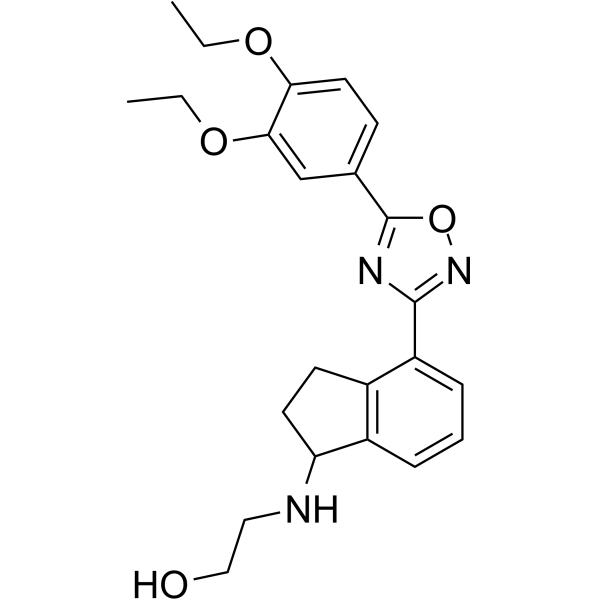
    CYM5442
    3 Publications Verification

    LPL Receptor Neurological Disease
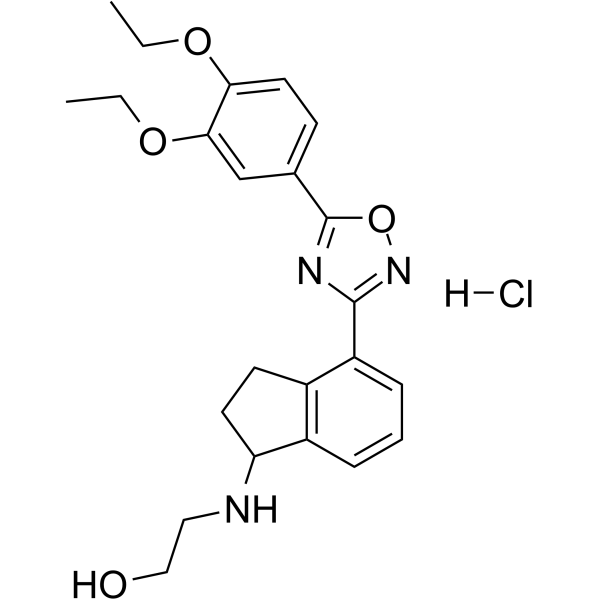
    CYM5442 is a potent, highly-selective and orally active sphingosine 1-phosphate (S1P1) receptor agonist with an EC50 of 1.35 nM. CYM5442 is inactive against S1P2, S1P3, S1P4, and S1P5. CYM5442 activates S1P1-dependent p42/p44-MAPK phosphorylation. CYM5442 exerts retinal neuroprotection. CYM5442 can easily penetrate the central nervous system (CNS) .
    CYM5442
  • HY-13660
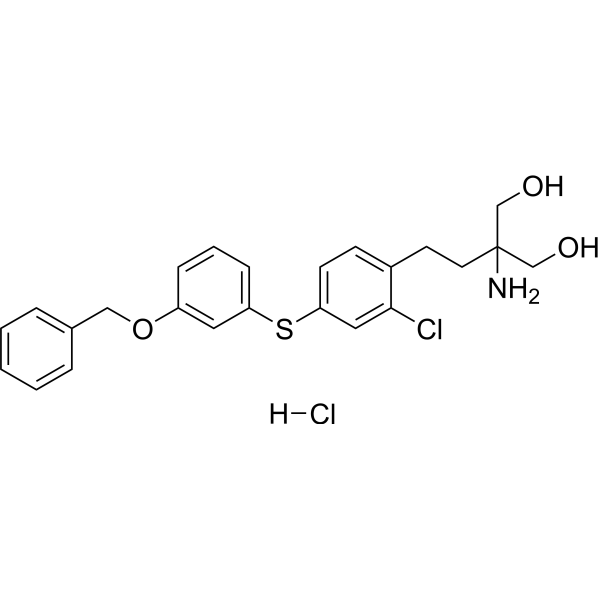
    Mocravimod hydrochloride
    2 Publications Verification

    KRP-203

    LPL Receptor Reactive Oxygen Species (ROS) Akt GSK-3 JAK STAT Metabolic Disease Inflammation/Immunology Cancer
    Mocravimod (hydrochloride) is an orally active sphingosine-1-phosphate receptor (S1PR) modulator that blocks the signal required by T cells to egress from lymph nodes and other lymphoid organs. Mocravimod (hydrochloride) preferentially binds to S1PR1 over S1PR2 and S1PR3 in cardiomyocytes. Mocravimod (hydrochloride) significantly lowered the concentration of reactive oxygen species (ROS), prevented mitochondrial permeability transition pore opening, boosted mitochondrial membrane potential (MMP), and increased phosphorylation of AKT, EKR, GSK-3β, JAK2, and STAT3. Mocravimod (hydrochloride) retains T cell effector function. Mocravimod (hydrochloride) can be used for the study of acute myelogenous leukemia, diabetes and Myocardial Ischemia-Reperfusion Injury (MIRI) .
    Mocravimod hydrochloride
  • HY-109038
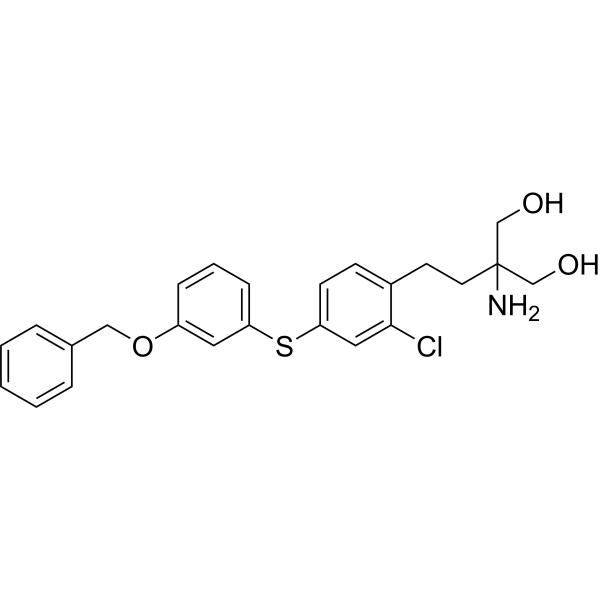
    Mocravimod
    2 Publications Verification

    KRP-203 free base

    LPL Receptor Reactive Oxygen Species (ROS) Mitochondrial Metabolism Akt GSK-3 JAK STAT Cardiovascular Disease Metabolic Disease Inflammation/Immunology Cancer
    Mocravimod (KRP-203 free base) is a sphingosine-1-phosphate receptor (S1PR) modulator that blocks the signal required by T cells to egress from lymph nodes and other lymphoid organs. Mocravimod preferentially binds to S1PR1 over S1PR2 and S1PR3 in cardiomyocytes. Mocravimod significantly lowered the concentration of reactive oxygen species (ROS), prevented mitochondrial permeability transition pore opening, boosted mitochondrial membrane potential (MMP), and increased phosphorylation of AKT, EKR, GSK-3β, JAK2, and STAT3. Mocravimod retains T cell effector function. Mocravimod can be used for the study of acute myelogenous leukemia, diabetes and Myocardial Ischemia-Reperfusion Injury (MIRI) .
    Mocravimod
  • HY-129099A

    PKC Estrogen Receptor/ERR Drug Metabolite Endogenous Metabolite Cancer
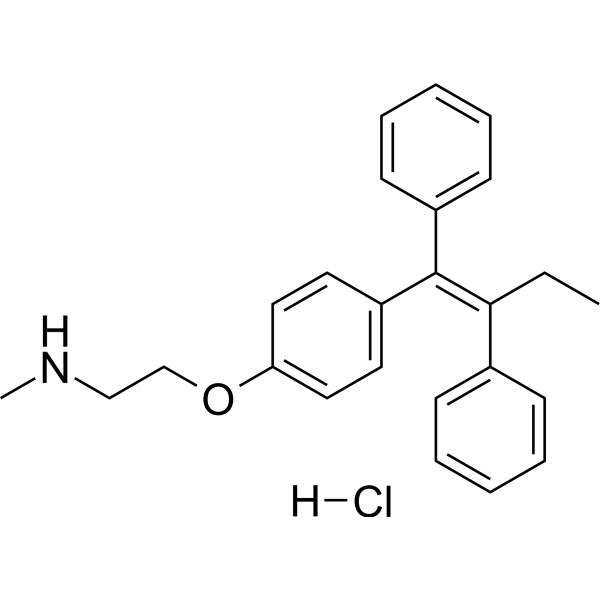
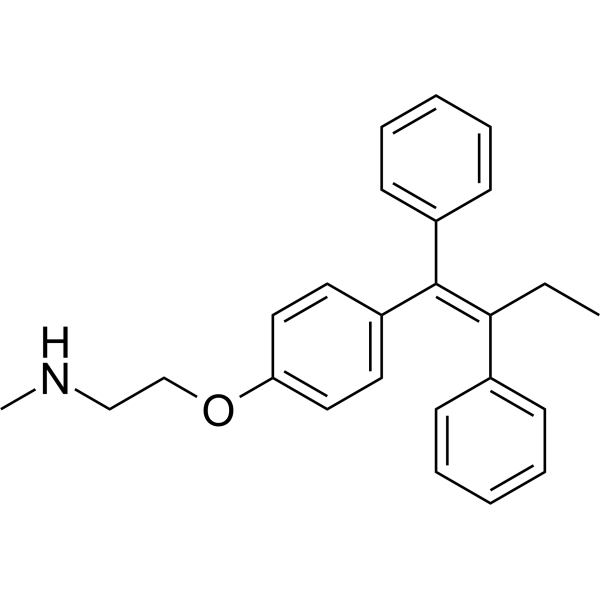
    N-Desmethyltamoxifen hydrochloride is the major metabolite of tamoxifen in humans. N-Desmethyltamoxifen, a poor antiestrogen, is a ten-fold more potent protein kinase C (PKC) inhibitor than Tamoxifen. N-Desmethyltamoxifen hydrochloride is also a potent regulator of ceramide metabolism in human AML cells, limiting ceramide glycosylation, hydrolysis, and sphingosine phosphorylation .
    N-Desmethyltamoxifen hydrochloride
  • HY-130433

    Fluorescent Dye Others
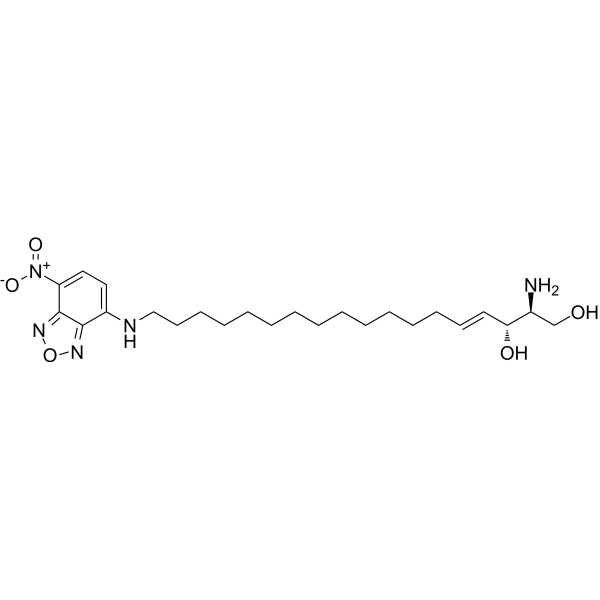
    NBD Sphingosine (NBD-Sph), a fluorochrome, is a fluorescence-labeled sphingosine. NBD Sphingosine can be uesd for fluorescence assay for sphingosine kinases .
    NBD Sphingosine
  • HY-129099

    PKC Estrogen Receptor/ERR Drug Metabolite Endogenous Metabolite Cancer
    N-Desmethyltamoxifen is the major metabolite of tamoxifen in humans. N-Desmethyltamoxifen, a poor antiestrogen, is a ten-fold more potent protein kinase C (PKC) inhibitor than Tamoxifen. N-Desmethyltamoxifen is also a potent regulator of ceramide metabolism in human AML cells, limiting ceramide glycosylation, hydrolysis, and sphingosine phosphorylation .
    N-Desmethyltamoxifen
  • HY-124863A

    SphK Inflammation/Immunology
    (R)-AAL is an immunomodulator. (R)-AAL decreases circulating T lymphocytes in rats, with an ID50 value of 0.009 mg/kg. (R)-AAL is a substrate of sphingosine kinase (SphK), which catalyzes the phosphorylation of (R)-AAL .
    (R)-AAL
  • HY-10968A

    LPL Receptor Neurological Disease
    CYM5442 hydrochloride is a potent, highly-selective and orally active sphingosine 1-phosphate (S1P1) receptor agonist with an EC50 of 1.35 nM. CYM5442 hydrochloride is inactive against S1P2, S1P3, S1P4, and S1P5. CYM5442 hydrochloride activates S1P1-dependent p42/p44-MAPK phosphorylation. CYM5442 exerts retinal neuroprotection. CYM5442 hydrochloride can easily penetrate the central nervous system (CNS) .
    CYM5442 hydrochloride
  • HY-129099AR

    Reference Standards PKC Estrogen Receptor/ERR Drug Metabolite Endogenous Metabolite Cancer
    N-Desmethyltamoxifen (hydrochloride) (Standard) is the analytical standard of N-Desmethyltamoxifen (hydrochloride). This product is intended for research and analytical applications. N-Desmethyltamoxifen hydrochloride is the major metabolite of tamoxifen in humans. N-Desmethyltamoxifen, a poor antiestrogen, is a ten-fold more potent protein kinase C (PKC) inhibitor than Tamoxifen. N-Desmethyltamoxifen hydrochloride is also a potent regulator of ceramide metabolism in human AML cells, limiting ceramide glycosylation, hydrolysis, and sphingosine phosphorylation[1][2][3].
    N-Desmethyltamoxifen hydrochloride (Standard)
  • HY-W019781

    Biotinyl-Sph

    SphK Metabolic Disease
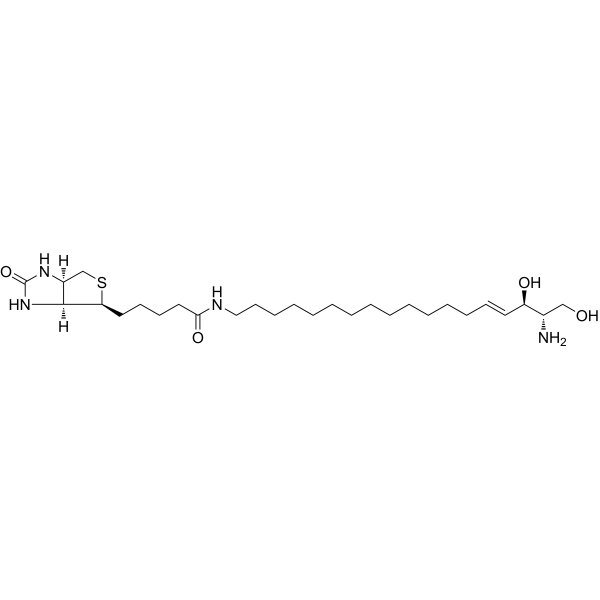
    Biotinylated sphingosine (Biotinyl-Sph) is a substrate of sphingosine kinase that can b used to detect the phosphorylation activity of sphingosine kinase 1 (SPHK1) and SPHK2 .
    Biotinylated sphingosine
  • HY-157787

    LPL Receptor Neurological Disease
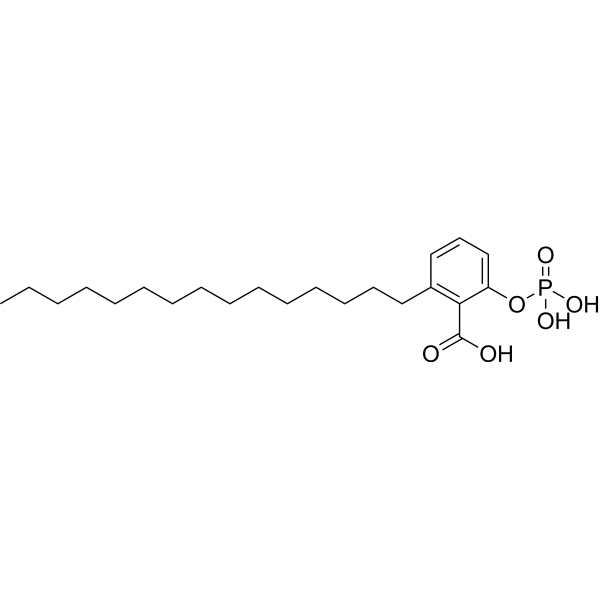
    Ginkgolic acid 2-phosphate is a potent sphingosine 1-phosphate agonist. Ginkgolic acid 2-phosphate induces ERK phosphorylation. Ginkgolic acid 2-phosphate interactes with S1P1 .
    Ginkgolic acid 2-phosphate
  • HY-16621

    SphK Inflammation/Immunology
    PPI-4955 is a subtype 1 (S1P₁) agonist of sphingosine-1-phosphate receptor with an EC50 of 1.62 nM. PPI-4955-P (the active phosphorylated form) exhibits excellent receptor selectivity and affinity, and the IC50 values for hS1P₁, hS1P₃, hS1P₄, and hS1P₅ are 0.23, 2000, 6.5, and 184 nM respectively. PPI-4955 has significantly improved in vivo phosphorylation efficiency, which can reduce lymphocytes and improve cardiovascular risk. PPI-4955 can be used in immunomodulation research .
    PPI-4955
  • HY-10968R

    LPL Receptor Neurological Disease
    CYM5442 (Standard) is the analytical standard of CYM5442. This product is intended for research and analytical applications. CYM5442 is a potent, highly-selective and orally active sphingosine 1-phosphate (S1P1) receptor agonist with an EC50 of 1.35 nM. CYM5442 is inactive against S1P2, S1P3, S1P4, and S1P5. CYM5442 activates S1P1-dependent p42/p44-MAPK phosphorylation. CYM5442 exerts retinal neuroprotection. CYM5442 can easily penetrate the central nervous system (CNS) .
    CYM5442 (Standard)
  • HY-124368

    SphK Inflammation/Immunology
    RB-042 is a SK1 and SK2 inhibitor with IC50 values of 5.3 μM and 5.0 μM, respectively. RB-042 is applicable to the research of inflammatory diseases .
    RB-042
  • HY-112385

    SphK PERK Cancer
    ABC294735 is an orally active SK1/SK2 inhibitor. Combination of ABC294735 with Sorafenib (HY-10201) reduces pERK. ABC294735 exhibits anticancer activity against pancreatic adenocarcinoma and renal cell carcinoma. ABC294735 can be used in research related to pancreatic adenocarcinoma and renal cell carcinoma .
    ABC294735

Inquiry Online

Your information is safe with us. * Required Fields.

Salutation


Country or Region *

Applicant Name *


Organization Name *

Department *


Email Address *


Product Name *

Cat. No.


Requested quantity *

Phone Number *


Remarks

Inquiry Online

Inquiry Information

Product Name:
Cat. No.:
Quantity:
MCE Japan Authorized Agent:

