19 Results for "

unbound

" in MedChemExpress (MCE) Product Catalog:
Products (19)

19 Results for "unbound" in MCE Product Catalog:

7
7 Publications Verification
Cat. No.: HY-110250
CAS No.: 1241390-29-3
Purity:  98.85%
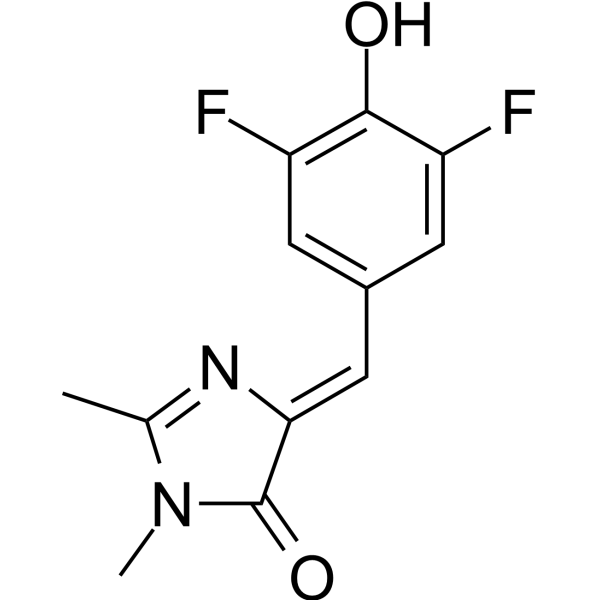
DFHBI is a small molecule that resembles the chromophore of green fluorescent protein (GFP). DFHBI can be used for imaging RNA in living cells. . Spinach and DFHBI are essentially nonfluorescent when unbound, whereas the Spinach-DFHBI complex is brightly fluorescent both in vitro and in living cells (Ex/Em = 469/501 nm).
loading...
    loading...
5
5 Cited Publications
Cat. No.: HY-D1191
CAS No.: 2225748-05-8
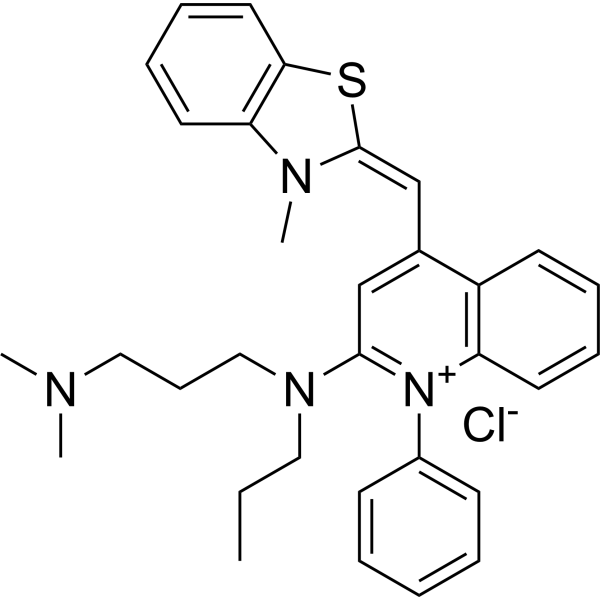
SYBR Green I chloride is a highly sensitive fluorescent nucleic acid dye that binds specifically to the minor groove of double-stranded DNA or intercalates between base pairs. SYBR Green I chloride exhibits weak fluorescence in the unbound state but emits bright fluorescence upon binding, and it preferentially binds to large-fragment DNA and DNA with high G+C content. SYBR Green I chloride is suitable for real-time PCR technology; its fluorescence intensity correlates with the amount and size of amplification products, enabling accurate quantification of gene expression and discrimination of amplicons via melting curve analysis without additional post-processing. SYBR Green I chloride is widely used in preclinical in vitro nucleic acid detection .
loading...
    loading...
Cat. No.: HY-103242
CAS No.: 1193447-34-5
Purity:  ≥98.0%
Target:  

Amyloid-β

Research Areas:  

Neurological Disease

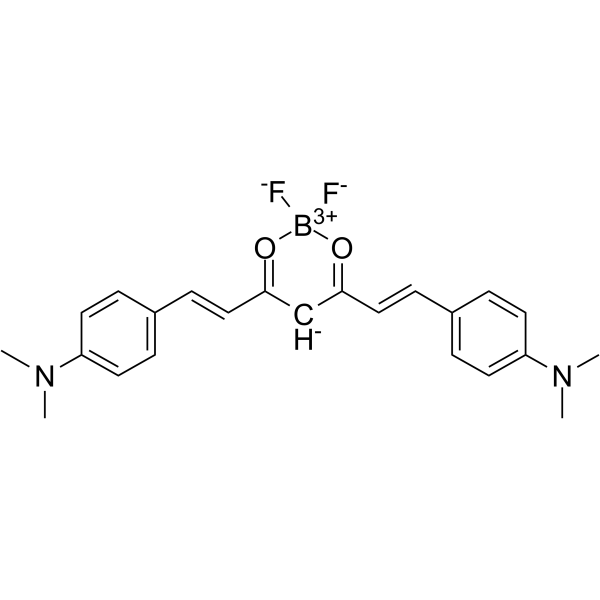
CRANAD-2 is a specific near-infrared (NIR) fluorescent probe for detecting Aβ plaques (unbound to Aβ: Ex=640 nm; Em=805 nm; after binding: Em=715 nm). CRANAD-2 penetrates the blood-brain barrier and has high affinity for Aβ aggregates, with a Kd value of 38 nM. CRANAD-2 is applicable to research related to Alzheimer's disease and neurodegenerative diseases .
loading...
    loading...
Cat. No.: HY-141667
CAS No.: 33984-50-8
Purity:  98.93%
Synonyms: 7-(p-Methoxybenzylamino)-4-nitrobenz-2,1,3-oxadiazole
Target:  

Fluorescent Dye

Research Areas:  

Others

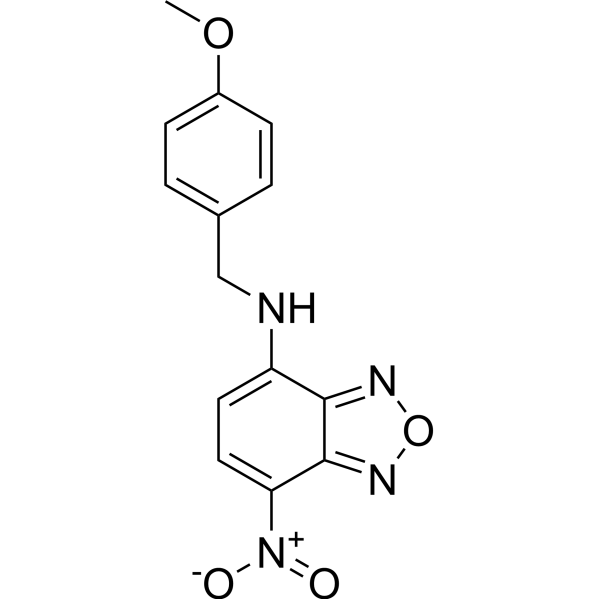
MBD (7-(p-Methoxybenzylamino)-4-nitrobenz-2,1,3-oxadiazole) is a hydrophobic fluorescent probe that is used to detect conformational changes of the complement subcomponent C1r during its autoactivation process. MBD acts by selectively binding to exposed hydrophobic regions on the C1r macromolecule. The detection wavelength of MBD in the free unbound state is Ex/Em = 490/560 nm, whereas the maximum emission wavelength of MBD upon binding to C1r exhibits a blue shift of approximately 20 nm relative to 560 nm .
loading...
    loading...
Cat. No.: HY-117789
CAS No.: 112560-33-5
Synonyms: keto-ITZ
Target:  

Cytochrome P450

Research Areas:  

Infection Cancer

Keto-itraconazole (keto-ITZ) is a metabolism of Itraconazole (HY-17514) with a potent inhibitor activity of CYP3A. Keto-itraconazole shows unbound IC50 value of 4.6 nM when coincubated with human liver microsomes and midazolam .
loading...
    loading...
Cat. No.: HY-D0121
CAS No.: 96314-96-4
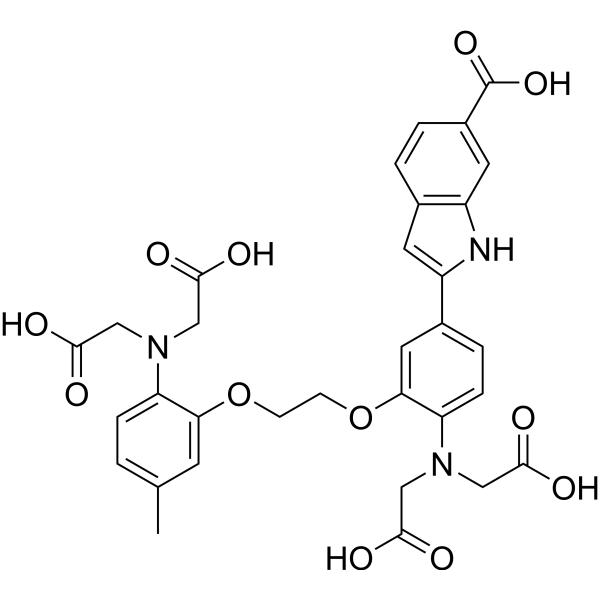
INDO 1 is a cell-impermeable, dual-emission ratiometric fluorescent calcium indicator with a KD·β value of 0.44 μM. INDO 1 binds to intracellular free calcium ions and undergoes wavelength-dependent fluorescence changes. In the unbound state (free form) without Ca 2+, its fluorescence emission peak is at 485 nm upon excitation with ultraviolet light (350 nm). When INDO 1 pentasodium binds to Ca 2+ (bound state), the emission peak shifts to 405 nm (Ex = 350 nm; dual emission at Em= 405/485 nm) .
loading...
    loading...
Cat. No.: HY-D0121A
CAS No.: 132319-56-3
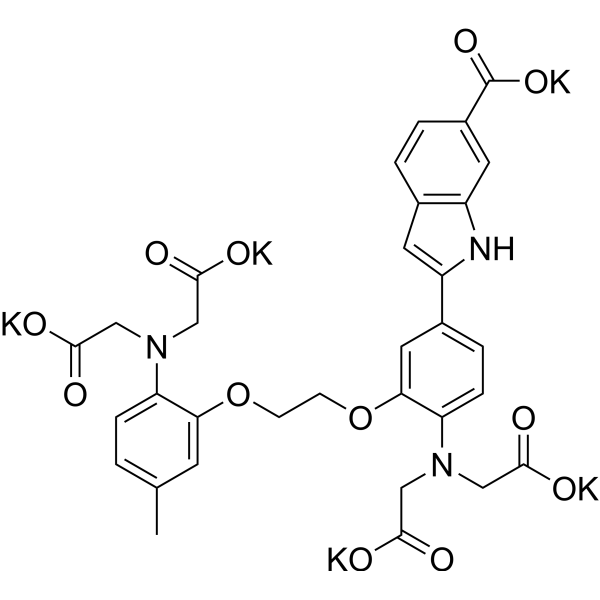
INDO 1 pentapotassium is a cell-impermeable, dual-emission ratiometric fluorescent calcium indicator with a KD·β value of 0.44 μM. INDO 1 pentapotassium binds to intracellular free calcium ions and undergoes wavelength-dependent fluorescence changes. In the unbound state (free form) without Ca 2+, its fluorescence emission peak is at 485 nm upon excitation with ultraviolet light (350 nm). When INDO 1 pentasodium binds to Ca 2+ (bound state), the emission peak shifts to 405 nm (Ex = 350 nm; dual emission at Em= 405/485 nm) .
loading...
    loading...
Cat. No.: HY-D0121B
INDO 1 pentasodium is a cell-impermeable, dual-emission ratiometric fluorescent calcium indicator with a KD·β value of 0.44 μM. INDO 1 pentasodium binds to intracellular free calcium ions and undergoes wavelength-dependent fluorescence changes. In the unbound state (free form) without Ca 2+, its fluorescence emission peak is at 485 nm upon excitation with ultraviolet light (350 nm). When INDO 1 pentasodium binds to Ca 2+ (bound state), the emission peak shifts to 405 nm (Ex = 350 nm; dual emission at Em= 405/485 nm) .
loading...
    loading...
Cat. No.: HY-403733A
CAS No.: 1998094-23-7
Target:  

Androgen Receptor

Research Areas:  

Cancer

(-)-JJ-450 is a non-competitive antagonist targeting the androgen receptor (AR). (-)-JJ-450 is more potent than (+)-JJ-450 (HY-403733B) in inhibiting androgen-induced AR activity, and the mechanism of AR inhibition by (+)-JJ-450 is different from that of Enzalutamide (MDV3100) (HY-70003), which may target the ligand binding domain (LBD) of AR. (-)-JJ-450 inhibits the transcriptional activity of wild-type AR and mutant AR F876L by inhibiting AR nuclear translocation and promoting nuclear degradation of unbound AR. (-)-JJ-450 can be used in the study of castration-resistant prostate cancer (CRPC) resistant to Enzalutamide .
loading...
    loading...
Cat. No.: HY-185120
CAS No.: 3084147-79-2
ProX1-(SS)-DOTAGA_R (Compound 25a) is the unbound radionuclide portion of the radiopharmaceutical and can be used for targeted delivery to diseases characterized by ACP3 expression .
loading...
    loading...
Cat. No.: HY-185120A
CAS No.: 3084147-67-8
ProX1-(SS)-DOTAGA (Compound 12b) is the unbound portion of the radionuclide in the compound and can be used for targeted delivery to diseases characterized by ACP3 expression .
loading...
    loading...
Cat. No.: HY-P2824A
Target:  

Endogenous Metabolite

Research Areas:  

Metabolic Disease

Streptokinase, Streptococcus hemolyticus (EC 3.4.99.0) is an enzyme secreted by several species of streptococci that can bind and activate human plasminogen. Streptokinase belongs to a group of medications known as fibrinolytics, and complexes of streptokinase with human plasminogen can hydrolytically activate other unbound plasminogen by activating through bond cleavage to produce plasmin.
loading...
    loading...
Cat. No.: HY-110250R
CAS No.: 1241390-29-3
Research Areas:  

Others

DFHBI (Standard) is the analytical standard of DFHBI (HY-110250). This product is intended for research and analytical applications. DFHBI is a small molecule that resembles the chromophore of green fluorescent protein (GFP). DFHBI can be used for imaging RNA in living cells. . Spinach and DFHBI are essentially nonfluorescent when unbound, whereas the Spinach-DFHBI complex is brightly fluorescent both in vitro and in living cells (Ex/Em = 469/501 nm).
loading...
    loading...
Cat. No.: HY-D3360
JF630-HTL is a fluorogenic Janelia Fluor (JF) Si-rhodamine HaloTag ligand. JF630-HTL covalently labels HaloTag fusion proteins in living cells. JF630-HTL displays low fluorescence in the unbound state, but exhibits a marked fluorescence enhancement upon binding to HaloTag. JF630-HTL can be used for live-cell imaging applications .
loading...
    loading...
Cat. No.: HY-181146
CAS No.: 2706576-88-5
Synonyms: TBD09
Target:  

Bacterial

Research Areas:  

Infection

MK-7762 is an orally active xazolidinone compound with antitubercular activity. MK-7762 inhibits MAO-B and mammalian mitochondrial protein synthesis. MK-7762 reduces lung bacterial burden in BALB/c mouse models of acute and chronic tuberculosis infection, penetrates caseous necrotic lung lesions in C3HeB/FeJ mice, and maintains concentrations above unbound MIC in lesion compartments. MK-7762 can be used for the research of tuberculosis .
loading...
    loading...
Cat. No.: HY-D3603
CAS No.: 928817-42-9
Research Areas:  

Others

Benzylguanine-CY5 is a quenched fluorescent dye conjugate based on benzylguanine (BG). Benzylguanine-CY5 possesses the activity of specifically covalently labeling SNAP-tag fusion proteins. Benzylguanine-CY5 exhibits intramolecular fluorescence quenching in the unbound state; upon binding to SNAP-tag, the quenching guanine moiety is cleaved, and its fluorescence intensity increases. Benzylguanine-CY5 can be used for background-free specific fluorescent labeling and imaging studies of SNAP-tag fusion proteins in living cells .
loading...
    loading...
Cat. No.: HY-135541
CAS No.: 365462-24-4
Synonyms: YM150 maleate
Target:  

Endogenous Metabolite

Research Areas:  

Cardiovascular Disease

Darexaban maleate (YM150 maleate) is a direct factor Xa inhibitor with activity in preventing venous thromboembolism. The major metabolite of Darexaban maleate in humans is Darexaban glucitol, which acts pharmacologically. The glucitolation reaction of Darexaban maleate is mainly catalyzed by UGT1A9 and UGT1A10 in the human liver and intestine. The K(m) value of Darexaban maleate glucitolation in the liver is greater than 250 μM, while in the intestine it exhibits substrate inhibition kinetics with a K(m) value of 27.3 μM. The unbound K(m) value of Darexaban maleate is significantly reduced by the influence of fatty acid-free bovine serum albumin in both HLM and UGT1A9 .
loading...
    loading...
Cat. No.: HY-DY1118
CAS No.: 132319-56-3
Target:  

Fluorescent Dye

Research Areas:  

Others

INDO 1 pentapotassium solution is a cell-impermeable, dual-emission ratiometric fluorescent calcium indicator with a KD·β value of 0.44 μM. INDO 1 pentapotassium solution binds to intracellular free calcium ions and undergoes wavelength-dependent fluorescence changes. In the unbound state (free form) without Ca 2+, its fluorescence emission peak is at 485 nm upon excitation with ultraviolet light (350 nm). When INDO 1 pentasodium binds to Ca 2+ (bound state), the emission peak shifts to 405 nm (Ex = 350 nm; dual emission at Em= 405/485 nm) .
Solvent and concentration: ddH2O: 1 mM
loading...
    loading...
Cat. No.: HY-D3127
CAS No.: 455251-97-5
Target:  

Fluorescent Dye

Research Areas:  

Others

DCA-Mln is a Fluorescent probe for ferric iron (Fe³⁺) detection. The probe works via an internal charge transfer (ICT) process from its diethylamino group to its dicyano group, which produces bright pink fluorescence in its unbound state; when Fe³⁺ is present, two molecules of DCA-Mln chelate with one Fe³⁺ ion, with one cyano group of each DCA-Mln participating in the complexation, and this binding triggers a photoinduced electron transfer (PET) process that provides a nonradiative deactivation pathway, resulting in fluorescence quenching; additionally, the probe exhibits a visible color change from purple to peach pink upon Fe³⁺ binding, enabling dual-channel detection. The probe has an excitation wavelength of 570 nm and an emission wavelength of 670 nm, and it shows a rapid response, with fluorescence stabilizing within 15 seconds of Fe³⁺ addition. DCA-Mln is cell-membrane-permeable, nontoxic at the imaging concentration of 10 μM, and can be used for Fe³⁺ detection in actual water samples, Fe³⁺ imaging in living cells, and as an anti-counterfeiting ink[1].
loading...
    loading...
  • 1

