



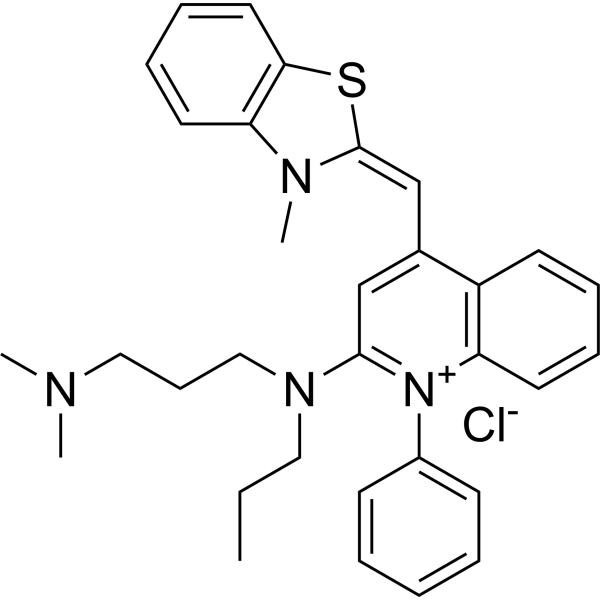
SYBR green I chloride
Based on 5 publication(s) in Google Scholar
SYBR Green I chloride is a highly sensitive fluorescent nucleic acid dye that binds specifically to the minor groove of double-stranded DNA or intercalates between base pairs. SYBR Green I chloride exhibits weak fluorescence in the unbound state but emits bright fluorescence upon binding, and it preferentially binds to large-fragment DNA and DNA with high G+C content. SYBR Green I chloride is suitable for real-time PCR technology; its fluorescence intensity correlates with the amount and size of amplification products, enabling accurate quantification of gene expression and discrimination of amplicons via melting curve analysis without additional post-processing. SYBR Green I chloride is widely used in preclinical in vitro nucleic acid detection.
For research use only. We do not sell to patients.
- Purity : 98.09%
- CAS No.: 2225748-05-8
- Formula: C32H37ClN4S
- Molecular Weight:545.18
-
Storage:
4°C, sealed storage, away from moisture and light
* In solvent : -80°C, 6 months; -20°C, 1 month (sealed storage, away from moisture and light)

To place orders, for customer services and technical support, please contact: MedChemExpress USA
Tel: 609-228-6898 E-mail: [email protected] [email protected]


-
 Biological Activity
-
Chemical Information
-
Solvent & Solubility
- Protocols
- Purity & Documentation
- References
-
 Help & FAQs


Publications Citing Use of MedChemExpress (MCE) SYBR green I chloride
MoreAll DNA/RNA Synthesis Isoforms
More

Biological Activity
Description
In Vitro
Real-Time RT-PCR for Cytokines[1]
1. Sample and Nucleic Acid Preparation
Cell treatment:
Splenic monocytes are isolated from mice and divided into a control group and a PMA-ionomycin stimulation group, followed by incubation at 37°C with 5% CO2 for 5 h.
RNA extraction:
Cells are lysed with TRIZOL to extract total RNA; genomic DNA is removed with DNase I, RNA integrity is verified via denaturing gel electrophoresis, and RNA is quantified at 260 nm.
cDNA synthesis:
2 μg of RNA is annealed with 1 μg of oligo-dT; a reverse transcription system is added, and cDNA is synthesized through the procedure of 25°C for 5 min → 37°C for 60 min → 70°C for 10 min.
2. Reaction System Preparation (50 μL total volume)
The system contains 0.5×SYBR Green I (10000× stock solution), PCR buffer (50 mM KCl, 20 mM Tris-HCl pH 8.3, 2.5 mM MgCl2, 0.2% glycerol, 0.2% DMSO), 0.2 mM forward and reverse primers, 0.2 mM dNTPs, 1.25 U AmpliTaq, and 5 μL of 1:5 diluted cDNA.
No-template controls (NTC) are set up, and all samples are run in at least 2 replicates.
3. Amplification Cycling Program
Pre-denaturation is performed at 95°C for 30 s; 35 cycles of amplification are carried out (95°C for 30 s → 60°C for 30 s → 72°C for 1 min → 85°C for 5 s).
Fluorescence collection:
Fluorescence is collected at 85°C during each cycle (a temperature higher than the Tm of primer dimers and lower than the Tm of specific amplicons).
4. Melting Curve Analysis
After amplification, the temperature is increased from 60°C to 95°C at a rate of 2°C/min, and fluorescence is detected every 15 s.
Target amplicons and non-specific signals from primer dimers are distinguished based on specific Tm peaks.
5. Quantification and Specificity Verification
Data analysis:
The baseline is set to cycles 1-5, with a threshold of 0.7; Ct values are read by software, absolute copy numbers are calculated using an external plasmid standard curve (109-104 copies); β-actin is used as an internal reference for normalization to calculate relative expression levels.
Specificity verification:
A single target band is confirmed via 2% agarose gel electrophoresis, which matches the specific peak in the melting curve.
Multiplex Real-Time PCR Based on Bacterial Samples[2]
1. Template Preparation
Strain culture: Vibrio cholerae is inoculated onto Columbia blood agar and cultured aerobically at 35°C for 24 h; Legionella pneumophila is inoculated onto BCYE agar and cultured aerobically at 35°C for 3 days.
DNA extraction: For Vibrio cholerae, 2-3 colonies are resuspended in 200 μL Instagene, and DNA is prepared following the kit instructions; for Legionella pneumophila, a bacterial suspension with a turbidity of 0.5 McFarland standard is prepared as the template.
2. Reaction System Preparation (20 μL total volume)
Homemade SYBR Green I (SG) premix:
1× PCR Buffer II, 4 mM MgCl2, 200 μM dNTP, primers (0.5 μM each of Legionella 16S rRNA primers, 0.1 μM each of mip primers; 0.5 μM each of singleplex mip primers), 1 U AmpliTaq Gold, SG at a final concentration of 0.2× or 0.4× (from 10000× stock solution), and 4 μL template DNA.
3. Amplification Cycling Program
For Vibrio cholerae: Pre-denaturation at 95°C for 10 min; 40 cycles of 94°C for 20 s → 60°C for 45 s → 72°C for 45 s.
For Legionella pneumophila: Pre-denaturation at 95°C for 10 min; 30 cycles of 94°C for 10 s → 50°C for 20 s → 72°C for 25 s.
Fluorescence collection: Performed at 72°C in the SYBR channel (excitation at 470 nm, detection at 585 nm) with gains set to 2 and 5.
4. Melting Curve Analysis
After amplification, the temperature is increased from 75°C to 99°C at a rate of 1°C per 60 s.
Software analysis: RotorGene V4.6.94 is used with digital filtration set to none, and the Tm value of amplicons is read.
5. Product Verification
1% agarose gel electrophoresis (with Gelstar dye added) is performed, and the melting curve is compared with the electrophoresis bands to verify the amplification of multiplex products.
6. Key Usage Points
In multiplex PCR, an SG concentration of **≥0.4×* is required for simultaneous detection of multiple amplicons; a concentration of 0.2× only detects products with high GC% and large fragment sizes.
MedChemExpress (MCE) has not independently confirmed the accuracy of these methods. They are for reference only. Further protocols information, click here.


Chemical Information
-
CAS No. 2225748-05-8
-
Appearance Solid
-
Molecular Weight 545.18
-
Formula C32H37ClN4S
-
Color Orange to red
-
SMILES
CCCN(CCCN(C)C)C(C=C1/C=C2N(C)C3=C(C=CC=C3)S\2)=[N+](C4=C1C=CC=C4)C5=CC=CC=C5.[Cl-]
-
Shipping
Room temperature in continental US; may vary elsewhere.
-
Storage
4°C, sealed storage, away from moisture and light
* In solvent : -80°C, 6 months; -20°C, 1 month (sealed storage, away from moisture and light)


Publications (5)
-
Journal Impact Factor
-
Most Recent
-
Small
Tolerogenic Nanovaccine Synergizing Citrullinated Peptide and TSP-1 Plasmid for Antigen-Specific Immunotherapy of Rheumatoid Arthritis. [Abstract]2026 Jul;22(37):e73817. PMID: 42143696 -
-
-
Eur J Clin Microbiol Infect Dis
Transcriptomic correlates of ceftazidime-avibactam collateral sensitivity in tigecycline-resistant NDM-producing enterobacter cloacae complex. [Abstract]2026 May 25. PMID: 42185701 -


Solvent & Solubility
In Vitro:
DMSO : 50 mg/mL (91.71 mM; Need ultrasonic; Hygroscopic DMSO has a significant impact on the solubility of product, please use newly opened DMSO)
Please refer to the solubility information to select the appropriate solvent. Once prepared, please aliquot and store the solution to prevent product inactivation from repeated freeze-thaw cycles.
Storage method and period of stock solution: -80°C, 6 months; -20°C, 1 month (sealed storage, away from moisture and light). When stored at -80°C, please use it within 6 months. When stored at -20°C, please use it within 1 month.
Please refer to the solubility information to select the appropriate solvent. Once prepared, please aliquot and store the solution to prevent product inactivation from repeated freeze-thaw cycles.
Storage method and period of stock solution: -80°C, 6 months; -20°C, 1 month (sealed storage, away from moisture and light). When stored at -80°C, please use it within 6 months. When stored at -20°C, please use it within 1 month.
Concentration (start) × Volume (start) = Concentration (final) × Volume (final)

Protocols
-
RT-PCR
Reverse transcription technology uses RNA as a template to synthesize DNA. RT-PCR is simple, specific and sensitive, and can be used to detect gene expression levels and expression differences in cells; detect RNA virus content; clone cDNA sequences of specific genes.
-
RNA extraction experimental
By lysing cells, releasing RNA, and removing impurities such as proteins and DNA, high-purity RNA products are finally obtained. The commonly used traditional method is the guanidine isothiocyanate/phenol/chloroform method (Trizol), which is suitable for a variety of animal materials including animal tissues, microorganisms, cultured cells, etc., and most plant materials.
-
Real Time qPCR (Q-PCR)
Real-time quantitative PCR (qPCR) quantifies an amplifiable nucleic-acid target by monitoring fluorescence during PCR cycling rather than measuring product only after amplification. The increase in fluorescence tracks accumulation of PCR product, and the quantification cycle (Cq; historically also Ct/CP) is related to the initial amount of target: samples containing more starting target generally reach the defined fluorescence threshold in fewer cycles.


Purity & Documentation
-
Data Sheet (285 KB)
-
SDS (252 KB)
- English - EN (252 KB)
- Français - FR (252 KB)
- Deutsch - DE (252 KB)
- Norwegian - NO (252 KB)
- Español - ES (252 KB)
- Swedish - SV (252 KB)
- Italian - IT (252 KB)
- Korean - KR (252 KB)
- Portuguese - PT (252 KB)
-
Handling Instructions (2659 KB)
References
[1]. Ramos-Payán R, et al. Quantification of cytokine gene expression using an economical real-time polymerase chain reaction method based on SYBR Green I. Scand J Immunol. 2003;57(5):439-445. [Content Brief]
[2]. Giglio S, et al. Demonstration of preferential binding of SYBR Green I to specific DNA fragments in real-time multiplex PCR. Nucleic Acids Res. 2003;31(22):e136. [Content Brief]


Complete Stock Solution Preparation Table
Please refer to the solubility information to select the appropriate solvent. Once prepared, please aliquot and store the solution to prevent product inactivation from repeated freeze-thaw cycles.
Storage method and period of stock solution: -80°C, 6 months; -20°C, 1 month (sealed storage, away from moisture and light). When stored at -80°C, please use it within 6 months. When stored at -20°C, please use it within 1 month.
| Optional Solvent | Concentration Solvent Mass | 1 mg | 5 mg | 10 mg | 25 mg |
|---|---|---|---|---|---|
| DMSO | 1 mM | 1.8343 mL | 9.1713 mL | 18.3426 mL | 45.8564 mL |
| 5 mM | 0.3669 mL | 1.8343 mL | 3.6685 mL | 9.1713 mL | |
| 10 mM | 0.1834 mL | 0.9171 mL | 1.8343 mL | 4.5856 mL | |
| 15 mM | 0.1223 mL | 0.6114 mL | 1.2228 mL | 3.0571 mL | |
| 20 mM | 0.0917 mL | 0.4586 mL | 0.9171 mL | 2.2928 mL | |
| 25 mM | 0.0734 mL | 0.3669 mL | 0.7337 mL | 1.8343 mL | |
| 30 mM | 0.0611 mL | 0.3057 mL | 0.6114 mL | 1.5285 mL | |
| 40 mM | 0.0459 mL | 0.2293 mL | 0.4586 mL | 1.1464 mL | |
| 50 mM | 0.0367 mL | 0.1834 mL | 0.3669 mL | 0.9171 mL | |
| 60 mM | 0.0306 mL | 0.1529 mL | 0.3057 mL | 0.7643 mL | |
| 80 mM | 0.0229 mL | 0.1146 mL | 0.2293 mL | 0.5732 mL |


SYBR green I chloride Related Classifications
HY-D1191 Related Classifications
 Powered by Bioz