



39 Results for "

wasting

" in MedChemExpress (MCE) Product Catalog:
Products (39)

39 Results for "wasting" in MCE Product Catalog:

36
36 Publications Verification
Cat. No.: HY-112288
CAS No.: 432001-19-9
Purity:  99.90%
Synonyms: TTI-101
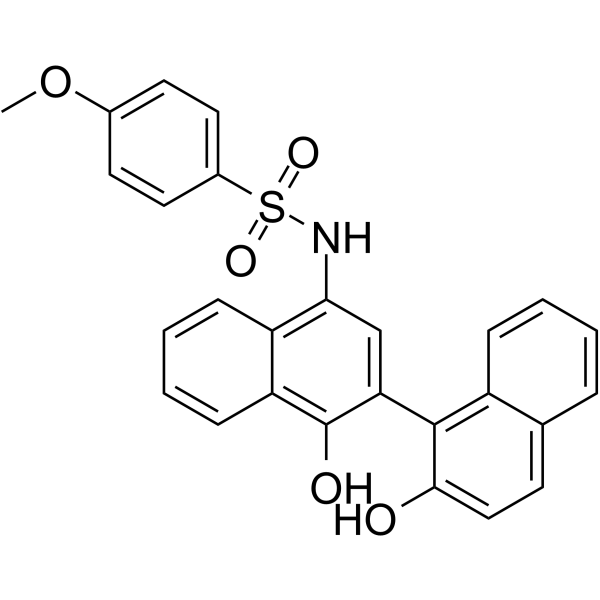
C188-9 (TTI-101) is a STAT3 inhibitor with a Kd value of 4.7 nM. C188-9 targets the SH2 domain of STAT3, blocks the processes of STAT3 ligand binding, receptor recruitment, homodimerization and phosphorylation, and regulates STAT3-mediated genes associated with tumorigenesis and radioresistance. C188-9 regulates STAT1-mediated genes related to radioresistance and reduces the activation level of STAT1. C188-9 downregulates the expression of DNMT1, enhances DAC-induced demethylation and re-expression of RASSF1A, and simultaneously potentiates the anti-tumor effect of DAC on pancreatic cancer cells. C188-9 inhibits both anchorage-dependent and anchorage-independent growth of cancer cells, induces Apoptosis, blocks the growth of tumor xenografts, and suppresses muscle atrophy. C188-9 maintains muscle mass, increases body weight and improves grip strength in tumor-bearing mice. C188-9 can be used in research related to head and neck squamous cell carcinoma, pancreatic cancer, sepsis-related skeletal muscle wasting, non-small cell lung cancer, acute myeloid leukemia and cancer cachexia .
loading...
    loading...
2
2 Cited Publications
Cat. No.: HY-13676
CAS No.: 595-33-5
Purity:  99.69%
Research Areas:  

Endocrinology Cancer

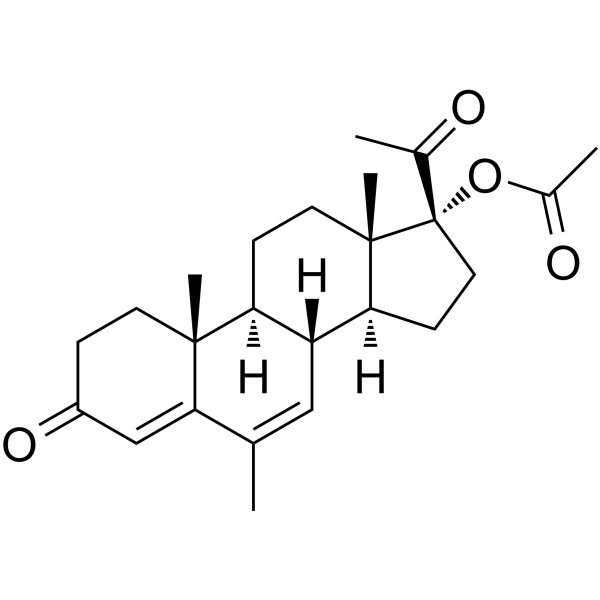
Megestrol acetate is a synthetic and orally active progesteronal agent. Megestrol acetate is effective as an appetite stimulant for wasting syndromes such as cachexia. Megestrol acetate decreases nuclear and cytosol androgen receptors human BPH tissue. Megestrol acetate has the potential for HIV study and downregulates autophagic catabolic pathway .
loading...
    loading...
1
1 Cited Publications
Cat. No.: HY-P99388
CAS No.: 1429201-24-0
Synonyms: REGN-1033; SAR391786

Target:  

TGF-beta/Smad

Research Areas:  

Inflammation/Immunology

Trevogrumab (REGN-1033) is a monoclonal antibody targeting GDF8 (growth differentiation factor 8, also known as myostatin). Trevogrumab is used in research on muscle wasting conditions, including disuse atrophy, chronic diseases, and changes in food and nutrient intake .
loading...
    loading...
1
1 Cited Publications
Cat. No.: HY-P99370
CAS No.: 1391726-30-9
Synonyms: LY2495655; Anti-GDF8 / Myostatin Reference Antibody (landogrozumab)

Target:  

TGF-beta/Smad

Research Areas:  

Inflammation/Immunology Cancer

Landogrozumab (LY2495655) is an humanized anti-myostatin monoclonal antibody. Landogrozumab effectively improves muscle volume, hand grip strength and function. Landogrozumab can be used for the research of muscle wasting disease .
loading...
    loading...
1
1 Cited Publications
Cat. No.: HY-Y0319B1
CAS No.: 127-08-2
Potassium acetate, for molecular biology is an acetate salt commonly used as a deicing agent, food preservative and potassium source. Potassium acetate, for molecular biology can serve as an activator for preparing waste tea-based activated carbon, and is applied to the adsorption of Acid Blue 25 dye .
loading...
    loading...
1
1 Cited Publications
Cat. No.: HY-W111581
CAS No.: 13681-87-3
Synonyms: Diethyldithiocarbamic acid copper salt
Target:  

Apoptosis Caspase

Research Areas:  

Cancer

Copper(II) diethyldithiocarbamate (Diethyldithiocarbamic acid copper salt) is a Copper(II) and diethyldithiocarbamate coordination polymer. Copper(II) diethyldithiocarbamate binds tightly to NPL4 and induces its aggregation, disrupting the p97-NPL4-UFD1 pathway. Copper(II) diethyldithiocarbamate causes ubiquitinated proteins accumulation and impairs waste proteins degradation, thus resulting in cell apoptosis. Copper(II) diethyldithiocarbamate inhibits tumor growth in MDA-MB-231 xenograft mice models. Copper(II) diethyldithiocarbamate can be used for the research of cancer, such as breast cancer .
loading...
    loading...
Cat. No.: HY-123012
CAS No.: 391920-32-4
Purity:  98.40%
Synonyms: LY-488756
Target:  

Adrenergic Receptor

Research Areas:  

Others

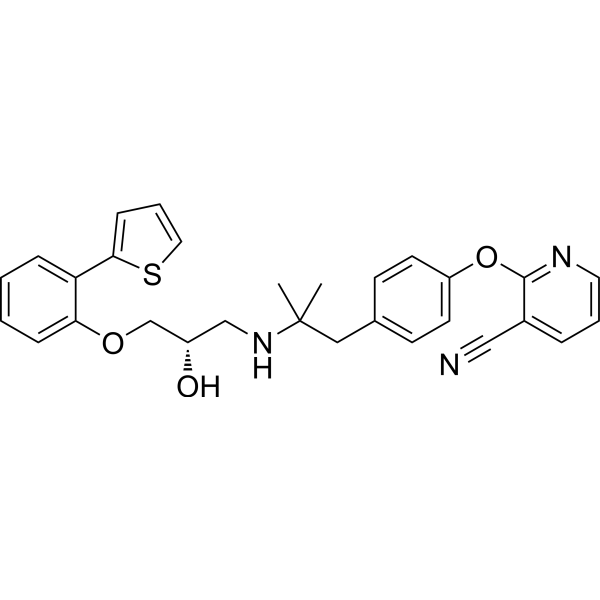
Lubabegron is a potent modulator of β-adrenergic receptor (β-AR). Lubabegron demonstrates antagonistic behavior at the β1 and β 2 receptor subtypes and agonistic behavior at the β 3 receptor subtype in cattle. Lubabegron reduces NH3 gas emissions from an animal or its waste. Lubabegron is available as an animal supplement .
loading...
    loading...
Cat. No.: HY-E70387
CAS No.: 42613-30-9
Target:  

Endogenous Metabolite

Research Areas:  

Others

Ligninase is a general term for extracellular heme-containing peroxidases produced by Phanerochaete chrysosporium. Ligninase can catalyze lignin degradation. Ligninase can be used in waste treatment and detoxification of environmental pollutants .
loading...
    loading...
Cat. No.: HY-Y1219H
CAS No.: 112926-00-8
Silica gel, high-purity grade, 200-400 mesh is a low-density, high-surface-area, high-purity inert additive that can be used to prepare chromatographic column sieve plates based on the sol-gel method. Silica gel, high-purity grade prevents DNA degradation by absorbing water from plant leaves, and is suitable for the preservation of field-collected samples for subsequent DNA extraction, restriction endonuclease digestion, PCR amplification and gene sequencing. It can also be reused after being saturated with water. Silica gel, high-purity grade can provide a non-toxic, inert aquatic environment for embedded cells, allowing nutrients, oxygen and metabolic waste to diffuse freely and blocking external pollution, thereby maintaining the activity of fibroblasts and epithelial cells .
loading...
    loading...
Cat. No.: HY-165151
CAS No.: 28925-89-5
Synonyms: Urochrome hydrochloride
Target:  

Endogenous Metabolite

Research Areas:  

Others

Urobilin hydrochloride is the metabolite of Hemoglobin (HY-P2995), that can be excreted through urine and feces in many mammals. Urobilin hydrochloride can be used as an indicator of human waste pollution .
loading...
    loading...
Cat. No.: HY-P2816
CAS No.: 37278-89-0
Research Areas:  

Others

Xylanase is an enzyme targeting 1,4-β-D-xylan that randomly cleaves the β-1,4 backbone of xylan, a complex polysaccharide in plant cell walls. Xylanase finds applications in the food, feed and industrial sectors, including pulp and paper processing, baking, animal feed improvement, and biotransformation of waste .
loading...
    loading...
Cat. No.: HY-13676R
CAS No.: 595-33-5
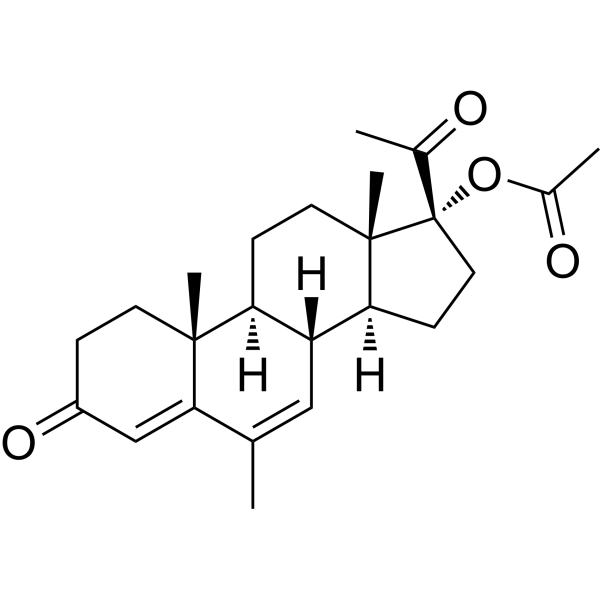
Megestrol acetate (Standard) is the analytical standard of Megestrol acetate. This product is intended for research and analytical applications. Megestrol acetate is a synthetic and orally active progesteronal agent. Megestrol acetate is effective as an appetite stimulant for wasting syndromes such as cachexia. Megestrol acetate decreases nuclear and cytosol androgen receptors human BPH tissue. Megestrol acetate has the potential for HIV study and downregulates autophagic catabolic pathway .
loading...
    loading...
Cat. No.: HY-W184800
CAS No.: 937891-74-2
Research Areas:  

Inflammation/Immunology

MuRF1-IN-2 (Example 3) is a MuRF1 inhibitor. MuRF1-IN-2 can be used for research of muscle wasting conditions, of skeletal or cardial muscle atrophy .
loading...
    loading...
Cat. No.: HY-Y1219E
CAS No.: 112926-00-8
Silica gel, high-purity grade, 130-270 mesh is a low-density, high-surface-area, high-purity inert additive that can be used to prepare chromatographic column sieve plates based on the sol-gel method. Silica gel, high-purity grade prevents DNA degradation by absorbing water from plant leaves, and is suitable for the preservation of field-collected samples for subsequent DNA extraction, restriction endonuclease digestion, PCR amplification and gene sequencing. It can also be reused after being saturated with water. Silica gel, high-purity grade can provide a non-toxic, inert aquatic environment for embedded cells, allowing nutrients, oxygen and metabolic waste to diffuse freely and blocking external pollution, thereby maintaining the activity of fibroblasts and epithelial cells .
loading...
    loading...
Cat. No.: HY-W009048
CAS No.: 16069-36-6
Synonyms: DCH18C6; Perhydrodibenzo-18-crown-6
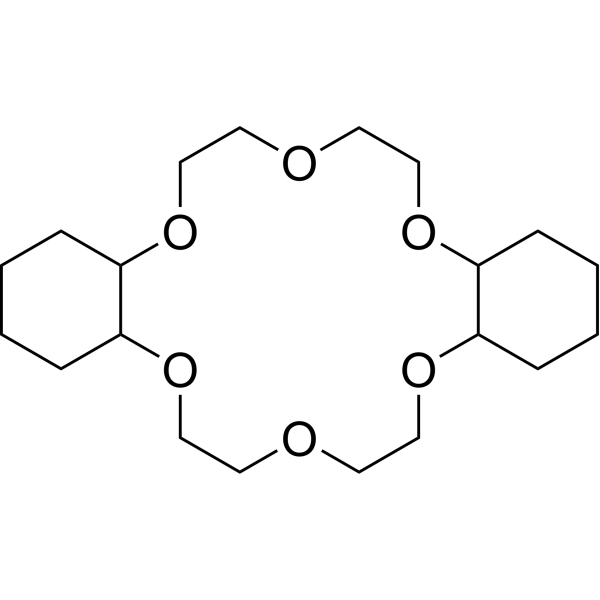
Dicyclohexano-18-crown-6-ether (DCH18C6) is an excellent strontium chelating agent. Dicyclohexano-18-crown-6-ether exhibits favorable extraction capacity and selectivity toward Sr (II). After chemical modification, Dicyclohexano-18-crown-6-ether is covalently bonded to an organosilicon matrix via co-condensation. DCH18C6-functionalized organosilicon materials are expected to be applied to the extraction and separation of strontium from radioactive waste liquid .
loading...
    loading...
Cat. No.: HY-Y1219C
CAS No.: 112926-00-8
Silica gel, high-purity grade, 220-440 mesh is a low-density, high-surface-area, high-purity inert additive that can be used to prepare chromatographic column sieve plates based on the sol-gel method. Silica gel, high-purity grade prevents DNA degradation by absorbing water from plant leaves, and is suitable for the preservation of field-collected samples for subsequent DNA extraction, restriction endonuclease digestion, PCR amplification and gene sequencing. It can also be reused after being saturated with water. Silica gel, high-purity grade can provide a non-toxic, inert aquatic environment for embedded cells, allowing nutrients, oxygen and metabolic waste to diffuse freely and blocking external pollution, thereby maintaining the activity of fibroblasts and epithelial cells .
loading...
    loading...
Cat. No.: HY-Y1219D
CAS No.: 112926-00-8
Silica gel, high-purity grade, 35-70 mesh is a low-density, high-surface-area, high-purity inert additive that can be used to prepare chromatographic column sieve plates based on the sol-gel method. Silica gel, high-purity grade prevents DNA degradation by absorbing water from plant leaves, and is suitable for the preservation of field-collected samples for subsequent DNA extraction, restriction endonuclease digestion, PCR amplification and gene sequencing. It can also be reused after being saturated with water. Silica gel, high-purity grade can provide a non-toxic, inert aquatic environment for embedded cells, allowing nutrients, oxygen and metabolic waste to diffuse freely and blocking external pollution, thereby maintaining the activity of fibroblasts and epithelial cells .
loading...
    loading...
Cat. No.: HY-Y1219I
CAS No.: 112926-00-8
Silica gel, high-purity grade, 70-230 mesh is a low-density, high-surface-area, high-purity inert additive that can be used to prepare chromatographic column sieve plates based on the sol-gel method. Silica gel, high-purity grade prevents DNA degradation by absorbing water from plant leaves, and is suitable for the preservation of field-collected samples for subsequent DNA extraction, restriction endonuclease digestion, PCR amplification and gene sequencing. It can also be reused after being saturated with water. Silica gel, high-purity grade can provide a non-toxic, inert aquatic environment for embedded cells, allowing nutrients, oxygen and metabolic waste to diffuse freely and blocking external pollution, thereby maintaining the activity of fibroblasts and epithelial cells .
loading...
    loading...
Cat. No.: HY-Y0850U1
CAS No.: 9002-89-5
Synonyms: Polyvinyl alcohol (Mw 61000, 98-99% hydrolyzed, ~1400 polymerization); Poly(Ethenol) (Mw 61000, 98-99% hydrolyzed, ~1400 polymerization)
PVA (Mw 61000, 98-99% hydrolyzed, ~1400 polymerization) is a semicrystalline and biocompatible synthetic polymer with excellent safety properties including non-toxicity, no accumulation, and non-mutagenicity. PVA (Mw 61000, 98-99% hydrolyzed, ~1400 polymerization) undergoes cross-linking via acetal bond formation between hydroxyl and aldehyde groups, and it can be used to prepare highly rigid, low-solubility degradable films as well as for dry or minimally invasive in vitro wound studies. PVA (Mw 61000, 98-99% hydrolyzed, ~1400 polymerization) can construct a hydroxyl-rich microenvironment to trap photogenerated holes, thereby promoting hydrogen peroxide production and enhancing the redox cycle of iron species in the photo-Fenton reaction. PVA (Mw 61000, 98-99% hydrolyzed, ~1400 polymerization) can act as a sacrificial agent and substrate to achieve synchronous degradation with pollutants, and it is applicable to sustainable waste management and water treatment .
loading...
    loading...
Cat. No.: HY-Y0850U2
CAS No.: 9002-89-5
Synonyms: Polyvinyl alcohol (Mw 130000, 87-89% hydrolyzed, ~2700 polymerization); Poly(Ethenol) (Mw 130000, 87-89% hydrolyzed, ~2700 polymerization)
PVA (Polyvinyl alcohol; Poly(Ethenol)) (Mw 130000, 87-89% hydrolyzed, ~2700 polymerization) is a non-toxic, biodegradable, and highly biocompatible semicrystalline synthetic polymer. PVA (Mw 130000, 87-89% hydrolyzed, ~2700 polymerization) acts as a coating agent to improve tableting performance, and can be cross-linked with sodium trimetaphosphate to prepare tubular vascular grafts or form hydrogels for use as artificial articular cartilage and sustained-release matrices for growth factors. PVA (Mw 130000, 87-89% hydrolyzed, ~2700 polymerization) enhances the redox cycle of iron species in photo-assisted Fenton reactions to simultaneously generate hydrogen peroxide and degrade pollutants, enabling integrated sustainable waste management and water treatment. PVA (Mw 130000, 87-89% hydrolyzed, ~2700 polymerization) is used in the manufacture of biodegradable films and in studies of dry or minimally invasive ex vivo wounds, but cannot form freeze-thaw cross-linked solid sheets for wound dressings .
loading...
    loading...

