



PVA (Mw 61000, 98-99% hydrolyzed, ~1400 polymerization)
PVA (Mw 61000, 98-99% hydrolyzed, ~1400 polymerization) is a semicrystalline and biocompatible synthetic polymer with excellent safety properties including non-toxicity, no accumulation, and non-mutagenicity. PVA (Mw 61000, 98-99% hydrolyzed, ~1400 polymerization) undergoes cross-linking via acetal bond formation between hydroxyl and aldehyde groups, and it can be used to prepare highly rigid, low-solubility degradable films as well as for dry or minimally invasive in vitro wound studies. PVA (Mw 61000, 98-99% hydrolyzed, ~1400 polymerization) can construct a hydroxyl-rich microenvironment to trap photogenerated holes, thereby promoting hydrogen peroxide production and enhancing the redox cycle of iron species in the photo-Fenton reaction. PVA (Mw 61000, 98-99% hydrolyzed, ~1400 polymerization) can act as a sacrificial agent and substrate to achieve synchronous degradation with pollutants, and it is applicable to sustainable waste management and water treatment.
For research use only. We do not sell to patients.
- CAS No.: 9002-89-5
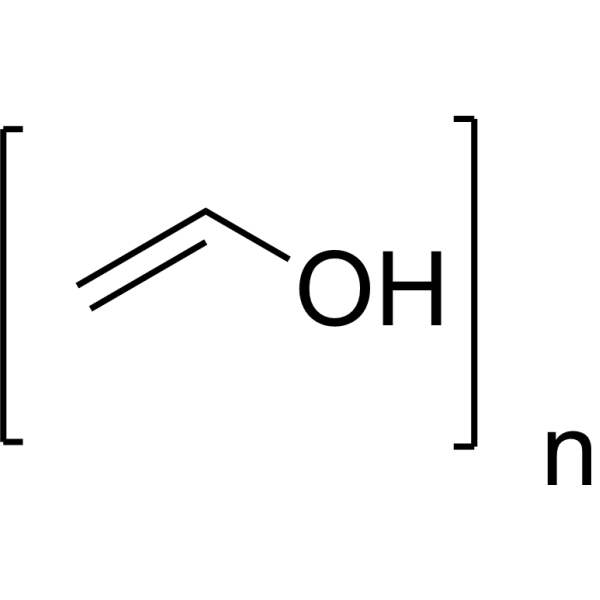
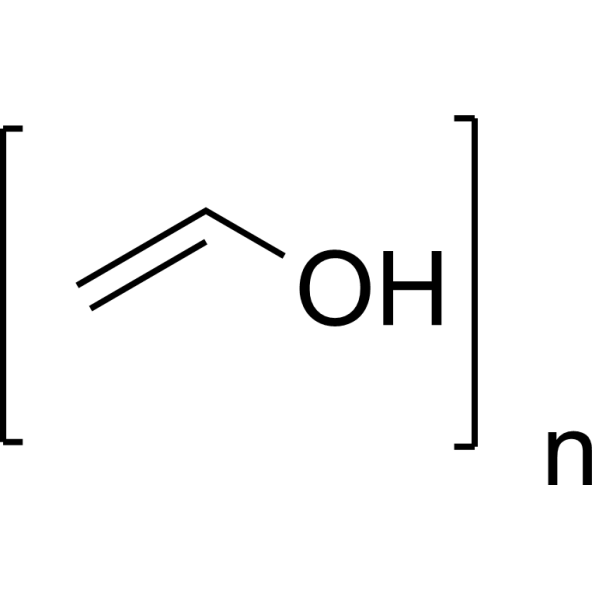
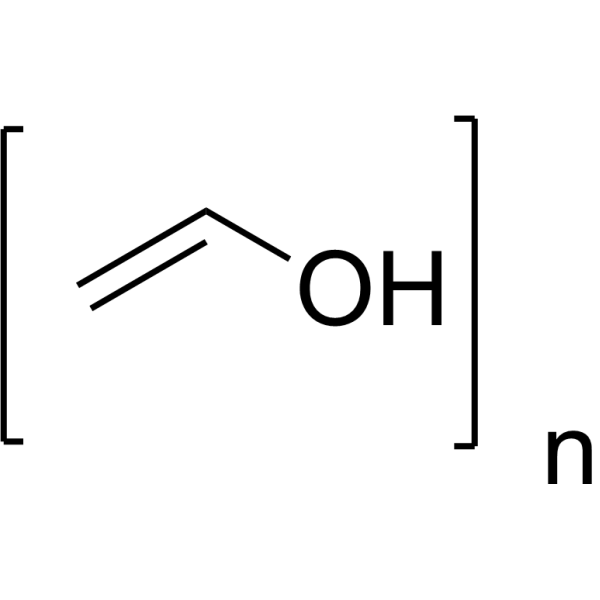
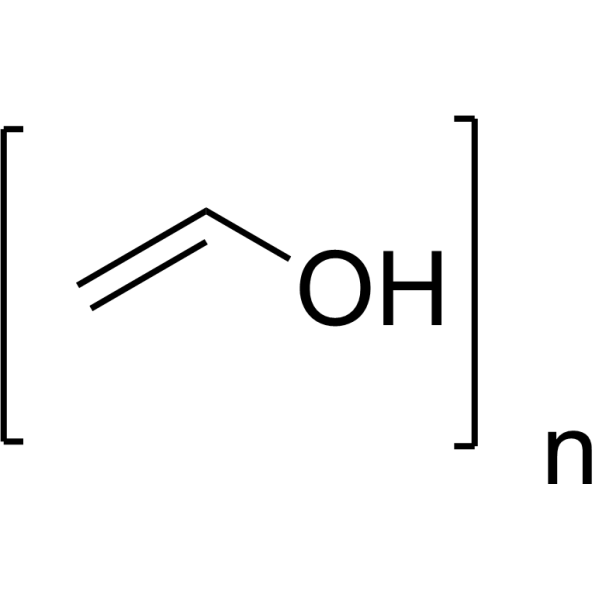
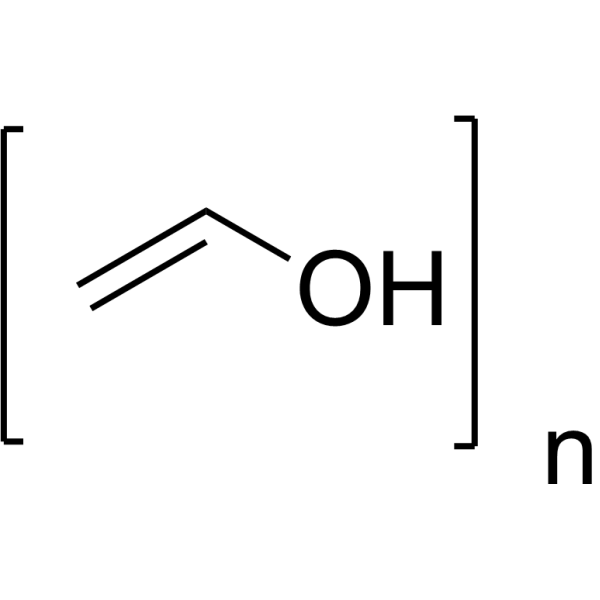
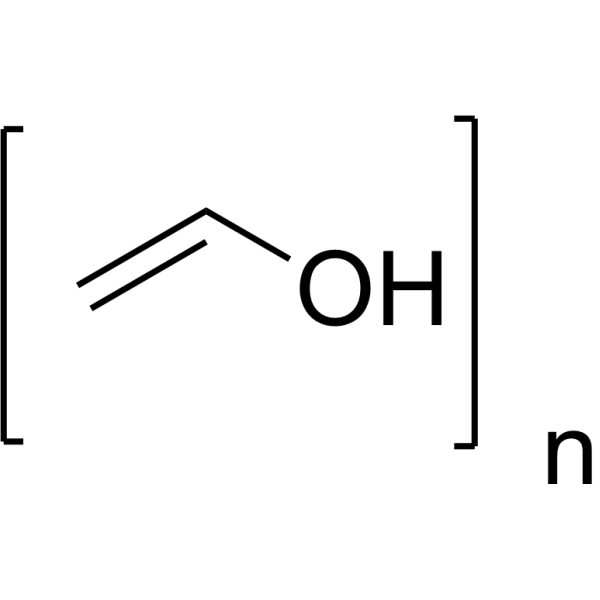
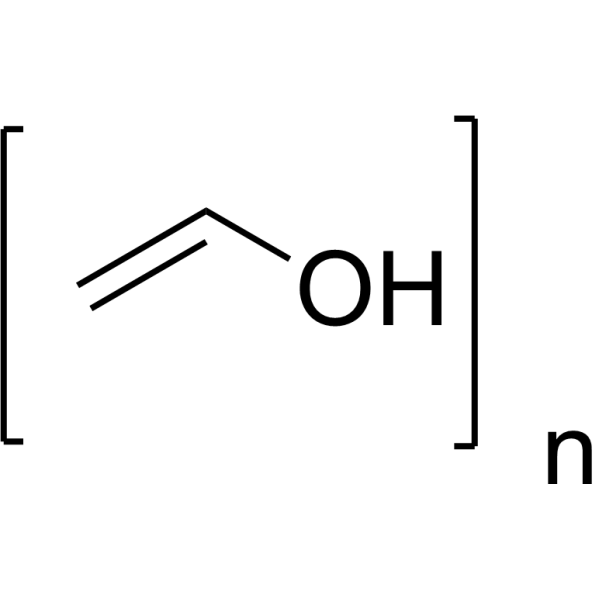
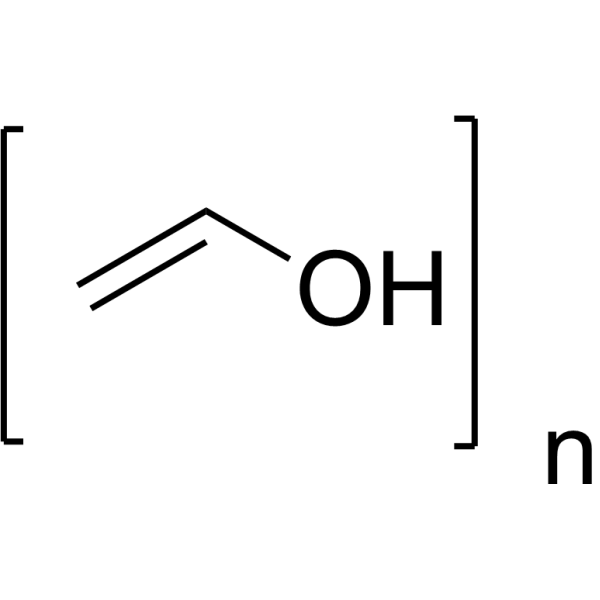
- Formula: (C2H4O)n
- Molecular Weight:61000 (Average)
-
Storage:
Please store the product under the recommended conditions in the Certificate of Analysis.


To place orders, for customer services and technical support, please contact: MedChemExpress USA
Tel: 609-228-6898 E-mail: [email protected] [email protected]


-
 Biological Activity
-
Chemical Information
- Purity & Documentation
- References
-
 Help & FAQs


-
HY-Y0850E
Polyvinyl alcohol (Mw 30000-70000, 87-90% hydrolyzed) -
HY-Y0850
Polyvinyl alcohol (Mw 146000-186000, 99+% hydrolyzed) -
HY-Y0850J
Polyvinyl alcohol (Mw 13000-23000, 87-89% hydrolyzed) -

HY-Y0850U4
PVA (Mw 145000, 99+% hydrolyzed, ~3300 polymerization) -

HY-Y0850U
PVA (Mw 31000, 87-89% hydrolyzed, ~630 polymerization) -
HY-Y0850K
Polyvinyl alcohol (Mw 31000-50000, 98-99% hydrolyzed) -
HY-Y0850O
Polyvinyl alcohol (Mw 31000-50000, 87-89% hydrolyzed) -
HY-Y0850H
Polyvinyl alcohol (Mw 89000-98000, 99+% hydrolyzed) -
HY-Y0850I
Polyvinyl alcohol (Mw 9000-10000, 80% hydrolyzed) -

HY-Y0850U6
PVA (Mw 205000) -
HY-Y0850N
Polyvinyl alcohol (Mw 13000-23000, 98% hydrolyzed) -

HY-Y0850U3
PVA (Mw 125000, 98-99% hydrolyzed, ~2800 polymerization)


Biological Activity
Description
In Vitro
Films prepared from PVA (Mw 61000, 98-99% hydrolyzed, ~1400 polymerization) exhibit weaker hygroscopicity compared with those prepared from low-hydrolysis-degree PVA, as reflected by their monolayer water content[3].
Films prepared from PVA (Mw 61000, 98-99% hydrolyzed, ~1400 polymerization) exhibit higher tensile strength (10.05 MPa), higher elongation at break (198.08%), and higher stiffness (Young's modulus 15.29 MPa) compared with films prepared from PVA with lower degree of polymerization or lower degree of hydrolysis[3].
Films prepared from PVA (Mw 61000, 98-99% hydrolyzed, ~1400 polymerization) have a continuous, smooth surface without structural defects, indicating good structural integrity[3].
PVA (Mw 61000, 98-99% hydrolyzed, ~1400 polymerization) (5 g/L; 2 h) undergoes efficient degradation in a Fe3+-initiated photo-Fenton system supplemented with 1 wt% Au-TiO2, with a removal rate of 81% within 2 hours and an apparent rate constant of 0.84 h-1[4].
PVA (Mw 61000, 98-99% hydrolyzed, ~1400 polymerization) can form coordination complexes with Fe2+ and Fe3+ ions, and its interaction with Fe3+ is stronger[4].
MedChemExpress (MCE) has not independently confirmed the accuracy of these methods. They are for reference only.


Chemical Information
-
CAS No. 9002-89-5
-
Molecular Weight 61000 (Average)
-
Formula (C2H4O)n
-
SMILES
CCC(O)C.[n]
-
Synonyms
Polyvinyl alcohol (Mw 61000, 98-99% hydrolyzed, ~1400 polymerization); Poly(Ethenol) (Mw 61000, 98-99% hydrolyzed, ~1400 polymerization)
-
Shipping
Room temperature in continental US; may vary elsewhere.
-
Storage
Please store the product under the recommended conditions in the Certificate of Analysis.


Purity & Documentation
References

Calculators
Concentration (start) × Volume (start) = Concentration (final) × Volume (final)


PVA (Mw 61000, 98-99% hydrolyzed, ~1400 polymerization) Related Classifications
HY-Y0850U1 Related Classifications
 Powered by Bioz
Keywords
- PVA (Mw 61000, 98-99% hydrolyzed, ~1400 polymerization)
- 9002-89-5
- Polyvinyl alcohol (Mw 61000, 98-99% hydrolyzed, ~1400 polymerization)
- Poly(Ethenol) (Mw 61000, 98-99% hydrolyzed, ~1400 polymerization)
- Biochemical Assay Reagents
- photo-self-Fenton reactions
- Fe 3+ /Fe 2+ redox cycle
- minimally exuding wounds
- glyoxal
- hydrogen peroxide
- cryogels
- dry wounds
- Au-TiO 2
- acetal bond
- biodegradable films
- Inhibitor
- inhibitor
- inhibit