



Tarlatamab
Based on 5 publication(s) in Google Scholar
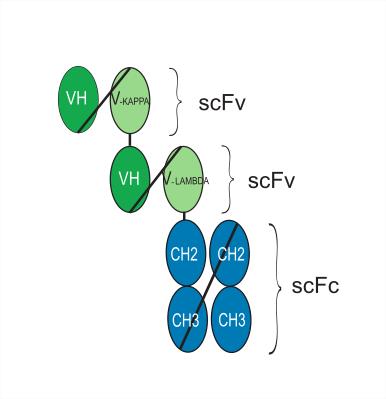
Tarlatamab (AMG 757) is a bispecific T-cell engager (BiTE) antibody targeting delta-like ligand 3 (DLL3). DLL3 is a target that is selectively expressed in small-cell lung cancer (SCLC) tumors, but with minimal normal tissue expression. Tarlatamab has the KDs of 0.64 nM and 0.50 nM for human and nonhuman primate (NHP) DLL3, respectively. Tarlatamab has the KDs of 14.9 nM and 12 nM for human and NHP CD3, respectively. Tarlatamab is a first-in-class HLE BiTE immuno-oncology therapy targeting DLL3 and has the potential for SCLC research.
Nur für Forschungszwecke. Wir verkaufen nicht an Patienten.
- Reinheit : 99.77%
- CAS. Nr.: 2307488-83-9
- Molecular Weight:105.07 kDa
-
Speicherung:Shipping with dry ice
Please store the product under the recommended conditions in the Certificate of Analysis.


To place orders, for customer services and technical support, please contact: MedChemExpress USA
Tel: 609-228-6898 E-mail: [email protected] [email protected]


-
 Biologische Aktivität
-
Chemical Information
- Protokoll
- Reinheit & Dokumentation
- Verweise
-
 Help & FAQs


-

HY-P9963
BlinatumomabAntineoplastic Agent -

HY-P99024
GlofitamabT-Cell-Engaging Bispecific Antibody -

HY-P99392
TeclistamabBCMA/CD3 Dual Antibodies -

HY-P99043
RovalpituzumabDLL3 Monoclonal Antibody -

HY-P9904
AtezolizumabAnti-PD-L1 Antibody -

HY-P99033
MosunetuzumabCD20/CD3 Inhibitor -
HY-P99001
Human IgG1 kappa, Isotype ControlIgG1κ Isotype Control -

HY-P99394
TalquetamabAnti-GPRC5D/CD3 Antibody -

HY-P99931
EpcoritamabAnti-CD3/CD20 Antibody -

HY-P99675
IvonescimabPD-1/VEGF Bispecific Antibody -
HY-135145
LimantrafinNotch Inhibitor -
HY-15860
FLI-06Notch Inhibitor


Biologische Aktivität
Beschreibung
IC50 & Target
CD3E & DLL3
In Vitro
Tarlatamab (AMG 757; 0-10 nM; 48 hours) has potent, specific cytotoxic activity against DLL3-expressing SCLC cell lines in vitro[1].
Tarlatamab (0-10 nM; 4-72 h) increased granzyme B levels and cytotoxicity over time, with maximal signal observed at 48 hours. Markers of T-cell activation or inflammation, CD69, CD71, PD-1, and PD-L1 (37-39) were upregulated[1].
MedChemExpress (MCE) has not independently confirmed the accuracy of these methods. They are for reference only.
-
Cell Line:SCLC cell lines (DMS 79, NCI-H2171, NCI-H889, SHP-77, NCI-H211,COR-L279)
-
Concentration:0-10 nM
-
Incubation Time:48 hours
-
Result:AMG 757 effectively engaged human T cells to kill SCLC cell lines, including those with very low DLL3 expression levels.
In Vivo
Tarlatamab (IP; 12 μg/kg; single dose) has a mean half-life of 234 hours (9.8 days), a mean clearance of 0.487 mL/hour/kg and a steady-state volume of distribution of 146 mL/kg in nonhuman primates (NHPs)[1].
MedChemExpress (MCE) has not independently confirmed the accuracy of these methods. They are for reference only.
-
Animal Model:Female NOD.Cg-PrkdcscidIl2rgtm1Sug/JicTac (NOG) mice with patient-derived SCLC tumor fragments (LXFS 1129 and LXFS 538)[1]
-
Dosage:3 mg/kg
-
Administration:IP; once weekly for 3 weeks
-
Result:Led to 83% tumor regression and an overall significant reduction in tumor volume compared with that in mice which received a control HLE BiTE molecule in the LXFS 1129 model.
Induced 98% tumor regression in the LXFS 538 model.
Clinical Trial
| NCT Number | Sponsor | Condition | Start Date |
Phase

|
|---|---|---|---|---|
| NCT01329991 | 2011-05 | PHASE1 |
Anwendung
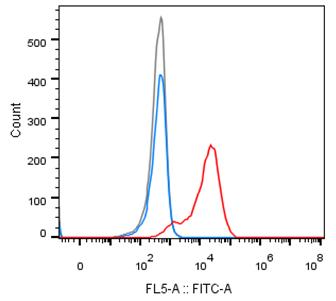
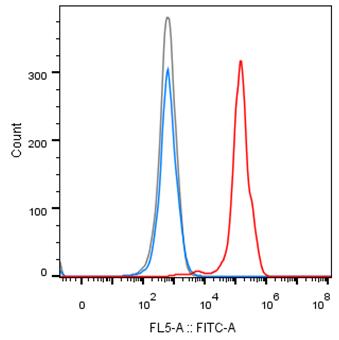
ELISA, FACS, Functional assay
Verified Bioactivity
-
-
-
 Tarlatamab (HY-P99575) captured on Protein A Chip can bind CD3 epsilon, Human (HY-P70506) with an affinity constant of 1.98E-10 M as determined in a SPR assay.
-
 Tarlatamab(HY-P99575) captured on Protein A Chip can bind Human DLL3 (HY-P700456) with an affinity constant of 1.31e-09 M as determined in a SPR assay.


Product Details
Product Properties
-
Appearance
Liquid
-
Formulation
Please refer to the lot-specific COA for specific buffer information.
-
Reinheit
99.77%
-
Reconstitution
The product can be reconstituted/diluted with sterile PBS or saline.
-
Storage & Stability
Please store the product under the recommended conditions in the Certificate of Analysis.
-
Versand
Shipping with dry ice.


Publications (5)
-
Journal Impact Factor
-
Most Recent
-
-
-
-
bioRxiv
Transcription Factor Subtype Governs Response and Resistance to DLL3-Directed T-Cell Engagement in Small Cell Lung Cancer. [Abstract]2026 Apr 8:2026.04.02.715020. PMID: 41993528 -
Reinheit & Dokumentation


Verweise
Hot Topics
-
All
-
Topics
-
Most Recent
-
Oldest
-
Topics TCE (T Cell Engager) Potential in Solid Tumors
T-cell engagers (TCEs) are engineered immunotherapeutic molecules designed to redirect endogenous T cells toward tumor cells through simultaneous binding of a T-cell receptor component, most commonly CD3, and a tumor-associated antigen (TAA) expressed on malignant cells.
2026-06-18

Calculators
Konzentration (Stammlösung) × Volumen (Stammlösung) = Konzentration (Ziellösung) × Volumen (Ziellösung)


Tarlatamab Related Classifications
HY-P99575 Related Classifications
 Powered by Bioz