



Tolebrutinib
Based on 7 publication(s) in Google Scholar
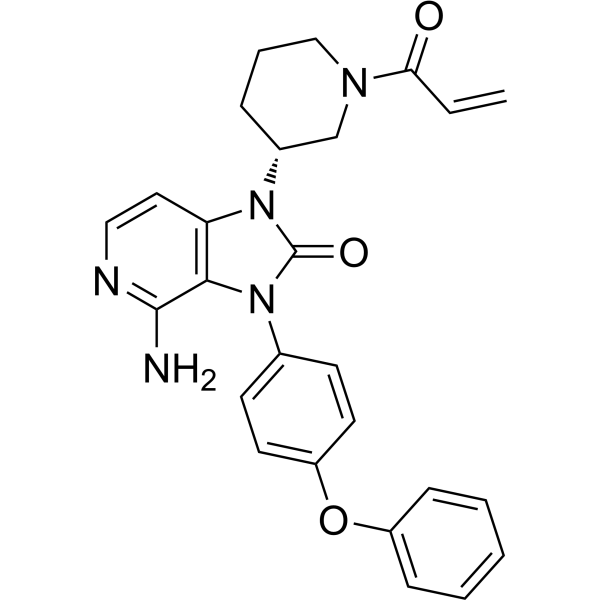
Tolebrutinib (SAR442168) is an orally active, selective, and blood-brain barrier-penetrant BTK inhibitor with neuroactive properties. Tolebrutinib is being investigated for use in multiple sclerosis (MS), particularly secondary progressive multiple sclerosis (SPMS)..
Nos produits utilisent uniquement pour la recherche. Nous ne vendons pas aux patients.
- Pureté : 99.12%
- CAS No.: 1971920-73-6
- Formule: C26H25N5O3
- Masse moléculaire:455.51
-
Stockage:Powder -20°C, 3 years , 4°C, 2 years ; In solvent -80°C, 6 months , -20°C, 1 month

To place orders, for customer services and technical support, please contact: MedChemExpress USA
Tel: 609-228-6898 E-mail: [email protected] [email protected]


-
 Activité biologique
-
Chemical Information
-
Solvant et solubilité
- Pureté et documentation
- Références
-
 Help & FAQs


-
HY-19834
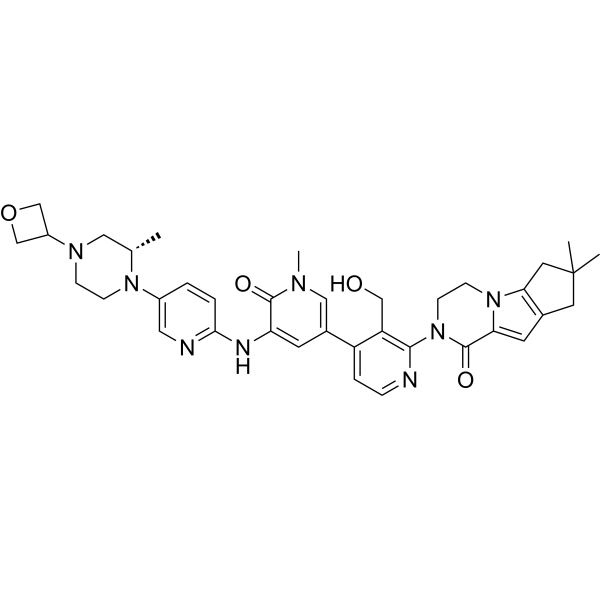
FenebrutinibBtk Inhibitor -
HY-128757
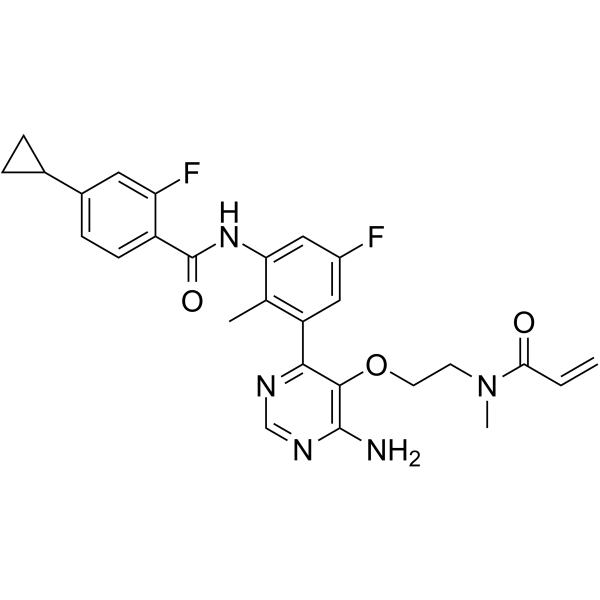
RemibrutinibBTK Inhibitor -
HY-129390
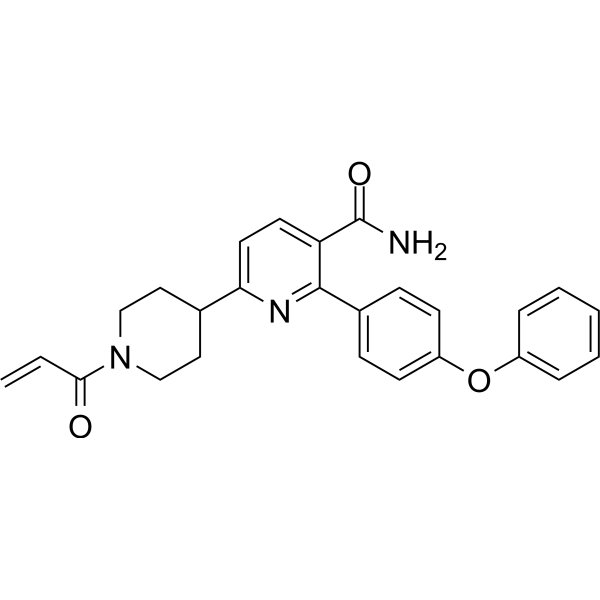
OrelabrutinibBTK Inhibitor -
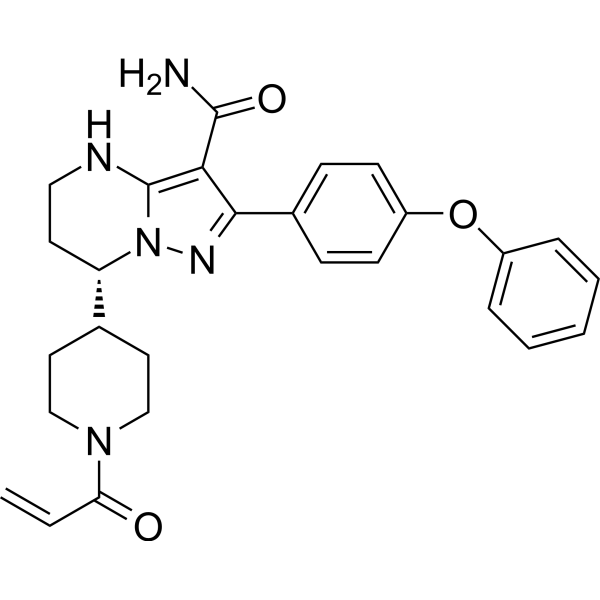
HY-101474A
ZanubrutinibBtk Inhibitor -
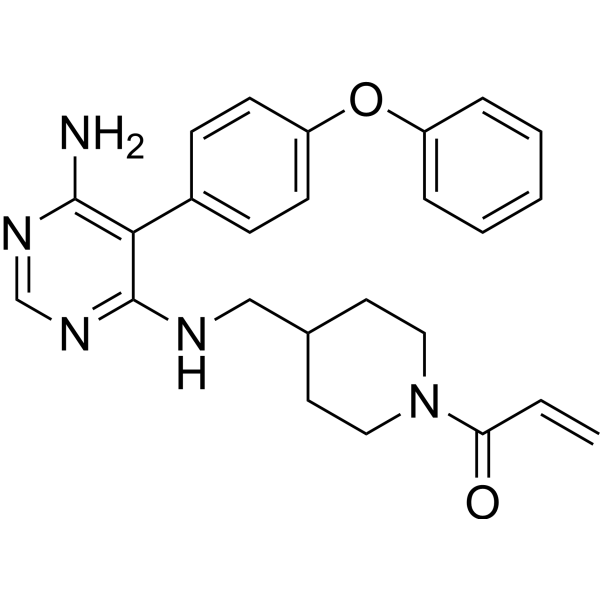
HY-101215
Evobrutinib -
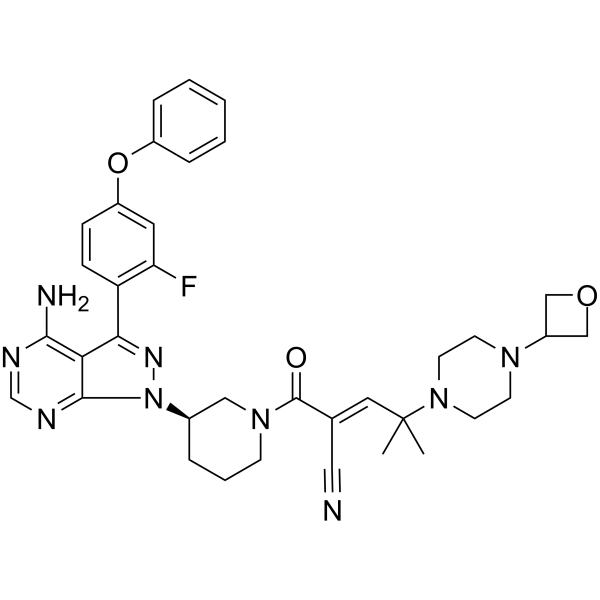
HY-112166
RilzabrutinibBTK Inhibitor -
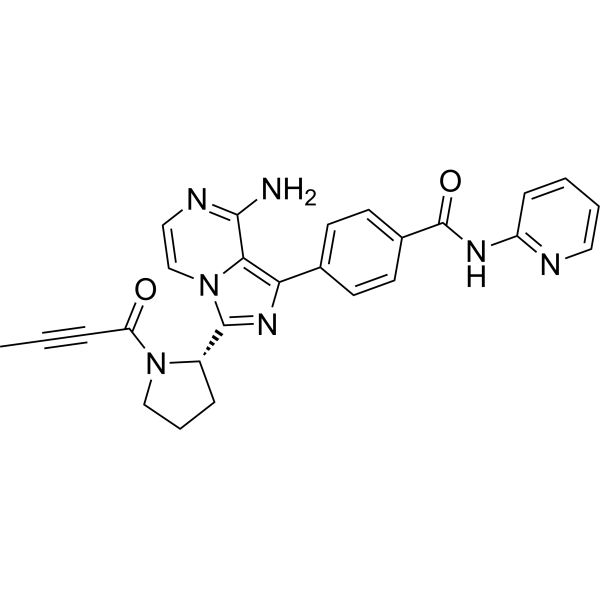
HY-17600
AcalabrutinibBTK Inhibitor -
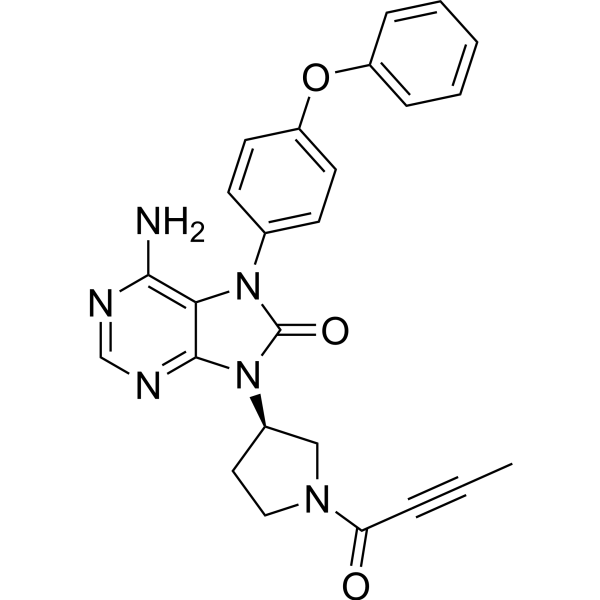
HY-15771
TirabrutinibBTK Inhibitor -
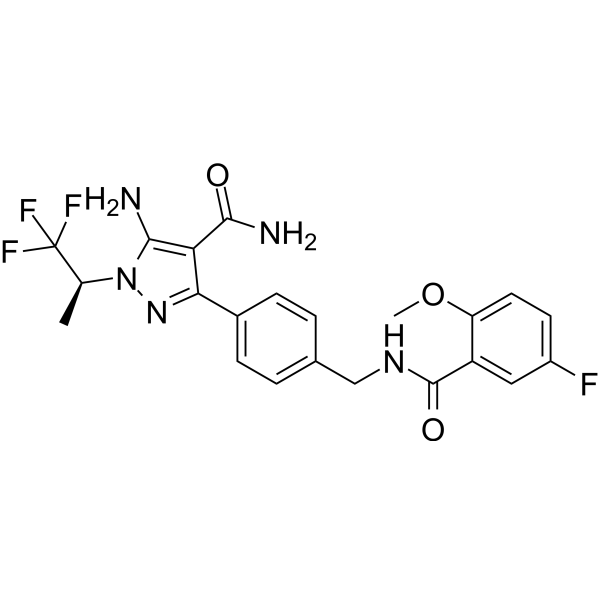
HY-131328
PirtobrutinibBTK Inhibitor -
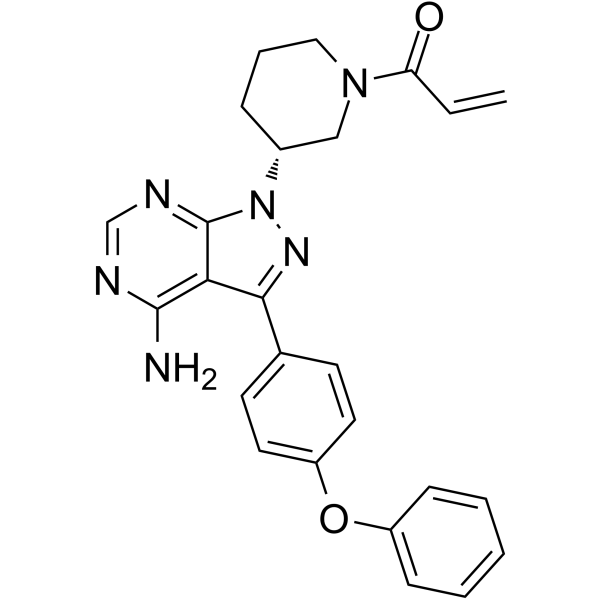
HY-10997
IbrutinibBtk Inhibitor -
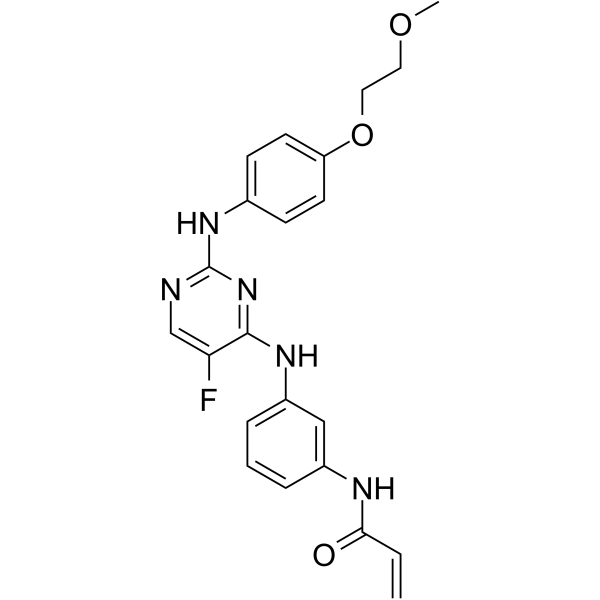
HY-18012
Spebrutinib -
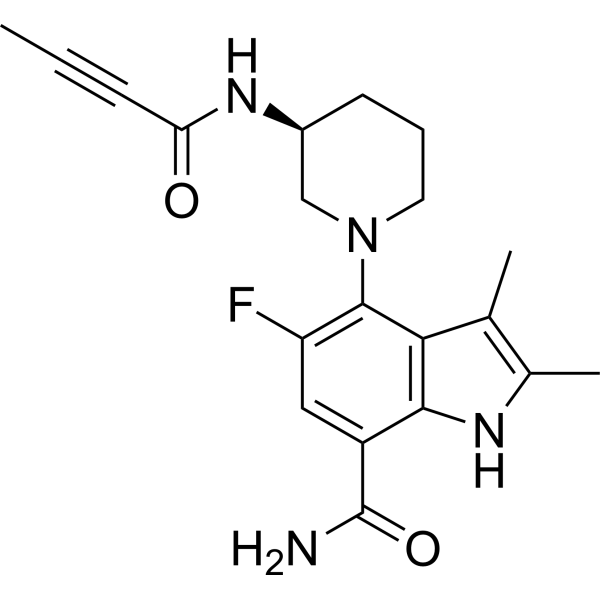
HY-112161
BranebrutinibBTK Inhibitor
Publications Citing Use of MedChemExpress (MCE) Tolebrutinib
More- Nat Commun. 2025 Sep 26;16(1):8477. [Abstract]
- ACS Pharmacol Transl Sci. 2025 Mar 12;8(4):917-931. [Abstract]
- J Leukoc Biol. 2025 Mar 14;117(3):qiae160. [Abstract]
- bioRxiv. 2024 September 08.
- Immunohorizons. 2024 Sep 1;8(9):652-667. [Abstract]
- Research Square Preprint. 2023 Aug 29.
- J Immunol Sci. March 31, 2022.
 Customer Validation & Images

-
Histological Imaging/Staining
-
Cell Imaging/Staining
-
Cell Proliferation/Viability Assay
-
IF
-
ELISA


Activité biologique
Description
IC50 & Target
IC50: 0.7 nM (BTK; in HMC microglia cells)[2]
In Vitro
PRN2246 blocks the BCR-mediated activation (IC50=10 nM) and Fc receptor activation (IC50=166 and 9.6 nM for FcεR and FcγR, repectively) of immune cells[2].
PRN2246 inhibits microglial FcγR activation through durable occupancy of BTK, with an IC50 of 157 nM[2].
MedChemExpress (MCE) has not independently confirmed the accuracy of these methods. They are for reference only.
In Vivo
MedChemExpress (MCE) has not independently confirmed the accuracy of these methods. They are for reference only.
Essai clinique
| NCT Number | Sponsor | Condition | Start Date |
Phase

|
|---|---|---|---|---|
| NCT01329991 | 2011-05 | PHASE1 |


Chemical Information
-
CAS No. 1971920-73-6
-
Appearance Solid
-
Masse moléculaire 455.51
-
Formule C26H25N5O3
-
Color Off-white to light yellow
-
SMILES
O=C(N1[C@H]2CN(C(C=C)=O)CCC2)N(C3=CC=C(OC4=CC=CC=C4)C=C3)C5=C1C=CN=C5N
-
Synonyms
SAR442168; PRN2246
-
Livraison
Room temperature in continental US; may vary elsewhere.
-
Stockage
Powder -20°C 3 years 4°C 2 years In solvent -80°C 6 months -20°C 1 month


Publications (7)
-
Journal Impact Factor
-
Most Recent
-
Nat Commun
Spatially-restricted inflammation-induced senescent-like glia in multiple sclerosis and patient-derived organoids. [Abstract]2025 Sep 26;16(1):8477. PMID: 41006208
Tolebrutinib purchased from MedChemExpress. Usage Cited in: Nat Commun. 2025 Sep 26;16(1):8477. [Abstract]
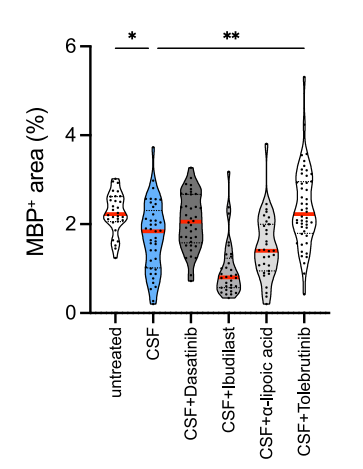
Quantification of MBP+ staining area, respectively (n = 3 MS hiPSC-lines; at least 30 glia-enriched organoids analyzed per experimental condition, respectively). The violin plots show the median (red line), quartiles (dotted lines), as well as the minima and maxima; each dot corresponds to one glia-enriched organoid. The results showed that Tolebrutinib (1 μM; 18 h) was able to rescue CSF-induced oligodendrocyte toxicity (MBP+ staining area ANOVA p < 0.0001).
-
ACS Pharmacol Transl Sci
Comprehensive Characterization of Bruton's Tyrosine Kinase Inhibitor Specificity, Potency, and Biological Effects: Insights into Covalent and Noncovalent Mechanistic Signatures. [Abstract]2025 Mar 12;8(4):917-931. PMID: 40242575 -
J Leukoc Biol
Effect on neutrophil migration and antimicrobial functions by the Bruton's tyrosine kinase inhibitors tolebrutinib, evobrutinib and fenebrutinib. [Abstract]2025 Mar 14;117(3):qiae160. PMID: 38976501
Tolebrutinib purchased from MedChemExpress. Usage Cited in: J Leukoc Biol. 2025 Mar 14;117(3):qiae160. [Abstract]
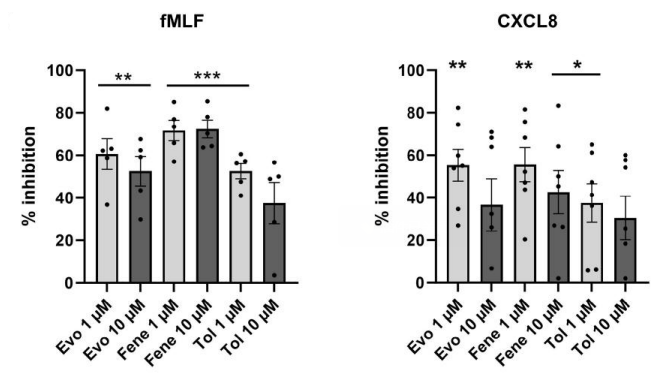
BTK inhibitors (evobrutinib, fenebrutinib, and Tolebrutinib) at concentrations of 1 µM or 10 µM or solvent control (0.01% DMSO). Afterward, neutrophils were activated with fMLF (1 nM) or CXCL8 (30 ng/mL) for 3 min. Cells were then fixed and microscopically scored as resting (round) or activated (blebbed/elongated) and the percentage activated cells of total cells was calculated. Next, the percentage inhibition of the treatments compared with DMSO control was calculated from the percentage activation.
Tolebrutinib purchased from MedChemExpress. Usage Cited in: J Leukoc Biol. 2025 Mar 14;117(3):qiae160. [Abstract]
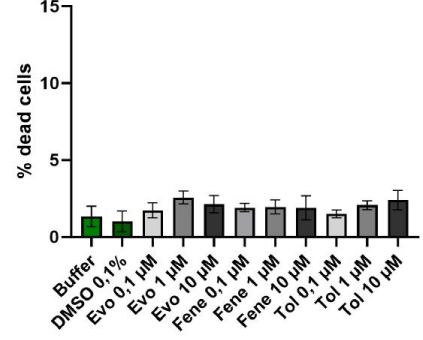
Purified neutrophils from healthy donors (n = 6) were treated with BTK inhibitors (evobrutinib, fenebrutinib, or Tolebrutinib) at concentrations of 0.1 µM, 1 µM, or 10 µM. Calcein AM (1 µM) and EthD-1 (0.5 µM) were added to visualize live and dead cells, respectively. DMSO (0.1%) and buffer were used as vehicle and negative control. The cells were imaged for 5 hours in the Incucyte imaging system and the percentage of dead cells (EthD-1+) was calculated.
-
-
Immunohorizons
Bruton Tyrosine Kinase Inhibition Decreases Inflammation and Differentially Impacts Phagocytosis and Cellular Metabolism in Mouse- and Human-derived Myeloid Cells. [Abstract]2024 Sep 1;8(9):652-667. PMID: 39259208
Tolebrutinib purchased from MedChemExpress. Usage Cited in: Immunohorizons. 2024 Sep 1;8(9):652-667. [Abstract]
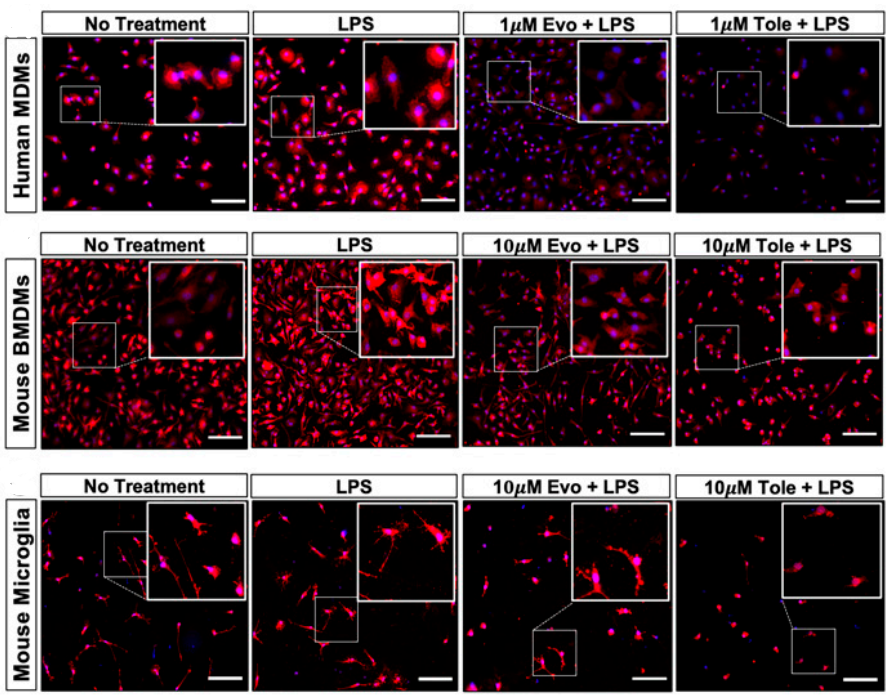
Tolebrutinib (Tol, 1-10 μM). ICC images of p-BTK (red) and DAPI (blue) in human MDMs, mouse BMDMs, and microglia (scale bars, 100 μm).
Tolebrutinib purchased from MedChemExpress. Usage Cited in: Immunohorizons. 2024 Sep 1;8(9):652-667. [Abstract]
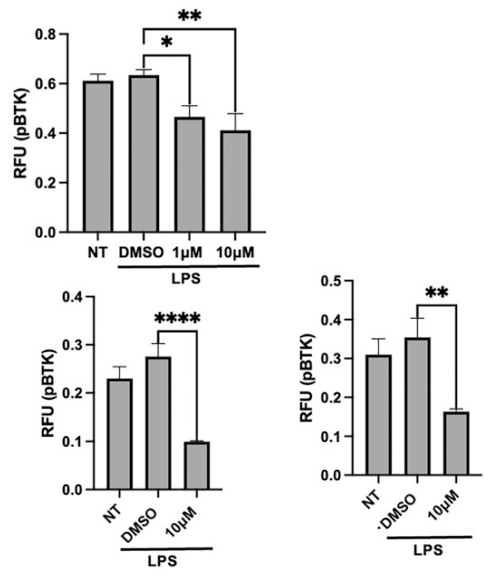
Tolebrutinib (1-10 μM) significantly decreased p-BTK levels in human MDMs, mouse BMDMs, and primary mouse microglia (n = 6 per treatment per cell type). DMSO: 0.1% at 10 μM.
-
-


Solvant et solubilité
In Vitro:
DMSO : 87.5 mg/mL (192.09 mM; Need ultrasonic; Hygroscopic DMSO has a significant impact on the solubility of product, please use newly opened DMSO)
Please refer to the solubility information to select the appropriate solvent. Once prepared, please aliquot and store the solution to prevent product inactivation from repeated freeze-thaw cycles.
Storage method and period of stock solution: -80°C, 6 months; -20°C, 1 month. When stored at -80°C, please use it within 6 months. When stored at -20°C, please use it within 1 month.
Please refer to the solubility information to select the appropriate solvent. Once prepared, please aliquot and store the solution to prevent product inactivation from repeated freeze-thaw cycles.
Storage method and period of stock solution: -80°C, 6 months; -20°C, 1 month. When stored at -80°C, please use it within 6 months. When stored at -20°C, please use it within 1 month.
Concentration (start) × Volume (start) = Concentration (final) × Volume (final)
In Vivo:
Select the appropriate dissolution method based on your experimental animal and administration route.
- For the following dissolution methods, please ensure to first prepare a clear stock solution using an In Vitro approach and then sequentially add co-solvents:
- To ensure reliable experimental results, the clarified stock solution can be appropriately stored based on storage conditions. As for the working solution for In Vivo experiments, it is recommended to prepare freshly and use it on the same day.
- The percentages shown for the solvents indicate their volumetric ratio in the final prepared solution. If precipitation or phase separation occurs during preparation, heat and/or sonication can be used to aid dissolution.
Add each solvent one by one: 10% DMSO 40% PEG300 5% Tween-80 45% Saline
Solubility: ≥ 2.5 mg/mL (5.49 mM); Clear solution
This protocol yields a clear solution of ≥ 2.5 mg/mL (saturation unknown).
Taking 1 mL working solution as an example, add 100 μL DMSO stock solution (25.0 mg/mL) to 400 μL PEG300, and mix evenly; then add 50 μL Tween-80 and mix evenly; then add 450 μL Saline to adjust the volume to 1 mL.
Preparation of Saline: Dissolve 0.9 g sodium chloride in ddH₂O and dilute to 100 mL to obtain a clear Saline solution.
Add each solvent one by one: 10% DMSO 90% (20% SBE-β-CD in Saline)
Solubility: ≥ 2.5 mg/mL (5.49 mM); Clear solution
This protocol yields a clear solution of ≥ 2.5 mg/mL (saturation unknown).
Taking 1 mL working solution as an example, add 100 μL DMSO stock solution (25.0 mg/mL) to 900 μL 20% SBE-β-CD in Saline, and mix evenly.
Preparation of 20% SBE-β-CD in Saline (4°C, storage for one week): 2 g SBE-β-CD powder is dissolved in 10 mL Saline, completely dissolve until clear.
In Vivo Dissolution Calculator
Please enter the basic information of animal experiments:
-
-
-
-
Recommended: Prepare an additional quantity of animals to account for potential losses during experiments.
Please enter your animal formula composition:
-
%DMSO +
Recommended: Keep the proportion of DMSO in working solution below 2% if your animal is weak.
-
%+
-
+%Tween-80 + +
-
%Saline +
The co-solvents required include: DMSO, . All of co-solvents are available by MedChemExpress (MCE). , Tween 80. All of co-solvents are available by MedChemExpress (MCE).
Working solution concentration: 0.22 mg/mL
Method for preparing stock solution: mg drug dissolved in μL DMSO. Stock solution concentration: mg/mL.
1. Take μL DMSO stock solution;
2. Add μL .
μL , mix evenly;
3. Then add μL Tween 80, mix evenly;
4. Then add μL
Please ensure that the stock solution in the first step is dissolved to a clear state, and add co-solvents in sequence. You can use ultrasonic heating (ultrasonic cleaner, recommended frequency 20-40 kHz), vortexing, etc. to assist dissolution.


Pureté et documentation
-
Fiche technique (279 KB)
-
SDS (393 KB)
- English - EN (393 KB)
- Français - FR (393 KB)
- Deutsch - DE (393 KB)
- Norwegian - NO (393 KB)
- Español - ES (393 KB)
- Swedish - SV (393 KB)
- Italian - IT (393 KB)
- Korean - KR (393 KB)
- Portuguese - PT (393 KB)
-
Instruction de manipulation (2659 KB)
Références


Complete Stock Solution Preparation Table
Please refer to the solubility information to select the appropriate solvent. Once prepared, please aliquot and store the solution to prevent product inactivation from repeated freeze-thaw cycles.
Storage method and period of stock solution: -80°C, 6 months; -20°C, 1 month. When stored at -80°C, please use it within 6 months. When stored at -20°C, please use it within 1 month.
| Optional Solvent | Concentration Solvent Mass | 1 mg | 5 mg | 10 mg | 25 mg |
|---|---|---|---|---|---|
| DMSO | 1 mM | 2.1953 mL | 10.9767 mL | 21.9534 mL | 54.8835 mL |
| 5 mM | 0.4391 mL | 2.1953 mL | 4.3907 mL | 10.9767 mL | |
| 10 mM | 0.2195 mL | 1.0977 mL | 2.1953 mL | 5.4884 mL | |
| 15 mM | 0.1464 mL | 0.7318 mL | 1.4636 mL | 3.6589 mL | |
| 20 mM | 0.1098 mL | 0.5488 mL | 1.0977 mL | 2.7442 mL | |
| 25 mM | 0.0878 mL | 0.4391 mL | 0.8781 mL | 2.1953 mL | |
| 30 mM | 0.0732 mL | 0.3659 mL | 0.7318 mL | 1.8295 mL | |
| 40 mM | 0.0549 mL | 0.2744 mL | 0.5488 mL | 1.3721 mL | |
| 50 mM | 0.0439 mL | 0.2195 mL | 0.4391 mL | 1.0977 mL | |
| 60 mM | 0.0366 mL | 0.1829 mL | 0.3659 mL | 0.9147 mL | |
| 80 mM | 0.0274 mL | 0.1372 mL | 0.2744 mL | 0.6860 mL | |
| 100 mM | 0.0220 mL | 0.1098 mL | 0.2195 mL | 0.5488 mL |


Tolebrutinib Related Classifications
HY-109192 Related Classifications
 Powered by Bioz