



Urea (Standard)

Based on 1 Customer Validation
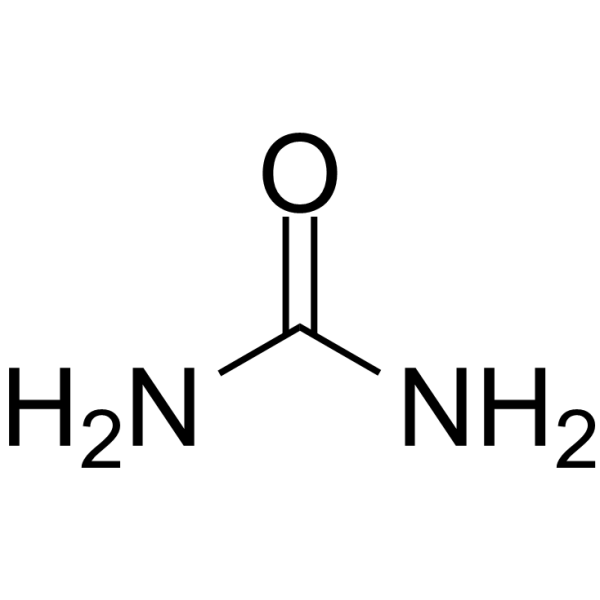
Urea (Standard) is the analytical standard of Urea. This product is intended for research and analytical applications. Urea is a powerful protein denaturant via both direct and indirect mechanisms. A potent emollient and keratolytic agent. Used as a diuretic agent. Blood urea nitrogen (BUN) has been utilized to evaluate renal function. Widely used in fertilizers as a source of nitrogen and is an important raw material for the chemical industry.
商品は「研究用試薬」です。人や動物の医療用・臨床診断用・食品用の製品ではありません。
研究用途以外に使用した場合、当社は一切の責任を負いかねます。
- 純度 : 99.87%
- CAS 番号: 57-13-6
- 分子式: CH4N2O
- 分子量:60.06
-
保管条件:
Please store the product under the recommended conditions in the Certificate of Analysis.


To place orders, for customer services and technical support, please contact: MedChemExpress USA
Tel: 609-228-6898 E-mail: [email protected] [email protected]


-
 Product Information
-
化学情報
- 純度とドキュメンテーション
-
 Help & FAQs


-
HY-Y0271
UreaProtein Denaturant -

HY-B0504R
Creatinine (Standard)Endogenous Metabolite -
HY-B0178A
Guanidine hydrochlorideProtein Denaturant -
HY-B0496
PMSFCathepsin Inhibitor -
HY-D0861
EGTACalcium Ion Chelator -
HY-D0857
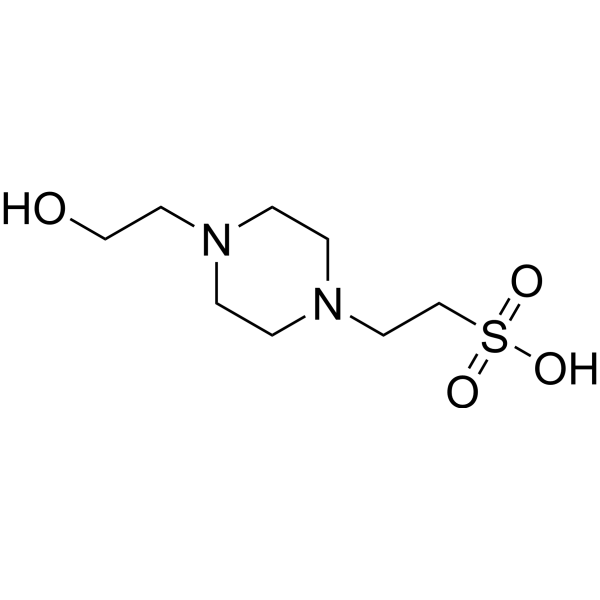
HEPESZwitterionic Buffer -
HY-D0859
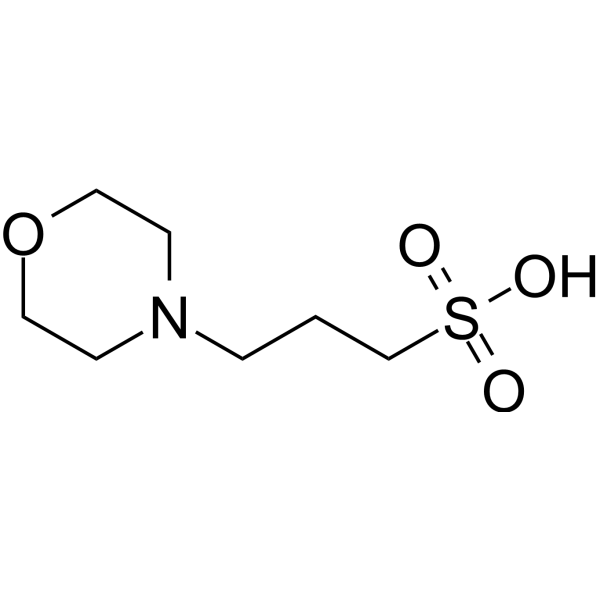
MOPSBuffering Agent -

HY-B0178B
6M Guanidine hydrochloride SolutionProtein Denaturant -
HY-15917
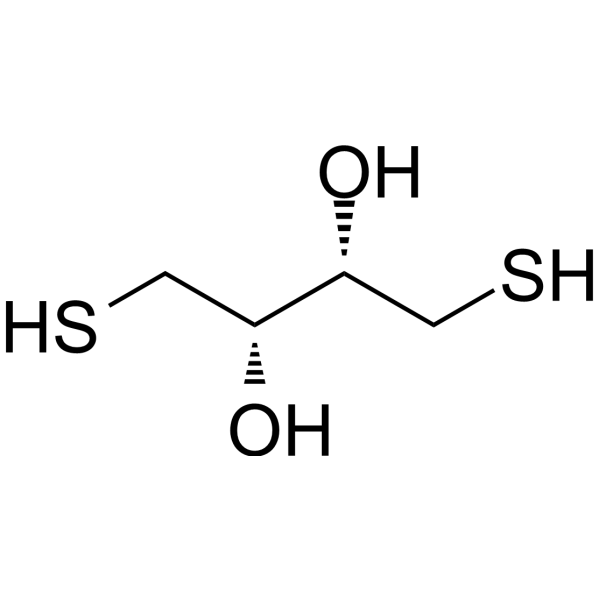
DL-DithiothreitolReducing Agent -
HY-Y0682
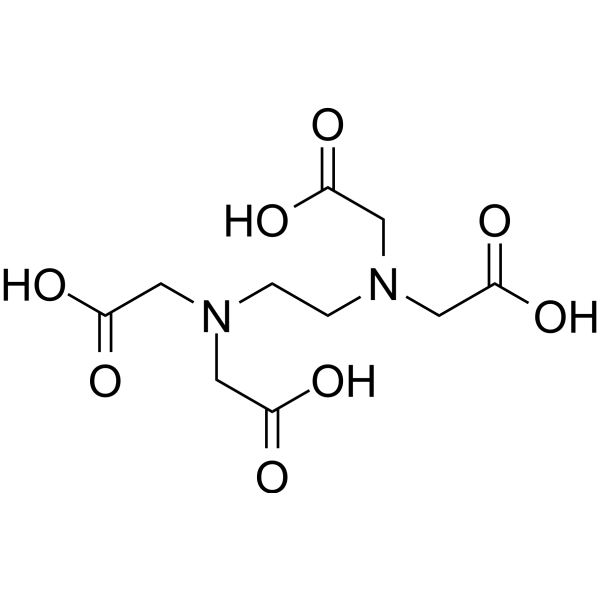
Ethylenediaminetetraacetic acidMetal Chelator -
HY-D0837
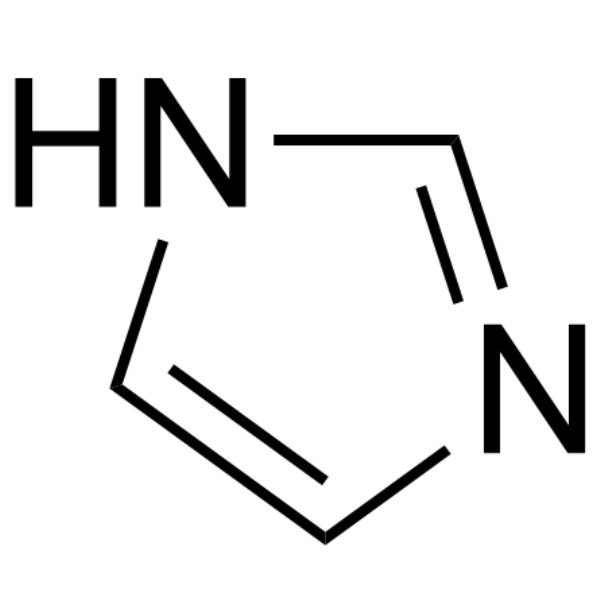
ImidazoleAChEI Inhibitor, XO Inhibitor, Thromboxane Inhibitor -
HY-D0227
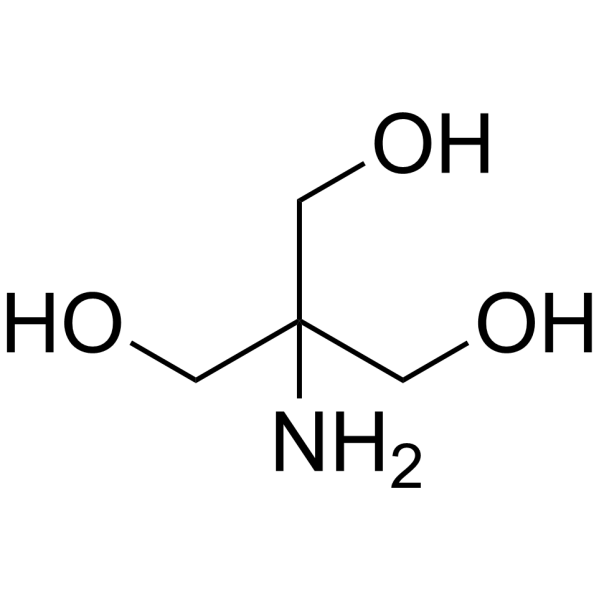
THAMBiochemical Assay Reagents


Product Information
説明
アプリケーション
The compound is the grade of analytical standard, which is the reference standard supplied assay. It is commonly used in qualitative, quantitative and methodological research experiments in HPLC, GC and MS.


化学情報
-
CAS 番号 57-13-6
-
性状 Solid
-
分子量 60.06
-
分子式 CH4N2O
-
Color White to off-white
-
SMILES
NC(N)=O
-
別名
Carbonyl diamide (Standard)
-
Structure Classification
-
Initial Source
-
輸送条件
Room temperature in continental US; may vary elsewhere.
-
保管条件
Please store the product under the recommended conditions in the Certificate of Analysis.


純度とドキュメンテーション
-
SDS (393 KB)
- English - EN (393 KB)
- Français - FR (393 KB)
- Deutsch - DE (393 KB)
- Norwegian - NO (393 KB)
- Español - ES (393 KB)
- Swedish - SV (393 KB)
- Italian - IT (393 KB)
- Korean - KR (393 KB)
- Portuguese - PT (393 KB)
-
取扱説明書 (2659 KB)
参考文献
[1]. Bennion BJ, et al. The molecular basis for the chemical denaturation of proteins by urea. Proc Natl Acad Sci U S A. 2003 Apr 29;100(9):5142-7. [Content Brief]
[2]. Pan M, et al. Urea: a comprehensive review of the clinical literature. Dermatol Online J. 2013 Nov 15;19(11):20392. [Content Brief]
[3]. Wang H, et al. Urea. Subcell Biochem. 2014;73:7-29. [Content Brief]
[4]. Michea L, et al., Cell cycle delay and apoptosis are induced by high salt and urea in renal medullary cells. Am J Physiol Renal Physiol. 2000 Feb;278(2):F209-18. [Content Brief]
[5]. Zhang Z, et al., High urea and NaCl carbonylate proteins in renal cells in culture and in vivo, and high urea causes 8-oxoguanine lesions in their DNA. Proc Natl Acad Sci U S A. 2004 Jun 22;101(25):9491-6. [Content Brief]
[6]. Prabhakar SS, et al., Urea inhibits inducible nitric oxide synthase in macrophage cell line. Am J Physiol. 1997 Dec;273(6):C1882-8. [Content Brief]
[7]. Yang XY, et al., ERK activation by urea in the renal inner medullary mIMCD3 cell line. Am J Physiol. 1999 Aug;277(2):F176-85. [Content Brief]
[8]. Ogino Y, et al., Effects of chronic, urea-induced osmotic diuresis on kidney weight and function in rats. Diabetologia. 1994 Mar;37(3):225-31. [Content Brief]

Calculators
濃度 (開始) × 体積 (開始) = 濃度 (終了) × 体積 (終了)


Urea (Standard) 関連分類
HY-Y0271R 関連分類
 Powered by Bioz