



[Pyr1]-Apelin-13
Based on 6 publication(s) in Google Scholar
[Pyr1]-Apelin-13 is a highly potent, selective endogenous apelin receptor (APJ) agonist.
Nur für Forschungszwecke. Wir verkaufen nicht an Patienten.
- Reinheit : 99.64%
- CAS. Nr.: 217082-60-5
- Formel: C69H108N22O16S
- Molecular Weight:1533.80
-
Speicherung:
Sealed storage, away from moisture.
Powder -80°C, 2 years , -20°C, 1 year* In solvent : -80°C, 6 months; -20°C, 1 month (sealed storage, away from moisture)
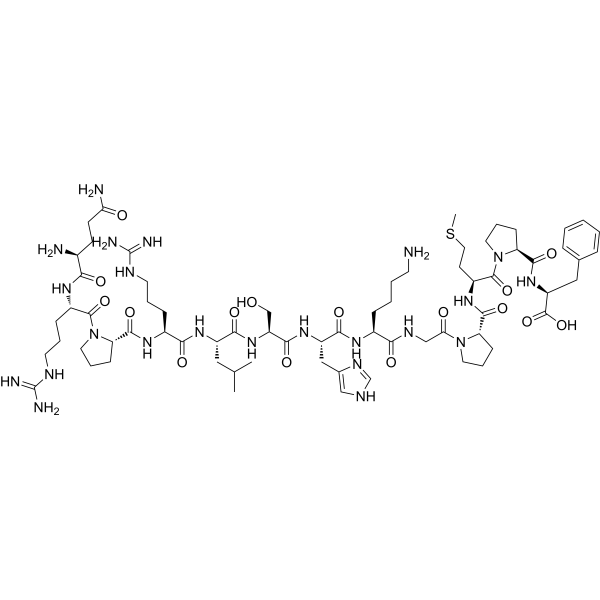
![[Pyr1]-Apelin-13 Chemical Structure](https://file.medchemexpress.com/product_pic/hy-p1033.gif "Click to View [Pyr1]-Apelin-13 Chemical Structure")

To place orders, for customer services and technical support, please contact: MedChemExpress USA
Tel: 609-228-6898 E-mail: [email protected] [email protected]


-
 Biologische Aktivität
-
Chemical Information
-
Lösungsmittel & Löslichkeit
- Reinheit & Dokumentation
- Verweise
-
 Help & FAQs


-
HY-103254
ML221Apelin (APJ) Receptor Antagonist -
HY-109111
AzelapragApelin Receptor Agonist -
HY-P1944
Apelin-13APJ Endogenous Ligand -
HY-P1064
Apelin-36(human)APJ Agonist -
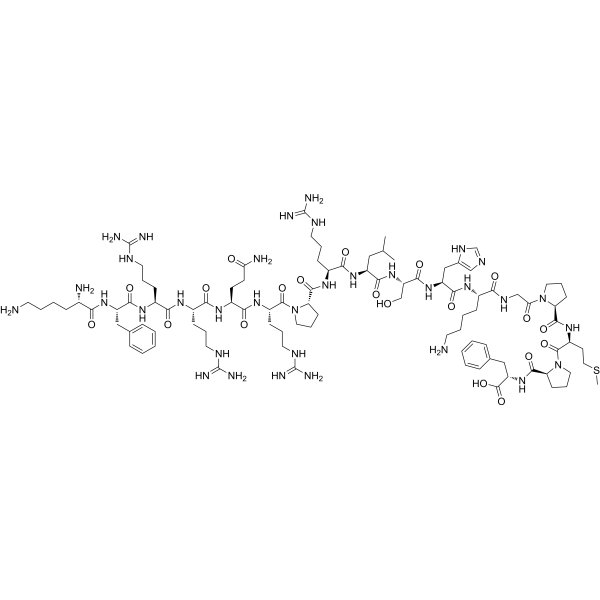
HY-P1066
Apelin-17(human, bovine)APJ Agonist -
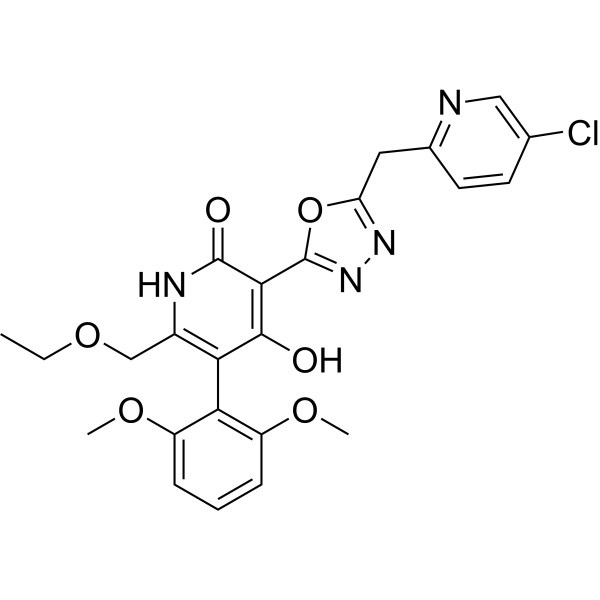
HY-139485
BMS-986224APJ Receptor Agonist -
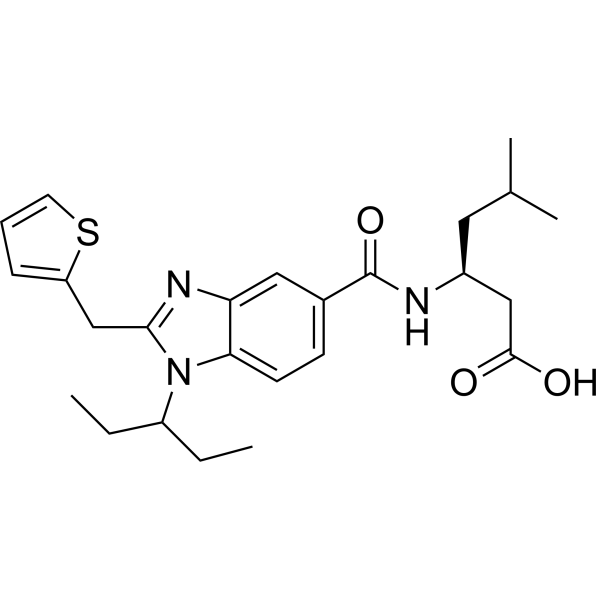
HY-103080
CMF019Apelin Receptor Agonist -
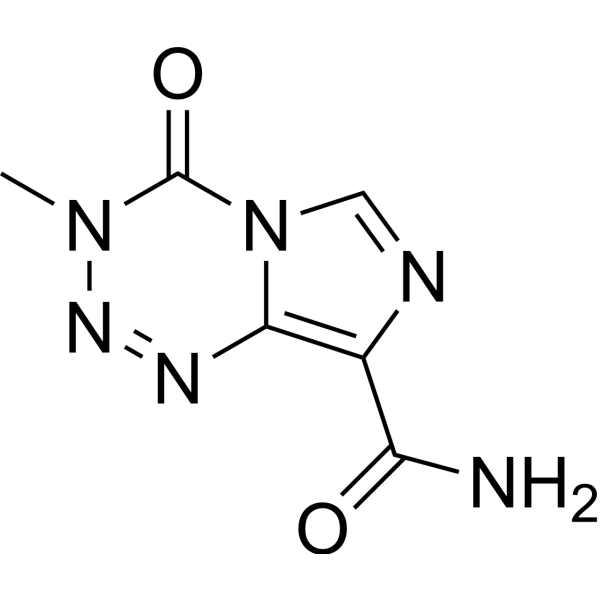
HY-17364
TemozolomideDNA Alkylator -
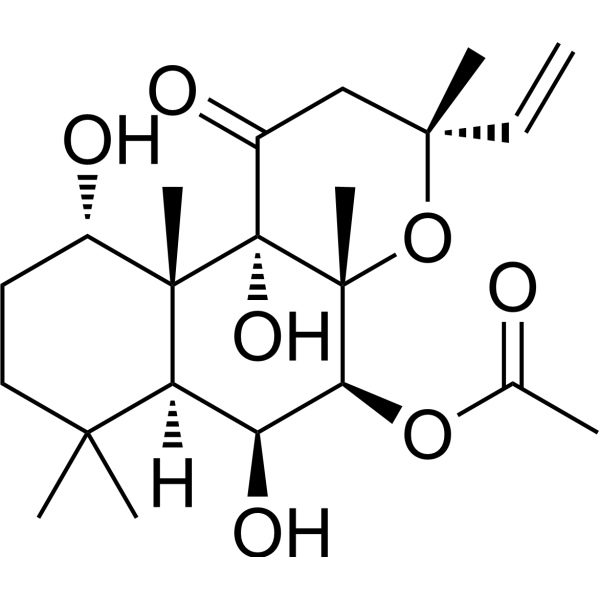
HY-15371
ForskolinAdenylate Cyclase Activator -
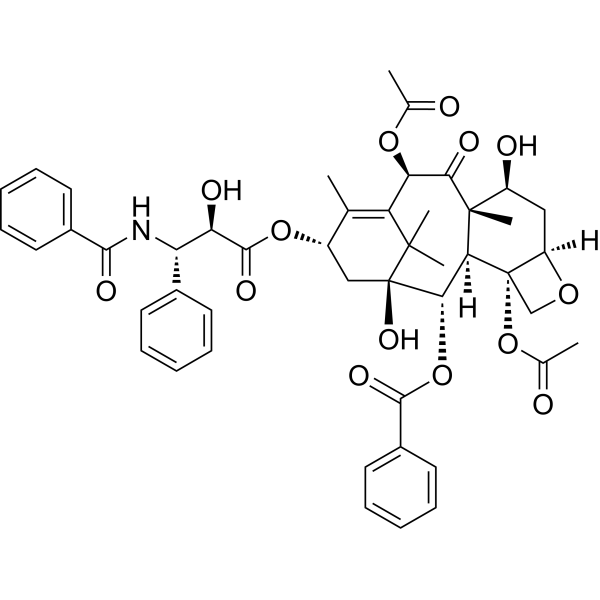
HY-B0015
PaclitaxelAntitumor Agent -
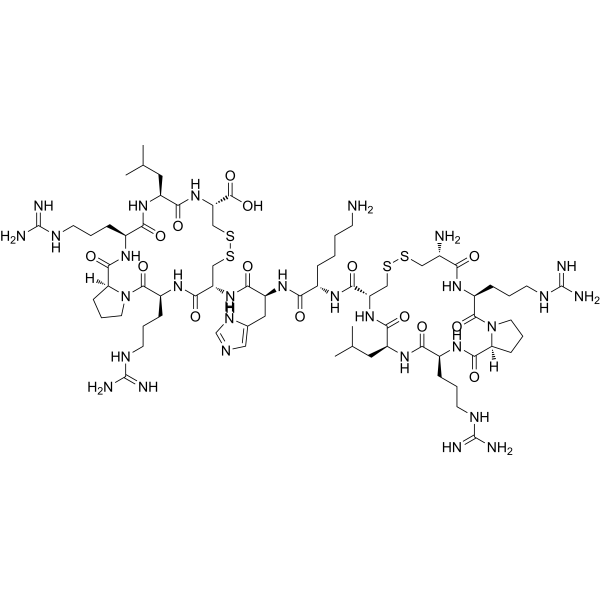
HY-P2271
MM 54APJ Antagonist -
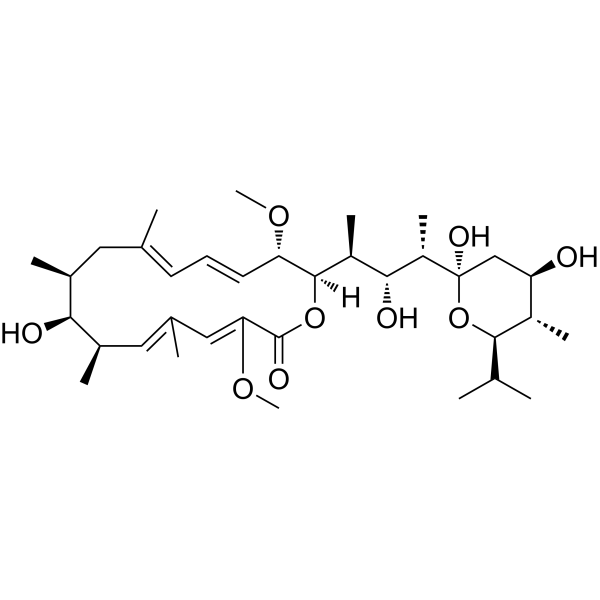
HY-100558
Bafilomycin A1V-ATPase Inhibitor
Publications Citing Use of MedChemExpress (MCE) [Pyr1]-Apelin-13
More Customer Validation & Images

-
Cell Proliferation/Viability Assay
-
IF
-
WB
-
2D/3D Cell Culture and Differentiation
-
Cell Migration/Invasion Assay


Biologische Aktivität
Beschreibung
Cellular Effect
|
Cell Line

|
Type | Value | Description | References |
|---|---|---|---|---|
| CHO | EC50 |
0.42 nM
Compound: 1, Pyr-apelin-13
|
Agonist activity at APJ receptor (unknown origin) expressed in CHO cells co-expressing with Calphaq16 assessed as calcium mobilization
Agonist activity at APJ receptor (unknown origin) expressed in CHO cells co-expressing with Calphaq16 assessed as calcium mobilization
|
[PMID: 24755525] |
| CHO | EC50 |
0.002 μM
Compound: Pyr-Apelin-13
|
Agonist activity at human APJ receptor stably expressed in CHO cells co-expressing Galphaq16 assessed as increase in intracellular calcium mobilization measured at 1 sec intervals for 90 secs by calcium 5 dye based FLIPR assay
Agonist activity at human APJ receptor stably expressed in CHO cells co-expressing Galphaq16 assessed as increase in intracellular calcium mobilization measured at 1 sec intervals for 90 secs by calcium 5 dye based FLIPR assay
|
[PMID: 31948845] |
| CHO | EC50 |
0.0003 μM
Compound: Pyr-Apelin-13
|
Agonist activity at human APJ receptor stably expressed in CHO cells assessed as inhibition of forskolin-induced cAMP accumulation measured after 30 mins by Eu-cAMP tracer based TR-FRET assay
Agonist activity at human APJ receptor stably expressed in CHO cells assessed as inhibition of forskolin-induced cAMP accumulation measured after 30 mins by Eu-cAMP tracer based TR-FRET assay
|
[PMID: 31948845] |
| CHO | EC50 |
0.3 nM
Compound: Pyr-Apelin-13
|
Agonist activity at human APJ receptor stably expressed in CHO cells assessed as inhibition of forskolin-induced cAMP accumulation measured after 30 mins by Eu-cAMP tracer based TR-FRET assay
Agonist activity at human APJ receptor stably expressed in CHO cells assessed as inhibition of forskolin-induced cAMP accumulation measured after 30 mins by Eu-cAMP tracer based TR-FRET assay
|
[PMID: 31948845] |
| CHO-K1 | EC50 |
0.001 μM
Compound: Pyr-Apelin-13
|
Agonist activity at human APJ receptor stably expressed in CHOK1 cells assessed as induction of beta-arrestin 2 recruitment incubated for 90 mins by PathHunter assay
Agonist activity at human APJ receptor stably expressed in CHOK1 cells assessed as induction of beta-arrestin 2 recruitment incubated for 90 mins by PathHunter assay
|
[PMID: 31948845] |
| HEK293 | EC50 |
12.2 pM
Compound: [pyr1]-apelin-13
|
Agonist activity at APJ receptor in HEK293 cells assessed as inhibition of forskolin-induced cAMP level incubated for 5 mins prior to forskolin challenge measured after 30 mins by TR-FRET assay
Agonist activity at APJ receptor in HEK293 cells assessed as inhibition of forskolin-induced cAMP level incubated for 5 mins prior to forskolin challenge measured after 30 mins by TR-FRET assay
|
[PMID: 25241924] |
| HEK293 | EC50 |
0.84 nM
Compound: Ape13
|
Agonist activity at human APJ receptor expressed in HEK293 cells assessed as induction of Galphai1 subunit dissociation incubated for 5 mins by BRET assay
Agonist activity at human APJ receptor expressed in HEK293 cells assessed as induction of Galphai1 subunit dissociation incubated for 5 mins by BRET assay
|
[PMID: 25668242] |
| HEK293 | EC50 |
1.4 nM
Compound: Ape13
|
Agonist activity at human APJ receptor expressed in HEK293 cells assessed as inhibition of forskolin-induced intracellular cAMP production incubated for 30 mins by TR-FRET assay
Agonist activity at human APJ receptor expressed in HEK293 cells assessed as inhibition of forskolin-induced intracellular cAMP production incubated for 30 mins by TR-FRET assay
|
[PMID: 25668242] |
| HEK293 | EC50 |
26 nM
Compound: Ape13
|
Agonist activity at human APJ receptor expressed in HEK293 cells assessed as induction of beta-arrestin-1 recruitment subunit dissociation incubated for 30 mins by BRET assay
Agonist activity at human APJ receptor expressed in HEK293 cells assessed as induction of beta-arrestin-1 recruitment subunit dissociation incubated for 30 mins by BRET assay
|
[PMID: 25668242] |
| HEK293 | EC50 |
29 nM
Compound: Ape13
|
Agonist activity at human APJ receptor expressed in HEK293 cells assessed as induction of beta-arrestin-2 recruitment subunit dissociation incubated for 30 mins by BRET assay
Agonist activity at human APJ receptor expressed in HEK293 cells assessed as induction of beta-arrestin-2 recruitment subunit dissociation incubated for 30 mins by BRET assay
|
[PMID: 25668242] |
| HEK293 | EC50 |
5.9 nM
Compound: Ape13
|
Agonist activity at human APJ receptor expressed in HEK293 cells assessed as induction of GalphaoA subunit dissociation incubated for 5 mins by BRET assay
Agonist activity at human APJ receptor expressed in HEK293 cells assessed as induction of GalphaoA subunit dissociation incubated for 5 mins by BRET assay
|
[PMID: 25668242] |
| HEK293 | IC50 |
1.2 nM
Compound: Ape13
|
Displacement of [125I]apelin-13[Glp65,Nle75,Tyr77] from YFP epitope-tagged human APJ receptor expressed in HEK293 cell membranes incubated for 1 hr by gamma counting method
Displacement of [125I]apelin-13[Glp65,Nle75,Tyr77] from YFP epitope-tagged human APJ receptor expressed in HEK293 cell membranes incubated for 1 hr by gamma counting method
|
[PMID: 25668242] |
| HEK293 | EC50 |
1.1 nM
Compound: Ape13
|
Activity at human APJ receptor expressed in HEK293 cells assessed as dissociation of Galphai1 from Gbetagamma subunit after 5 mins by BRET assay
Activity at human APJ receptor expressed in HEK293 cells assessed as dissociation of Galphai1 from Gbetagamma subunit after 5 mins by BRET assay
|
[PMID: 29461833] |
| HEK293 | EC50 |
24 nM
Compound: Ape13
|
Induction of human HA-tagged APJ receptor internalization expressed in HEK293 cells after 30 mins by ELISA
Induction of human HA-tagged APJ receptor internalization expressed in HEK293 cells after 30 mins by ELISA
|
[PMID: 29461833] |
| HEK293 | EC50 |
60 nM
Compound: Ape13
|
Activity at GFP10-tagged human APJ receptor expressed in HEK293 cells assessed as induction of RlucII-tagged beta-arrestin-2 recruitment after 30 mins by BRET assay
Activity at GFP10-tagged human APJ receptor expressed in HEK293 cells assessed as induction of RlucII-tagged beta-arrestin-2 recruitment after 30 mins by BRET assay
|
[PMID: 29461833] |
| HEK293 | EC50 |
0.047 nM
Compound: 1; (Pyr1)apelin-13
|
Agonist activity at human APJ-R expressed in HEK293 cells assessed as inhibition of forskolin- stimulated cAMP accumulation incubated for 30 mins by HTRF assay
Agonist activity at human APJ-R expressed in HEK293 cells assessed as inhibition of forskolin- stimulated cAMP accumulation incubated for 30 mins by HTRF assay
|
[PMID: 31724863] |
| HEK293 | EC50 |
0.062 nM
Compound: 1; (Pyr1)apelin-13
|
Agonist activity at rat APJ-R expressed in HEK293 cells assessed as inhibition of forskolin- stimulated cAMP accumulation incubated for 30 mins by HTRF assay
Agonist activity at rat APJ-R expressed in HEK293 cells assessed as inhibition of forskolin- stimulated cAMP accumulation incubated for 30 mins by HTRF assay
|
[PMID: 31724863] |
In Vitro
[Pyr1]-apelin-13 encapsulation in lipoPEG particles (lipoPEG-PA13) results in sustained and extended drug release under physiological conditions[1].
MedChemExpress (MCE) has not independently confirmed the accuracy of these methods. They are for reference only.
In Vivo
MedChemExpress (MCE) has not independently confirmed the accuracy of these methods. They are for reference only.


Chemical Information
-
CAS. Nr. 217082-60-5
-
Appearance Solid
-
Molecular Weight 1533.80
-
Formel C69H108N22O16S
-
Color White to off-white
-
Synonyms
[pGlu1]-Apelin-13
-
Sequence
{Glp}-Arg-Pro-Arg-Leu-Ser-His-Lys-Gly-Pro-Met-Pro-Phe
-
Sequence Shortening
{Glp}-RPRLSHKGPMPF
-
Versand
Room temperature in continental US; may vary elsewhere.
-
Speicherung
Sealed storage, away from moisture
Powder -80°C 2 years -20°C 1 year * In solvent : -80°C, 6 months; -20°C, 1 month (sealed storage, away from moisture)


Publications (6)
-
Journal Impact Factor
-
Most Recent
-
J Transl Med
Apelin-13 attenuates optic nerve damage in glaucomatous mice by regulating glucose metabolism. [Abstract]2025 Feb 18;23(1):200. PMID: 39966959
[Pyr1]-Apelin-13 purchased from MedChemExpress. Usage Cited in: J Transl Med. 2025 Feb 18;23(1):200. [Abstract]
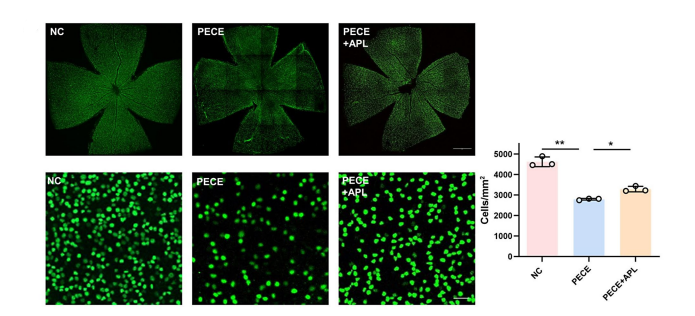
The number of RGCs was significantly lesser in the PECE group than in the control group. Moreover, the number of surviving RGCs was significantly greater in the Apelin-13 (10 µg/eye) group than in the PECE group.
[Pyr1]-Apelin-13 purchased from MedChemExpress. Usage Cited in: J Transl Med. 2025 Feb 18;23(1):200. [Abstract]
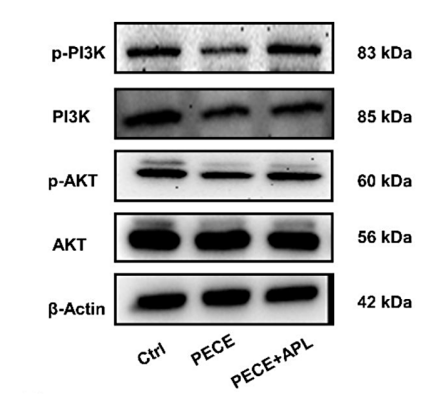
The ratios of p-PI3K/PI3K and p-Akt/Akt in the retina of the PECE group were decreased, while those in the Apelin-13 (10 µg/eye) group returned to normal.
[Pyr1]-Apelin-13 purchased from MedChemExpress. Usage Cited in: J Transl Med. 2025 Feb 18;23(1):200. [Abstract]
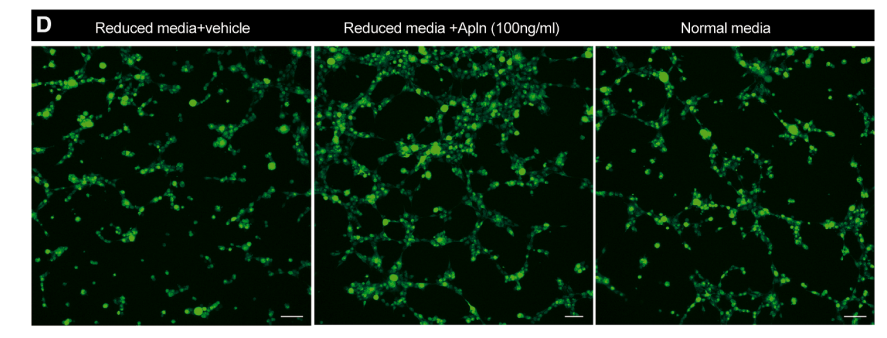
Tube formation experiment. The mBMECs in matrix gels were treated with vehicle or Apln13 (100 ng/mL) in reduced growth media (2% FBS) or cultured in normal growth media (5% FBS) for 4 h. Representative images of tubular-like structures.
[Pyr1]-Apelin-13 purchased from MedChemExpress. Usage Cited in: J Transl Med. 2025 Feb 18;23(1):200. [Abstract]
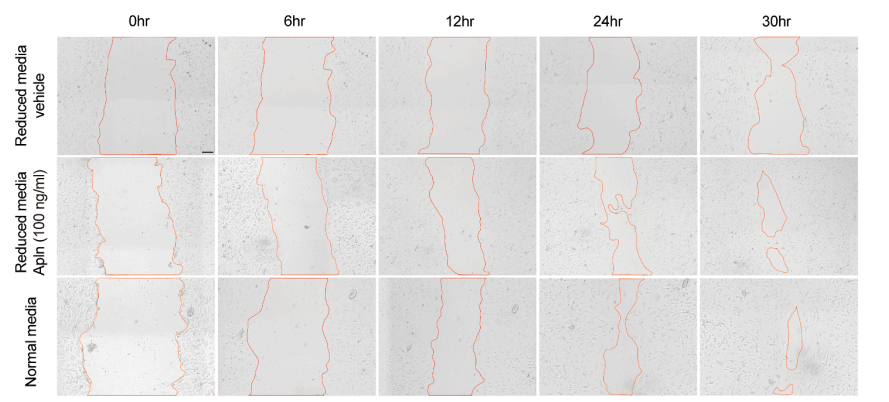
In vitro scratch assay in mBMEC cultures in reduced growth media (2% FBS) with vehicle or Apln13 treatment (100 ng/mL). Normal growth media (5% FBS) was used as a positive control. Scratch area closure was assessed after 0, 6, 12, 24, and 30 h.
-
Int Immunopharmacol
Apelin-13 alleviated ischemia reperfusion injury via KLF2/NF-κB signaling pathway after kidney transplantation. [Abstract]2026 Jan 1;168(Pt 1):115802. PMID: 41223609 -
iScience
Single-cell transcriptomic analyses reveal angiogenic vascular responses to chronic cerebral hypoperfusion. [Abstract]2026 Mar 11;29(4):115331. PMID: 41907427
[Pyr1]-Apelin-13 purchased from MedChemExpress. Usage Cited in: iScience. 2026 Mar 11;29(4):115331. [Abstract]
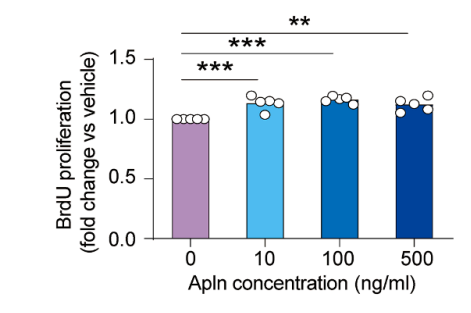
Proliferation analysis under different concentrations of Apln13 treatment (0, 10, 100, and 500 ng/mL) for 20 h.
-
-
-


Lösungsmittel & Löslichkeit
In Vitro:
H2O : 100 mg/mL (65.20 mM; Need ultrasonic)
Please refer to the solubility information to select the appropriate solvent. Once prepared, please aliquot and store the solution to prevent product inactivation from repeated freeze-thaw cycles.
Storage method and period of stock solution: -80°C, 6 months; -20°C, 1 month (sealed storage, away from moisture). When stored at -80°C, please use it within 6 months. When stored at -20°C, please use it within 1 month.
* Note: If you choose water as the stock solution, please dilute it to the working solution, then filter and sterilize it with a 0.22 μm filter before use.
Please refer to the solubility information to select the appropriate solvent. Once prepared, please aliquot and store the solution to prevent product inactivation from repeated freeze-thaw cycles.
Storage method and period of stock solution: -80°C, 6 months; -20°C, 1 month (sealed storage, away from moisture). When stored at -80°C, please use it within 6 months. When stored at -20°C, please use it within 1 month.
* Note: If you choose water as the stock solution, please dilute it to the working solution, then filter and sterilize it with a 0.22 μm filter before use.
Konzentration (Stammlösung) × Volumen (Stammlösung) = Konzentration (Ziellösung) × Volumen (Ziellösung)
In Vivo:
For the following dissolution methods, please prepare the working solution directly:
It is recommended to prepare fresh solutions and use them promptly within a short period of time.
The percentages shown for the solvents indicate their volumetric ratio in the final prepared solution. If precipitation or phase separation occurs during preparation, heat and/or sonication can be used to aid dissolution.
Add each solvent one by one: PBS
Solubility: 100 mg/mL (65.20 mM); Clear solution; Need ultrasonic


Reinheit & Dokumentation
-
Data Sheet (276 KB)
-
SDS (396 KB)
- English - EN (396 KB)
- Français - FR (396 KB)
- Deutsch - DE (396 KB)
- Norwegian - NO (396 KB)
- Español - ES (396 KB)
- Swedish - SV (396 KB)
- Italian - IT (396 KB)
- Korean - KR (396 KB)
- Portuguese - PT (396 KB)
-
Handling Instructions (2659 KB)
Verweise
[1]. Serpooshan V, et al. [Pyr1]-Apelin-13 delivery via nano-liposomal encapsulation attenuates pressure overload-induced cardiac dysfunction. Biomaterials. 2015 Jan;37:289-98. [Content Brief]
[2]. Hajimashhadi Z, et al. Chronic administration of [Pyr1] apelin-13 attenuates neuropathic pain after compression spinal cord injury in rats. Neuropeptides. 2017 Feb;61:15-22. [Content Brief]


Complete Stock Solution Preparation Table
Please refer to the solubility information to select the appropriate solvent. Once prepared, please aliquot and store the solution to prevent product inactivation from repeated freeze-thaw cycles.
Storage method and period of stock solution: -80°C, 6 months; -20°C, 1 month (sealed storage, away from moisture). When stored at -80°C, please use it within 6 months. When stored at -20°C, please use it within 1 month.
| Optional Solvent | Concentration Solvent Mass | 1 mg | 5 mg | 10 mg | 25 mg |
|---|---|---|---|---|---|
| H2O | 1 mM | 0.6520 mL | 3.2599 mL | 6.5198 mL | 16.2994 mL |
| 5 mM | 0.1304 mL | 0.6520 mL | 1.3040 mL | 3.2599 mL | |
| 10 mM | 0.0652 mL | 0.3260 mL | 0.6520 mL | 1.6299 mL | |
| 15 mM | 0.0435 mL | 0.2173 mL | 0.4347 mL | 1.0866 mL | |
| 20 mM | 0.0326 mL | 0.1630 mL | 0.3260 mL | 0.8150 mL | |
| 25 mM | 0.0261 mL | 0.1304 mL | 0.2608 mL | 0.6520 mL | |
| 30 mM | 0.0217 mL | 0.1087 mL | 0.2173 mL | 0.5433 mL | |
| 40 mM | 0.0163 mL | 0.0815 mL | 0.1630 mL | 0.4075 mL | |
| 50 mM | 0.0130 mL | 0.0652 mL | 0.1304 mL | 0.3260 mL | |
| 60 mM | 0.0109 mL | 0.0543 mL | 0.1087 mL | 0.2717 mL |
* Note: If you choose water as the stock solution, please dilute it to the working solution, then filter and sterilize it with a 0.22 μm filter before use.


[Pyr1]-Apelin-13 Related Classifications
HY-P1033 Related Classifications
 Powered by Bioz