



Avacopan
Based on 5 publication(s) in Google Scholar
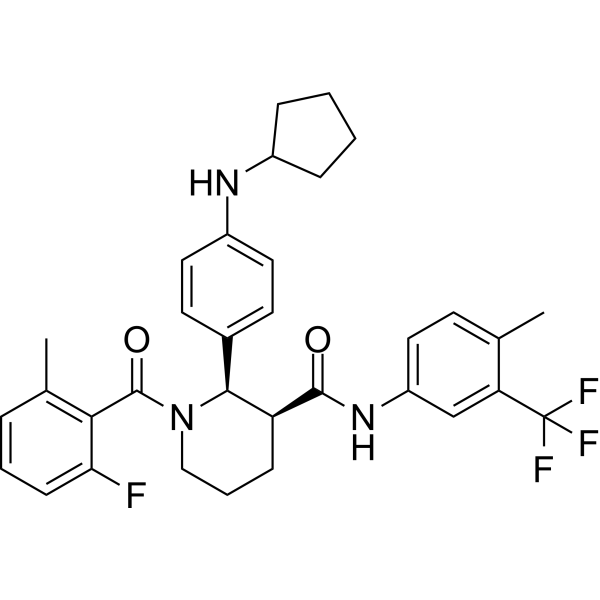
Avacopan (CCX168) is a potent, selective and orally available complement 5a receptor (C5aR) inhibitor with an IC50 of 0.1 nM.
For research use only. We do not sell to patients.
- Purity : 98.50%
- CAS No.: 1346623-17-3
- Formula: C33H35F4N3O2
- Molecular Weight:581.64
-
Storage:Powder -20°C, 3 years , 4°C, 2 years ; In solvent -80°C, 6 months , -20°C, 1 month

To place orders, for customer services and technical support, please contact: MedChemExpress USA
Tel: 609-228-6898 E-mail: [email protected] [email protected]


-
 Biological Activity
-
Chemical Information
-
Solvent & Solubility
- Purity & Documentation
- References
-
 Help & FAQs


-
HY-106178
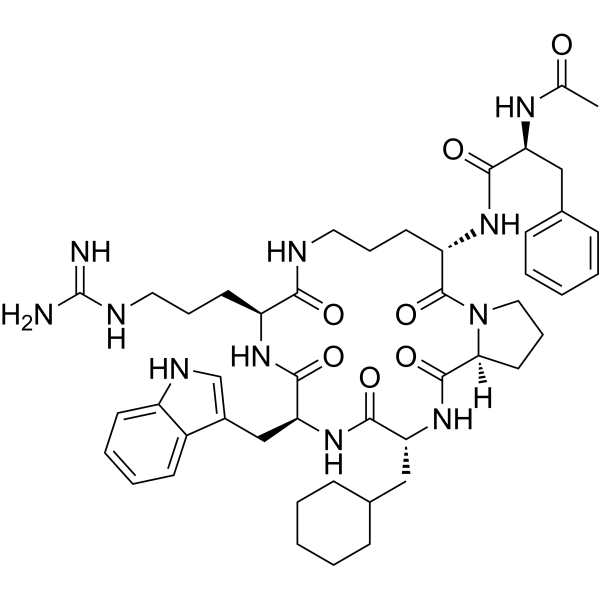
PMX-53C5a Receptor Antagonist -
HY-117930
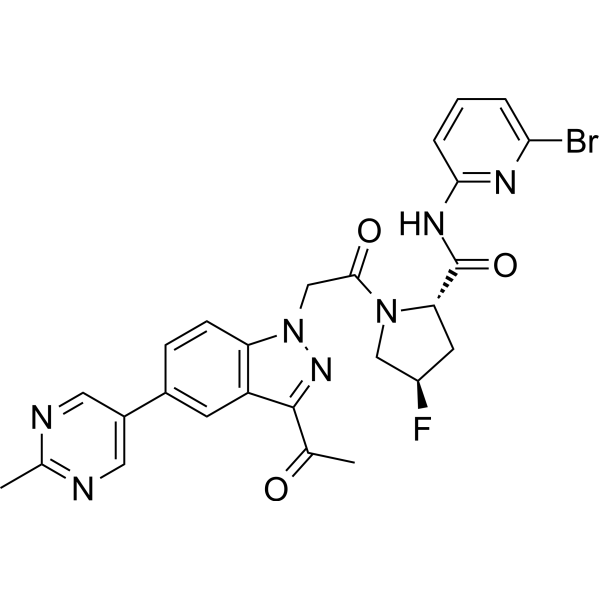
DanicopanFactor D Inhibitor -

HY-P99520
VilobelimabAnti-C5a antibody -
HY-110136
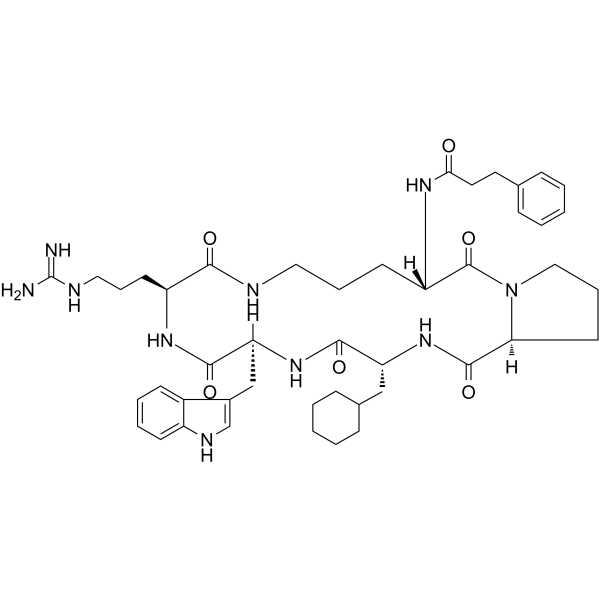
PMX 205Complement System Antagonist -
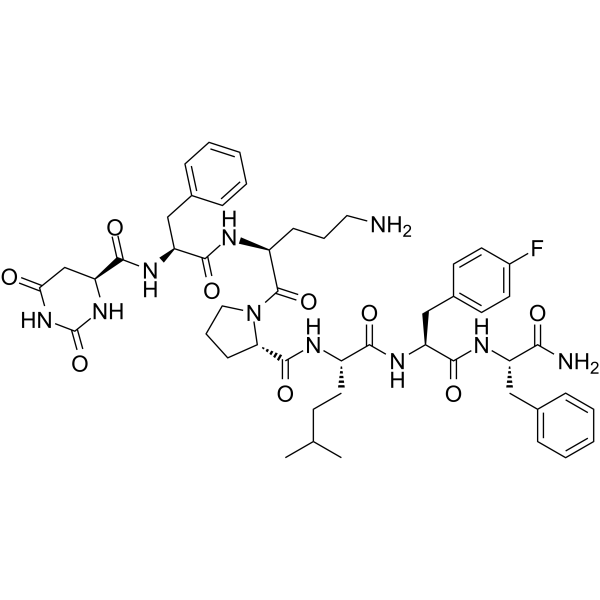
HY-148141
JPE-1375C5aR1 Antagonist -

HY-P9914
EculizumabComplement C5 Antibody -
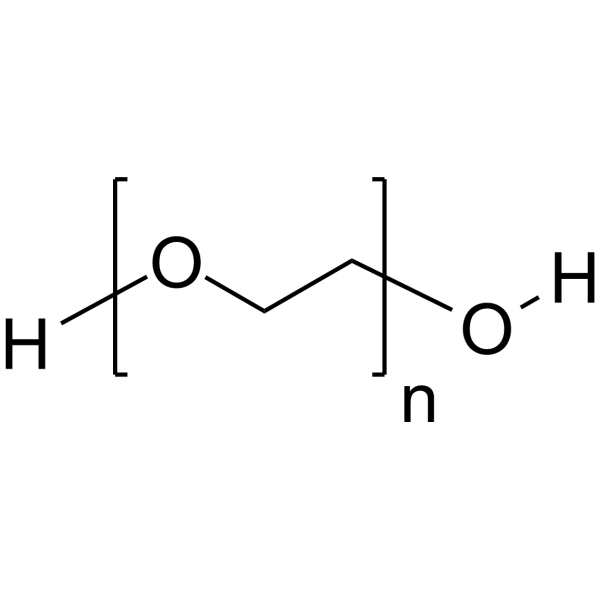
HY-Y0873
PEG300Neutral Polymer -
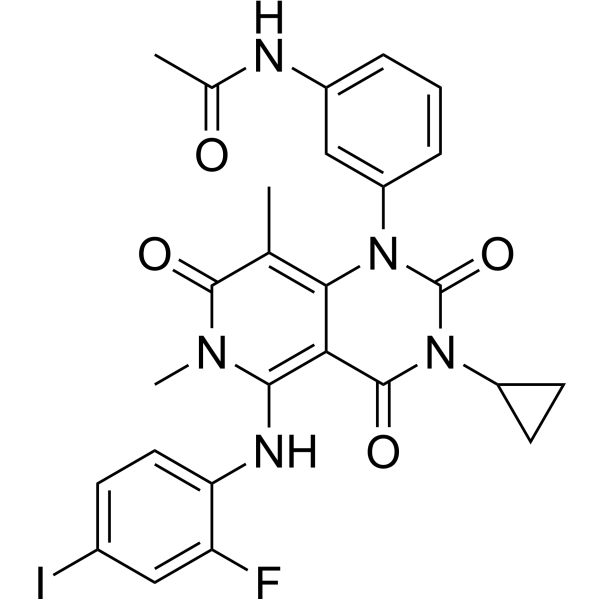
HY-10999
TrametinibMEK Inhibitor -
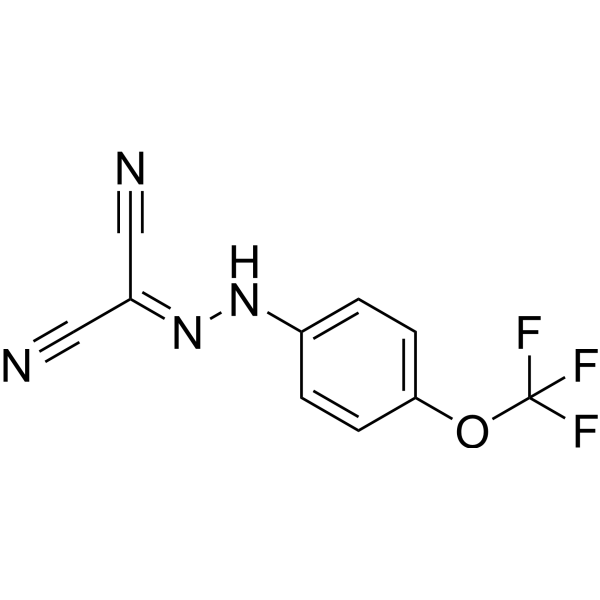
HY-100410
FCCPOXPHOS Uncoupler -
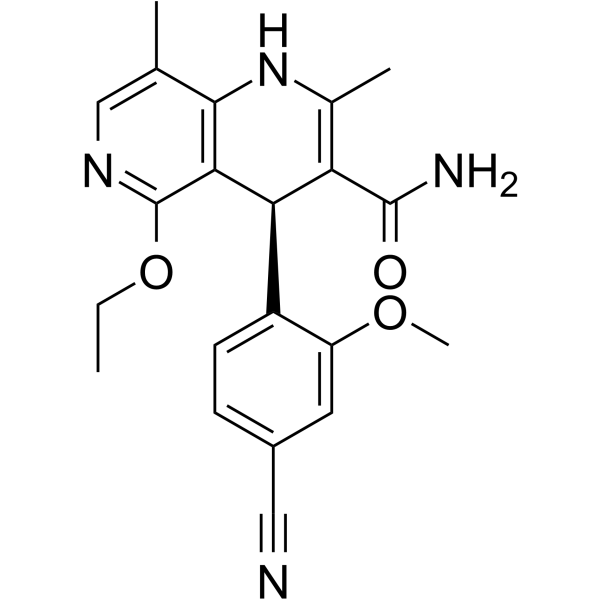
HY-111372
FinerenoneMineralocorticoid Receptor Antagonist -
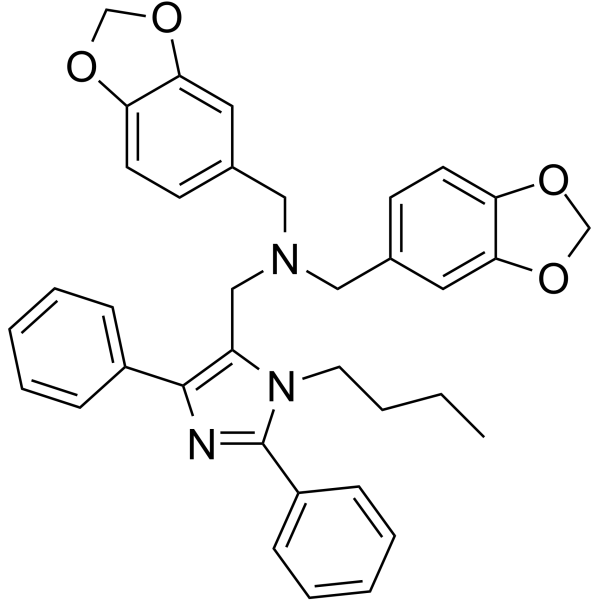
HY-110060
NDT 9513727Human C5aR Inverse agonist -
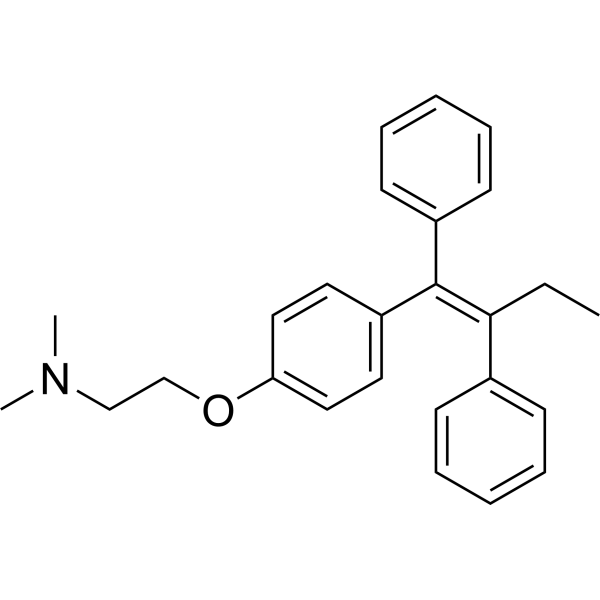
HY-13757A
TamoxifenEstrogen Receptor Modulator
Publications Citing Use of MedChemExpress (MCE) Avacopan
More Customer Validation & Images

-
ELISA
-
Histological Imaging/Staining
-
WB
-
In Vivo Imaging
-
Bio/Physico-chemical Assay


Biological Activity
Description
IC50 & Target
IC50: 0.1 nM (complement 5a receptor )[1]
In Vitro
CCX168 displaces [125I]-C5a binding to C5aR on a human myeloid cell line (U937) with a potency (IC50) of 0.1 nM. CCX168 inhibits C5a-mediated chemotaxis of U937 cells with a potency (the concentration of CCX168 that produces a 2-fold right-shift in C5a activity) of 0.2 nM. CCX168 competitively and selectively blocked C5a-induced calcium mobilization in purified human neutrophils, with an IC50 value of 0.2 nM. CCX168 inhibited C5a-induced release of reactive-oxygen species from isolated neutrophils, and is able to completely block respiratory burst in these neutrophils[1].
MedChemExpress (MCE) has not independently confirmed the accuracy of these methods. They are for reference only.
In Vivo
MedChemExpress (MCE) has not independently confirmed the accuracy of these methods. They are for reference only.
Clinical Trial
| NCT Number | Sponsor | Condition | Start Date |
Phase

|
|---|---|---|---|---|
| NCT01329991 | 2011-05 | PHASE1 |


Chemical Information
-
CAS No. 1346623-17-3
-
Appearance Solid
-
Molecular Weight 581.64
-
Formula C33H35F4N3O2
-
Color White to off-white
-
SMILES
O=C([C@@H]1[C@H](C2=CC=C(NC3CCCC3)C=C2)N(C(C4=C(C)C=CC=C4F)=O)CCC1)NC5=CC=C(C)C(C(F)(F)F)=C5
-
Synonyms
CCX168
-
Shipping
Room temperature in continental US; may vary elsewhere.
-
Storage
Powder -20°C 3 years 4°C 2 years In solvent -80°C 6 months -20°C 1 month


Publications (5)
-
Journal Impact Factor
-
Most Recent
-
Cell
2023 Jun 22;186(13):2802-2822.e22. PMID: 37220746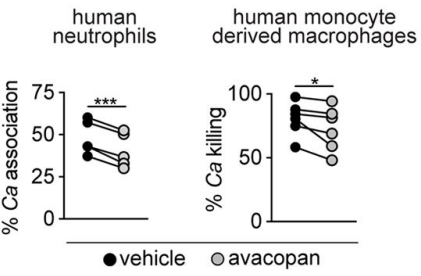
Avacopan purchased from MedChemExpress. Usage Cited in: Cell. 2023 Jun 22;186(13):2802-2822.e22. [Abstract]
Candida uptake by human neutrophils and killing by human macrophages (n=5–6). The results showed that Avacopan (500 nM; 30 min) decreased fungal uptake and killing by human neutrophils and macrophages, respectively.
-
Neuron
2025 Nov 18:S0896-6273(25)00803-7. PMID: 41260217
Avacopan purchased from MedChemExpress. Usage Cited in: Neuron. 2025 Nov 18:S0896-6273(25)00803-7. [Abstract]
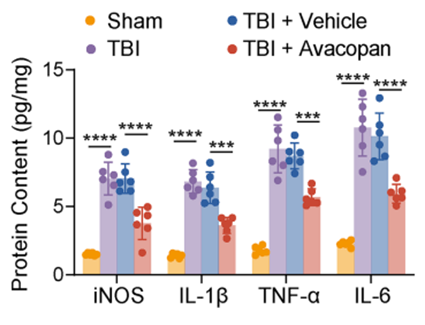
ELISA of iNOS, IL-1β, TNF-α, and IL-6 expression in TBI mice with or without Avacopan (30 mg/kg; p.o.; once daily for 7 days) administration (n = 6 mice/group). In TBI model, Avacopan significantly suppressed iNOS, IL-1β, TNF-α, and IL-6 expression.
Avacopan purchased from MedChemExpress. Usage Cited in: Neuron. 2025 Nov 18:S0896-6273(25)00803-7. [Abstract]
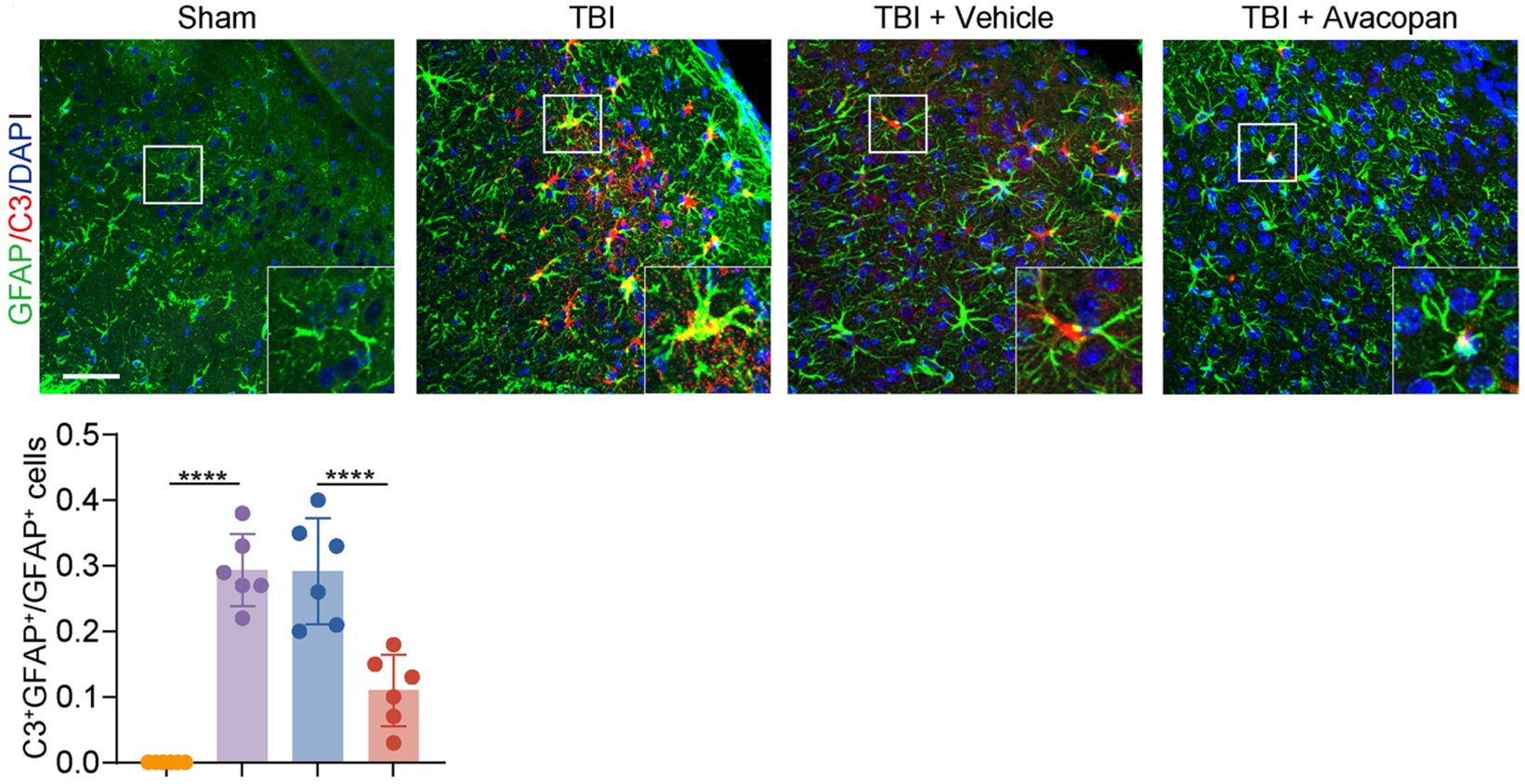
Immunostaining and quantification of C3+ astrocytes of TBI mice with or without Avacopan (30 mg/kg; p.o.; once daily for 7 days) administration (n = 6 mice/group). Scale bar, 50 μm. The results showed that Avacopan significantly reduced C3+ astrocytes after TBI.
Avacopan purchased from MedChemExpress. Usage Cited in: Neuron. 2025 Nov 18:S0896-6273(25)00803-7. [Abstract]
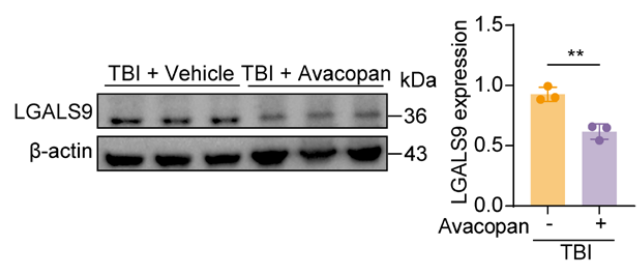
Relative expression of LGALS9 in TBI mice with or without Avacopan (30 mg/kg; p.o.; once daily for 7 days) treatment (n = 3 mice/group). The results showed that Avacopan significantly inhibited the expression of LGALS9
Avacopan purchased from MedChemExpress. Usage Cited in: Neuron. 2025 Nov 18:S0896-6273(25)00803-7. [Abstract]
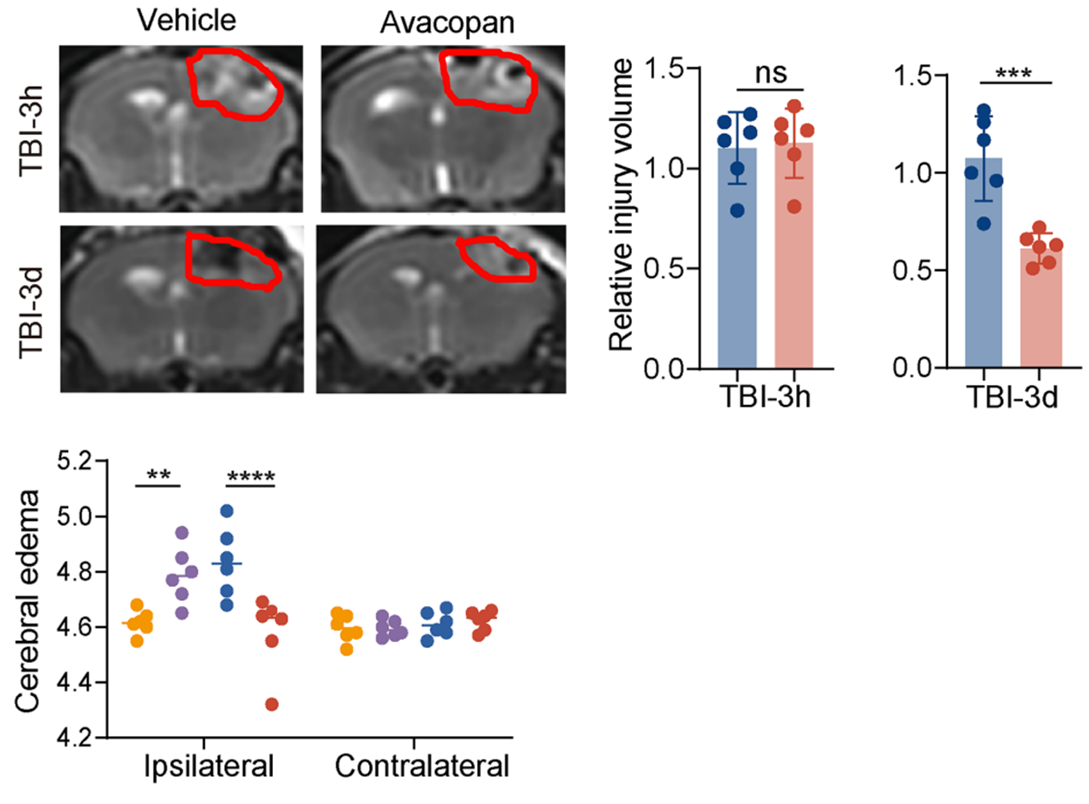
MRI imaging and analysis of injury volume, as well as cerebral edema assessments, in TBI mice with or without Avacopan (30 mg/kg; p.o.; once daily for 7 days) administered at 3 h and 3 days post-TBI (n = 6 mice/group). The results showed that Avacopan significantly reduced the severity of cerebral edema in TBI mice.
-
Physiol Rep
Novel interactions between the C5-C5aR1 Axis and IF1: Implications for kidney mitochondrial physiology and ischemia-reperfusion injury. [Abstract]2026 Jun;14(11):e70942. PMID: 42210713 -
-
Avacopan purchased from MedChemExpress. Usage Cited in: bioRxiv. 2025 Oct 29.
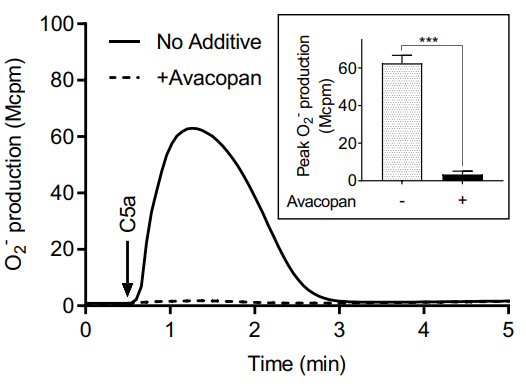
Inhibition of the C5a-induced response by the specific C5aR1 antagonist Avacopan. TNF-primed neutrophils were incubated without (solid line) or with Avacopan (50 nM, dashed line) for 5 min before addition of C5a (2 nM; added at the time point marked with an arrow) and determination of the NADPH oxidase activity. Inset: The inhibitory effect of Avacopan on the neutrophil NADPH oxidase activity expressed as peak values (Mcpm) of O2-production induced by C5a in absence and presence of the antagonist, respectively (mean ± SEM, n = 6).


Solvent & Solubility
In Vitro:
DMSO : 100 mg/mL (171.93 mM; Need ultrasonic; Hygroscopic DMSO has a significant impact on the solubility of product, please use newly opened DMSO)
Please refer to the solubility information to select the appropriate solvent. Once prepared, please aliquot and store the solution to prevent product inactivation from repeated freeze-thaw cycles.
Storage method and period of stock solution: -80°C, 6 months; -20°C, 1 month. When stored at -80°C, please use it within 6 months. When stored at -20°C, please use it within 1 month.
Please refer to the solubility information to select the appropriate solvent. Once prepared, please aliquot and store the solution to prevent product inactivation from repeated freeze-thaw cycles.
Storage method and period of stock solution: -80°C, 6 months; -20°C, 1 month. When stored at -80°C, please use it within 6 months. When stored at -20°C, please use it within 1 month.
Concentration (start) × Volume (start) = Concentration (final) × Volume (final)
In Vivo:
Select the appropriate dissolution method based on your experimental animal and administration route.
- For the following dissolution methods, please ensure to first prepare a clear stock solution using an In Vitro approach and then sequentially add co-solvents:
- To ensure reliable experimental results, the clarified stock solution can be appropriately stored based on storage conditions. As for the working solution for In Vivo experiments, it is recommended to prepare freshly and use it on the same day.
- The percentages shown for the solvents indicate their volumetric ratio in the final prepared solution. If precipitation or phase separation occurs during preparation, heat and/or sonication can be used to aid dissolution.
Add each solvent one by one: 10% DMSO 40% PEG300 5% Tween-80 45% Saline
Solubility: 2.5 mg/mL (4.30 mM); Suspended solution; Need ultrasonic
This protocol yields a suspended solution of 2.5 mg/mL. Suspended solution can be used for oral and intraperitoneal injection.
Taking 1 mL working solution as an example, add 100 μL DMSO stock solution (25.0 mg/mL) to 400 μL PEG300, and mix evenly; then add 50 μL Tween-80 and mix evenly; then add 450 μL Saline to adjust the volume to 1 mL.
Preparation of Saline: Dissolve 0.9 g sodium chloride in ddH₂O and dilute to 100 mL to obtain a clear Saline solution.
In Vivo Dissolution Calculator
Please enter the basic information of animal experiments:
-
-
-
-
Recommended: Prepare an additional quantity of animals to account for potential losses during experiments.
Please enter your animal formula composition:
-
%DMSO +
Recommended: Keep the proportion of DMSO in working solution below 2% if your animal is weak.
-
%+
-
+%Tween-80 + +
-
%Saline +
The co-solvents required include: DMSO, . All of co-solvents are available by MedChemExpress (MCE). , Tween 80. All of co-solvents are available by MedChemExpress (MCE).
Working solution concentration: 0.22 mg/mL
Method for preparing stock solution: mg drug dissolved in μL DMSO. Stock solution concentration: mg/mL.
1. Take μL DMSO stock solution;
2. Add μL .
μL , mix evenly;
3. Then add μL Tween 80, mix evenly;
4. Then add μL
Please ensure that the stock solution in the first step is dissolved to a clear state, and add co-solvents in sequence. You can use ultrasonic heating (ultrasonic cleaner, recommended frequency 20-40 kHz), vortexing, etc. to assist dissolution.


Purity & Documentation
-
Data Sheet (278 KB)
-
SDS (536 KB)
- English - EN (536 KB)
- Français - FR (536 KB)
- Deutsch - DE (536 KB)
- Norwegian - NO (536 KB)
- Español - ES (536 KB)
- Swedish - SV (536 KB)
- Italian - IT (536 KB)
- Korean - KR (536 KB)
- Portuguese - PT (536 KB)
-
Handling Instructions (2659 KB)
References
[1]. Bekker P, et al. Characterization of Pharmacologic and Pharmacokinetic Properties of CCX168, a Potent and Selective Orally Administered Complement 5a Receptor Inhibitor, Based on Preclinical Evaluation and Randomized Phase 1 Clinical Study. PLoS One. 2016 Oct 21;11(10):e0164646. [Content Brief]
[2]. Xiao H, et al. C5a receptor (CD88) blockade protects against MPO-ANCA GN. J Am Soc Nephrol. 2014 Feb;25(2):225-31. [Content Brief]


Complete Stock Solution Preparation Table
Please refer to the solubility information to select the appropriate solvent. Once prepared, please aliquot and store the solution to prevent product inactivation from repeated freeze-thaw cycles.
Storage method and period of stock solution: -80°C, 6 months; -20°C, 1 month. When stored at -80°C, please use it within 6 months. When stored at -20°C, please use it within 1 month.
| Optional Solvent | Concentration Solvent Mass | 1 mg | 5 mg | 10 mg | 25 mg |
|---|---|---|---|---|---|
| DMSO | 1 mM | 1.7193 mL | 8.5964 mL | 17.1928 mL | 42.9819 mL |
| 5 mM | 0.3439 mL | 1.7193 mL | 3.4386 mL | 8.5964 mL | |
| 10 mM | 0.1719 mL | 0.8596 mL | 1.7193 mL | 4.2982 mL | |
| 15 mM | 0.1146 mL | 0.5731 mL | 1.1462 mL | 2.8655 mL | |
| 20 mM | 0.0860 mL | 0.4298 mL | 0.8596 mL | 2.1491 mL | |
| 25 mM | 0.0688 mL | 0.3439 mL | 0.6877 mL | 1.7193 mL | |
| 30 mM | 0.0573 mL | 0.2865 mL | 0.5731 mL | 1.4327 mL | |
| 40 mM | 0.0430 mL | 0.2149 mL | 0.4298 mL | 1.0745 mL | |
| 50 mM | 0.0344 mL | 0.1719 mL | 0.3439 mL | 0.8596 mL | |
| 60 mM | 0.0287 mL | 0.1433 mL | 0.2865 mL | 0.7164 mL | |
| 80 mM | 0.0215 mL | 0.1075 mL | 0.2149 mL | 0.5373 mL | |
| 100 mM | 0.0172 mL | 0.0860 mL | 0.1719 mL | 0.4298 mL |


Avacopan Related Classifications
HY-17627 Related Classifications
 Powered by Bioz