



BMS-5
Based on 5 publication(s) in Google Scholar
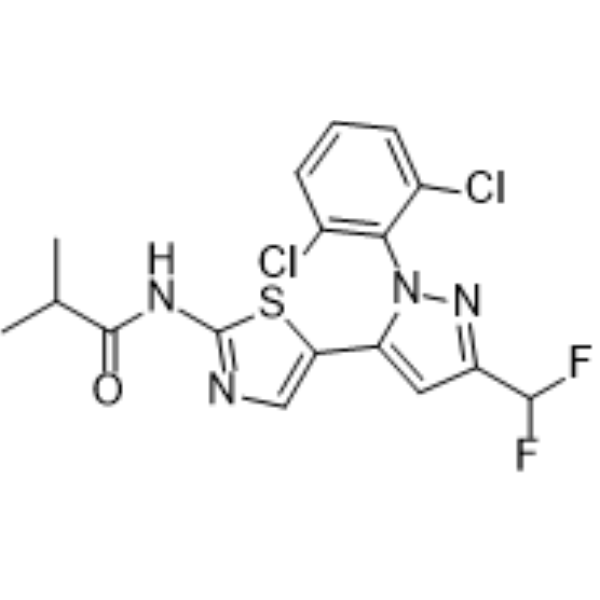
BMS-5 (LIMKi 3) is a potent LIMK inhibitor with IC50s of 7 nM and 8 nM for LIMK1 and LIMK2, respectively.
For research use only. We do not sell to patients.
- Purity : 99.84%
- CAS No.: 1338247-35-0
- Formula: C17H14Cl2F2N4OS
- Molecular Weight:431.29
-
Storage:Powder -20°C, 3 years , 4°C, 2 years ; In solvent -80°C, 2 years , -20°C, 1 year

To place orders, for customer services and technical support, please contact: MedChemExpress USA
Tel: 609-228-6898 E-mail: [email protected] [email protected]


-
 Biological Activity
-
Chemical Information
-
Solvent & Solubility
- Purity & Documentation
- References
-
 Help & FAQs


-
HY-18304
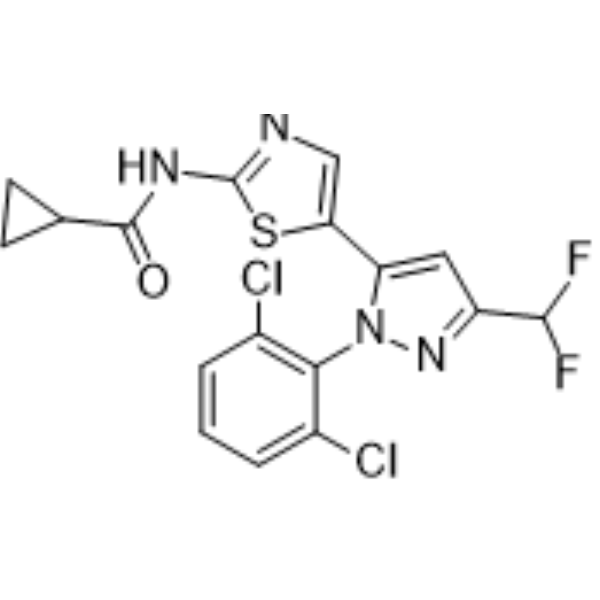
BMS-3LIMK Inhibitor -
HY-122630
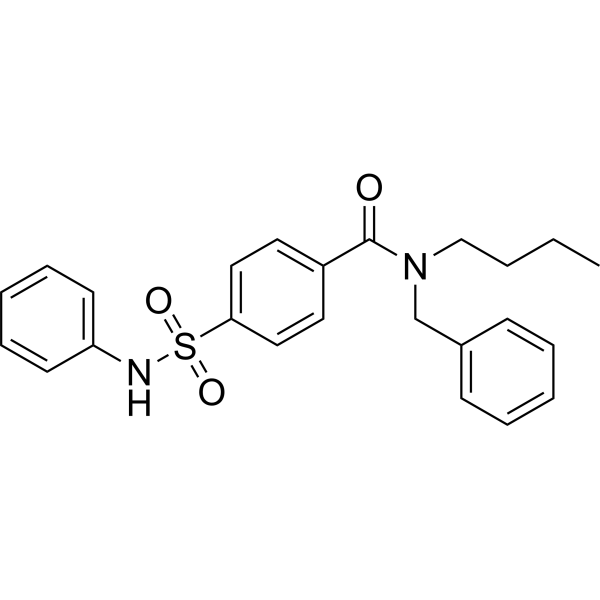
TH-257LIMK1/2 Inhibitor -
HY-19352
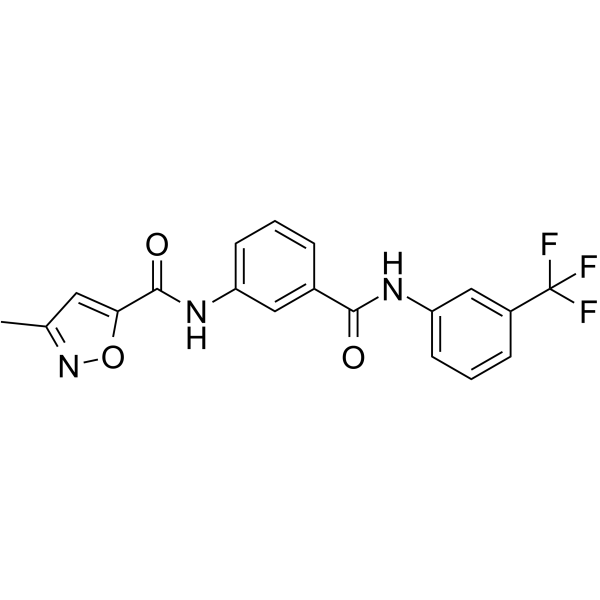
T56-LIMKiLIMK Inhibitor -
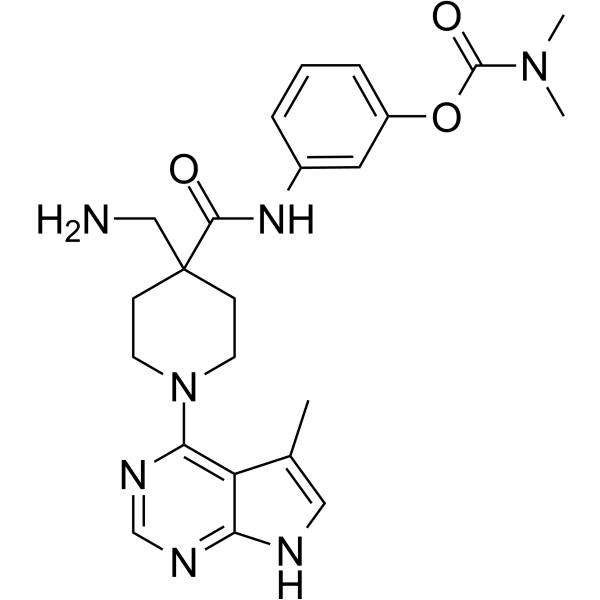
HY-12659
LX7101LIM/ROCK/PKA Inhibitor -
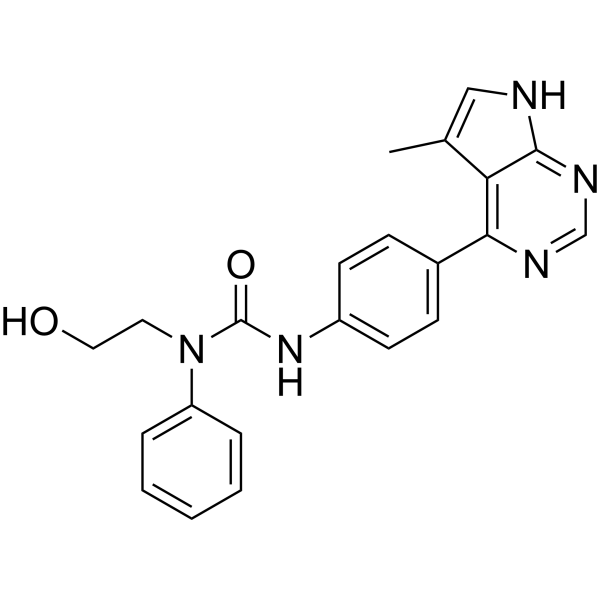
HY-19353
SR7826LIMK1 Inhibitor -
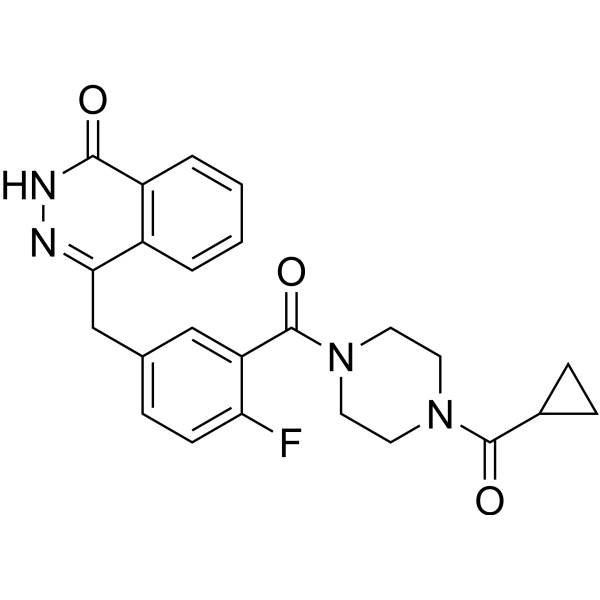
HY-10162
OlaparibPARP Inhibitor -
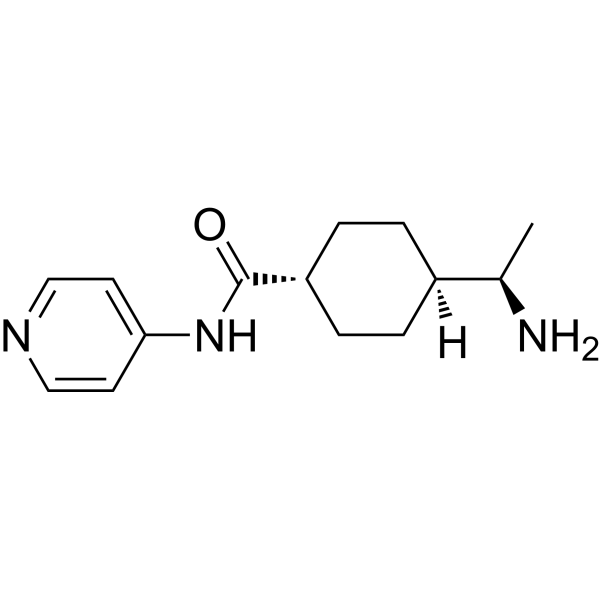
HY-10071
Y-27632ROCK Inhibitor -
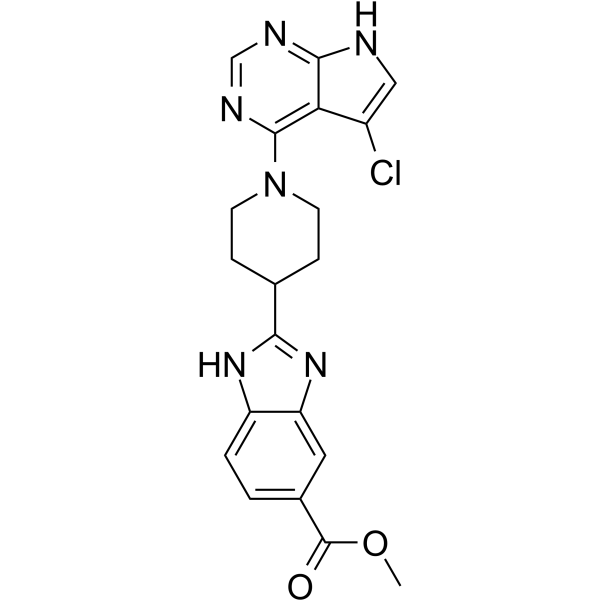
HY-120097
R-10015LIMK Inhibitor -
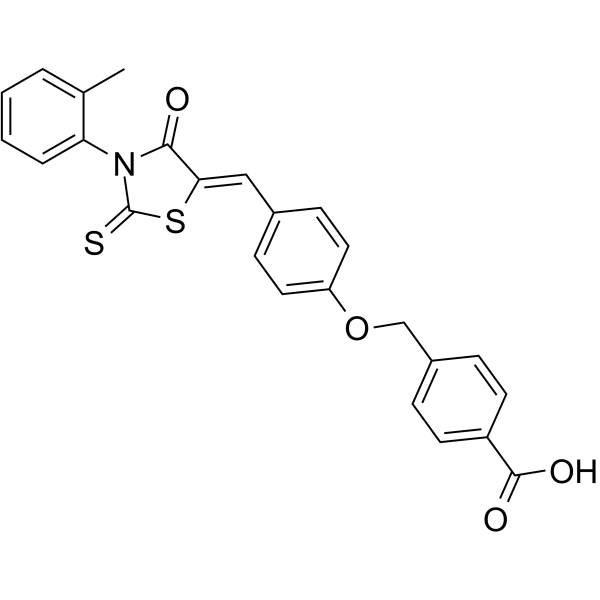
HY-124366
Slingshot inhibitor D3Slingshot Inhibitor -
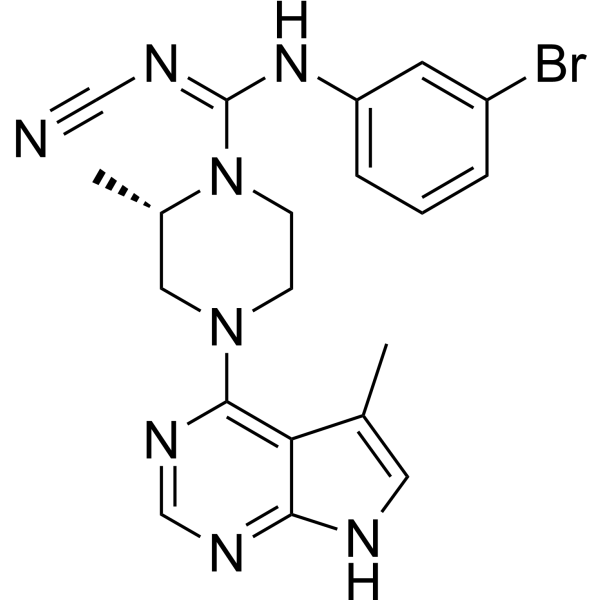
HY-14227
LIMK-IN-1LIMK Inhibitor -
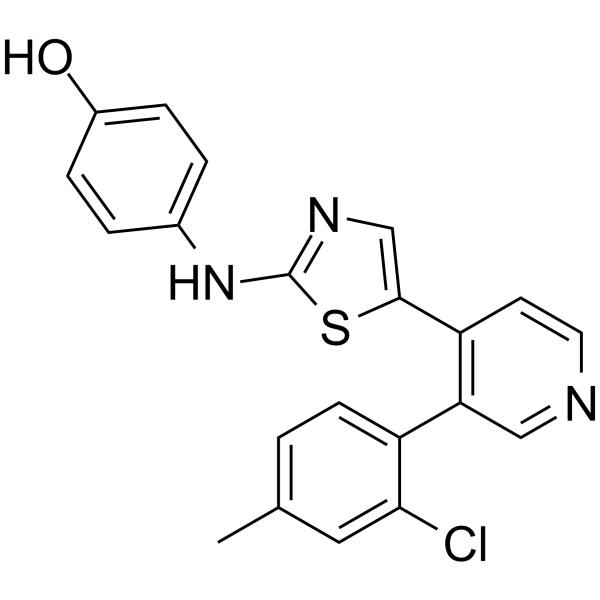
HY-120025
CRT0105950LIMK Inhibitor -
HY-135843
TH-263TH-257 Negative Control
Publications Citing Use of MedChemExpress (MCE) BMS-5
More Customer Validation & Images

-
Cell Imaging/Staining
-
Others
-
Cell Migration/Invasion Assay
-
WB
-
Flow Cytometry


Biological Activity
Description
IC50 & Target
[1]|
LIMK1 7 nM (IC50) |
LIMK2 8 nM (IC50) |
Cellular Effect
|
Cell Line

|
Type | Value | Description | References |
|---|---|---|---|---|
| HeLa | EC50 |
25 μM
Compound: LIMKi3; BMS5
|
Cytotoxicity against human HeLa cells assessed as induction of cell death measured after 48 hrs by celltiter glo luminescent cell viability assay
Cytotoxicity against human HeLa cells assessed as induction of cell death measured after 48 hrs by celltiter glo luminescent cell viability assay
|
[PMID: 38669909] |
| ZR-75-1 | IC50 |
0.22 μM
Compound: BMS3
|
Inhibition of LIMK1-catalyzed cofilin phosphorylation in human ZR-75-1 cells
Inhibition of LIMK1-catalyzed cofilin phosphorylation in human ZR-75-1 cells
|
10.1039/C1MD00138H |
In Vitro
BMS-5 (LIMKi 3) inhibits cofilin-Ser3 phosphorylation in a dose-dependent manner in Nf2ΔEx2 mouse Schwann cells (MSCs) with an IC50 of ~2 μM. BMS-5 (LIMKi 3) reduces Nf2ΔEx2 MSC viability in a dose-dependent manner with an IC50 of 3.9 μM, but does not significantly reduce the viability of control Nf2flox2/flox2 MSCs at equivalent BMS-5 concentrations. At 10 μM BMS-5, Nf2ΔEx2 MSC viability is 40% compared to 83% for controls[2].
MedChemExpress (MCE) has not independently confirmed the accuracy of these methods. They are for reference only. .
In Vivo
MedChemExpress (MCE) has not independently confirmed the accuracy of these methods. They are for reference only.


Chemical Information
-
CAS No. 1338247-35-0
-
Appearance Solid
-
Molecular Weight 431.29
-
Formula C17H14Cl2F2N4OS
-
Color White to off-white
-
SMILES
CC(C)C(NC1=NC=C(C2=CC(C(F)F)=NN2C3=C(Cl)C=CC=C3Cl)S1)=O
-
Synonyms
LIMKi 3
-
Shipping
Room temperature in continental US; may vary elsewhere.
-
Storage
Powder -20°C 3 years 4°C 2 years In solvent -80°C 2 years -20°C 1 year


Publications (5)
-
Journal Impact Factor
-
Most Recent
-
Adv Sci (Weinh)
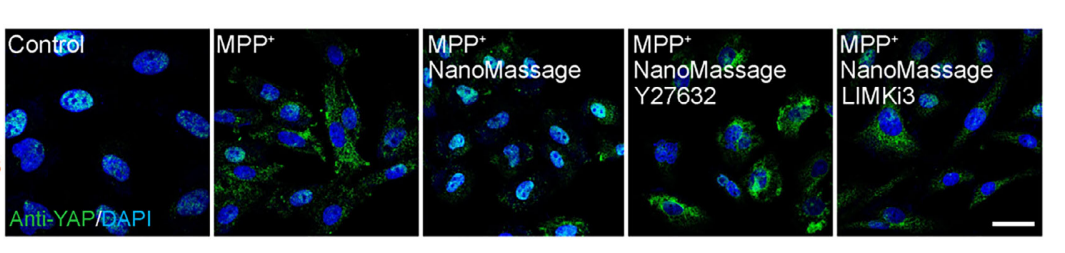
Massage-Mimicking Nanosheets Mechanically Reorganize Inter-organelle Contacts to Restore Mitochondrial Functions in Parkinson's Disease. [Abstract]2025 May;12(20):e2413376. PMID: 40223359
BMS-5 purchased from MedChemExpress. Usage Cited in: Adv Sci (Weinh). 2025 May;12(20):e2413376. [Abstract]
BMS-5 (LIMKi3: 20 µM). Representative confocal images of neuron-like cells treated with specified methods and stained with anti-YAP antibody (green). Cell nuclei are labeled with DAPI (blue).
-
Int J Mol Med
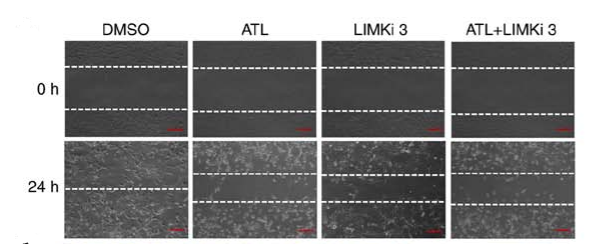
Alantolactone suppresses the metastatic phenotype and induces the apoptosis of glioblastoma cells by targeting LIMK kinase activity and activating the cofilin/G‑actin signaling cascade. [Abstract]2021 May;47(5):68. PMID: 33649781
BMS-5 purchased from MedChemExpress. Usage Cited in: Int J Mol Med. 2021 May;47(5):68. [Abstract]
U87MG cells were pretreated with LIMKi 3 (BMS-5: 5 µM) for 8 hours, and then ATL (10 µM) was added at the corresponding time points to detect cell migration and invasion capabilities.
BMS-5 purchased from MedChemExpress. Usage Cited in: Int J Mol Med. 2021 May;47(5):68. [Abstract]
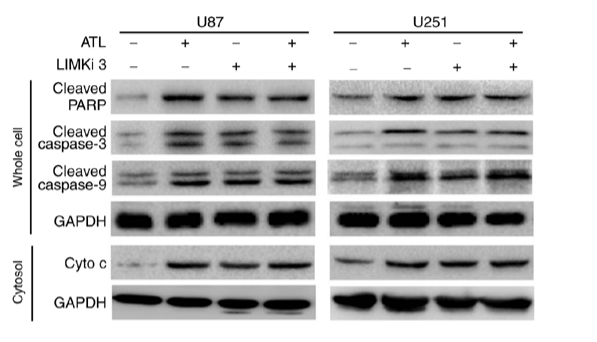
LIMKi 3 (BMS-5: 5 µM). Western blot analysis was used to detect the protein expression levels of cleaved caspase-3, cleaved caspase-9, cleaved PARP, and cytochrome c in U87MG and U251 cells.
BMS-5 purchased from MedChemExpress. Usage Cited in: Int J Mol Med. 2021 May;47(5):68. [Abstract]
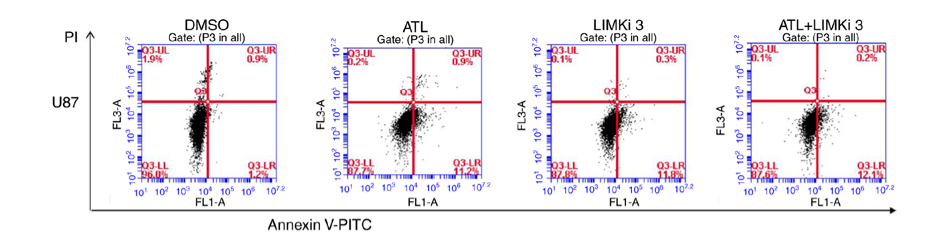
U87MG cells were pretreated with LIMKi 3 (BMS-5: 5 µM) for 8 hours, then with ATL (10 µM) for 24 hours, and finally apoptosis was detected by flow cytometry.
-
Biochem Pharmacol
Triptonoterpene promotes the mitochondrial translocation of cofilin-1 to induce apoptosis in gastric cancer cells by regulating actin dynamics. [Abstract]2025 Jul 15:241:117173. PMID: 40675226 -
J Virol
Microfilaments and microtubules alternately coordinate the multi-step endosomal trafficking of Classical Swine Fever Virus. [Abstract]2021 Feb 24;95(10):e02436-20. PMID: 33627389 -
Biomed Pharmacother
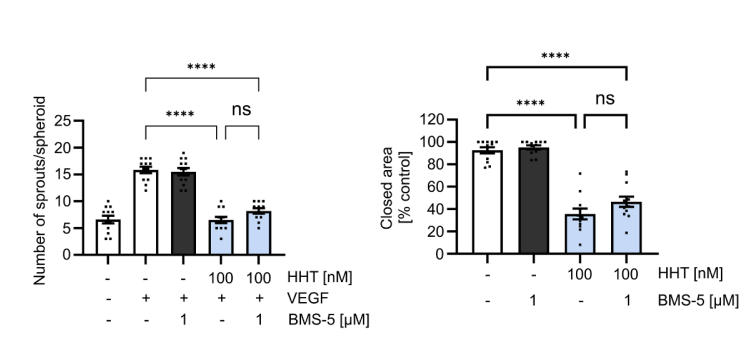
Homoharringtonine (omacetaxine mepesuccinate) limits the angiogenic capacity of endothelial cells and reorganises filamentous actin. [Abstract]2025 May:186:118025. PMID: 40184838
BMS-5 purchased from MedChemExpress. Usage Cited in: Biomed Pharmacother. 2025 May:186:118025. [Abstract]
HUVECs were cultured on microslides pre-coated with GFR Matrigel and treated with HHT for 6 hours as indicated. Under specified conditions, BMS-5 (1 µM) was added 30 minutes before the HHT treatment.


Solvent & Solubility
In Vitro:
DMSO : 100 mg/mL (231.86 mM; Need ultrasonic; Hygroscopic DMSO has a significant impact on the solubility of product, please use newly opened DMSO)
Please refer to the solubility information to select the appropriate solvent. Once prepared, please aliquot and store the solution to prevent product inactivation from repeated freeze-thaw cycles.
Storage method and period of stock solution: -80°C, 2 years; -20°C, 1 year. When stored at -80°C, please use it within 2 years. When stored at -20°C, please use it within 1 year.
Please refer to the solubility information to select the appropriate solvent. Once prepared, please aliquot and store the solution to prevent product inactivation from repeated freeze-thaw cycles.
Storage method and period of stock solution: -80°C, 2 years; -20°C, 1 year. When stored at -80°C, please use it within 2 years. When stored at -20°C, please use it within 1 year.
Concentration (start) × Volume (start) = Concentration (final) × Volume (final)
In Vivo:
Select the appropriate dissolution method based on your experimental animal and administration route.
- For the following dissolution methods, please ensure to first prepare a clear stock solution using an In Vitro approach and then sequentially add co-solvents:
- To ensure reliable experimental results, the clarified stock solution can be appropriately stored based on storage conditions. As for the working solution for In Vivo experiments, it is recommended to prepare freshly and use it on the same day.
- The percentages shown for the solvents indicate their volumetric ratio in the final prepared solution. If precipitation or phase separation occurs during preparation, heat and/or sonication can be used to aid dissolution.
Add each solvent one by one: 10% DMSO 40% PEG300 5% Tween-80 45% Saline
Solubility: ≥ 2.08 mg/mL (4.82 mM); Clear solution
This protocol yields a clear solution of ≥ 2.08 mg/mL (saturation unknown).
Taking 1 mL working solution as an example, add 100 μL DMSO stock solution (20.8 mg/mL) to 400 μL PEG300, and mix evenly; then add 50 μL Tween-80 and mix evenly; then add 450 μL Saline to adjust the volume to 1 mL.
Preparation of Saline: Dissolve 0.9 g sodium chloride in ddH₂O and dilute to 100 mL to obtain a clear Saline solution.
Add each solvent one by one: 10% DMSO 90% (20% SBE-β-CD in Saline)
Solubility: ≥ 2.08 mg/mL (4.82 mM); Clear solution
This protocol yields a clear solution of ≥ 2.08 mg/mL (saturation unknown).
Taking 1 mL working solution as an example, add 100 μL DMSO stock solution (20.8 mg/mL) to 900 μL 20% SBE-β-CD in Saline, and mix evenly.
Preparation of 20% SBE-β-CD in Saline (4°C, storage for one week): 2 g SBE-β-CD powder is dissolved in 10 mL Saline, completely dissolve until clear.
In Vivo Dissolution Calculator
Please enter the basic information of animal experiments:
-
-
-
-
Recommended: Prepare an additional quantity of animals to account for potential losses during experiments.
Please enter your animal formula composition:
-
%DMSO +
Recommended: Keep the proportion of DMSO in working solution below 2% if your animal is weak.
-
%+
-
+%Tween-80 + +
-
%Saline +
The co-solvents required include: DMSO, . All of co-solvents are available by MedChemExpress (MCE). , Tween 80. All of co-solvents are available by MedChemExpress (MCE).
Working solution concentration: 0.22 mg/mL
Method for preparing stock solution: mg drug dissolved in μL DMSO. Stock solution concentration: mg/mL.
1. Take μL DMSO stock solution;
2. Add μL .
μL , mix evenly;
3. Then add μL Tween 80, mix evenly;
4. Then add μL
Please ensure that the stock solution in the first step is dissolved to a clear state, and add co-solvents in sequence. You can use ultrasonic heating (ultrasonic cleaner, recommended frequency 20-40 kHz), vortexing, etc. to assist dissolution.


Purity & Documentation
-
Data Sheet (293 KB)
-
SDS (396 KB)
- English - EN (396 KB)
- Français - FR (396 KB)
- Deutsch - DE (396 KB)
- Norwegian - NO (396 KB)
- Español - ES (396 KB)
- Swedish - SV (396 KB)
- Italian - IT (396 KB)
- Korean - KR (396 KB)
- Portuguese - PT (396 KB)
-
Handling Instructions (2659 KB)
References
[1]. Ross-Macdonald P, et al. Identification of a nonkinase target mediating cytotoxicity of novel kinase inhibitors. Mol Cancer Ther. 2008 Nov;7(11):3490-8. [Content Brief]
[2]. Petrilli A, et al. LIM Domain Kinases as Potential Therapeutic Targets for Neurofibromatosis Type 2.Oncogene. Oncogene. 2014 Jul 3;33(27):3571-82. [Content Brief]
[3]. Lunardi P, et al. Effects of Hippocampal LIMK Inhibition on Memory Acquisition, Consolidation, Retrieval, Reconsolidation, and Extinction. Mol Neurobiol. 2017 Jan 13. [Content Brief]


Complete Stock Solution Preparation Table
Please refer to the solubility information to select the appropriate solvent. Once prepared, please aliquot and store the solution to prevent product inactivation from repeated freeze-thaw cycles.
Storage method and period of stock solution: -80°C, 2 years; -20°C, 1 year. When stored at -80°C, please use it within 2 years. When stored at -20°C, please use it within 1 year.
| Optional Solvent | Concentration Solvent Mass | 1 mg | 5 mg | 10 mg | 25 mg |
|---|---|---|---|---|---|
| DMSO | 1 mM | 2.3186 mL | 11.5931 mL | 23.1863 mL | 57.9656 mL |
| 5 mM | 0.4637 mL | 2.3186 mL | 4.6373 mL | 11.5931 mL | |
| 10 mM | 0.2319 mL | 1.1593 mL | 2.3186 mL | 5.7966 mL | |
| 15 mM | 0.1546 mL | 0.7729 mL | 1.5458 mL | 3.8644 mL | |
| 20 mM | 0.1159 mL | 0.5797 mL | 1.1593 mL | 2.8983 mL | |
| 25 mM | 0.0927 mL | 0.4637 mL | 0.9275 mL | 2.3186 mL | |
| 30 mM | 0.0773 mL | 0.3864 mL | 0.7729 mL | 1.9322 mL | |
| 40 mM | 0.0580 mL | 0.2898 mL | 0.5797 mL | 1.4491 mL | |
| 50 mM | 0.0464 mL | 0.2319 mL | 0.4637 mL | 1.1593 mL | |
| 60 mM | 0.0386 mL | 0.1932 mL | 0.3864 mL | 0.9661 mL | |
| 80 mM | 0.0290 mL | 0.1449 mL | 0.2898 mL | 0.7246 mL | |
| 100 mM | 0.0232 mL | 0.1159 mL | 0.2319 mL | 0.5797 mL |


BMS-5 Related Classifications
HY-18305 Related Classifications
 Powered by Bioz