



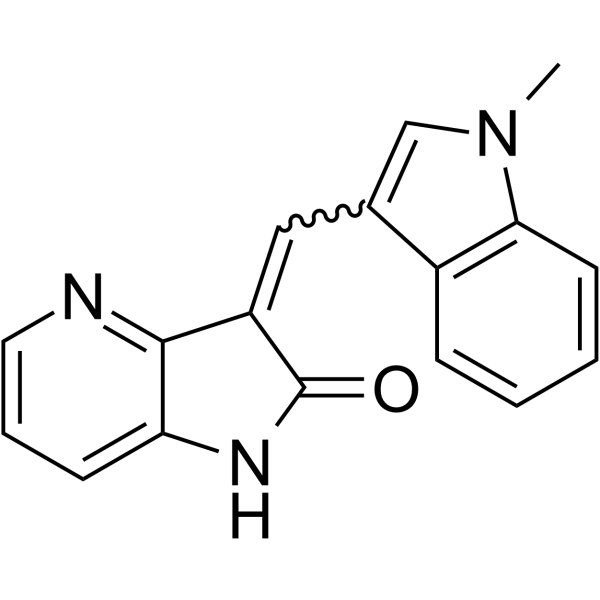
GW 441756
Based on 12 publication(s) in Google Scholar
GW 441756 is a potent and specific nerve growth factor (NGF) receptor tyrosine kinases A (TrkA) inhibitor (IC50=2 nM), which eliminates the BmK NSPK-induced neurite outgrowth.
Nos produits utilisent uniquement pour la recherche. Nous ne vendons pas aux patients.
- Pureté : 99.88%
- CAS No.: 504433-23-2
- Formule: C17H13N3O
- Masse moléculaire:275.30
-
Stockage:Powder -20°C, 3 years , 4°C, 2 years ; In solvent -80°C, 2 years , -20°C, 1 year

To place orders, for customer services and technical support, please contact: MedChemExpress USA
Tel: 609-228-6898 E-mail: [email protected] [email protected]


-
 Activité biologique
-
Chemical Information
-
Solvant et solubilité
- Protocole
- Pureté et documentation
- Références
-
 Help & FAQs


-
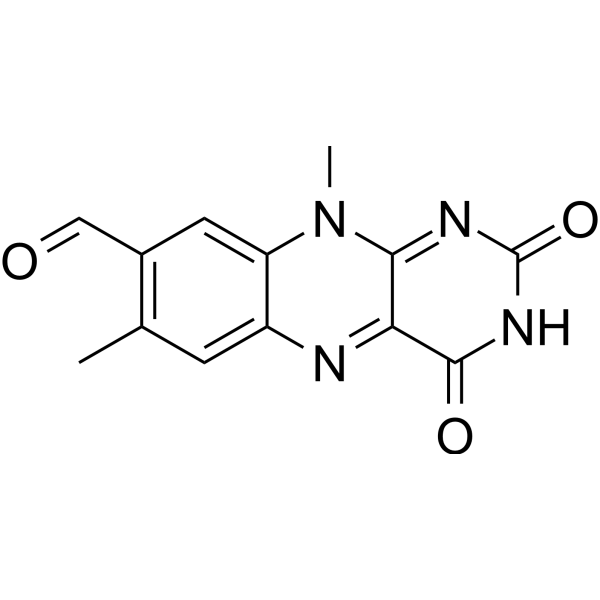
HY-108466
Ro 08-2750NGF Inhibitor -
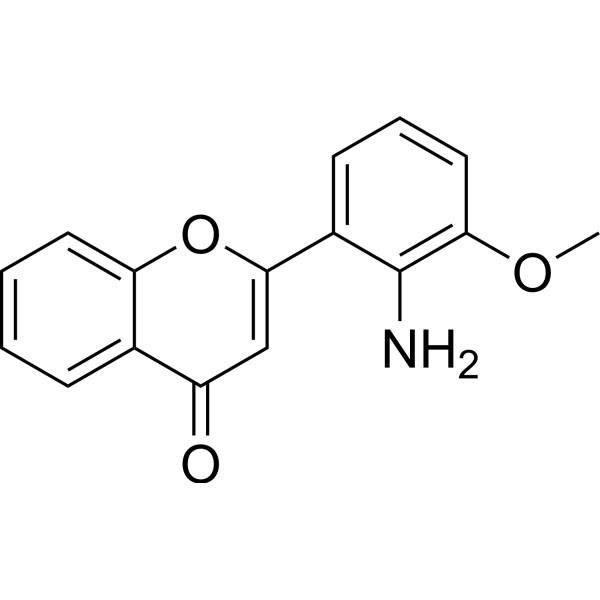
HY-12028
PD98059MEK Inhibitor -
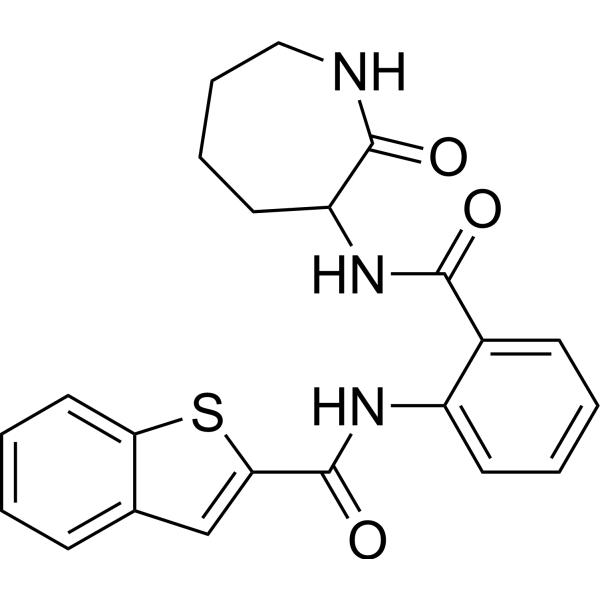
HY-12497
ANA-12TrkB Antagonist -
HY-B0015
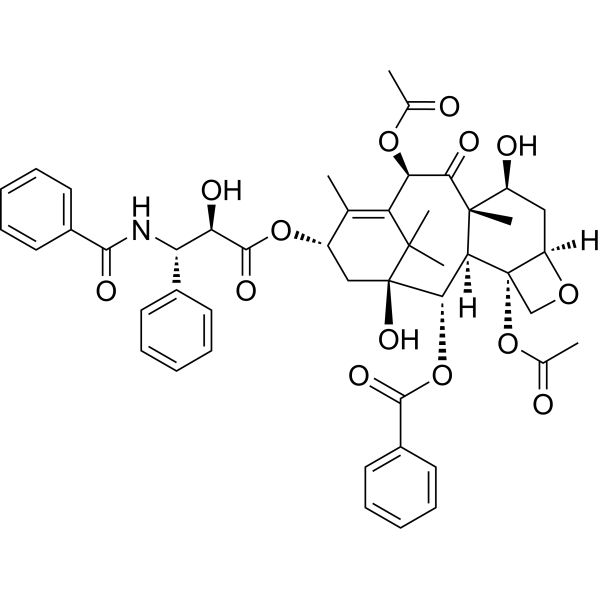
PaclitaxelAntitumor Agent -
HY-90006
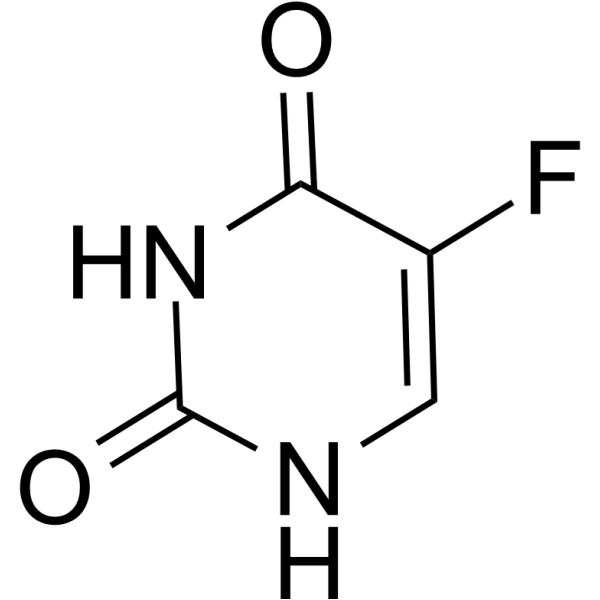
5-FluorouracilThymidylate Synthase Inhibitor -
HY-15531
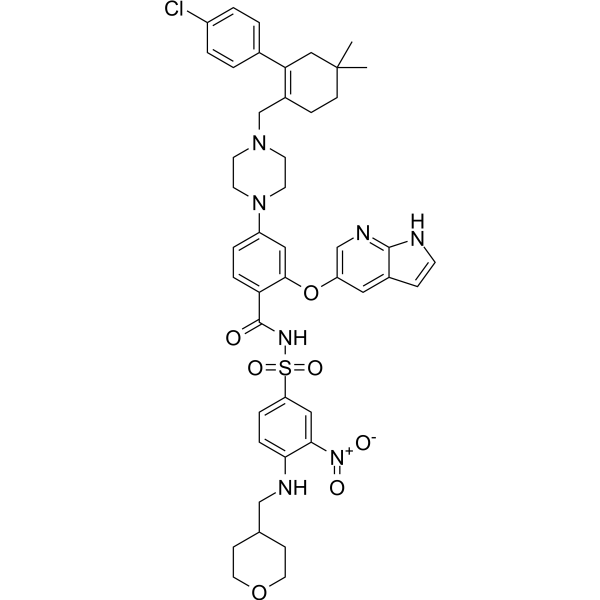
VenetoclaxBCL-2 Inhibitor -
HY-50767
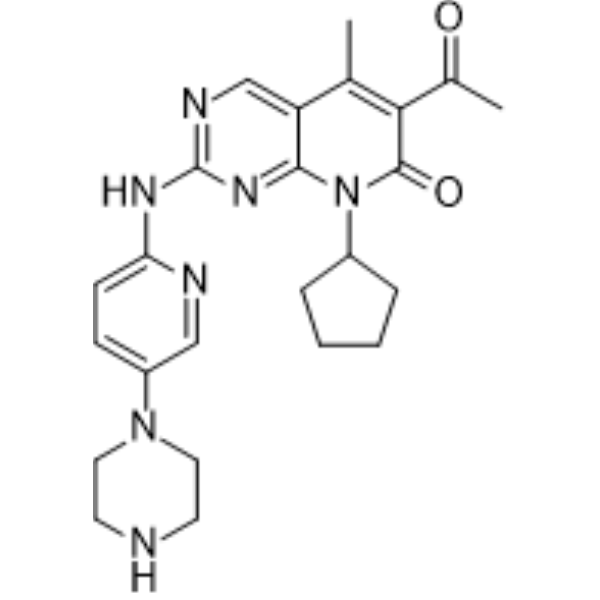
PalbociclibCDK4/6 Inhibitor -
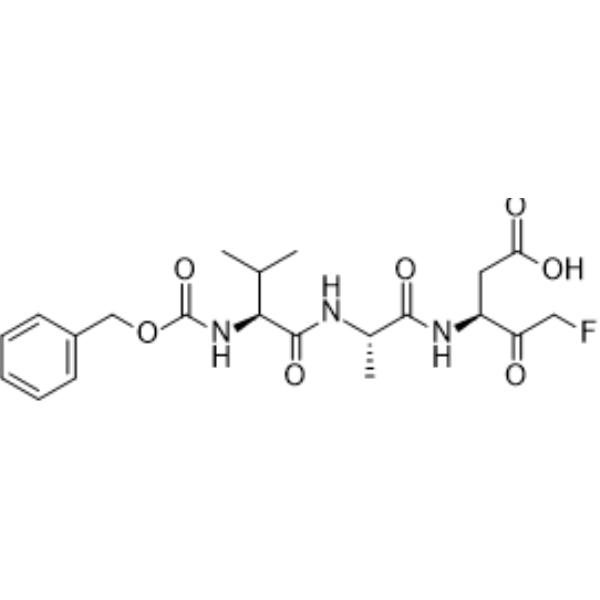
HY-16658B
Z-VAD-FMKPan-Caspase Inhibitor -
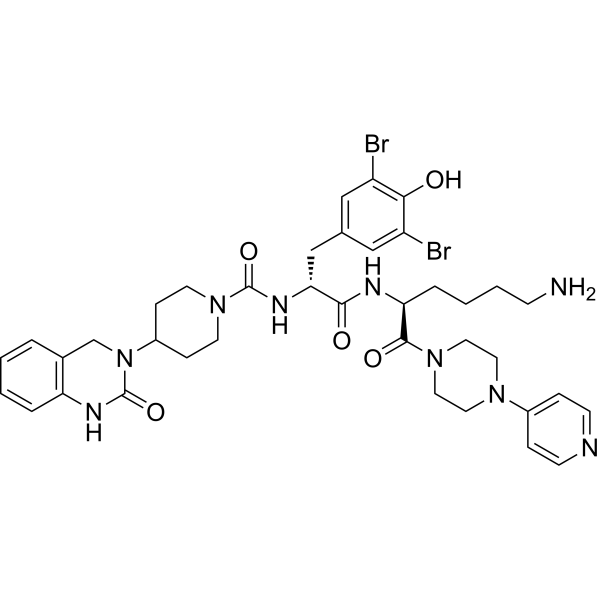
HY-10095
OlcegepantCGRP Antagonist -
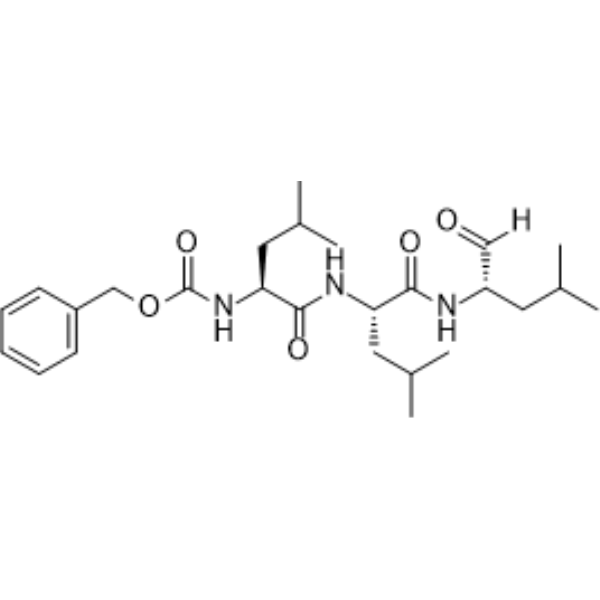
HY-13259
MG-132Proteasome Inhibitor -
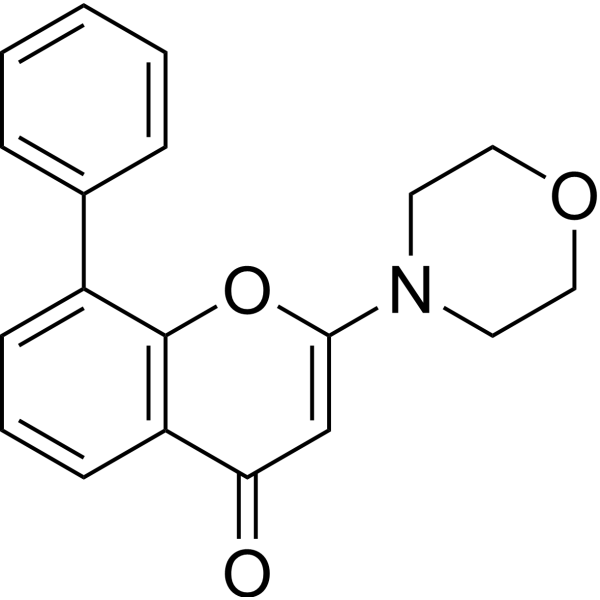
HY-10108
LY294002PI3K Inhibitor -
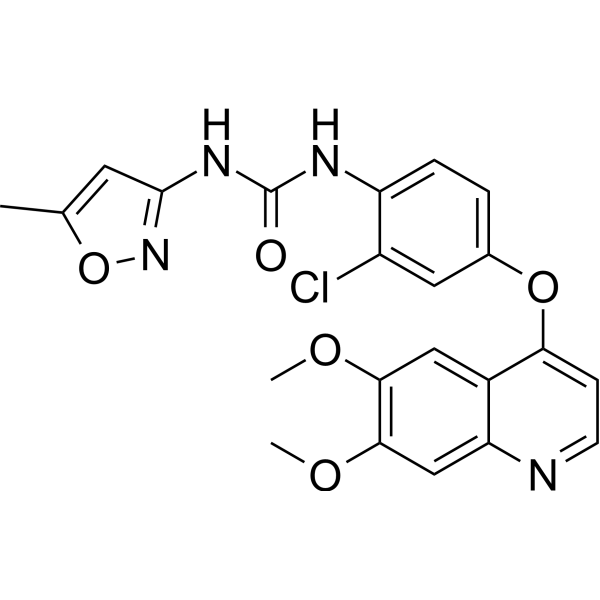
HY-10977
TivozanibVEGFR inhibitor
Publications Citing Use of MedChemExpress (MCE) GW 441756
More- Cell Metab. 2022 Dec 6;34(12):1999-2017.e10. [Abstract]
- Adv Sci (Weinh). 2024 Oct;11(39):e2403058. [Abstract]
- Int J Biol Sci. 2025 Jun 12;21(9):4081-4097. [Abstract]
- J Hazard Mater. 2022 Jan 15;422:126850. [Abstract]
- CNS Neurosci Ther. 2026 Aug;32(8):e71062.
- J Clin Endocrinol Metab. 2026 Jan 20:dgag017. [Abstract]
- Spine J. 2024 Aug;24(8):1527-1537. [Abstract]
- Sci Rep. 2026 Jun 20. [Abstract]
- J Funct Foods. 2018 Jul;46:175-184.
- Pathogens. 2025 Mar 31;14(4):333. [Abstract]
- bioRxiv. 2026 May 7.
- bioRxiv. 2021 Feb 17.
 Customer Validation & Images

-
Cell Proliferation/Viability Assay

-
Cell Migration/Invasion Assay

-
WB


Activité biologique
Description
IC50 & Target
[1]|
TrkA 2 nM (IC50) |
Cellular Effect
|
Cell Line

|
Type | Value | Description | References |
|---|---|---|---|---|
| Sf21 | IC50 |
0.003 μM
Compound: GW441756
|
Inhibition of human N- terminal GST-tagged TrkA cytoplasmic domain (436 to 790 residues) expressed in baculovirus infected sf21 cells using biotinylated peptide substrate incubated for 15 mins followed by addition of ATP measured after 30 mins by TR-FRET
Inhibition of human N- terminal GST-tagged TrkA cytoplasmic domain (436 to 790 residues) expressed in baculovirus infected sf21 cells using biotinylated peptide substrate incubated for 15 mins followed by addition of ATP measured after 30 mins by TR-FRET
|
[PMID: 27856237] |
| Sf9 | IC50 |
2 nM
Compound: 2
|
Inhibition of human TrkA expressed in Sf9 cells by amplified luminescent proximity assay
Inhibition of human TrkA expressed in Sf9 cells by amplified luminescent proximity assay
|
[PMID: 18646745] |
In Vitro
GW-441756 (1 μM; 48 hours; spinal cord neurons cells) abolishs BmK NSPK-induced neurite outgrowth[1].
GW-441756 (1 μM; 4 hours; PC12 cells) inhibits nerve growth factor induced neurite outgrowth[1].
MedChemExpress (MCE) has not independently confirmed the accuracy of these methods. They are for reference only.
-
Cell Line:Spinal cord neurons cells
-
Concentration:1 µM
-
Incubation Time:48 hours
-
Result:Abolished BmK NSPK-induced neurite outgrowth.


Chemical Information
-
CAS No. 504433-23-2
-
Appearance Solid
-
Masse moléculaire 275.30
-
Formule C17H13N3O
-
Color Brown to reddish brown
-
SMILES
O=C1/C(C2=NC=CC=C2N1)=C\C3=CN(C)C4=C3C=CC=C4
-
Livraison
Room temperature in continental US; may vary elsewhere.
-
Stockage
Powder -20°C 3 years 4°C 2 years In solvent -80°C 2 years -20°C 1 year


Publications (12)
-
Journal Impact Factor
-
Most Recent
-
Cell Metab
Cancer cells co-opt nociceptive nerves to thrive in nutrient-poor environments and upon nutrient-starvation therapies. [Abstract]2022 Dec 6;34(12):1999-2017.e10. PMID: 36395769 -
Adv Sci (Weinh)
Ginsenoside Rg3 Restores Mitochondrial Cardiolipin Homeostasis via GRB2 to Prevent Parkinson's Disease. [Abstract]2024 Oct;11(39):e2403058. PMID: 39159293 -
Int J Biol Sci
Promoter Hyper-methylation of ZNF662 Restrains its Tumor Suppressing Function in Triple-Negative Breast Cancer Through Regulating NGF Signaling Axis. [Abstract]2025 Jun 12;21(9):4081-4097. PMID: 40612670 -
J Hazard Mater
BDE-47 induced PC-12 cell differentiation via TrkA downstream pathways and caused the loss of hippocampal neurons in BALB/c mice. [Abstract]2022 Jan 15;422:126850. PMID: 34419847 -
-
J Clin Endocrinol Metab
NGF promotes, in an autocrine-paracrine manner, metabolic and anti-inflammatory pathways in human and mouse adipocytes. [Abstract]2026 Jan 20:dgag017. PMID: 41556140
GW 441756 purchased from MedChemExpress. Usage Cited in: J Clin Endocrinol Metab. 2026 Jan 20:dgag017. [Abstract]
Effect of GW441756 (1 μM) on MB231 and YCCB1 cell proliferation was determined by CCK-8 assay.
GW 441756 purchased from MedChemExpress. Usage Cited in: J Clin Endocrinol Metab. 2026 Jan 20:dgag017. [Abstract]
Effect of GW441756 (1 μM) on MB231 and YCCB1 cell migration and invasion was determined by Transwell assay.
GW 441756 purchased from MedChemExpress. Usage Cited in: J Clin Endocrinol Metab. 2026 Jan 20:dgag017. [Abstract]
Effect of GW441756 (1 μM) on downstream signaling pathways was examined by Western blot.
-
Spine J
2024 Aug;24(8):1527-1537. PMID: 38608821 -
Sci Rep
Deciphering glutamine metabolic reprogramming: a novel therapeutic target ALDH18A1 in triple-negative breast cancer. [Abstract]2026 Jun 20. PMID: 42323345 -
-
Pathogens
Cellular Receptor Tyrosine Kinase Signaling Plays Important Roles in SARS-CoV-2 Infection. [Abstract]2025 Mar 31;14(4):333. PMID: 40333134 -
-


Solvant et solubilité
In Vitro:
DMSO : 62.5 mg/mL (227.03 mM; Need ultrasonic; Hygroscopic DMSO has a significant impact on the solubility of product, please use newly opened DMSO)
Please refer to the solubility information to select the appropriate solvent. Once prepared, please aliquot and store the solution to prevent product inactivation from repeated freeze-thaw cycles.
Storage method and period of stock solution: -80°C, 2 years; -20°C, 1 year. When stored at -80°C, please use it within 2 years. When stored at -20°C, please use it within 1 year.
Please refer to the solubility information to select the appropriate solvent. Once prepared, please aliquot and store the solution to prevent product inactivation from repeated freeze-thaw cycles.
Storage method and period of stock solution: -80°C, 2 years; -20°C, 1 year. When stored at -80°C, please use it within 2 years. When stored at -20°C, please use it within 1 year.
Concentration (start) × Volume (start) = Concentration (final) × Volume (final)
In Vivo:
Select the appropriate dissolution method based on your experimental animal and administration route.
- For the following dissolution methods, please ensure to first prepare a clear stock solution using an In Vitro approach and then sequentially add co-solvents:
- To ensure reliable experimental results, the clarified stock solution can be appropriately stored based on storage conditions. As for the working solution for In Vivo experiments, it is recommended to prepare freshly and use it on the same day.
- The percentages shown for the solvents indicate their volumetric ratio in the final prepared solution. If precipitation or phase separation occurs during preparation, heat and/or sonication can be used to aid dissolution.
Add each solvent one by one: 10% DMSO 40% PEG300 5% Tween-80 45% Saline
Solubility: ≥ 2.08 mg/mL (7.56 mM); Clear solution
This protocol yields a clear solution of ≥ 2.08 mg/mL (saturation unknown).
Taking 1 mL working solution as an example, add 100 μL DMSO stock solution (20.8 mg/mL) to 400 μL PEG300, and mix evenly; then add 50 μL Tween-80 and mix evenly; then add 450 μL Saline to adjust the volume to 1 mL.
Preparation of Saline: Dissolve 0.9 g sodium chloride in ddH₂O and dilute to 100 mL to obtain a clear Saline solution.
In Vivo Dissolution Calculator
Please enter the basic information of animal experiments:
-
-
-
-
Recommended: Prepare an additional quantity of animals to account for potential losses during experiments.
Please enter your animal formula composition:
-
%DMSO +
Recommended: Keep the proportion of DMSO in working solution below 2% if your animal is weak.
-
%+
-
+%Tween-80 + +
-
%Saline +
The co-solvents required include: DMSO, . All of co-solvents are available by MedChemExpress (MCE). , Tween 80. All of co-solvents are available by MedChemExpress (MCE).
Working solution concentration: 0.22 mg/mL
Method for preparing stock solution: mg drug dissolved in μL DMSO. Stock solution concentration: mg/mL.
1. Take μL DMSO stock solution;
2. Add μL .
μL , mix evenly;
3. Then add μL Tween 80, mix evenly;
4. Then add μL
Please ensure that the stock solution in the first step is dissolved to a clear state, and add co-solvents in sequence. You can use ultrasonic heating (ultrasonic cleaner, recommended frequency 20-40 kHz), vortexing, etc. to assist dissolution.


Pureté et documentation
-
Fiche technique (280 KB)
-
SDS (393 KB)
- English - EN (393 KB)
- Français - FR (393 KB)
- Deutsch - DE (393 KB)
- Norwegian - NO (393 KB)
- Español - ES (393 KB)
- Swedish - SV (393 KB)
- Italian - IT (393 KB)
- Korean - KR (393 KB)
- Portuguese - PT (393 KB)
-
Instruction de manipulation (2659 KB)
Références
[1]. Zhao F, et al. BmK NSPK, a Potent Potassium Channel Inhibitor from Scorpion Buthus martensii Karsch, Promotes Neurite Outgrowth via NGF/TrkA Signaling Pathway. Toxins (Basel). 2021;13(1):33. Published 2021 Jan 5. [Content Brief]
[2]. Terada K, et al. Cholinesterase inhibitor rivastigmine enhances nerve growth factor-induced neurite outgrowth in PC12 cells via sigma-1 and sigma-2 receptors. PLoS One. 2018;13(12):e0209250. Published 2018 Dec 17. [Content Brief]
[3]. Wood ER, et al. Discovery and in vitro evaluation of potent TrkA kinase inhibitors: oxindole and aza-oxindoles. Bioorg Med Chem Lett. 2004;14(4):953-957. [Content Brief]


Complete Stock Solution Preparation Table
Please refer to the solubility information to select the appropriate solvent. Once prepared, please aliquot and store the solution to prevent product inactivation from repeated freeze-thaw cycles.
Storage method and period of stock solution: -80°C, 2 years; -20°C, 1 year. When stored at -80°C, please use it within 2 years. When stored at -20°C, please use it within 1 year.
| Optional Solvent | Concentration Solvent Mass | 1 mg | 5 mg | 10 mg | 25 mg |
|---|---|---|---|---|---|
| DMSO | 1 mM | 3.6324 mL | 18.1620 mL | 36.3240 mL | 90.8100 mL |
| 5 mM | 0.7265 mL | 3.6324 mL | 7.2648 mL | 18.1620 mL | |
| 10 mM | 0.3632 mL | 1.8162 mL | 3.6324 mL | 9.0810 mL | |
| 15 mM | 0.2422 mL | 1.2108 mL | 2.4216 mL | 6.0540 mL | |
| 20 mM | 0.1816 mL | 0.9081 mL | 1.8162 mL | 4.5405 mL | |
| 25 mM | 0.1453 mL | 0.7265 mL | 1.4530 mL | 3.6324 mL | |
| 30 mM | 0.1211 mL | 0.6054 mL | 1.2108 mL | 3.0270 mL | |
| 40 mM | 0.0908 mL | 0.4541 mL | 0.9081 mL | 2.2703 mL | |
| 50 mM | 0.0726 mL | 0.3632 mL | 0.7265 mL | 1.8162 mL | |
| 60 mM | 0.0605 mL | 0.3027 mL | 0.6054 mL | 1.5135 mL | |
| 80 mM | 0.0454 mL | 0.2270 mL | 0.4541 mL | 1.1351 mL | |
| 100 mM | 0.0363 mL | 0.1816 mL | 0.3632 mL | 0.9081 mL |


GW 441756 Related Classifications
HY-18314 Related Classifications
 Powered by Bioz