



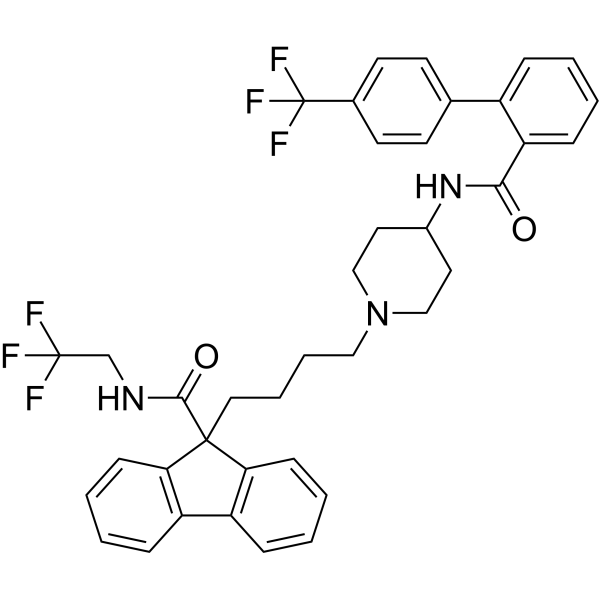
Lomitapide
Based on 8 publication(s) in Google Scholar
Lomitapide (AEGR-733; BMS-201038) is a potent inhibitor of microsomal triglyceride-transfer protein (MTP) with an IC50 of 8 nM in vitro.
Nos produits utilisent uniquement pour la recherche. Nous ne vendons pas aux patients.
- Pureté : 99.63%
- CAS No.: 182431-12-5
- Formule: C39H37F6N3O2
- Masse moléculaire:693.72
-
Stockage:Powder -20°C, 3 years , 4°C, 2 years ; In solvent -80°C, 2 years , -20°C, 1 year

To place orders, for customer services and technical support, please contact: MedChemExpress USA
Tel: 609-228-6898 E-mail: [email protected] [email protected]


-
 Activité biologique
-
Chemical Information
-
Solvant et solubilité
- Pureté et documentation
- Références
-
 Help & FAQs


-
HY-17502
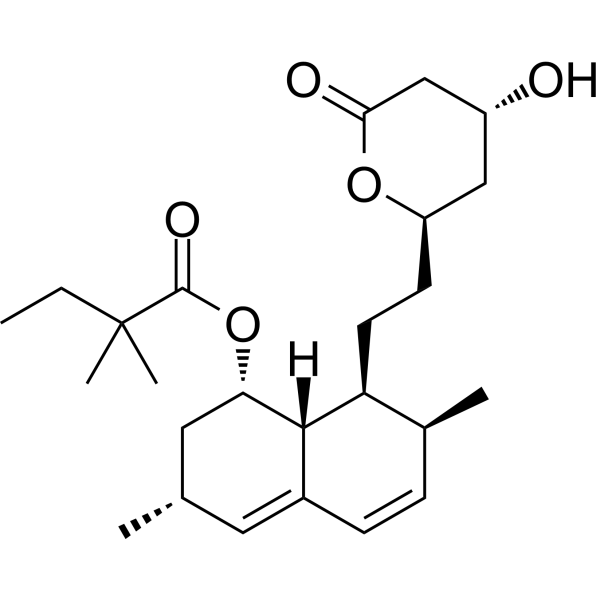
SimvastatinHMGCR Inhibitor -
HY-14668
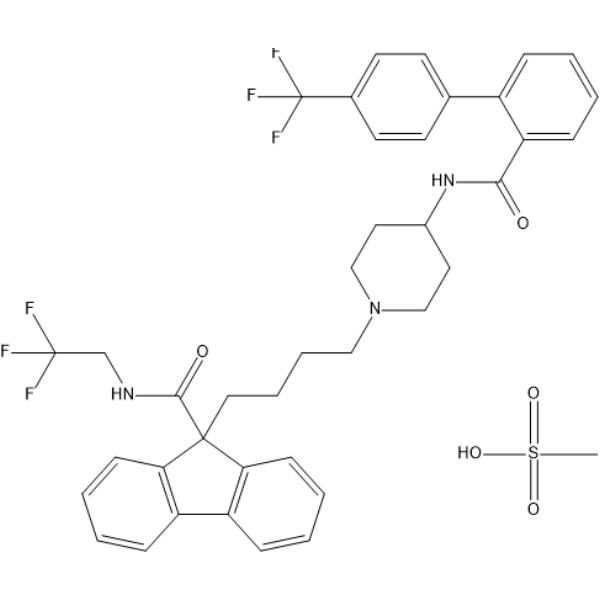
Lomitapide mesylatemTORC1 Inhibitor -
HY-B0141
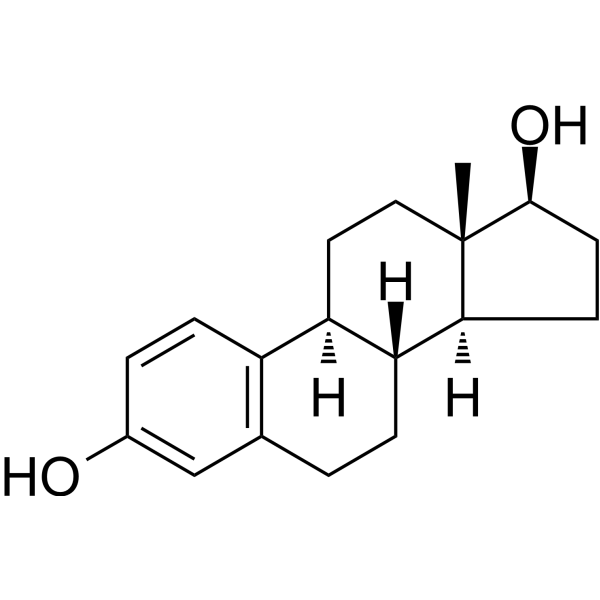
EstradiolHuman Endogenous Metabolite -
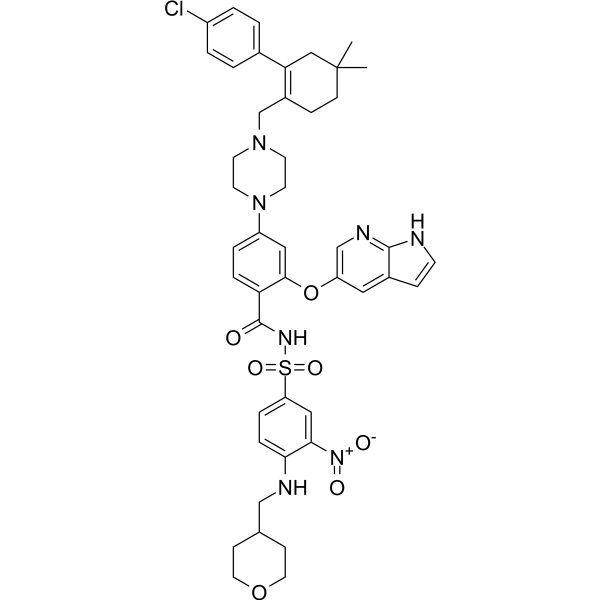
HY-15531
VenetoclaxBCL-2 Inhibitor -
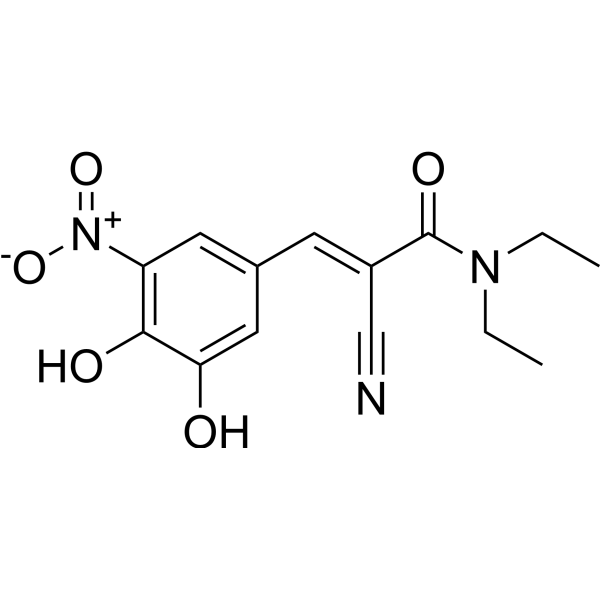
HY-14280
EntacaponeCOMT Inhibitor -
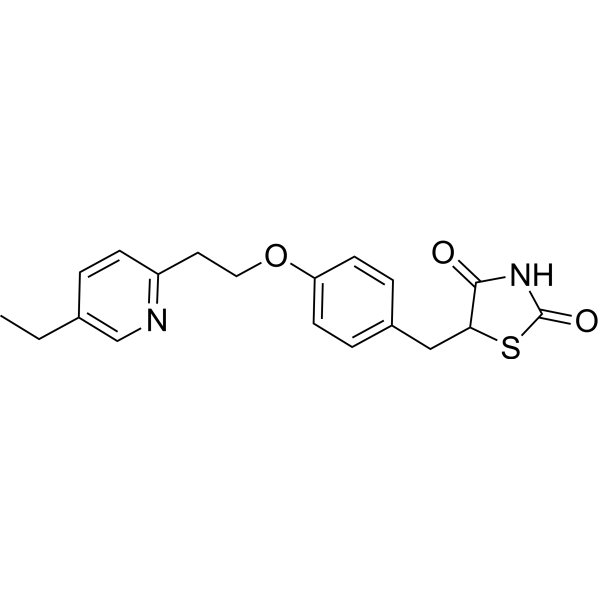
HY-13956
PioglitazonePPARγ Agonist -
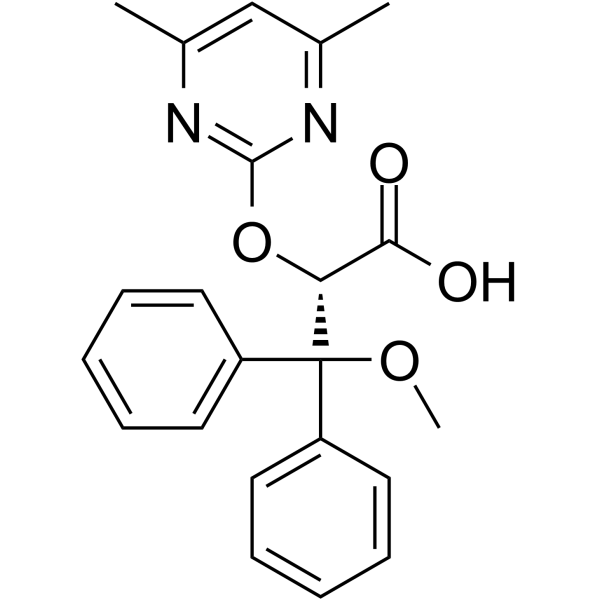
HY-13209
Ambrisentan -
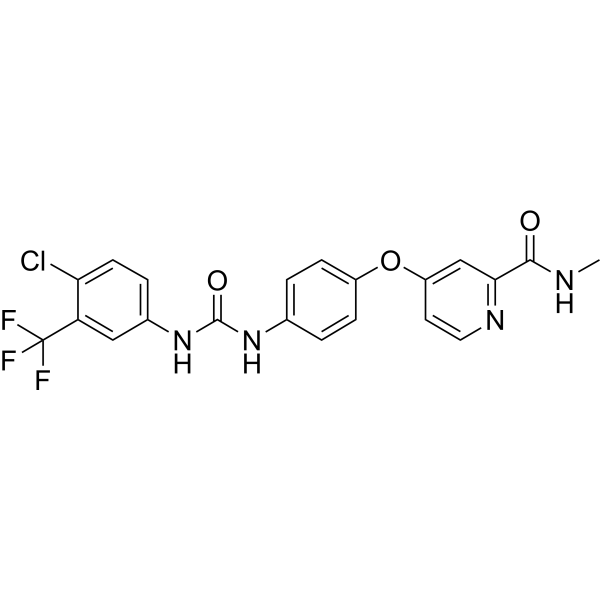
HY-10201
SorafenibMultikinase Inhibitor -
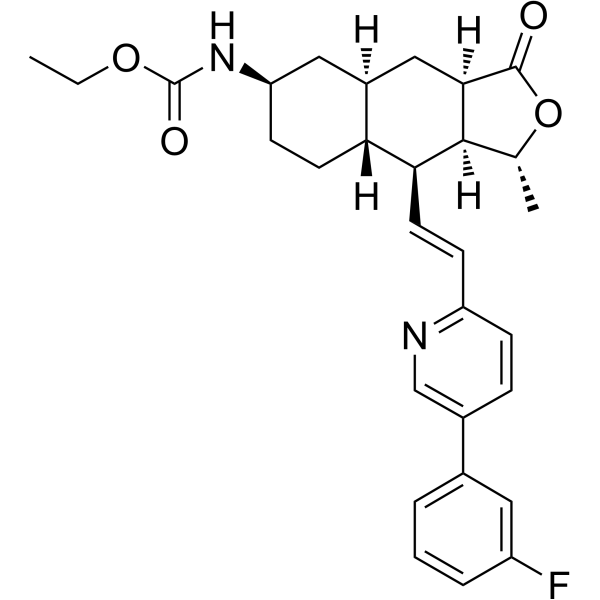
HY-10119
VorapaxarPAR-1 Antagonist -
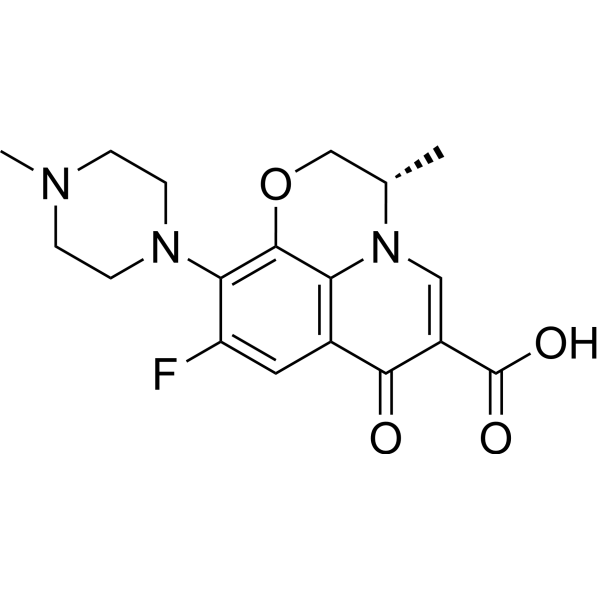
HY-B0330
LevofloxacinDNA Gyrase/Topoisomerase Inhibitor -
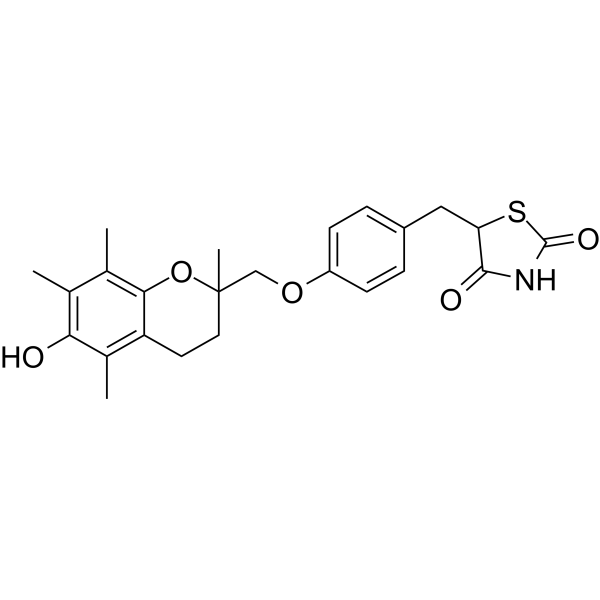
HY-50935
TroglitazonePPARγ Agonist -
HY-100218A
RSL3GPX4 Inhibitor
Publications Citing Use of MedChemExpress (MCE) Lomitapide
More- Adv Mater. 2024 Jun;36(24):e2311760. [Abstract]
- Free Radic Biol Med. 2021 Aug 20:172:213-225. [Abstract]
- Cell Rep. 2026 Apr 21;45(5):117295. [Abstract]
- Liver Int. 2025 Apr;45(4):e70027. [Abstract]
- BMC Microbiol. 2022 Apr 26;22(1):114. [Abstract]
- J Lipid Res. 2024 Oct;65(10):100635. [Abstract]
- bioRxiv. 2026 Jul 31.
- bioRxiv. 2025 Jul 21.
 Customer Validation & Images

-
Cell Proliferation/Viability Assay
-
Cell Imaging/Staining
-
Cell Proliferation/Viability Assay
-
Flow Cytometry
-
Cell Imaging/Staining


Activité biologique
Description
IC50 & Target
IC50: 8 nM (MTP)[1]
Cellular Effect
|
Cell Line

|
Type | Value | Description | References |
|---|---|---|---|---|
| HepG2 | ED50 |
0.8 nM
Compound: 12
|
Antiproliferative activity against human HepG2 cells assessed as inhibition of cell growth
Antiproliferative activity against human HepG2 cells assessed as inhibition of cell growth
|
[PMID: 36155354] |
| HepG2 | ED50 |
0.8 nM
Compound: 2
|
inhibitory activity against secretion of lipoproteins apoB and apoA1 from human HepG2 cell lines
inhibitory activity against secretion of lipoproteins apoB and apoA1 from human HepG2 cell lines
|
[PMID: 15380200] |
| HepG2 | IC50 |
0.8 nM
Compound: 1, BMS-201038
|
In vitro inhibition of human microsomal triglyceride transfer protein in HepG2 cells using apoB secretion assay
In vitro inhibition of human microsomal triglyceride transfer protein in HepG2 cells using apoB secretion assay
|
[PMID: 11300866] |
In Vitro
Lomitapide is an oral microsomal triglyceride transfer protein (MTP) inhibitor indicated for the treatment of patients with HoFH, a rare form of hypercholesterolemia that can lead to premature atherosclerotic disease. Lomitapide undergoes hepatic metabolism via cytochrome P-450 (CYP) isoenzyme 3A4 and interacts with CYP3A4 substrates including Atorvastatin (HY-B0589) and Simvastatin (HY-17502)[2].
MedChemExpress (MCE) has not independently confirmed the accuracy of these methods. They are for reference only.
In Vivo
MedChemExpress (MCE) has not independently confirmed the accuracy of these methods. They are for reference only.


Chemical Information
-
CAS No. 182431-12-5
-
Appearance Solid
-
Masse moléculaire 693.72
-
Formule C39H37F6N3O2
-
Color White to off-white
-
SMILES
O=C(C1(CCCCN2CCC(NC(C3=CC=CC=C3C4=CC=C(C(F)(F)F)C=C4)=O)CC2)C5=C(C6=C1C=CC=C6)C=CC=C5)NCC(F)(F)F
-
Synonyms
AEGR-733; BMS-201038
-
Livraison
Room temperature in continental US; may vary elsewhere.
-
Stockage
Powder -20°C 3 years 4°C 2 years In solvent -80°C 2 years -20°C 1 year


Publications (8)
-
Journal Impact Factor
-
Most Recent
-
Adv Mater
Efficient Delivery of Lomitapide using Hybrid Membrane-Coated Tetrahedral DNA Nanostructures for Glioblastoma Therapy. [Abstract]2024 Jun;36(24):e2311760. PMID: 38569065
Lomitapide purchased from MedChemExpress. Usage Cited in: Adv Mater. 2024 Jun;36(24):e2311760. [Abstract]
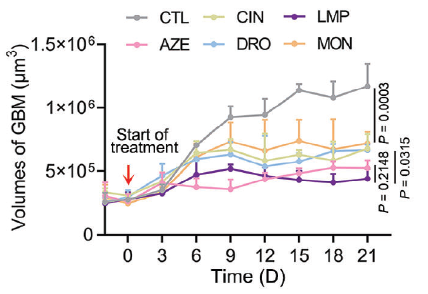
Lomitapide (LMP) (10 μM; 21 d) significantly inhibited the growth of 3D U251 cells.
Lomitapide purchased from MedChemExpress. Usage Cited in: Adv Mater. 2024 Jun;36(24):e2311760. [Abstract]
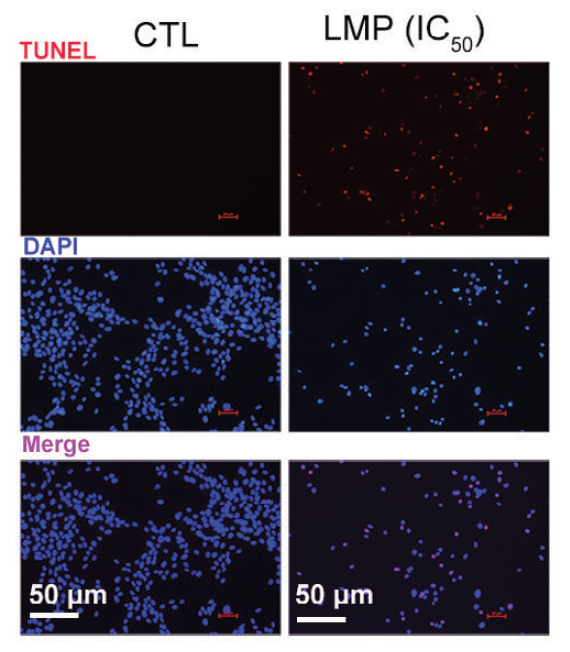
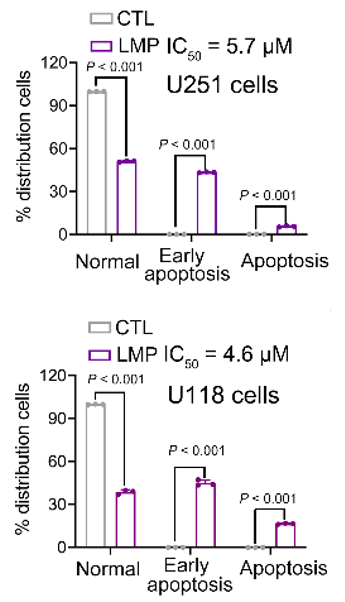
Lomitapide (LMP) (5.8 μM) induced apoptosis in GBM cells.
Lomitapide purchased from MedChemExpress. Usage Cited in: Adv Mater. 2024 Jun;36(24):e2311760. [Abstract]
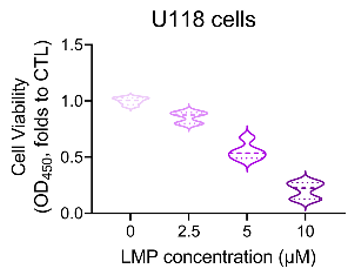
Lomitapide (LMP) (2.5-10 μM; 24 h) exhibited a concentration-dependent increase in cytotoxicity against U118 cells.
Lomitapide purchased from MedChemExpress. Usage Cited in: Adv Mater. 2024 Jun;36(24):e2311760. [Abstract]
Lomitapide (LMP) (5.8 μM) mainly induced GBM cells to undergo early apoptosis.
Lomitapide purchased from MedChemExpress. Usage Cited in: Adv Mater. 2024 Jun;36(24):e2311760. [Abstract]
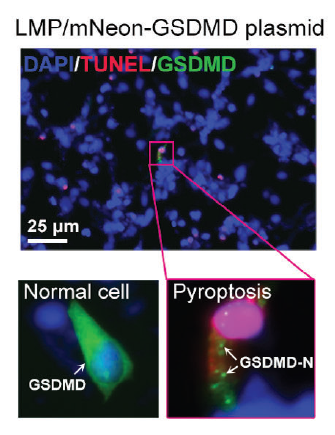
Lomitapide (LMP) (5.8 μM) induced the oligomeric GSDMD-N-terminal structural domains to aggregate on the membrane, thereby expediting pyroptosis of U251 cells.
-
Free Radic Biol Med
Lipid overload impairs hepatic VLDL secretion via oxidative stress-mediated PKCδ-HNF4α-MTP pathway in large yellow croaker (Larimichthys crocea). [Abstract]2021 Aug 20:172:213-225. PMID: 34116177 -
Cell Rep
Increased yolk lipid mobilization promotes zebrafish post-segmentation growth via an Hnf4-lipoprotein axis. [Abstract]2026 Apr 21;45(5):117295. PMID: 42018437 -
Liver Int
Disentangling Organ-Specific Roles of Farnesoid X Receptor in Bile Acid and Glucolipid Metabolism. [Abstract]2025 Apr;45(4):e70027. PMID: 40052709 -
BMC Microbiol
Antibacterial activities and action mode of anti-hyperlipidemic lomitapide against Staphylococcus aureus. [Abstract]2022 Apr 26;22(1):114. PMID: 35473561 -
J Lipid Res
Therapeutic siRNA targeting PLIN2 ameliorates steatosis, inflammation, and fibrosis in steatotic liver disease models. [Abstract]2024 Oct;65(10):100635. PMID: 39187042 -
-


Solvant et solubilité
In Vitro:
DMSO : ≥ 100 mg/mL (144.15 mM; Hygroscopic DMSO has a significant impact on the solubility of product, please use newly opened DMSO)
* "≥" means soluble, but saturation unknown.
Please refer to the solubility information to select the appropriate solvent. Once prepared, please aliquot and store the solution to prevent product inactivation from repeated freeze-thaw cycles.
Storage method and period of stock solution: -80°C, 2 years; -20°C, 1 year. When stored at -80°C, please use it within 2 years. When stored at -20°C, please use it within 1 year.
Please refer to the solubility information to select the appropriate solvent. Once prepared, please aliquot and store the solution to prevent product inactivation from repeated freeze-thaw cycles.
Storage method and period of stock solution: -80°C, 2 years; -20°C, 1 year. When stored at -80°C, please use it within 2 years. When stored at -20°C, please use it within 1 year.
Concentration (start) × Volume (start) = Concentration (final) × Volume (final)
In Vivo:
Select the appropriate dissolution method based on your experimental animal and administration route.
- For the following dissolution methods, please ensure to first prepare a clear stock solution using an In Vitro approach and then sequentially add co-solvents:
- To ensure reliable experimental results, the clarified stock solution can be appropriately stored based on storage conditions. As for the working solution for In Vivo experiments, it is recommended to prepare freshly and use it on the same day.
- The percentages shown for the solvents indicate their volumetric ratio in the final prepared solution. If precipitation or phase separation occurs during preparation, heat and/or sonication can be used to aid dissolution.
Add each solvent one by one: 10% DMSO 40% PEG300 5% Tween-80 45% Saline
Solubility: ≥ 2.5 mg/mL (3.60 mM); Clear solution
This protocol yields a clear solution of ≥ 2.5 mg/mL (saturation unknown).
Taking 1 mL working solution as an example, add 100 μL DMSO stock solution (25.0 mg/mL) to 400 μL PEG300, and mix evenly; then add 50 μL Tween-80 and mix evenly; then add 450 μL Saline to adjust the volume to 1 mL.
Preparation of Saline: Dissolve 0.9 g sodium chloride in ddH₂O and dilute to 100 mL to obtain a clear Saline solution.
Add each solvent one by one: 10% DMSO 90% (20% SBE-β-CD in Saline)
Solubility: 2.5 mg/mL (3.60 mM); Suspended solution; Need ultrasonic
This protocol yields a suspended solution of 2.5 mg/mL. Suspended solution can be used for oral and intraperitoneal injection.
Taking 1 mL working solution as an example, add 100 μL DMSO stock solution (25.0 mg/mL) to 900 μL 20% SBE-β-CD in Saline, and mix evenly.
Preparation of 20% SBE-β-CD in Saline (4°C, storage for one week): 2 g SBE-β-CD powder is dissolved in 10 mL Saline, completely dissolve until clear.
In Vivo Dissolution Calculator
Please enter the basic information of animal experiments:
-
-
-
-
Recommended: Prepare an additional quantity of animals to account for potential losses during experiments.
Please enter your animal formula composition:
-
%DMSO +
Recommended: Keep the proportion of DMSO in working solution below 2% if your animal is weak.
-
%+
-
+%Tween-80 + +
-
%Saline +
The co-solvents required include: DMSO, . All of co-solvents are available by MedChemExpress (MCE). , Tween 80. All of co-solvents are available by MedChemExpress (MCE).
Working solution concentration: 0.22 mg/mL
Method for preparing stock solution: mg drug dissolved in μL DMSO. Stock solution concentration: mg/mL.
1. Take μL DMSO stock solution;
2. Add μL .
μL , mix evenly;
3. Then add μL Tween 80, mix evenly;
4. Then add μL
Please ensure that the stock solution in the first step is dissolved to a clear state, and add co-solvents in sequence. You can use ultrasonic heating (ultrasonic cleaner, recommended frequency 20-40 kHz), vortexing, etc. to assist dissolution.


Pureté et documentation
-
Fiche technique (280 KB)
-
SDS (393 KB)
- English - EN (393 KB)
- Français - FR (393 KB)
- Deutsch - DE (393 KB)
- Norwegian - NO (393 KB)
- Español - ES (393 KB)
- Swedish - SV (393 KB)
- Italian - IT (393 KB)
- Korean - KR (393 KB)
- Portuguese - PT (393 KB)
-
Instruction de manipulation (2659 KB)
Références
[1]. Sulsky R, et al. 5-Carboxamido-1,3,2-dioxaphosphorinanes, potent inhibitors of MTP. Bioorg Med Chem Lett. 2004 Oct 18;14(20):5067-70. [Content Brief]
[2]. Davis KA. et al. Lomitapide: A novel agent for the treatment of homozygous familial hypercholesterolemia. Am J Health Syst Pharm. 2014 Jun 15;71(12):1001-8. [Content Brief]
[3]. Dhote V, et al. Inhibition of microsomal triglyceride transfer protein improves insulin sensitivity and reduces atherogenic risk in Zucker fatty rats. Clin Exp Pharmacol Physiol. 2011 May;38(5):338-44. [Content Brief]


Complete Stock Solution Preparation Table
Please refer to the solubility information to select the appropriate solvent. Once prepared, please aliquot and store the solution to prevent product inactivation from repeated freeze-thaw cycles.
Storage method and period of stock solution: -80°C, 2 years; -20°C, 1 year. When stored at -80°C, please use it within 2 years. When stored at -20°C, please use it within 1 year.
| Optional Solvent | Concentration Solvent Mass | 1 mg | 5 mg | 10 mg | 25 mg |
|---|---|---|---|---|---|
| DMSO | 1 mM | 1.4415 mL | 7.2075 mL | 14.4150 mL | 36.0376 mL |
| 5 mM | 0.2883 mL | 1.4415 mL | 2.8830 mL | 7.2075 mL | |
| 10 mM | 0.1442 mL | 0.7208 mL | 1.4415 mL | 3.6038 mL | |
| 15 mM | 0.0961 mL | 0.4805 mL | 0.9610 mL | 2.4025 mL | |
| 20 mM | 0.0721 mL | 0.3604 mL | 0.7208 mL | 1.8019 mL | |
| 25 mM | 0.0577 mL | 0.2883 mL | 0.5766 mL | 1.4415 mL | |
| 30 mM | 0.0481 mL | 0.2403 mL | 0.4805 mL | 1.2013 mL | |
| 40 mM | 0.0360 mL | 0.1802 mL | 0.3604 mL | 0.9009 mL | |
| 50 mM | 0.0288 mL | 0.1442 mL | 0.2883 mL | 0.7208 mL | |
| 60 mM | 0.0240 mL | 0.1201 mL | 0.2403 mL | 0.6006 mL | |
| 80 mM | 0.0180 mL | 0.0901 mL | 0.1802 mL | 0.4505 mL | |
| 100 mM | 0.0144 mL | 0.0721 mL | 0.1442 mL | 0.3604 mL |


Lomitapide Related Classifications
HY-14667 Related Classifications
 Powered by Bioz