



(Rac)-NSC305787
Based on 10 publication(s) in Google Scholar
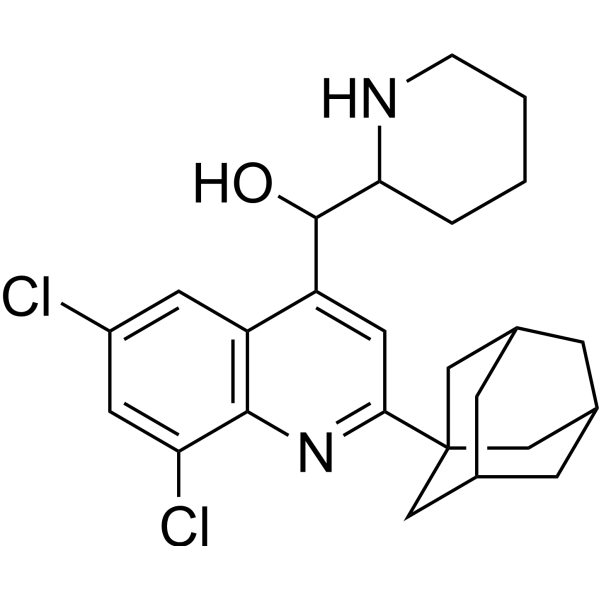
NSC305787 is an inhibitor of ezrin with a Kd of 5.85 μM, inhibits the phosphorylation of ezrin caused by PKCΙ with an IC50 of 8.3 μM, has antitumor activity.
연구목적의 판매만을 진행합니다. 환자를 대상으로 한 판매는 하지 않습니다.
- Purity : 99.29%
- CAS No.: 785718-37-8
- 화학식: C25H30Cl2N2O
- 분자량:445.42
-
보관:Powder -20°C, 3 years , 4°C, 2 years ; In solvent -80°C, 6 months , -20°C, 1 month

To place orders, for customer services and technical support, please contact: MedChemExpress USA
Tel: 609-228-6898 E-mail: [email protected] [email protected]


-
 Biological Activity
-
Chemical Information
-
용액&용해도
- Protocol
- 순도&문서
- References
-
 Help & FAQs


-
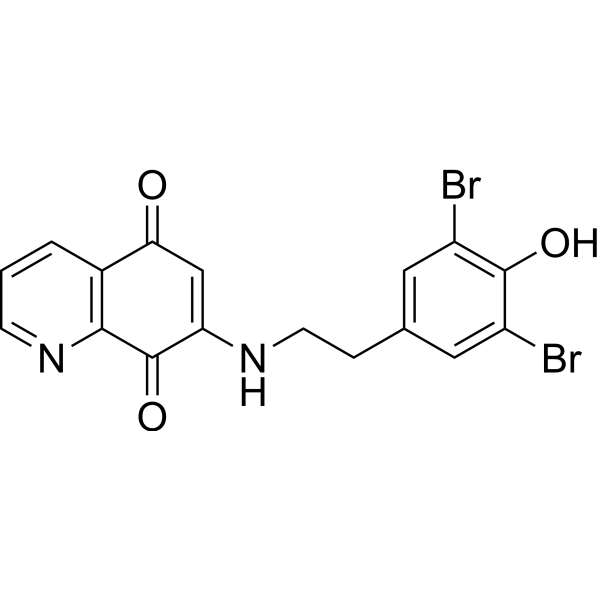
HY-115492
NSC668394p-Ezrin Inhibitor -
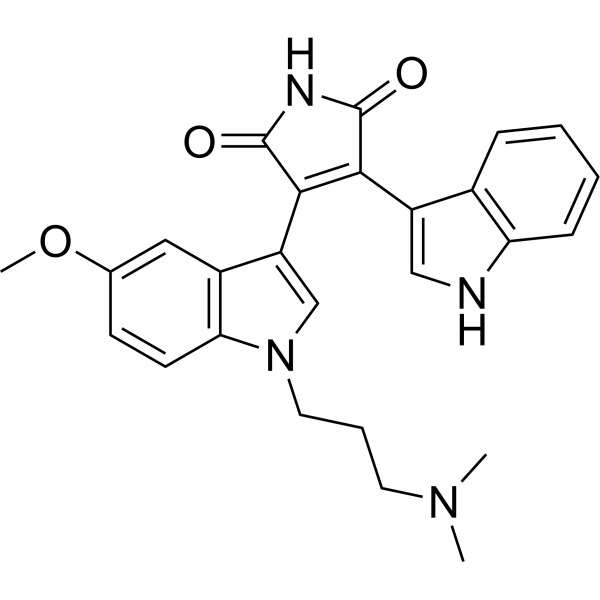
HY-13689
Go 6983PKC Inhibitor -
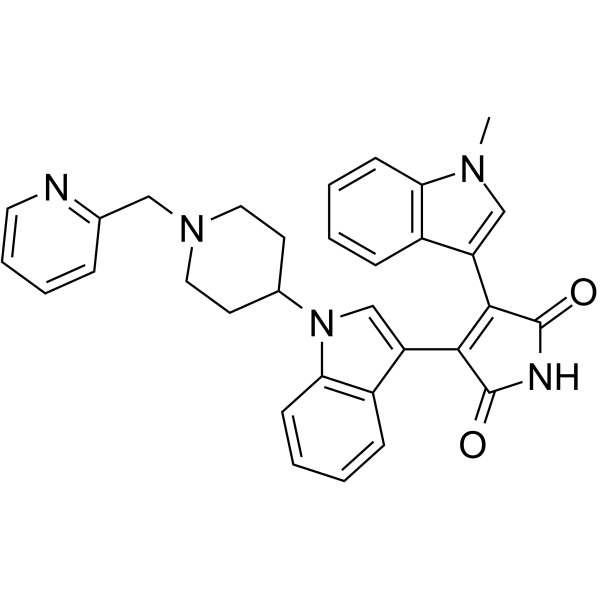
HY-10342
EnzastaurinPKCβ Inhibitor -
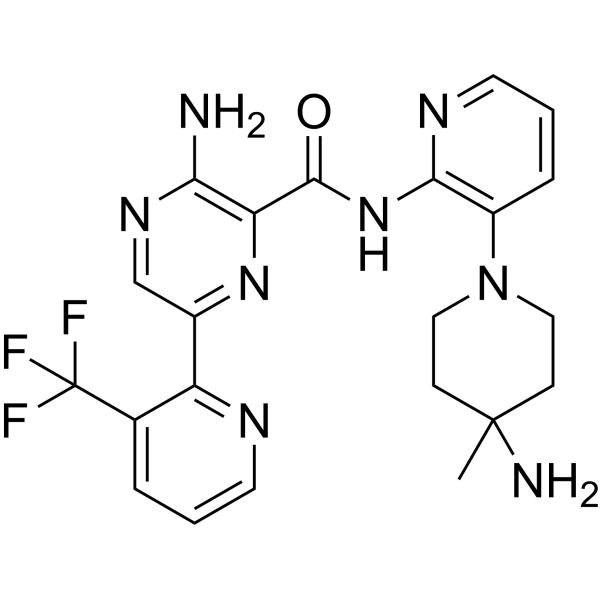
HY-101569
DarovasertibPKC Inhibitor -
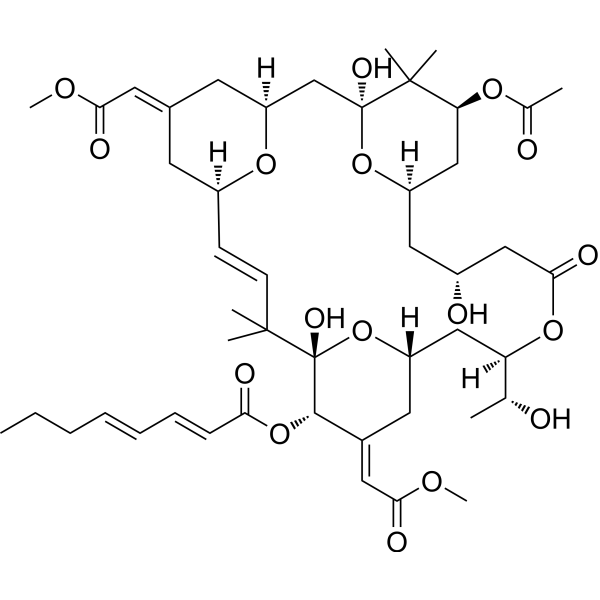
HY-105231
Bryostatin 1PKC Modulator -
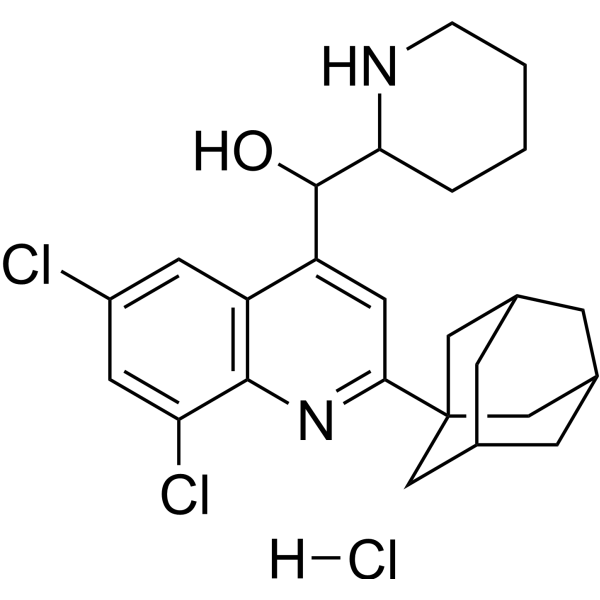
HY-18931A
(Rac)-NSC305787 hydrochlorideEzrin Inhibitor -
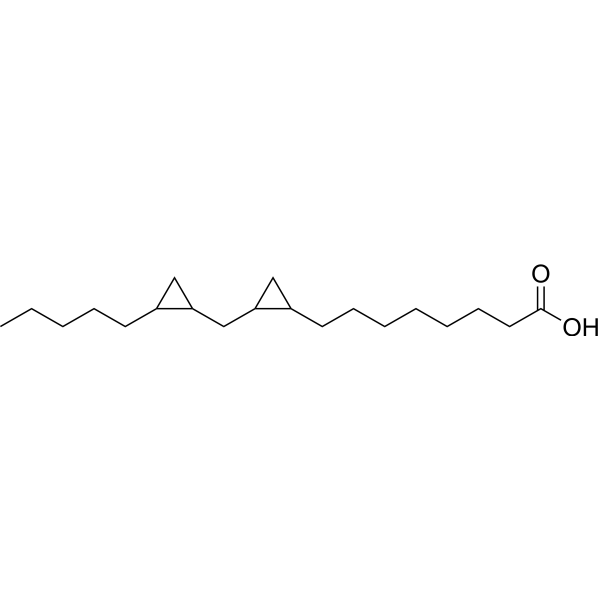
HY-108599
DCP-LAPKC Activator -
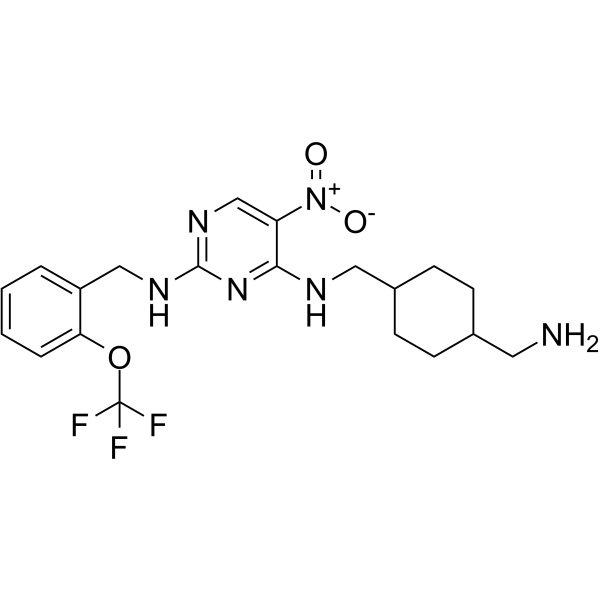
HY-112681
PKC-theta inhibitor 2PKC-θ Inhibitor -
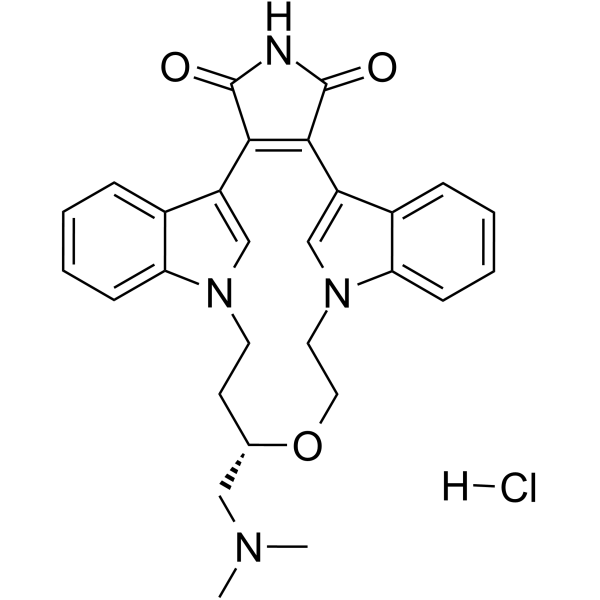
HY-10195B
Ruboxistaurin hydrochloridePKCβ Inhibitor -
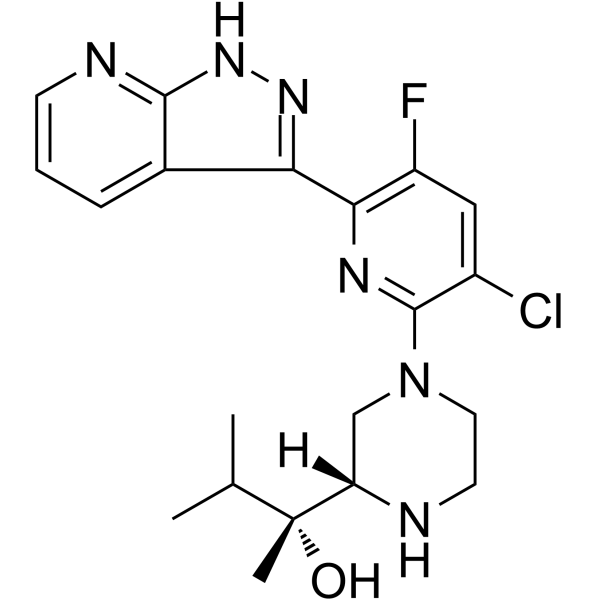
HY-112782
VTX-27PKC θ Inhibitor -
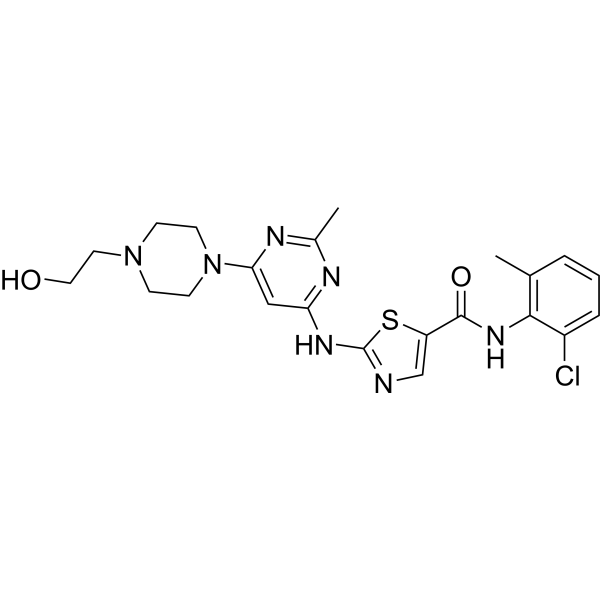
HY-10181
DasatinibSrc/Bcr-Abl Inhibitor -
HY-10162
OlaparibPARP Inhibitor
Publications Citing Use of MedChemExpress (MCE) (Rac)-NSC305787
More- Cell. 2026 Apr 2;189(7):1942-1956.e26. [Abstract]
- Cell. 2023 Jan 5;186(1):112-130.e20. [Abstract]
- Adv Sci (Weinh). 2026 Mar;13(16):e13310. [Abstract]
- Sci Adv. 2025 Oct 24;11(43):eads9181. [Abstract]
- Life Sci. 2020 Aug 1:254:117681. [Abstract]
- Front Cell Dev Biol. 2021 Sep 3;9:663207. [Abstract]
- PLoS Pathog. 2019 May 9;15(5):e1007737. [Abstract]
- J Cell Mol Med. 2022 Apr;26(7):2089-2103. [Abstract]
- Am J Physiol Renal Physiol. 2025 Aug 1;329(2):F269-F283. [Abstract]
- Biochem Biophys Res Commun. 2024 Apr 9:703:149685. [Abstract]
 Customer Validation & Images

-
WB


Biological Activity
제품 설명
IC50 & Target
In Vitro
NSC305787 is an inhibitor of ezrin with a Kd of 5.85 μM, and has antitumor activity. NSC305787 inhibits PKCΙ phosphorylation of Ezrin, Moesin, Radixin, MBP, with IC50s of 8.3, 9.4, 55, 58.9 μM, respectively. NSC305787 binds to PKCΙ with a Kd value of 172.4 μM, and inhibits ezrin T567 phosphorylation primarily via its binding to ezrin and not through inhibition of PKCΙ kinase activity. NSC305787 (1, 10 μM) shows inhibitory activity against ezrin-mediated invasion of K7M2 osteosarcoma (OS) cells. Moreover, NSC305787 (10 μM) reduces cell motility phenotypes in zebrafish and blocks OS metastatic growth in lung organ culture[1].
MedChemExpress (MCE) has not independently confirmed the accuracy of these methods. They are for reference only.
In Vivo
MedChemExpress (MCE) has not independently confirmed the accuracy of these methods. They are for reference only.


Chemical Information
-
CAS No. 785718-37-8
-
Appearance Solid
-
분자량 445.42
-
화학식 C25H30Cl2N2O
-
Color White to off-white
-
SMILES
OC(C1CCCCN1)C2=CC(C3(C[C@H](C4)C5)C[C@H]5C[C@H]4C3)=NC(C(Cl)=C6)=C2C=C6Cl
-
선적
Room temperature in continental US; may vary elsewhere.
-
보관
Powder -20°C 3 years 4°C 2 years In solvent -80°C 6 months -20°C 1 month


Publications (10)
-
Journal Impact Factor
-
Most Recent
-
Cell
Ferritin aggregation cell engager for CAR T avidity engineering against refractory leukemias. [Abstract]2026 Apr 2;189(7):1942-1956.e26. PMID: 41806835 -
Cell
SARS-CoV-2 replication in airway epithelia requires motile cilia and microvillar reprogramming. [Abstract]2023 Jan 5;186(1):112-130.e20. PMID: 36580912 -
Adv Sci (Weinh)
2026 Mar;13(16):e13310. PMID: 41589654 -
Sci Adv
The chloride intracellular channel 1 (CLIC1) is essential for microglial morphodynamics and neuroinflammation. [Abstract]2025 Oct 24;11(43):eads9181. PMID: 41124273 -
Life Sci
Ezrin T567 phosphorylation regulates migration and invasion of ectopic endometrial stromal cells by changing actin cytoskeleton. [Abstract]2020 Aug 1:254:117681. PMID: 32380081
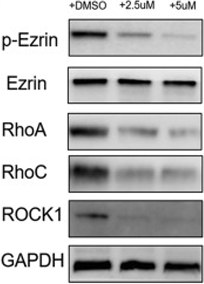
(Rac)-NSC305787 purchased from MedChemExpress. Usage Cited in: Life Sci. 2020 Aug 1:254:117681. [Abstract]
NSC305787 considerably inhibits the expression of p-ezrin, RhoA, RohC and ROCK1 without altering cellular ezrin levels at 2.5 μM and 5 μM.
-
Front Cell Dev Biol
2021 Sep 3;9:663207. PMID: 34540823 -
PLoS Pathog
A streptococcal Fic domain-containing protein disrupts blood-brain barrier integrity by activating moesin in endothelial cells. [Abstract]2019 May 9;15(5):e1007737. PMID: 31071198 -
J Cell Mol Med
CD44/ERM/F-actin complex mediates targeted nuclear degranulation and excessive neutrophil extracellular trap formation during sepsis. [Abstract]2022 Apr;26(7):2089-2103. PMID: 35146909 -
Am J Physiol Renal Physiol
Renal ischemia-reperfusion injury triggers proximal tubular apoptosis and NHE3 dysfunction via p38MAPK/ezrin signaling pathway. [Abstract]2025 Aug 1;329(2):F269-F283. PMID: 40610014 -
Biochem Biophys Res Commun
Inhibition of ezrin phosphorylation by NSC305787 attenuates procaterol-stimulated ciliary beating in airway cilia. [Abstract]2024 Apr 9:703:149685. PMID: 38373381


용액&용해도
In Vitro:
DMSO : 6 mg/mL (13.47 mM; Need ultrasonic and warming; Hygroscopic DMSO has a significant impact on the solubility of product, please use newly opened DMSO)
Please refer to the solubility information to select the appropriate solvent. Once prepared, please aliquot and store the solution to prevent product inactivation from repeated freeze-thaw cycles.
Storage method and period of stock solution: -80°C, 6 months; -20°C, 1 month. When stored at -80°C, please use it within 6 months. When stored at -20°C, please use it within 1 month.
Please refer to the solubility information to select the appropriate solvent. Once prepared, please aliquot and store the solution to prevent product inactivation from repeated freeze-thaw cycles.
Storage method and period of stock solution: -80°C, 6 months; -20°C, 1 month. When stored at -80°C, please use it within 6 months. When stored at -20°C, please use it within 1 month.
Concentration (start) × Volume (start) = Concentration (final) × Volume (final)
In Vivo:
Select the appropriate dissolution method based on your experimental animal and administration route.
- For the following dissolution methods, please ensure to first prepare a clear stock solution using an In Vitro approach and then sequentially add co-solvents:
- To ensure reliable experimental results, the clarified stock solution can be appropriately stored based on storage conditions. As for the working solution for In Vivo experiments, it is recommended to prepare freshly and use it on the same day.
- The percentages shown for the solvents indicate their volumetric ratio in the final prepared solution. If precipitation or phase separation occurs during preparation, heat and/or sonication can be used to aid dissolution.
Add each solvent one by one: 10% DMSO 40% PEG300 5% Tween-80 45% Saline
Solubility: ≥ 0.6 mg/mL (1.35 mM); Clear solution
This protocol yields a clear solution of ≥ 0.6 mg/mL (saturation unknown).
Taking 1 mL working solution as an example, add 100 μL DMSO stock solution (6.0 mg/mL) to 400 μL PEG300, and mix evenly; then add 50 μL Tween-80 and mix evenly; then add 450 μL Saline to adjust the volume to 1 mL.
Preparation of Saline: Dissolve 0.9 g sodium chloride in ddH₂O and dilute to 100 mL to obtain a clear Saline solution.
Add each solvent one by one: 10% DMSO 90% (20% SBE-β-CD in Saline)
Solubility: ≥ 0.6 mg/mL (1.35 mM); Clear solution
This protocol yields a clear solution of ≥ 0.6 mg/mL (saturation unknown).
Taking 1 mL working solution as an example, add 100 μL DMSO stock solution (6.0 mg/mL) to 900 μL 20% SBE-β-CD in Saline, and mix evenly.
Preparation of 20% SBE-β-CD in Saline (4°C, storage for one week): 2 g SBE-β-CD powder is dissolved in 10 mL Saline, completely dissolve until clear.
In Vivo Dissolution Calculator
Please enter the basic information of animal experiments:
-
-
-
-
Recommended: Prepare an additional quantity of animals to account for potential losses during experiments.
Please enter your animal formula composition:
-
%DMSO +
Recommended: Keep the proportion of DMSO in working solution below 2% if your animal is weak.
-
%+
-
+%Tween-80 + +
-
%Saline +
The co-solvents required include: DMSO, . All of co-solvents are available by MedChemExpress (MCE). , Tween 80. All of co-solvents are available by MedChemExpress (MCE).
Working solution concentration: 0.22 mg/mL
Method for preparing stock solution: mg drug dissolved in μL DMSO. Stock solution concentration: mg/mL.
1. Take μL DMSO stock solution;
2. Add μL .
μL , mix evenly;
3. Then add μL Tween 80, mix evenly;
4. Then add μL
Please ensure that the stock solution in the first step is dissolved to a clear state, and add co-solvents in sequence. You can use ultrasonic heating (ultrasonic cleaner, recommended frequency 20-40 kHz), vortexing, etc. to assist dissolution.


순도&문서
-
Data Sheet (285 KB)
-
SDS (393 KB)
- English - EN (393 KB)
- Français - FR (393 KB)
- Deutsch - DE (393 KB)
- Norwegian - NO (393 KB)
- Español - ES (393 KB)
- Swedish - SV (393 KB)
- Italian - IT (393 KB)
- Korean - KR (393 KB)
- Portuguese - PT (393 KB)
-
Handling Instructions (2659 KB)
References
[1]. Bulut G, et al. Small molecule inhibitors of ezrin inhibit the invasive phenotype of osteosarcoma cells. Oncogene. 2012 Jan 19;31(3):269-81. [Content Brief]
[2]. Çelik H, et al. Ezrin Inhibition Up-regulates Stress Response Gene Expression. J Biol Chem. 2016 Jun 17;291(25):13257-70. [Content Brief]


Complete Stock Solution Preparation Table
Please refer to the solubility information to select the appropriate solvent. Once prepared, please aliquot and store the solution to prevent product inactivation from repeated freeze-thaw cycles.
Storage method and period of stock solution: -80°C, 6 months; -20°C, 1 month. When stored at -80°C, please use it within 6 months. When stored at -20°C, please use it within 1 month.
| Optional Solvent | Concentration Solvent Mass | 1 mg | 5 mg | 10 mg | 25 mg |
|---|---|---|---|---|---|
| DMSO | 1 mM | 2.2451 mL | 11.2254 mL | 22.4507 mL | 56.1268 mL |
| 5 mM | 0.4490 mL | 2.2451 mL | 4.4901 mL | 11.2254 mL | |
| 10 mM | 0.2245 mL | 1.1225 mL | 2.2451 mL | 5.6127 mL |


(Rac)-NSC305787 Related Classifications
HY-18931 Related Classifications
 Powered by Bioz