



ONC212
Based on 6 publication(s) in Google Scholar
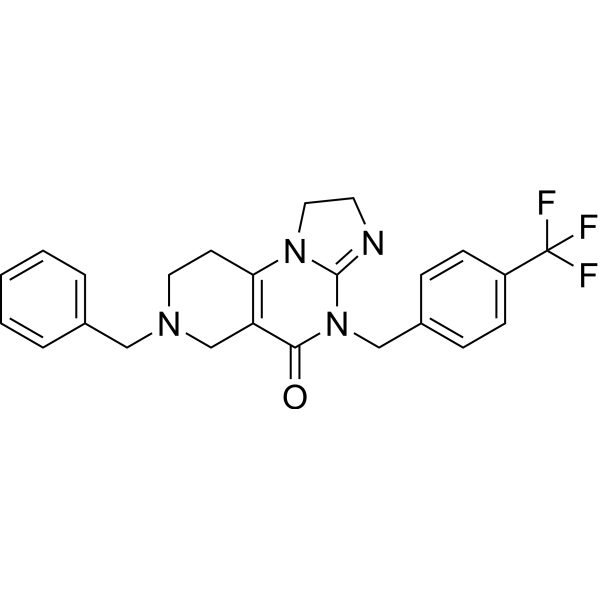
ONC212, a fluorinated-ONC201 analogue, is a promising anti-cancer agent and also a selective agonist of GPR132. ONC212 also induces apoptosis.
For research use only. We do not sell to patients.
- Purity : 99.86%
- CAS No.: 1807861-48-8
- Formula: C24H23F3N4O
- Molecular Weight:440.46
-
Storage:Powder -20°C, 3 years , 4°C, 2 years ; In solvent -80°C, 2 years , -20°C, 1 year

To place orders, for customer services and technical support, please contact: MedChemExpress USA
Tel: 609-228-6898 E-mail: [email protected] [email protected]


-
 Biological Activity
-
Chemical Information
-
Solvent & Solubility
- Protocols
- Purity & Documentation
- References
-
 Help & FAQs


-
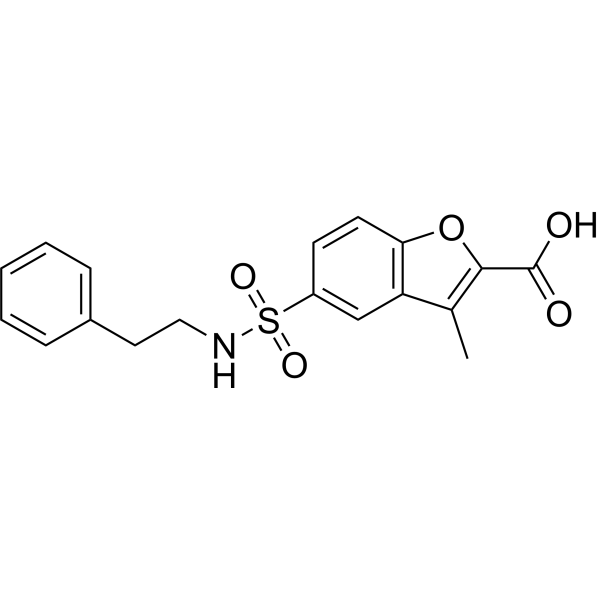
HY-157189
NOX-6-18GPR132 Antagonist -
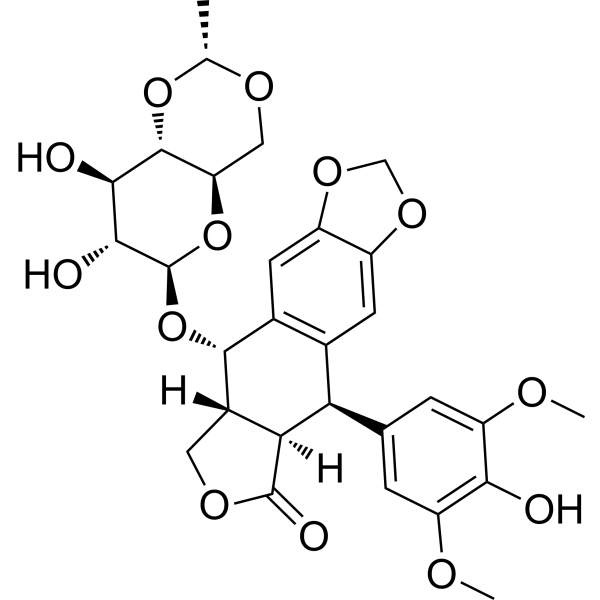
HY-13629
EtoposideTopoisomerase II Inhibitor -
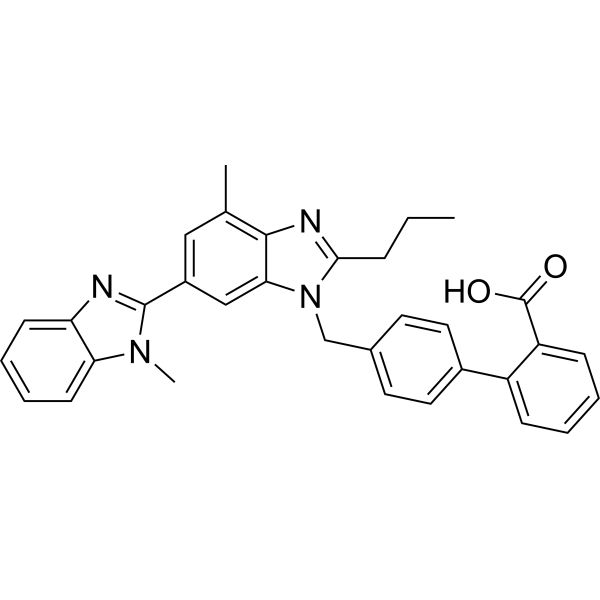
HY-13955
TelmisartanAngiotensin II Type 1 Receptor -
HY-10227
BortezomibProteasome Inhibitor -
HY-13757A
TamoxifenEstrogen Receptor Modulator -
HY-15565
APD668GPR119 Agonist -
HY-13704
SN-38Topoisomerase I Inhibitor -
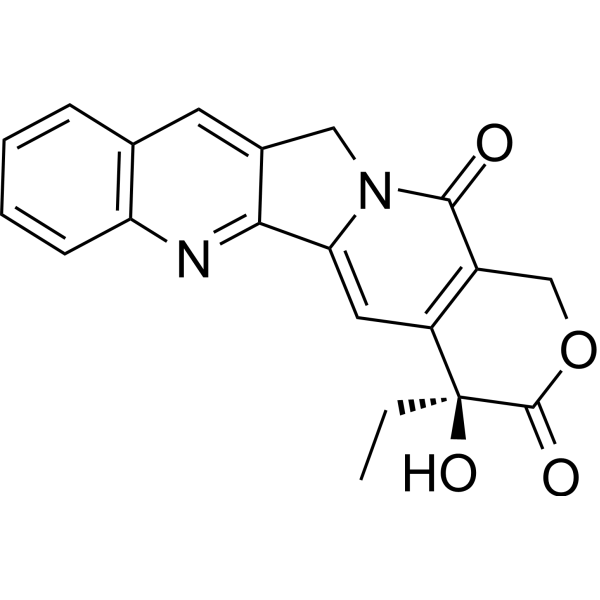
HY-16560
CamptothecinTopo I inhibitor -
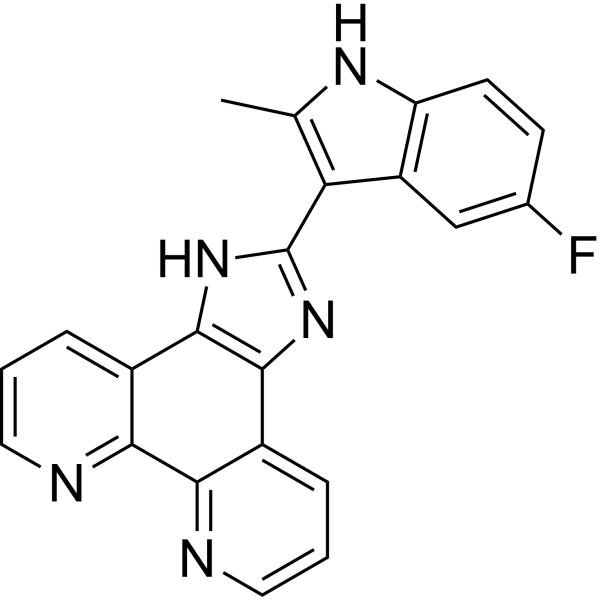
HY-16291
APTO-253 -
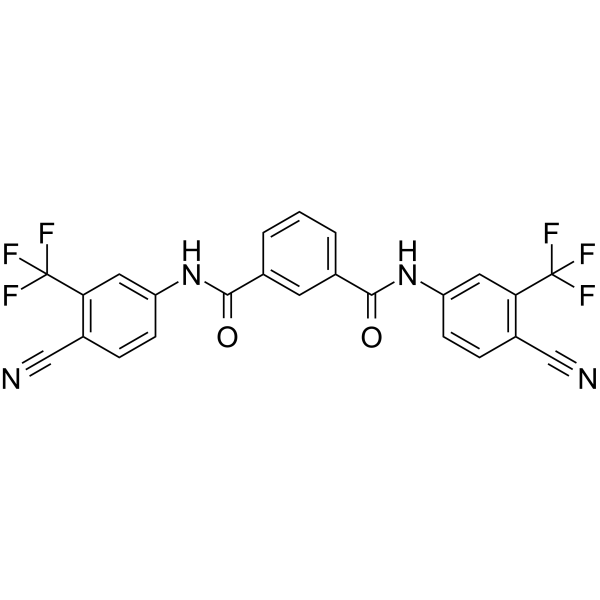
HY-114165
DJ-V-159Androgen Receptor Agonist -
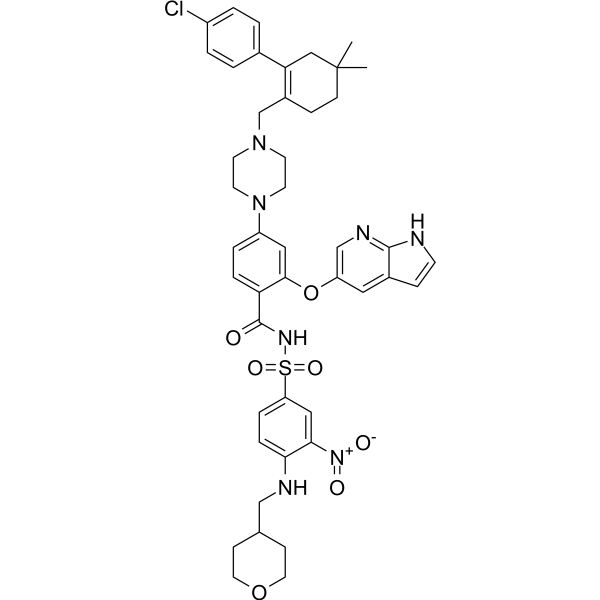
HY-15531
VenetoclaxBCL-2 Inhibitor -
HY-15566
APD597GPR119 Agonist
Publications Citing Use of MedChemExpress (MCE) ONC212
More Customer Validation & Images

-
Cell Proliferation/Viability Assay
-
IF
-
Flow Cytometry
-
WB
-
Cell Imaging/Staining


Biological Activity
Description
IC50 & Target
GPR132[1]
Cellular Effect
|
Cell Line

|
Type | Value | Description | References |
|---|---|---|---|---|
| HCT-116 | IC50 |
0.11 μM
Compound: ONC212
|
Antiproliferative activity against human HCT-116 cells assessed as inhibition of cell growth incubated for 72 hrs by CCK-8 method
Antiproliferative activity against human HCT-116 cells assessed as inhibition of cell growth incubated for 72 hrs by CCK-8 method
|
[PMID: 39172943] |
| HL-60 | IC50 |
0.09 μM
Compound: ONC212
|
Antiproliferative activity against human HL-60 cells assessed as inhibition of cell growth incubated for 72 hrs by CCK-8 method
Antiproliferative activity against human HL-60 cells assessed as inhibition of cell growth incubated for 72 hrs by CCK-8 method
|
[PMID: 39172943] |
| MIA PaCa-2 | IC50 |
0.1 μM
Compound: ONC212
|
Antiproliferative activity against human MIA PaCa-2 cells assessed as inhibition of cell growth incubated for 72 hrs by CCK-8 method
Antiproliferative activity against human MIA PaCa-2 cells assessed as inhibition of cell growth incubated for 72 hrs by CCK-8 method
|
[PMID: 39172943] |
| OCI-AML2 | IC50 |
76 nM
Compound: 35; ONC212
|
Cytotoxicity against human OCI-AML2 cells assessed as cell growth inhibition measured after 72 hrs by spectrophotometry
Cytotoxicity against human OCI-AML2 cells assessed as cell growth inhibition measured after 72 hrs by spectrophotometry
|
[PMID: 33656892] |
| OCI-AML-3 | IC50 |
60 nM
Compound: 35; ONC212
|
Cytotoxicity against human OCI-AML-3 cells assessed as cell growth inhibition measured after 72 hrs by spectrophotometry
Cytotoxicity against human OCI-AML-3 cells assessed as cell growth inhibition measured after 72 hrs by spectrophotometry
|
[PMID: 33656892] |
| SUM-159-PT | IC50 |
77 nM
Compound: 35; ONC212
|
Cytotoxicity against human SUM159PT cells assessed as cell growth inhibition measured after 72 hrs by MTS assay
Cytotoxicity against human SUM159PT cells assessed as cell growth inhibition measured after 72 hrs by MTS assay
|
[PMID: 33656892] |
| Z-138 | IC50 |
49 nM
Compound: 35; ONC212
|
Antiproliferative activity against human Z138 cells transfected with D190A mutant in NSG mouse assessed as tumor reduction at 50 mg/kg/d, po administered via oral gavage for every 2 day measured after 31 days by luminescence assay
Antiproliferative activity against human Z138 cells transfected with D190A mutant in NSG mouse assessed as tumor reduction at 50 mg/kg/d, po administered via oral gavage for every 2 day measured after 31 days by luminescence assay
|
[PMID: 33656892] |
In Vitro
Cell proliferation assay reveals that at least a ten-fold lower concentration of ONC212 is needed to achieve 50% growth inhibition in comparison to ONC201. ONC212 shows GI50 values in the range of 0.1 to 0.4 μM, while the corresponding ONC201 GI50 values are in the range of 4 to 9 μM for the seven pancreatic cancer cell lines tested. Long-term cell proliferation assay shows that both ONC201 and ONC212 are comparable in inhibiting colony formation at a 20 μM dose. However, at a 5 μM dose, ONC212 is about 50-times more potent than ONC201 in preventing colony formation in four out of the seven pancreatic cancer cell lines tested. Induction of apoptosis by ONC212 is an earlier event than ONC201. Treatment with ONC201 and ONC212 reduces the expression of anti-apoptotic markers such as XIAP and MCL-1. Western blot analysis shows that in the HPAF-II cell line, ATF4 and phosphorylated EIF2α are upregulated as early as 6 to 12 hours post ONC201 or ONC212 treatment[2].
MedChemExpress (MCE) has not independently confirmed the accuracy of these methods. They are for reference only. Further protocols information, click here.
In Vivo
ONC212 treatment exhibits significantly greater growth inhibition in comparison to ONC201. A dose of 50 mg/kg of ONC212 administered three-times a week is sufficient to lead to significant growth inhibition of tumors compare to the control group for these two models. Results demonstrate that ONC212 treated tumors show reduced proliferation in the HPAF-II model[2].
In vivo toxicity assessment experiments show that ONC212 is well tolerated up to 250 mg/kg. 300 mg/kg of ONC212 causes splenic damage and elevates liver enzymes. ONC212 has a slightly shorter half-life than ONC201, with a clearance from the blood at 12 hours, T1/2 of 4.3 hours, and Cmax of 1.4 μg/mL[3].
MedChemExpress (MCE) has not independently confirmed the accuracy of these methods. They are for reference only.


Chemical Information
-
CAS No. 1807861-48-8
-
Appearance Solid
-
Molecular Weight 440.46
-
Formula C24H23F3N4O
-
Color White to off-white
-
SMILES
O=C1N(CC2=CC=C(C(F)(F)F)C=C2)C3=NCCN3C4=C1CN(CC5=CC=CC=C5)CC4
-
Shipping
Room temperature in continental US; may vary elsewhere.
-
Storage
Powder -20°C 3 years 4°C 2 years In solvent -80°C 2 years -20°C 1 year


Publications (6)
-
Journal Impact Factor
-
Most Recent
-
Autophagy
2026 Mar 5. PMID: 41787744 -
Cell Commun Signal
ONC212, alone or in synergistic conjunction with Navitoclax (ABT-263), promotes cancer cell apoptosis via unconventional mitochondrial-independent caspase-3 activation. [Abstract]2024 Sep 13;22(1):441. PMID: 39272099
ONC212 purchased from MedChemExpress. Usage Cited in: Cell Commun Signal. 2024 Sep 13;22(1):441. [Abstract]
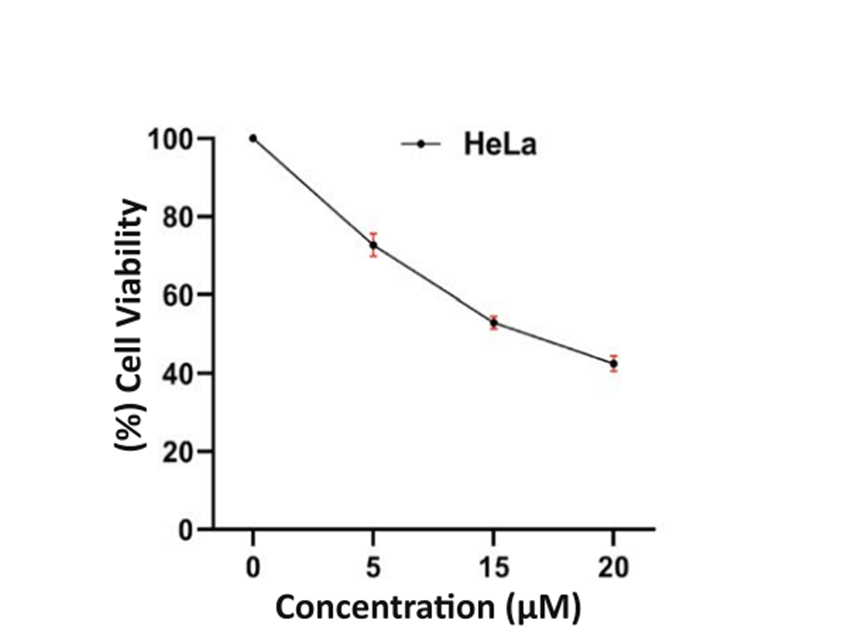
The viability of HeLa was determined by MTT assay at different concentrations (5 to 20 μM) of ONC212 treatment for 48 h. The IC50 value was calculated to be 16.3 μM.
ONC212 purchased from MedChemExpress. Usage Cited in: Cell Commun Signal. 2024 Sep 13;22(1):441. [Abstract]
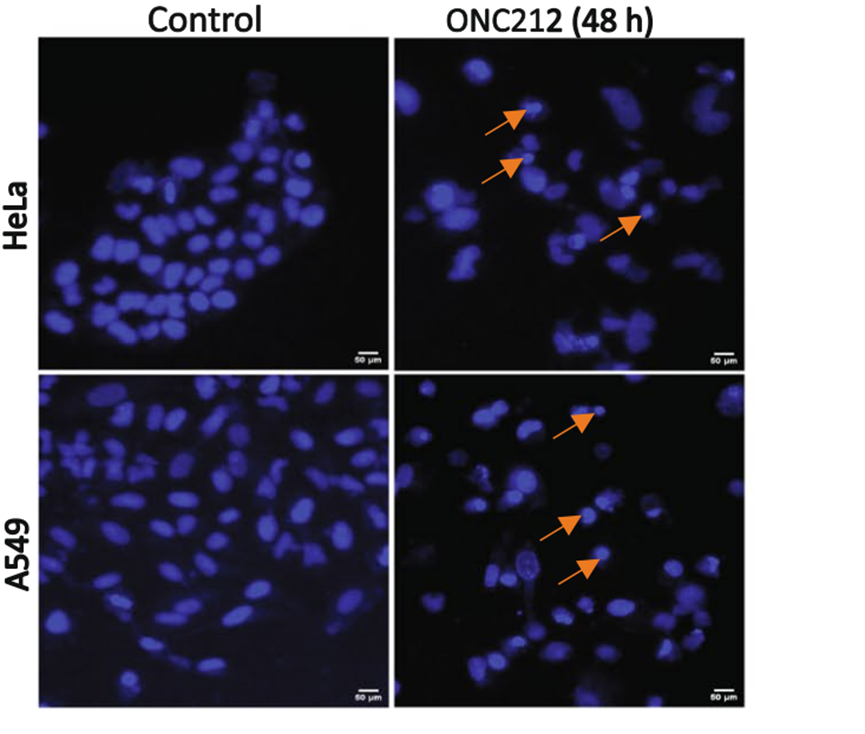
Hoechst-stained pictures of ONC212 (15 μM for Hela,and 50 μM for A549)-induced nuclear condensation.
ONC212 purchased from MedChemExpress. Usage Cited in: Cell Commun Signal. 2024 Sep 13;22(1):441. [Abstract]
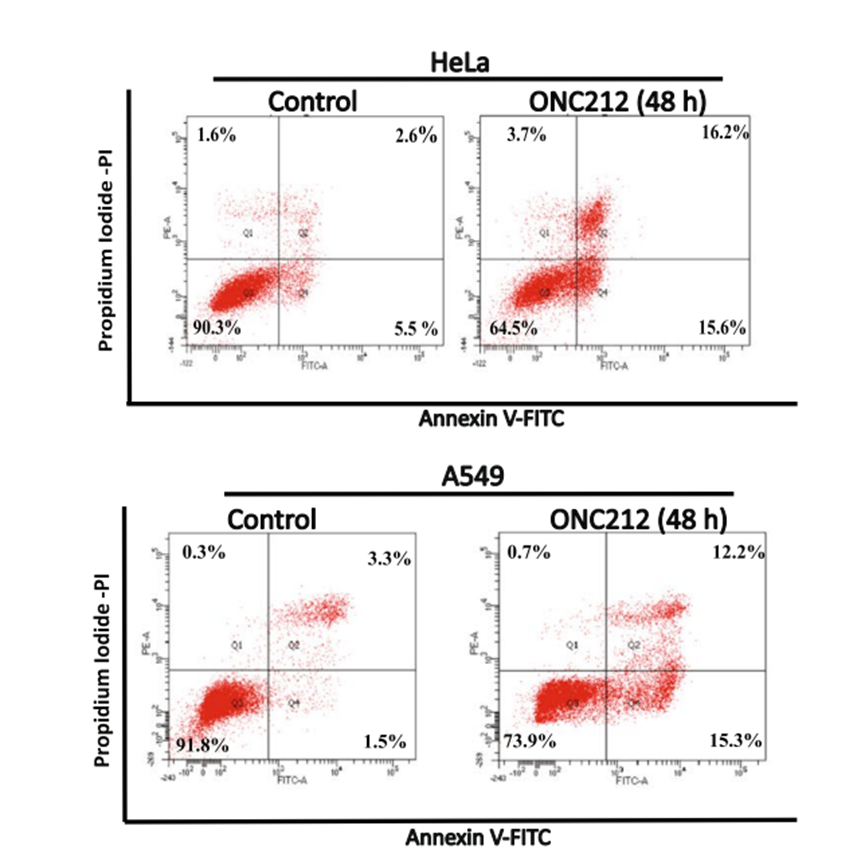
Representative flow cytometry scatter plots of Annexin-V FITC/PI staining in control and ONC212-treated cells. ONC212 (15 μM for Hela,and 50 μM for A549) treatment increased the proportion of early and late apoptotic cell populations compared to untreated control.
ONC212 purchased from MedChemExpress. Usage Cited in: Cell Commun Signal. 2024 Sep 13;22(1):441. [Abstract]
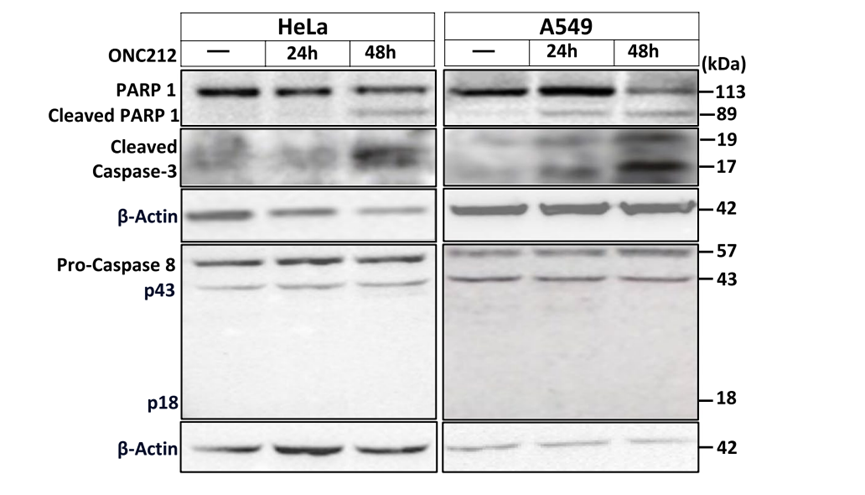
The western blot demonstrated that ONC212 (15 μM for Hela,and 50 μM for A549) treatment gradually (24 h and 48 h) induced effective caspase-3 and PARP cleavage in both HeLa and A549 cancer cells. Caspase-8 cleavage did not occur upon ONC212 treatment.
ONC212 purchased from MedChemExpress. Usage Cited in: Cell Commun Signal. 2024 Sep 13;22(1):441. [Abstract]
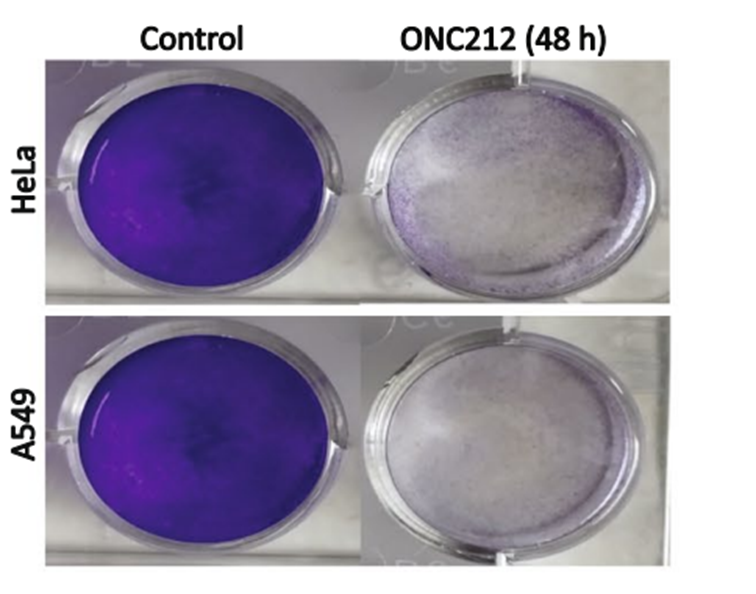
Clonogenicity assay showing the survival efficacy of cancer cells after ONC212 (15 μM for Hela,and 50 μM for A549) treatment for 48 h.
-
Biochem Pharmacol
ONC212 enhances YM155 cytotoxicity by triggering SLC35F2 expression and NOXA-dependent MCL1 degradation in acute myeloid leukemia cells. [Abstract]2024 Jun:224:116242. PMID: 38679209 -
-
-


Solvent & Solubility
In Vitro:
DMSO : 50 mg/mL (113.52 mM; Need ultrasonic; Hygroscopic DMSO has a significant impact on the solubility of product, please use newly opened DMSO)
Please refer to the solubility information to select the appropriate solvent. Once prepared, please aliquot and store the solution to prevent product inactivation from repeated freeze-thaw cycles.
Storage method and period of stock solution: -80°C, 2 years; -20°C, 1 year. When stored at -80°C, please use it within 2 years. When stored at -20°C, please use it within 1 year.
Please refer to the solubility information to select the appropriate solvent. Once prepared, please aliquot and store the solution to prevent product inactivation from repeated freeze-thaw cycles.
Storage method and period of stock solution: -80°C, 2 years; -20°C, 1 year. When stored at -80°C, please use it within 2 years. When stored at -20°C, please use it within 1 year.
Concentration (start) × Volume (start) = Concentration (final) × Volume (final)
In Vivo:
Select the appropriate dissolution method based on your experimental animal and administration route.
- For the following dissolution methods, please ensure to first prepare a clear stock solution using an In Vitro approach and then sequentially add co-solvents:
- To ensure reliable experimental results, the clarified stock solution can be appropriately stored based on storage conditions. As for the working solution for In Vivo experiments, it is recommended to prepare freshly and use it on the same day.
- The percentages shown for the solvents indicate their volumetric ratio in the final prepared solution. If precipitation or phase separation occurs during preparation, heat and/or sonication can be used to aid dissolution.
Add each solvent one by one: 10% DMSO 20% Cremophor EL 70% ddH2O
Solubility: ≥ 2.5 mg/mL (5.68 mM); Clear solution
Add each solvent one by one: 10% DMSO 40% PEG300 5% Tween-80 45% Saline
Solubility: ≥ 2.5 mg/mL (5.68 mM); Clear solution
This protocol yields a clear solution of ≥ 2.5 mg/mL (saturation unknown).
Taking 1 mL working solution as an example, add 100 μL DMSO stock solution (25.0 mg/mL) to 400 μL PEG300, and mix evenly; then add 50 μL Tween-80 and mix evenly; then add 450 μL Saline to adjust the volume to 1 mL.
Preparation of Saline: Dissolve 0.9 g sodium chloride in ddH₂O and dilute to 100 mL to obtain a clear Saline solution.
Add each solvent one by one: 10% DMSO 90% (20% SBE-β-CD in Saline)
Solubility: ≥ 2.5 mg/mL (5.68 mM); Clear solution
This protocol yields a clear solution of ≥ 2.5 mg/mL (saturation unknown).
Taking 1 mL working solution as an example, add 100 μL DMSO stock solution (25.0 mg/mL) to 900 μL 20% SBE-β-CD in Saline, and mix evenly.
Preparation of 20% SBE-β-CD in Saline (4°C, storage for one week): 2 g SBE-β-CD powder is dissolved in 10 mL Saline, completely dissolve until clear.
In Vivo Dissolution Calculator
Please enter the basic information of animal experiments:
-
-
-
-
Recommended: Prepare an additional quantity of animals to account for potential losses during experiments.
Please enter your animal formula composition:
-
%DMSO +
Recommended: Keep the proportion of DMSO in working solution below 2% if your animal is weak.
-
%+
-
+%Tween-80 + +
-
%Saline +
The co-solvents required include: DMSO, . All of co-solvents are available by MedChemExpress (MCE). , Tween 80. All of co-solvents are available by MedChemExpress (MCE).
Working solution concentration: 0.22 mg/mL
Method for preparing stock solution: mg drug dissolved in μL DMSO. Stock solution concentration: mg/mL.
1. Take μL DMSO stock solution;
2. Add μL .
μL , mix evenly;
3. Then add μL Tween 80, mix evenly;
4. Then add μL
Please ensure that the stock solution in the first step is dissolved to a clear state, and add co-solvents in sequence. You can use ultrasonic heating (ultrasonic cleaner, recommended frequency 20-40 kHz), vortexing, etc. to assist dissolution.

Protocols
-
Detection of Apoptosis
Apoptosis, also called programmed cell death, is generally characterized by distinct morphological characteristics.
-
TUNEL staining for apoptotic DNA fragmentation
TUNEL staining detects DNA strand breaks by using terminal deoxynucleotidyl transferase to add labeled nucleotides to exposed 3′-OH DNA termini, generating either microscopic staining in fixed cells or tissue sections, or fluorescence/cytometric signal in cell suspensions. TUNEL positivity reflects DNA fragmentation but should not be interpreted alone as definitive apoptosis, because TUNEL can also label necrotic, autolytic, mechanically damaged, or DNA-repair-associated DNA breaks.
-
Annexin V plus membrane-impermeant dye apoptosis staining
Annexin V-based apoptosis assays rely on the detection of phosphatidylserine (PS) externalization from the inner leaflet of the plasma membrane to the outer leaflet, an early biochemical hallmark of apoptosis. Fluorescently labeled Annexin V binds PS in a calcium-dependent manner, enabling identification of early apoptotic cells by flow cytometry or fluorescence microscopy. When combined with a membrane-impermeant DNA-binding dye (e. g. , propidium iodide), this approach allows discrimination between viable (Annexin V−/dye−), early apoptotic (Annexin V+/dye−), and late apoptotic or necrotic (Annexin V+/dye+) cell populations by assessing membrane integrity and PS exposure.
-
Apoptosis Solutions
Apoptosis is a regulated, generally non-lytic cell-death pathway that removes unwanted, damaged, infected, or abnormal cells through coordinated morphological changes, caspase activation, DNA fragmentation, and membrane remodeling. The intrinsic apoptosis pathway is controlled mainly by mitochondrial outer membrane permeabilization, BCL-2 family proteins, cytochrome c release, apoptosome formation, caspase-9 activation, and downstream executioner caspase-3/7 activation. The extrinsic apoptosis pathway is initiated by death receptors such as Fas, TNFR, and TRAIL receptors, which recruit adaptor proteins and activate caspase-8 before engaging executioner caspases or mitochondrial amplification through BID cleavage. Apoptosis is linked to many phenotypes, including cancer cell killing, tissue homeostasis, immune regulation, neurodegeneration, infection response, and treatment-induced cytotoxicity; unresolved questions include how apoptosis interacts with necroptosis, pyroptosis, ferroptos


Purity & Documentation
-
Data Sheet (279 KB)
-
SDS (701 KB)
- English - EN (701 KB)
- Français - FR (701 KB)
- Deutsch - DE (701 KB)
- Norwegian - NO (701 KB)
- Español - ES (701 KB)
- Swedish - SV (701 KB)
- Italian - IT (701 KB)
- Korean - KR (701 KB)
- Portuguese - PT (701 KB)
-
Handling Instructions (2659 KB)
References
[2]. Lev A, et al. Anti-pancreatic cancer activity of ONC212 involves the unfolded protein response (UPR) and is reduced by IGF1-R and GRP78/BIP. Oncotarget. 2017 Sep 12;8(47):81776-81793. [Content Brief]
[3]. Wagner J, et al. Preclinical evaluation of the imipridone family, analogs of clinical stage anti-cancer small molecule ONC201, reveals potent anti-cancer effects of ONC212. Cell Cycle. 2017 Oct 2;16(19):1790-1799. [Content Brief]


Complete Stock Solution Preparation Table
Please refer to the solubility information to select the appropriate solvent. Once prepared, please aliquot and store the solution to prevent product inactivation from repeated freeze-thaw cycles.
Storage method and period of stock solution: -80°C, 2 years; -20°C, 1 year. When stored at -80°C, please use it within 2 years. When stored at -20°C, please use it within 1 year.
| Optional Solvent | Concentration Solvent Mass | 1 mg | 5 mg | 10 mg | 25 mg |
|---|---|---|---|---|---|
| DMSO | 1 mM | 2.2704 mL | 11.3518 mL | 22.7035 mL | 56.7588 mL |
| 5 mM | 0.4541 mL | 2.2704 mL | 4.5407 mL | 11.3518 mL | |
| 10 mM | 0.2270 mL | 1.1352 mL | 2.2704 mL | 5.6759 mL | |
| 15 mM | 0.1514 mL | 0.7568 mL | 1.5136 mL | 3.7839 mL | |
| 20 mM | 0.1135 mL | 0.5676 mL | 1.1352 mL | 2.8379 mL | |
| 25 mM | 0.0908 mL | 0.4541 mL | 0.9081 mL | 2.2704 mL | |
| 30 mM | 0.0757 mL | 0.3784 mL | 0.7568 mL | 1.8920 mL | |
| 40 mM | 0.0568 mL | 0.2838 mL | 0.5676 mL | 1.4190 mL | |
| 50 mM | 0.0454 mL | 0.2270 mL | 0.4541 mL | 1.1352 mL | |
| 60 mM | 0.0378 mL | 0.1892 mL | 0.3784 mL | 0.9460 mL | |
| 80 mM | 0.0284 mL | 0.1419 mL | 0.2838 mL | 0.7095 mL | |
| 100 mM | 0.0227 mL | 0.1135 mL | 0.2270 mL | 0.5676 mL |


ONC212 Related Classifications
HY-111343 Related Classifications
 Powered by Bioz