



Tirabrutinib
Based on 8 publication(s) in Google Scholar
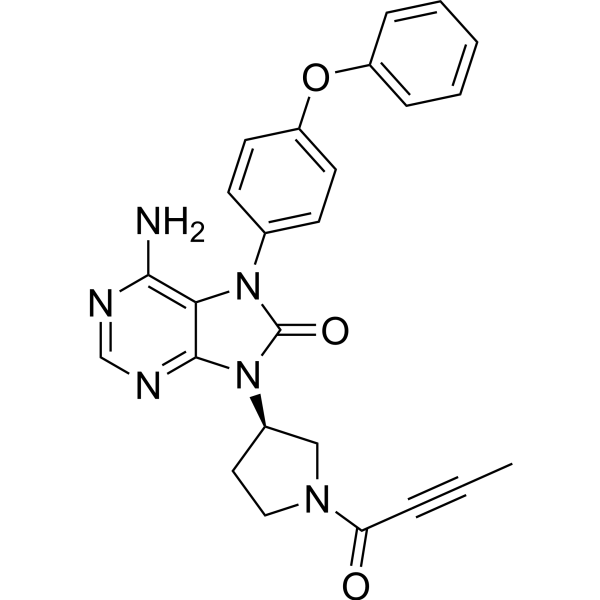
Tirabrutinib (ONO-4059) is an orally active Bruton’s Tyrosine Kinase (BTK) inhibitor (can cross the blood-brain barrier (BBB)), with an IC50 of 6.8 nM. Tirabrutinib irreversibly and covalently binds to BTK and inhibits aberrant B cell receptor signaling. Tirabrutinib can be used in studies of autoimmune diseases and hematological malignancies.
연구목적의 판매만을 진행합니다. 환자를 대상으로 한 판매는 하지 않습니다.
- Purity : 99.71%
- CAS No.: 1351636-18-4
- 화학식: C25H22N6O3
- 분자량:454.48
-
보관:Powder -20°C, 3 years , 4°C, 2 years ; In solvent -80°C, 2 years , -20°C, 1 year

To place orders, for customer services and technical support, please contact: MedChemExpress USA
Tel: 609-228-6898 E-mail: [email protected] [email protected]


-
 Biological Activity
-
Chemical Information
-
용액&용해도
- 순도&문서
- References
-
 Help & FAQs


-
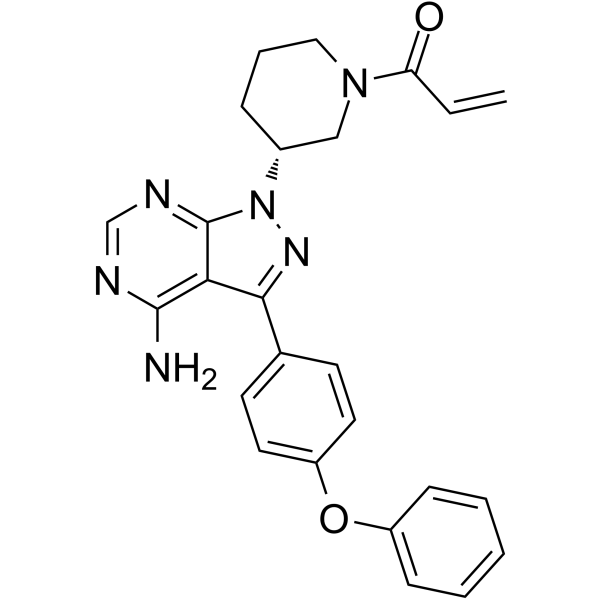
HY-10997
IbrutinibBtk Inhibitor -
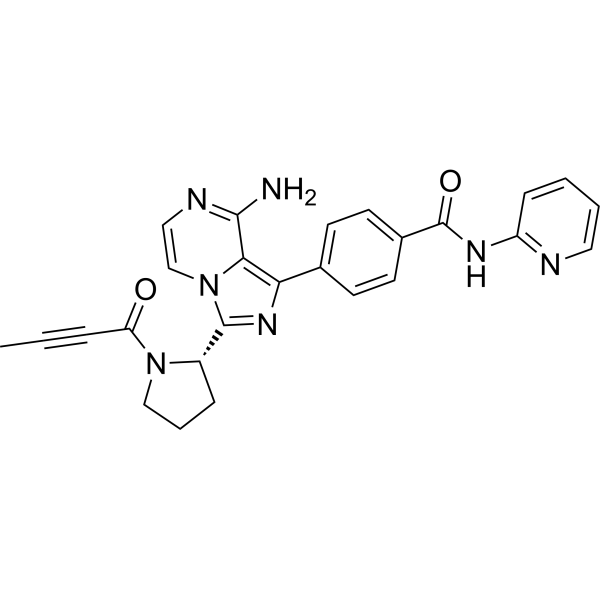
HY-17600
AcalabrutinibBTK Inhibitor -
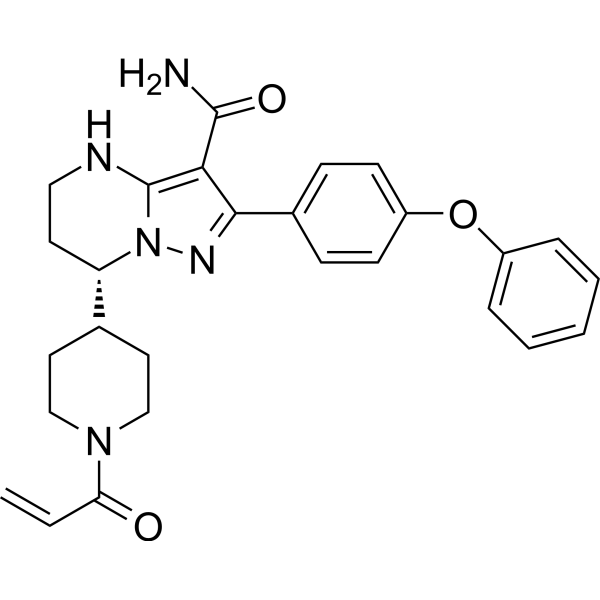
HY-101474A
ZanubrutinibBtk Inhibitor -
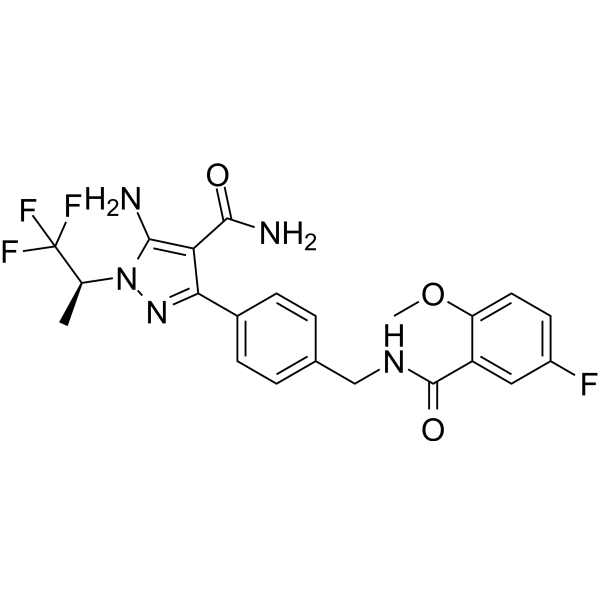
HY-131328
PirtobrutinibBTK Inhibitor -
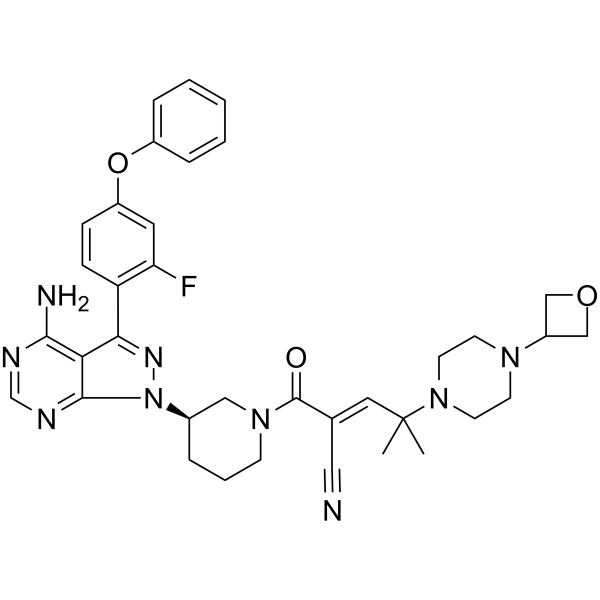
HY-112166
RilzabrutinibBTK Inhibitor -
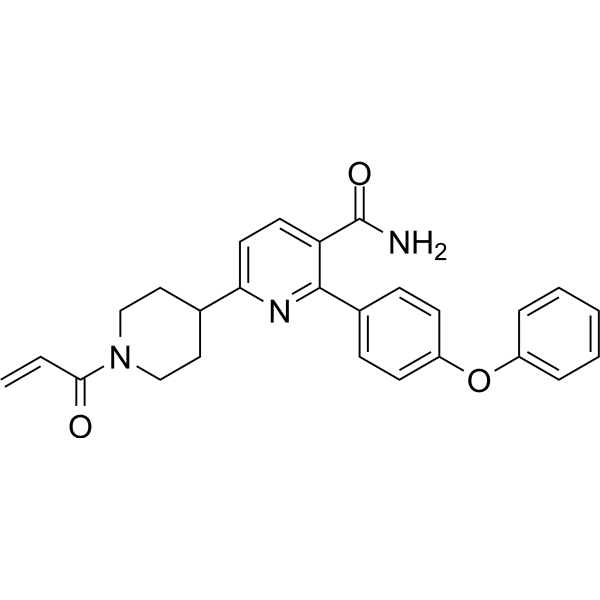
HY-129390
OrelabrutinibBTK Inhibitor -
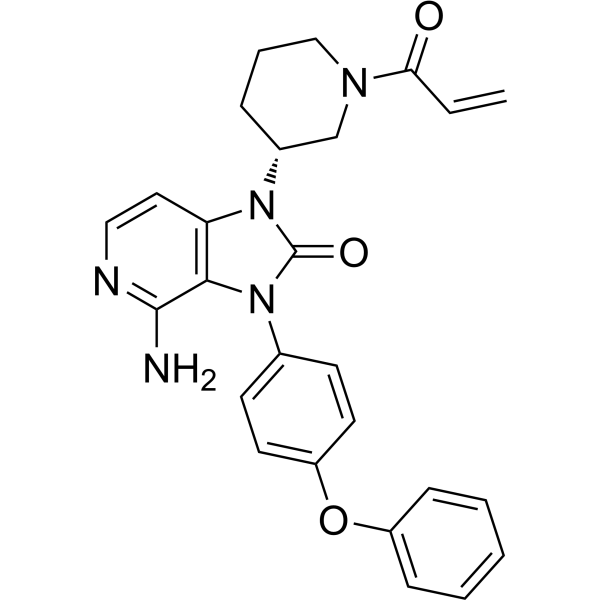
HY-109192
TolebrutinibBTK Inhibitor -
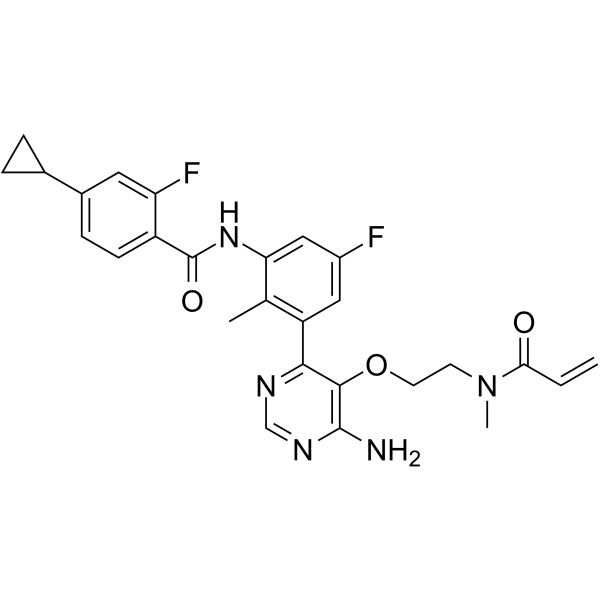
HY-128757
RemibrutinibBTK Inhibitor -
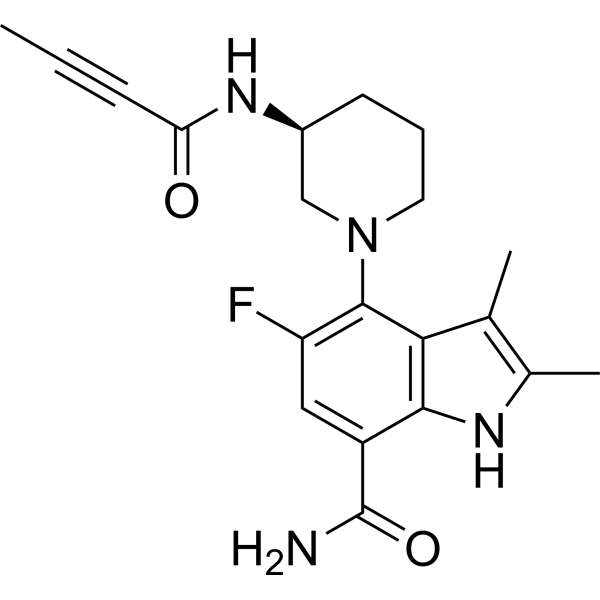
HY-112161
BranebrutinibBTK Inhibitor -
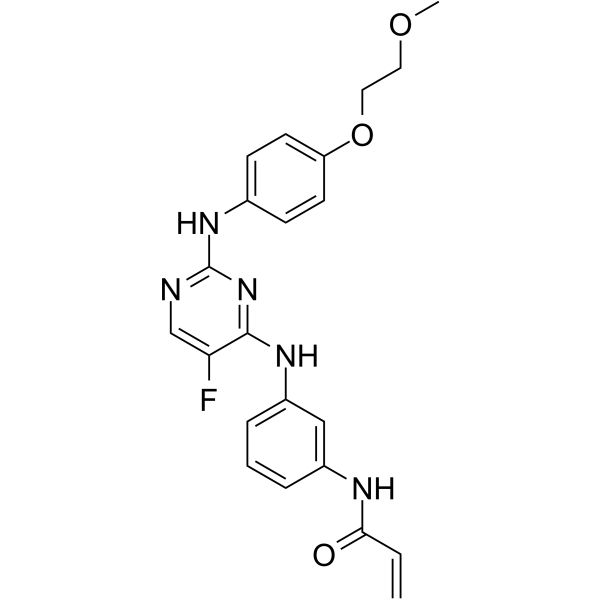
HY-18012
Spebrutinib -
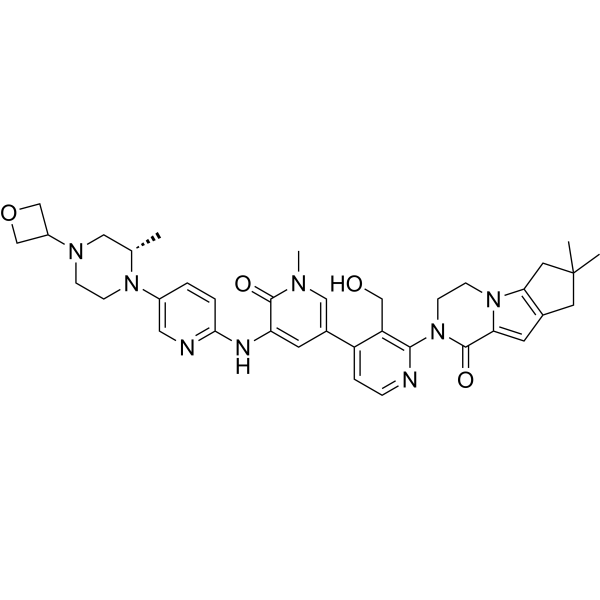
HY-19834
FenebrutinibBtk Inhibitor -
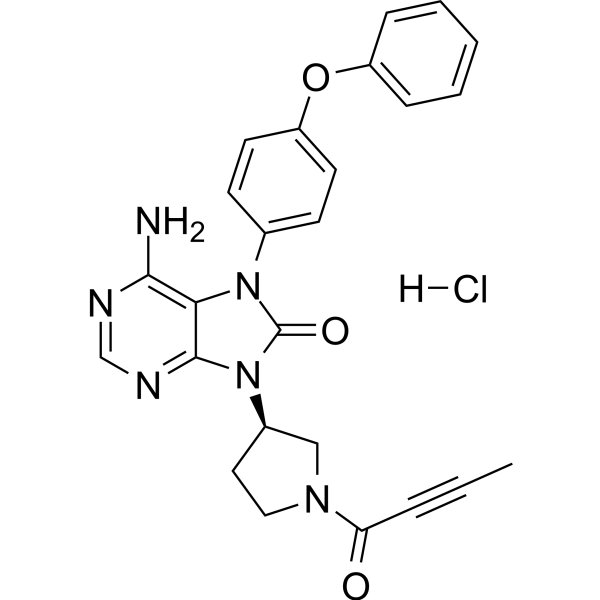
HY-15771A
Tirabrutinib hydrochlorideBTK Inhibitor
Publications Citing Use of MedChemExpress (MCE) Tirabrutinib
More- Stem Cell Reports. 2019 May 14;12(5):996-1006. [Abstract]
- iScience. 2024 Sep 24;27(11):110961. [Abstract]
- ACS Pharmacol Transl Sci. 2025 Mar 12;8(4):917-931. [Abstract]
- Rapid Commun Mass Spectrom. 2022 Mar 15;36(5):e9240. [Abstract]
- bioRxiv. 2026 May 8:2026.05.07.723540. [Abstract]
- bioRxiv. 2024 September 08.
- bioRxiv. 2024 Oct 10:2023.12.18.572223. [Abstract]
- bioRxiv. 2023 Feb 24.


Biological Activity
제품 설명
IC50 & Target
|
BMX 6 nM (IC50) |
BTK 6.8 nM (IC50) |
TEC 48 nM (IC50) |
TXK 92 nM (IC50) |
BLK 0.3 μM (IC50) |
ERBB4 0.77 μM (IC50) |
EGFR 3.02 μM (IC50) |
JAK3 5.52 μM (IC50) |
ERBB2 7.31 μM (IC50) |
In Vitro
Tirabrutinib (0.1-1000 nM or 0.001-100 nM; 72 h) inhibits the proliferation of OCI-L Y10 and SU-DHL-6 cells with IC50s of 9.127 nM, and 17.10 nM, respectively[1].
Tirabrutinib (0.5, 5, 50 μM; 24, 48 h) induces SU-DHL-6 cells apoptosis needs high dosage and prolonged administration (concentration up to 50 μM and incubates for 48 h)[1].
Tirabrutinib (300 nM, 72 h) induces caspase-3 and PARP cleavage in TMD8 cells[2].
MedChemExpress (MCE) has not independently confirmed the accuracy of these methods. They are for reference only.
-
Cell Line:SU-DHL-6 and OCI-L Y10 cells
-
Concentration:0.1-1000 nM; 0.001 nM-100 nM
-
Incubation Time:72 h
-
Result:Showed good anti-proliferative activity with IC50s of 9.127 nM, and 17.10 nM for OCI-L Y10 and SU-DHL-6 cells, respectively.
-
Cell Line:SU-DHL-6 cells
-
Concentration:0.5, 5, 50 μM
-
Incubation Time:24, 48 h
-
Result:Induced cell apoptosis when concentration up to 50 μM and incubated for 48 h.
-
Cell Line:TMD8 cells
-
Concentration:300 nM
-
Incubation Time:72 h
-
Result:Induced caspase-3 and PARP cleavage.
In Vivo
Tirabrutinib (6, 20 mg/kg; p.o.; single daily for 3 weeks) shows inhibition of tumour growth in vivo[2].
MedChemExpress (MCE) has not independently confirmed the accuracy of these methods. They are for reference only.
-
Animal Model:Male SD rats (219.0–260.5g)[1].
-
Dosage:10 mg/kg
-
Administration:Oral administration; single.
-
Result:
1.19 Pharmacokinetic Parameters of Tirabrutinib in male SD rats[1].
Plasma, Cmax (ng/mL) Brain, Cmax (ng/mL) Penetration rate
(%, Cmax,brain/Cmax,plasma)PO (10 mg/kg) 339.53 28.9 8.5
-
Animal Model:Immunodeficiency (SCID) mice (mouse xenograft model)[2].
-
Dosage:6, 20 mg/kg
-
Administration:Oral administration; single daily for 3 weeks.
-
Result:Inhibited tumour growth, and when dosage up to 20 mg/kg, a complete tumor suppression at day 14.
Clinical Trial
| NCT Number | Sponsor | Condition | Start Date |
Phase

|
|---|---|---|---|---|
| NCT01329991 | 2011-05 | PHASE1 |


Chemical Information
-
CAS No. 1351636-18-4
-
Appearance Solid
-
분자량 454.48
-
화학식 C25H22N6O3
-
Color White to yellow
-
SMILES
O=C1N(C2=CC=C(OC3=CC=CC=C3)C=C2)C4=C(N)N=CN=C4N1[C@H]5CN(C(C#CC)=O)CC5
-
Synonyms
ONO-4059; GS-4059
-
선적
Room temperature in continental US; may vary elsewhere.
-
보관
Powder -20°C 3 years 4°C 2 years In solvent -80°C 2 years -20°C 1 year


Publications (8)
-
Journal Impact Factor
-
Most Recent
-
Stem Cell Reports
2019 May 14;12(5):996-1006. PMID: 31031187 -
iScience
Inhibition of proteolytic and ATPase activities of the proteasome by the BTK inhibitor CGI-1746. [Abstract]2024 Sep 24;27(11):110961. PMID: 39759071 -
ACS Pharmacol Transl Sci
Comprehensive Characterization of Bruton's Tyrosine Kinase Inhibitor Specificity, Potency, and Biological Effects: Insights into Covalent and Noncovalent Mechanistic Signatures. [Abstract]2025 Mar 12;8(4):917-931. PMID: 40242575 -
Rapid Commun Mass Spectrom
Characterization of the metabolites of tirabrutinib generated from rat, dog and human liver microsomes using ultra-high-performance liquid chromatography combined with high-resolution mass spectrometry. [Abstract]2022 Mar 15;36(5):e9240. PMID: 34904306 -
bioRxiv
More than an attachment module: covalent inhibitor warheads influence BTK dynamics and function. [Abstract]2026 May 8:2026.05.07.723540. PMID: 42146433 -
-
bioRxiv
Impact of the clinically approved BTK inhibitors on the conformation of full-length BTK and analysis of the development of BTK resistance mutations in chronic lymphocytic leukemia. [Abstract]2024 Oct 10:2023.12.18.572223. PMID: 38187560 -


용액&용해도
In Vitro:
DMSO : ≥ 100 mg/mL (220.03 mM; Hygroscopic DMSO has a significant impact on the solubility of product, please use newly opened DMSO)
* "≥" means soluble, but saturation unknown.
Please refer to the solubility information to select the appropriate solvent. Once prepared, please aliquot and store the solution to prevent product inactivation from repeated freeze-thaw cycles.
Storage method and period of stock solution: -80°C, 2 years; -20°C, 1 year. When stored at -80°C, please use it within 2 years. When stored at -20°C, please use it within 1 year.
Please refer to the solubility information to select the appropriate solvent. Once prepared, please aliquot and store the solution to prevent product inactivation from repeated freeze-thaw cycles.
Storage method and period of stock solution: -80°C, 2 years; -20°C, 1 year. When stored at -80°C, please use it within 2 years. When stored at -20°C, please use it within 1 year.
Concentration (start) × Volume (start) = Concentration (final) × Volume (final)
In Vivo:
Select the appropriate dissolution method based on your experimental animal and administration route.
- For the following dissolution methods, please ensure to first prepare a clear stock solution using an In Vitro approach and then sequentially add co-solvents:
- To ensure reliable experimental results, the clarified stock solution can be appropriately stored based on storage conditions. As for the working solution for In Vivo experiments, it is recommended to prepare freshly and use it on the same day.
- The percentages shown for the solvents indicate their volumetric ratio in the final prepared solution. If precipitation or phase separation occurs during preparation, heat and/or sonication can be used to aid dissolution.
Add each solvent one by one: 10% DMSO 40% PEG300 5% Tween-80 45% Saline
Solubility: ≥ 2.5 mg/mL (5.50 mM); Clear solution
This protocol yields a clear solution of ≥ 2.5 mg/mL (saturation unknown).
Taking 1 mL working solution as an example, add 100 μL DMSO stock solution (25.0 mg/mL) to 400 μL PEG300, and mix evenly; then add 50 μL Tween-80 and mix evenly; then add 450 μL Saline to adjust the volume to 1 mL.
Preparation of Saline: Dissolve 0.9 g sodium chloride in ddH₂O and dilute to 100 mL to obtain a clear Saline solution.
Add each solvent one by one: 10% DMSO 90% (20% SBE-β-CD in Saline)
Solubility: ≥ 2.5 mg/mL (5.50 mM); Clear solution
This protocol yields a clear solution of ≥ 2.5 mg/mL (saturation unknown).
Taking 1 mL working solution as an example, add 100 μL DMSO stock solution (25.0 mg/mL) to 900 μL 20% SBE-β-CD in Saline, and mix evenly.
Preparation of 20% SBE-β-CD in Saline (4°C, storage for one week): 2 g SBE-β-CD powder is dissolved in 10 mL Saline, completely dissolve until clear.
In Vivo Dissolution Calculator
Please enter the basic information of animal experiments:
-
-
-
-
Recommended: Prepare an additional quantity of animals to account for potential losses during experiments.
Please enter your animal formula composition:
-
%DMSO +
Recommended: Keep the proportion of DMSO in working solution below 2% if your animal is weak.
-
%+
-
+%Tween-80 + +
-
%Saline +
The co-solvents required include: DMSO, . All of co-solvents are available by MedChemExpress (MCE). , Tween 80. All of co-solvents are available by MedChemExpress (MCE).
Working solution concentration: 0.22 mg/mL
Method for preparing stock solution: mg drug dissolved in μL DMSO. Stock solution concentration: mg/mL.
1. Take μL DMSO stock solution;
2. Add μL .
μL , mix evenly;
3. Then add μL Tween 80, mix evenly;
4. Then add μL
Please ensure that the stock solution in the first step is dissolved to a clear state, and add co-solvents in sequence. You can use ultrasonic heating (ultrasonic cleaner, recommended frequency 20-40 kHz), vortexing, etc. to assist dissolution.


순도&문서
-
Data Sheet (286 KB)
-
SDS (393 KB)
- English - EN (393 KB)
- Français - FR (393 KB)
- Deutsch - DE (393 KB)
- Norwegian - NO (393 KB)
- Español - ES (393 KB)
- Swedish - SV (393 KB)
- Italian - IT (393 KB)
- Korean - KR (393 KB)
- Portuguese - PT (393 KB)
-
Handling Instructions (2659 KB)
References
[1]. Yu H, et al. Bruton's tyrosine kinase inhibitors in primary central nervous system lymphoma-evaluation of anti-tumor efficacy and brain distribution. Transl Cancer Res. 2021 May;10(5):1975-1983. [Content Brief]
[2]. Kozaki R, et al. Responses to the Selective Bruton's Tyrosine Kinase (BTK) Inhibitor Tirabrutinib (ONO/GS-4059) in Diffuse Large B-cell Lymphoma Cell Lines. Cancers (Basel). 2018 Apr 23;10(4):127. [Content Brief]
[3]. Liclican A, et al. Biochemical characterization of tirabrutinib and other irreversible inhibitors of Bruton's tyrosine kinase reveals differences in on - and off - target inhibition. Biochim Biophys Acta Gen Subj. 2020 Apr;1864(4):129531. [Content Brief]
[4]. Dhillon S. Tirabrutinib: First Approval. Drugs. 2020 Jun;80(8):835-840. [Content Brief]


Complete Stock Solution Preparation Table
Please refer to the solubility information to select the appropriate solvent. Once prepared, please aliquot and store the solution to prevent product inactivation from repeated freeze-thaw cycles.
Storage method and period of stock solution: -80°C, 2 years; -20°C, 1 year. When stored at -80°C, please use it within 2 years. When stored at -20°C, please use it within 1 year.
| Optional Solvent | Concentration Solvent Mass | 1 mg | 5 mg | 10 mg | 25 mg |
|---|---|---|---|---|---|
| DMSO | 1 mM | 2.2003 mL | 11.0016 mL | 22.0032 mL | 55.0079 mL |
| 5 mM | 0.4401 mL | 2.2003 mL | 4.4006 mL | 11.0016 mL | |
| 10 mM | 0.2200 mL | 1.1002 mL | 2.2003 mL | 5.5008 mL | |
| 15 mM | 0.1467 mL | 0.7334 mL | 1.4669 mL | 3.6672 mL | |
| 20 mM | 0.1100 mL | 0.5501 mL | 1.1002 mL | 2.7504 mL | |
| 25 mM | 0.0880 mL | 0.4401 mL | 0.8801 mL | 2.2003 mL | |
| 30 mM | 0.0733 mL | 0.3667 mL | 0.7334 mL | 1.8336 mL | |
| 40 mM | 0.0550 mL | 0.2750 mL | 0.5501 mL | 1.3752 mL | |
| 50 mM | 0.0440 mL | 0.2200 mL | 0.4401 mL | 1.1002 mL | |
| 60 mM | 0.0367 mL | 0.1834 mL | 0.3667 mL | 0.9168 mL | |
| 80 mM | 0.0275 mL | 0.1375 mL | 0.2750 mL | 0.6876 mL | |
| 100 mM | 0.0220 mL | 0.1100 mL | 0.2200 mL | 0.5501 mL |


Tirabrutinib Related Classifications
HY-15771 Related Classifications
 Powered by Bioz