



OTSSP167 hydrochloride
Based on 24 publication(s) in Google Scholar
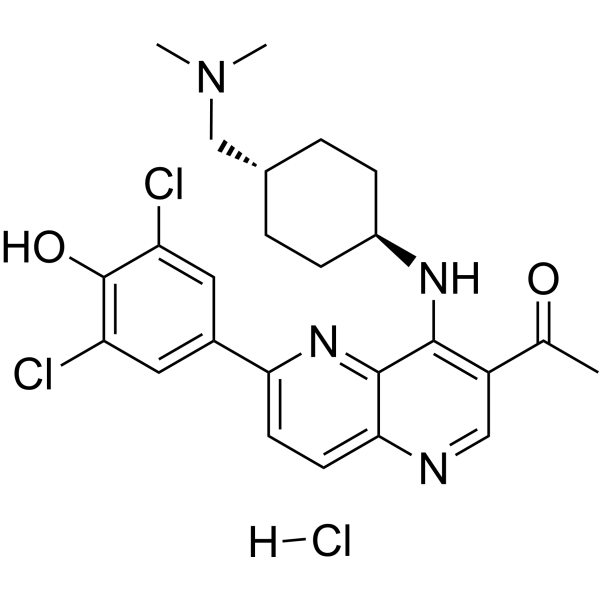
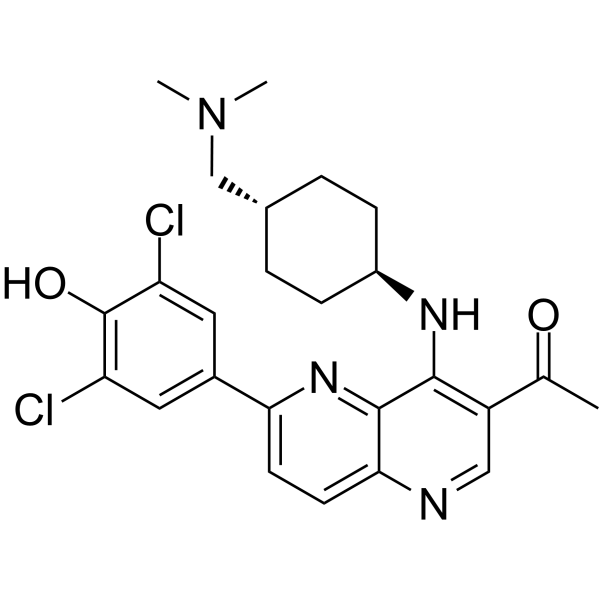
OTSSP167 (OTS167) hydrochloride is a highly potent and ATP-competitive MELK inhibitor with IC50 value of 0.41 nM.
For research use only. We do not sell to patients.
- Purity : 99.78%
- CAS No.: 1431698-10-0
- Formula: C25H29Cl3N4O2
- Molecular Weight:523.88
-
Storage:
4°C, sealed storage, away from moisture
* In solvent : -80°C, 2 years; -20°C, 1 year (sealed storage, away from moisture)

To place orders, for customer services and technical support, please contact: MedChemExpress USA
Tel: 609-228-6898 E-mail: [email protected] [email protected]


-
 Biological Activity
-
Chemical Information
-
Solvent & Solubility
- Protocols
- Purity & Documentation
- References
-
 Help & FAQs


-
HY-15512
OTSSP167 -
HY-10424
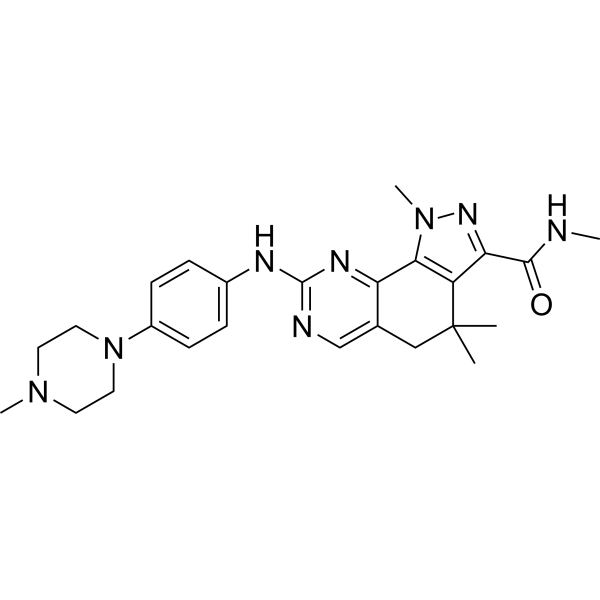
MilciclibCDK/TRK Inhibitor -
HY-11009
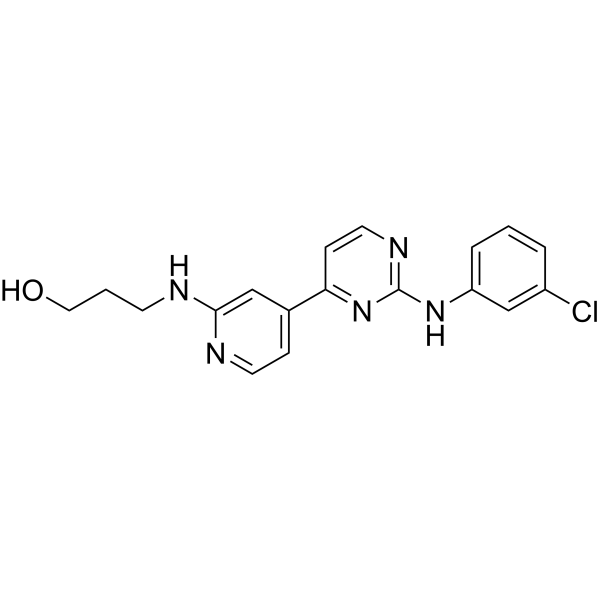
CGP60474CDK/PKC Inhibitor -
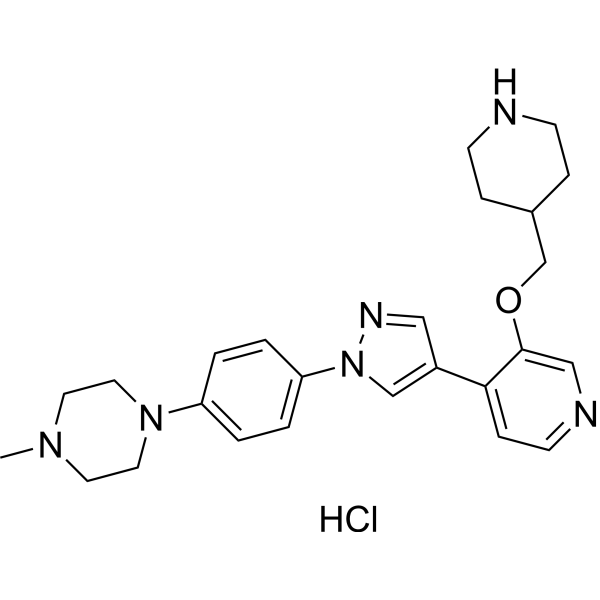
HY-100368A
MELK-8a hydrochlorideMELK Inhibitor -
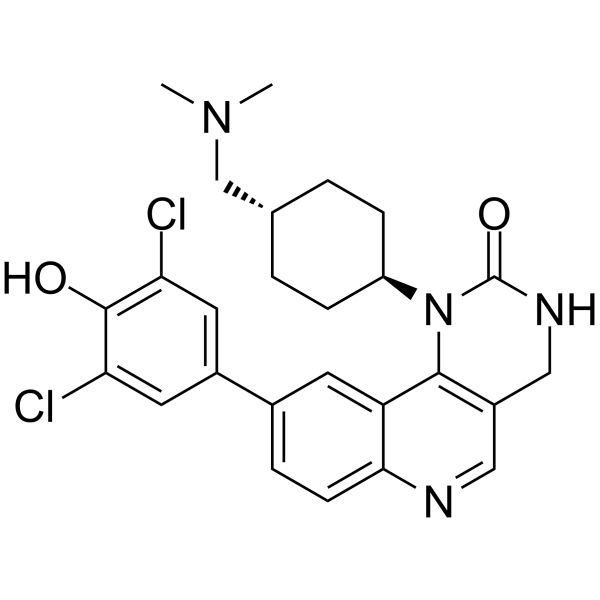
HY-122665
HTH-01-091MELK Inhibitor -
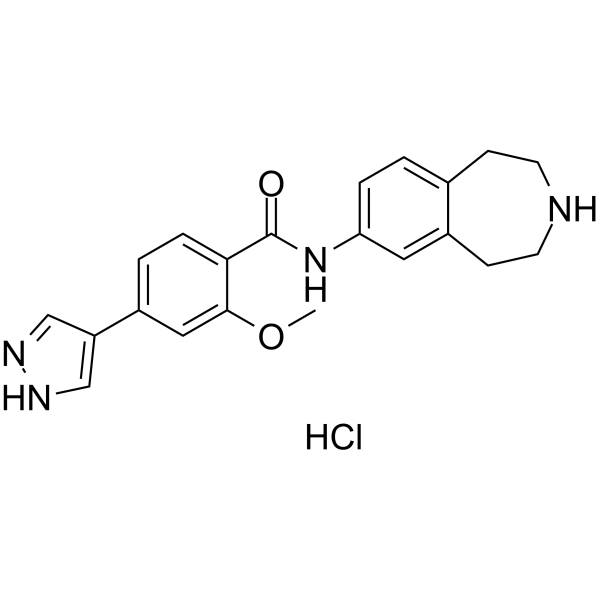
HY-12420
JNJ-47117096 hydrochloride -
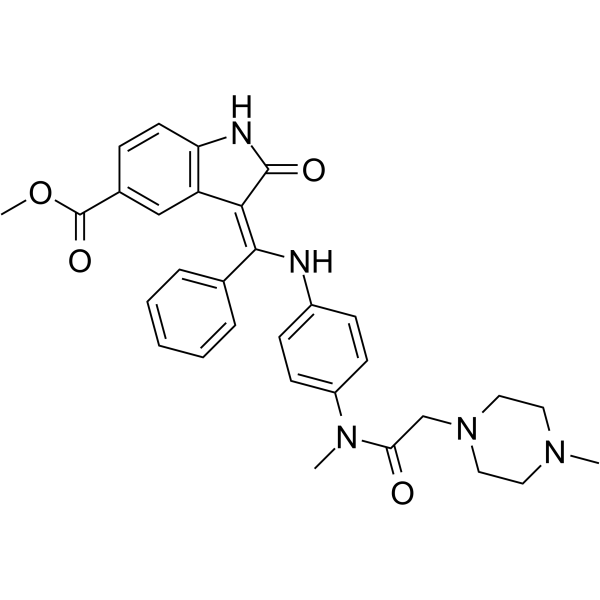
HY-101515
MELK-IN-1MELK Inhibitor -
HY-100368
MELK-8aMELK Inhibitor -

HY-100368AR
MELK-8a hydrochloride (Standard)MELK Inhibitor -

HY-101515R
MELK-IN-1 (Standard)MELK Inhibitor -
HY-13514
TG 100713PI3K Inhibitor -

HY-12420A
JNJ-47117096MELK Inhibitor
Publications Citing Use of MedChemExpress (MCE) OTSSP167 hydrochloride
More- Mol Cancer. 2014 May 4:13:100. [Abstract]
- Nat Cancer. 2024 Aug;5(8):1250-1266. [Abstract]
- Blood Cancer J. 2019 Nov 18;9(12):87. [Abstract]
- Neuro Oncol. 2020 Jan 11;22(1):58-69. [Abstract]
- Clin Cancer Res. 2018 Nov 15;24(22):5645-5657. [Abstract]
- Free Radic Biol Med. 2021 Aug 20:172:312-329. [Abstract]
- EMBO Mol Med. 2018 Mar;10(3):e8274. [Abstract]
- Int J Oncol. 2022 Jul;61(1):89. [Abstract]
- Eur J Pharmacol. 2025 Oct 5:1004:178017. [Abstract]
- Int J Mol Sci. 2025 Mar 3;26(5):2245. [Abstract]
- Sci Rep. 2017 Feb 14:7:42502. [Abstract]
- Gynecol Oncol. 2017 Apr;145(1):159-166. [Abstract]
- FEBS J. 2026 Feb 2. [Abstract]
- Adv Ther (Weinh). 2025 Oct 24.
- PLoS One. 2017 Feb 24;12(2):e0172832. [Abstract]
- Biochem Biophys Res Commun. 2014 Apr 25;447(1):7-11. [Abstract]
- University of Michigan. 2026.
- bioRxiv. 2026 Apr 24.
- University of Washington. 2025.
- Elife. 2018 Feb 8:7:e32838. [Abstract]
- Oncotarget. 2017 Dec 20;9(2):2591-2602. [Abstract]
- Elife. 2017 Mar 24:6:e24179. [Abstract]
- Patent. US20160291017A1.
- Oncotarget. 2016 Feb 2;7(5):6266-80. [Abstract]
 Customer Validation & Images

-
WB
-
WB
-
WB
-
IP
-
WB


Biological Activity
Description
IC50 & Target
IC50: 0.41 nM (MELK)
In Vitro
OTSSP167 inhibits the growth of A549 (lung), T47D (breast), DU4475 (breast), 22Rv1 (prostate) and HT1197 (bladder) cancer cells with IC50 values of 6.7, 4.3, 2.3, 6.0 and 97 nM, respectively[1].
OTSSP167 can abrogate the mitotic checkpoint, disrupt MCC and MCC-APC/C interaction in MCF7 cells. OTSSP167 causes GFP-MELK localization to cell cortex in prometaphase cells[2].
OTSSP167 is a MELK selective inhibitor, exhibits a strong in vitro activity, conferring an IC50 of 0.41 nM[3].
MedChemExpress (MCE) has not independently confirmed the accuracy of these methods. They are for reference only. Further protocols information, click here.
In Vivo
MedChemExpress (MCE) has not independently confirmed the accuracy of these methods. They are for reference only.


Chemical Information
-
CAS No. 1431698-10-0
-
Appearance Solid
-
Molecular Weight 523.88
-
Formula C25H29Cl3N4O2
-
Color Light yellow to yellow
-
SMILES
ClC1=CC(C2=CC=C(N=CC(C(C)=O)=C3N[C@H]4CC[C@H](CN(C)C)CC4)C3=N2)=CC(Cl)=C1O.[H]Cl
-
Synonyms
OTS167 hydrochloride
-
Shipping
Room temperature in continental US; may vary elsewhere.
-
Storage
4°C, sealed storage, away from moisture
* In solvent : -80°C, 2 years; -20°C, 1 year (sealed storage, away from moisture)


Publications (24)
-
Journal Impact Factor
-
Most Recent
-
Mol Cancer
Maternal embryonic leucine zipper kinase enhances gastric cancer progression via the FAK/Paxillin pathway. [Abstract]2014 May 4:13:100. PMID: 24885567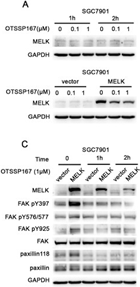
OTSSP167 hydrochloride purchased from MedChemExpress. Usage Cited in: Mol Cancer. 2014 May 4:13:100. [Abstract]
MELK specific inhibitor OTSSP167 suppresses cell migration and invasion. A, Immunoblotting representing MELK expression in SGC7901 cell following OTSSP167 treatment for indicated period. In the upper panel, SGC7901 cell are treated with different concentration (0, 0.1, 1 μM) of OTSSP167 for 1 h and 2 h. In the lower panel, SGC7901/vector and SGC7901/MELK cell are treated with 1 μM OTSSP167 for 2 h. C, SGC7901/vector and SGC7901/MELK cells are treated with 1 μM OTSSP167 for indicated period and
-
Nat Cancer
A first-in-class selective inhibitor of EGFR and PI3K offers a single-molecule approach to targeting adaptive resistance. [Abstract]2024 Aug;5(8):1250-1266. PMID: 38992135 -
Blood Cancer J
Maternal embryonic leucine zipper kinase is a novel target for diffuse large B cell lymphoma and mantle cell lymphoma. [Abstract]2019 Nov 18;9(12):87. PMID: 31740676
OTSSP167 hydrochloride purchased from MedChemExpress. Usage Cited in: Blood Cancer J. 2019 Nov 18;9(12):87. [Abstract]
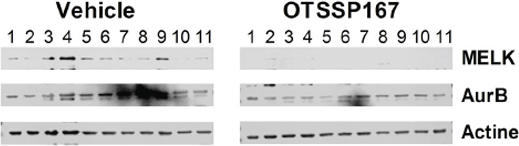
Expression of MELK and Aurora B kinase (AurB) is determined in samples from vehicle and OTSSP167-treated mice. β-actin is used as loading control.
-
Neuro Oncol
MEK/MELK inhibition and blood-brain barrier deficiencies in atypical teratoid/rhabdoid tumors. [Abstract]2020 Jan 11;22(1):58-69. PMID: 31504799 -
Clin Cancer Res
2018 Nov 15;24(22):5645-5657. PMID: 30061363
OTSSP167 hydrochloride purchased from MedChemExpress. Usage Cited in: Clin Cancer Res. 2018 Nov 15;24(22):5645-5657. [Abstract]
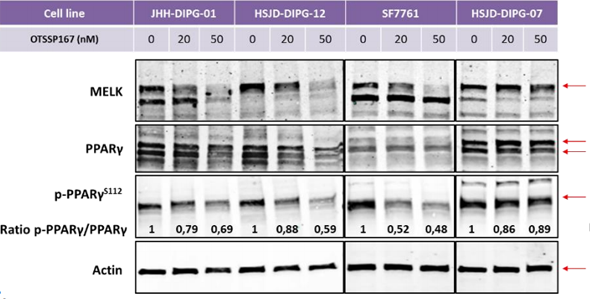
Western blot showing protein levels of MELK, PPARγ and phospho-PPARγS112 in JHH-DIPG-01, HSJD-DIPG-12, SF7761 and HSJD-DIPG-07 cells after 48 hours treatment with either 20 nM or 50 nM OTSSP167.
-
Free Radic Biol Med
Pharmacological inhibition of MELK restricts ferroptosis and the inflammatory response in colitis and colitis-propelled carcinogenesis. [Abstract]2021 Aug 20:172:312-329. PMID: 34144192 -
EMBO Mol Med
Identification of potential therapeutic targets in prostate cancer through a cross-species approach. [Abstract]2018 Mar;10(3):e8274. PMID: 29437778
OTSSP167 hydrochloride purchased from MedChemExpress. Usage Cited in: EMBO Mol Med. 2018 Mar;10(3):e8274. [Abstract]
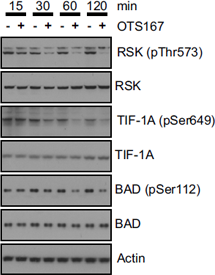
Validation of effects of OTS167 on phosphorylation of p90RSK and its targets. C4-2b cells are treated with vehicle or 30 nM OTS167 for the indicated times, and levels of total and phosphorylated proteins are determined by Western blot analysis. β-Actin is used as a loading control.
-
Int J Oncol
Exposure to escalating olaparib does not induce acquired resistance to PARPi and to other chemotherapeutic compounds in ovarian cancer cell lines. [Abstract]2022 Jul;61(1):89. PMID: 35642662 -
Eur J Pharmacol
2025 Oct 5:1004:178017. PMID: 40744390 -
Int J Mol Sci
2025 Mar 3;26(5):2245. PMID: 40076867 -
Sci Rep
Zinc finger protein ZPR9 functions as an activator of AMPK-related serine/threonine kinase MPK38/MELK involved in ASK1/TGF-β/p53 signaling pathways. [Abstract]2017 Feb 14:7:42502. PMID: 28195154
OTSSP167 hydrochloride purchased from MedChemExpress. Usage Cited in: Sci Rep. 2017 Feb 14:7:42502. [Abstract]
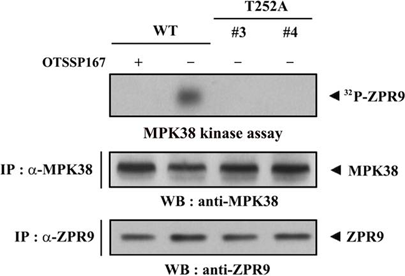
In vitro kinase assays are performed using MPK38 immunoprecipitates, which are obtained from cell lysates of wild-type and clonal CRISPR/Cas9 ZPR9 (T252A) KI isolates, treated with (+) or without (−) OTSSP167 (1 μM, 2 h), a MPK38-specific inhibitor, in the presence of ZPR9 immunoprecipitates as the substrate. Recombinant MPK38 proteins (lower panels), which were expressed in bacterial cells, treated with (+) or without (−) OTSSP167 are also used instead of the MPK38 immunoprecipitates (upper pan
-
Gynecol Oncol
MELK expression in ovarian cancer correlates with poor outcome and its inhibition by OTSSP167 abrogates proliferation and viability of ovarian cancer cells. [Abstract]2017 Apr;145(1):159-166. PMID: 28214016
OTSSP167 hydrochloride purchased from MedChemExpress. Usage Cited in: Gynecol Oncol. 2017 Apr;145(1):159-166. [Abstract]
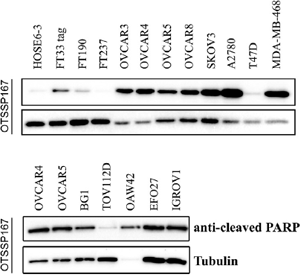
Western blotting demonstrates that 100 nM OTSSP167 for 48 h produces marked PARP-1 cleavage in HGSOC cell lines whereas no or weak PARP-1 cleavage is observed in normal ovarian surface epithelial cells (HOSE6-3) and in the fallopian tubal cells (FT33-tag, FT190, FT237).
-
FEBS J
Nemo-like kinase modulates glucocorticoid-induced erythroid progenitor differentiation by regulating stability of the glucocorticoid receptor. [Abstract]2026 Feb 2. PMID: 41629744 -
-
PLoS One
Genome-wide effects of MELK-inhibitor in triple-negative breast cancer cells indicate context-dependent response with p53 as a key determinant. [Abstract]2017 Feb 24;12(2):e0172832. PMID: 28235006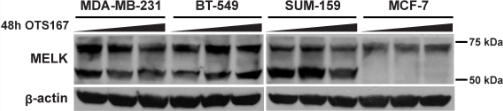
OTSSP167 hydrochloride purchased from MedChemExpress. Usage Cited in: PLoS One. 2017 Feb 24;12(2):e0172832. [Abstract]
OTS167 reduces proliferation and regulates MELK transcript but not protein levels in TNBC cells. The MELK 52 kDa variant is highly expressed in the TNBC cell lines but not in luminal A MCF-7.
-
Biochem Biophys Res Commun
The crystal structure of MPK38 in complex with OTSSP167, an orally administrative MELK selective inhibitor. [Abstract]2014 Apr 25;447(1):7-11. PMID: 24657156 -
-
-
-
Elife
MELK expression correlates with tumor mitotic activity but is not required for cancer growth. [Abstract]2018 Feb 8:7:e32838. PMID: 29417930 -
Oncotarget
2017 Dec 20;9(2):2591-2602. PMID: 29416794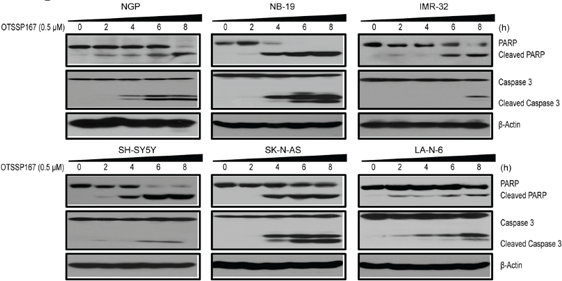
OTSSP167 hydrochloride purchased from MedChemExpress. Usage Cited in: Oncotarget. 2017 Dec 20;9(2):2591-2602. [Abstract]
Effects of OTSSP167 on PARP and Caspase-3 cleavages in NB cells are shown by immunoblotting assay.
-
Elife
CRISPR/Cas9 mutagenesis invalidates a putative cancer dependency targeted in on-going clinical trials. [Abstract]2017 Mar 24:6:e24179. PMID: 28337968 -
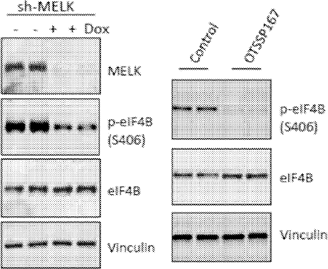
OTSSP167 hydrochloride purchased from MedChemExpress. Usage Cited in: Patent. US20160291017A1.
Mitotic MDA-MB-468 cells are treated for 30 min with vehicle or 200 nM OTSSP167, a MELK inhibitor. Lysates are used for immunoblotting.
-
Oncotarget
Maternal embryonic leucine zipper kinase serves as a poor prognosis marker and therapeutic target in gastric cancer. [Abstract]2016 Feb 2;7(5):6266-80. PMID: 26701722


Solvent & Solubility
In Vitro:
DMSO : 33.33 mg/mL (63.62 mM; Need ultrasonic; Hygroscopic DMSO has a significant impact on the solubility of product, please use newly opened DMSO)
H2O : 7.14 mg/mL (13.63 mM; Need ultrasonic)
Please refer to the solubility information to select the appropriate solvent. Once prepared, please aliquot and store the solution to prevent product inactivation from repeated freeze-thaw cycles.
Storage method and period of stock solution: -80°C, 2 years; -20°C, 1 year (sealed storage, away from moisture). When stored at -80°C, please use it within 2 years. When stored at -20°C, please use it within 1 year.
* Note: If you choose water as the stock solution, please dilute it to the working solution, then filter and sterilize it with a 0.22 μm filter before use.
Please refer to the solubility information to select the appropriate solvent. Once prepared, please aliquot and store the solution to prevent product inactivation from repeated freeze-thaw cycles.
Storage method and period of stock solution: -80°C, 2 years; -20°C, 1 year (sealed storage, away from moisture). When stored at -80°C, please use it within 2 years. When stored at -20°C, please use it within 1 year.
* Note: If you choose water as the stock solution, please dilute it to the working solution, then filter and sterilize it with a 0.22 μm filter before use.
Concentration (start) × Volume (start) = Concentration (final) × Volume (final)
In Vivo:
Select the appropriate dissolution method based on your experimental animal and administration route.
- For the following dissolution methods, please ensure to first prepare a clear stock solution using an In Vitro approach and then sequentially add co-solvents:
- To ensure reliable experimental results, the clarified stock solution can be appropriately stored based on storage conditions. As for the working solution for In Vivo experiments, it is recommended to prepare freshly and use it on the same day.
- The percentages shown for the solvents indicate their volumetric ratio in the final prepared solution. If precipitation or phase separation occurs during preparation, heat and/or sonication can be used to aid dissolution.
Add each solvent one by one: 10% DMSO 40% PEG300 5% Tween-80 45% Saline
Solubility: ≥ 3 mg/mL (5.73 mM); Clear solution
This protocol yields a clear solution of ≥ 3 mg/mL (saturation unknown).
Taking 1 mL working solution as an example, add 100 μL DMSO stock solution (30.0 mg/mL) to 400 μL PEG300, and mix evenly; then add 50 μL Tween-80 and mix evenly; then add 450 μL Saline to adjust the volume to 1 mL.
Preparation of Saline: Dissolve 0.9 g sodium chloride in ddH₂O and dilute to 100 mL to obtain a clear Saline solution.
Add each solvent one by one: 10% DMSO 90% (20% SBE-β-CD in Saline)
Solubility: ≥ 3 mg/mL (5.73 mM); Clear solution
This protocol yields a clear solution of ≥ 3 mg/mL (saturation unknown).
Taking 1 mL working solution as an example, add 100 μL DMSO stock solution (30.0 mg/mL) to 900 μL 20% SBE-β-CD in Saline, and mix evenly.
Preparation of 20% SBE-β-CD in Saline (4°C, storage for one week): 2 g SBE-β-CD powder is dissolved in 10 mL Saline, completely dissolve until clear.
For the following dissolution methods, please prepare the working solution directly:
It is recommended to prepare fresh solutions and use them promptly within a short period of time.
The percentages shown for the solvents indicate their volumetric ratio in the final prepared solution. If precipitation or phase separation occurs during preparation, heat and/or sonication can be used to aid dissolution.
Add each solvent one by one: PBS
Solubility: 1 mg/mL (1.91 mM); Clear solution; Need ultrasonic
In Vivo Dissolution Calculator
Please enter the basic information of animal experiments:
-
-
-
-
Recommended: Prepare an additional quantity of animals to account for potential losses during experiments.
Please enter your animal formula composition:
-
%DMSO +
Recommended: Keep the proportion of DMSO in working solution below 2% if your animal is weak.
-
%+
-
+%Tween-80 + +
-
%Saline +
The co-solvents required include: DMSO, . All of co-solvents are available by MedChemExpress (MCE). , Tween 80. All of co-solvents are available by MedChemExpress (MCE).
Working solution concentration: 0.22 mg/mL
Method for preparing stock solution: mg drug dissolved in μL DMSO. Stock solution concentration: mg/mL. * In solvent : -80°C, 2 years; -20°C, 1 year (sealed storage, away from moisture)
1. Take μL DMSO stock solution;
2. Add μL .
μL , mix evenly;
3. Then add μL Tween 80, mix evenly;
4. Then add μL
Please ensure that the stock solution in the first step is dissolved to a clear state, and add co-solvents in sequence. You can use ultrasonic heating (ultrasonic cleaner, recommended frequency 20-40 kHz), vortexing, etc. to assist dissolution.

Protocols
-
Cell Cytotoxicity Assay
Cytotoxicity assays are usually based on the assessment of cell membrane damage, which can also be indirectly detected by measuring cell viability. Detection methods include MTT assay, CKK-8 assay, LDH assay and ATP assay, etc.


Purity & Documentation
-
Data Sheet (284 KB)
-
SDS (393 KB)
- English - EN (393 KB)
- Français - FR (393 KB)
- Deutsch - DE (393 KB)
- Norwegian - NO (393 KB)
- Español - ES (393 KB)
- Swedish - SV (393 KB)
- Italian - IT (393 KB)
- Korean - KR (393 KB)
- Portuguese - PT (393 KB)
-
Handling Instructions (2659 KB)
References
[1]. Chung S, Suzuki H, Miyamoto T, et al. Development of an orally-administrative MELK-targeting inhibitor that suppresses the growth of various types of human cancer. Oncotarget. 2012 Dec 21. [Content Brief]
[2]. Ji W, et al. OTSSP167 Abrogates Mitotic Checkpoint through Inhibiting Multiple Mitotic Kinases. PLoS One. 2016 Apr 15;11(4):e0153518. [Content Brief]
[3]. Cho YS, et al. The crystal structure of MPK38 in complex with OTSSP167, an orally administrative MELK selective inhibitor. Biochem Biophys Res Commun. 2014 Apr 25;447(1):7-11. [Content Brief]
[4]. Jurmeister S, et al. Identification of potential therapeutic targets in prostate cancer through a cross-species approach. EMBO Mol Med. 2018 Feb 5. pii: e8274. [Content Brief]
[5]. Meel MH, et al. MELK inhibition in Diffuse Intrinsic Pontine Glioma. Clin Cancer Res. 2018 Jul 30. pii: clincanres.0924.2018. [Content Brief]


Complete Stock Solution Preparation Table
Please refer to the solubility information to select the appropriate solvent. Once prepared, please aliquot and store the solution to prevent product inactivation from repeated freeze-thaw cycles.
Storage method and period of stock solution: -80°C, 2 years; -20°C, 1 year (sealed storage, away from moisture). When stored at -80°C, please use it within 2 years. When stored at -20°C, please use it within 1 year.
| Optional Solvent | Concentration Solvent Mass | 1 mg | 5 mg | 10 mg | 25 mg |
|---|---|---|---|---|---|
| H2O / DMSO | 1 mM | 1.9088 mL | 9.5442 mL | 19.0883 mL | 47.7209 mL |
| 5 mM | 0.3818 mL | 1.9088 mL | 3.8177 mL | 9.5442 mL | |
| 10 mM | 0.1909 mL | 0.9544 mL | 1.9088 mL | 4.7721 mL | |
| DMSO | 15 mM | 0.1273 mL | 0.6363 mL | 1.2726 mL | 3.1814 mL |
| 20 mM | 0.0954 mL | 0.4772 mL | 0.9544 mL | 2.3860 mL | |
| 25 mM | 0.0764 mL | 0.3818 mL | 0.7635 mL | 1.9088 mL | |
| 30 mM | 0.0636 mL | 0.3181 mL | 0.6363 mL | 1.5907 mL | |
| 40 mM | 0.0477 mL | 0.2386 mL | 0.4772 mL | 1.1930 mL | |
| 50 mM | 0.0382 mL | 0.1909 mL | 0.3818 mL | 0.9544 mL | |
| 60 mM | 0.0318 mL | 0.1591 mL | 0.3181 mL | 0.7953 mL |
* Note: If you choose water as the stock solution, please dilute it to the working solution, then filter and sterilize it with a 0.22 μm filter before use.


OTSSP167 hydrochloride Related Classifications
HY-15512A Related Classifications
 Powered by Bioz