



PF-06260933
Based on 5 publication(s) in Google Scholar
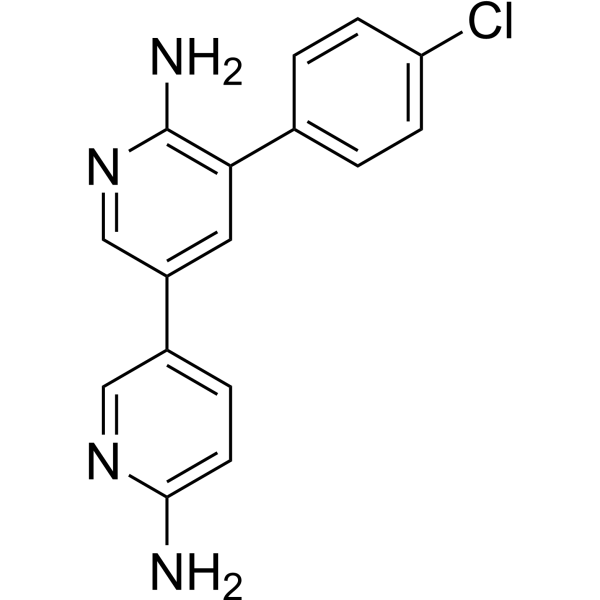
PF-06260933 is an orally active and highly selective inhibitor of MAP4K4 with IC50s of 3.7 and 160 nM for kinase and cell, respectively.
For research use only. We do not sell to patients.
- Purity : 99.39%
- CAS No.: 1811510-56-1
- Formula: C16H13ClN4
- Molecular Weight:296.75
-
Storage:Powder -20°C, 3 years , 4°C, 2 years ; In solvent -80°C, 2 years , -20°C, 1 year

To place orders, for customer services and technical support, please contact: MedChemExpress USA
Tel: 609-228-6898 E-mail: [email protected] [email protected]


-
 Biological Activity
-
Chemical Information
-
Solvent & Solubility
- Purity & Documentation
- References
-
 Help & FAQs


-
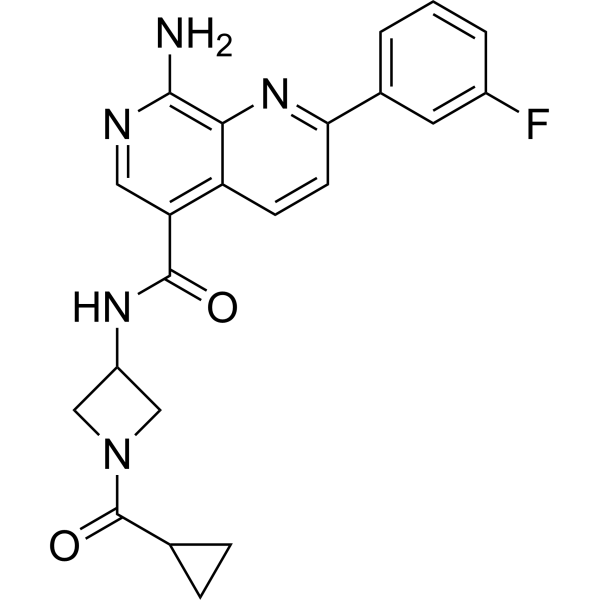
HY-100343
GNE-495MAP4K4 Inhibitor -
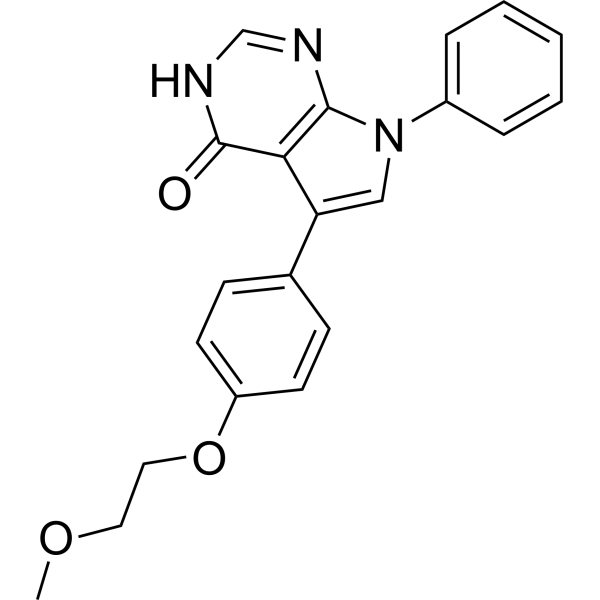
HY-111754
DMX-5804MAP4K4 Inhibitor -
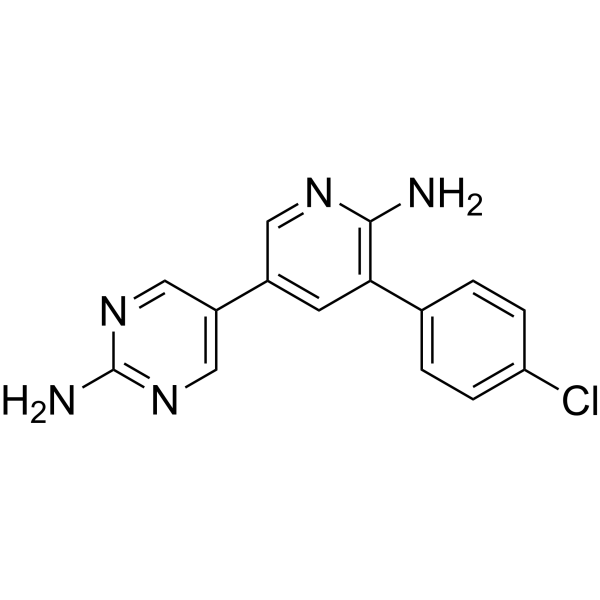
HY-125012
MAP4K4-IN-3MAP4K4 Inhibitor -
HY-12041
SP600125JNK Inhibitor -
HY-10218
EverolimusmTORC Inhibitor -
HY-10181
DasatinibSrc/Bcr-Abl Inhibitor -
HY-10219
RapamycinmTOR Inhibitor -
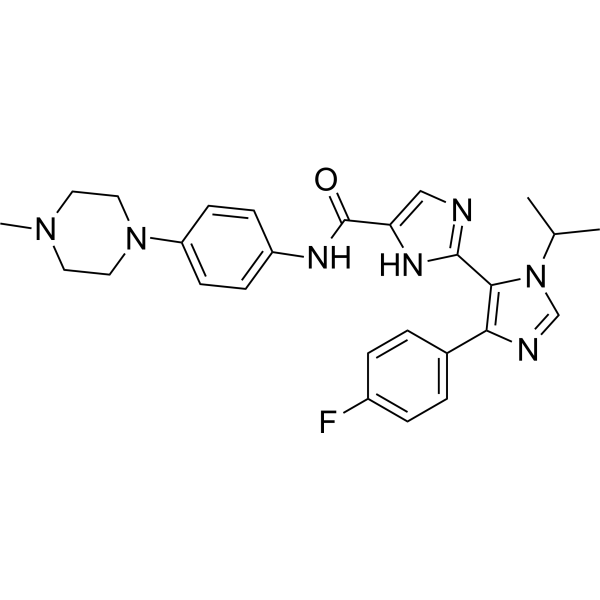
HY-160623
RentosertibTNIK/MAP4K4 Inhibitor -
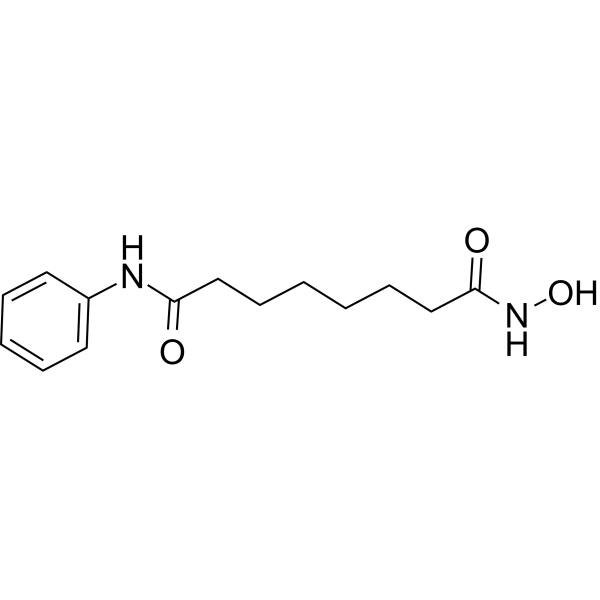
HY-10221
VorinostatHDAC Inhibitor -
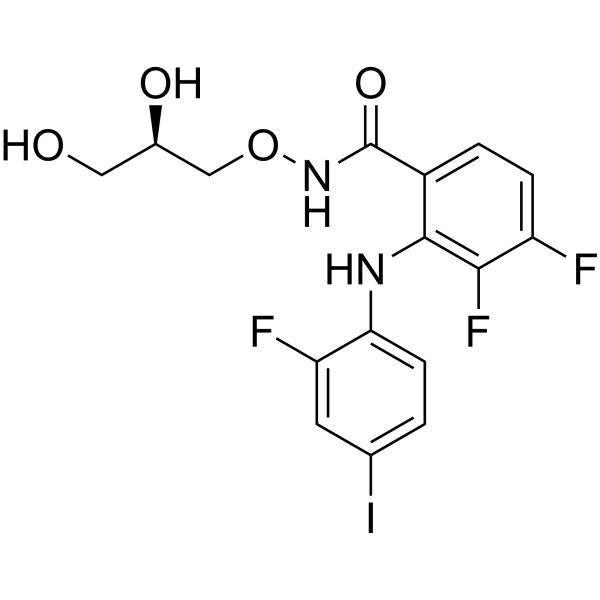
HY-10254
MirdametinibMEK Inhibitor -
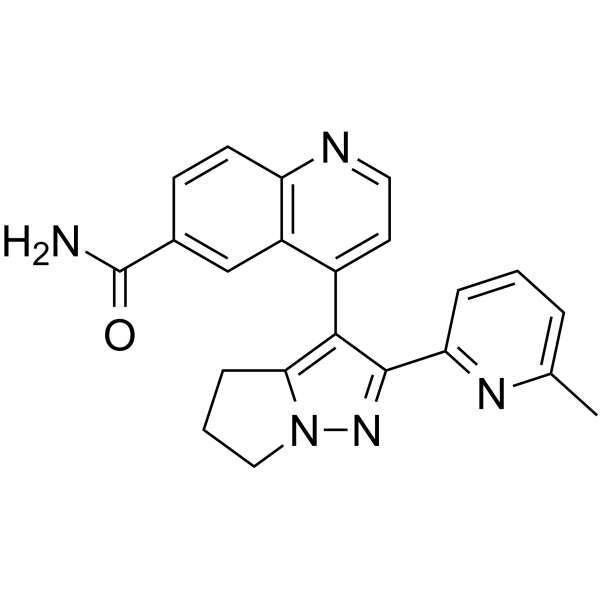
HY-13226
GalunisertibTGFβRI Inhibitor -
HY-100596
AS1842856Foxo1 Inhibitor
Publications Citing Use of MedChemExpress (MCE) PF-06260933
MoreAll MAP4K Isoforms
More

Biological Activity
Description
IC50 & Target
[1]|
MAP4K4 3.7 nM (IC50) |
Cellular Effect
|
Cell Line

|
Type | Value | Description | References |
|---|---|---|---|---|
| Epithelial cell | IC50 |
>119 μM
Compound: 16; PF-6260933
|
Cytotoxicity against human liver epithelial cells
Cytotoxicity against human liver epithelial cells
|
[PMID: 26617966] |
| HEK293 | IC50 |
1.8 μM
Compound: 16; PF-6260933
|
Inhibition of human ERG transfected in HEK293 cells
Inhibition of human ERG transfected in HEK293 cells
|
[PMID: 26617966] |
In Vitro
PF-06260933 treatment of human aortic endothelial cell (EC) robustly prevents TNF-α-mediated endothelial permeability in vitro, similar to MAP4K4 knockdown[2].
MedChemExpress (MCE) has not independently confirmed the accuracy of these methods. They are for reference only. .
In Vivo
MedChemExpress (MCE) has not independently confirmed the accuracy of these methods. They are for reference only.


Chemical Information
-
CAS No. 1811510-56-1
-
Appearance Solid
-
Molecular Weight 296.75
-
Formula C16H13ClN4
-
Color White to off-white
-
SMILES
NC1=C(C2=CC=C(Cl)C=C2)C=C(C(C=N3)=CC=C3N)C=N1
-
Shipping
Room temperature in continental US; may vary elsewhere.
-
Storage
Powder -20°C 3 years 4°C 2 years In solvent -80°C 2 years -20°C 1 year


Publications (5)
-
Journal Impact Factor
-
Most Recent
-
Cell Rep Med
A human iPSC-derived sensory neuron platform for high-throughput discovery of neuroprotectants against chemotherapy-induced peripheral neuropathy. [Abstract]2026 May 19;7(5):102787. PMID: 42097147 -
Diabetologia
MAP4K4 aggravates microvascular anomalies in diabetic retinopathy in a YTHDF2-dependent manner. [Abstract]2025 Jun;68(6):1335-1351. PMID: 40072537 -
Sci Rep
The neuroepithelial origin of ovarian carcinomas explained through an epithelial-mesenchymal-ectodermal transition enhanced by cisplatin. [Abstract]2024 Nov 26;14(1):29286. PMID: 39592661 -
Life Sci Alliance
MAP4K4 regulates forces at cell-cell and cell-matrix adhesions to promote collective cell migration. [Abstract]2023 Jun 27;6(9):e202302196. PMID: 37369604 -


Solvent & Solubility
In Vitro:
DMSO : 30 mg/mL (101.10 mM; Need ultrasonic and warming; Hygroscopic DMSO has a significant impact on the solubility of product, please use newly opened DMSO)
Please refer to the solubility information to select the appropriate solvent. Once prepared, please aliquot and store the solution to prevent product inactivation from repeated freeze-thaw cycles.
Storage method and period of stock solution: -80°C, 2 years; -20°C, 1 year. When stored at -80°C, please use it within 2 years. When stored at -20°C, please use it within 1 year.
Please refer to the solubility information to select the appropriate solvent. Once prepared, please aliquot and store the solution to prevent product inactivation from repeated freeze-thaw cycles.
Storage method and period of stock solution: -80°C, 2 years; -20°C, 1 year. When stored at -80°C, please use it within 2 years. When stored at -20°C, please use it within 1 year.
Concentration (start) × Volume (start) = Concentration (final) × Volume (final)
In Vivo:
Select the appropriate dissolution method based on your experimental animal and administration route.
- For the following dissolution methods, please ensure to first prepare a clear stock solution using an In Vitro approach and then sequentially add co-solvents:
- To ensure reliable experimental results, the clarified stock solution can be appropriately stored based on storage conditions. As for the working solution for In Vivo experiments, it is recommended to prepare freshly and use it on the same day.
- The percentages shown for the solvents indicate their volumetric ratio in the final prepared solution. If precipitation or phase separation occurs during preparation, heat and/or sonication can be used to aid dissolution.
Add each solvent one by one: 10% DMSO 40% PEG300 5% Tween-80 45% Saline
Solubility: ≥ 2.5 mg/mL (8.42 mM); Clear solution
This protocol yields a clear solution of ≥ 2.5 mg/mL (saturation unknown).
Taking 1 mL working solution as an example, add 100 μL DMSO stock solution (25.0 mg/mL) to 400 μL PEG300, and mix evenly; then add 50 μL Tween-80 and mix evenly; then add 450 μL Saline to adjust the volume to 1 mL.
Preparation of Saline: Dissolve 0.9 g sodium chloride in ddH₂O and dilute to 100 mL to obtain a clear Saline solution.
In Vivo Dissolution Calculator
Please enter the basic information of animal experiments:
-
-
-
-
Recommended: Prepare an additional quantity of animals to account for potential losses during experiments.
Please enter your animal formula composition:
-
%DMSO +
Recommended: Keep the proportion of DMSO in working solution below 2% if your animal is weak.
-
%+
-
+%Tween-80 + +
-
%Saline +
The co-solvents required include: DMSO, . All of co-solvents are available by MedChemExpress (MCE). , Tween 80. All of co-solvents are available by MedChemExpress (MCE).
Working solution concentration: 0.22 mg/mL
Method for preparing stock solution: mg drug dissolved in μL DMSO. Stock solution concentration: mg/mL.
1. Take μL DMSO stock solution;
2. Add μL .
μL , mix evenly;
3. Then add μL Tween 80, mix evenly;
4. Then add μL
Please ensure that the stock solution in the first step is dissolved to a clear state, and add co-solvents in sequence. You can use ultrasonic heating (ultrasonic cleaner, recommended frequency 20-40 kHz), vortexing, etc. to assist dissolution.


Purity & Documentation
-
Data Sheet (277 KB)
-
SDS (393 KB)
- English - EN (393 KB)
- Français - FR (393 KB)
- Deutsch - DE (393 KB)
- Norwegian - NO (393 KB)
- Español - ES (393 KB)
- Swedish - SV (393 KB)
- Italian - IT (393 KB)
- Korean - KR (393 KB)
- Portuguese - PT (393 KB)
-
Handling Instructions (2659 KB)
References
[1]. Ammirati M, et al. Discovery of an in Vivo Tool to Establish Proof-of-Concept for MAP4K4-Based Antidiabetic Treatment. ACS Med Chem Lett. 2015 Oct 6;6(11):1128-33. [Content Brief]
[2]. Roth Flach RJ, et al. Endothelial protein kinase MAP4K4 promotes vascular inflammation and atherosclerosis. Nat Commun. 2015 Dec 21;6:8995. [Content Brief]


Complete Stock Solution Preparation Table
Please refer to the solubility information to select the appropriate solvent. Once prepared, please aliquot and store the solution to prevent product inactivation from repeated freeze-thaw cycles.
Storage method and period of stock solution: -80°C, 2 years; -20°C, 1 year. When stored at -80°C, please use it within 2 years. When stored at -20°C, please use it within 1 year.
| Optional Solvent | Concentration Solvent Mass | 1 mg | 5 mg | 10 mg | 25 mg |
|---|---|---|---|---|---|
| DMSO | 1 mM | 3.3698 mL | 16.8492 mL | 33.6984 mL | 84.2460 mL |
| 5 mM | 0.6740 mL | 3.3698 mL | 6.7397 mL | 16.8492 mL | |
| 10 mM | 0.3370 mL | 1.6849 mL | 3.3698 mL | 8.4246 mL | |
| 15 mM | 0.2247 mL | 1.1233 mL | 2.2466 mL | 5.6164 mL | |
| 20 mM | 0.1685 mL | 0.8425 mL | 1.6849 mL | 4.2123 mL | |
| 25 mM | 0.1348 mL | 0.6740 mL | 1.3479 mL | 3.3698 mL | |
| 30 mM | 0.1123 mL | 0.5616 mL | 1.1233 mL | 2.8082 mL | |
| 40 mM | 0.0842 mL | 0.4212 mL | 0.8425 mL | 2.1061 mL | |
| 50 mM | 0.0674 mL | 0.3370 mL | 0.6740 mL | 1.6849 mL | |
| 60 mM | 0.0562 mL | 0.2808 mL | 0.5616 mL | 1.4041 mL | |
| 80 mM | 0.0421 mL | 0.2106 mL | 0.4212 mL | 1.0531 mL | |
| 100 mM | 0.0337 mL | 0.1685 mL | 0.3370 mL | 0.8425 mL |


PF-06260933 Related Classifications
HY-19562 Related Classifications
 Powered by Bioz