



MAP4K4/HGK
MAP4K4/HGK is a human STE20-related serine/threonine kinase that specifically activates the c-Jun N-terminal kinase (JNK) pathway[1]. Mechanistically, the related Nck-interacting kinase (NIK) form binds NCK and MEKK1 and activates the SAPK/JNK cascade through a conserved regulatory domain[2]. Therefore, MAP4K4/HGK provides a kinase node connecting adaptor proteins, MAPK signaling, and stress-responsive transcriptional programs[1][2]. In endothelial models, MAP4K4 regulates integrin-FERM binding and controls endothelial cell motility, linking this kinase to adhesion remodeling and vascular migration assays[3]. In tumor-cell screening, MAP4K4 was identified as a promigratory kinase, supporting its use in invasion, migration, and metastasis-related experimental designs[4]. In inflammatory and metabolic models, TNF-α stimulates Map4k4 expression through TNFR1, c-Jun, and ATF2 signaling, and MAP4K4 gene silencing in human skeletal muscle prevents TNF-α-induced insulin resistance[5]. In immune-metabolic disease models, HGK/MAP4K4 deficiency stabilizes TRAF2, promotes Th17 differentiation, and leads to insulin resistance[6]. Compared with related MAP4K4 isoforms, colorectal cancer studies show that the RBM4-SRSF3-MAP4K4 splicing cascade modulates metastatic signatures, and MAP4K4 isoform levels correlate with migration and invasion[7]. For experimental applications, GNE-495 is a potent and selective MAP4K4 inhibitor with efficacy in retinal angiogenesis, and it impedes pancreatic cancer growth and migration in disease models[8][9].
References:
- [1]. Yao Z, et al. A novel human STE20-related protein kinase, HGK, that specifically activates the c-Jun N-terminal kinase signaling pathway. J Biol Chem. 1999 Jan 22;274(4):2118-25. [Content Brief]
- [2]. Su YC, et al. NIK is a new Ste20-related kinase that binds NCK and MEKK1 and activates the SAPK/JNK cascade via a conserved regulatory domain. EMBO J. 1997 Mar 17;16(6):1279-90. [Content Brief]
- [3]. Vitorino P, et al. MAP4K4 regulates integrin-FERM binding to control endothelial cell motility. Nature. 2015 Mar 26;519(7544):425-30. [Content Brief]
- [4]. Collins CS, et al. A small interfering RNA screen for modulators of tumor cell motility identifies MAP4K4 as a promigratory kinase. Proc Natl Acad Sci U S A. 2006 Mar 7;103(10):3775-80. [Content Brief]
- [5]. Tesz GJ, et al. Tumor necrosis factor alpha (TNFalpha) stimulates Map4k4 expression through TNFalpha receptor 1 signaling to c-Jun and activating transcription factor 2. J Biol Chem. 2007 Jul 6;282(27):19302-12. [Content Brief]
- [6]. Chuang HC, et al. HGK/MAP4K4 deficiency induces TRAF2 stabilization and Th17 differentiation leading to insulin resistance. Nat Commun. 2014 Aug 6;5:4602. [Content Brief]
- [7]. Lin JC, et al. RBM4-SRSF3-MAP4K4 splicing cascade modulates the metastatic signature of colorectal cancer cell. Biochim Biophys Acta Mol Cell Res. 2018 Feb;1865(2):259-272. [Content Brief]
- [8]. Ndubaku CO, et al. Structure-Based Design of GNE-495, a Potent and Selective MAP4K4 Inhibitor with Efficacy in Retinal Angiogenesis. ACS Med Chem Lett. 2015 Jun 29;6(8):913-8. [Content Brief]
- [9]. Singh SK, et al. MAP4K4 promotes pancreatic tumorigenesis via phosphorylation and activation of mixed lineage kinase 3. Oncogene. 2021 Oct;40(43):6153-6165. [Content Brief]
All Product Categories
-
MAP4K4/HGK Related Products (18)
Related Products (18)

- 1
-
Rentosertib
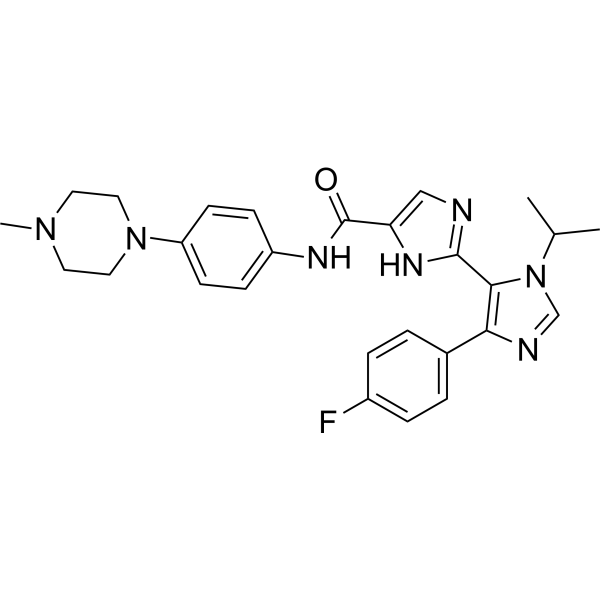 0 ImagesSynonyms: INS018_055; TNIK&MAP4K4-IN-2Rentosertib (INS018 055) (compound 112) is the orally active TNIK and MAP4K4 inhibitor with IC50 values of 12-120, 12-120 nM, respectively.
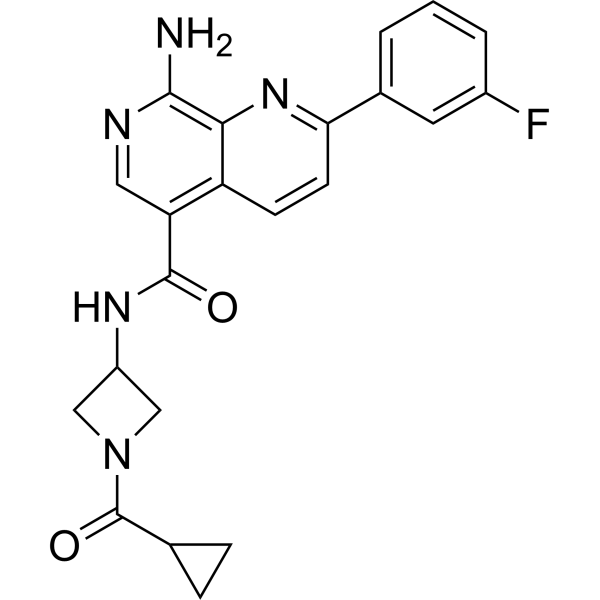
-
PF-06260933
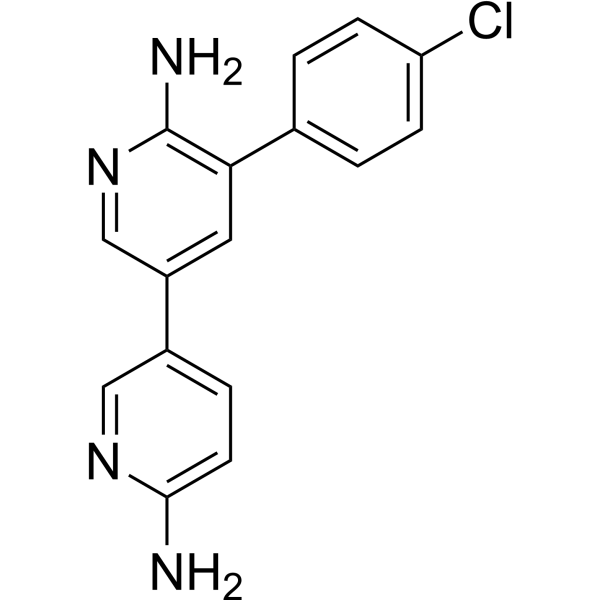 0 ImagesPF-06260933 is an orally active and highly selective inhibitor of MAP4K4 with IC50s of 3.7 and 160 nM for kinase and cell, respectively.
-
DMX-5804
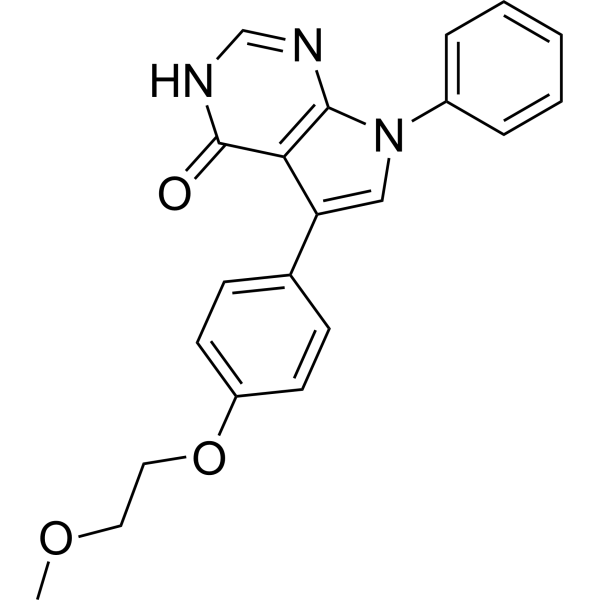 0 ImagesDMX-5804 is a potent, orally active and selective MAP4K4 inhibitor, with an IC50 of 3 nM, a pIC50 of 8.55 for human MAP4K4, less potent on MINK1/MAP4K6 (pIC50, 8.18), and TNIK/MAP4K7 (pIC50, 7.96). DMX-5804 enhances cardiomyocyte survival, and reduces ischemia-reperfusion injury in mice.
-
Famlasertib
 0 ImagesSynonyms: Prostetin/12kFamlasertib is a potent, brain-penetrant MAP4K inhibitor with IC50s value of 0.3 nM, 23.7 nM, and 44.7 nM for HGK (MAP4K4), MLK3, and MLK1, respectively. Famlasertib shows motor neuron protection and anti-inflammatory properties. Famlasertib can be used for the study of amyotrophic lateral sclerosis (ALS).
-
F1386-0303
 0 ImagesCat. No.: HY-W207224CAS No.: 287177-12-2F1386-0303 is a highly selective MAP4K4 inhibitor with an IC50 of 34 nM against human targets. F1386-0303 exerts cardiomyocyte protective and function-preserving effects through mechanisms such as alleviating oxidative stress, inhibiting caspases, and maintaining mitochondrial membrane potential, while it does not interfere with the activity of Doxorubicin (HY-15142A) in cancer cells. F1386-0303 is rapidly cleared and has no bioavailability in mice, but it is well-suited as a tool compound for target validation. F1386-0303 can be applied to studies related to cardiac ischemia-reperfusion injury, Doxorubicin-induced cardiotoxicity, myocardial infarction and other related conditions.
-
MAP4K4-IN-3
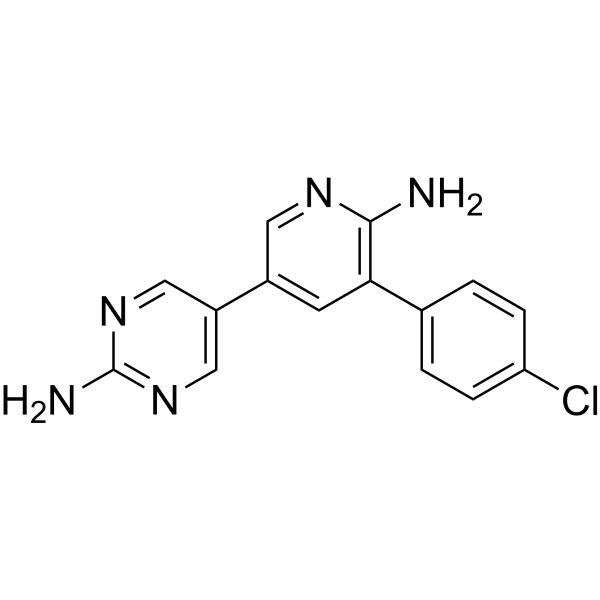 0 ImagesMAP4K4-IN-3 (Compound 17) is a potent and selective MAP4K4 inhibitor with an IC50 of 14.9 nM in kinase assay, an IC50 of 470 nM in cell assay. Antidiabetic agent.
-
Pyrrolo[2,1-f][1,2,4]triazin-4-amine
![Pyrrolo[2,1-f][1,2,4]triazin-4-amine](https://file.medchemexpress.com/product_pic/hy-w003471.gif "Click to View Pyrrolo[2,1-f][1,2,4]triazin-4-amine Product Detail") 0 ImagesCat. No.: HY-W003471CAS No.: 159326-68-8Pyrrolo[2,1-f][1,2,4]triazin-4-amine is a MAP4K4 inhibitor with a surface plasmon resonance (SPR) Kd of 88 μM and a ligand efficiency of 0.56.
0 ImagesCat. No.: HY-W003471CAS No.: 159326-68-8Pyrrolo[2,1-f][1,2,4]triazin-4-amine is a MAP4K4 inhibitor with a surface plasmon resonance (SPR) Kd of 88 μM and a ligand efficiency of 0.56.
-
GNE 220 hydrochloride
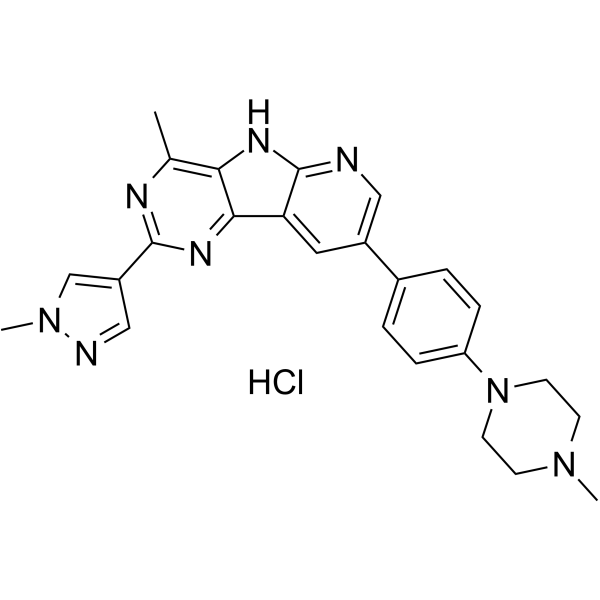 0 ImagesGNE 220 (hydrochloride) is a potent and selective inhibitor of MAP4K4, with an IC50 of 7 nM.
-
GNE 220
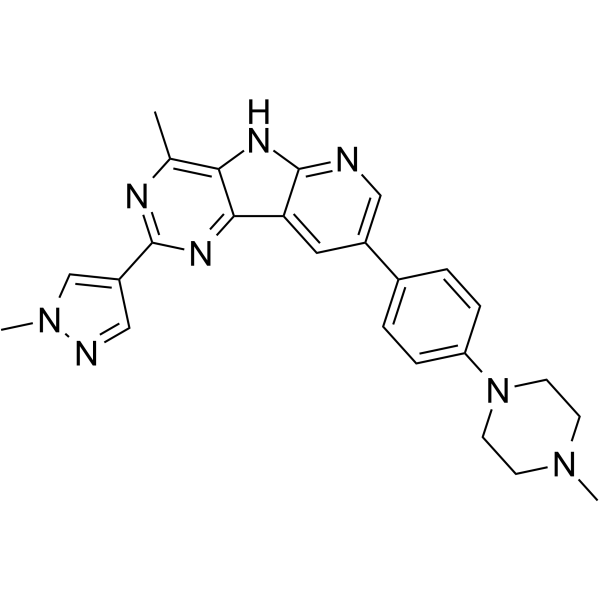 0 ImagesCat. No.: HY-U00428CAS No.: 1199590-75-4GNE-220 is a potent and selective inhibitor of MAP4K4 with an IC50 of 7 nM.
-
MAP4K4-IN-7
 0 ImagesCat. No.: HY-W402208CAS No.: 1499162-60-5MAP4K4-IN-7 (Compound 8) is a MAP4K4 inhibitor. MAP4K4-IN-7 shows moderate inhibitory activity against TNIK, MAP4K4, and MINK1 with pIC50 values of 6.8, 6.8, and 6.7 respectively. MAP4K4-IN-7 can be used for the researches of cancer and neurological disease, such as schizophrenia.
-
PF-06745013
 0 ImagesCat. No.: HY-123965CAS No.: 2089334-01-8PF-06745013 (Compound 37) is a MAP4K4 inhibitor without time-dependent inhibition (TDI) risk of CYP3A4 (IC50 of 0.4 nM for MAP4K4). PF-06745013 has no accumulation CNS-impaired and non-ATP competitive activities in mouse models. PF-06745013 can be used for inflammatory diseases like diabetes and cancers research.
-
HPK1-IN-56
 0 ImagesCat. No.: HY-172107CAS No.: 2901054-39-3HPK1-IN-56 (Compound A29) is a HPK1 inhibitor (IC50: 2.70 nM). HPK1-IN-56 inhibits downstream p-SLP76 (IC50: 8.1 nM in Jurkat T cells). HPK1-IN-56 induces the production of IL-2 in human PBMCs. HPK1-IN-56 has anticancer effect, enhances T-cell killing ability and the antitumor efficacy of anti-PD-1 antibody.
-
RET-IN-19
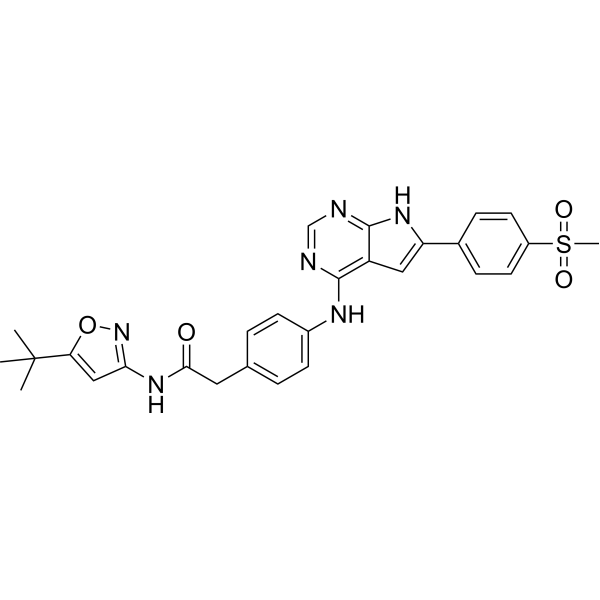 0 ImagesCat. No.: HY-151377CAS No.: 2484919-71-1RET-IN-19 (compound 59) is a potent RET inhibitor, with IC50 values of 6.8 and 13.51 nM against RET-wt and RET V804M, respectively. RET-IN-19 shows anticancer activity. RET-IN-19 can be used for non-small cell lung cancer (NSCLC) research.
-
FLT3/ITD-IN-4
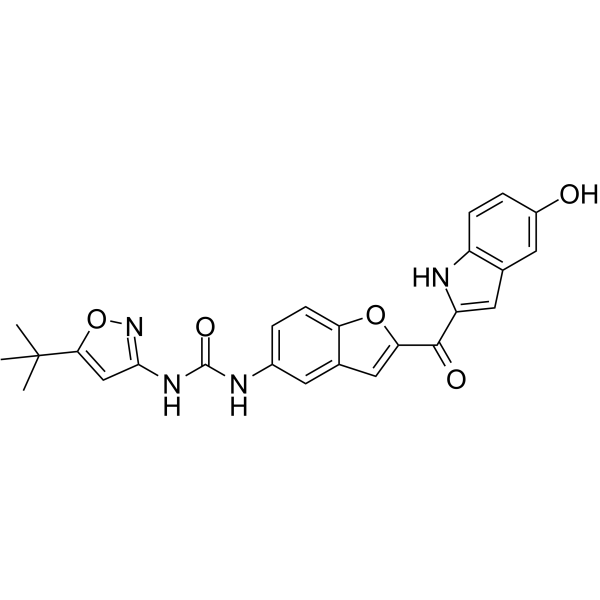 0 ImagesCat. No.: HY-146680CAS No.: 2278278-04-7FLT3/ITD-IN-4 (Compound 16) is a selective FMS-like tyrosine kinase 3 internal tandem duplications (FLT3-ITD) inhibitor with an IC50 of 2.3 nM. FLT3/ITD-IN-4 can be used for acute myeloid leukemia research.
-
HPK1-IN-52
 0 ImagesCat. No.: HY-168110CAS No.: 2994298-66-5HPK1-IN-52 is a potent and orally active hematopoietic progenitor kinase 1 (HPK1) inhibitor with an IC50 value of 10.4 nM. HPK1-IN-52 exhibits anti-tumor activities.
-
PI4K-IN-3
 0 ImagesCat. No.: HY-178775PI4K-IN-3 (Compound 27) is an orally active PI4K inhibitor with an IC50 of 1.9 nM for Plasmodium vivax PI4K. PI4K-IN-3 has no hERG channel inhibition and mammalian cytotoxicity. PI4K-IN-3 has significant selectivity against the human MINK1 and MAP4K4 kinases but with low selectivity against human PI3Kα and PI4Kβ. PI4K-IN-3 has potent antimalarial activity and significantly reduces parasitaemia in NSG mice mouse models of Plasmodium falciparum malaria.
-
NEU-1953
 0 ImagesCat. No.: HY-124633CAS No.: 2218480-85-2
- 1



