



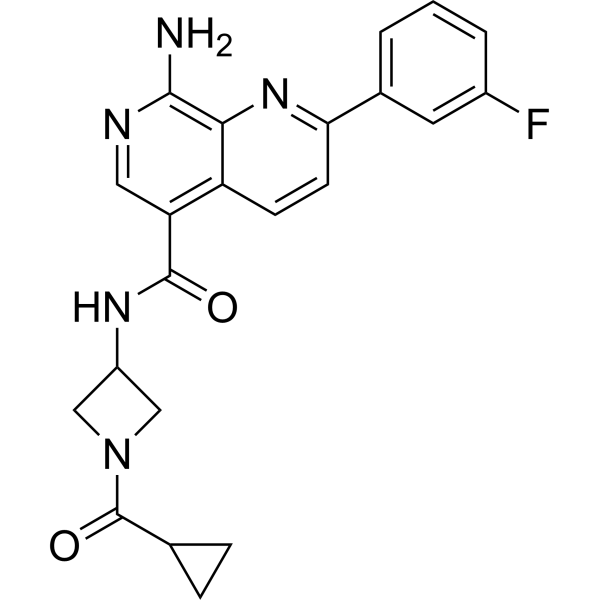
GNE-495
Based on 11 publication(s) in Google Scholar
GNE-495 is a potent and selective MAP4K4 inhibitor with an IC50 of 3.7 nM.
Para uso exclusivo en investigación. No vendemos a pacientes.
- Pureza : 99.49%
- No. CAS: 1449277-10-4
- Fòrmula: C22H20FN5O2
- Peso molecular:405.42
-
Almacenamiento:Powder -20°C, 3 years , 4°C, 2 years ; In solvent -80°C, 1 year , -20°C, 6 months

To place orders, for customer services and technical support, please contact: MedChemExpress USA
Tel: 609-228-6898 E-mail: [email protected] [email protected]


-
 Actividad biológica
-
Chemical Information
-
Solvente y solubilidad
- Pureza y Documentación
- Referencias
-
 Help & FAQs


-
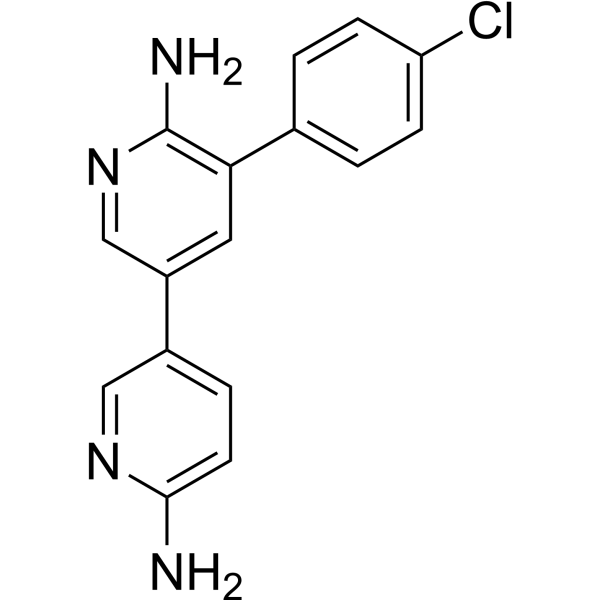
HY-19562
PF-06260933MAP4K4 Inhibitor -
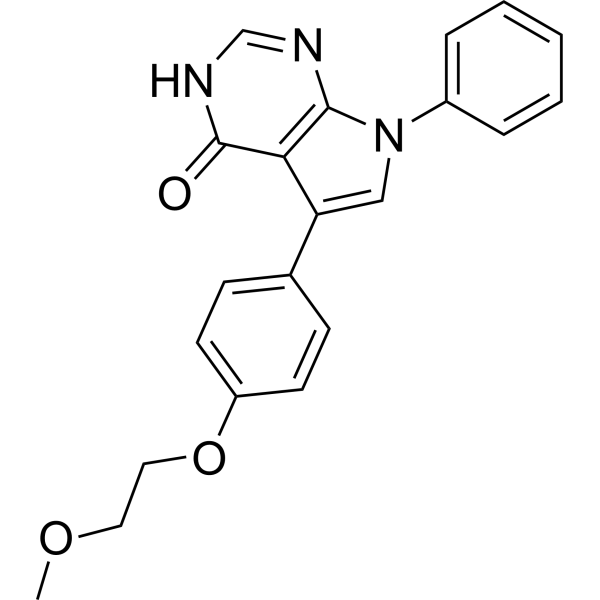
HY-111754
DMX-5804MAP4K4 Inhibitor -
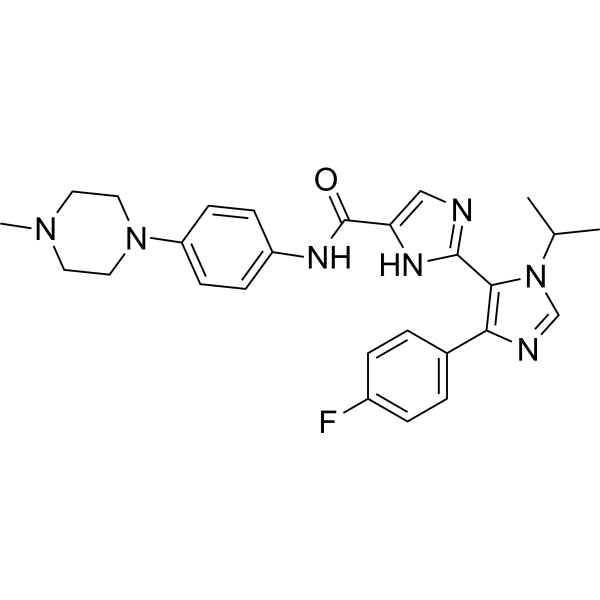
HY-160623
RentosertibTNIK/MAP4K4 Inhibitor -
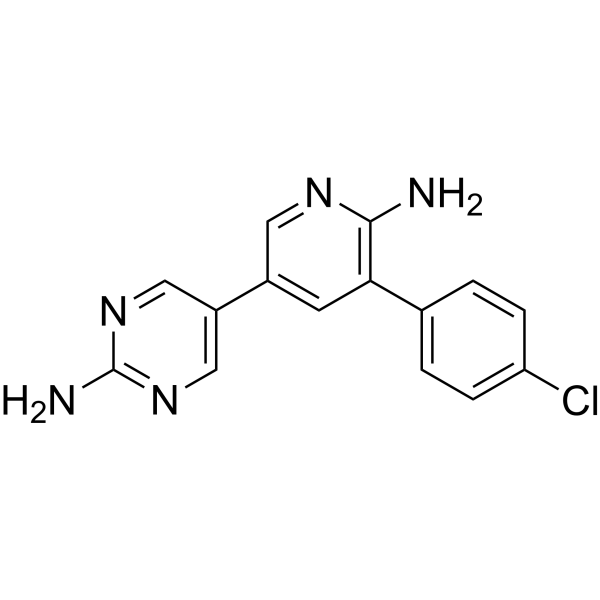
HY-125012
MAP4K4-IN-3MAP4K4 Inhibitor -
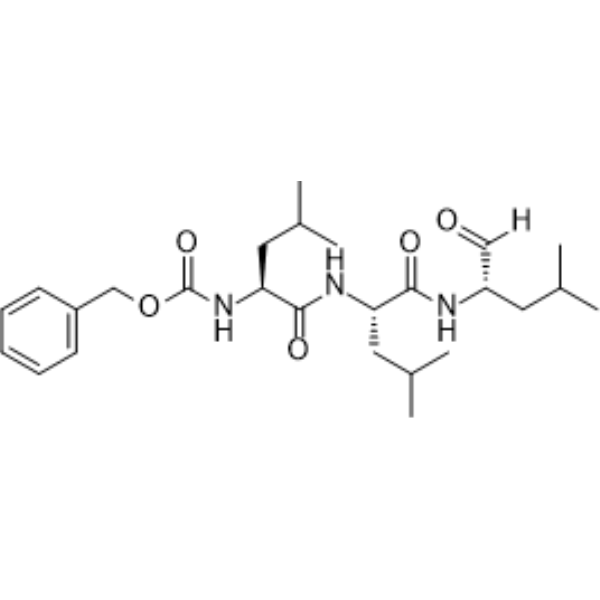
HY-13259
MG-132Proteasome Inhibitor -
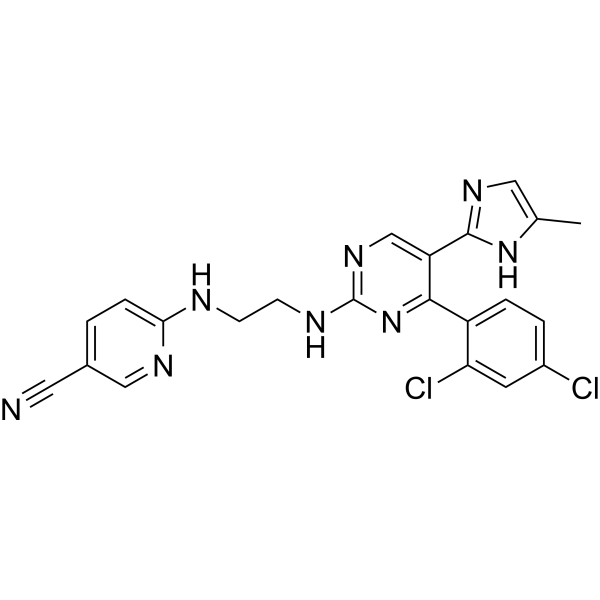
HY-10182
LaduviglusibGSK-3 Inhibitor -
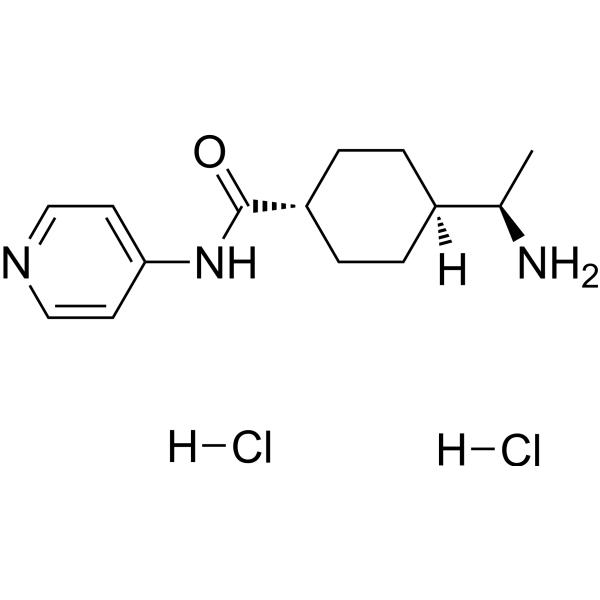
HY-10583
Y-27632 dihydrochlorideROCK Inhibitor -
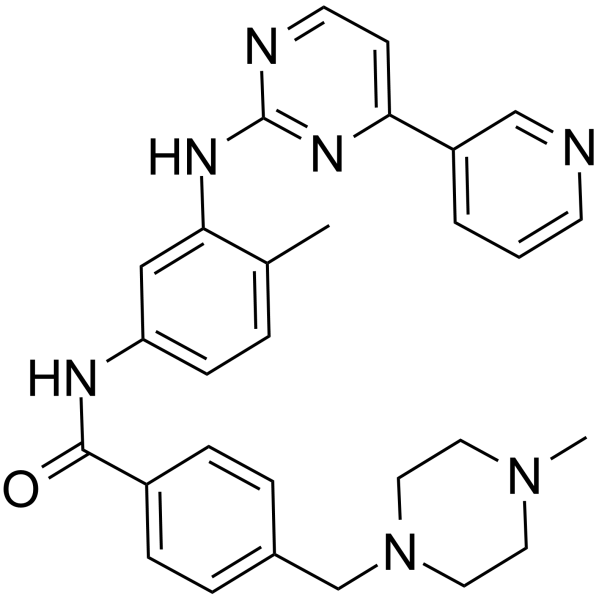
HY-15463
ImatinibTyrosine Kinases Inhibitor -

HY-108882
DNase I, Bovine pancreasEnzyme -
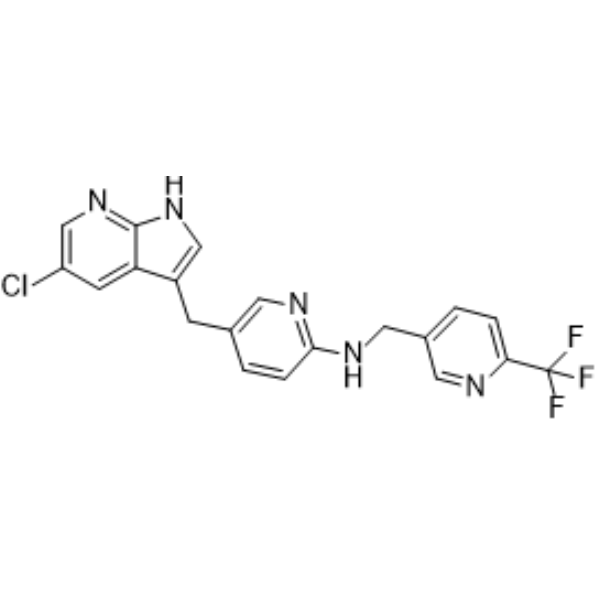
HY-16749
PexidartinibCSF1R/c-Kit Inhibitor -
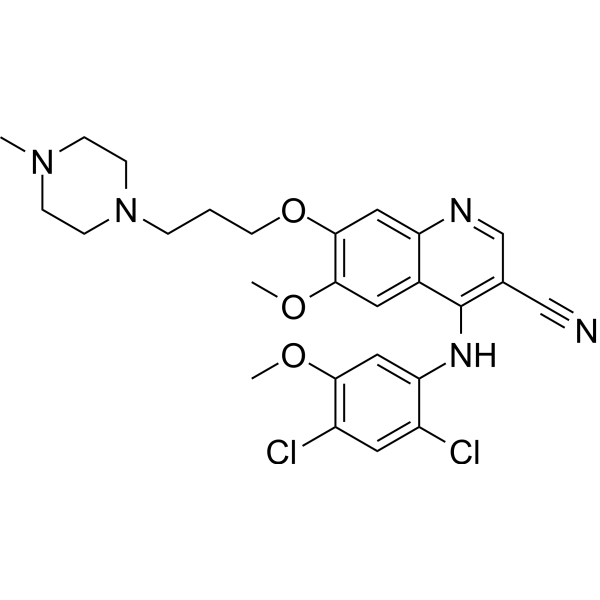
HY-10158
BosutinibSrc/Abl Inhibitor -
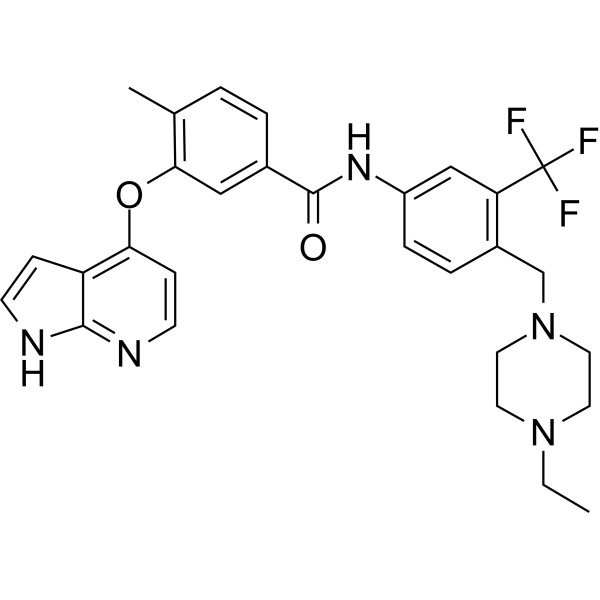
HY-15434
NG25TAK1 Inhibitor
Publications Citing Use of MedChemExpress (MCE) GNE-495
More- Adv Sci (Weinh). 2024 Jun;11(24):e2306671. [Abstract]
- Cell Rep Med. 2026 May 19;7(5):102787. [Abstract]
- Cancer Lett. 2026 Feb 16:218336. [Abstract]
- Oncogene. 2023 May;42(18):1438-1452. [Abstract]
- J Biol Chem. 2024 Jun;300(6):107309. [Abstract]
- J Cell Sci. 2026 Feb 15;139(4):jcs264424. [Abstract]
- Life Sci Alliance. 2023 Jun 27;6(9):e202302196. [Abstract]
- J Toxicol Pathol. 2026.
- Technical University of Dresden. 2025.
- SSRN. 2025 Aug 6.
- bioRxiv. 2025 January 13.
 Customer Validation & Images

-
In Vivo Efficacy Study
-
WB
-
Cell Migration/Invasion Assay
-
Cell Migration/Invasion Assay
-
WB
Ver todos los productos específicos de isoformas MAP4K
More

Actividad biológica
Descripciòn
IC50 & Target
[1]|
MAP4K4 3.7 nM (IC50) |
Cellular Effect
|
Cell Line

|
Type | Value | Description | References |
|---|---|---|---|---|
| HUVEC | IC50 |
0.057 nM
Compound: 13, GNE-495
|
Anti-angiogenesis activity in HUVEC assessed as inhibition of cell migration
Anti-angiogenesis activity in HUVEC assessed as inhibition of cell migration
|
[PMID: 26288693] |
In Vitro
GNE-495 is a potent and selective MAP4K4 inhibitor with efficacy in retinal angiogenesis. GNE-495 shows the best balance of MAP4K4 inhibition, permeability, microsomal stability, and cellular potency[1].
MedChemExpress (MCE) has not independently confirmed the accuracy of these methods. They are for reference only.
In Vivo
MedChemExpress (MCE) has not independently confirmed the accuracy of these methods. They are for reference only.


Chemical Information
-
No. CAS 1449277-10-4
-
Appearance Solid
-
Peso molecular 405.42
-
Fòrmula C22H20FN5O2
-
Color Light yellow to yellow
-
SMILES
O=C(C1=C2C=CC(C3=CC=CC(F)=C3)=NC2=C(N)N=C1)NC4CN(C(C5CC5)=O)C4
-
Envío
Room temperature in continental US; may vary elsewhere.
-
Almacenamiento
Powder -20°C 3 years 4°C 2 years In solvent -80°C 1 year -20°C 6 months


Publications (11)
-
Journal Impact Factor
-
Most Recent
-
Adv Sci (Weinh)
Peptide Transporter 1-Mediated Dipeptide Transport Promotes Hepatocellular Carcinoma Metastasis by Activating MAP4K4/G3BP2 Signaling Axis. [Abstract]2024 Jun;11(24):e2306671. PMID: 38639383
GNE-495 purchased from MedChemExpress. Usage Cited in: Adv Sci (Weinh). 2024 Jun;11(24):e2306671. [Abstract]
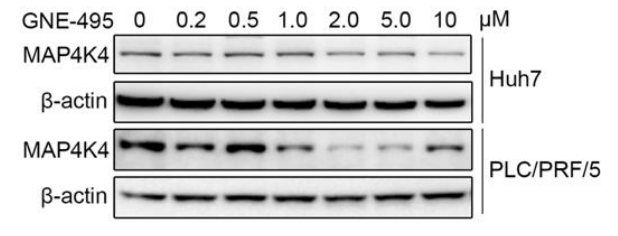
GNE-495 (0.2-10 µM; 24 h) dramatically diminished the expression of MAP4K4 in Huh7 and PLC/PRF/5 cells.
GNE-495 purchased from MedChemExpress. Usage Cited in: Adv Sci (Weinh). 2024 Jun;11(24):e2306671. [Abstract]
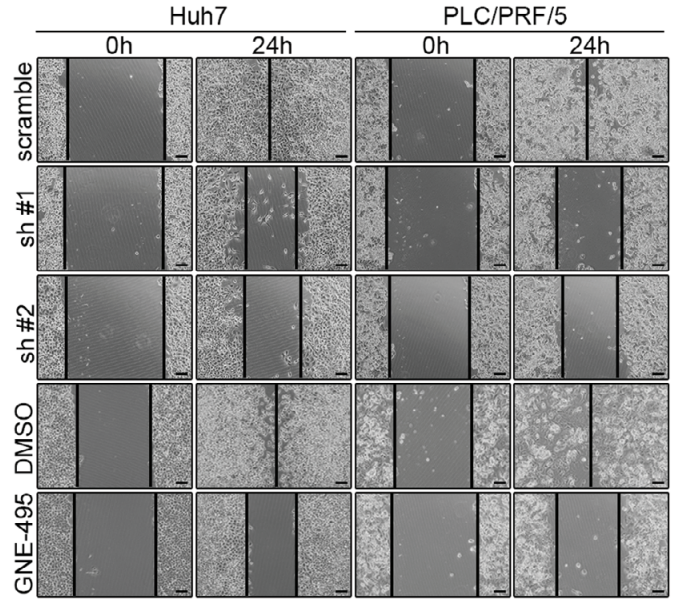
GNE-495 (2 µM; 24 h). Representative images and quantification of the Huh7 and PLC/PRF/5 cells in the wound-healing migration assays.
GNE-495 purchased from MedChemExpress. Usage Cited in: Adv Sci (Weinh). 2024 Jun;11(24):e2306671. [Abstract]
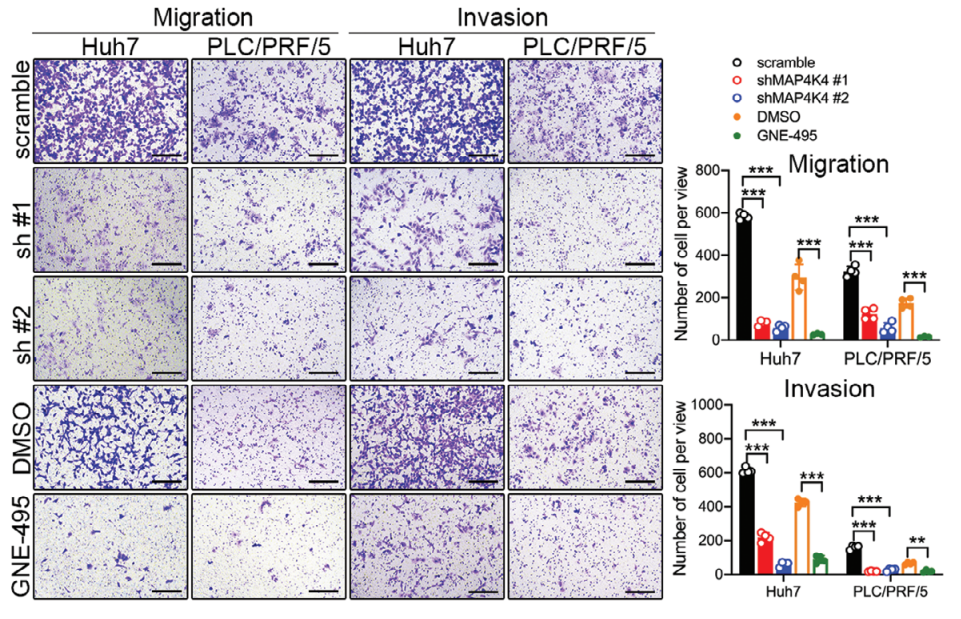
GNE-495 (2 µM; 24 h). Representative images and quantification of the migration and invasion of the Huh7 and PLC/PRF/5 cells in the Transwell assays.
GNE-495 purchased from MedChemExpress. Usage Cited in: Adv Sci (Weinh). 2024 Jun;11(24):e2306671. [Abstract]
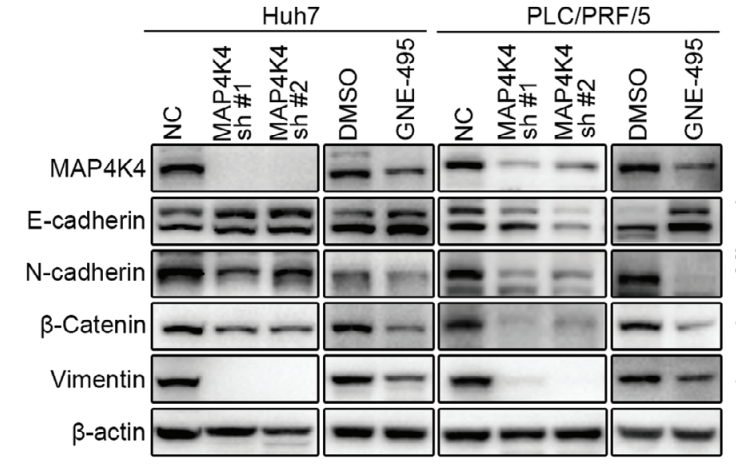
Protein expression of EMT‐associated proteins in HCC and PLC/PRF/5 cells treated with GNE-495 (2 µM; 24 h).
-
Cell Rep Med
A human iPSC-derived sensory neuron platform for high-throughput discovery of neuroprotectants against chemotherapy-induced peripheral neuropathy. [Abstract]2026 May 19;7(5):102787. PMID: 42097147 -
Cancer Lett
MAP4K4 regulates the immune landscape of pancreatic tumor microenvironment and provides an opportunity for immunotherapy. [Abstract]2026 Feb 16:218336. PMID: 41707980
GNE-495 purchased from MedChemExpress. Usage Cited in: Cancer Lett. 2026 Feb 16:218336. [Abstract]
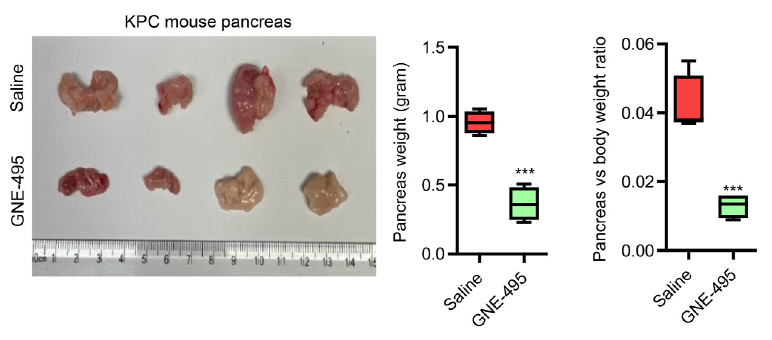
GNE-495 (3 mg/kg; i.p.; once daily for 3 weeks) reduced tumor burden in KPC (Pdx1-Cre x LSL-KRASG12D x LSL-TP53R172H) mice.
-
Oncogene
MAP4K4 promotes ovarian cancer metastasis through diminishing ADAM10-dependent N-cadherin cleavage. [Abstract]2023 May;42(18):1438-1452. PMID: 36922678 -
J Biol Chem
Blockade of a novel MAP4K4-LATS2-SASH1-YAP1 cascade inhibits tumorigenesis and metastasis in luminal breast cancer. [Abstract]2024 Jun;300(6):107309. PMID: 38657867 -
J Cell Sci
A supracellular actin network transmits forces over long distances at the apical surface of squamous carcinoma cells. [Abstract]2026 Feb 15;139(4):jcs264424. PMID: 41568698 -
Life Sci Alliance
MAP4K4 regulates forces at cell-cell and cell-matrix adhesions to promote collective cell migration. [Abstract]2023 Jun 27;6(9):e202302196. PMID: 37369604 -
-
-
-


Solvente y solubilidad
In Vitro:
DMSO : 2.17 mg/mL (5.35 mM; Need ultrasonic; Hygroscopic DMSO has a significant impact on the solubility of product, please use newly opened DMSO)
Please refer to the solubility information to select the appropriate solvent. Once prepared, please aliquot and store the solution to prevent product inactivation from repeated freeze-thaw cycles.
Storage method and period of stock solution: -80°C, 1 year; -20°C, 6 months. When stored at -80°C, please use it within 1 year. When stored at -20°C, please use it within 6 months.
Please refer to the solubility information to select the appropriate solvent. Once prepared, please aliquot and store the solution to prevent product inactivation from repeated freeze-thaw cycles.
Storage method and period of stock solution: -80°C, 1 year; -20°C, 6 months. When stored at -80°C, please use it within 1 year. When stored at -20°C, please use it within 6 months.
Concentration (start) × Volume (start) = Concentration (final) × Volume (final)
In Vivo:
Select the appropriate dissolution method based on your experimental animal and administration route.
- For the following dissolution methods, please ensure to first prepare a clear stock solution using an In Vitro approach and then sequentially add co-solvents:
- To ensure reliable experimental results, the clarified stock solution can be appropriately stored based on storage conditions. As for the working solution for In Vivo experiments, it is recommended to prepare freshly and use it on the same day.
- The percentages shown for the solvents indicate their volumetric ratio in the final prepared solution. If precipitation or phase separation occurs during preparation, heat and/or sonication can be used to aid dissolution.
Add each solvent one by one: 10% DMSO 40% PEG300 5% Tween-80 45% Saline
Solubility: ≥ 0.22 mg/mL (0.54 mM); Clear solution
This protocol yields a clear solution of ≥ 0.22 mg/mL (saturation unknown).
Taking 1 mL working solution as an example, add 100 μL DMSO stock solution (2.2 mg/mL) to 400 μL PEG300, and mix evenly; then add 50 μL Tween-80 and mix evenly; then add 450 μL Saline to adjust the volume to 1 mL.
Preparation of Saline: Dissolve 0.9 g sodium chloride in ddH₂O and dilute to 100 mL to obtain a clear Saline solution.
Add each solvent one by one: 10% DMSO 90% (20% SBE-β-CD in Saline)
Solubility: ≥ 0.22 mg/mL (0.54 mM); Clear solution
This protocol yields a clear solution of ≥ 0.22 mg/mL (saturation unknown).
Taking 1 mL working solution as an example, add 100 μL DMSO stock solution (2.2 mg/mL) to 900 μL 20% SBE-β-CD in Saline, and mix evenly.
Preparation of 20% SBE-β-CD in Saline (4°C, storage for one week): 2 g SBE-β-CD powder is dissolved in 10 mL Saline, completely dissolve until clear.
In Vivo Dissolution Calculator
Please enter the basic information of animal experiments:
-
-
-
-
Recommended: Prepare an additional quantity of animals to account for potential losses during experiments.
Please enter your animal formula composition:
-
%DMSO +
Recommended: Keep the proportion of DMSO in working solution below 2% if your animal is weak.
-
%+
-
+%Tween-80 + +
-
%Saline +
The co-solvents required include: DMSO, . All of co-solvents are available by MedChemExpress (MCE). , Tween 80. All of co-solvents are available by MedChemExpress (MCE).
Working solution concentration: 0.22 mg/mL
Method for preparing stock solution: mg drug dissolved in μL DMSO. Stock solution concentration: mg/mL.
1. Take μL DMSO stock solution;
2. Add μL .
μL , mix evenly;
3. Then add μL Tween 80, mix evenly;
4. Then add μL
Please ensure that the stock solution in the first step is dissolved to a clear state, and add co-solvents in sequence. You can use ultrasonic heating (ultrasonic cleaner, recommended frequency 20-40 kHz), vortexing, etc. to assist dissolution.


Pureza y Documentación
-
Ficha de datos (279 KB)
-
SDS (393 KB)
- English - EN (393 KB)
- Français - FR (393 KB)
- Deutsch - DE (393 KB)
- Norwegian - NO (393 KB)
- Español - ES (393 KB)
- Swedish - SV (393 KB)
- Italian - IT (393 KB)
- Korean - KR (393 KB)
- Portuguese - PT (393 KB)
-
Instrucciones de manejo (2659 KB)
Referencias


Complete Stock Solution Preparation Table
Please refer to the solubility information to select the appropriate solvent. Once prepared, please aliquot and store the solution to prevent product inactivation from repeated freeze-thaw cycles.
Storage method and period of stock solution: -80°C, 1 year; -20°C, 6 months. When stored at -80°C, please use it within 1 year. When stored at -20°C, please use it within 6 months.
| Optional Solvent | Concentration Solvent Mass | 1 mg | 5 mg | 10 mg | 25 mg |
|---|---|---|---|---|---|
| DMSO | 1 mM | 2.4666 mL | 12.3329 mL | 24.6658 mL | 61.6644 mL |
| 5 mM | 0.4933 mL | 2.4666 mL | 4.9332 mL | 12.3329 mL |


GNE-495 Related Classifications
HY-100343 Related Classifications
 Powered by Bioz