



MAP4K3/GLK
MAP4K3, also known as germinal center kinase-like kinase (GLK), is a serine/threonine kinase that belongs to the Ste20-like kinase family and regulates T-cell activation[1]. Mechanistically, GLK phosphorylates PKCθ at Ser-538, which activates the IKK/NF-κB signaling cascade, promoting pro-inflammatory T-cell responses[1][2]. GLK further inhibits regulatory T-cell (Treg) differentiation by phosphorylating IKKβ at Ser733, leading to FoxO1 nuclear export and Foxp3 downregulation[3]. In T cells, GLK selectively stimulates IL-17A production through induction of the AhR-RORγt transcriptional complex, linking GLK signaling to autoimmune pathogenesis[4]. Compared with related MAP4K isoforms, such as HPK1/MAP4K1, GLK promotes tumorigenesis and autoimmune inflammation, highlighting its distinct functional role[1]. Overexpression of GLK in human T cells correlates with disease severity in systemic lupus erythematosus and adult-onset Still’s disease, confirming its relevance as a biomarker and pathogenic mediator[5][4]. GLK also contributes to cancer progression by phosphorylating IQGAP1, which enhances Cdc42-mediated cell migration and metastasis[1]. Pharmacological inhibition using small-molecule inhibitors such as verteporfin reduces IL-17A production and ameliorates autoimmune disease in mouse models, demonstrating translational potential[4]. These characteristics position GLK as a critical regulator of immune activation and a promising target for experimental interventions in autoimmune and cancer research[1][3][4].
References:
- [1]. Chuang HC, et al. MAP4K3/GLK in autoimmune disease, cancer and aging. J Biomed Sci. 2019 Oct 22;26(1):82. [Content Brief]
- [2]. Chuang HC, et al. AhR-ROR-γt complex is a therapeutic target for MAP4K3/GLKhighIL-17Ahigh subpopulation of systemic lupus erythematosus. FASEB J. 2019 Oct;33(10):11469-11480. [Content Brief]
- [3]. Chi JN, et al. MAP4K3/GLK inhibits Treg differentiation by direct phosphorylating IKKβ and inducing IKKβ-mediated FoxO1 nuclear export and Foxp3 downregulation. Theranostics. 2022 Jul 18;12(13):5744-5760. [Content Brief]
- [4]. Chen DY, et al. Germinal center kinase-like kinase (GLK/MAP4K3) expression is increased in adult-onset Still's disease and may act as an activity marker. BMC Med. 2012 Aug 6;10:84. [Content Brief]
- [5]. Isakov N, et al. PKC-theta-mediated signal delivery from the TCR/CD28 surface receptors. Front Immunol. 2012 Aug 22;3:273. [Content Brief]
All Product Categories
-
MAP4K3/GLK Related Products (7)
Related Products (7)

-
DMX-5804
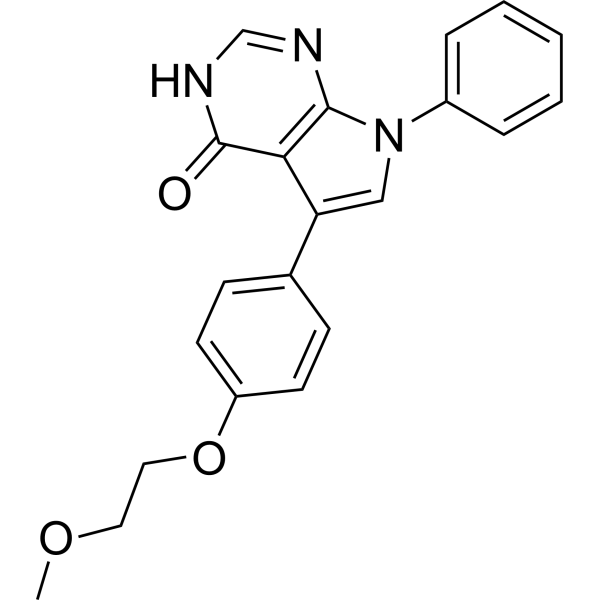 0 ImagesDMX-5804 is a potent, orally active and selective MAP4K4 inhibitor, with an IC50 of 3 nM, a pIC50 of 8.55 for human MAP4K4, less potent on MINK1/MAP4K6 (pIC50, 8.18), and TNIK/MAP4K7 (pIC50, 7.96). DMX-5804 enhances cardiomyocyte survival, and reduces ischemia-reperfusion injury in mice.
-
HPK1-IN-7
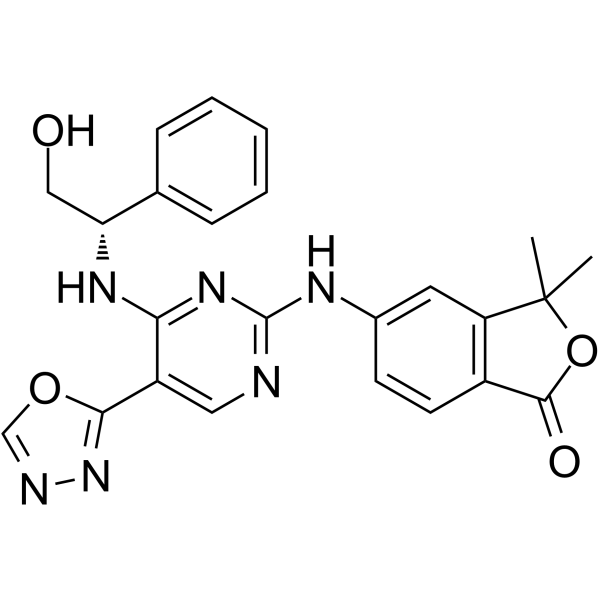 0 ImagesHPK1-IN-7 is a potent, orally active HPK1 (hematopoietic progenitor kinase 1, MAP4K1) inhibitor (IC50=2.6 nM) with excellent family and kinome selectivity. HPK1-IN-7 shows selectivity against IRAK4 (59 nM) and GLK (140 nM). HPK1-IN-7 shows robust efficacy against MC38 syngeneic tumor model in combination with anti-PD1.
-
DB1113
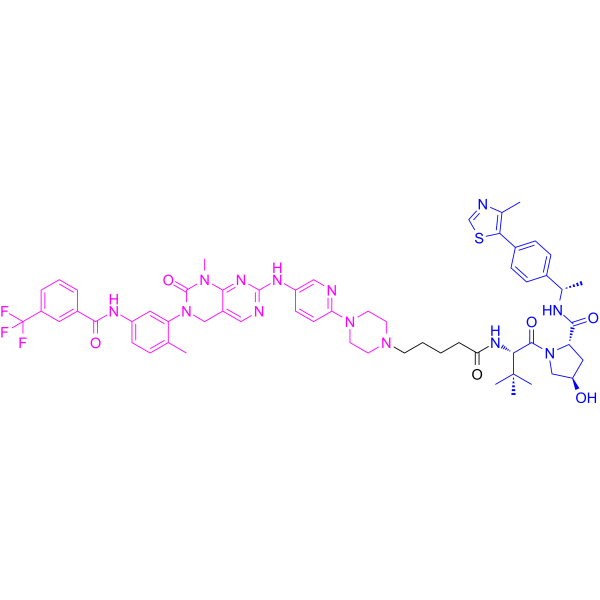 0 ImagesDB1113 is a multi-kinase PROTAC degrader. DB1113 induces the ubiquitination and degradation of ABL1, ABL2, BLK, CDK11B, CDK4, CSK, EPHA3, FER, GAK, LIMK1, MAP3K20, MAP4K1, MAP4K2, MAP4K3, MAP4K5, MAPK14, MAPK7, MAPK8, MAPK9, MAPKAPK2, MAPKAPK3, NLK, PDIK1L, PTK2B, RIPK1, RPS6KA1, RPS6KA3, SIK2, SIK3, STK35, TNK2, and ULK1. DB1113 can be used to study diseases or disorders mediated by aberrant kinase activity.
-
CA/PRAK-IN-1
 0 ImagesCat. No.: HY-184792CA/PRAK-IN-1 is a dual inhibitor of carbonic anhydrase (Carbonic Anhydrase) and PRAK, with a Ki of 20.1 nM against hCA IX and 16.4 nM against hCA XII. CA/PRAK-IN-1 exhibits inhibitory activity against YES1 kinase, BTK, and MAP4K3. CA/PRAK-IN-1 induces G0/G1 phase arrest of the cancer cell cycle, inhibits DNA synthesis, disrupts hypoxia-driven survival pathways, promotes cell death, and shows broad-spectrum cytotoxicity against tumor cells. CA/PRAK-IN-1 can be used in research on various cancers including leukemia, colon cancer, melanoma, and renal cancer.
-
HPK1-IN-62
 0 ImagesCat. No.: HY-178097HPK1-IN-62 is a selective and orally active HPK-1 inhibitor with an IC50 of 1.22 nM. HPK1-IN-62 significantly improves GLK selectivity (> 665-fold) and LCK selectivity (> 1095-fold). HPK1-IN-62 enhances T-cell activation and demonstrated synergistic effects when combined with anti-mPD-1 therapy in the MC38 tumor model, inhibiting a tumor growth. HPK1-IN-62 can be used in the researchs of colon cancer and cancer immunotherapy.
-
HPK1-IN-56
 0 ImagesCat. No.: HY-172107CAS No.: 2901054-39-3HPK1-IN-56 (Compound A29) is a HPK1 inhibitor (IC50: 2.70 nM). HPK1-IN-56 inhibits downstream p-SLP76 (IC50: 8.1 nM in Jurkat T cells). HPK1-IN-56 induces the production of IL-2 in human PBMCs. HPK1-IN-56 has anticancer effect, enhances T-cell killing ability and the antitumor efficacy of anti-PD-1 antibody.
-
HPK1-IN-52
 0 ImagesCat. No.: HY-168110CAS No.: 2994298-66-5HPK1-IN-52 is a potent and orally active hematopoietic progenitor kinase 1 (HPK1) inhibitor with an IC50 value of 10.4 nM. HPK1-IN-52 exhibits anti-tumor activities.



