



MAP4K1/HPK1
Hematopoietic progenitor kinase 1 (HPK1, also MAP4K1) is a Ste20-related serine/threonine kinase predominantly expressed in hematopoietic cells[1][2]. HPK1 functions as a negative regulator of T-cell receptor (TCR) signaling by phosphorylating the adaptor protein SLP-76 at Ser376, thereby dampening T-cell activation and cytokine production[1][2][3]. Mechanistically, HPK1 also suppresses B-cell receptor and dendritic cell signaling, contributing to broad immunomodulatory effects[1][4][2]. In immune signaling, HPK1 mediates ubiquitination-dependent degradation of downstream targets, including the oncogenic receptor tyrosine kinase AXL in pancreatic cancer cells, linking HPK1 activity to tumor suppressive functions[5]. Compared with related MAP4K isoforms, such as MAP4K3 (GLK), HPK1 generally inhibits T-cell activation, whereas GLK promotes TCR-mediated signaling and Th17 differentiation[1][6]. Pharmacological inhibition of HPK1 using small molecules like CompK, BGB-15025, and KHK-6 enhances T-cell activation, cytokine release, and anti-tumor immune responses in preclinical cancer models[7][8][9]. Structural studies reveal HPK1 exists in multiple conformational states, which underlie its dynamic trans-regulation and inform rational inhibitor design[10]. High-throughput biochemical and cell-based assays have been developed to quantify HPK1 activity and evaluate inhibitor selectivity and pharmacodynamics, facilitating drug discovery[3]. Collectively, HPK1 represents a critical checkpoint kinase in immune regulation and a promising target for immuno-oncology interventions[8][2][4].
References:
- [1]. Chuang HC, et al. MAP4K family kinases in immunity and inflammation. Adv Immunol. 2016;129:277-314.
- [2]. Wang Y, et al. Pharmacological inhibition of hematopoietic progenitor kinase 1 positively regulates T-cell function. PLoS One. 2020 Dec 3;15(12):e0243145. [Content Brief]
- [3]. Yang S, et al. Hematopoietic progenitor kinase 1 inhibitor BGB-15025 induces apoptosis in acute myeloid leukemia cells through the cell cycle pathway and mitogen-activated protein kinase/extracellular signal-regulated kinase pathway signaling axis. Anticancer Drugs. 2026 Jun 1;37(5):329-342. [Content Brief]
- [4]. Lacey BM, et al. Development of High-Throughput Assays for Evaluation of Hematopoietic Progenitor Kinase 1 Inhibitors. SLAS Discov. 2021 Jan;26(1):88-99. [Content Brief]
- [5]. Chuang HC, et al. MAP4K3/GLK in autoimmune disease, cancer and aging. J Biomed Sci. 2019 Oct 22;26(1):82. [Content Brief]
- [6]. Ahn MJ, et al. Novel hematopoietic progenitor kinase 1 inhibitor KHK-6 enhances T-cell activation. PLoS One. 2024 Jun 26;19(6):e0305261. [Content Brief]
- [7]. Chmielewski S, et al. Novel, orally administered HPK1 inhibitors demonstrate anti-tumor efficacy and enhanced immune response. J Immunother Cancer. 2021;9(Suppl 2):A786.
- [8]. Johnson E, et al. Multiple conformational states of the HPK1 kinase domain in complex with sunitinib reveal the structural changes accompanying HPK1 trans-regulation. J Biol Chem. 2019 Jun 7;294(23):9029-9036. [Content Brief]
- [9]. You D, et al. Enhanced antitumor immunity by a novel small molecule HPK1 inhibitor. J Immunother Cancer. 2021 Jan;9(1):e001402. [Content Brief]
- [10]. Yuan Z, et al. Hematopoietic Progenitor Kinase 1 Inhibitors. Highlights in Science, Engineering and Technology. 2023;74:1694-1703.
- [11]. Chen H, et al. Current strategies for targeting HPK1 in cancer and the barriers to preclinical progress. Expert Opin Ther Targets. 2024 Apr;28(4):237-250. [Content Brief]
- [12]. Hamid O, et al. TWT-101: a phase 1 study of the novel HPK1 inhibitor CFI-402411 in patients with advanced cancer. J Immunother Cancer. 2021;9(Suppl 2):A519.
- [13]. Song X, et al. Hematopoietic progenitor kinase 1 down-regulates the oncogenic receptor tyrosine kinase AXL in pancreatic cancer. J Biol Chem. 2020 Feb 21;295(8):2348-2358. [Content Brief]
-
MAP4K1/HPK1 Related Products (51)
Related Products (51)

-
DS21150768
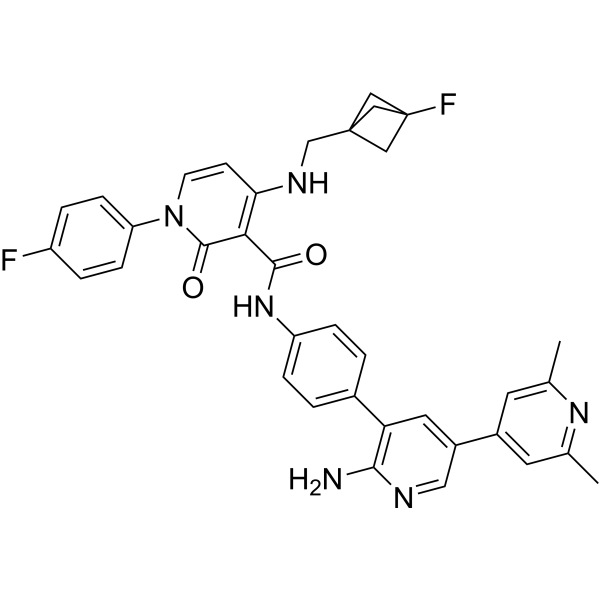 0 ImagesDS21150768 is a potent, orally active HPK1 inhibitor. DS21150768 shows potent activity to enhance T-cell function. DS21150768 has anticancer effects.
-
ZYF0033
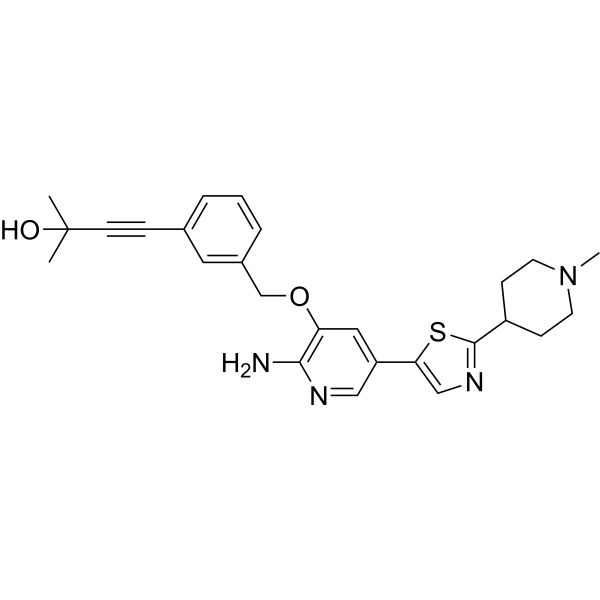 0 ImagesSynonyms: HPK1-IN-22ZYF0033 is an orally active inhibitor of the hematopoietic progenitor cell kinase HPK1 with an IC50 of less than 10 nM based on the phosphorylation inhibition of MBP protein. ZYF0033 promotes anti-cancer immune responses and reduces phosphorylation of SLP76 (serine 376). ZYF0033 inhibits tumor growth in the 4T-1 syngeneic mouse model and leads to increased intratumoral infiltration of DCs, NK cells, and CD107a+CD8+ T cells, but not T cells, PD-1+CD8+ T cells, TIM-3+CD8+ Infiltration of T cells and LAG3+CD8+ T cells was reduced.
-
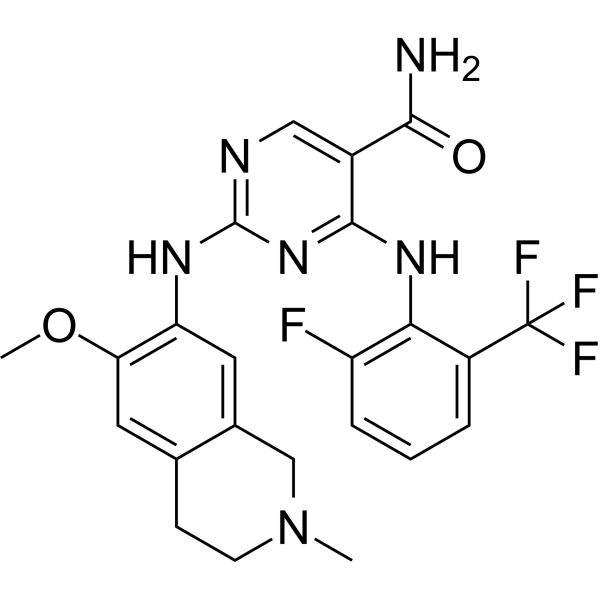
HPK1-IN-32
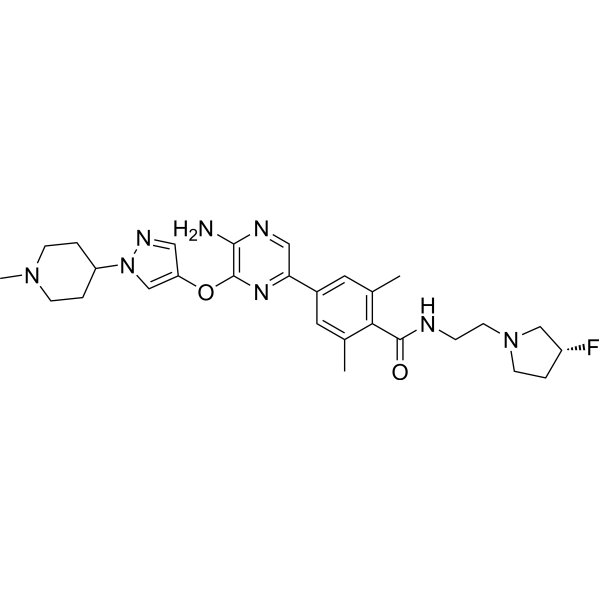 0 ImagesHPK1-IN-32 is a potent and selective HPK1 inhibitor with an IC50 of 65 nM. HPK1-IN-32 can be used for the research of HPK1 related disorders or diseases.
-
HPK1-IN-7
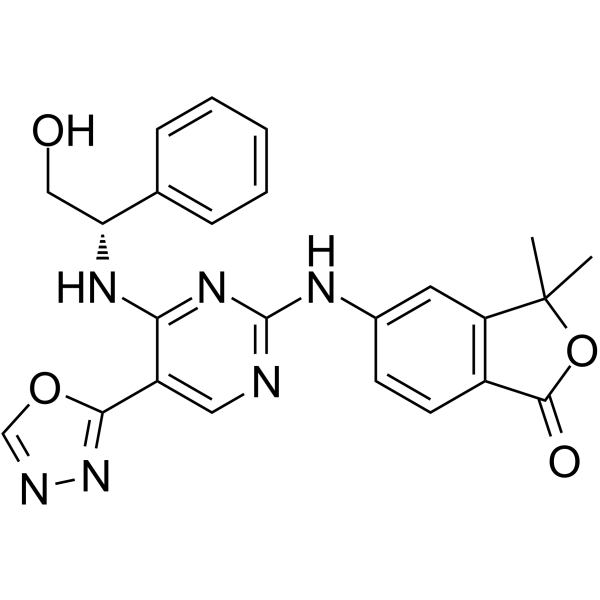 0 ImagesHPK1-IN-7 is a potent, orally active HPK1 (hematopoietic progenitor kinase 1, MAP4K1) inhibitor (IC50=2.6 nM) with excellent family and kinome selectivity. HPK1-IN-7 shows selectivity against IRAK4 (59 nM) and GLK (140 nM). HPK1-IN-7 shows robust efficacy against MC38 syngeneic tumor model in combination with anti-PD1.
-
PROTAC HPK1 Degrader-3
 0 ImagesCat. No.: HY-162816Purity: 98.11%PROTAC HPK1 Degrader-3 is an orally active, PROTAC degrader that selectively targets HPK1, with a DC50 of 21.26 nM. PROTAC HPK1 Degrader-3 induces HPK1 degradation via the ubiquitin-proteasome system and forms a stable ternary complex with HPK1 and CRBN. It inhibits the SLP76 and NF-κB signaling pathways, enhances MAPK signal transduction, reverses the immunosuppressive factor-mediated inhibition of T cell cytokine secretion, and promotes the secretion of T cell immune cytokines. PROTAC HPK1 Degrader-3 suppresses tumor growth and enhances anti-PD-L1-mediated antitumor activity. It can be used in studies related to malignant tumors, such as colorectal cancer.
-
SS47 TFA
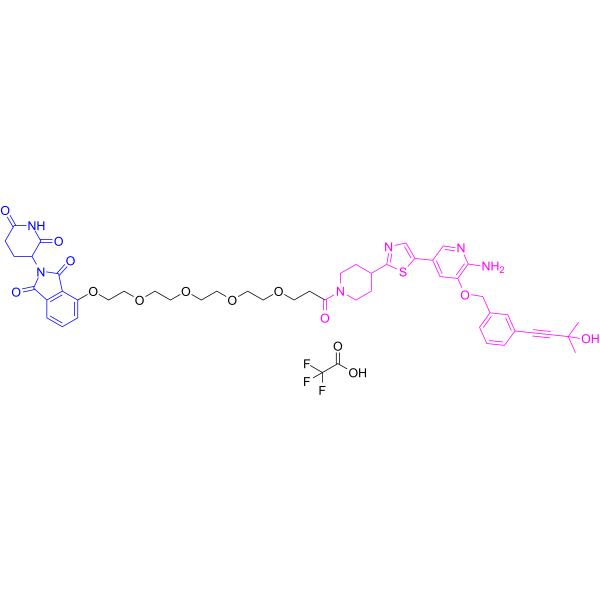 0 ImagesCat. No.: HY-146231APurity: 99.55%SS47 TFA is a hematopoietic progenitor kinase HPK1 PROTAC-class degrader and immune activator. SS47 TFA promotes the proliferation of CD4+ and CD8+ T cells as well as IFN-γ secretion, and enhances the anti-tumor cytotoxicity and in vivo efficacy of BCMA CAR-T cells. SS47 TFA also inhibits tumor growth in mouse models, and when combined with anti-PD-1 therapy, it improves the immune response of 4T1 tumor-bearing mice. SS47 TFA can be used in breast cancer-related research.
-
PROTAC HPK1 Degrader-5
 0 ImagesCat. No.: HY-175547CAS No.: 3108744-13-1PROTAC HPK1 Degrader-5 is an orally effective and selective HPK1 PROTAC degrader with a DC50 of 5.0 nM. PROTAC HPK1 Degrader-5 recruits the CRBN E3 ligase to specifically induce the degradation of HPK1 via the ubiquitin-proteasome system, which in turn significantly inhibits SLP76 phosphorylation and enhances the activation of the ERK pathway, thereby stimulating the release of IL-2 and IFN-γ. PROTAC HPK1 Degrader-5 can be used in studies related to tumor immunity (e.g., colorectal cancer).
-
DB1113
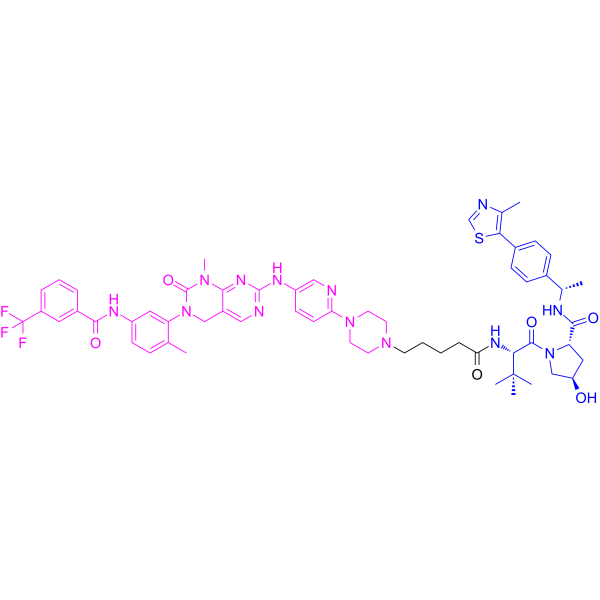 0 ImagesDB1113 (Example 24) is a bifunctional compound targeted protein degradation of kinases. DB1113 degrades ABL1, ABL2, BLK, CDK11B, CDK4, CSK, EPHA3, FER, GAK, LIMK1, MAP3K20, MAP4K1, MAP4K2, MAP4K3, MAP4K5, MAPK14, MAPK7, MAPK8, MAPK9, MAPKAPK2, MAPKAPK3, NLK, PDIK1L, PTK2B, RIPK1, RPS6KA1, RPS6KA3, SIK2, SIK3, STK35, TNK2, and ULK1. DB1113 can be used for research of disease or disorder mediated by aberrant kinase activity.
-
PROTAC HPK1 Degrader-1
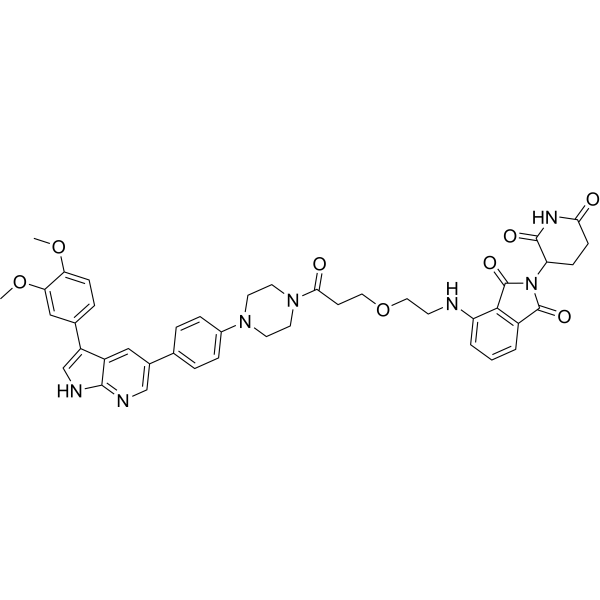 0 ImagesPROTAC HPK1 Degrader-1 (compound B1) is a PROTAC degrader that recruits cereblon to induce HPK1 degradation, with a DC50 of 1.8 nM. PROTAC HPK1 Degrader-1 inhibits HPK1 kinase activity, with an IC50 of 140.5 nM. PROTAC HPK1 Degrader-1 suppresses the phosphorylation of SLP76 protein, with an IC50 of 496.1 nM. PROTAC HPK1 Degrader-1 can be used to investigate non-kinase-dependent signaling of HPK1 in the TCR pathway and cancer-related research.
-
HPK1-IN-34
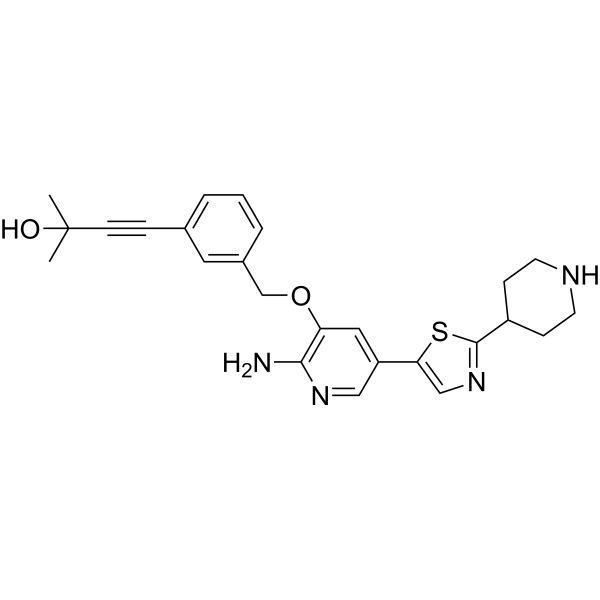 0 ImagesCat. No.: HY-153362CAS No.: 2380300-99-0HPK1-IN-34 (Compound 143) is a Hematopoietic progenitor kinase 1 (HPK1) inhibitor with an IC50 of <100 nM. HPK1-IN-34 is a click chemistry reagent, it contains an Alkyne group and can undergo copper-catalyzed azide-alkyne cycloaddition (CuAAc) with molecules containing Azide groups.
-
GNE-6893
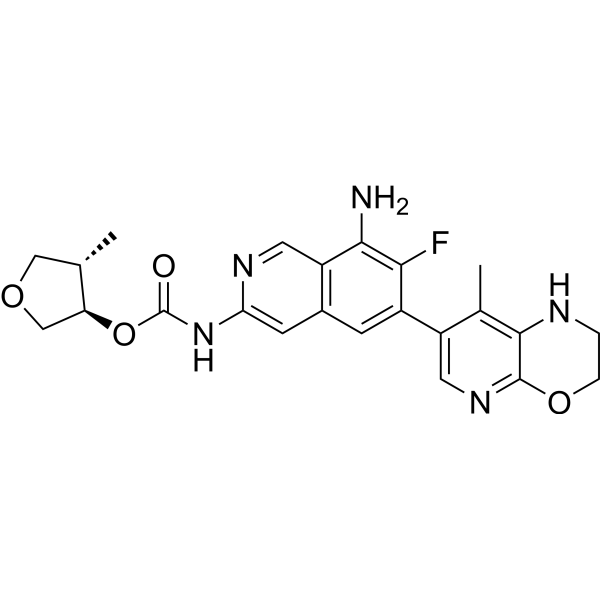 0 ImagesGNE-6893 is an orally active, selective HPK1 inhibitor with a Ki < 0.02 nM. GNE-6893 enhances T cell receptor signaling in primary human T cells. GNE-6893 increases IL2 production in stimulated primary human T cells. GNE-6893 can be used for the research of chronic refractory cancers.
-
NDI-101150
 0 ImagesCat. No.: HY-159643CAS No.: 2628486-22-4NDI-101150 is an orally active, potent and selective hematopoietic progenitor cell kinase 1 (HPK1) inhibitor with an IC50 of 0.7 nM. NDI-101150 blocks HPK1-mediated negative regulation of immune receptor signaling, inhibits immunosuppression of T cell activation, enhances antigen-specific antibody production and augments B-cell activation. NDI-101150 inhibits tumor growth in syngeneic tumor models, establishes durable antitumor immune memory, and synergizes with anti-PD1 to enhance exhausted T cell activity and drive tumor regressions. NDI-101150 can be used for the research of cancer, such as breast cancer and colon cancer.
-
SS47
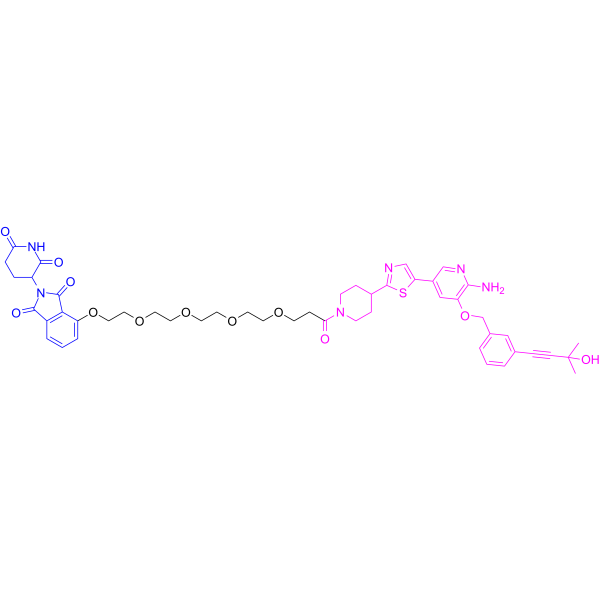 0 ImagesCat. No.: HY-146231CAS No.: 2636072-62-1SS47 is a hematopoietic progenitor kinase HPK1 PROTAC-class degrader and immune activator. SS47 promotes the proliferation of CD4+ and CD8+ T cells as well as IFN-γ secretion, and enhances the anti-tumor cytotoxicity and in vivo efficacy of BCMA CAR-T cells. SS47 also inhibits tumor growth in mouse models, and when combined with anti-PD-1 therapy, it improves the immune response of 4T1 tumor-bearing mice. SS47 can be used in breast cancer-related research.
-
DD205-291
 0 ImagesCat. No.: HY-168282CAS No.: 3047066-15-6DD205-291 is a selective, orally active HPK1 PROTAC degrader with a DC50 of 8.8 nM. By inducing complete degradation of HPK1 protein, DD205-291 simultaneously blocks both its kinase-dependent functions and non-kinase scaffold functions. DD205-291 inhibits the phosphorylation of SLP-76 with an EC50 of 22.98 nM. DD205-291 induces the production of IL-2 and IFN-γ with EC50 values of 34.68 nM and 32.6 nM, respectively. Combined with anti-PD1 in mouse models, DD205-291 exerts tumor-suppressive effects with favorable safety profiles. DD205-291 can be used in colon cancer-related research.
-
HPK1-IN-68
 0 ImagesCat. No.: HY-181924CAS No.: 3078477-58-1HPK1-IN-68 (Compound 39) is a HPK1 inhibitor with an IC50 of 2.8 nM. HPK1-IN-68 blocks HPK1 signaling, inhibits HPK1-mediated phosphorylation of SLP76, and promotes the production of the IL-2 cytokine. HPK1-IN-68 antagonizes the immunosuppressive effect mediated by PGE2. HPK1-IN-68 enhances the infiltration of CD3+/CD8+ T cells into tumor tissues. HPK1-IN-68 exerts T cell-dependent antitumor efficacy in a mouse colon cancer model. HPK1-IN-68 exhibits significant synergistic antitumor effects when used in combination with anti-PD-1. HPK1-IN-68 is applicable to research related to colon cancer.
-
KHK-6
 0 ImagesCat. No.: HY-159123KHK-6 is an inhibitor for serine/threonine kinase hematopoietic progenitor kinase 1 (HPK 1) with an IC50 of 20 nM. KHK-6 enhances CD3/CD28-induced cytokine production, enhances CD69, CD25 and HLA-DR markers on CD4+ and CD8+ T cells, and enhances T cell-mediated killing activity of SKOV3 and A549 cells.
-
HPK1-IN-62
 0 ImagesCat. No.: HY-178097HPK1-IN-62 is a selective and orally active HPK-1 inhibitor with an IC50 of 1.22 nM. HPK1-IN-62 significantly improves GLK selectivity (> 665-fold) and LCK selectivity (> 1095-fold). HPK1-IN-62 enhances T-cell activation and demonstrated synergistic effects when combined with anti-mPD-1 therapy in the MC38 tumor model, inhibiting a tumor growth. HPK1-IN-62 can be used in the researchs of colon cancer and cancer immunotherapy.
-
HPK1-IN-21
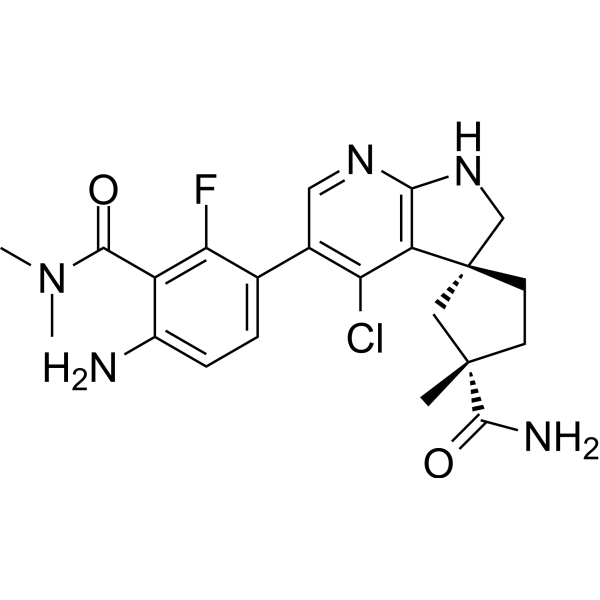 0 ImagesCat. No.: HY-144073CAS No.: 2413804-83-6HPK1-IN-21 is a potent inhibitor of HPK1 kinase inhibitor (Ki=0.8 nM). HPK1-IN-21 also has orally active.



