



SARS-CoV
SARS coronavirus
SARS-CoV is the coronavirus (CoV) that causes severe acute respiratory syndrome (SARS). CoVs are enveloped viruses with a positive-sense, single-stranded RNA and can cause health-threatening outbreaks by targeting human respiratory system, including not only SARS, but also Middle East respiratory syndrome (MERS) and SARS-CoV-2 (the cause of COVID-19).
CoVs have four main structural proteins: spike(S), membrane (M), envelope (E), and nucleocapsid (N) proteins. An S protein mediates the CoV entry into host cells by attaching to a cellular receptor (ACE2 for SARS-CoV and SARS-CoV-2, DPP4 for MERS-CoV), followed by fusion between virus and host cell membranes. Genome replication and subgenomic RNA transcription after entry carry on with the participation of many nonstructural proteins such as Mpro (main protease or 3CLpro), PLpro (papain-like protease) and RdRp (RNA-dependent RNA polymerase). Then the structural proteins are translated, assembled into mature virions, and released via vesicles by exocytosis. It is worth mentioning that a protease called TMPRSS2 (transmembrane protease, serine 2) play important roles throughout the whole life of CoVs (such as attachment, assembling and release) by cleaving S protein. All the proteins and subcellular structures participated in the life cycle of CoVs are promising targets for treatment of disease caused by CoVs.
All Product Categories
-
SARS-CoV Related Products (1182)
Related Products (1182)

-
Recombinant Proteins (195)
-
RBT-9
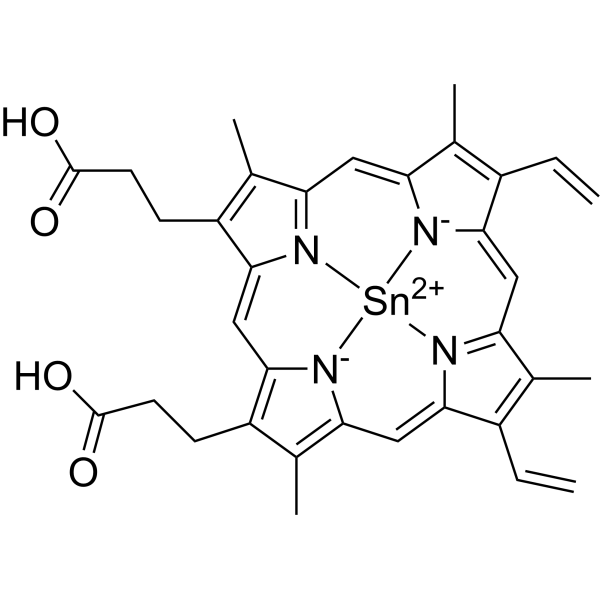 0 ImagesCat. No.: HY-156979CAS No.: 123307-75-5
-
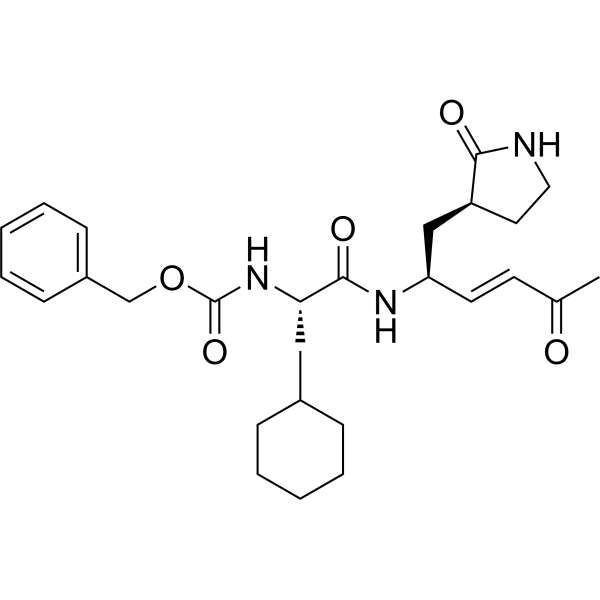
PROTAC SARS-CoV-2 Mpro degrader-4
 0 ImagesCat. No.: HY-174233PROTAC SARS-CoV-2 Mpro degrader-4 is a SARS-CoV-2 MPro PROTAC degrader with antiviral activity, with a DC50 value of 4.7 μM. PROTAC SARS-CoV-2 Mpro degrader-4 induces MPro ubiquitination and proteasomal degradation, and inhibits SARS-CoV-2 replication. PROTAC SARS-CoV-2 Mpro degrader-4 can be used in the research of coronavirus infections.
-
Aranotin
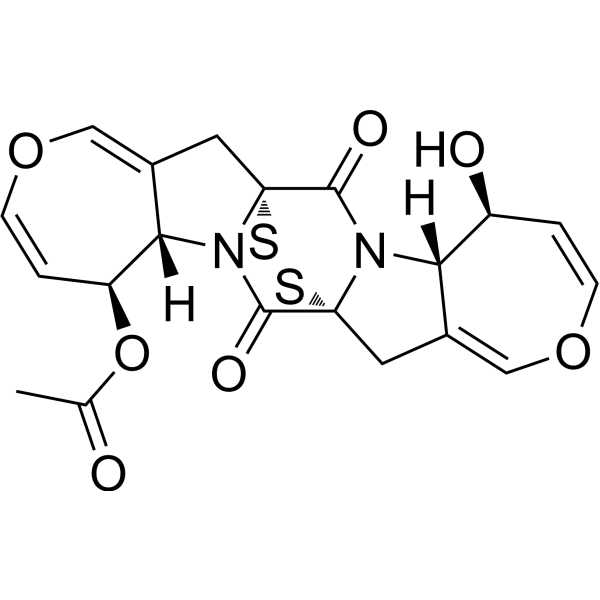 0 ImagesCat. No.: HY-105721CAS No.: 19885-51-9Aranotin strongly binds to Nsp15 viral protein. Aranotin can be used as promising SARS-CoV-2 replication strong inhibitor. Aranotin has the potential for COVID-19 research.

-
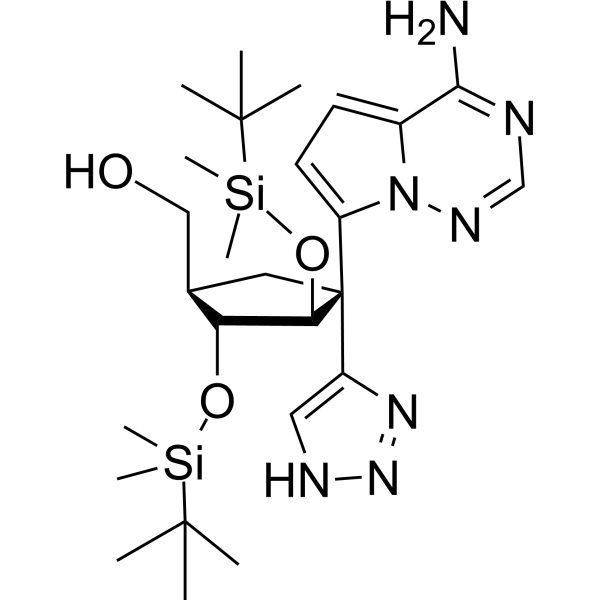
AD06
 0 ImagesCat. No.: HY-184147AD06 is a SARS-CoV-2 main protease (Mpro) inhibitor with an IC50 of 163.3 nM. AD06 undergoes nucleophilic attack by deprotonated Cys145, thereby blocking viral replication. AD06 inhibits the activity of wild-type SARS-CoV-2 and shows no significant cytotoxicity in mammalian cells. AD06 can be used in studies related to SARS-CoV-2 infection.
-
3'OMe-m7GpppAmpG
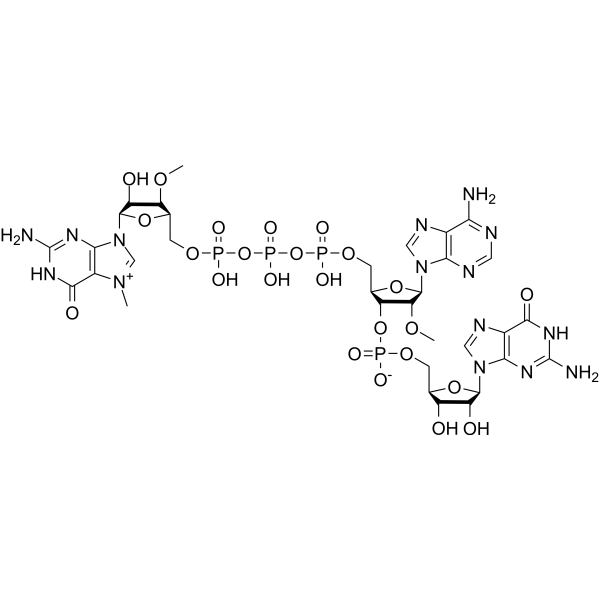 0 ImagesCat. No.: HY-145973CAS No.: 2089461-55-0Synonyms: m7(3'OMeG)(5')ppp(5')(2'OMeA)pG3’OMe-m7GpppAmpG (m7(3'OMeG)(5')ppp(5')(2'OMeA)pG) is a trinucleotide Cap1 analog with the structure m7 (3'OMeG)(5') ppp (5')(2'OMeA) pG, and also functions as a cis-acting ligase ribozyme inhibitor. 3’OMe-m7GpppAmpG effectively reduces free 5'-triphosphate groups on RNA transcripts, thereby enabling efficient co-transcriptional capping of in vitro transcribed mRNA. 3’OMe-m7GpppAmpG is not only widely used in the preparation of modified mRNA including trivalent influenza vaccine candidates, but also applicable to studies related to SARS-CoV-2 infection and other relevant research.
-
Oberadilol
 0 ImagesCat. No.: HY-19088CAS No.: 114856-44-9Synonyms: CID-3047798Oberadilol (CID-3047798) is a Phosphodiesterase III inhibitor, non-selective β-adrenergic receptor blocker, vasodilator and positive inotropic agent. Oberadilol reduces left ventricular end-diastolic volume. Oberadilol is used in research related to chronic congestive heart failure and SARS-CoV-2 infection.
-
N-0385
 0 ImagesCat. No.: HY-187788CAS No.: 2230674-01-6N-0385 is an antiviral agent active against SARS-CoV-2 and its Omicron subvariants. N-0385 acts on factors such as TMPRSS2 to block viral entry, reduce infection, regulate metabolism and inhibit inflammatory responses. N-0385 reduces SARS-CoV-2-induced mortality, weight loss, pulmonary pathological changes and cellular damage in animal models. N-0385 can be used in research related to coronavirus infections.
-
LSALT peptide
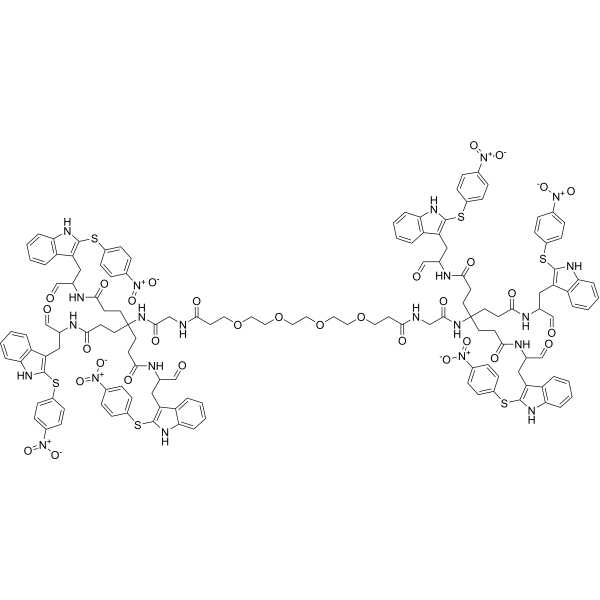
 0 ImagesCat. No.: HY-P11879CAS No.: 2567713-50-0LSALT peptide is a selective DPEP-1 inhibitor with selectivity over DPEP2/3. LSALT peptide inhibits neutrophil and monocyte/macrophage recruitment, inflammation, and tissue injury. LSALT peptide reduces kidney damage, improves survival in murine sepsis and endotoxemia models. LSALT peptide can be used for the research of COVID-19, sepsis, acute respiratory distress syndrome, and acute kidney injury.
-
FWM-3
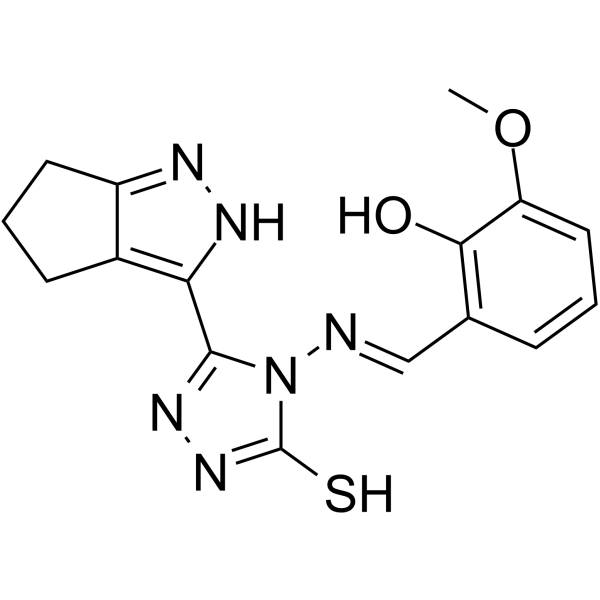 0 ImagesCat. No.: HY-146987CAS No.: 714923-33-8FWM-3 is a potent SARS-CoV-2 NSP13 helicase inhibitor.
-
Setomimycin
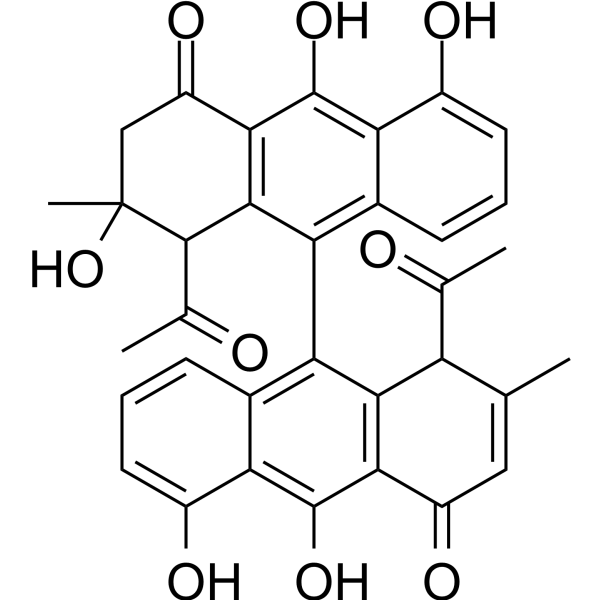 0 ImagesCat. No.: HY-124439CAS No.: 69431-87-4Setomimycin is a potent antibiotic. Setomimycin inhibits the SARS-CoV-2 Mpro enzyme with an IC50 value of 12.02 µM. Setomimycin shows anti-inflammatory and antioxidant properties. Setomimycin shows antiproliferative and antitumor activity.

-
Dihydromaniwamycin E
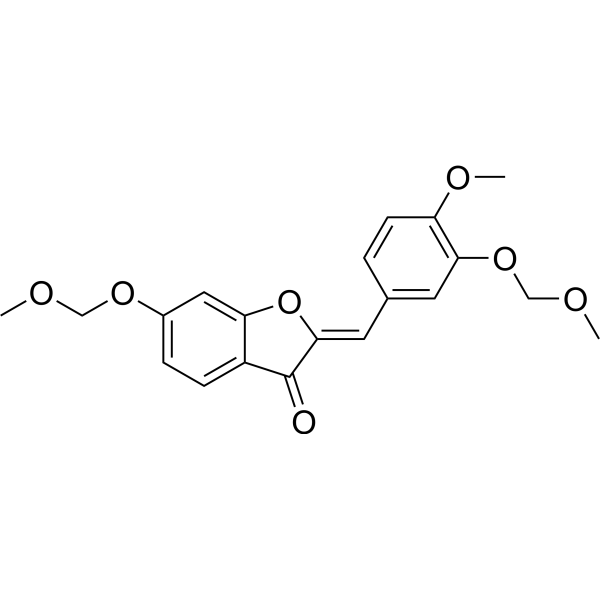
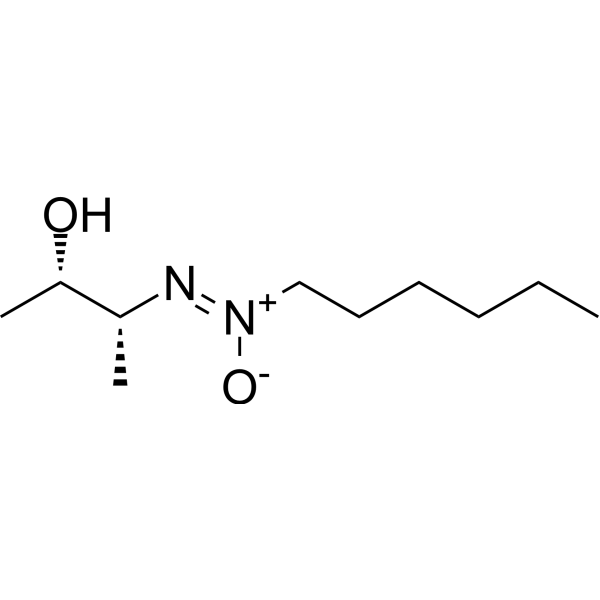 0 ImagesCat. No.: HY-N10604CAS No.: 3033567-35-7Dihydromaniwamycin E is a heat-shock metabolite with antiviral activity against influenza and SARS-CoV-2 viruses.
-
DB02307
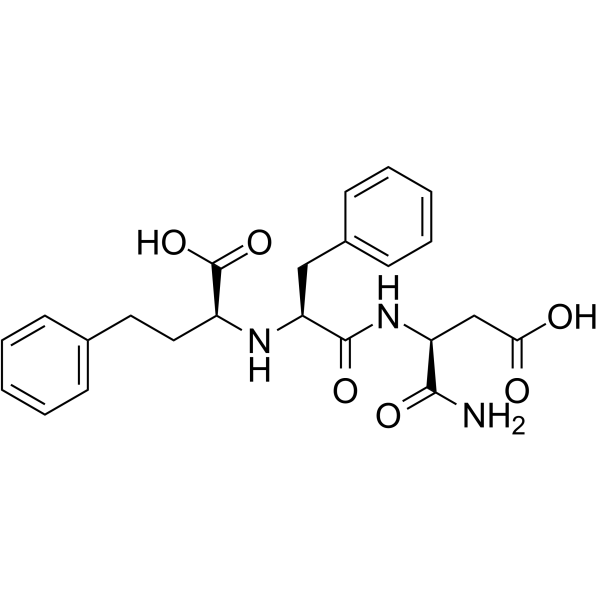 0 ImagesCat. No.: HY-148217CAS No.: 101222-71-3DB02307 is a dipeptide composed of a sequence of two α-amino acids linked by a peptide bond. DB02307 is applicable to research related to COVID-19.

-
SARS-CoV-2 3CLpro-IN-3
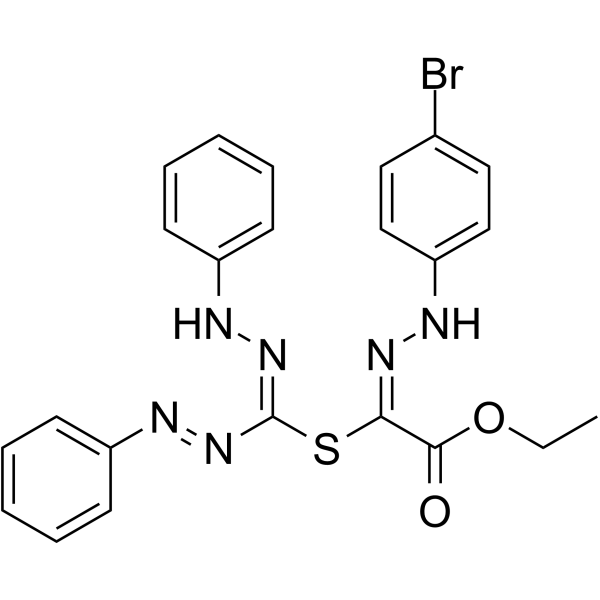 0 ImagesCat. No.: HY-147804CAS No.: 2505241-13-2SARS-CoV-2 3CLpro-IN-3 (Compound 3d) is a SARS CoV-2 3CLpro inhibitor with antiviral, antibacterial and antifungal activities.




