



Tazarotene
Based on 2 publication(s) in Google Scholar
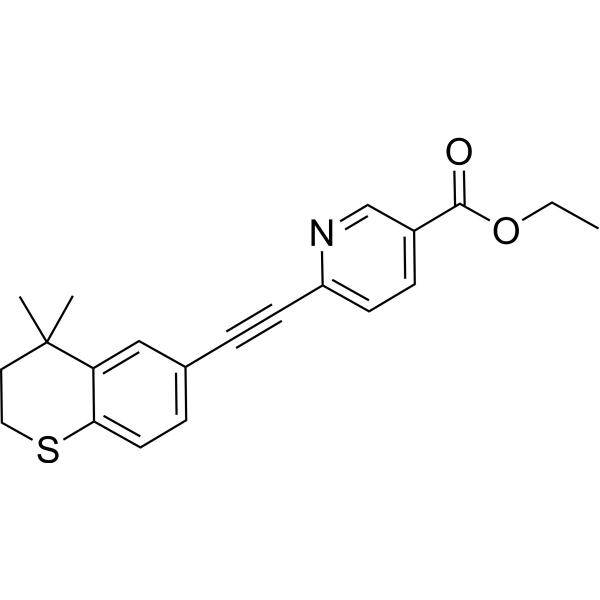
Tazarotene (AGN 190168) is a selective retinoic acid receptor (RAR) agonist for the treatment of plaque psoriasis and acne vulgaris. Tazarotene is a click chemistry reagent, it contains an Alkyne group and can undergo copper-catalyzed azide-alkyne cycloaddition (CuAAc) with molecules containing Azide groups.
연구목적의 판매만을 진행합니다. 환자를 대상으로 한 판매는 하지 않습니다.
- Purity : 99.17%
- CAS No.: 118292-40-3
- 화학식: C21H21NO2S
- 분자량:351.46
-
보관:Powder -20°C, 3 years , 4°C, 2 years ; In solvent -80°C, 2 years , -20°C, 1 year

To place orders, for customer services and technical support, please contact: MedChemExpress USA
Tel: 609-228-6898 E-mail: [email protected] [email protected]


-
 Biological Activity
-
Chemical Information
-
용액&용해도
- Protocol
- 순도&문서
- References
-
 Help & FAQs


-
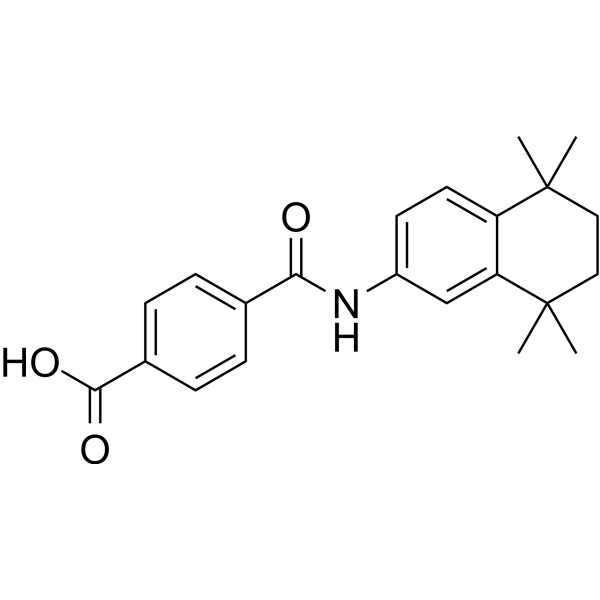
HY-14652
TamibaroteneApoptosis Inducer -
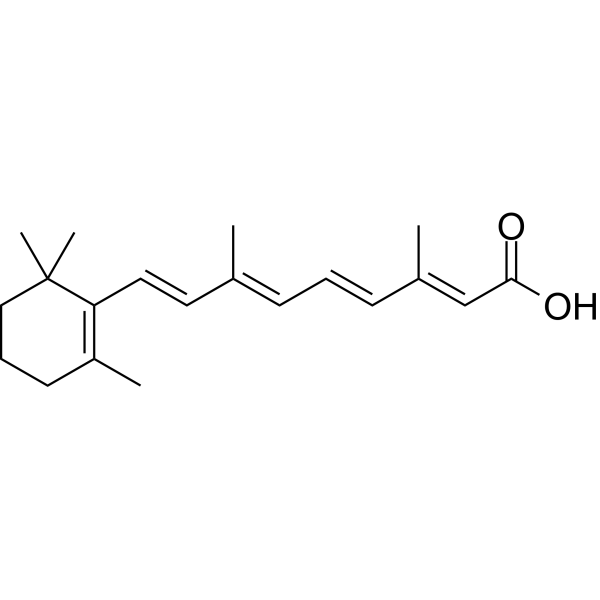
HY-14649
Retinoic acidRAR Agonist -
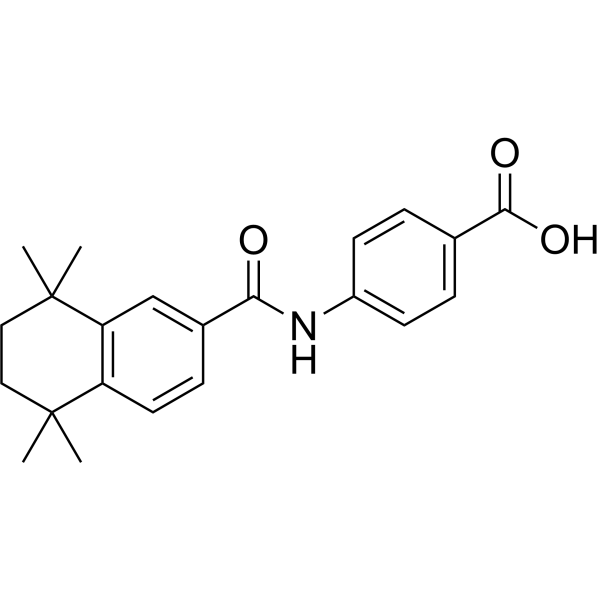
HY-10475
AM580RARα Agonist -
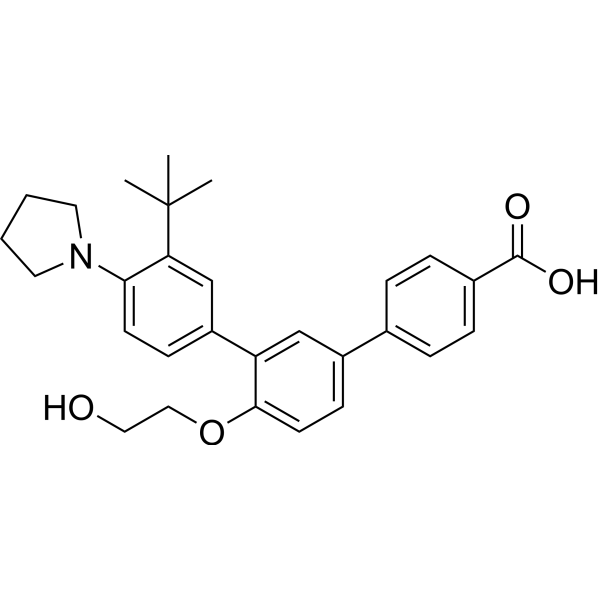
HY-100256
TrifaroteneRARγ Agonist -
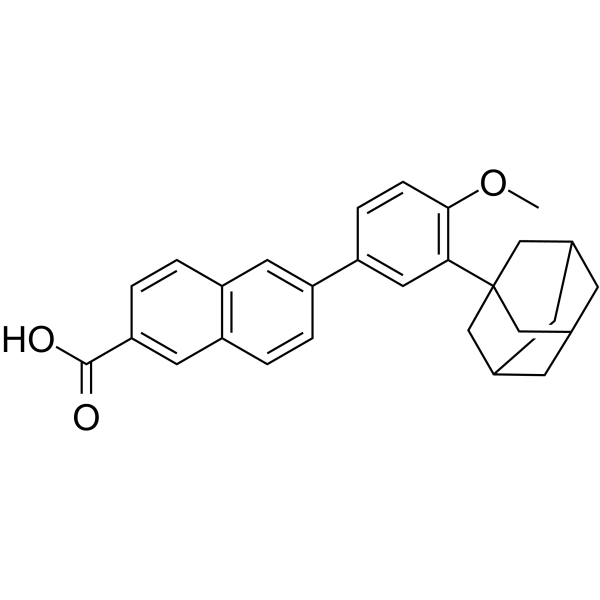
HY-B0091
AdapaleneRAR Agonist -
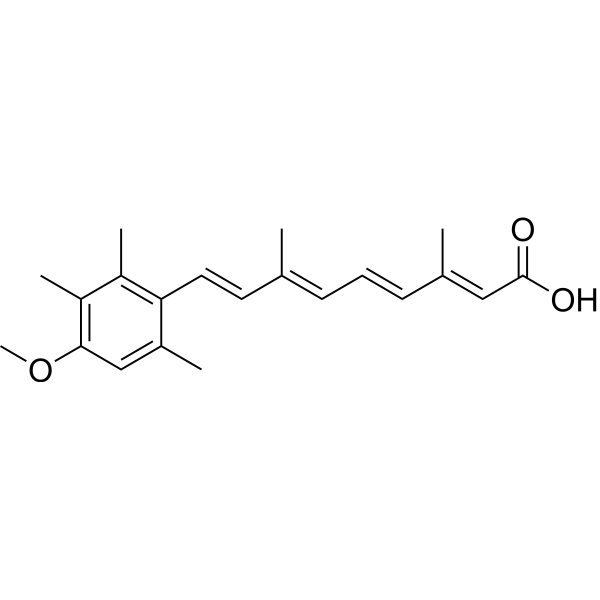
HY-B0107
AcitretinAutophagy Inducer -
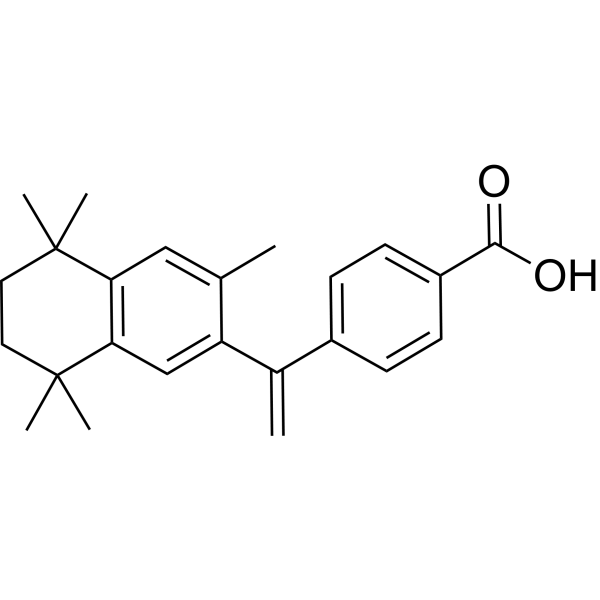
HY-14171
BexaroteneRXR Agonist -
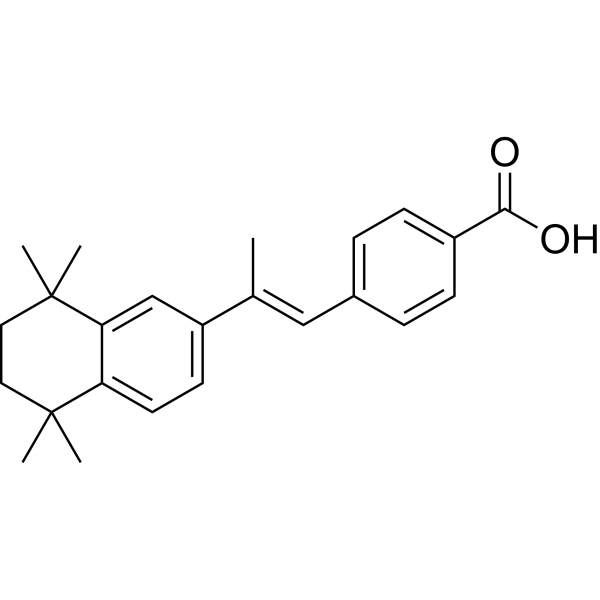
HY-15682
TTNPBApoptosis Inducer -
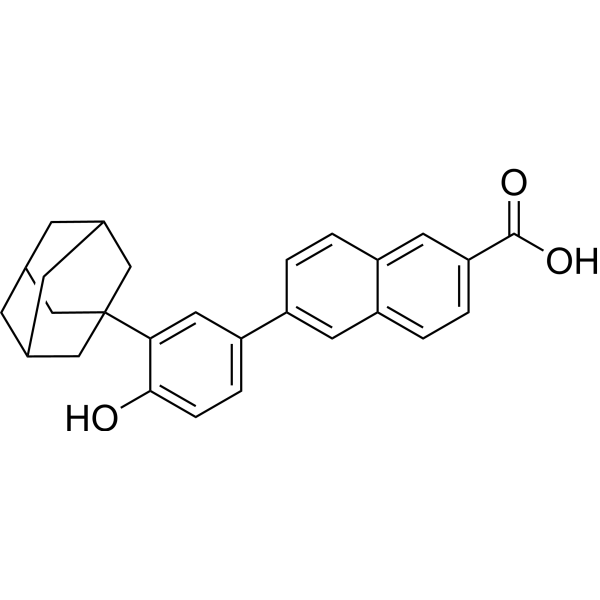
HY-100532
CD437RARγ Agonist -
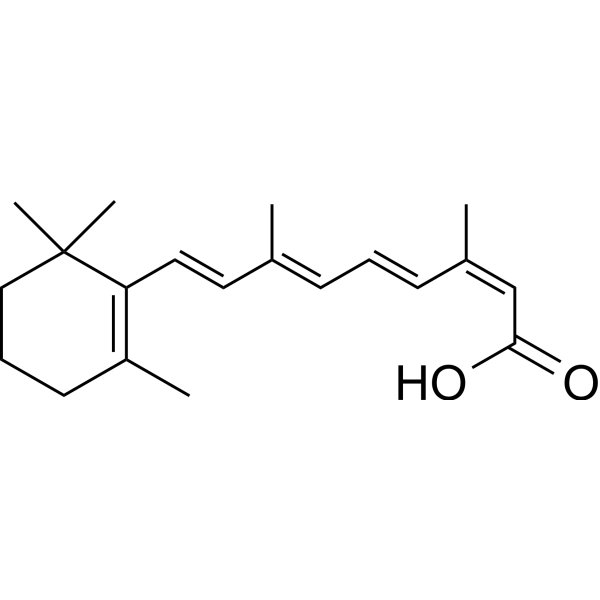
HY-15127
IsotretinoinAnti-acne Agent -
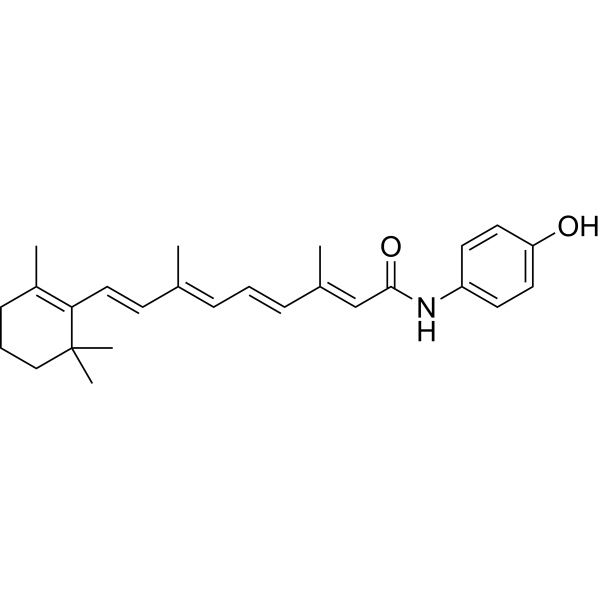
HY-15373
FenretinideAutophagy Inducer -
HY-14531
TalarozoleCYP26 Inhibitor/RAMBA
Publications Citing Use of MedChemExpress (MCE) Tazarotene
More

Biological Activity
제품 설명
Cellular Effect
|
Cell Line

|
Type | Value | Description | References |
|---|---|---|---|---|
| COS-7 | EC50 |
0.8 nM
Compound: tazarotene
|
Activity at human RARbeta ligand binding domain expressed in COS7 cells co-transfected with Gal4-DBD assessed as transcriptional activation after 16 hrs by Gal4 response element-driven luciferase reporter gene assay
Activity at human RARbeta ligand binding domain expressed in COS7 cells co-transfected with Gal4-DBD assessed as transcriptional activation after 16 hrs by Gal4 response element-driven luciferase reporter gene assay
|
[PMID: 19058965] |
| COS-7 | EC50 |
40 nM
Compound: tazarotene
|
Activity at human RARgamma ligand binding domain expressed in COS7 cells co-transfected with Gal4-DBD assessed as transcriptional activation after 16 hrs by Gal4 response element-driven luciferase reporter gene assay
Activity at human RARgamma ligand binding domain expressed in COS7 cells co-transfected with Gal4-DBD assessed as transcriptional activation after 16 hrs by Gal4 response element-driven luciferase reporter gene assay
|
[PMID: 19058965] |
| COS-7 | EC50 |
63 nM
Compound: tazarotene
|
Activity at human RARalpha ligand binding domain expressed in COS7 cells co-transfected with Gal4-DBD assessed as transcriptional activation after 16 hrs by Gal4 response element-driven luciferase reporter gene assay
Activity at human RARalpha ligand binding domain expressed in COS7 cells co-transfected with Gal4-DBD assessed as transcriptional activation after 16 hrs by Gal4 response element-driven luciferase reporter gene assay
|
[PMID: 19058965] |
In Vitro
Tazarotene (AGN 190168), in both gel and cream formulations, has been used both as monotherapy and as an adjuvant therapy. For psoriasis it has been combined with steroids, calcipotriene and phototherapy, and for acne, with antibiotics. Tazarotene (AGN 190168) has been shown to upregulate the tumor suppressor, Tazarotene (AGN 190168) induced gene 3, which is overexpressed in psoriasis and skin cancer[1]. In human epidermal cell cultures, Tazarotene (AGN 190168) suppresses the gene expression of 2 marker proteins, MRP-8 (calgranulin A) and SKALP (skin derived anti-leukoproteinase), highly elevated in psoriatic epidermis[2].
MedChemExpress (MCE) has not independently confirmed the accuracy of these methods. They are for reference only. Further protocols information, click here.
In Vivo
MedChemExpress (MCE) has not independently confirmed the accuracy of these methods. They are for reference only.
Clinical Trial
| NCT Number | Sponsor | Condition | Start Date |
Phase
|
|---|---|---|---|---|
| NCT01329991 | Plexxikon| | 2011-05 | PHASE1 |


Chemical Information
-
CAS No. 118292-40-3
-
Appearance Solid
-
분자량 351.46
-
화학식 C21H21NO2S
-
Color Light yellow to yellow
-
SMILES
O=C(C1=CC=C(C#CC2=CC=C3C(C(C)(C)CCS3)=C2)N=C1)OCC
-
Synonyms
AGN 190168
-
선적
Room temperature in continental US; may vary elsewhere.
-
보관
Powder -20°C 3 years 4°C 2 years In solvent -80°C 2 years -20°C 1 year


Publications (2)
-
Journal Impact Factor
-
Most Recent
-
Adv Sci (Weinh)
Synthetic Retinoid Kills Drug-Resistant Cancer Stem Cells via Inducing RARγ-Translocation-Mediated Tension Reduction and Chromatin Decondensation. [Abstract]2022 Aug 28;e2203173. PMID: 36031407 -
Fundam Clin Pharmacol
The third-generation retinoid adapalene triggered DNA damage to induce S-phase arrest in HaCat cells. [Abstract]2020 Jun;34(3):380-388. PMID: 31808972


용액&용해도
In Vitro:
DMSO : 50 mg/mL (142.26 mM; Need ultrasonic; Hygroscopic DMSO has a significant impact on the solubility of product, please use newly opened DMSO)
H2O : < 0.1 mg/mL (insoluble)
Please refer to the solubility information to select the appropriate solvent. Once prepared, please aliquot and store the solution to prevent product inactivation from repeated freeze-thaw cycles.
Storage method and period of stock solution: -80°C, 2 years; -20°C, 1 year. When stored at -80°C, please use it within 2 years. When stored at -20°C, please use it within 1 year.
Please refer to the solubility information to select the appropriate solvent. Once prepared, please aliquot and store the solution to prevent product inactivation from repeated freeze-thaw cycles.
Storage method and period of stock solution: -80°C, 2 years; -20°C, 1 year. When stored at -80°C, please use it within 2 years. When stored at -20°C, please use it within 1 year.
Concentration (start) × Volume (start) = Concentration (final) × Volume (final)
In Vivo:
Select the appropriate dissolution method based on your experimental animal and administration route.
- For the following dissolution methods, please ensure to first prepare a clear stock solution using an In Vitro approach and then sequentially add co-solvents:
- To ensure reliable experimental results, the clarified stock solution can be appropriately stored based on storage conditions. As for the working solution for In Vivo experiments, it is recommended to prepare freshly and use it on the same day.
- The percentages shown for the solvents indicate their volumetric ratio in the final prepared solution. If precipitation or phase separation occurs during preparation, heat and/or sonication can be used to aid dissolution.
Add each solvent one by one: 10% DMSO 40% PEG300 5% Tween-80 45% Saline
Solubility: ≥ 2.5 mg/mL (7.11 mM); Clear solution
This protocol yields a clear solution of ≥ 2.5 mg/mL (saturation unknown).
Taking 1 mL working solution as an example, add 100 μL DMSO stock solution (25.0 mg/mL) to 400 μL PEG300, and mix evenly; then add 50 μL Tween-80 and mix evenly; then add 450 μL Saline to adjust the volume to 1 mL.
Preparation of Saline: Dissolve 0.9 g sodium chloride in ddH₂O and dilute to 100 mL to obtain a clear Saline solution.
In Vivo Dissolution Calculator
Please enter the basic information of animal experiments:
-
-
-
-
Recommended: Prepare an additional quantity of animals to account for potential losses during experiments.
Please enter your animal formula composition:
-
%DMSO +
Recommended: Keep the proportion of DMSO in working solution below 2% if your animal is weak.
-
%+
-
+%Tween-80 + +
-
%Saline +
The co-solvents required include: DMSO, . All of co-solvents are available by MedChemExpress (MCE). , Tween 80. All of co-solvents are available by MedChemExpress (MCE).
Working solution concentration: 0.22 mg/mL
Method for preparing stock solution: mg drug dissolved in μL DMSO. Stock solution concentration: mg/mL.
1. Take μL DMSO stock solution;
2. Add μL .
μL , mix evenly;
3. Then add μL Tween 80, mix evenly;
4. Then add μL
Please ensure that the stock solution in the first step is dissolved to a clear state, and add co-solvents in sequence. You can use ultrasonic heating (ultrasonic cleaner, recommended frequency 20-40 kHz), vortexing, etc. to assist dissolution.

Protocol
-
EdU Incorporation Assay (Click Chemistry-Based DNA Synthesis Measurement)
The EdU incorporation assay measures DNA synthesis by adding the thymidine analog 5-ethynyl-2′-deoxyuridine to cells or tissues, where it is incorporated into newly synthesized DNA during S phase. Incorporated EdU is detected by copper-catalyzed azide-alkyne cycloaddition, in which a fluorescent azide covalently reacts with the ethynyl group on EdU, allowing S-phase cells to be detected by fluorescence microscopy, flow cytometry, or high-content imaging. EdU detection does not require DNA denaturation or anti-BrdU antibody access, which preserves sample structure and improves compatibility with immunostaining and multiparameter cytometry compared with BrdU-based detection. EdU can be cytotoxic in a cell-type- and exposure-dependent manner, so pulse duration, concentration, and continuous-labeling designs should be validated for each cell type.
-
Imiquimod-Induced Psoriasiform Dermatitis
Imiquimod (IMQ)-induced psoriasiform dermatitis is a widely used murine model in which topical application of IMQ, a Toll-like receptor 7 (TLR7) agonist, triggers innate immune activation in the skin and induces a psoriasis-like inflammatory cascade characterized by epidermal hyperplasia, immune cell infiltration, and cytokine production dominated by the IL-23/IL-17 axis. This inflammatory response is mediated through activation of dendritic cells and downstream induction of IL-23, IL-17A, IL-22, and related pro-inflammatory mediators, recapitulating key features of human plaque psoriasis and enabling mechanistic and therapeutic studies. The model is commonly induced using Aldara (5% IMQ cream) applied topically to murine skin, resulting in rapid onset of erythema, scaling, and thickening that can be quantified as disease severity indices and validated histologically.


순도&문서
-
Data Sheet (275 KB)
-
SDS (418 KB)
- English - EN (418 KB)
- Français - FR (418 KB)
- Deutsch - DE (418 KB)
- Norwegian - NO (418 KB)
- Español - ES (418 KB)
- Swedish - SV (418 KB)
- Italian - IT (418 KB)
- Korean - KR (418 KB)
- Portuguese - PT (418 KB)
-
Handling Instructions (2659 KB)
References
[1]. Talpur R, et al. Efficacy and safety of topical tazarotene: a review. Expert Opin Drug Metab Toxicol. 2009 Feb;5(2):195-210. [Content Brief]
[2]. Nagpal S, et al. Negative regulation of two hyperproliferative keratinocyte differentiation markers by a retinoic acidreceptor-specific retinoid: insight into the mechanism of retinoid action in psoriasis. Cell Growth Differ. 1996 Dec;7(12):1783-91. [Content Brief]
[3]. Tang-Liu DD, et al. Clinical pharmacokinetics and drug metabolism of tazarotene: a novel topical treatment for acne and psoriasis. Clin Pharmacokinet. 1999 Oct;37(4):273-87. [Content Brief]


Complete Stock Solution Preparation Table
Please refer to the solubility information to select the appropriate solvent. Once prepared, please aliquot and store the solution to prevent product inactivation from repeated freeze-thaw cycles.
Storage method and period of stock solution: -80°C, 2 years; -20°C, 1 year. When stored at -80°C, please use it within 2 years. When stored at -20°C, please use it within 1 year.
| Optional Solvent | Concentration Solvent Mass | 1 mg | 5 mg | 10 mg | 25 mg |
|---|---|---|---|---|---|
| DMSO | 1 mM | 2.8453 mL | 14.2264 mL | 28.4527 mL | 71.1319 mL |
| 5 mM | 0.5691 mL | 2.8453 mL | 5.6905 mL | 14.2264 mL | |
| 10 mM | 0.2845 mL | 1.4226 mL | 2.8453 mL | 7.1132 mL | |
| 15 mM | 0.1897 mL | 0.9484 mL | 1.8968 mL | 4.7421 mL | |
| 20 mM | 0.1423 mL | 0.7113 mL | 1.4226 mL | 3.5566 mL | |
| 25 mM | 0.1138 mL | 0.5691 mL | 1.1381 mL | 2.8453 mL | |
| 30 mM | 0.0948 mL | 0.4742 mL | 0.9484 mL | 2.3711 mL | |
| 40 mM | 0.0711 mL | 0.3557 mL | 0.7113 mL | 1.7783 mL | |
| 50 mM | 0.0569 mL | 0.2845 mL | 0.5691 mL | 1.4226 mL | |
| 60 mM | 0.0474 mL | 0.2371 mL | 0.4742 mL | 1.1855 mL | |
| 80 mM | 0.0356 mL | 0.1778 mL | 0.3557 mL | 0.8891 mL | |
| 100 mM | 0.0285 mL | 0.1423 mL | 0.2845 mL | 0.7113 mL |


Tazarotene Related Classifications
HY-15388 Related Classifications
 Powered by Bioz