



Vericiguat
Based on 10 publication(s) in Google Scholar
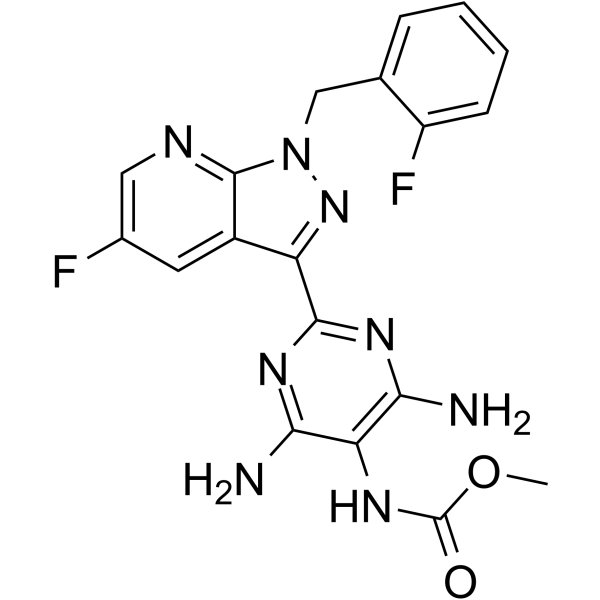
Vericiguat (BAY1021189) is a potent, orally available and soluble guanylate cyclase stimulator.
For research use only. We do not sell to patients.
- Purity : 99.23%
- CAS No.: 1350653-20-1
- Formula: C19H16F2N8O2
- Molecular Weight:426.38
-
Storage:Powder -20°C, 3 years , 4°C, 2 years ; In solvent -80°C, 1 year , -20°C, 6 months

To place orders, for customer services and technical support, please contact: MedChemExpress USA
Tel: 609-228-6898 E-mail: [email protected] [email protected]


-
 Biological Activity
-
Chemical Information
-
Solvent & Solubility
- Purity & Documentation
- References
-
 Help & FAQs


-
HY-14779
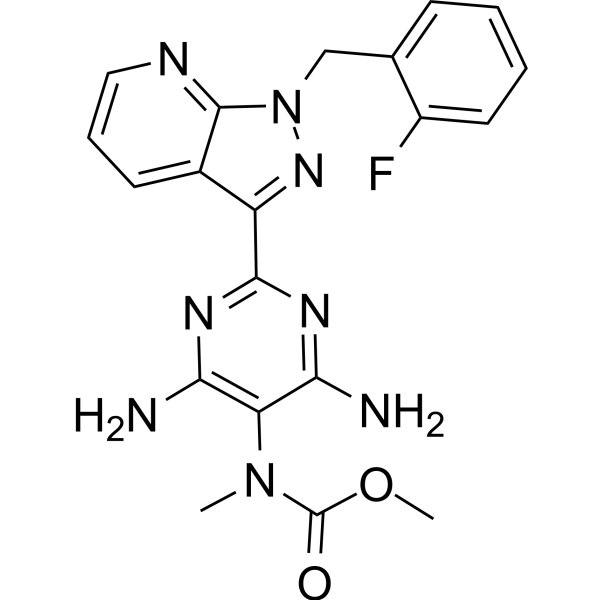
Riociguat -
HY-111372
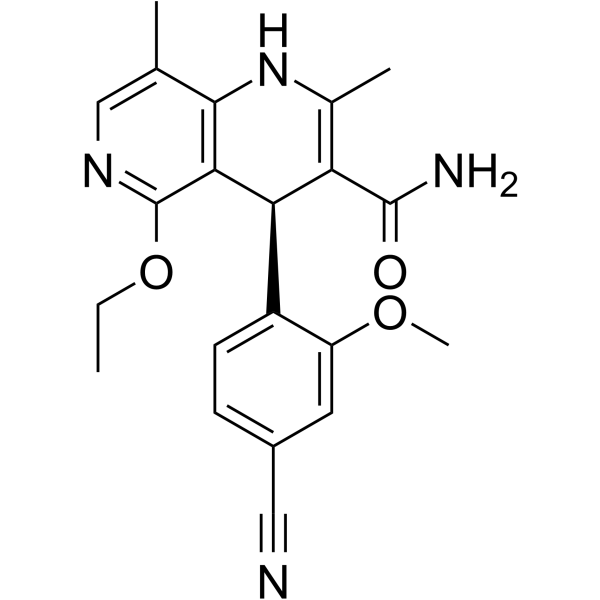
FinerenoneMineralocorticoid Receptor Antagonist -
HY-14181
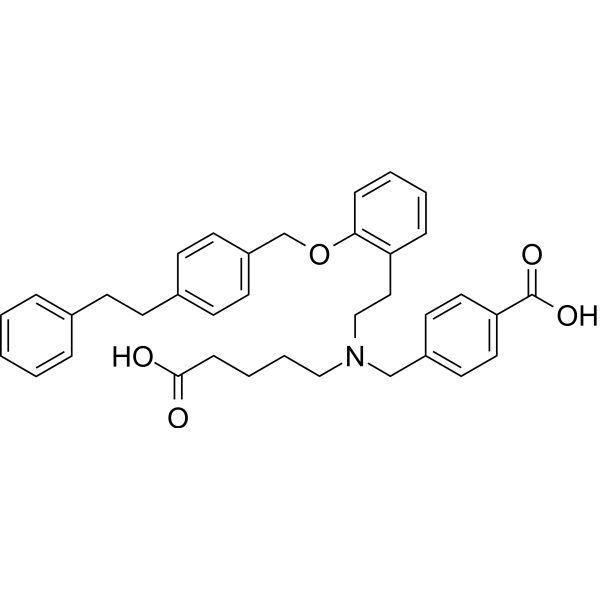
CinaciguatGuanylate Cyclase Activator -
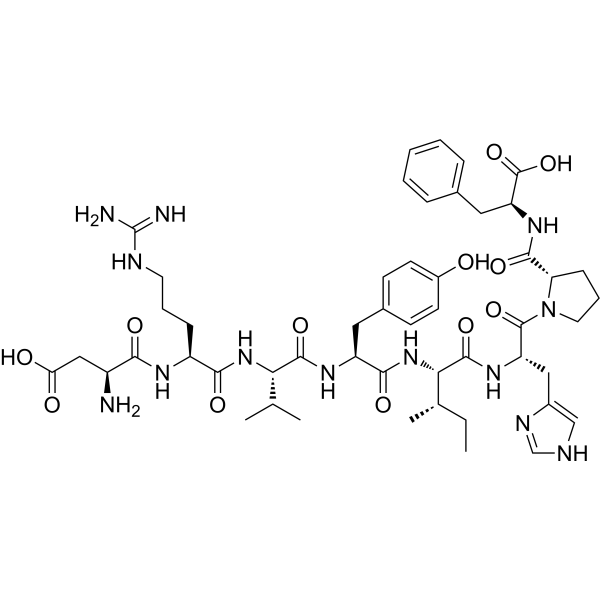
HY-13948
Angiotensin II humanVasoconstrictor -
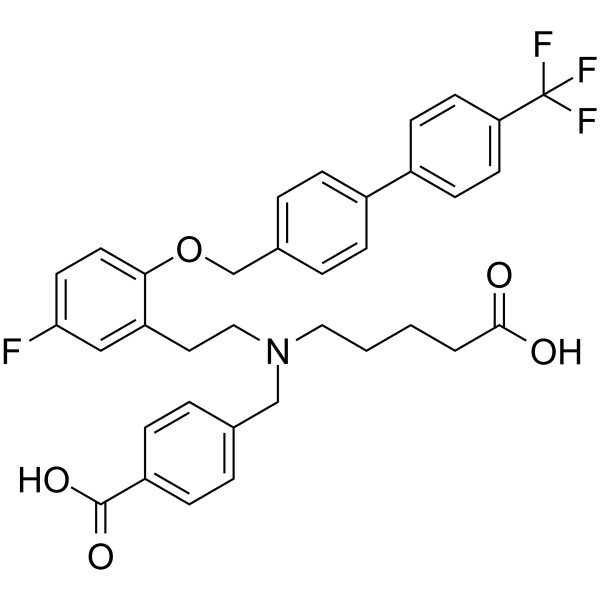
HY-113926
BAY 60-2770sGC Activator -
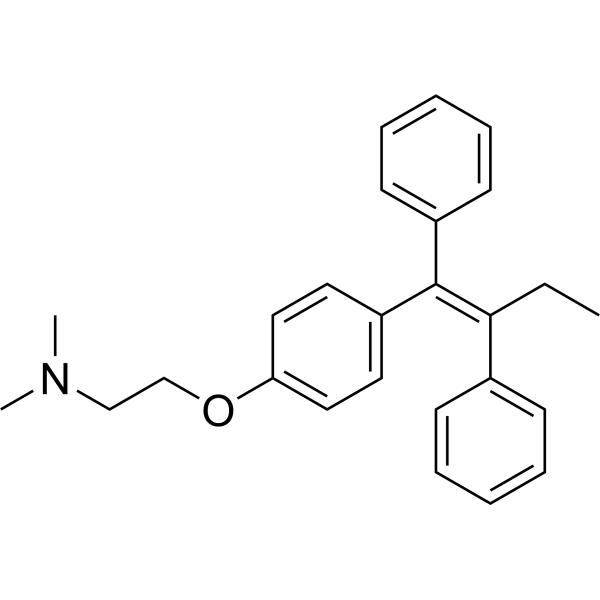
HY-13757A
TamoxifenEstrogen Receptor Modulator -
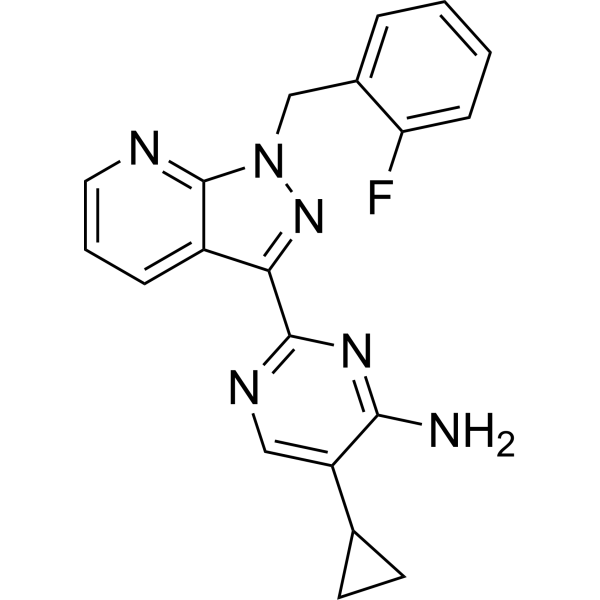
HY-12376
BAY 41-2272Guanylate Cyclase Activator -
HY-10219
RapamycinmTOR Inhibitor -
HY-Y0320
Dimethyl sulfoxide, meets analytical specification of Ch.P.Aprotic Solvent -
HY-17386
RosiglitazonePPARγ Agonist -

HY-16774R
Vericiguat (Standard)sCG Stimulator -
HY-50907
ABT-737Bcl-2 Family Inhibitor/BH3 Mimetic
Publications Citing Use of MedChemExpress (MCE) Vericiguat
More- Biochem Pharmacol. 2026 Mar:245:117570. [Abstract]
- Circ J. 2025 Mar 20. [Abstract]
- Eur J Pharmacol. 2023 Aug 5:952:175789. [Abstract]
- Mediators Inflamm. 2022 Jun 16:2022:1625290. [Abstract]
- J Chromatogr A. 2023 Oct 25:1709:464401. [Abstract]
- Toxicol Appl Pharmacol. 2025 Oct:503:117473. [Abstract]
- PLoS One. 2023 Aug 11;18(8):e0286767. [Abstract]
- Auton Neurosci. 2025 Dec:262:103354. [Abstract]
- Auton Neurosci. 2025 Dec:262:103363. [Abstract]
- Biomed Pharmacother. 2025 Dec:193:118762. [Abstract]
 Customer Validation & Images

-
Cell Proliferation/Viability Assay
-
WB
-
Cell Imaging/Staining
-
RT-PCR
-
Histological Imaging/Staining


Biological Activity
Description
In Vitro
Vericiguat (0.01 μM to 100 μM) stimulates recombinant sGC concentration dependently, by 1.7-fold to 57.6-fold. When combined with the NO donor diethylamine/nitric oxide complex (DEA/NO), vericiguat and DEA/NO have a synergistic effect on the enzyme activity over a wide range of concentrations. At highest concentrations of vericiguat (100 μM) and DEA/NO (100 nM), the specific activity of sGC is 341.6-fold above baseline. Vericiguat stimulates the sGC reporter cell line concentration dependently, with an EC50 of 1005±145 nM. Vericiguat inhibits phenylephrine-induced contractions of rabbit saphenous artery rings, rabbit aortic rings, and canine femoral vein rings concentration dependently, with IC50 values of 798, 692, and 3072 nM, respectively. Vericiguat inhibits the U46619-induced contractions of porcine coronary artery rings concentration dependently, with an IC50 of 956 nM[1].
MedChemExpress (MCE) has not independently confirmed the accuracy of these methods. They are for reference only. .
In Vivo
MedChemExpress (MCE) has not independently confirmed the accuracy of these methods. They are for reference only.
-
Animal Model:L-NAME-treated renin transgenic rats[1]
-
Dosage:3 mg/kg, 10 mg/kg
-
Administration:Oral administration; 3 mg/kg, 10 mg/kg; once daily; 21 days
-
Result:Resulted in a significant attenuation of blood pressure increase, however the overall rise of blood pressure increase was not halted in the 3/10 mg/kg treatment groups.Resulted a significant and dose-dependent reduction of heart hypertrophy, in both the right and left ventricle.With respect to kidney damage, Vericiguat Led to a significant reduction in kidney injury molecule Kim-1 and osteopontin expression which are used as biomarkers for renal injury and dysfunction.Resulted in a significant and dose-dependent increase in survival rates. The rat survival rate was 70% and 90%, respectively in the 3 and 10 mg/kg qd treatment groups. In contrast, the survival rate in the placebo group was only 25% after 21 days.
Clinical Trial
| NCT Number | Sponsor | Condition | Start Date |
Phase

|
|---|---|---|---|---|
| NCT01329991 | Plexxikon| | 2011-05 | PHASE1 |


Chemical Information
-
CAS No. 1350653-20-1
-
Appearance Solid
-
Molecular Weight 426.38
-
Formula C19H16F2N8O2
-
Color Light yellow to brown
-
SMILES
O=C(OC)NC1=C(N)N=C(C2=NN(CC3=CC=CC=C3F)C4=NC=C(F)C=C42)N=C1N
-
Synonyms
BAY1021189
-
Shipping
Room temperature in continental US; may vary elsewhere.
-
Storage
Powder -20°C 3 years 4°C 2 years In solvent -80°C 1 year -20°C 6 months


Publications (10)
-
Journal Impact Factor
-
Most Recent
-
Biochem Pharmacol
Soluble guanylate cyclase stimulator vericiguat alleviates skeletal muscle injury and exercise capacity decline in ApoE-/- mice by inhibiting oxidative stress and repairing mitophagy. [Abstract]2026 Mar:245:117570. PMID: 41354362 -
Circ J
Soluble Guanylate Cyclase Stimulator Vericiguat Attenuates Angiotensin II-Induced Oxidative Stress and Cardiac Remodeling. [Abstract]2025 Mar 20. PMID: 40128921 -
Eur J Pharmacol
sGC agonist BAY1021189 promotes thoracic aortic dissection formation by accelerating vascular smooth muscle cell phenotype switch. [Abstract]2023 Aug 5:952:175789. PMID: 37244376 -
Mediators Inflamm
Vericiguat Modulates Osteoclast Differentiation and Bone Resorption via a Balance between VASP and NF- κ B Pathways. [Abstract]2022 Jun 16:2022:1625290. PMID: 35757109
Vericiguat purchased from MedChemExpress. Usage Cited in: Mediators Inflamm. 2022 Jun 16:2022:1625290. [Abstract]
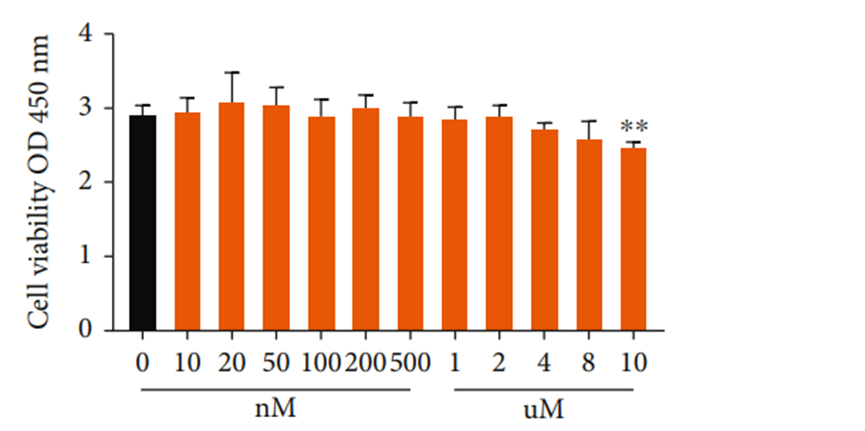
BMM cell viability as detected by CCK-8 assay after treatment with indicated concentrations of Vericiguat (0, 10, 20, 50, 100, 200, and 500 nM and 1, 2, 4, 8, and 10 μM) for 24 h.
Vericiguat purchased from MedChemExpress. Usage Cited in: Mediators Inflamm. 2022 Jun 16:2022:1625290. [Abstract]
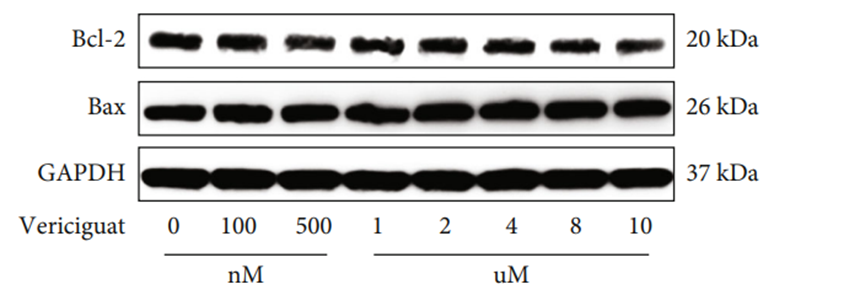
The effect of Vericiguat (100, 500 nM, and 1, 2, 4, 8, 10 μM) on apoptosis-related markers, Bax and Bcl-2, in BMMs.
Vericiguat purchased from MedChemExpress. Usage Cited in: Mediators Inflamm. 2022 Jun 16:2022:1625290. [Abstract]
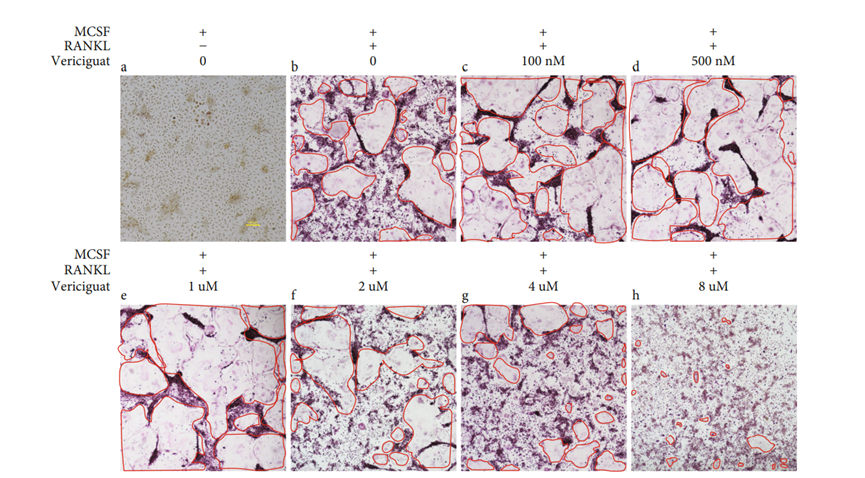
Representative images of TRAP-positive osteoclasts (red circles) after stimulation with RANKL and indicated concentrations of Vericiguat (100, 500 nM, and 1, 2, 4, 8 μM).
Vericiguat purchased from MedChemExpress. Usage Cited in: Mediators Inflamm. 2022 Jun 16:2022:1625290. [Abstract]
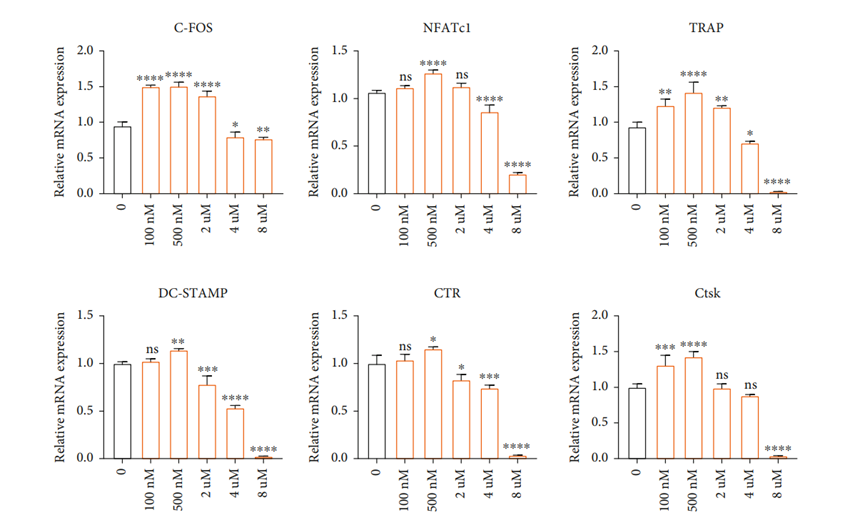
The relative mRNA expression of osteoclast marker genes (c-Fos, NFATc1, TRAP, CTSK, CTR, and DC-STAMP) in BMMs treated with RANKL+MCSF, as well as indicated concentrations of Vericiguat (100, 500 nM, and 2, 4, 8 μM), for three days was quantified by qRT-PCR.
Vericiguat purchased from MedChemExpress. Usage Cited in: Mediators Inflamm. 2022 Jun 16:2022:1625290. [Abstract]
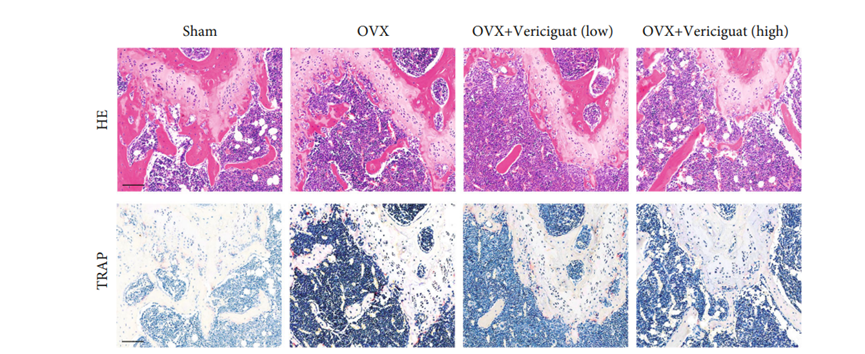
Validation of the effects of Vericiguat (5 μg/kg, 10 μg/kg) on OVX-induced bone loss in vivo indicated by histological analysis.
-
J Chromatogr A
Determination of vericiguat in rat plasma by UPLC-MS/MS and its application to drug interaction. [Abstract]2023 Oct 25:1709:464401. PMID: 37741219 -
Toxicol Appl Pharmacol
2025 Oct:503:117473. PMID: 40653114 -
PLoS One
Impact of vericiguat on baroreflex-mediated sympathetic circulatory regulation: An open-loop analysis. [Abstract]2023 Aug 11;18(8):e0286767. PMID: 37566583 -
Auton Neurosci
Vericiguat attenuates the dynamic gain of open-loop baroreflex function in a low-frequency range. [Abstract]2025 Dec:262:103354. PMID: 41101266 -
Auton Neurosci
Acute effects of vericiguat on urine excretion during baroreflex-mediated sympathetic arterial pressure regulation in male rats. [Abstract]2025 Dec:262:103363. PMID: 41289895 -
Biomed Pharmacother
Revisiting soluble guanylate cyclase pharmacology: Additive potential of stimulators and activators. [Abstract]2025 Dec:193:118762. PMID: 41252787


Solvent & Solubility
In Vitro:
DMSO : 60 mg/mL (140.72 mM; Need ultrasonic; Hygroscopic DMSO has a significant impact on the solubility of product, please use newly opened DMSO)
Please refer to the solubility information to select the appropriate solvent. Once prepared, please aliquot and store the solution to prevent product inactivation from repeated freeze-thaw cycles.
Storage method and period of stock solution: -80°C, 1 year; -20°C, 6 months. When stored at -80°C, please use it within 1 year. When stored at -20°C, please use it within 6 months.
Please refer to the solubility information to select the appropriate solvent. Once prepared, please aliquot and store the solution to prevent product inactivation from repeated freeze-thaw cycles.
Storage method and period of stock solution: -80°C, 1 year; -20°C, 6 months. When stored at -80°C, please use it within 1 year. When stored at -20°C, please use it within 6 months.
Concentration (start) × Volume (start) = Concentration (final) × Volume (final)
In Vivo:
Select the appropriate dissolution method based on your experimental animal and administration route.
- For the following dissolution methods, please ensure to first prepare a clear stock solution using an In Vitro approach and then sequentially add co-solvents:
- To ensure reliable experimental results, the clarified stock solution can be appropriately stored based on storage conditions. As for the working solution for In Vivo experiments, it is recommended to prepare freshly and use it on the same day.
- The percentages shown for the solvents indicate their volumetric ratio in the final prepared solution. If precipitation or phase separation occurs during preparation, heat and/or sonication can be used to aid dissolution.
Add each solvent one by one: 10% DMSO 40% PEG300 5% Tween-80 45% Saline
Solubility: ≥ 2.5 mg/mL (5.86 mM); Clear solution
This protocol yields a clear solution of ≥ 2.5 mg/mL (saturation unknown).
Taking 1 mL working solution as an example, add 100 μL DMSO stock solution (25.0 mg/mL) to 400 μL PEG300, and mix evenly; then add 50 μL Tween-80 and mix evenly; then add 450 μL Saline to adjust the volume to 1 mL.
Preparation of Saline: Dissolve 0.9 g sodium chloride in ddH₂O and dilute to 100 mL to obtain a clear Saline solution.
In Vivo Dissolution Calculator
Please enter the basic information of animal experiments:
-
-
-
-
Recommended: Prepare an additional quantity of animals to account for potential losses during experiments.
Please enter your animal formula composition:
-
%DMSO +
Recommended: Keep the proportion of DMSO in working solution below 2% if your animal is weak.
-
%+
-
+%Tween-80 + +
-
%Saline +
The co-solvents required include: DMSO, . All of co-solvents are available by MedChemExpress (MCE). , Tween 80. All of co-solvents are available by MedChemExpress (MCE).
Working solution concentration: 0.22 mg/mL
Method for preparing stock solution: mg drug dissolved in μL DMSO. Stock solution concentration: mg/mL.
1. Take μL DMSO stock solution;
2. Add μL .
μL , mix evenly;
3. Then add μL Tween 80, mix evenly;
4. Then add μL
Please ensure that the stock solution in the first step is dissolved to a clear state, and add co-solvents in sequence. You can use ultrasonic heating (ultrasonic cleaner, recommended frequency 20-40 kHz), vortexing, etc. to assist dissolution.


Purity & Documentation
-
Data Sheet (281 KB)
-
SDS (393 KB)
- English - EN (393 KB)
- Français - FR (393 KB)
- Deutsch - DE (393 KB)
- Norwegian - NO (393 KB)
- Español - ES (393 KB)
- Swedish - SV (393 KB)
- Italian - IT (393 KB)
- Korean - KR (393 KB)
- Portuguese - PT (393 KB)
-
Handling Instructions (2659 KB)
References


Complete Stock Solution Preparation Table
Please refer to the solubility information to select the appropriate solvent. Once prepared, please aliquot and store the solution to prevent product inactivation from repeated freeze-thaw cycles.
Storage method and period of stock solution: -80°C, 1 year; -20°C, 6 months. When stored at -80°C, please use it within 1 year. When stored at -20°C, please use it within 6 months.
| Optional Solvent | Concentration Solvent Mass | 1 mg | 5 mg | 10 mg | 25 mg |
|---|---|---|---|---|---|
| DMSO | 1 mM | 2.3453 mL | 11.7266 mL | 23.4533 mL | 58.6331 mL |
| 5 mM | 0.4691 mL | 2.3453 mL | 4.6907 mL | 11.7266 mL | |
| 10 mM | 0.2345 mL | 1.1727 mL | 2.3453 mL | 5.8633 mL | |
| 15 mM | 0.1564 mL | 0.7818 mL | 1.5636 mL | 3.9089 mL | |
| 20 mM | 0.1173 mL | 0.5863 mL | 1.1727 mL | 2.9317 mL | |
| 25 mM | 0.0938 mL | 0.4691 mL | 0.9381 mL | 2.3453 mL | |
| 30 mM | 0.0782 mL | 0.3909 mL | 0.7818 mL | 1.9544 mL | |
| 40 mM | 0.0586 mL | 0.2932 mL | 0.5863 mL | 1.4658 mL | |
| 50 mM | 0.0469 mL | 0.2345 mL | 0.4691 mL | 1.1727 mL | |
| 60 mM | 0.0391 mL | 0.1954 mL | 0.3909 mL | 0.9772 mL | |
| 80 mM | 0.0293 mL | 0.1466 mL | 0.2932 mL | 0.7329 mL | |
| 100 mM | 0.0235 mL | 0.1173 mL | 0.2345 mL | 0.5863 mL |


Vericiguat Related Classifications
HY-16774 Related Classifications
 Powered by Bioz