



Aristolochic acid B
Based on 1 publication(s) in Google Scholar
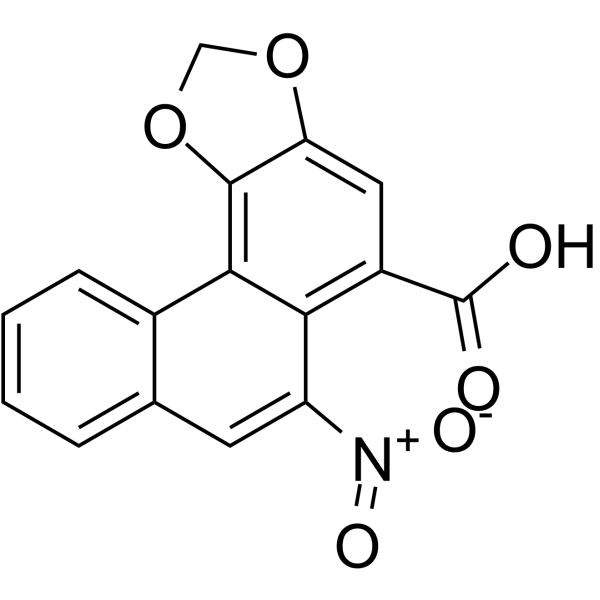
Aristolochic acid B (Aristolochic Acid II) is an orally active major component of aristolochic acid (AA). Aristolochic acid B can be isolated from plants of the genus Aristolochica. Aristolochic acid B forms DNA adducts. Aristolochic acid B is mutagenic. Aristolochic acid B exhibits a greater carcinogenic risk in vivo than Aristolochic acid I (HY-N0510).
For research use only. We do not sell to patients.
- Purity : 99.92%
- CAS No.: 475-80-9
- Formula: C16H9NO6
- Molecular Weight:311.25
-
Storage:
4°C, protect from light
* In solvent : -80°C, 6 months; -20°C, 1 month (protect from light)

To place orders, for customer services and technical support, please contact: MedChemExpress USA
Tel: 609-228-6898 E-mail: [email protected] [email protected]


-
 Biological Activity
-
Chemical Information
-
Solvent & Solubility
- Protocols
- Purity & Documentation
- References
-
 Help & FAQs


-
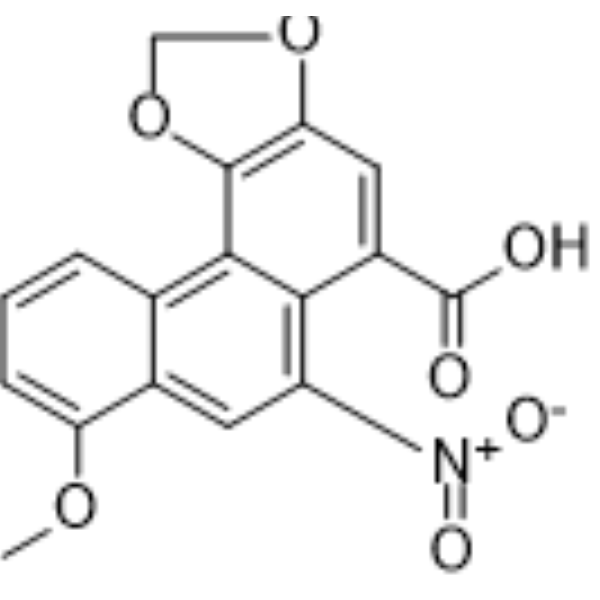
HY-N0510
Aristolochic acid ANF-κB Inhibitor -
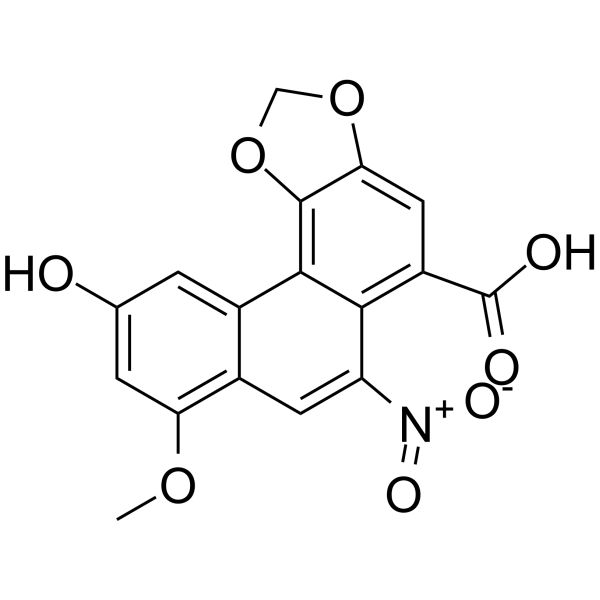
HY-N1465
Aristolochic acid DPDE2/CDK2 Inhibitor -
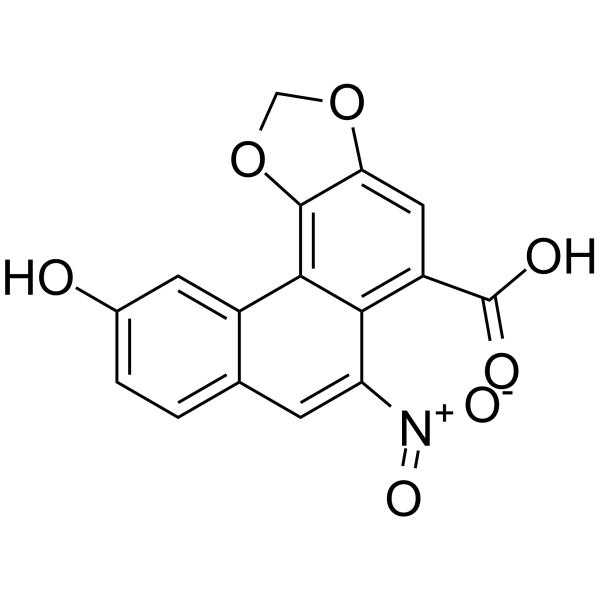
HY-N1450
Aristolochic acid CPhospholipase Inhibitor -
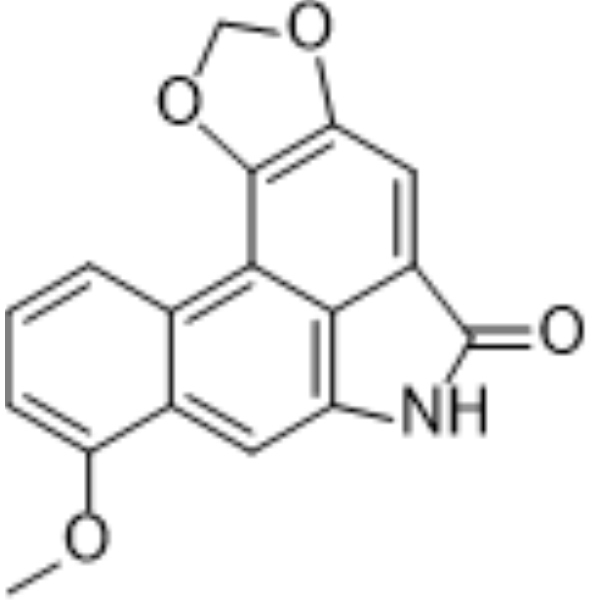
HY-N2013
Aristolactam IAQP1 Inhibitor -

HY-N0511R
Aristolochic acid B (Standard)Standard Of Aristolochic acid B -
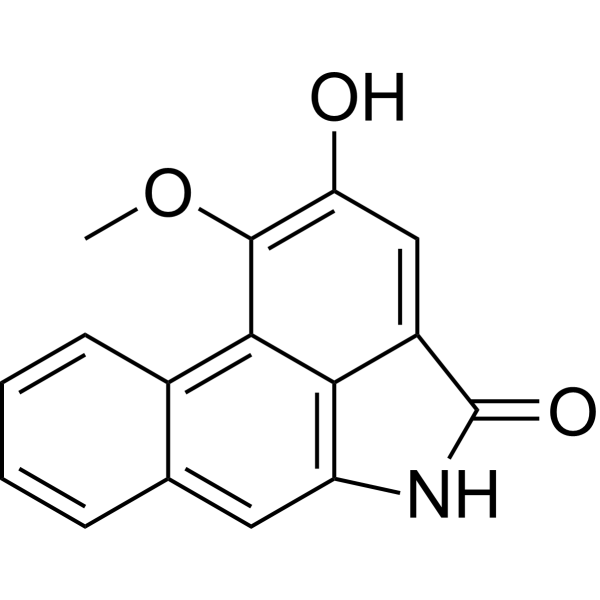
HY-N2891
Aristolactam A IIAnti-plasmodial Agent -
![Dibenz[a,h]anthracene](https://file.medchemexpress.com/product_pic/hy-w013053.gif)
HY-W013053
Dibenz[a,h]anthraceneAhR Agonist -
![Dibenz[a,h]anthracene (Standard)](https://file.medchemexpress.com/product_pic/hy-w013053r.gif)
HY-W013053R
Dibenz[a,h]anthracene (Standard)DNA Damage Inducer
Publications Citing Use of MedChemExpress (MCE) Aristolochic acid B
More

Biological Activity
Description
In Vitro
Aristolochic acid B (0.4 mM) forms DNA adducts under anaerobic conditions[3].
MedChemExpress (MCE) has not independently confirmed the accuracy of these methods. They are for reference only. Further protocols information, click here.
In Vivo
Aristolochic acid B (10 mg/kg; p.o.; every 3 days; 19 days) causes significant toxicity in female Wistar rats[2].
Aristolochic acid B (0.03 mmol/kg/day; p.o.; 5 days) forms DNA adducts in forestomach, stomach, kidney, bladder, liver, lung, and brain of male Wistar rats[3].
MedChemExpress (MCE) has not independently confirmed the accuracy of these methods. They are for reference only.
-
Animal Model:Female Wistar rats[2]
-
Dosage:10 mg/kg
-
Administration:Intragastric incubation; every 3 days; for 19 days
-
Result:Reduced body weight.
Increased liver/kidney weight to body weight ratio.
Elevated plasma AST, ALT, ALP, BUN, creatinine, and urinary BUN, creatinine, as well as renal and hepatic cell enlargement and lesions, with toxicity similar to that of total AA.


Chemical Information
-
CAS No. 475-80-9
-
Appearance Solid
-
Molecular Weight 311.25
-
Formula C16H9NO6
-
Color Light yellow to yellow
-
SMILES
O=C(C1=C2C([N+]([O-])=O)=CC3=CC=CC=C3C2=C(OCO4)C4=C1)O
-
Synonyms
Aristolochic acid II
-
Structure Classification
-
Initial Source
-
Shipping
Room temperature in continental US; may vary elsewhere.
-
Storage
4°C, protect from light
* In solvent : -80°C, 6 months; -20°C, 1 month (protect from light)


Publications (1)
-
Journal Impact Factor
-
Most Recent
-
Clin Transl Med
Loss of MEN1 leads to renal fibrosis and decreases HGF-Adamts5 pathway activity via an epigenetic mechanism. [Abstract]2022 Aug;12(8):e982. PMID: 35968938


Solvent & Solubility
In Vitro:
DMSO : 11.11 mg/mL (35.69 mM; ultrasonic and warming and heat to 60°C; Hygroscopic DMSO has a significant impact on the solubility of product, please use newly opened DMSO)
Please refer to the solubility information to select the appropriate solvent. Once prepared, please aliquot and store the solution to prevent product inactivation from repeated freeze-thaw cycles.
Storage method and period of stock solution: -80°C, 6 months; -20°C, 1 month (protect from light). When stored at -80°C, please use it within 6 months. When stored at -20°C, please use it within 1 month.
Please refer to the solubility information to select the appropriate solvent. Once prepared, please aliquot and store the solution to prevent product inactivation from repeated freeze-thaw cycles.
Storage method and period of stock solution: -80°C, 6 months; -20°C, 1 month (protect from light). When stored at -80°C, please use it within 6 months. When stored at -20°C, please use it within 1 month.
Concentration (start) × Volume (start) = Concentration (final) × Volume (final)
In Vivo:
Select the appropriate dissolution method based on your experimental animal and administration route.
- For the following dissolution methods, please ensure to first prepare a clear stock solution using an In Vitro approach and then sequentially add co-solvents:
- To ensure reliable experimental results, the clarified stock solution can be appropriately stored based on storage conditions. As for the working solution for In Vivo experiments, it is recommended to prepare freshly and use it on the same day.
- The percentages shown for the solvents indicate their volumetric ratio in the final prepared solution. If precipitation or phase separation occurs during preparation, heat and/or sonication can be used to aid dissolution.
Add each solvent one by one: 10% DMSO 40% PEG300 5% Tween-80 45% Saline
Solubility: ≥ 1.39 mg/mL (4.47 mM); Clear solution
This protocol yields a clear solution of ≥ 1.39 mg/mL (saturation unknown).
Taking 1 mL working solution as an example, add 100 μL DMSO stock solution (13.9 mg/mL) to 400 μL PEG300, and mix evenly; then add 50 μL Tween-80 and mix evenly; then add 450 μL Saline to adjust the volume to 1 mL.
Preparation of Saline: Dissolve 0.9 g sodium chloride in ddH₂O and dilute to 100 mL to obtain a clear Saline solution.
In Vivo Dissolution Calculator
Please enter the basic information of animal experiments:
-
-
-
-
Recommended: Prepare an additional quantity of animals to account for potential losses during experiments.
Please enter your animal formula composition:
-
%DMSO +
Recommended: Keep the proportion of DMSO in working solution below 2% if your animal is weak.
-
%+
-
+%Tween-80 + +
-
%Saline +
The co-solvents required include: DMSO, . All of co-solvents are available by MedChemExpress (MCE). , Tween 80. All of co-solvents are available by MedChemExpress (MCE).
Working solution concentration: 0.22 mg/mL
Method for preparing stock solution: mg drug dissolved in μL DMSO. Stock solution concentration: mg/mL. * In solvent : -80°C, 6 months; -20°C, 1 month (protect from light)
1. Take μL DMSO stock solution;
2. Add μL .
μL , mix evenly;
3. Then add μL Tween 80, mix evenly;
4. Then add μL
Please ensure that the stock solution in the first step is dissolved to a clear state, and add co-solvents in sequence. You can use ultrasonic heating (ultrasonic cleaner, recommended frequency 20-40 kHz), vortexing, etc. to assist dissolution.

Protocols
-
Genotoxicity/Mutagenicity Study
The bacterial reverse mutation assay detects point mutations that restore amino-acid prototrophy in auxotrophic Salmonella typhimurium or Escherichia coli tester strains; after exposure to a test article, mutagenic activity is read out as an increased number of revertant colonies on minimal agar compared with the vehicle control. The assay uses tester strains with different mutation targets so that base-substitution and frameshift mutagens can be detected, and testing is performed with and without exogenous mammalian metabolic activation because some chemicals require biotransformation to become mutagenic.


Purity & Documentation
-
Data Sheet (282 KB)
-
SDS (644 KB)
- English - EN (644 KB)
- Français - FR (644 KB)
- Deutsch - DE (644 KB)
- Norwegian - NO (644 KB)
- Español - ES (644 KB)
- Swedish - SV (644 KB)
- Italian - IT (644 KB)
- Korean - KR (644 KB)
- Portuguese - PT (644 KB)
-
Handling Instructions (2659 KB)
References
[1]. Xing G, et al. Comparison of the mutagenicity of aristolochic acid I and aristolochic acid II in the gpt delta transgenic mouse kidney. Mutat Res. 2012 Mar 18;743(1-2):52-8. [Content Brief]
[2]. Yeh YH, et al. Short-term toxicity of aristolochic acid, aristolochic acid-I and aristolochic acid-II in rats. Food Chem Toxicol. 2008 Mar;46(3):1157-63. [Content Brief]
[3]. Schmeiser HH, et al. DNA adduct formation of aristolochic acid I and II in vitro and in vivo. Carcinogenesis. 1988 Feb;9(2):297-303. [Content Brief]


Complete Stock Solution Preparation Table
Please refer to the solubility information to select the appropriate solvent. Once prepared, please aliquot and store the solution to prevent product inactivation from repeated freeze-thaw cycles.
Storage method and period of stock solution: -80°C, 6 months; -20°C, 1 month (protect from light). When stored at -80°C, please use it within 6 months. When stored at -20°C, please use it within 1 month.
| Optional Solvent | Concentration Solvent Mass | 1 mg | 5 mg | 10 mg | 25 mg |
|---|---|---|---|---|---|
| DMSO | 1 mM | 3.2129 mL | 16.0643 mL | 32.1285 mL | 80.3213 mL |
| 5 mM | 0.6426 mL | 3.2129 mL | 6.4257 mL | 16.0643 mL | |
| 10 mM | 0.3213 mL | 1.6064 mL | 3.2129 mL | 8.0321 mL | |
| 15 mM | 0.2142 mL | 1.0710 mL | 2.1419 mL | 5.3548 mL | |
| 20 mM | 0.1606 mL | 0.8032 mL | 1.6064 mL | 4.0161 mL | |
| 25 mM | 0.1285 mL | 0.6426 mL | 1.2851 mL | 3.2129 mL | |
| 30 mM | 0.1071 mL | 0.5355 mL | 1.0710 mL | 2.6774 mL |


Aristolochic acid B Related Classifications
HY-N0511 Related Classifications
 Powered by Bioz