



BML-111
Based on 1 publication(s) in Google Scholar
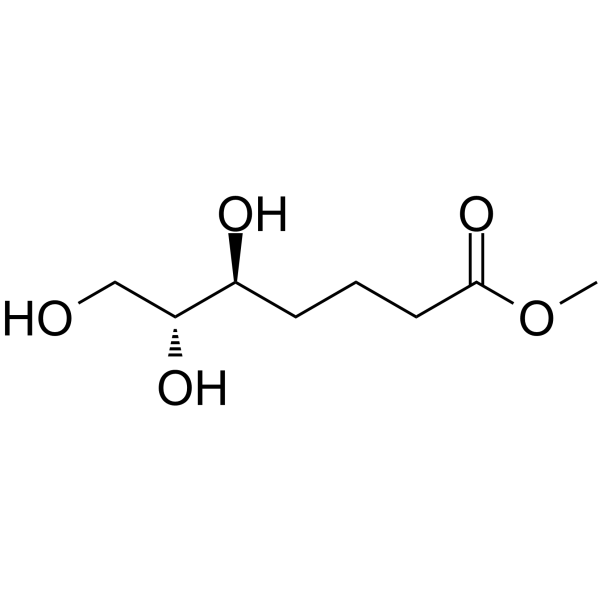
BML-111, a lipoxin A4 analog, is a lipoxin A4 receptor agonist. BML-111 represses the activity of angiotensin converting enzyme (ACE) and increases the activity of angiotensinconverting enzyme 2 (ACE2). BML-111 has antiangiogenic, antitumor and anti-inflammatory properties.
For research use only. We do not sell to patients.
- Purity : 98.87%
- CAS No.: 78606-80-1
- Formula: C8H16O5
- Molecular Weight:192.21
-
Storage:Pure form -20°C, 3 years ; In solvent -80°C, 6 months , -20°C, 1 month

To place orders, for customer services and technical support, please contact: MedChemExpress USA
Tel: 609-228-6898 E-mail: [email protected] [email protected]


-
 Biological Activity
-
Chemical Information
-
Solvent & Solubility
- Protocols
- Purity & Documentation
- References
-
 Help & FAQs


-
HY-B0215
AcetylcysteineMucolytic Agent -

HY-100450R
BML-111 (Standard)Lipoxin A4 Receptor Agonist -
HY-N7140
Gamma-Linolenic acidEndogenous Metabolite -
HY-107608
Leukotriene B4PROTAC linker -
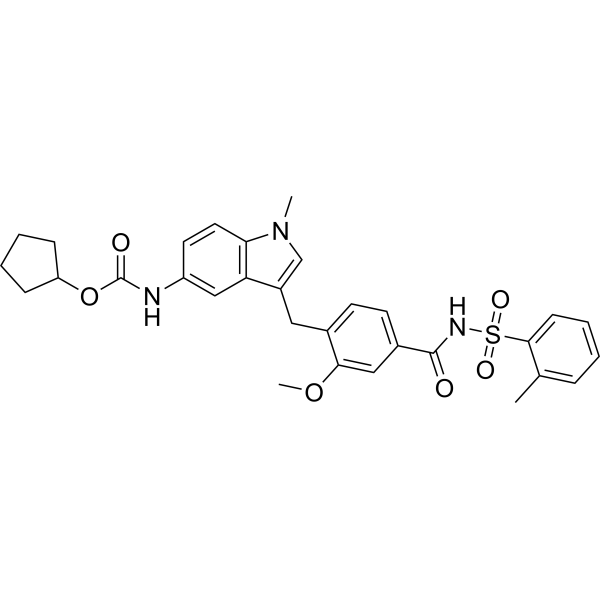
HY-17492
ZafirlukastLeukotriene Receptor Antagonist -
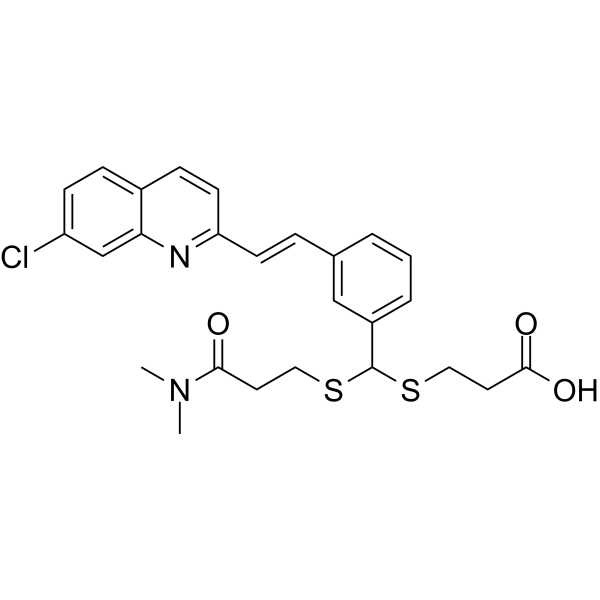
HY-19989
MK-571ABCC1/MRP4 Inhibitor -
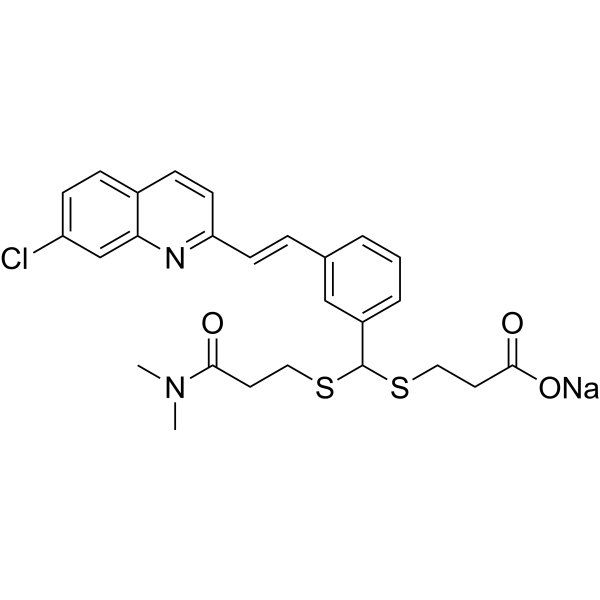
HY-19989A
MK-571 sodiumABCC1/MRP4 Inhibitor -
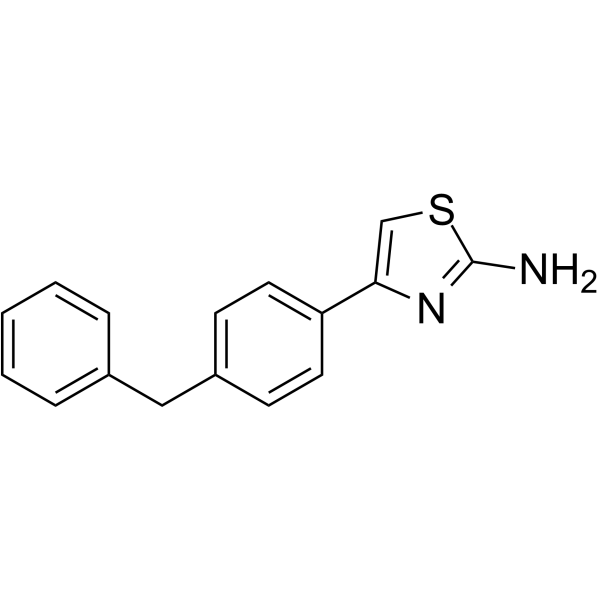
HY-W027340
ARM1Aminopeptidase/Epoxide Hydrolase Inhibitor -
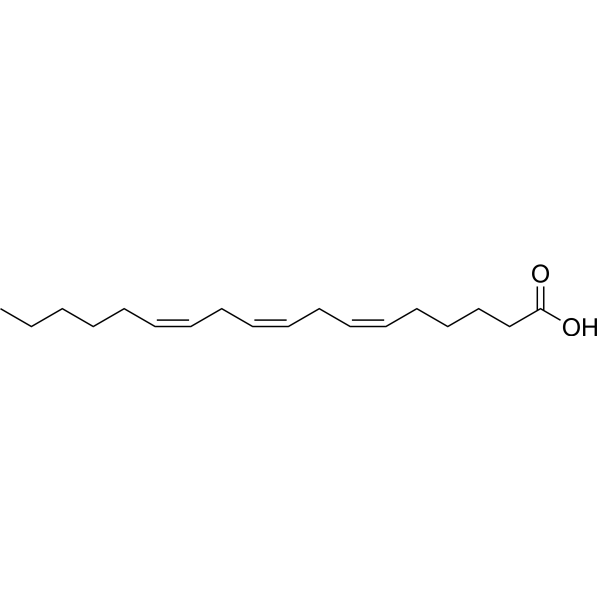
HY-N7140R
Gamma-Linolenic acid (Standard) -
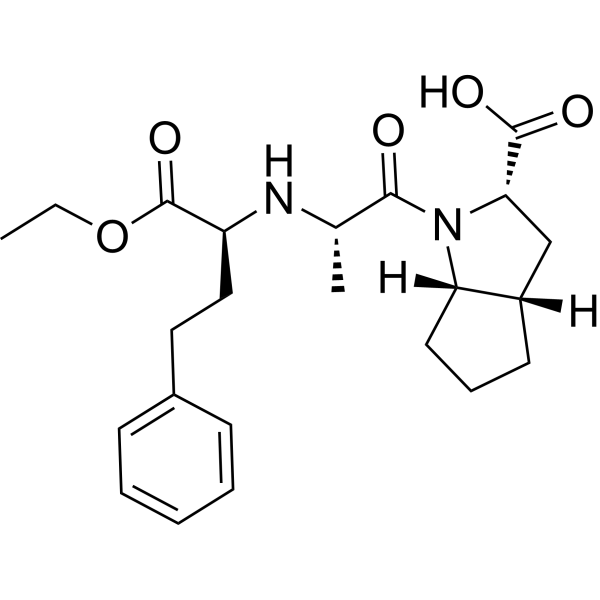
HY-B0279
RamiprilApoptosis Inducer -
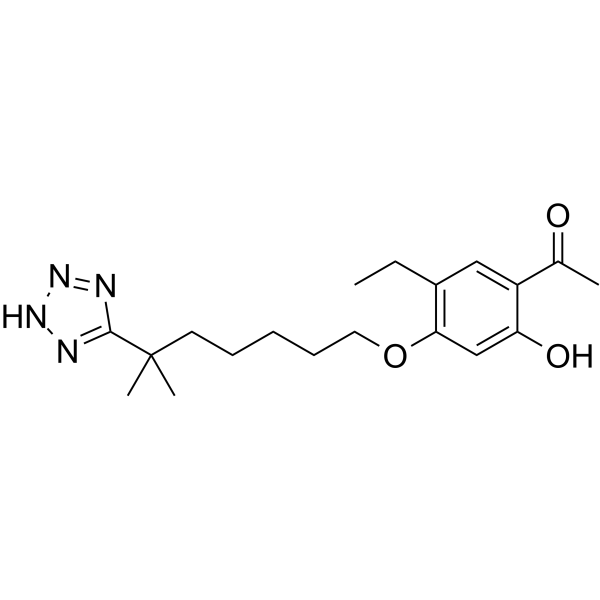
HY-15744
LY255283LTB4 Receptor Antagonist -
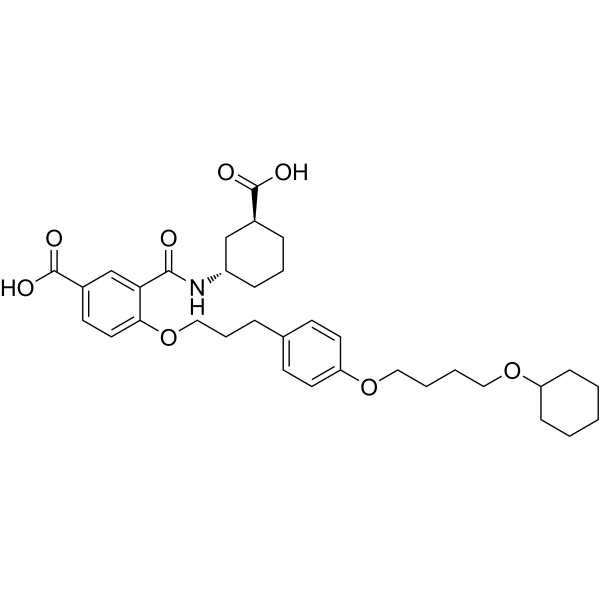
HY-112248A
HAMI 3379CysLT2 Receptor Antagonist
Publications Citing Use of MedChemExpress (MCE) BML-111
More

Biological Activity
Description
IC50 & Target
Lipoxin A4 receptor[1]
Angiotensin converting enzyme (ACE)[2]
In Vitro
In H22 cells, BML-111 inhibits the production of vascular endothelial growth factor and reduces hypoxia-inducible factor-1α level[1].
BML-111 inhibits leukotriene B4-induced cellular migration with an IC50 of 5 nM[3].
MedChemExpress (MCE) has not independently confirmed the accuracy of these methods. They are for reference only.
In Vivo
BML-111 protects LPS-induced acute lung injury and LPS/D-GalN-induced acute liver injury. BML-111 represses the activity of ACE, but increases the activity of ACE2. BML-111 decreases the expression levels of ACE, AngII, and AngII type 1 receptor (AT1R), meanwhile increases the levels of ACE2, angiotensin-(1-7) (Ang-1-7), and Mas[2].
MedChemExpress (MCE) has not independently confirmed the accuracy of these methods. They are for reference only.
-
Animal Model:Male Imprinting Control Region mice (5-6-week-old,18-22 g) injected with H22 cells[1]
-
Dosage:1 mg/kg
-
Administration:Intraperitoneal injection; injected 5 minutes before and 4 hours after H22 cell inoculation, then every 12 hours for 2 consecutive days, then daily in an additional 3 days and every other day for the last 10 days
-
Result:Suppressed tumor-related angiogenesis and tumor growth in vivo.


Chemical Information
-
CAS No. 78606-80-1
-
Appearance Solid-Liquid Mixture
-
Molecular Weight 192.21
-
Formula C8H16O5
-
Color Colorless to light yellow
-
SMILES
O=C(OC)CCC[C@H](O)[C@H](O)CO
-
Shipping
Room temperature in continental US; may vary elsewhere.
-
Storage
Pure form -20°C 3 years In solvent -80°C 6 months -20°C 1 month


Publications (1)
-
Journal Impact Factor
-
Most Recent
-
Free Radic Biol Med
p67phox/NOX2 inhibits psoriasis by regulating the HIF-1α-glycolysis axis via p53-AMPK in keratinocytes. [Abstract]2025 Sep:237:503-514. PMID: 40516795


Solvent & Solubility
In Vitro:
DMSO : 200 mg/mL (1040.53 mM; Need ultrasonic; Hygroscopic DMSO has a significant impact on the solubility of product, please use newly opened DMSO)
Please refer to the solubility information to select the appropriate solvent. Once prepared, please aliquot and store the solution to prevent product inactivation from repeated freeze-thaw cycles.
Storage method and period of stock solution: -80°C, 6 months; -20°C, 1 month. When stored at -80°C, please use it within 6 months. When stored at -20°C, please use it within 1 month.
Please refer to the solubility information to select the appropriate solvent. Once prepared, please aliquot and store the solution to prevent product inactivation from repeated freeze-thaw cycles.
Storage method and period of stock solution: -80°C, 6 months; -20°C, 1 month. When stored at -80°C, please use it within 6 months. When stored at -20°C, please use it within 1 month.
Concentration (start) × Volume (start) = Concentration (final) × Volume (final)
In Vivo:
Select the appropriate dissolution method based on your experimental animal and administration route.
- For the following dissolution methods, please ensure to first prepare a clear stock solution using an In Vitro approach and then sequentially add co-solvents:
- To ensure reliable experimental results, the clarified stock solution can be appropriately stored based on storage conditions. As for the working solution for In Vivo experiments, it is recommended to prepare freshly and use it on the same day.
- The percentages shown for the solvents indicate their volumetric ratio in the final prepared solution. If precipitation or phase separation occurs during preparation, heat and/or sonication can be used to aid dissolution.
Add each solvent one by one: 10% DMSO 40% PEG300 5% Tween-80 45% Saline
Solubility: ≥ 2.5 mg/mL (13.01 mM); Clear solution
This protocol yields a clear solution of ≥ 2.5 mg/mL (saturation unknown).
Taking 1 mL working solution as an example, add 100 μL DMSO stock solution (25.0 mg/mL) to 400 μL PEG300, and mix evenly; then add 50 μL Tween-80 and mix evenly; then add 450 μL Saline to adjust the volume to 1 mL.
Preparation of Saline: Dissolve 0.9 g sodium chloride in ddH₂O and dilute to 100 mL to obtain a clear Saline solution.
Add each solvent one by one: 10% DMSO 90% (20% SBE-β-CD in Saline)
Solubility: ≥ 2.5 mg/mL (13.01 mM); Clear solution
This protocol yields a clear solution of ≥ 2.5 mg/mL (saturation unknown).
Taking 1 mL working solution as an example, add 100 μL DMSO stock solution (25.0 mg/mL) to 900 μL 20% SBE-β-CD in Saline, and mix evenly.
Preparation of 20% SBE-β-CD in Saline (4°C, storage for one week): 2 g SBE-β-CD powder is dissolved in 10 mL Saline, completely dissolve until clear.
In Vivo Dissolution Calculator
Please enter the basic information of animal experiments:
-
-
-
-
Recommended: Prepare an additional quantity of animals to account for potential losses during experiments.
Please enter your animal formula composition:
-
%DMSO +
Recommended: Keep the proportion of DMSO in working solution below 2% if your animal is weak.
-
%+
-
+%Tween-80 + +
-
%Saline +
The co-solvents required include: DMSO, . All of co-solvents are available by MedChemExpress (MCE). , Tween 80. All of co-solvents are available by MedChemExpress (MCE).
Working solution concentration: 0.22 mg/mL
Method for preparing stock solution: mg drug dissolved in μL DMSO. Stock solution concentration: mg/mL.
1. Take μL DMSO stock solution;
2. Add μL .
μL , mix evenly;
3. Then add μL Tween 80, mix evenly;
4. Then add μL
Please ensure that the stock solution in the first step is dissolved to a clear state, and add co-solvents in sequence. You can use ultrasonic heating (ultrasonic cleaner, recommended frequency 20-40 kHz), vortexing, etc. to assist dissolution.


Purity & Documentation
-
Data Sheet (279 KB)
-
SDS (393 KB)
- English - EN (393 KB)
- Français - FR (393 KB)
- Deutsch - DE (393 KB)
- Norwegian - NO (393 KB)
- Español - ES (393 KB)
- Swedish - SV (393 KB)
- Italian - IT (393 KB)
- Korean - KR (393 KB)
- Portuguese - PT (393 KB)
-
Handling Instructions (2659 KB)
References
[1]. Ying Chen, et al. Lipoxin A4 and Its Analogue Suppress the Tumor Growth of Transplanted H22 in Mice: The Role of Antiangiogenesis. Mol Cancer Ther. 2010 Aug;9(8):2164-74. [Content Brief]
[2]. Qiong-Feng Chen, et al. BML-111, a Lipoxin Receptor Agonist, Protects Against Acute Injury via Regulating the Renin Angiotensin-Aldosterone System. Prostaglandins Other Lipid Mediat. 2019 Feb;140:9-17. [Content Brief]
[3]. T H Lee, et al. Inhibition of Leukotriene B4-induced Neutrophil Migration by Lipoxin A4: Structure-Function Relationships. Biochem Biophys Res Commun. 1991 Nov 14;180(3):1416-21. [Content Brief]


Complete Stock Solution Preparation Table
Please refer to the solubility information to select the appropriate solvent. Once prepared, please aliquot and store the solution to prevent product inactivation from repeated freeze-thaw cycles.
Storage method and period of stock solution: -80°C, 6 months; -20°C, 1 month. When stored at -80°C, please use it within 6 months. When stored at -20°C, please use it within 1 month.
| Optional Solvent | Concentration Solvent Mass | 1 mg | 5 mg | 10 mg | 25 mg |
|---|---|---|---|---|---|
| DMSO | 1 mM | 5.2026 mL | 26.0132 mL | 52.0264 mL | 130.0661 mL |
| 5 mM | 1.0405 mL | 5.2026 mL | 10.4053 mL | 26.0132 mL | |
| 10 mM | 0.5203 mL | 2.6013 mL | 5.2026 mL | 13.0066 mL | |
| 15 mM | 0.3468 mL | 1.7342 mL | 3.4684 mL | 8.6711 mL | |
| 20 mM | 0.2601 mL | 1.3007 mL | 2.6013 mL | 6.5033 mL | |
| 25 mM | 0.2081 mL | 1.0405 mL | 2.0811 mL | 5.2026 mL | |
| 30 mM | 0.1734 mL | 0.8671 mL | 1.7342 mL | 4.3355 mL | |
| 40 mM | 0.1301 mL | 0.6503 mL | 1.3007 mL | 3.2517 mL | |
| 50 mM | 0.1041 mL | 0.5203 mL | 1.0405 mL | 2.6013 mL | |
| 60 mM | 0.0867 mL | 0.4336 mL | 0.8671 mL | 2.1678 mL | |
| 80 mM | 0.0650 mL | 0.3252 mL | 0.6503 mL | 1.6258 mL | |
| 100 mM | 0.0520 mL | 0.2601 mL | 0.5203 mL | 1.3007 mL |


BML-111 Related Classifications
HY-100450 Related Classifications
 Powered by Bioz