



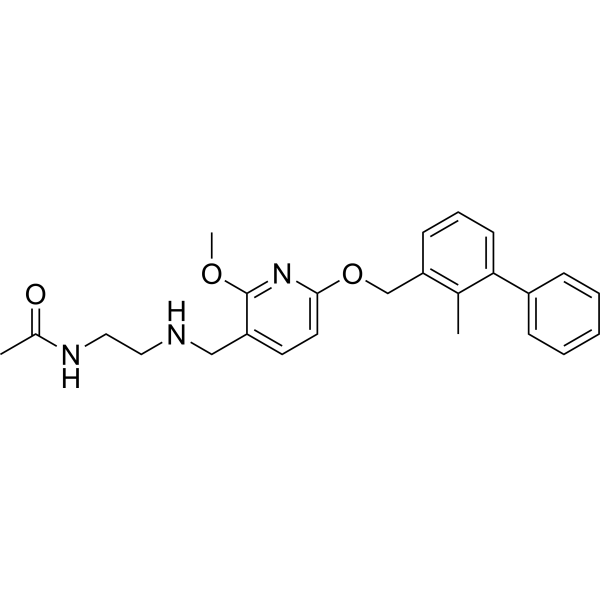
BMS-202
Based on 29 publication(s) in Google Scholar
BMS-202 is a potent and nonpeptidic PD-1/PD-L1 complex inhibitor with an IC50 of 18 nM and a KD of 8 μM. BMS-202 binds to PD-L1 and blocks human PD-1/PD-L1 interaction. BMS-202 has antitumor activity.
Nos produits utilisent uniquement pour la recherche. Nous ne vendons pas aux patients.
- Pureté : 99.48%
- CAS No.: 1675203-84-5
- Formule: C25H29N3O3
- Masse moléculaire:419.52
-
Stockage:Powder -20°C, 3 years , 4°C, 2 years ; In solvent -80°C, 1 year , -20°C, 6 months

To place orders, for customer services and technical support, please contact: MedChemExpress USA
Tel: 609-228-6898 E-mail: [email protected] [email protected]


-
 Activité biologique
-
Chemical Information
-
Solvant et solubilité
- Protocole
- Pureté et documentation
- Références
-
 Help & FAQs


-
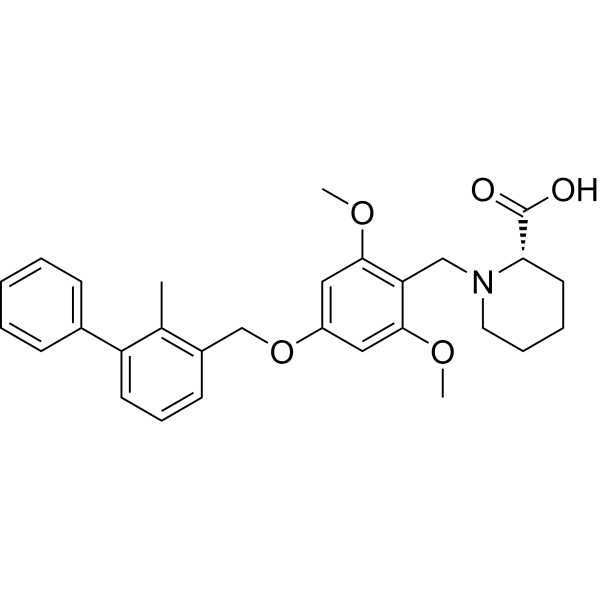
HY-19991
BMS-1PD-1/PD-L1 PPI Inhibitor -
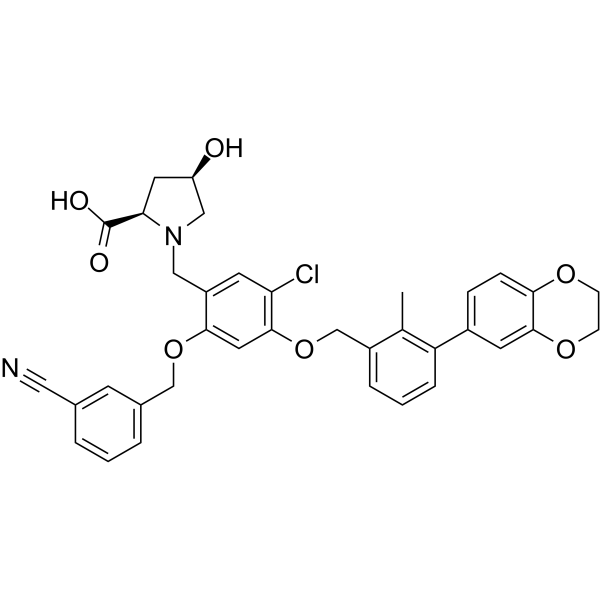
HY-102011
BMS-1166PD-1/PD-L1 Interaction Inhibitor -
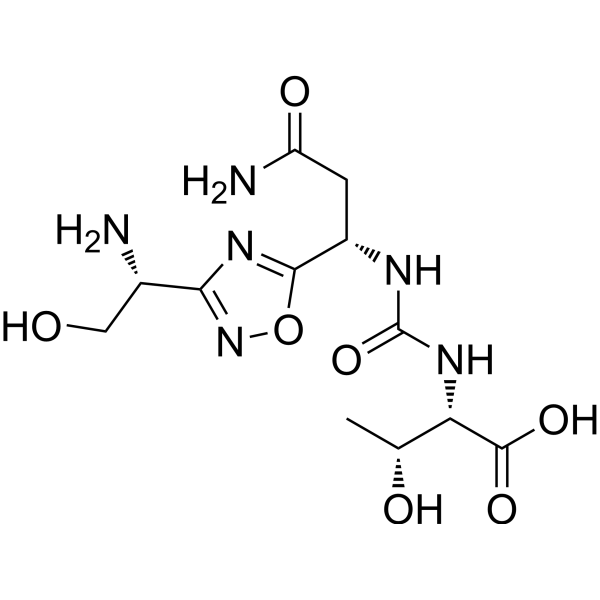
HY-101093
CA-170VISTA/PD-L1 Inhibitor -
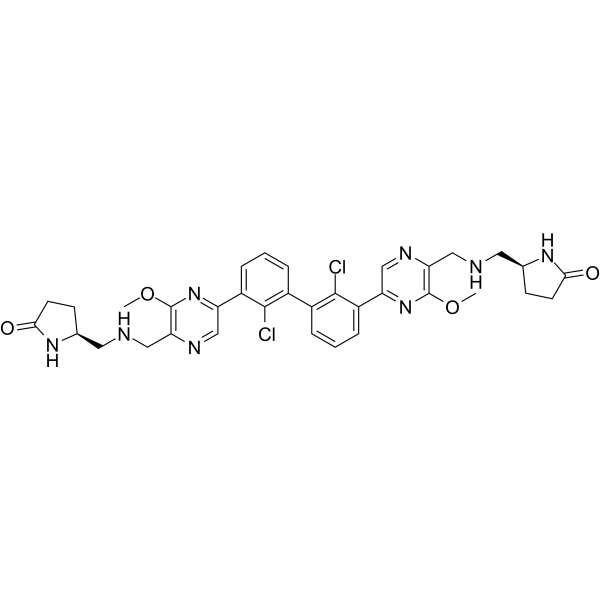
HY-138407
EvixapodlinPD-1/PD-L1 PPI Inhibitor -
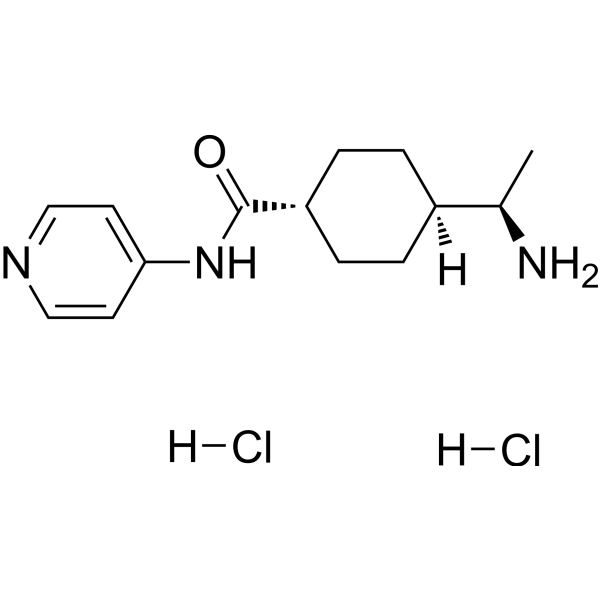
HY-10583
Y-27632 dihydrochlorideROCK Inhibitor -
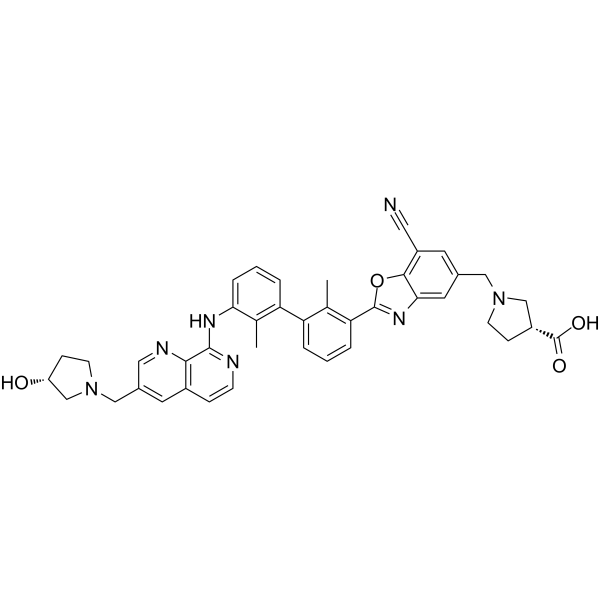
HY-134884
INCB086550PD-L1 Inhibitor -

HY-P9902
PembrolizumabPD-1 Inhibitor -
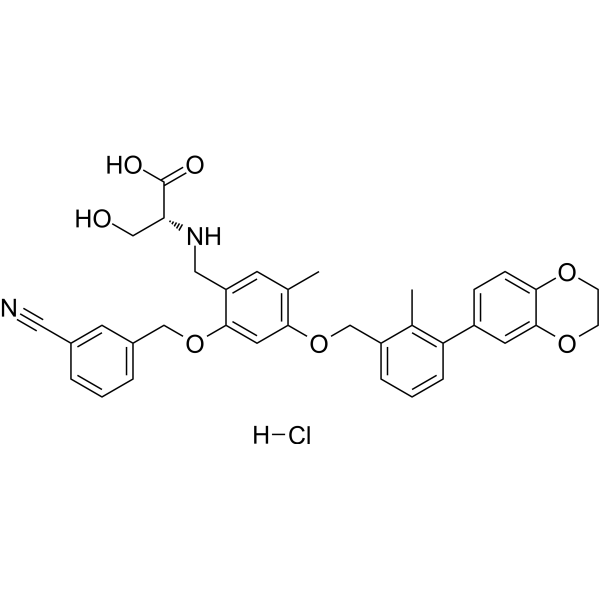
HY-120635
BMS-1001 hydrochloridePD-L1/PD-1 Inhibitor -
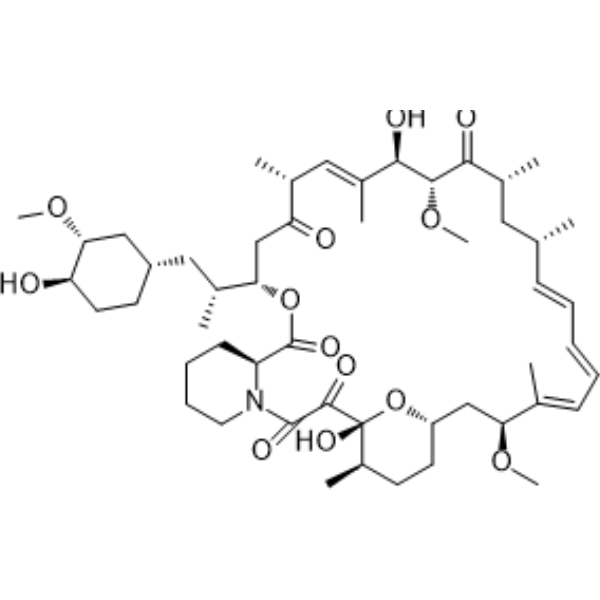
HY-10219
RapamycinmTOR Inhibitor -
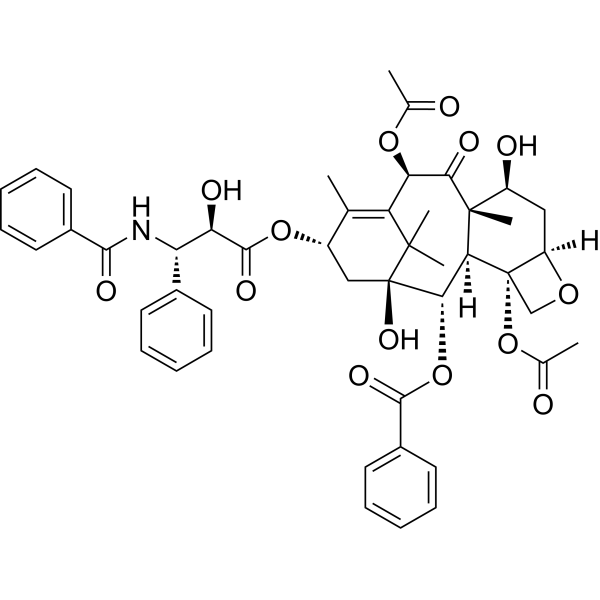
HY-B0015
PaclitaxelAntitumor Agent -

HY-Y0320
Dimethyl sulfoxide, meets analytical specification of Ch.P.Aprotic Solvent -
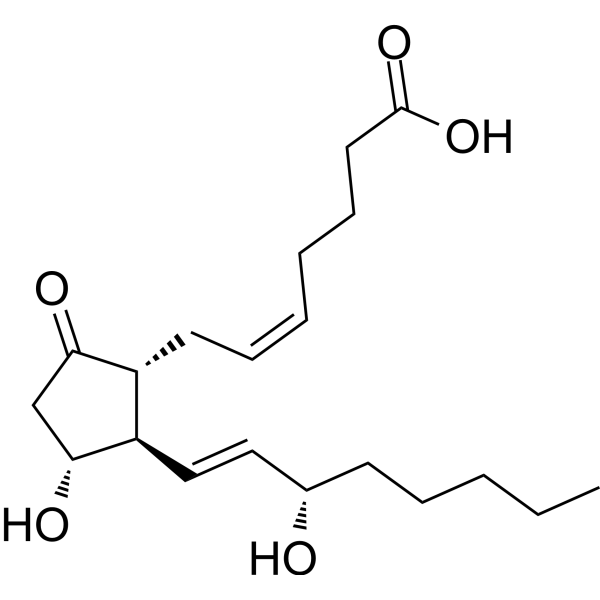
HY-101952
Prostaglandin E2Prostaglandin Receptor Agonist
Publications Citing Use of MedChemExpress (MCE) BMS-202
More- Nat Commun. 2021 Dec 9;12(1):7155. [Abstract]
- ACS Nano. 2024 Feb 20;18(7):5632-5646. [Abstract]
- J Nanobiotechnology. 2023 Oct 3;21(1):360. [Abstract]
- Acta Pharm Sin B. 2025 Apr;15(4):2156-2169. [Abstract]
- Acta Pharm Sin B. 2022 Apr;12(4):2103-2119. [Abstract]
- Adv Sci (Weinh). 2026 Sep 27:e77923.
- Adv Sci (Weinh). 2025 Mar;12(12):e2409895. [Abstract]
- Cell Death Dis. 2026 May 29. [Abstract]
- EBioMedicine. 2019 Mar:41:395-407. [Abstract]
- Nano Today. 2022, 47: 101689.
- Biomater Res. 2023 Nov 24;27(1):120. [Abstract]
- Mater Today Nano. 2024 Aug.
- J Med Chem. 2026 Apr 9;69(7):8417-8432. [Abstract]
- J Med Chem. 2025 Jun 12;68(11):11829-11840. [Abstract]
- J Med Chem. 2025 Feb 20. [Abstract]
- J Med Chem. 2020 Nov 25;63(22):13825-13850. [Abstract]
- Cells. 2022 Oct 7;11(19):3152. [Abstract]
- ACS Omega. 2023 Sep 3;8(37):33242-33254. [Abstract]
- Nanoscale. 2021 Oct 1;13(37):15789-15803. [Abstract]
- Mol Med Rep. 2025 Sep;32(3):242. [Abstract]
- Cell Signal. 2024 Sep:121:111275. [Abstract]
- Biomedicines. 2026 Aug;14(8):1659.
- Drug Dev Res. 2022 Feb;83(1):176-183. [Abstract]
- ACS Pharmacol Transl Sci. 2025 Jul 7;8(8):2612-2629. [Abstract]
- Mol Pain. 2024 Jan-Dec:20:17448069241252384. [Abstract]
- Onco Targets Ther. 2021 Mar 30:14:2247-2258. [Abstract]
- Bio Protoc. 2023 Aug 5;13(15):e4765. [Abstract]
- SSRN. 2026 Aug 1.
- Pharmacological Research-Modern Chinese Medicine. 19 January 2022, 100051.
 Customer Validation & Images

-
Cell Proliferation/Viability Assay
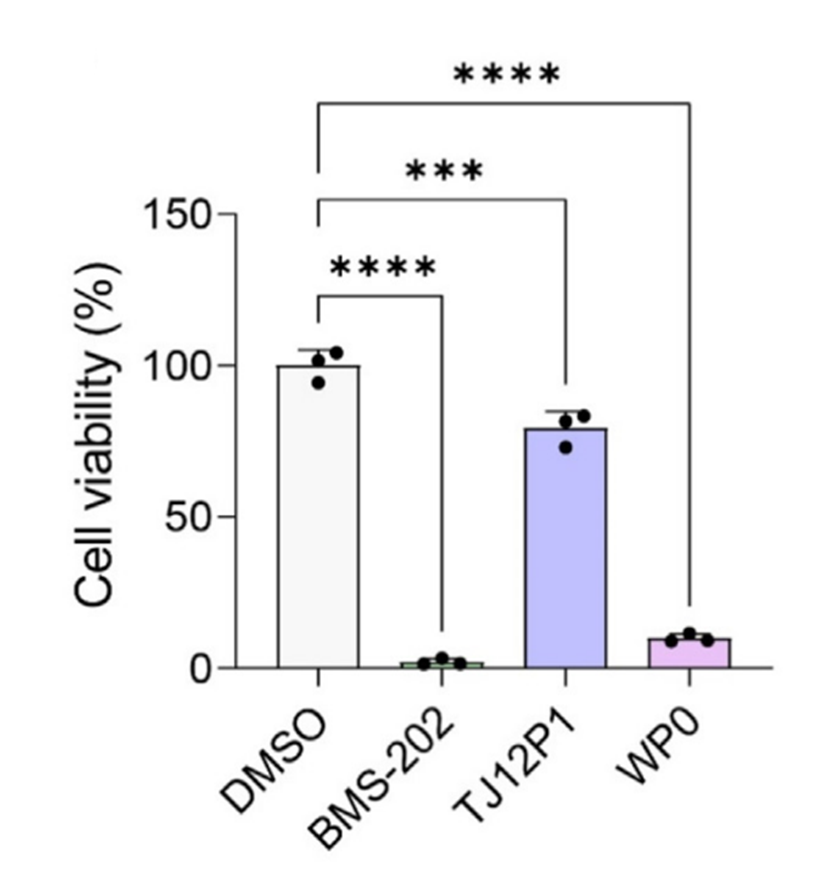
-
WB
-
Cell Migration/Invasion Assay
-
RT-PCR
-
Flow Cytometry


Activité biologique
Description
IC50 & Target
Cellular Effect
|
Cell Line

|
Type | Value | Description | References |
|---|---|---|---|---|
| 4T1 | IC50 |
5.2 μM
Compound: 1; BMS-202
|
Antiproliferative activity against mouse 4T1 cells as cell killing incubated for 6 days by CCK-8 assay
Antiproliferative activity against mouse 4T1 cells as cell killing incubated for 6 days by CCK-8 assay
|
[PMID: 38348878] |
| CHO | EC50 |
24.9 μM
Compound: BMS-202
|
Cytotoxicity against CHO cells expressing human PD-L1 assessed as cell viability measured after 24 hrs by MTT assay
Cytotoxicity against CHO cells expressing human PD-L1 assessed as cell viability measured after 24 hrs by MTT assay
|
[PMID: 38442487] |
| CHO-K1 | GI50 |
4.5 μM
Compound: 1a
|
Cytotoxicity against CHOK1 cells stably expressing human PDL1 co-cultured with human Jurkat T cell expressing human PD1 assessed as growth inhibition measured after 24 hrs by XTT assay
Cytotoxicity against CHOK1 cells stably expressing human PDL1 co-cultured with human Jurkat T cell expressing human PD1 assessed as growth inhibition measured after 24 hrs by XTT assay
|
[PMID: 31298541] |
| CT26 | IC50 |
3.35 μM
Compound: BMS-202
|
Antiproliferative activity against mouse CT26 cells assessed as inhibition of cell growth incubated for 48 hrs by MTT assay
Antiproliferative activity against mouse CT26 cells assessed as inhibition of cell growth incubated for 48 hrs by MTT assay
|
[PMID: 34481337] |
| HCC827 | IC50 |
8.41 μM
Compound: BMS202
|
Cytotoxicity against human HCC827 cells incubated for 36 hrs by standard CCK-8 assay
Cytotoxicity against human HCC827 cells incubated for 36 hrs by standard CCK-8 assay
|
[PMID: 33949196] |
| HEK293 | IC50 |
96 nM
Compound: 1a
|
Inhibition of human Fc-tagged PD1 N-terminal domain (Leu25 to Gln167 residues) expressed in HEK293 cells/human His-tagged PDL1 (Phe19 to Arg238 residues) expressed in HEK293 cells protein-protein interaction after 1 hr by APC-labeled anti-His antibody/Eu-
Inhibition of human Fc-tagged PD1 N-terminal domain (Leu25 to Gln167 residues) expressed in HEK293 cells/human His-tagged PDL1 (Phe19 to Arg238 residues) expressed in HEK293 cells protein-protein interaction after 1 hr by APC-labeled anti-His antibody/Eu-
|
[PMID: 31298541] |
| HEK293 | IC50 |
99.6 nM
Compound: BMS-202
|
Inhibition of Eu-tagged PD-1 (unknown origin)/C-terminal Fc fusion (human IgG1)/Avi-tagged biotinylated human PDL1 (19 to 239 residues) extracted from HEK293 cells interaction preincubated for 15 mins with PD-L1 followed by PD-1 addition and measured afte
Inhibition of Eu-tagged PD-1 (unknown origin)/C-terminal Fc fusion (human IgG1)/Avi-tagged biotinylated human PDL1 (19 to 239 residues) extracted from HEK293 cells interaction preincubated for 15 mins with PD-L1 followed by PD-1 addition and measured afte
|
[PMID: 39389791] |
| Jurkat | EC50 |
2764 nM
Compound: 1a
|
Inhibition of PD1/PDL1 interaction in human Jurkat cells co-cultured with human U2OS cells expressing PDL1 assessed as reduction in SHP1 recruitment preincubated with U2OS cells for 60 mins followed by Jurkat cell addition and measured after 2 hrs by Path
Inhibition of PD1/PDL1 interaction in human Jurkat cells co-cultured with human U2OS cells expressing PDL1 assessed as reduction in SHP1 recruitment preincubated with U2OS cells for 60 mins followed by Jurkat cell addition and measured after 2 hrs by Path
|
[PMID: 31298541] |
| Jurkat | GI50 |
4.5 μM
Compound: 1a
|
Cytotoxicity against human Jurkat T cell expressing human PD1 co-cultured with CHOK1 cells stably expressing human PDL1 assessed as growth inhibition measured after 24 hrs by XTT assay
Cytotoxicity against human Jurkat T cell expressing human PD1 co-cultured with CHOK1 cells stably expressing human PDL1 assessed as growth inhibition measured after 24 hrs by XTT assay
|
[PMID: 31298541] |
| Jurkat | EC50 |
>10000 nM
Compound: 1a
|
Inhibition of human PD1 stably expressed in human Jurkat T cells co-expressing NFAT-induced luciferase/human PDL1 stably expressed in CHOK1 cells co-expressing aAPC protein-protein interaction assessed as increase in NFAT signaling measured after 6 hrs by
Inhibition of human PD1 stably expressed in human Jurkat T cells co-expressing NFAT-induced luciferase/human PDL1 stably expressed in CHOK1 cells co-expressing aAPC protein-protein interaction assessed as increase in NFAT signaling measured after 6 hrs by
|
[PMID: 31298541] |
| Jurkat | EC50 |
>10000 nM
Compound: 1; BMS-202
|
Inhibition of human PD-1/PD-L1 interaction in human Jurkat cells expressing PD-1/NFAT/Luc cocultured with CHO-K1 cells expressing PD-L1/aAPC assessed as Jurkat T-lymphocyte activation measured after 6 hrs by luciferase reporter gene based luminescence ass
Inhibition of human PD-1/PD-L1 interaction in human Jurkat cells expressing PD-1/NFAT/Luc cocultured with CHO-K1 cells expressing PD-L1/aAPC assessed as Jurkat T-lymphocyte activation measured after 6 hrs by luciferase reporter gene based luminescence ass
|
[PMID: 34115499] |
| Jurkat | IC50 |
2.6 μM
Compound: BMS-202
|
Cytotoxicity against human Jurkat cells assessed as cell growth inhibition incubated for 48 hrs by MTT assay
Cytotoxicity against human Jurkat cells assessed as cell growth inhibition incubated for 48 hrs by MTT assay
|
[PMID: 37226718] |
| Jurkat | IC50 |
4.33 μM
Compound: 1; BMS-202
|
Antiproliferative activity against human Jurkat cells as cell killing incubated for 6 days by CCK-8 assay
Antiproliferative activity against human Jurkat cells as cell killing incubated for 6 days by CCK-8 assay
|
[PMID: 38348878] |
| Jurkat | EC50 |
1.03 μM
Compound: 1; BMS202
|
Inhibition of PD-1 (unknown origin) expressed in Jurkat T cell membranes harboring NFAT-Luc interaction with PD-L1 (unknown origin) expressed in CHO cells assessed as Jurkat T lymphocyte activation by measuring increase in luminescence intensity measured
Inhibition of PD-1 (unknown origin) expressed in Jurkat T cell membranes harboring NFAT-Luc interaction with PD-L1 (unknown origin) expressed in CHO cells assessed as Jurkat T lymphocyte activation by measuring increase in luminescence intensity measured
|
[PMID: 38959727] |
| MDA-MB-231 | IC50 |
7.92 μM
Compound: BMS202
|
Cytotoxicity against human MDA-MB-231 cells incubated for 36 hrs by standard CCK-8 assay
Cytotoxicity against human MDA-MB-231 cells incubated for 36 hrs by standard CCK-8 assay
|
[PMID: 33949196] |
| MDA-MB-231 | IC50 |
19.32 μM
Compound: 1; BMS-202
|
Antiproliferative activity against human MDA-MB-231 cells as cell killing incubated for 6 days by CCK-8 assay
Antiproliferative activity against human MDA-MB-231 cells as cell killing incubated for 6 days by CCK-8 assay
|
[PMID: 38348878] |
| T-cell | EC50 |
11 nM
Compound: BMS-202
|
Cytotoxicity against T cell (unknown origin)
Cytotoxicity against T cell (unknown origin)
|
[PMID: 34954618] |
| U-251 | IC50 |
2.98 μM
Compound: BMS-202
|
Antiproliferative activity against human U-251 cells incubated for 72 hrs by MTT assay
Antiproliferative activity against human U-251 cells incubated for 72 hrs by MTT assay
|
[PMID: 38739112] |
| U-87MG ATCC | IC50 |
3.72 μM
Compound: BMS-202
|
Antiproliferative activity against human U-87 MG cells incubated for 72 hrs by MTT assay
Antiproliferative activity against human U-87 MG cells incubated for 72 hrs by MTT assay
|
[PMID: 38739112] |
In Vitro
BMS-202 (0-100 μM; 4 days; SCC-3 or Jurkat cells) treatment inhibits the proliferation of strongly PD-L1-positive SCC-3 cells (IC50 of 15 μM) and anti-CD3 antibody-activated Jurkat cells (IC50 10 μM) in vitro[2].
BMS-202 selectively induces thermal stabilization of PD-L1. BMS-202 induces dimerization of PD-L1 in solution.BMS-202 is located at the center of the homodimer filling a deep hydrophobic pocket contributing multiple additional interactions between the monomers. BMS-202 interacts with both PD-L1 molecules using hydrophobic surfaces physiologically involved in the PD-1/PD-L1 interaction[1].
MedChemExpress (MCE) has not independently confirmed the accuracy of these methods. They are for reference only.
-
Cell Line:SCC-3 or Jurkat cells
-
Concentration:0-100 μM
-
Incubation Time:4 days
-
Result:Inhibited the proliferation of strongly PD-L1-positive SCC-3 cells (IC50 of 15 μM) and anti-CD3 antibody-activated Jurkat cells (IC50 10 μM) in vitro.
In Vivo
MedChemExpress (MCE) has not independently confirmed the accuracy of these methods. They are for reference only.
-
Animal Model:NOG-dKO mice (8-week-old) injected with SCC-3 cells[2]
-
Dosage:20 mg/kg
-
Administration:Intraperitoneal injection; daily; for 9 days
-
Result:Showed 41% growth inhibitory activity against humanized mouse-transplanted human lymphoma SCC-3 cells.


Chemical Information
-
CAS No. 1675203-84-5
-
Appearance Solid
-
Masse moléculaire 419.52
-
Formule C25H29N3O3
-
Color White to off-white
-
SMILES
CC(NCCNCC1=CC=C(OCC2=C(C)C(C3=CC=CC=C3)=CC=C2)N=C1OC)=O
-
Livraison
Room temperature in continental US; may vary elsewhere.
-
Stockage
Powder -20°C 3 years 4°C 2 years In solvent -80°C 1 year -20°C 6 months


Publications (29)
-
Journal Impact Factor
-
Most Recent
-
Nat Commun
Strategies to package recombinant Adeno-Associated Virus expressing the N-terminal gasdermin domain for tumor treatment. [Abstract]2021 Dec 9;12(1):7155. PMID: 34887423 -
ACS Nano
Immunomodulatory Prodrug Micelles Imitate Mild Heat Effects to Reshape Tumor Microenvironment for Enhanced Cancer Immunotherapy. [Abstract]2024 Feb 20;18(7):5632-5646. PMID: 38344992 -
J Nanobiotechnology
Autophagy-amplifying nanoparticles evoke immunogenic cell death combined with anti-PD-1/PD-L1 for residual tumors immunotherapy after RFA. [Abstract]2023 Oct 3;21(1):360. PMID: 37789342 -
Acta Pharm Sin B
GPC3-mediated lysosome-targeting chimeras (GLTACs) for targeted degradation of membrane proteins. [Abstract]2025 Apr;15(4):2156-2169. PMID: 40486834
BMS-202 purchased from MedChemExpress. Usage Cited in: Acta Pharm Sin B. 2025 Apr;15(4):2156-2169. [Abstract]
Effects of compounds WP0 and BMS-202 to induce T-cell-mediated tumor killing against HepG2 Cells.
BMS-202 purchased from MedChemExpress. Usage Cited in: Acta Pharm Sin B. 2025 Apr;15(4):2156-2169. [Abstract]
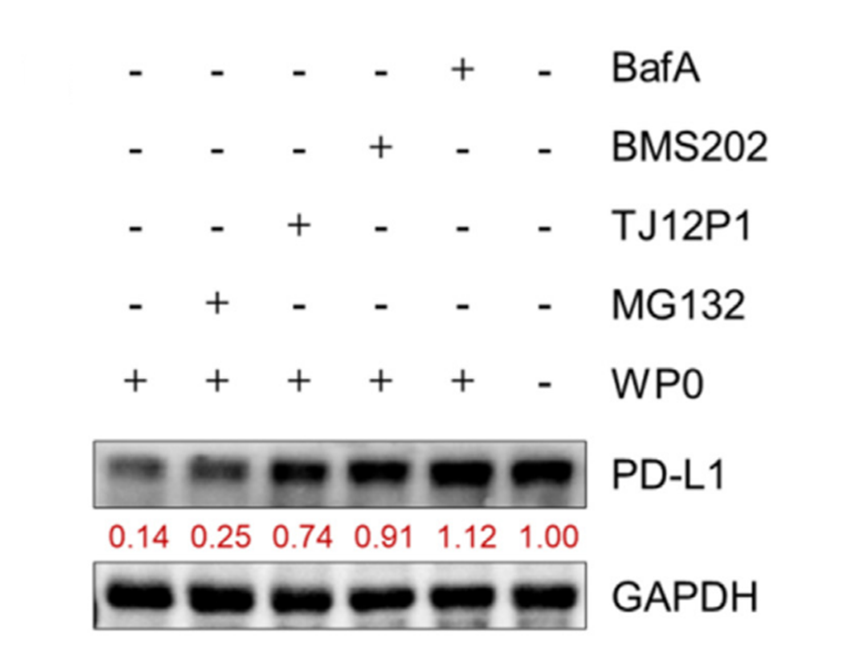
PD-L1 protein level in HepG2 cells. Cells were pretreated with lysosome inhibitor BafA (100 nmol/L), BMS-202 (1 μmol/L), TJ12P1 (1 μmol/L), or proteasome inhibitor MG132 (100 nmol/L), followed by treatment with WP0 (1 μmol/L).
-
Acta Pharm Sin B
Cancer-cell-biomimetic nanoparticles systemically eliminate hypoxia tumors by synergistic chemotherapy and checkpoint blockade immunotherapy. [Abstract]2022 Apr;12(4):2103-2119. PMID: 35847496 -
-
Adv Sci (Weinh)
Targeted Delivery of c(RGDfk)-Modified Liposomes to Bone Marrow Through In Vivo Hitchhiking Neutrophils for Multiple Myeloma Therapy. [Abstract]2025 Mar;12(12):e2409895. PMID: 39679804 -
Cell Death Dis
Ripk2 promotes CD8+ T cell inactivation and hepatocellular carcinoma progression through Myb/Cxcl9 and Pax5/Adpgk signaling pathways. [Abstract]2026 May 29. PMID: 42215445 -
EBioMedicine
2019 Mar:41:395-407. PMID: 30803931 -
-
Biomater Res
Metal-organic framework-based photodynamic combined immunotherapy against the distant development of triple-negative breast cancer. [Abstract]2023 Nov 24;27(1):120. PMID: 37996880
BMS-202 purchased from MedChemExpress. Usage Cited in: Biomater Res. 2023 Nov 24;27(1):120. [Abstract]
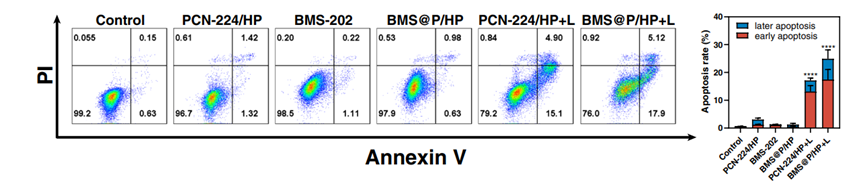
Compared with the blank control group, the PCN-224/HP NPs, BMS-202, BMS@P/HP NPs, PCN-224/HP+L and BMS@P/HP+L groups all showed different degrees of tumor cell apoptosis.
-
-
J Med Chem
Hsp70-Targeting Chimeras Enable Dual Proteasomal and Lysosomal Degradation of Intracellular and Extracellular Proteins. [Abstract]2026 Apr 9;69(7):8417-8432. PMID: 41874277 -
J Med Chem
2025 Jun 12;68(11):11829-11840. PMID: 40403183 -
J Med Chem
Discovery of Novel and Highly Potent Dual PD-L1/Histone Deacetylase 6 Inhibitors with Favorable Pharmacokinetics for Cancer Immunotherapy. [Abstract]2025 Feb 20. PMID: 39979078 -
J Med Chem
Design, Synthesis, and Biological Evaluation of Linear Aliphatic Amine-Linked Triaryl Derivatives as Potent Small-Molecule Inhibitors of the Programmed Cell Death-1/Programmed Cell Death-Ligand 1 Interaction with Promising Antitumor Effects In Vivo. [Abstract]2020 Nov 25;63(22):13825-13850. PMID: 33186040 -
Cells
Immunomodulatory Effect and Bone Homeostasis Regulation in Osteoblasts Differentiated from hADMSCs via the PD-1/PD-L1 Axis. [Abstract]2022 Oct 7;11(19):3152. PMID: 36231113 -
ACS Omega
Virtual Screening and Biological Evaluation of Potential PD-1/PD-L1 Immune Checkpoint Inhibitors as Anti-Hepatocellular Carcinoma Agents. [Abstract]2023 Sep 3;8(37):33242-33254. PMID: 37744828 -
Nanoscale
Adoptive CD8+T-cell grafted with liposomal immunotherapy drugs to counteract the immune suppressive tumor microenvironment and enhance therapy for melanoma. [Abstract]2021 Oct 1;13(37):15789-15803. PMID: 34528979 -
Mol Med Rep
Direct effects of the small molecule PD‑L1 inhibitor BMS‑202 on A375 melanoma cells: Anti‑tumor activity accompanied by increased mitochondrial function. [Abstract]2025 Sep;32(3):242. PMID: 40641134
BMS-202 purchased from MedChemExpress. Usage Cited in: Mol Med Rep. 2025 Sep;32(3):242. [Abstract]
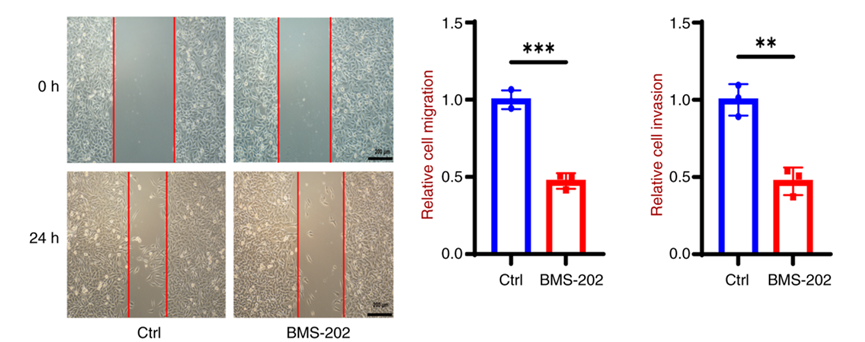
BMS-202 (5 μM, 24 h) inhibits A375 cell migration and invasion.
BMS-202 purchased from MedChemExpress. Usage Cited in: Mol Med Rep. 2025 Sep;32(3):242. [Abstract]
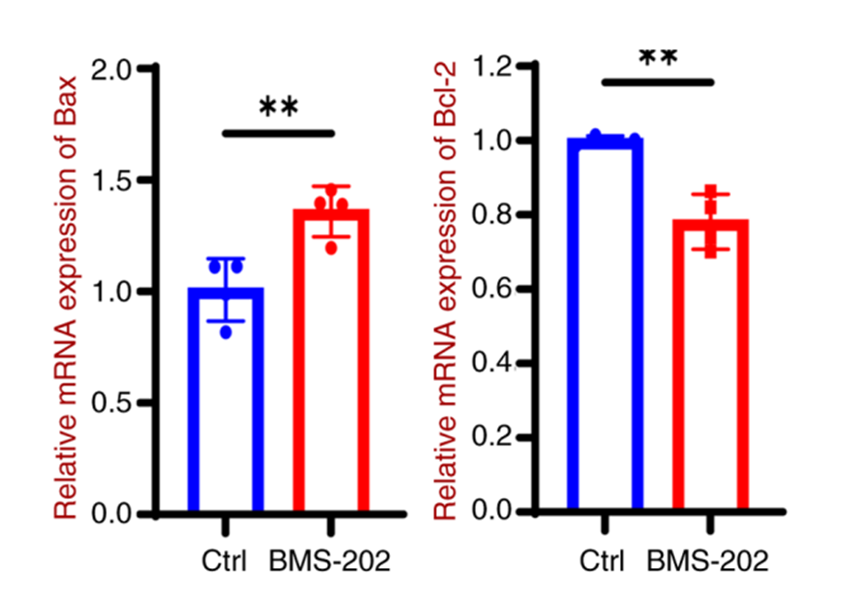
RT-qPCR analysis revealed an increase in the mRNA expression levels of the pro-apoptotic factor Bax and a decrease in the mRNA expression levels of the anti-apoptotic factor Bcl-2 treated with BMS-202 (5 μM, 24 h).
-
Cell Signal
2024 Sep:121:111275. PMID: 38942343 -
-
Drug Dev Res
The PD-1/PD-L1 binding inhibitor BMS-202 suppresses the synthesis and secretion of gonadotropins and enhances apoptosis via p38 MAPK signaling pathway. [Abstract]2022 Feb;83(1):176-183. PMID: 34309063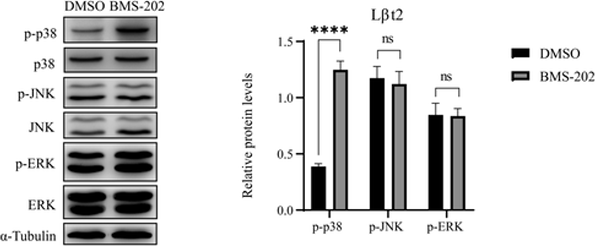
BMS-202 purchased from MedChemExpress. Usage Cited in: Drug Dev Res. 2022 Feb;83(1):176-183. [Abstract]
Cultured Lβt2 cells are treated with 25 μM BMS-202 and collected at 24 h. the p-p38 MAPK, p38 MAPK, p-JNK, JNK, p-ERK, ERK, and α-tubulin protein levels are detected by Western Blotting.
-
ACS Pharmacol Transl Sci
Antineuroblastoma Activity Evaluation and Mechanism of Novel PD-L1 Small Molecule Inhibitors through Immune and Non-Immune Pathways. [Abstract]2025 Jul 7;8(8):2612-2629. PMID: 40810160 -
Mol Pain
The regulation of the PD-1/PD-L1 pathway in imiquimod-induced chronic psoriasis itch and itch sensitization in mouse. [Abstract]2024 Jan-Dec:20:17448069241252384. PMID: 38631843 -
Onco Targets Ther
Remodels the Immunosuppressive Tumor Microenvironment by Combination of Bacillus Calmette-Guérin and Anti-PD-L1 in an Orthotopic Triple-Negative Breast Cancer Mouse Model. [Abstract]2021 Mar 30:14:2247-2258. PMID: 33833524 -
Bio Protoc
Establishment of Human PD-1/PD-L1 Blockade Assay Based on Surface Plasmon Resonance (SPR) Biosensor. [Abstract]2023 Aug 5;13(15):e4765. PMID: 37575393 -
-


Solvant et solubilité
In Vitro:
DMSO : ≥ 100 mg/mL (238.37 mM; Hygroscopic DMSO has a significant impact on the solubility of product, please use newly opened DMSO)
* "≥" means soluble, but saturation unknown.
Please refer to the solubility information to select the appropriate solvent. Once prepared, please aliquot and store the solution to prevent product inactivation from repeated freeze-thaw cycles.
Storage method and period of stock solution: -80°C, 1 year; -20°C, 6 months. When stored at -80°C, please use it within 1 year. When stored at -20°C, please use it within 6 months.
Please refer to the solubility information to select the appropriate solvent. Once prepared, please aliquot and store the solution to prevent product inactivation from repeated freeze-thaw cycles.
Storage method and period of stock solution: -80°C, 1 year; -20°C, 6 months. When stored at -80°C, please use it within 1 year. When stored at -20°C, please use it within 6 months.
Concentration (start) × Volume (start) = Concentration (final) × Volume (final)
In Vivo:
Select the appropriate dissolution method based on your experimental animal and administration route.
- For the following dissolution methods, please ensure to first prepare a clear stock solution using an In Vitro approach and then sequentially add co-solvents:
- To ensure reliable experimental results, the clarified stock solution can be appropriately stored based on storage conditions. As for the working solution for In Vivo experiments, it is recommended to prepare freshly and use it on the same day.
- The percentages shown for the solvents indicate their volumetric ratio in the final prepared solution. If precipitation or phase separation occurs during preparation, heat and/or sonication can be used to aid dissolution.
Add each solvent one by one: 10% DMSO 40% PEG300 5% Tween-80 45% Saline
Solubility: ≥ 2.5 mg/mL (5.96 mM); Clear solution
This protocol yields a clear solution of ≥ 2.5 mg/mL (saturation unknown).
Taking 1 mL working solution as an example, add 100 μL DMSO stock solution (25.0 mg/mL) to 400 μL PEG300, and mix evenly; then add 50 μL Tween-80 and mix evenly; then add 450 μL Saline to adjust the volume to 1 mL.
Preparation of Saline: Dissolve 0.9 g sodium chloride in ddH₂O and dilute to 100 mL to obtain a clear Saline solution.
Add each solvent one by one: 10% DMSO 90% (20% SBE-β-CD in Saline)
Solubility: ≥ 2.5 mg/mL (5.96 mM); Clear solution
This protocol yields a clear solution of ≥ 2.5 mg/mL (saturation unknown).
Taking 1 mL working solution as an example, add 100 μL DMSO stock solution (25.0 mg/mL) to 900 μL 20% SBE-β-CD in Saline, and mix evenly.
Preparation of 20% SBE-β-CD in Saline (4°C, storage for one week): 2 g SBE-β-CD powder is dissolved in 10 mL Saline, completely dissolve until clear.
For the following dissolution methods, please prepare the working solution directly:
It is recommended to prepare fresh solutions and use them promptly within a short period of time.
The percentages shown for the solvents indicate their volumetric ratio in the final prepared solution. If precipitation or phase separation occurs during preparation, heat and/or sonication can be used to aid dissolution.
In Vivo Dissolution Calculator
Please enter the basic information of animal experiments:
-
-
-
-
Recommended: Prepare an additional quantity of animals to account for potential losses during experiments.
Please enter your animal formula composition:
-
%DMSO +
Recommended: Keep the proportion of DMSO in working solution below 2% if your animal is weak.
-
%+
-
+%Tween-80 + +
-
%Saline +
The co-solvents required include: DMSO, . All of co-solvents are available by MedChemExpress (MCE). , Tween 80. All of co-solvents are available by MedChemExpress (MCE).
Working solution concentration: 0.22 mg/mL
Method for preparing stock solution: mg drug dissolved in μL DMSO. Stock solution concentration: mg/mL.
1. Take μL DMSO stock solution;
2. Add μL .
μL , mix evenly;
3. Then add μL Tween 80, mix evenly;
4. Then add μL
Please ensure that the stock solution in the first step is dissolved to a clear state, and add co-solvents in sequence. You can use ultrasonic heating (ultrasonic cleaner, recommended frequency 20-40 kHz), vortexing, etc. to assist dissolution.


Pureté et documentation
-
Fiche technique (275 KB)
-
SDS (396 KB)
- English - EN (396 KB)
- Français - FR (396 KB)
- Deutsch - DE (396 KB)
- Norwegian - NO (396 KB)
- Español - ES (396 KB)
- Swedish - SV (396 KB)
- Italian - IT (396 KB)
- Korean - KR (396 KB)
- Portuguese - PT (396 KB)
-
Instruction de manipulation (2659 KB)
Références
[1]. Zak KM, et al. Structural basis for small molecule targeting of the programmed death ligand 1 (PD-L1). Oncotarget. 2016 May 24;7(21):30323-35. [Content Brief]
[2]. Ashizawa T, et al. Antitumor activity of the PD-1/PD-L1 binding inhibitor BMS-202 in the humanized MHC-double knockout NOG mouse. Biomed Res. 2019;40(6):243-250. [Content Brief]


Complete Stock Solution Preparation Table
Please refer to the solubility information to select the appropriate solvent. Once prepared, please aliquot and store the solution to prevent product inactivation from repeated freeze-thaw cycles.
Storage method and period of stock solution: -80°C, 1 year; -20°C, 6 months. When stored at -80°C, please use it within 1 year. When stored at -20°C, please use it within 6 months.
| Optional Solvent | Concentration Solvent Mass | 1 mg | 5 mg | 10 mg | 25 mg |
|---|---|---|---|---|---|
| DMSO | 1 mM | 2.3837 mL | 11.9184 mL | 23.8368 mL | 59.5919 mL |
| 5 mM | 0.4767 mL | 2.3837 mL | 4.7674 mL | 11.9184 mL | |
| 10 mM | 0.2384 mL | 1.1918 mL | 2.3837 mL | 5.9592 mL | |
| 15 mM | 0.1589 mL | 0.7946 mL | 1.5891 mL | 3.9728 mL | |
| 20 mM | 0.1192 mL | 0.5959 mL | 1.1918 mL | 2.9796 mL | |
| 25 mM | 0.0953 mL | 0.4767 mL | 0.9535 mL | 2.3837 mL | |
| 30 mM | 0.0795 mL | 0.3973 mL | 0.7946 mL | 1.9864 mL | |
| 40 mM | 0.0596 mL | 0.2980 mL | 0.5959 mL | 1.4898 mL | |
| 50 mM | 0.0477 mL | 0.2384 mL | 0.4767 mL | 1.1918 mL | |
| 60 mM | 0.0397 mL | 0.1986 mL | 0.3973 mL | 0.9932 mL | |
| 80 mM | 0.0298 mL | 0.1490 mL | 0.2980 mL | 0.7449 mL | |
| 100 mM | 0.0238 mL | 0.1192 mL | 0.2384 mL | 0.5959 mL |


BMS-202 Related Classifications
HY-19745 Related Classifications
 Powered by Bioz