



Histamine (Standard)

Based on 1 Customer Validation
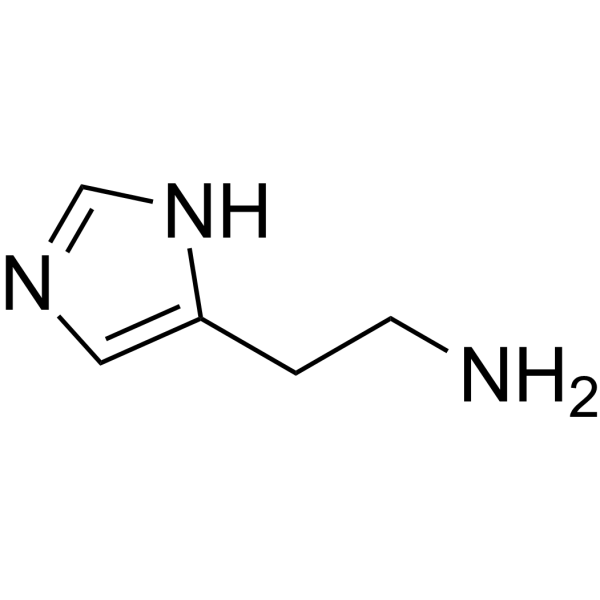
Histamine (Standard) is the analytical standard of Histamine (HY-B1204). This product is intended for research and analytical applications. Histamine is the agonist for histamine receptor and a vasodilator. Histamine is an organic nitrogen compound that participates in local immune responses, regulates intestinal physiological functions, and acts as a neurotransmitter. Histamine affects p38 MAPK/Akt signaling pathway, exhibits antitumor, antioxidant and anti-inflammatory activities. Histamine can be used in the research of acute myeloid leukemia, malignant melanoma, and renal cell carcinoma.
For research use only. We do not sell to patients.
- Purity: 99.99%
- CAS No.: 51-45-6
- Formula: C5H9N3
- Molecular Weight:111.15
-
Storage:
Please store the product under the recommended conditions in the Certificate of Analysis.

To place orders, for customer services and technical support, please contact: MedChemExpress USA
Tel: 609-228-6898 E-mail: [email protected] [email protected]


-
 Product Information
-
Chemical Information
- Purity & Documentation
-
 Help & FAQs




Product Information
The compound is the grade of analytical standard, which is the reference standard supplied assay. It is commonly used in qualitative, quantitative and methodological research experiments in HPLC, GC and MS.


Chemical Information
-
CAS No. 51-45-6
-
Appearance Solid
-
Molecular Weight 111.15
-
Formula C5H9N3
-
Color White to off-white
-
SMILES
NCCC1=CN=CN1
-
Synonyms
Ergamine (Standard)
-
Structure Classification
-
Initial Source
-
Shipping
Room temperature in continental US; may vary elsewhere.
-
Storage
Please store the product under the recommended conditions in the Certificate of Analysis.


Purity & Documentation
References
[1]. Okabe S, et al. Effects of cimetidine, a histamine H2-receptor antagonist, on various experimental gastric and duodenal ulcers. Am J Dig Dis. 1977 Aug;22(8):677-84. [Content Brief]
[2]. Rietveld S et al. The influence of respiratory sounds on breathlessness in children with asthma: a symptom-perceptionapproach. Health Psychol. 1997 Nov;16(6):547-53. [Content Brief]
[3]. Malmberg-Aiello P, et al., Role of histamine in rodent antinociception. Br J Pharmacol. 1994 Apr;111(4):1269-79. [Content Brief]
[4]. Medina V, et al., Histamine-mediated signaling processes in human malignant mammary cells. Cancer Biol Ther. 2006 Nov;5(11):1462-71. [Content Brief]
[5]. Ferreira R, et al., Histamine modulates microglia function. J Neuroinflammation. 2012 May 8;9:90. [Content Brief]
[6]. MARTIN L. The effects of histamine on the vaginal epithelium of the mouse. J Endocrinol. 1962 Jan;23:329-40. [Content Brief]
[7]. Yang LP, et al. Spotlight on histamine dihydrochloride in acute myeloid leukaemia. Drugs Aging. 2011 Apr 1;28(4):325-9. [Content Brief]


Histamine (Standard) Related Classifications
HY-B1204R Related Classifications
 Powered by Bioz