



Tedizolid
Based on 20 publication(s) in Google Scholar
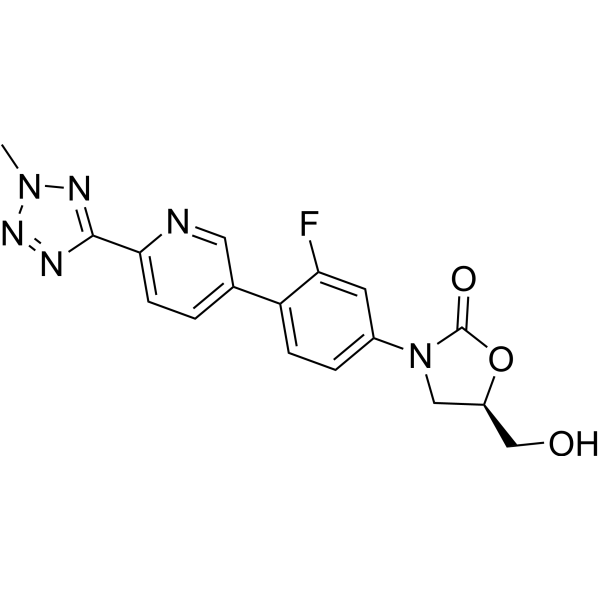
Tedizolid (TR 700; Torezolid; DA-7157) is a novel oxazolidinone, acting through inhibition of bacterial protein synthesis by binding to 23S ribosomal RNA (rRNA) of the 50S subunit of the ribosome.
For research use only. We do not sell to patients.
- Purity: 99.23%
- CAS No.: 856866-72-3
- Formula: C17H15FN6O3
- Molecular Weight:370.34
-
Storage:Powder -20°C, 3 years , 4°C, 2 years ; In solvent -80°C, 2 years , -20°C, 1 year

To place orders, for customer services and technical support, please contact: MedChemExpress USA
Tel: 609-228-6898 E-mail: [email protected] [email protected]


-
 Biological Activity
-
Chemical Information
-
Solvent & Solubility
- Protocol
- Purity & Documentation
- References
-
 Help & FAQs


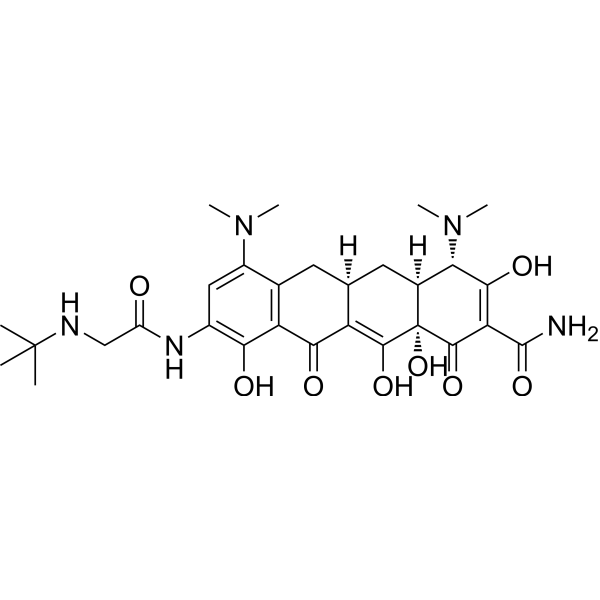
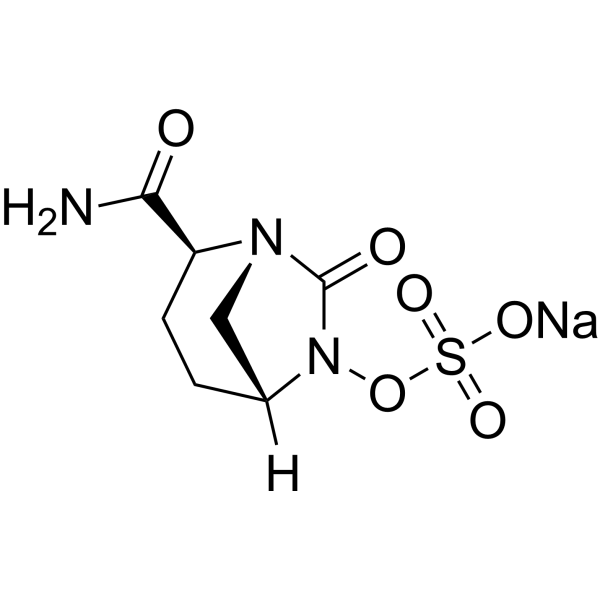
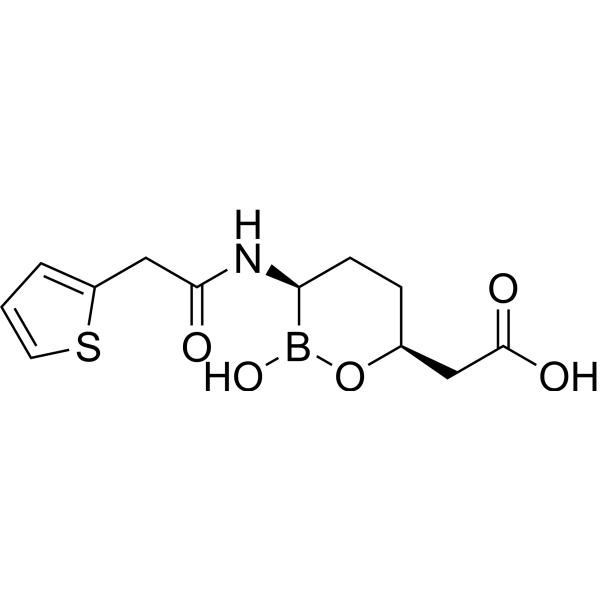
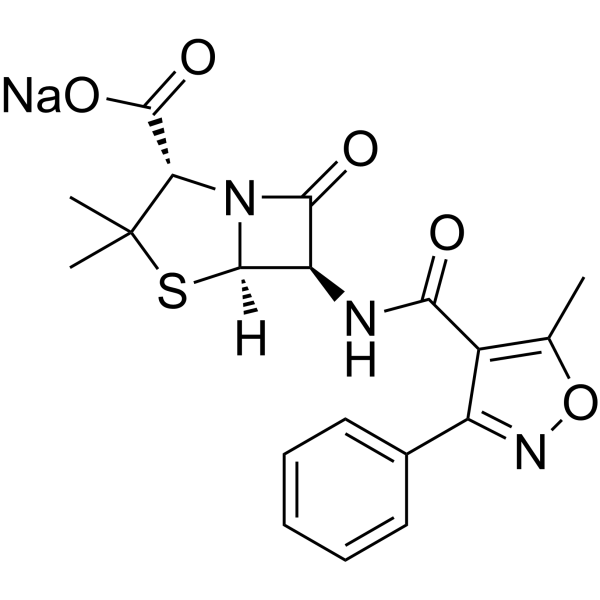
Publications Citing Use of MedChemExpress (MCE) Tedizolid
More- Nat Commun. 2023 Jun 22;14(1):3705. [Abstract]
- Drug Des Devel Ther. 2025 Oct 1:19:8903-8917. [Abstract]
- Front Microbiol. 2018 Sep 7:9:2095. [Abstract]
- Int J Mol Sci. 2026 May 9;27(10):4234. [Abstract]
- mBio. 2025 Sep 30:e0212425. [Abstract]
- ACS Omega. 2025 Oct 27;10(44):52289-52295. [Abstract]
- J Mol Struct. 2016 Jul 5; 1115:136-143.
- Antimicrob Agents Chemother. 2024 Dec 5;68(12):e0105124. [Abstract]
- Antimicrob Agents Chemother. 2023 Apr 18;67(4):e0165522. [Abstract]
- Antimicrob Agents Chemother. 2023 Feb 16;67(2):e0145922. [Abstract]
- J Antimicrob Chemother. 2021 Jan 19;76(2):292-296. [Abstract]
- Pathology. 2026 Feb 6:S0031-3025(26)00393-4. [Abstract]
- J Pharm Biomed Anal. 2021 Feb 5:194:113783. [Abstract]
- J Pharm Biomed Anal. 2019 May 30:169:170-180. [Abstract]
- J Pharm Biomed Anal. 2017 May 30:139:221-231. [Abstract]
- J Pharm Biomed Anal. 2016 Feb 20:120:402-12. [Abstract]
- Infect Dis Rep. 2021 Sep 8;13(3):843-854. [Abstract]
- bioRxiv. 2025 Oct 12.
- Research Square Preprint. 2020 Jun.
- TJPS (Thai Journal of Pharmaceutical Sciences). 2016;40(4):1-5.
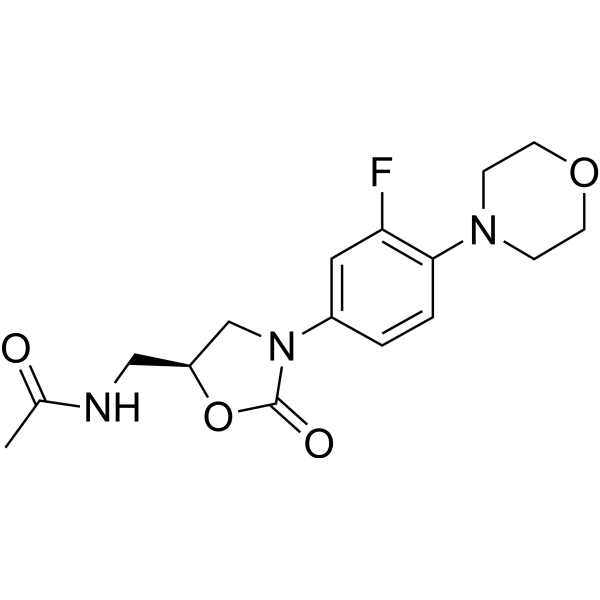
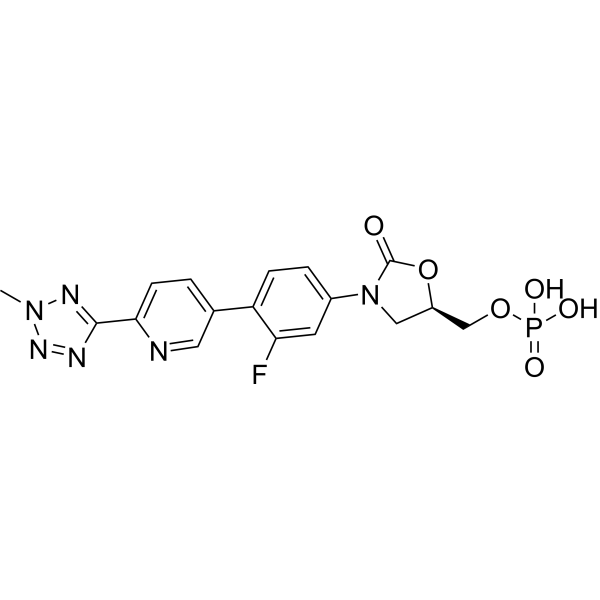
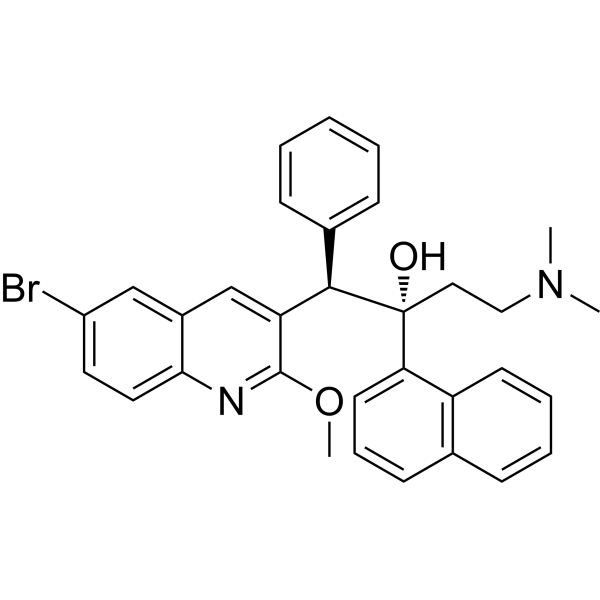
All Antibiotic Isoforms
More

Biological Activity
Description
IC50 & Target
|
Oxazolidinone |
In Vitro
Tedizolid (0.25 μg/mL) inhibits all 28 clinical isolates of PRSP, and is 4-fold more potent than linezolid against PRSP[1].
MedChemExpress (MCE) has not independently confirmed the accuracy of these methods. They are for reference only.
In Vivo
MedChemExpress (MCE) has not independently confirmed the accuracy of these methods. They are for reference only.
Clinical Trial
| NCT Number | Sponsor | Condition | Start Date |
Phase

|
|---|---|---|---|---|
| NCT01329991 | Plexxikon| | 2011-05 | PHASE1 |


Chemical Information
-
CAS No. 856866-72-3
-
Appearance Solid
-
Molecular Weight 370.34
-
Formula C17H15FN6O3
-
Color White to off-white
-
SMILES
O=C1O[C@@H](CO)CN1C2=CC=C(C3=CC=C(C4=NN(C)N=N4)N=C3)C(F)=C2
-
Synonyms
TR 700; Torezolid; DA-7157
-
Shipping
Room temperature in continental US; may vary elsewhere.
-
Storage
Powder -20°C 3 years 4°C 2 years In solvent -80°C 2 years -20°C 1 year


Publications (20)
-
Journal Impact Factor
-
Most Recent
-
Nat Commun
Mycobacterium abscessus VapC5 toxin potentiates evasion of antibiotic killing by ribosome overproduction and activation of multiple resistance pathways. [Abstract]2023 Jun 22;14(1):3705. PMID: 37349306 -
Drug Des Devel Ther
LC-MS/MS Method for Simultaneous Quantification of Three Oxazolidinone Antimicrobials in Human Plasma: Application to Therapeutic Drug Monitoring. [Abstract]2025 Oct 1:19:8903-8917. PMID: 41054619 -
Front Microbiol
Tedizolid Activity Against Clinical Mycobacterium abscessus Complex Isolates-An in vitro Characterization Study. [Abstract]2018 Sep 7:9:2095. PMID: 30245674 -
Int J Mol Sci
Tedizolid Targets AQP9-JAK/STAT Axis to Suppress Metastatic Progression in Clear Cell Renal Cell Carcinoma: Mechanism and Therapeutic Implications. [Abstract]2026 May 9;27(10):4234. PMID: 42196217 -
mBio
Effect of antibiotics on Kupffer cell immunometabolism relative to intracellular killing of S. aureus using NAD(P)H fluorescence lifetime imaging. [Abstract]2025 Sep 30:e0212425. PMID: 41025812 -
ACS Omega
In Vitro Activity of Sulfamethoxazole-Trimethoprim, Amikacin, Oxazolidinones, Fluoroquinolones and Fidaxomicin against Isolates of Nocardia. [Abstract]2025 Oct 27;10(44):52289-52295. PMID: 41244472 -
-
Antimicrob Agents Chemother
Multidrug tolerance conferred by loss-of-function mutations in anti-sigma factor RshA of Mycobacterium abscessus. [Abstract]2024 Dec 5;68(12):e0105124. PMID: 39470195 -
Antimicrob Agents Chemother
Side-by-Side Profiling of Oxazolidinones to Estimate the Therapeutic Window against Mycobacterial Infections. [Abstract]2023 Apr 18;67(4):e0165522. PMID: 36920191 -
Antimicrob Agents Chemother
Activity of Oral Tebipenem-Avibactam in a Mouse Model of Mycobacterium abscessus Lung Infection. [Abstract]2023 Feb 16;67(2):e0145922. PMID: 36688684 -
J Antimicrob Chemother
Identification of a novel tedizolid resistance mutation in rpoB of MRSA after in vitro serial passage. [Abstract]2021 Jan 19;76(2):292-296. PMID: 33057715 -
Pathology
In vitro activity of recently introduced Gram-positive-specific antimicrobial agents against Australian methicillin-resistant Staphylococcus aureus isolates. [Abstract]2026 Feb 6:S0031-3025(26)00393-4. PMID: 41760492 -
J Pharm Biomed Anal
The solution and solid-state degradation study followed by identification of tedizolid related compounds in medicinal product by high performance liquid chromatography with diode array and tandem mass spectrometry detection. [Abstract]2021 Feb 5:194:113783. PMID: 33280994 -
J Pharm Biomed Anal
Nuclear magnetic resonance spectroscopic study of the inclusion complex of (R)-tedizolid with HDAS-β-CD, β-CD, and γ-cyclodextrin in aqueous solution. [Abstract]2019 May 30:169:170-180. PMID: 30921691 -
J Pharm Biomed Anal
Identification of forced degradation products of tedizolid phosphate by liquid chromatography/electrospray ionization tandem mass spectrometry. [Abstract]2017 May 30:139:221-231. PMID: 28292681 -
J Pharm Biomed Anal
Chiral separation of tedizolid using charge single isomer derivatives of cyclodextrins by capillary electrokinetic chromatography. [Abstract]2016 Feb 20:120:402-12. PMID: 26724911 -
Infect Dis Rep
Inadequate Cerebrospinal Fluid Concentrations of Available Salvage Agents Further Impedes the Optimal Treatment of Multidrug-Resistant Enterococcus faecium Meningitis and Bacteremia. [Abstract]2021 Sep 8;13(3):843-854. PMID: 34563001 -
-
-


Solvent & Solubility
In Vitro:
DMSO : 10 mg/mL (27.00 mM; Need ultrasonic; Hygroscopic DMSO has a significant impact on the solubility of product, please use newly opened DMSO)
Please refer to the solubility information to select the appropriate solvent. Once prepared, please aliquot and store the solution to prevent product inactivation from repeated freeze-thaw cycles.
Storage method and period of stock solution: -80°C, 2 years; -20°C, 1 year. When stored at -80°C, please use it within 2 years. When stored at -20°C, please use it within 1 year.
Please refer to the solubility information to select the appropriate solvent. Once prepared, please aliquot and store the solution to prevent product inactivation from repeated freeze-thaw cycles.
Storage method and period of stock solution: -80°C, 2 years; -20°C, 1 year. When stored at -80°C, please use it within 2 years. When stored at -20°C, please use it within 1 year.
Concentration (start) × Volume (start) = Concentration (final) × Volume (final)
In Vivo:
Select the appropriate dissolution method based on your experimental animal and administration route.
- For the following dissolution methods, please ensure to first prepare a clear stock solution using an In Vitro approach and then sequentially add co-solvents:
- To ensure reliable experimental results, the clarified stock solution can be appropriately stored based on storage conditions. As for the working solution for In Vivo experiments, it is recommended to prepare freshly and use it on the same day.
- The percentages shown for the solvents indicate their volumetric ratio in the final prepared solution. If precipitation or phase separation occurs during preparation, heat and/or sonication can be used to aid dissolution.
Add each solvent one by one: 10% DMSO 40% PEG300 5% Tween-80 45% Saline
Solubility: ≥ 1 mg/mL (2.70 mM); Clear solution
This protocol yields a clear solution of ≥ 1 mg/mL (saturation unknown).
Taking 1 mL working solution as an example, add 100 μL DMSO stock solution (10.0 mg/mL) to 400 μL PEG300, and mix evenly; then add 50 μL Tween-80 and mix evenly; then add 450 μL Saline to adjust the volume to 1 mL.
Preparation of Saline: Dissolve 0.9 g sodium chloride in ddH₂O and dilute to 100 mL to obtain a clear Saline solution.
Add each solvent one by one: 10% DMSO 90% (20% SBE-β-CD in Saline)
Solubility: ≥ 1 mg/mL (2.70 mM); Clear solution
This protocol yields a clear solution of ≥ 1 mg/mL (saturation unknown).
Taking 1 mL working solution as an example, add 100 μL DMSO stock solution (10.0 mg/mL) to 900 μL 20% SBE-β-CD in Saline, and mix evenly.
Preparation of 20% SBE-β-CD in Saline (4°C, storage for one week): 2 g SBE-β-CD powder is dissolved in 10 mL Saline, completely dissolve until clear.
In Vivo Dissolution Calculator
Please enter the basic information of animal experiments:
-
-
-
-
Recommended: Prepare an additional quantity of animals to account for potential losses during experiments.
Please enter your animal formula composition:
-
%DMSO +
Recommended: Keep the proportion of DMSO in working solution below 2% if your animal is weak.
-
%+
-
+%Tween-80 + +
-
%Saline +
The co-solvents required include: DMSO, . All of co-solvents are available by MedChemExpress (MCE). , Tween 80. All of co-solvents are available by MedChemExpress (MCE).
Working solution concentration: 0.22 mg/mL
Method for preparing stock solution: mg drug dissolved in μL DMSO. Stock solution concentration: mg/mL.
1. Take μL DMSO stock solution;
2. Add μL .
μL , mix evenly;
3. Then add μL Tween 80, mix evenly;
4. Then add μL
Please ensure that the stock solution in the first step is dissolved to a clear state, and add co-solvents in sequence. You can use ultrasonic heating (ultrasonic cleaner, recommended frequency 20-40 kHz), vortexing, etc. to assist dissolution.

Protocol
Animal Administration[1]
To induce a systemic S. pneumoniae infection, male ICR mice (weight, 18 to 20 g) are inoculated intraperitoneally with 1 of 4 PRSP isolates (DR9, DR10, DR11, or DR14) suspended in 10% mucin. The suspension contained sufficient bacteria to kill 100% of untreated control mice. At 1 h postinfection, mice receives a single dose of either tedizolid phosphate or linezolid, and survival is assessed daily for 7 days postinfection. Treatments are delivered both orally and intravenously at each of four doses (40 mg/kg of body weight, 13.33 mg/kg, 4.44 mg/kg, and 1.48 mg/kg), with 8 mice per group defined by dose, delivery method, and infecting strain. The 50% effective dose (ED50), i.e., the dose allowing survival of 50% of the infected mice, is calculated for each delivery route using probit analysis.
MedChemExpress (MCE) has not independently confirmed the accuracy of these methods. They are for reference only.


Purity & Documentation
-
Data Sheet (275 KB)
-
SDS (622 KB)
- English - EN (622 KB)
- Français - FR (622 KB)
- Deutsch - DE (622 KB)
- Norwegian - NO (622 KB)
- Español - ES (622 KB)
- Swedish - SV (622 KB)
- Italian - IT (622 KB)
- Korean - KR (622 KB)
- Portuguese - PT (622 KB)
-
Handling Instructions (2659 KB)
References


Complete Stock Solution Preparation Table
Please refer to the solubility information to select the appropriate solvent. Once prepared, please aliquot and store the solution to prevent product inactivation from repeated freeze-thaw cycles.
Storage method and period of stock solution: -80°C, 2 years; -20°C, 1 year. When stored at -80°C, please use it within 2 years. When stored at -20°C, please use it within 1 year.
| Optional Solvent | Concentration Solvent Mass | 1 mg | 5 mg | 10 mg | 25 mg |
|---|---|---|---|---|---|
| DMSO | 1 mM | 2.7002 mL | 13.5011 mL | 27.0022 mL | 67.5055 mL |
| 5 mM | 0.5400 mL | 2.7002 mL | 5.4004 mL | 13.5011 mL | |
| 10 mM | 0.2700 mL | 1.3501 mL | 2.7002 mL | 6.7506 mL | |
| 15 mM | 0.1800 mL | 0.9001 mL | 1.8001 mL | 4.5004 mL | |
| 20 mM | 0.1350 mL | 0.6751 mL | 1.3501 mL | 3.3753 mL | |
| 25 mM | 0.1080 mL | 0.5400 mL | 1.0801 mL | 2.7002 mL |


Tedizolid Related Classifications
HY-14855 Related Classifications
 Powered by Bioz