



Drinabant

Based on 1 Customer Validation
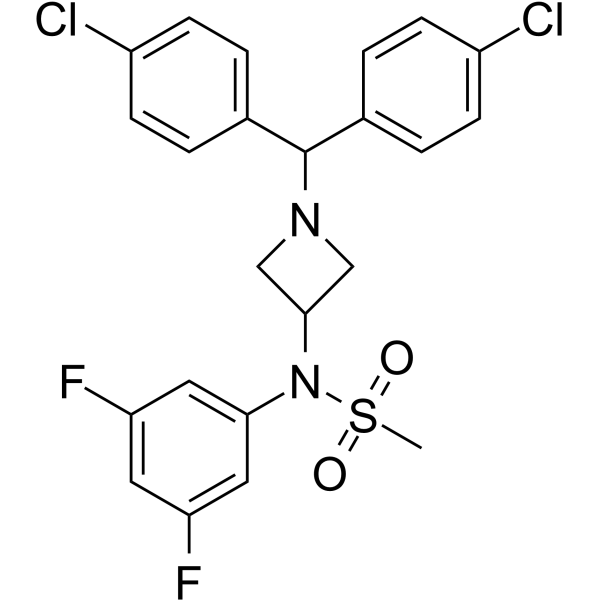
Drinabant (AVE1625) is an orally active CB1 receptor antagonist. Drinabant (AVE1625) inhibits the agonist-stimulated calcium signal with IC50 values of 25 nM and 10 nM for the hCB1-R and rCB1-R, respectively, and is ineffective for the hCB2-R.
For research use only. We do not sell to patients.
- Purity : 99.0%
- CAS No.: 358970-97-5
- Formula: C23H20Cl2F2N2O2S
- Molecular Weight:497.38
-
Storage:
-20°C, stored under nitrogen
* In solvent : -80°C, 6 months; -20°C, 1 month (stored under nitrogen)

To place orders, for customer services and technical support, please contact: MedChemExpress USA
Tel: 609-228-6898 E-mail: [email protected] [email protected]


-
 Biological Activity
-
Chemical Information
-
Solvent & Solubility
- Protocols
- Purity & Documentation
- References
-
 Help & FAQs


-
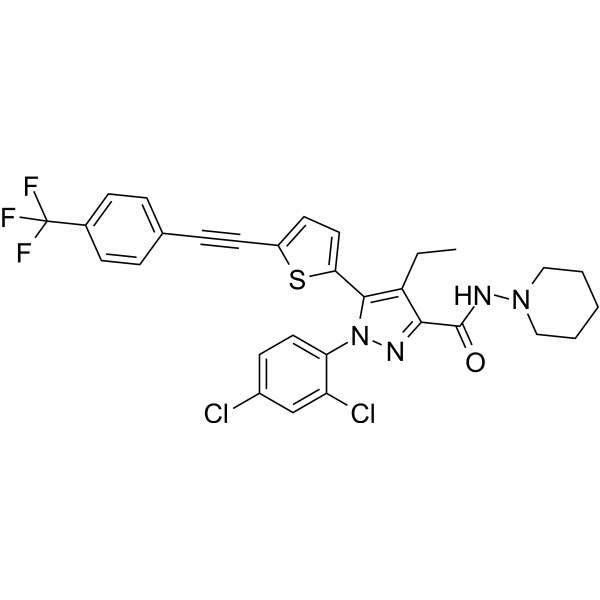
HY-112340
CB1 antagonist 4CB1 Receptor Antagonist -
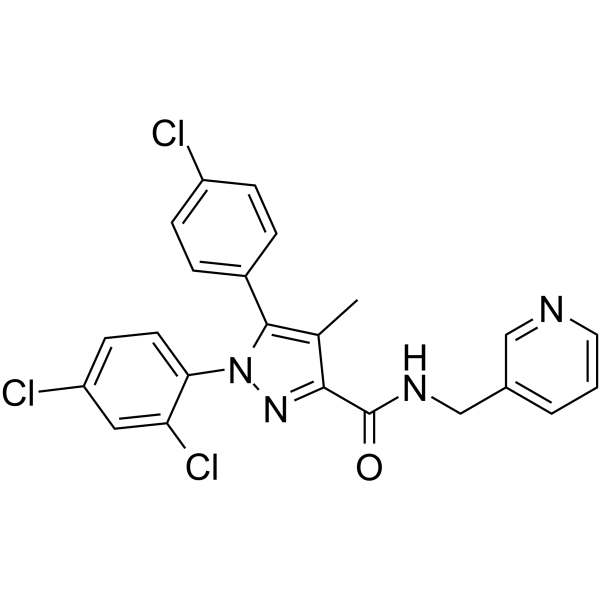
HY-103327
MJ15CB1 antagonist -
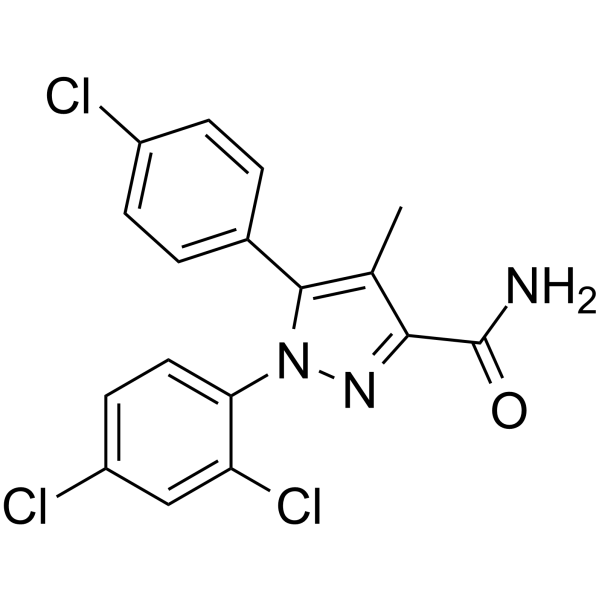
HY-116649
CB1 antagonist 2CB1R Antagonist -
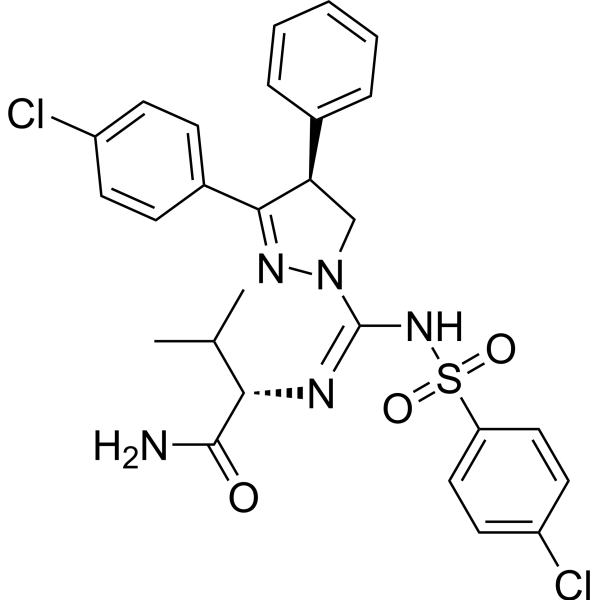
HY-18697
JD-5037CB1 Receptor Antagonist -
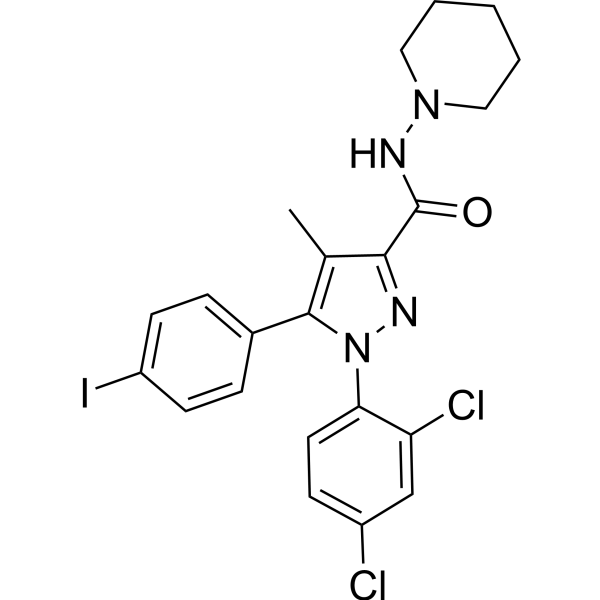
HY-15443
AM251CB1 Receptor Antagonist -
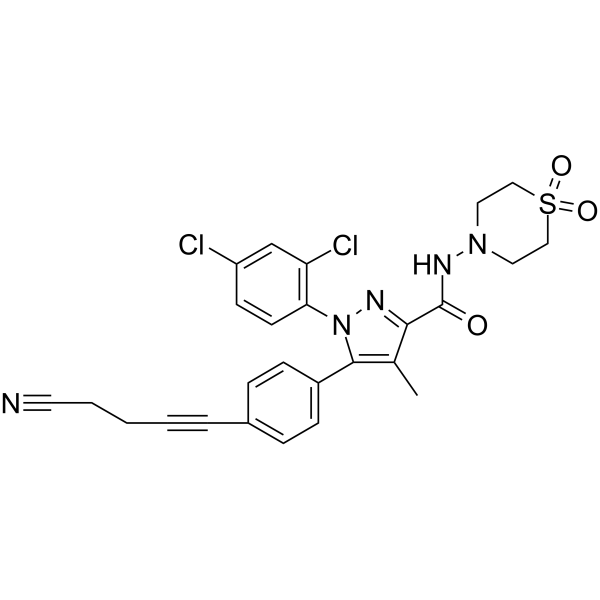
HY-110206
AM6545CB1 Receptor Antagonist -
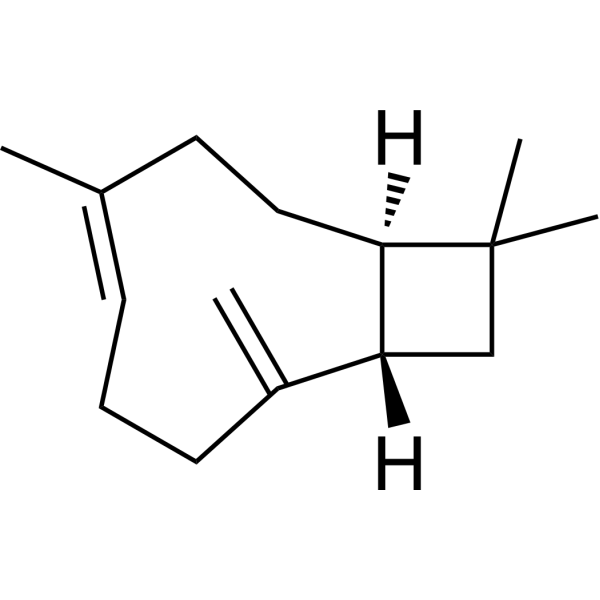
HY-N1415
β-CaryophylleneCannabinoid Receptor Agonist -
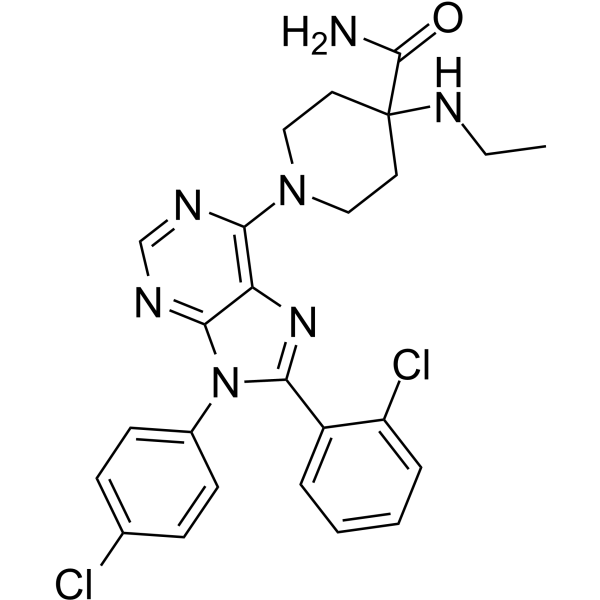
HY-10871
OtenabantCannabinoid Receptor Antagonist -
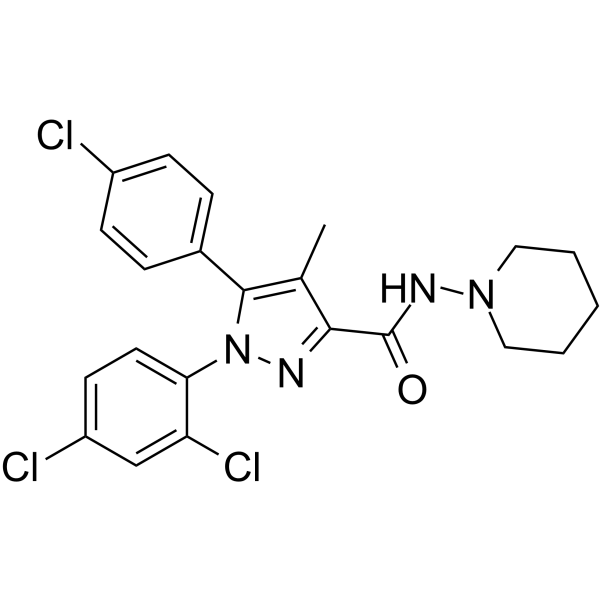
HY-14136
Rimonabant -
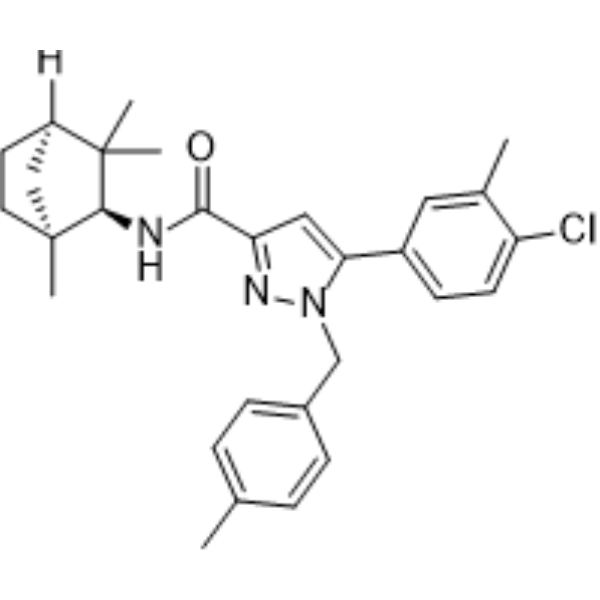
HY-13439
SR144528CB2 Receptor Antagonist -
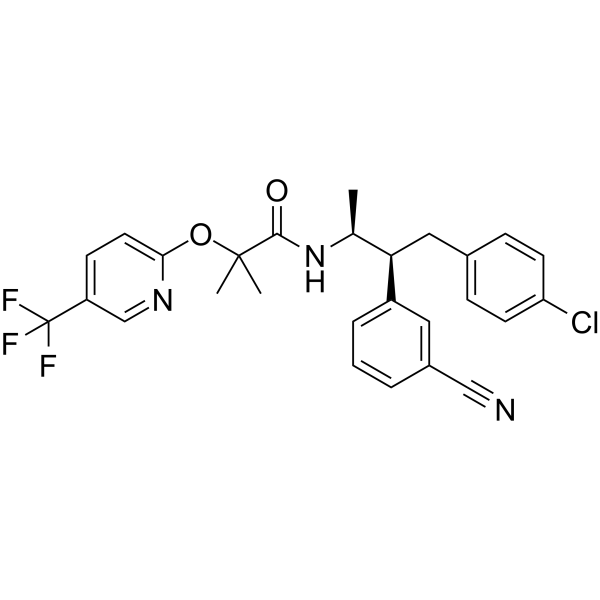
HY-10013
TaranabantCB1 Receptor Invert Agonist -
HY-14137
Rimonabant HydrochlorideCB1 Antagonist


Biological Activity
Description
IC50 & Target
[1]|
hCB1-R 25 nM (IC50) |
rCB1-R 10 nM (IC50) |
CB2 10000 nM (IC50) |
In Vivo
AVE1625 (1, 3, and 10 mg/kg ip), reverses abnormally persistent LI induced by MK-801 (HY-15084B) or neonatal nitric oxide synthase inhibition in rodents, and improves both working and episodic memory[3].
MedChemExpress (MCE) has not independently confirmed the accuracy of these methods. They are for reference only.
-
Animal Model:Rats[1].
-
Dosage:30 mg/kg.
-
Administration:Oral gavage, single dose.
-
Result:Had free access to food during the preceding night (postprandial state) caused a pronounced reduction of food intake during the subsequent 10-12 h without differences in their locomotor activity relative to that of the control group.
Caused an increase in FFA and glycerol, indicating increased lipolysis from fat tissue.
Immediately resulted in a pronounced increase in VCO2 and VO2, indicating increased oxidation of energetic substrates and increased TEE.
-
Animal Model:Female Hanover Wistar rats weighing 225 ± 8.6 g[2].
-
Dosage:10 mg/kg.
-
Administration:Orally once daily.
-
Result:Reduced their weight markedly within the first 3 days of treatment where upon animals maintained lower body weight, although they lost about 7.3 ± 1.3 g fat during the 12 days of treatment.
Clinical Trial
| NCT Number | Sponsor | Condition | Start Date |
Phase

|
|---|---|---|---|---|
| NCT01329991 | Plexxikon| | 2011-05 | PHASE1 |


Chemical Information
-
CAS No. 358970-97-5
-
Appearance Solid
-
Molecular Weight 497.38
-
Formula C23H20Cl2F2N2O2S
-
Color White to off-white
-
SMILES
CS(=O)(N(C1CN(C(C2=CC=C(Cl)C=C2)C3=CC=C(Cl)C=C3)C1)C4=CC(F)=CC(F)=C4)=O
-
Synonyms
AVE1625
-
Shipping
Room temperature in continental US; may vary elsewhere.
-
Storage
-20°C, stored under nitrogen
* In solvent : -80°C, 6 months; -20°C, 1 month (stored under nitrogen)


Solvent & Solubility
In Vitro:
DMSO : 100 mg/mL (201.05 mM; Need ultrasonic; Hygroscopic DMSO has a significant impact on the solubility of product, please use newly opened DMSO)
Please refer to the solubility information to select the appropriate solvent. Once prepared, please aliquot and store the solution to prevent product inactivation from repeated freeze-thaw cycles.
Storage method and period of stock solution: -80°C, 6 months; -20°C, 1 month (stored under nitrogen). When stored at -80°C, please use it within 6 months. When stored at -20°C, please use it within 1 month.
Please refer to the solubility information to select the appropriate solvent. Once prepared, please aliquot and store the solution to prevent product inactivation from repeated freeze-thaw cycles.
Storage method and period of stock solution: -80°C, 6 months; -20°C, 1 month (stored under nitrogen). When stored at -80°C, please use it within 6 months. When stored at -20°C, please use it within 1 month.
Concentration (start) × Volume (start) = Concentration (final) × Volume (final)
In Vivo:
Select the appropriate dissolution method based on your experimental animal and administration route.
- For the following dissolution methods, please ensure to first prepare a clear stock solution using an In Vitro approach and then sequentially add co-solvents:
- To ensure reliable experimental results, the clarified stock solution can be appropriately stored based on storage conditions. As for the working solution for In Vivo experiments, it is recommended to prepare freshly and use it on the same day.
- The percentages shown for the solvents indicate their volumetric ratio in the final prepared solution. If precipitation or phase separation occurs during preparation, heat and/or sonication can be used to aid dissolution.
Add each solvent one by one: 10% DMSO 40% PEG300 5% Tween-80 45% Saline
Solubility: ≥ 2.5 mg/mL (5.03 mM); Clear solution
This protocol yields a clear solution of ≥ 2.5 mg/mL (saturation unknown).
Taking 1 mL working solution as an example, add 100 μL DMSO stock solution (25.0 mg/mL) to 400 μL PEG300, and mix evenly; then add 50 μL Tween-80 and mix evenly; then add 450 μL Saline to adjust the volume to 1 mL.
Preparation of Saline: Dissolve 0.9 g sodium chloride in ddH₂O and dilute to 100 mL to obtain a clear Saline solution.
In Vivo Dissolution Calculator
Please enter the basic information of animal experiments:
-
-
-
-
Recommended: Prepare an additional quantity of animals to account for potential losses during experiments.
Please enter your animal formula composition:
-
%DMSO +
Recommended: Keep the proportion of DMSO in working solution below 2% if your animal is weak.
-
%+
-
+%Tween-80 + +
-
%Saline +
The co-solvents required include: DMSO, . All of co-solvents are available by MedChemExpress (MCE). , Tween 80. All of co-solvents are available by MedChemExpress (MCE).
Working solution concentration: 0.22 mg/mL
Method for preparing stock solution: mg drug dissolved in μL DMSO. Stock solution concentration: mg/mL. * In solvent : -80°C, 6 months; -20°C, 1 month (stored under nitrogen)
1. Take μL DMSO stock solution;
2. Add μL .
μL , mix evenly;
3. Then add μL Tween 80, mix evenly;
4. Then add μL
Please ensure that the stock solution in the first step is dissolved to a clear state, and add co-solvents in sequence. You can use ultrasonic heating (ultrasonic cleaner, recommended frequency 20-40 kHz), vortexing, etc. to assist dissolution.


Purity & Documentation
-
Data Sheet (279 KB)
-
SDS (252 KB)
- English - EN (252 KB)
- Français - FR (252 KB)
- Deutsch - DE (252 KB)
- Norwegian - NO (252 KB)
- Español - ES (252 KB)
- Swedish - SV (252 KB)
- Italian - IT (252 KB)
- Korean - KR (252 KB)
- Portuguese - PT (252 KB)
-
Handling Instructions (2659 KB)
References
[1]. Andreas W Herling, et al. CB1 receptor antagonist AVE1625 affects primarily metabolic parameters independently of reduced food intake in Wistar rats. Am J Physiol Endocrinol Metab. 2007 Sep;293(3):E826-32. [Content Brief]
[2]. Michaela Liebig, et al. Profiling of energy metabolism in olanzapine-induced weight gain in rats and its prevention by the CB1-antagonist AVE1625. Obesity (Silver Spring). 2010 Oct;18(10):1952-8. [Content Brief]
[3]. Mark D Black, et al. AVE1625, a cannabinoid CB1 receptor antagonist, as a co-treatment with antipsychotics for schizophrenia: improvement in cognitive function and reduction of antipsychotic-side effects in rodents. Psychopharmacology (Berl). 2011 May;215 [Content Brief]


Complete Stock Solution Preparation Table
Please refer to the solubility information to select the appropriate solvent. Once prepared, please aliquot and store the solution to prevent product inactivation from repeated freeze-thaw cycles.
Storage method and period of stock solution: -80°C, 6 months; -20°C, 1 month (stored under nitrogen). When stored at -80°C, please use it within 6 months. When stored at -20°C, please use it within 1 month.
| Optional Solvent | Concentration Solvent Mass | 1 mg | 5 mg | 10 mg | 25 mg |
|---|---|---|---|---|---|
| DMSO | 1 mM | 2.0105 mL | 10.0527 mL | 20.1054 mL | 50.2634 mL |
| 5 mM | 0.4021 mL | 2.0105 mL | 4.0211 mL | 10.0527 mL | |
| 10 mM | 0.2011 mL | 1.0053 mL | 2.0105 mL | 5.0263 mL | |
| 15 mM | 0.1340 mL | 0.6702 mL | 1.3404 mL | 3.3509 mL | |
| 20 mM | 0.1005 mL | 0.5026 mL | 1.0053 mL | 2.5132 mL | |
| 25 mM | 0.0804 mL | 0.4021 mL | 0.8042 mL | 2.0105 mL | |
| 30 mM | 0.0670 mL | 0.3351 mL | 0.6702 mL | 1.6754 mL | |
| 40 mM | 0.0503 mL | 0.2513 mL | 0.5026 mL | 1.2566 mL | |
| 50 mM | 0.0402 mL | 0.2011 mL | 0.4021 mL | 1.0053 mL | |
| 60 mM | 0.0335 mL | 0.1675 mL | 0.3351 mL | 0.8377 mL | |
| 80 mM | 0.0251 mL | 0.1257 mL | 0.2513 mL | 0.6283 mL | |
| 100 mM | 0.0201 mL | 0.1005 mL | 0.2011 mL | 0.5026 mL |


Drinabant Related Classifications
HY-14788 Related Classifications
 Powered by Bioz