



GPX4-IN-5
Based on 1 publication(s) in Google Scholar
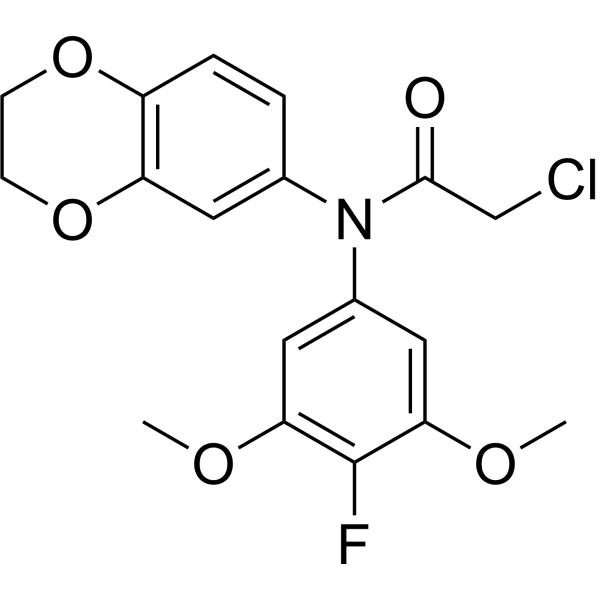
GPX4-IN-5 is a covalent inhibitor of GPX4 (IC50: 0.12 μM). GPX4-IN-5 can induce ferroptosis and has anti-tumor effects. GPX4-IN-5 can be used in the study of triple-negative breast cancer (TNBC).
For research use only. We do not sell to patients.
- Purity : 99.73%
- CAS No.: 2922824-09-5
- Formula: C18H17ClFNO5
- Molecular Weight:381.78
-
Storage:Powder -20°C, 3 years , 4°C, 2 years ; In solvent -80°C, 6 months , -20°C, 1 month

To place orders, for customer services and technical support, please contact: MedChemExpress USA
Tel: 609-228-6898 E-mail: [email protected] [email protected]


-
 Biological Activity
-
Chemical Information
-
Solvent & Solubility
- Protocols
- Purity & Documentation
- References
-
 Help & FAQs


-
HY-100003
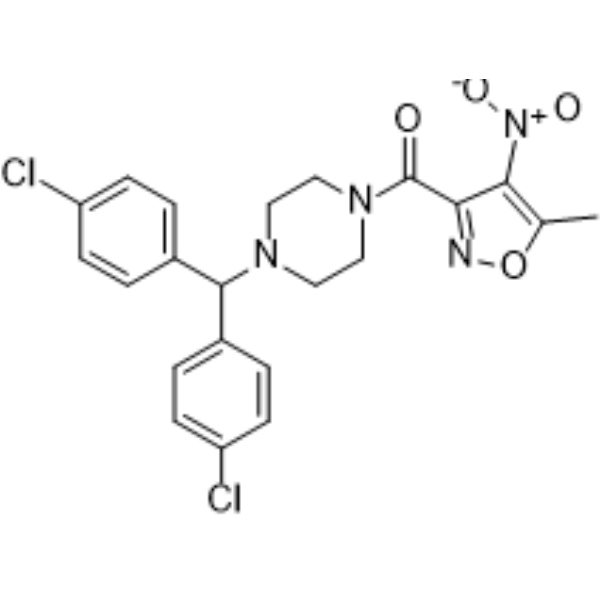
ML-210Selective GPX4 Inhibitor -
HY-100218A
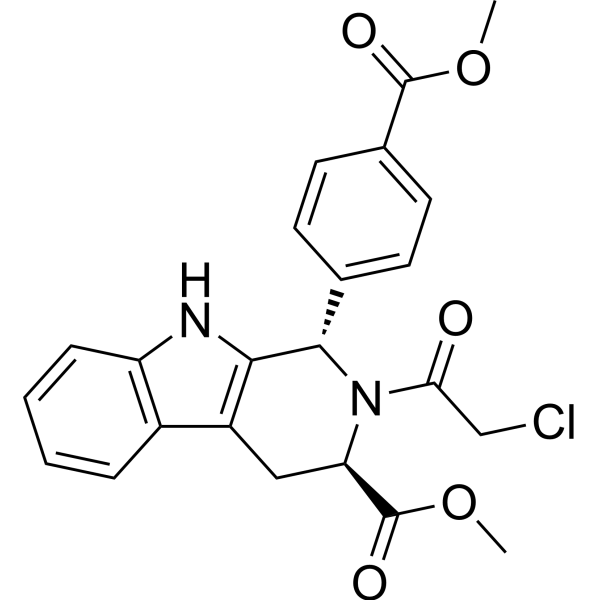
RSL3GPX4 Inhibitor -
HY-162065
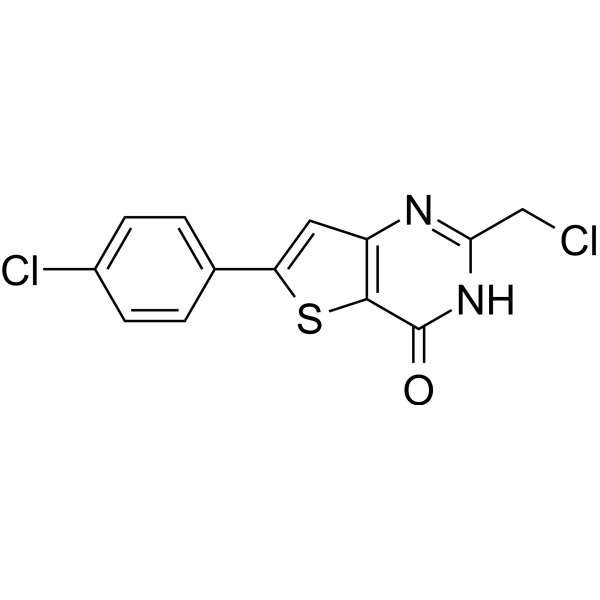
N6F11Ferroptosis Inducer -
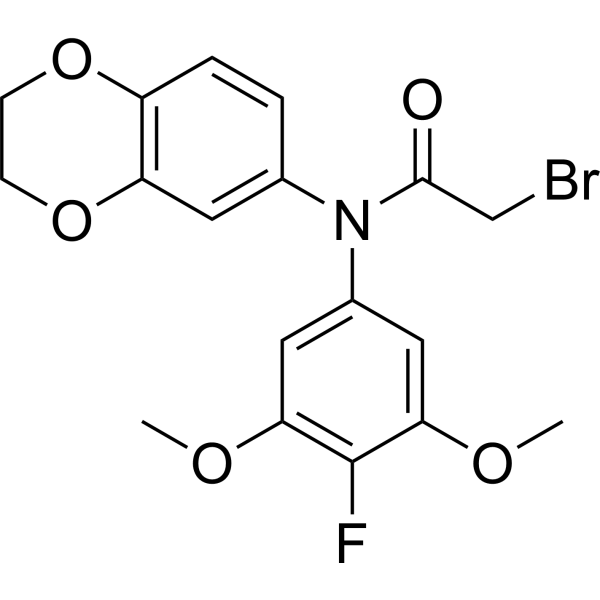
HY-155664
GPX4-IN-6GPX4 Inhibitor -
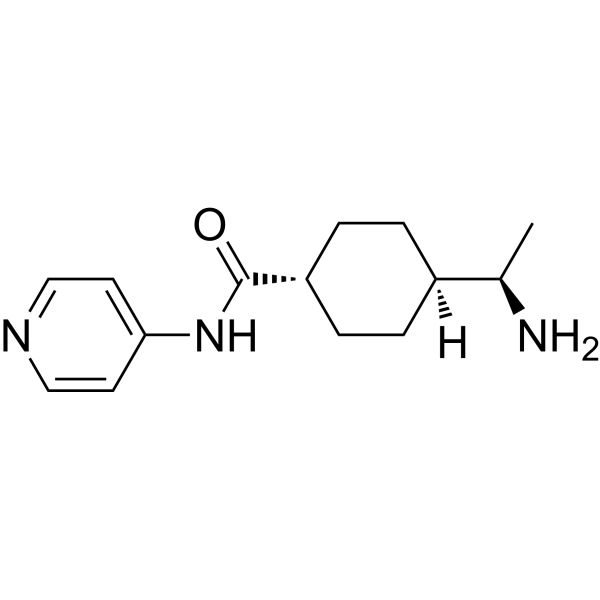
HY-10071
Y-27632ROCK Inhibitor -
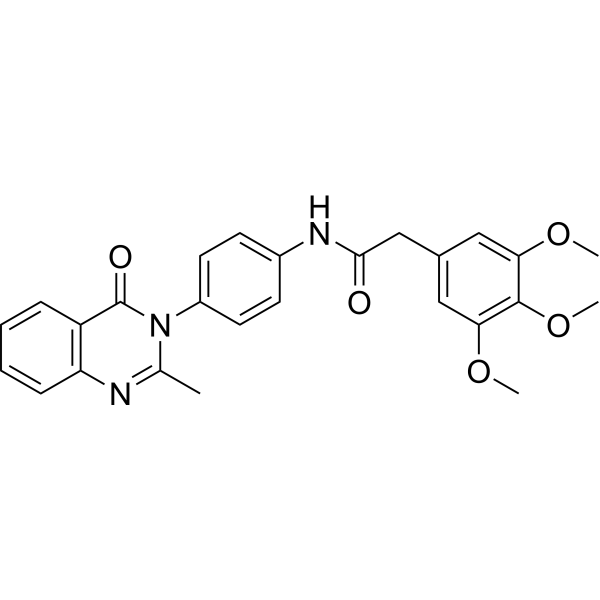
HY-157068
icFSP1FSP1 Inhibitor -
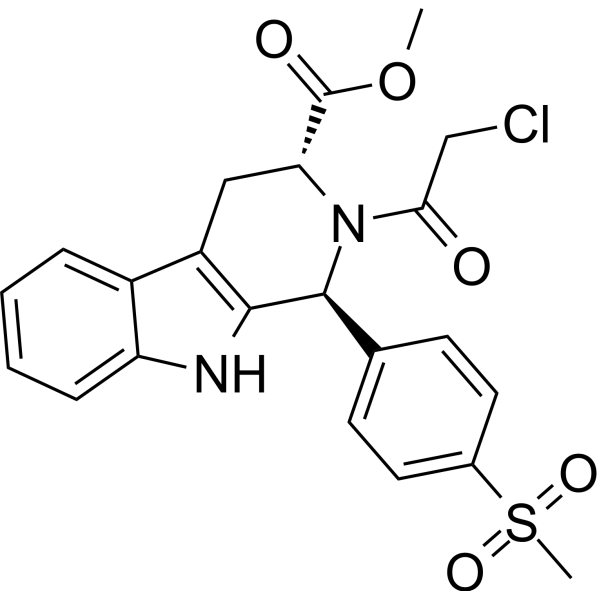
HY-149923
GPX4-IN-4GPX4 Inhibitor -
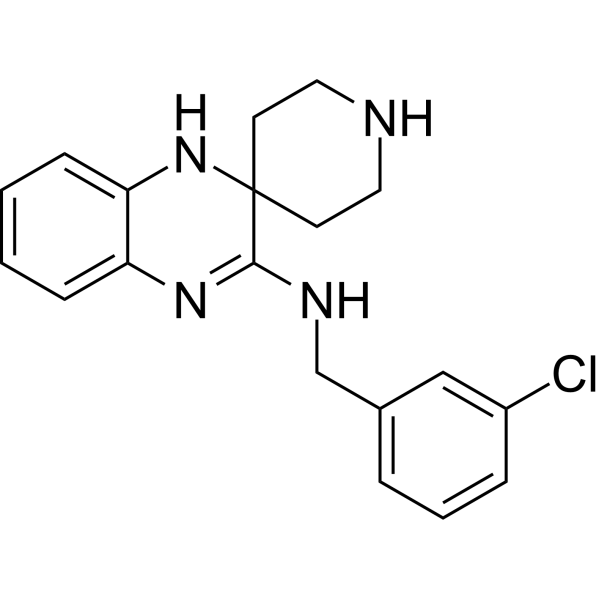
HY-12726
Liproxstatin-1Ferroptosis Inhibitor -
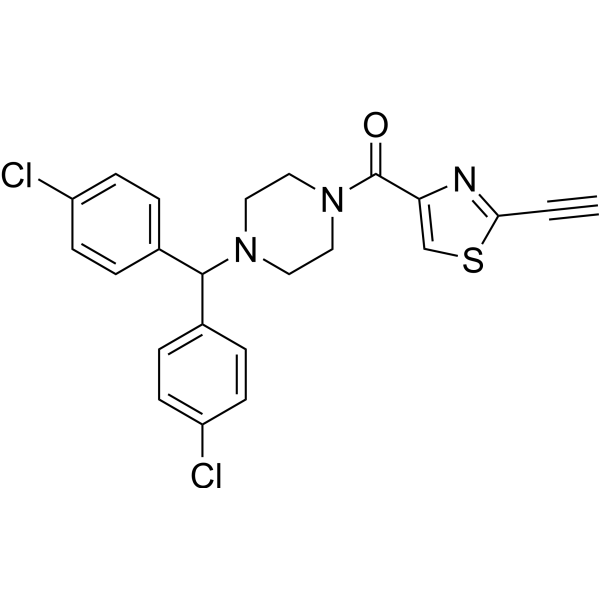
HY-151212
BCP-T.AFerroptosis Inducer -
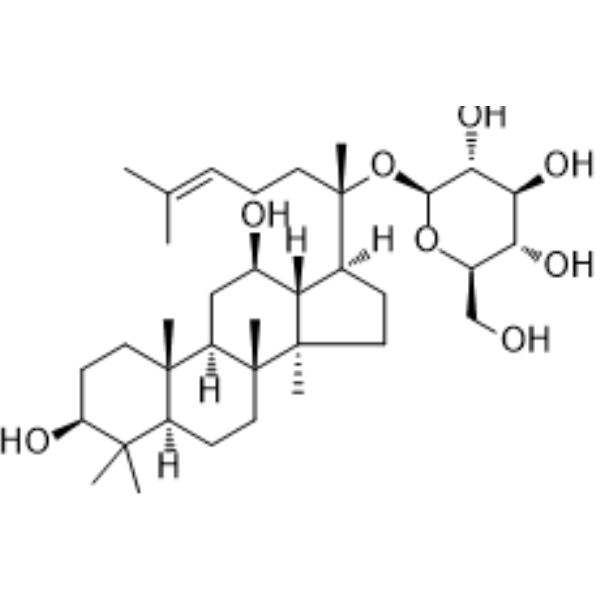
HY-N0904
Ginsenoside C-KNO Synthase/COX Inhibitor -
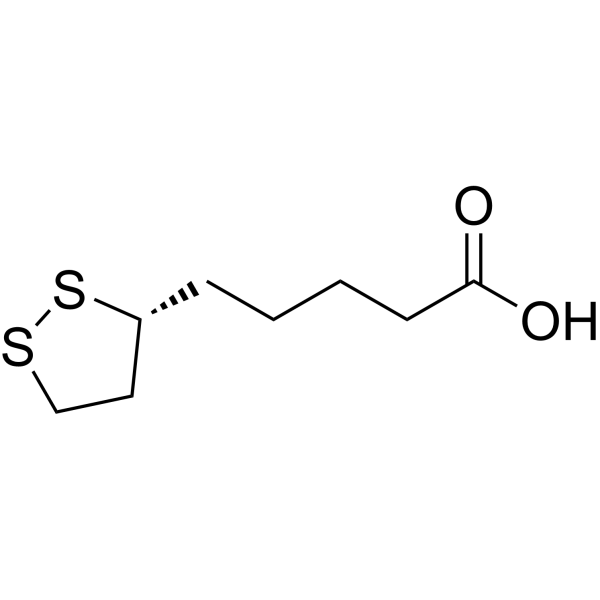
HY-18733
Lipoic acidAntioxidant
Publications Citing Use of MedChemExpress (MCE) GPX4-IN-5
More

Biological Activity
Description
IC50 & Target
|
GPX4 |
Cellular Effect
|
Cell Line

|
Type | Value | Description | References |
|---|---|---|---|---|
| BT-549 | IC50 |
0.075 μM
Compound: C18
|
Antiproliferative activity against human BT-549 cells assessed as inhibition of cell viability incubated for 72 hrs by MTT assay
Antiproliferative activity against human BT-549 cells assessed as inhibition of cell viability incubated for 72 hrs by MTT assay
|
[PMID: 37452764] |
| MDA-MB-231 | IC50 |
>20 μM
Compound: C18
|
Induction of ferroptosis in human MDA-MB-231 cells assessed as cell viability incubated for 72 hrs in presence of glutathione by MTT assay
Induction of ferroptosis in human MDA-MB-231 cells assessed as cell viability incubated for 72 hrs in presence of glutathione by MTT assay
|
[PMID: 37452764] |
| MDA-MB-231 | IC50 |
>20 μM
Compound: C18
|
Induction of ferroptosis in human MDA-MB-231 cells assessed as cell viability incubated for 72 hrs in presence of N-acetyl-L-cysteine by MTT assay
Induction of ferroptosis in human MDA-MB-231 cells assessed as cell viability incubated for 72 hrs in presence of N-acetyl-L-cysteine by MTT assay
|
[PMID: 37452764] |
| MDA-MB-231 | IC50 |
0.012 μM
Compound: C18
|
Antiproliferative activity against human MDA-MB-231 cells assessed as inhibition of cell viability incubated for 72 hrs by MTT assay
Antiproliferative activity against human MDA-MB-231 cells assessed as inhibition of cell viability incubated for 72 hrs by MTT assay
|
[PMID: 37452764] |
| MDA-MB-231 | IC50 |
0.018 μM
Compound: C18
|
Induction of ferroptosis in human MDA-MB-231 cells assessed as cell viability incubated for 72 hrs in presence of autophagy inhibitor, 3-MA by MTT assay
Induction of ferroptosis in human MDA-MB-231 cells assessed as cell viability incubated for 72 hrs in presence of autophagy inhibitor, 3-MA by MTT assay
|
[PMID: 37452764] |
| MDA-MB-231 | IC50 |
0.022 μM
Compound: C18
|
Induction of ferroptosis in human MDA-MB-231 cells assessed as cell viability incubated for 72 hrs in presence of necrosis inhibitor, necrostatin-1 by MTT assay
Induction of ferroptosis in human MDA-MB-231 cells assessed as cell viability incubated for 72 hrs in presence of necrosis inhibitor, necrostatin-1 by MTT assay
|
[PMID: 37452764] |
| MDA-MB-231 | IC50 |
0.031 μM
Compound: C18
|
Induction of ferroptosis in human MDA-MB-231 cells assessed as cell viability incubated for 72 hrs in presence of apoptosis inhibitor, Z-VAD-FMK by MTT assay
Induction of ferroptosis in human MDA-MB-231 cells assessed as cell viability incubated for 72 hrs in presence of apoptosis inhibitor, Z-VAD-FMK by MTT assay
|
[PMID: 37452764] |
| MDA-MB-231 | IC50 |
2.57 μM
Compound: C18
|
Induction of ferroptosis in human MDA-MB-231 cells assessed as cell viability incubated for 72 hrs in presence of deferoxamine by MTT assay
Induction of ferroptosis in human MDA-MB-231 cells assessed as cell viability incubated for 72 hrs in presence of deferoxamine by MTT assay
|
[PMID: 37452764] |
| MDA-MB-231 | IC50 |
2.57 μM
Compound: C18
|
Induction of ferroptosis in human MDA-MB-231 cells assessed as cell viability incubated for 72 hrs in presence of ferroptosis inhibitor, ferrostatin-1 by MTT assay
Induction of ferroptosis in human MDA-MB-231 cells assessed as cell viability incubated for 72 hrs in presence of ferroptosis inhibitor, ferrostatin-1 by MTT assay
|
[PMID: 37452764] |
| MDA-MB-468 | IC50 |
0.01 μM
Compound: C18
|
Antiproliferative activity against human MDA-MB-468 cells assessed as inhibition of cell viability incubated for 72 hrs by CCK-8 assay
Antiproliferative activity against human MDA-MB-468 cells assessed as inhibition of cell viability incubated for 72 hrs by CCK-8 assay
|
[PMID: 37452764] |
In Vitro
GPX4-IN-5 (Compound 18) (72 hours) has antitumor activity against TNBC cells (MDA-MB-468, BT-549, MDA-MB-468) with IC50s of 0.01, 0.075, and 0.012 μM, respectively.
GPX4-IN-5 (1 μM, 72 hours) is unable to effectively kill MDA-MB-231 cells induced by ferroptosis inhibitors (Ferrostatin-1 (HY-100579), Acetylcysteine (HY-B0215), L-Glutathione reduced (HY-D0187)), indicating that it relies on ferroptosis to exert its potent cell-killing effect[1].
GPX4-IN-5 (5-20 nM, 8 hours) increases Fe2+ and ROS levels in MDA-MB-231 cells, leading to LPOs accumulation and inducing ferroptosis[1].
GPX4-IN-5 (20 nM, 6 hours) causes mitochondrial volume reduction, cristae disappearance, and outer membrane rupture in MDA-MB-231 cells, which are consistent with the characteristics of ferroptosis[1].
GPX4-IN-5 (1 hour) has significant inhibitory activity against GPX4 (IC50: 0.12 μM)[1].
GPX4-IN-5 (1 μM, 2 hours) decreases the degradation temperature of GPX4 in MDA-MB-231 cells as determined by Celular Thermal shift Assay, indicating that it can directly bind to GPX4[1].
GPX4-IN-5 (50-800 nM, 90 minutes) has a strong covalent bond formation ability with GPX4 (Kinact/KI: 93.54 min/M)[1].
GPX4-IN-5 (20 nM) slightly increases LPO in MDA-MB-231 cells transfected with siGPX4#1, and the levels of GPX4-related proteins does not change significantly, indicating that it induces cell ferroptosis by specifically targeting GPX4 protein[1].
GPX4-IN-5 (5-20 nM, 10 hours) inhibits GPX4 activity rather than downregulating GPX4 levels to induce ferroptosis in MDA-MB-231 cells[1].
MedChemExpress (MCE) has not independently confirmed the accuracy of these methods. They are for reference only. Further protocols information, click here.
-
Cell Line:MDA-MB-231 cells
-
Concentration:5, 10, 20 nM
-
Incubation Time:4, 6 8, 10 h
-
Result:Showed a decrease in the expression levels of negative regulatory proteins of ferroptosis (GPX4 and FTH1), and the decrease in FTH1 was associated with abnormal iron metabolism.
Showed that the expression level of the xCT system was not downregulated, indicating that it was not inhibited.
Caused a compensatory upregulation of GPX4 expression within 6 hours, and then decreased after 8 hours.
Parmacokinetics
| Species | Dose | Route | T1/2 | Tmax | Plasma Concentration | AUC | MRT | Clearance (CL) |
|---|---|---|---|---|---|---|---|---|
| Rat[1] | 10 mg/kg | i.p. | 1.90 h | 0.85 h | 5205 ng/mL | 12.099 ng·h/mL | 1.71 h | 0.83 L/h/kg |
In Vivo
GPX4-IN-5 (20 mg/kg, i.p., once a day for 14 consecutive days) has no obvious blood toxicity, does not cause bone marrow suppression, and has no obvious damage to kidney, liver and heart function in the BALB/C nude mouse model[1].
MedChemExpress (MCE) has not independently confirmed the accuracy of these methods. They are for reference only.
-
Animal Model:BALB/c nude mice (female, aged 4 weeks) injected with MDA-MB-231 (8 million cells)[1]
-
Dosage:5, 10, 20 mg/kg
-
Administration:i.p. once a day, 21 consecutive days
-
Result:Showed excellent tumor growth inhibition (TGI) ranging from 50.4% to 81.0%.
Showed no obvious drug-related damage in organs such as heart, liver, spleen, lung and kidney.
Can significantly reduce the level of GPX4 protein in tumor tissues, indicating that it can effectively induce ferroptosis in vivo.
Reduced the number of Ki67-positive tumor cells and inhibited the proliferation of tumor cells.
-
Animal Model:BALB/c nude mice (female, aged 4 weeks)[1]
-
Dosage:20 mg/kg
-
Administration:i.p. once a day, 14 consecutive days
-
Result:Showed no significant differences in ALT, AST, BUN, CREA, LDH, and CK, indicated that the kidney, liver, and heart functions of the mice were not significantly damaged.
Has no obvious blood toxicity and did not cause bone marrow suppression, which is manifested by no significant changes in white blood cells (WBC), red blood cells (RBC) and hemoglobin (HGB).


Chemical Information
-
CAS No. 2922824-09-5
-
Appearance Solid
-
Molecular Weight 381.78
-
Formula C18H17ClFNO5
-
Color White to light brown
-
SMILES
COC1=CC(N(C2=CC3=C(OCCO3)C=C2)C(CCl)=O)=CC(OC)=C1F
-
Shipping
Room temperature in continental US; may vary elsewhere.
-
Storage
Powder -20°C 3 years 4°C 2 years In solvent -80°C 6 months -20°C 1 month


Publications (1)
-
Journal Impact Factor
-
Most Recent


Solvent & Solubility
In Vitro:
DMSO : 100 mg/mL (261.93 mM; Need ultrasonic; Hygroscopic DMSO has a significant impact on the solubility of product, please use newly opened DMSO)
Please refer to the solubility information to select the appropriate solvent. Once prepared, please aliquot and store the solution to prevent product inactivation from repeated freeze-thaw cycles.
Storage method and period of stock solution: -80°C, 6 months; -20°C, 1 month. When stored at -80°C, please use it within 6 months. When stored at -20°C, please use it within 1 month.
Please refer to the solubility information to select the appropriate solvent. Once prepared, please aliquot and store the solution to prevent product inactivation from repeated freeze-thaw cycles.
Storage method and period of stock solution: -80°C, 6 months; -20°C, 1 month. When stored at -80°C, please use it within 6 months. When stored at -20°C, please use it within 1 month.
Concentration (start) × Volume (start) = Concentration (final) × Volume (final)
In Vivo:
Select the appropriate dissolution method based on your experimental animal and administration route.
- For the following dissolution methods, please ensure to first prepare a clear stock solution using an In Vitro approach and then sequentially add co-solvents:
- To ensure reliable experimental results, the clarified stock solution can be appropriately stored based on storage conditions. As for the working solution for In Vivo experiments, it is recommended to prepare freshly and use it on the same day.
- The percentages shown for the solvents indicate their volumetric ratio in the final prepared solution. If precipitation or phase separation occurs during preparation, heat and/or sonication can be used to aid dissolution.
Add each solvent one by one: 10% DMSO 40% PEG300 5% Tween-80 45% Saline
Solubility: ≥ 2.5 mg/mL (6.55 mM); Clear solution
This protocol yields a clear solution of ≥ 2.5 mg/mL (saturation unknown).
Taking 1 mL working solution as an example, add 100 μL DMSO stock solution (25.0 mg/mL) to 400 μL PEG300, and mix evenly; then add 50 μL Tween-80 and mix evenly; then add 450 μL Saline to adjust the volume to 1 mL.
Preparation of Saline: Dissolve 0.9 g sodium chloride in ddH₂O and dilute to 100 mL to obtain a clear Saline solution.
In Vivo Dissolution Calculator
Please enter the basic information of animal experiments:
-
-
-
-
Recommended: Prepare an additional quantity of animals to account for potential losses during experiments.
Please enter your animal formula composition:
-
%DMSO +
Recommended: Keep the proportion of DMSO in working solution below 2% if your animal is weak.
-
%+
-
+%Tween-80 + +
-
%Saline +
The co-solvents required include: DMSO, . All of co-solvents are available by MedChemExpress (MCE). , Tween 80. All of co-solvents are available by MedChemExpress (MCE).
Working solution concentration: 0.22 mg/mL
Method for preparing stock solution: mg drug dissolved in μL DMSO. Stock solution concentration: mg/mL.
1. Take μL DMSO stock solution;
2. Add μL .
μL , mix evenly;
3. Then add μL Tween 80, mix evenly;
4. Then add μL
Please ensure that the stock solution in the first step is dissolved to a clear state, and add co-solvents in sequence. You can use ultrasonic heating (ultrasonic cleaner, recommended frequency 20-40 kHz), vortexing, etc. to assist dissolution.

Protocols
-
Ferroptosis Solutions
Ferroptosis is an iron-dependent, non-apoptotic form of regulated cell death characterized by lethal lipid peroxidation and sensitivity to suppression by iron chelators or lipophilic radical-trapping antioxidants. The core pathway links cystine uptake through system Xc−, glutathione availability, GPX4-dependent detoxification of phospholipid hydroperoxides, iron-dependent oxidative reactions, and polyunsaturated-phospholipid metabolism into a cell-death program that is biochemically and morphologically distinct from apoptosis, necrosis, and autophagy. The ferroptosis pathway is experimentally linked to phenotype through chemical and genetic perturbation. Erastin induces ferroptosis by inhibiting cystine uptake through system Xc− and weakening antioxidant defenses, while GPX4 inhibition or depletion causes lipid peroxide accumulation and ferroptotic cancer-cell death. ACSL4 and oxidizable arachidonoyl- or adrenoyl-containing phosphatidylethanolamines shape ferroptosis sensitivity by con
-
Breast Cancer Modeling
Breast cancer is a heterogeneous cancer, and it has been distinguished into four subtypes: luminal A, luminal B, HER2-positive and basal-like. Molecular mutations, epigenetic alterations, hormone exposure and immune microenvironment are related to the progression of breast cancer.


Purity & Documentation
-
Data Sheet (284 KB)
-
SDS (254 KB)
- English - EN (254 KB)
- Français - FR (254 KB)
- Deutsch - DE (254 KB)
- Norwegian - NO (254 KB)
- Español - ES (254 KB)
- Swedish - SV (254 KB)
- Italian - IT (254 KB)
- Korean - KR (254 KB)
- Portuguese - PT (254 KB)
-
Handling Instructions (2659 KB)
References


Complete Stock Solution Preparation Table
Please refer to the solubility information to select the appropriate solvent. Once prepared, please aliquot and store the solution to prevent product inactivation from repeated freeze-thaw cycles.
Storage method and period of stock solution: -80°C, 6 months; -20°C, 1 month. When stored at -80°C, please use it within 6 months. When stored at -20°C, please use it within 1 month.
| Optional Solvent | Concentration Solvent Mass | 1 mg | 5 mg | 10 mg | 25 mg |
|---|---|---|---|---|---|
| DMSO | 1 mM | 2.6193 mL | 13.0965 mL | 26.1931 mL | 65.4827 mL |
| 5 mM | 0.5239 mL | 2.6193 mL | 5.2386 mL | 13.0965 mL | |
| 10 mM | 0.2619 mL | 1.3097 mL | 2.6193 mL | 6.5483 mL | |
| 15 mM | 0.1746 mL | 0.8731 mL | 1.7462 mL | 4.3655 mL | |
| 20 mM | 0.1310 mL | 0.6548 mL | 1.3097 mL | 3.2741 mL | |
| 25 mM | 0.1048 mL | 0.5239 mL | 1.0477 mL | 2.6193 mL | |
| 30 mM | 0.0873 mL | 0.4366 mL | 0.8731 mL | 2.1828 mL | |
| 40 mM | 0.0655 mL | 0.3274 mL | 0.6548 mL | 1.6371 mL | |
| 50 mM | 0.0524 mL | 0.2619 mL | 0.5239 mL | 1.3097 mL | |
| 60 mM | 0.0437 mL | 0.2183 mL | 0.4366 mL | 1.0914 mL | |
| 80 mM | 0.0327 mL | 0.1637 mL | 0.3274 mL | 0.8185 mL | |
| 100 mM | 0.0262 mL | 0.1310 mL | 0.2619 mL | 0.6548 mL |


GPX4-IN-5 Related Classifications
HY-155663 Related Classifications
 Powered by Bioz