



Neobavaisoflavone
Based on 15 publication(s) in Google Scholar
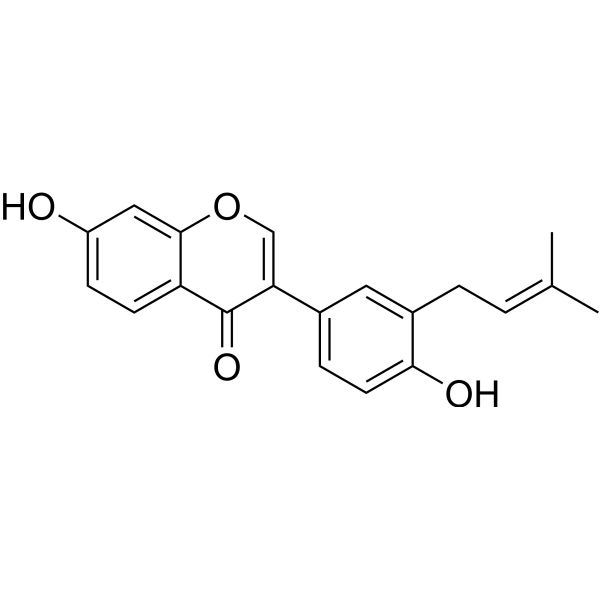
Neobavaisoflavone, a flavonoid, is isolated from the seeds of Psoralea corylifolia. Neobavaisoflavone exhibits anti-inflammatory, anti-cancer and anti-oxidation activities. Neobavaisoflavone inhibits DNA polymerase at moderate to high concentrations. Neobavaisoflavone also inhibits platelet aggregation.
For research use only. We do not sell to patients.
- Purity: 99.92%
- CAS No.: 41060-15-5
- Formula: C20H18O4
- Molecular Weight:322.35
-
Storage:Powder -20°C, 3 years , 4°C, 2 years ; In solvent -80°C, 2 years , -20°C, 1 year


-
 Biological Activity
-
Chemical Information
-
Solvent & Solubility
- Purity & Documentation
- References
-
 Help & FAQs
-

Apoptosis Compound Library
HY-L003
-
Cell Cycle/DNA Damage Compound Library
HY-L004
-
Immunology/Inflammation Compound Library
HY-L007
-
Natural Product Library
HY-L021
-
Anti-Cancer Compound Library
HY-L025
-
Anti-Aging Compound Library
HY-L034
-
Phenols Library
HY-L057
-
Pyroptosis Compound Library
HY-L059
-
Traditional Chinese Medicine Active Compound Library
HY-L065
-
Flavonoids Library
HY-L068
-
Targeted Diversity Library
HY-L099
-
Anti-Cancer Natural Product Library
HY-L107
-
Anti-inflammatory Traditional Chinese Medicine Active Compound Library
HY-L114
-
Plant-Sourced Natural Product Library
HY-L115
-
Human Metabolite Library
HY-L123
-
Coagulation and Anti-coagulation Compound Library
HY-L136
-
Cell Death Library
HY-L162
-
Bioactive Compound Library Max
HY-L181
-
MCE Bioactive Compound Library
HY-L001V
-
Natural Product Library Plus
HY-L021P
-
Natural Product and Natural Product-Like Compound Library
HY-L021M
-
Bioactive Compound Library
HY-L001
-
Non-Alcoholic Fatty Liver Disease (NAFLD) Compound Library
HY-L199
-
RO5 Drug-like Natural Product Library
HY-L200
-
High-Throughput Bioactive Compound Library
HY-L205
-
High-Throughput Natural Product Library
HY-L206
-
Mass Spectrometry Human Metabolite Library
HY-L215
-
Tonifying Traditional Chinese Medicine Monomer Compound Library
HY-L246
-
Mass Spectrometry Natural Product Library
HY-L262


Publications Citing Use of MedChemExpress (MCE) Neobavaisoflavone
More- Acta Pharm Sin B. 2021 Jan;11(1):143-155. [Abstract]
- Food Chem. 2025 Dec 30:497:146992. [Abstract]
- Food Chem. 2025 May 31:489:144992. [Abstract]
- Phytomedicine. 2023 Jul 25:116:154869. [Abstract]
- Biomed Pharmacother. 2020 Sep;129:110369. [Abstract]
- Journal of Future Foods. 2025 Jul 8.
- Chem Biol Interact. 2024 Jul 3:111133. [Abstract]
- J Ethnopharmacol. 2022 Nov 15:298:115593. [Abstract]
- Int Immunopharmacol. 2022 Oct:111:109103. [Abstract]
- Int Immunopharmacol. 2022 Sep:110:108953. [Abstract]
- Int Immunopharmacol. 2021 Dec;101(Pt A):108191. [Abstract]
- J Cell Mol Med. 2025 Sep;29(17):e70815. [Abstract]
- Front Med. 2021 Aug;15(4):594-607. [Abstract]
- Genomics. 2021 Jul;113(4):2702-2716. [Abstract]
- Curr Microbiol. 2023 Jun 26;80(8):258. [Abstract]
 Customer Validation & Images

-
Cell Proliferation/Viability Assay
-
WB
-
IF
All DNA/RNA Synthesis Isoforms
More

Biological Activity
|
DNA Polymerase |
|
Cell Line

|
Type | Value | Description | References |
|---|---|---|---|---|
| A549 | IC50 |
>10 μM
Compound: 12
|
Cytotoxicity against human A549 cells after 48 hrs by MTT assay
Cytotoxicity against human A549 cells after 48 hrs by MTT assay
|
[PMID: 25710081] |
| K562 | IC50 |
>10 μM
Compound: 12
|
Cytotoxicity against human K562 cells after 48 hrs by MTT assay
Cytotoxicity against human K562 cells after 48 hrs by MTT assay
|
[PMID: 25710081] |
| Platelet | IC50 |
2.5 μM
Compound: 2
|
Antiplatelet activity against rabbit platelet assessed as inhibition of platelet-activating factor-induced platelet aggregation preincubated for 3 mins by turbidimetric method
Antiplatelet activity against rabbit platelet assessed as inhibition of platelet-activating factor-induced platelet aggregation preincubated for 3 mins by turbidimetric method
|
[PMID: 8759164] |
| Platelet | IC50 |
62.4 μM
Compound: 2
|
Antiplatelet activity against rabbit platelet assessed as inhibition of collagen-induced platelet aggregation preincubated for 3 mins by turbidimetric method
Antiplatelet activity against rabbit platelet assessed as inhibition of collagen-induced platelet aggregation preincubated for 3 mins by turbidimetric method
|
[PMID: 8759164] |
| Platelet | IC50 |
7.8 μM
Compound: 2
|
Antiplatelet activity against rabbit platelet assessed as inhibition of arachidonic acid-induced platelet aggregation preincubated for 3 mins by turbidimetric method
Antiplatelet activity against rabbit platelet assessed as inhibition of arachidonic acid-induced platelet aggregation preincubated for 3 mins by turbidimetric method
|
[PMID: 8759164] |
Neobavaisoflavone (1-50 μM; 20 h) decreases NO (ED50=25 μM) and cytokine (ED50s=23.11, 5.03, 5.23, 5.26 and 18.80 μM for IL-1β, IL-6, IL-12p40, IL-12p70 and TNF-α, respectively) production in LPS plus IFN-γ-stimulated RAW264.7 macrophages[1].
Neobavaisoflavone (1-100 μM; 30 min) decreases the chemiluminescence in PMA-stimulated RAW264.7 macrophages, with an ED50 of 19.94 μM in activated RAW264.7 cells[1].
Neobavaisoflavone (1-100 μM); 20 h) has no effect on the viability and is not toxic to RAW264.7 cells[1].
Neobavaisoflavone (20-50 μM; 48 h) inhibits prostate cancer cell proliferation by inducing cytotoxicity and apoptosis in a dose-dependent manner[2].
Neobavaisoflavone (2-8 μM; 7 d) inhibits RANKL-mediated osteoclastogenesis in bone marrow monocytes (BMMCs) and RAW264.7 cells dose dependently at the early stage[3].
MedChemExpress (MCE) has not independently confirmed the accuracy of these methods. They are for reference only.
MedChemExpress (MCE) has not independently confirmed the accuracy of these methods. They are for reference only.
-
Animal Model:C57BL/6 female mice (8 weeksd; 20-25 g) were removed bilateral ovaries[3]
-
Dosage:30 mg/kg
-
Administration:I.p. for 6 weeks
-
Result:Attenuated bone loss by inhibiting osteoclast activation and promoting osteogenesis in ovariectomized mice.


Chemical Information
-
CAS No. 41060-15-5
-
Appearance Solid
-
Molecular Weight 322.35
-
Formula C20H18O4
-
Color White to light yellow
-
SMILES
O=C1C(C2=CC=C(O)C(C/C=C(C)\C)=C2)=COC3=CC(O)=CC=C13
-
Structure Classification
-
Initial Source
-
Shipping
Room temperature in continental US; may vary elsewhere.
-
Storage
Powder -20°C 3 years 4°C 2 years In solvent -80°C 2 years -20°C 1 year


Publications (15)
-
Journal Impact Factor
-
Most Recent
-
Acta Pharm Sin B
Chrysin serves as a novel inhibitor of DGK α/FAK interaction to suppress the malignancy of esophageal squamous cell carcinoma (ESCC). [Abstract]2021 Jan;11(1):143-155. PMID: 33532186 -
Food Chem
Effects of sun drying combined with baking processes on the flavor quality of Chongqing Tuocha raw tea. [Abstract]2025 Dec 30:497:146992. PMID: 41285060 -
Food Chem
Flavonoid-mediated metabolic underpinning quality variation in red bud-sport pear mutants. [Abstract]2025 May 31:489:144992. PMID: 40466530 -
Phytomedicine
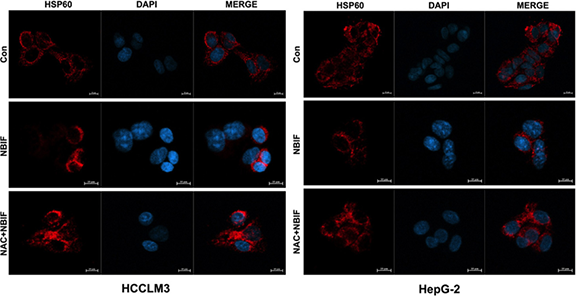
Neobavaisoflavone induces pyroptosis of liver cancer cells via Tom20 sensing the activated ROS signal. [Abstract]2023 Jul 25:116:154869. PMID: 37196512
Neobavaisoflavone purchased from MedChemExpress. Usage Cited in: Phytomedicine. 2023 Jul 25:116:154869. [Abstract]
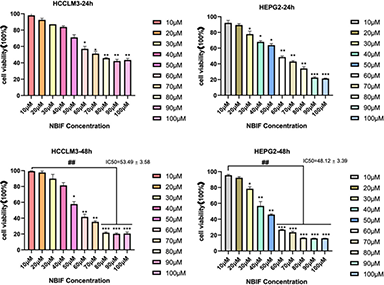
Neobavaisoflavone (NBIF; 10, 20, 30, 40, 50, 60, 70, 80, 90, 100 μM; 24, 48 h) inhibits the cell viability of HCCLM3 and HepG-2 in a time- and concentration-dependent manner.
Neobavaisoflavone purchased from MedChemExpress. Usage Cited in: Phytomedicine. 2023 Jul 25:116:154869. [Abstract]
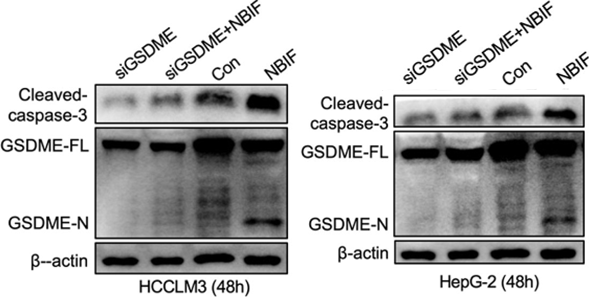
Neobavaisoflavone (NBIF; 50 μM; 48 h) increases the expression of Cleaved-caspase-3 in HCCLM3 and HepG-2 cells.
Neobavaisoflavone purchased from MedChemExpress. Usage Cited in: Phytomedicine. 2023 Jul 25:116:154869. [Abstract]
Neobavaisoflavone (NBIF; 50 μM; 48 h) severely damages mitochondria in HCCLM3 and HepG-2 cells.
-
Biomed Pharmacother
Developing neobavaisoflavone nanoemulsion suppresses lung cancer progression by regulating tumor microenvironment. [Abstract]2020 Sep;129:110369. PMID: 32563983 -
-
Chem Biol Interact
Bavachinin, a main compound of Psoraleae Fructus, facilitates GSDMD-mediated pyroptosis and causes hepatotoxicity in mice. [Abstract]2024 Jul 3:111133. PMID: 38969277 -
J Ethnopharmacol
2022 Nov 15:298:115593. PMID: 35973629 -
Int Immunopharmacol
Neobavaisoflavone inhibits antitumor immunosuppression via myeloid-derived suppressor cells. [Abstract]2022 Oct:111:109103. PMID: 35944461 -
Int Immunopharmacol
Neobavaisoflavone inhibits allergic inflammatory responses by suppressing mast cell activation. [Abstract]2022 Sep:110:108953. PMID: 35724607 -
Int Immunopharmacol
2021 Dec;101(Pt A):108191. PMID: 34601328 -
J Cell Mol Med
Pharmacological Targeting of DHHC9-Mediated STRN4 Palmitoylation to Suppress YAP-Driven Cancer Metastasis. [Abstract]2025 Sep;29(17):e70815. PMID: 40903842 -
Front Med
Bavachin enhances NLRP3 inflammasome activation induced by ATP or nigericin and causes idiosyncratic hepatotoxicity. [Abstract]2021 Aug;15(4):594-607. PMID: 33909257 -
Genomics
Transcriptomics and metabolomics reveal the induction of flavonoid biosynthesis pathway in the interaction of Stylosanthes-Colletotrichum gloeosporioides. [Abstract]2021 Jul;113(4):2702-2716. PMID: 34111523 -
Curr Microbiol
Neobavaisoflavone Inhibits Biofilm Formation and α-Toxin Activity of Staphylococcus aureus. [Abstract]2023 Jun 26;80(8):258. PMID: 37358668


Solvent & Solubility
DMSO : ≥ 100 mg/mL (310.22 mM; Hygroscopic DMSO has a significant impact on the solubility of product, please use newly opened DMSO)
* "≥" means soluble, but saturation unknown.
Please refer to the solubility information to select the appropriate solvent. Once prepared, please aliquot and store the solution to prevent product inactivation from repeated freeze-thaw cycles.
Storage method and period of stock solution: -80°C, 2 years; -20°C, 1 year. When stored at -80°C, please use it within 2 years. When stored at -20°C, please use it within 1 year.
Please refer to the solubility information to select the appropriate solvent. Once prepared, please aliquot and store the solution to prevent product inactivation from repeated freeze-thaw cycles.
Storage method and period of stock solution: -80°C, 2 years; -20°C, 1 year. When stored at -80°C, please use it within 2 years. When stored at -20°C, please use it within 1 year.
Concentration (start) × Volume (start) = Concentration (final) × Volume (final)
Select the appropriate dissolution method based on your experimental animal and administration route.
- For the following dissolution methods, please ensure to first prepare a clear stock solution using an In Vitro approach and then sequentially add co-solvents:
- To ensure reliable experimental results, the clarified stock solution can be appropriately stored based on storage conditions. As for the working solution for In Vivo experiments, it is recommended to prepare freshly and use it on the same day.
- The percentages shown for the solvents indicate their volumetric ratio in the final prepared solution. If precipitation or phase separation occurs during preparation, heat and/or sonication can be used to aid dissolution.
Add each solvent one by one: 10% DMSO 40% PEG300 5% Tween-80 45% Saline
Solubility: ≥ 2.08 mg/mL (6.45 mM); Clear solution
This protocol yields a clear solution of ≥ 2.08 mg/mL (saturation unknown).
Taking 1 mL working solution as an example, add 100 μL DMSO stock solution (20.8 mg/mL) to 400 μL PEG300, and mix evenly; then add 50 μL Tween-80 and mix evenly; then add 450 μL Saline to adjust the volume to 1 mL.
Preparation of Saline: Dissolve 0.9 g sodium chloride in ddH₂O and dilute to 100 mL to obtain a clear Saline solution.
Add each solvent one by one: 10% DMSO 90% (20% SBE-β-CD in Saline)
Solubility: ≥ 2.08 mg/mL (6.45 mM); Clear solution
This protocol yields a clear solution of ≥ 2.08 mg/mL (saturation unknown).
Taking 1 mL working solution as an example, add 100 μL DMSO stock solution (20.8 mg/mL) to 900 μL 20% SBE-β-CD in Saline, and mix evenly.
Preparation of 20% SBE-β-CD in Saline (4°C, storage for one week): 2 g SBE-β-CD powder is dissolved in 10 mL Saline, completely dissolve until clear.
Please enter the basic information of animal experiments:
-
-
-
-
Recommended: Prepare an additional quantity of animals to account for potential losses during experiments.
Please enter your animal formula composition:
-
%DMSO +
Recommended: Keep the proportion of DMSO in working solution below 2% if your animal is weak.
-
%+
-
+%Tween-80 + +
-
%Saline +
The co-solvents required include: DMSO, . All of co-solvents are available by MedChemExpress (MCE). , Tween 80. All of co-solvents are available by MedChemExpress (MCE).
Working solution concentration: 0.22 mg/mL
Method for preparing stock solution: mg drug dissolved in μL DMSO. Stock solution concentration: mg/mL.
1. Take μL DMSO stock solution;
2. Add μL .
μL , mix evenly;
3. Then add μL Tween 80, mix evenly;
4. Then add μL
Please ensure that the stock solution in the first step is dissolved to a clear state, and add co-solvents in sequence. You can use ultrasonic heating (ultrasonic cleaner, recommended frequency 20-40 kHz), vortexing, etc. to assist dissolution.


Purity & Documentation
-
Data Sheet (277 KB)
-
SDS (393 KB)
- English - EN (393 KB)
- Français - FR (393 KB)
- Deutsch - DE (393 KB)
- Norwegian - NO (393 KB)
- Español - ES (393 KB)
- Swedish - SV (393 KB)
- Italian - IT (393 KB)
- Portuguese - PT (393 KB)
-
Handling Instructions (2659 KB)
References
[1]. Szliszka E, et, al. Inhibition of inflammatory mediators by neobavaisoflavone in activated RAW264.7 macrophages. Molecules. 2011 May 3;16(5):3701-12. [Content Brief]
[2]. Szliszka E, et, al. Enhanced TRAIL-mediated apoptosis in prostate cancer cells by the bioactive compounds neobavaisoflavone and psoralidin isolated from Psoralea corylifolia. Pharmacol Rep. 2011;63(1):139-48. [Content Brief]
[3]. Chen H, et, al. Neobavaisoflavone inhibits osteoclastogenesis through blocking RANKL signalling-mediated TRAF6 and c-Src recruitment and NF-κB, MAPK and Akt pathways. J Cell Mol Med. 2020 Aug;24(16):9067-9084. [Content Brief]
[4]. Sun NJ, et, al. DNA polymerase and topoisomerase II inhibitors from Psoralea corylifolia. J Nat Prod. 1998 Mar;61(3):362-6. [Content Brief]
[5]. Tsai WJ, et, al. Antiplatelet flavonoids from seeds of Psoralea corylifolia. J Nat Prod. 1996 Jul;59(7):671-2. [Content Brief]


Complete Stock Solution Preparation Table
Please refer to the solubility information to select the appropriate solvent. Once prepared, please aliquot and store the solution to prevent product inactivation from repeated freeze-thaw cycles.
Storage method and period of stock solution: -80°C, 2 years; -20°C, 1 year. When stored at -80°C, please use it within 2 years. When stored at -20°C, please use it within 1 year.
| Optional Solvent | Concentration Solvent Mass | 1 mg | 5 mg | 10 mg | 25 mg |
|---|---|---|---|---|---|
| DMSO | 1 mM | 3.1022 mL | 15.5111 mL | 31.0222 mL | 77.5555 mL |
| 5 mM | 0.6204 mL | 3.1022 mL | 6.2044 mL | 15.5111 mL | |
| 10 mM | 0.3102 mL | 1.5511 mL | 3.1022 mL | 7.7555 mL | |
| 15 mM | 0.2068 mL | 1.0341 mL | 2.0681 mL | 5.1704 mL | |
| 20 mM | 0.1551 mL | 0.7756 mL | 1.5511 mL | 3.8778 mL | |
| 25 mM | 0.1241 mL | 0.6204 mL | 1.2409 mL | 3.1022 mL | |
| 30 mM | 0.1034 mL | 0.5170 mL | 1.0341 mL | 2.5852 mL | |
| 40 mM | 0.0776 mL | 0.3878 mL | 0.7756 mL | 1.9389 mL | |
| 50 mM | 0.0620 mL | 0.3102 mL | 0.6204 mL | 1.5511 mL | |
| 60 mM | 0.0517 mL | 0.2585 mL | 0.5170 mL | 1.2926 mL | |
| 80 mM | 0.0388 mL | 0.1939 mL | 0.3878 mL | 0.9694 mL | |
| 100 mM | 0.0310 mL | 0.1551 mL | 0.3102 mL | 0.7756 mL |


 Powered by Bioz