



MT1
MT1 is a high-affinity melatonin G protein-coupled receptor (GPCR) that mediates melatonin actions in sleep and circadian biology[1]. Mechanistically, human MT1 forms an activated MT1-Gi signaling complex after melatonin binding, linking ligand recognition to G-protein coupling[2]. Functional studies associate MT1 with neuronal firing, arterial vasoconstriction, cancer-cell proliferation, reproductive regulation, and metabolic functions[3]. In retinal models, MT1/MT2 heteromers mediate melatonin control of rod photoreceptor light sensitivity, showing that MT1 can act within receptor complexes rather than only as an isolated receptor[4]. In disease-relevant models, MT1 knockout mice show melancholic-like behaviors and circadian neurobiological abnormalities, supporting MT1-focused experimental designs in neuropsychopharmacology[5]. Compared with MT2, MT1 has a distinct structural basis for ligand recognition, while MT2 structures reveal separate determinants of subtype selectivity[6][7]. For experimental applications, cryo-EM and XFEL structures with agonists such as melatonin, ramelteon, and 2-iodomelatonin support structure-guided design of melatonergic ligands, although subtype-selective drug design remains challenging because MT1 and MT2 share highly similar orthosteric binding pockets[6][8].
References:
- [1]. Liu J, et al. MT1 and MT2 Melatonin Receptors: A Therapeutic Perspective. Annu Rev Pharmacol Toxicol. 2016;56:361-83. [Content Brief]
- [2]. Okamoto HH, et al. Cryo-EM structure of the human MT1-Gi signaling complex. Nat Struct Mol Biol. 2021 Aug;28(8):694-701. [Content Brief]
- [3]. Baba K, et al. Heteromeric MT1/MT2 melatonin receptors modulate photoreceptor function. Sci Signal. 2013 Oct 8;6(296):ra89. [Content Brief]
- [4]. Comai S, et al. Melancholic-Like behaviors and circadian neurobiological abnormalities in melatonin MT1 receptor knockout mice. Int J Neuropsychopharmacol. 2015 Jan 31;18(3):pyu075. [Content Brief]
- [5]. Stauch B, et al. Structural basis of ligand recognition at the human MT1 melatonin receptor. Nature. 2019 May;569(7755):284-288. [Content Brief]
- [6]. Johansson LC, et al. XFEL structures of the human MT2 melatonin receptor reveal the basis of subtype selectivity. Nature. 2019 May;569(7755):289-292. [Content Brief]
- [7]. Wang Q, et al. Structural basis of the ligand binding and signaling mechanism of melatonin receptors. Nat Commun. 2022 Jan 24;13(1):454. [Content Brief]
All Product Categories
-
MT1 Related Products (18)

- 1
-
Ramelteon
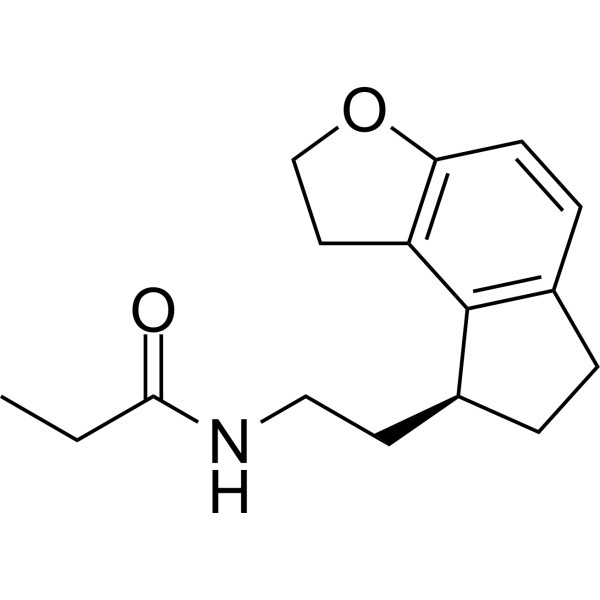 0 ImagesSynonyms: TAK-375Ramelteon is a potent, highly selective, and orally active agonist of MT1/MT2 with Ki values of 14 and 112 pM, respectively. Ramelteon has the potential for the research of insomnia. Ramelteon consistently reduces sleep onset after long-term treatment, with no next-morning residual effects or rebound insomnia or withdrawal symptoms upon discontinuation.
 -
loading...loading...
-
-
S-22153
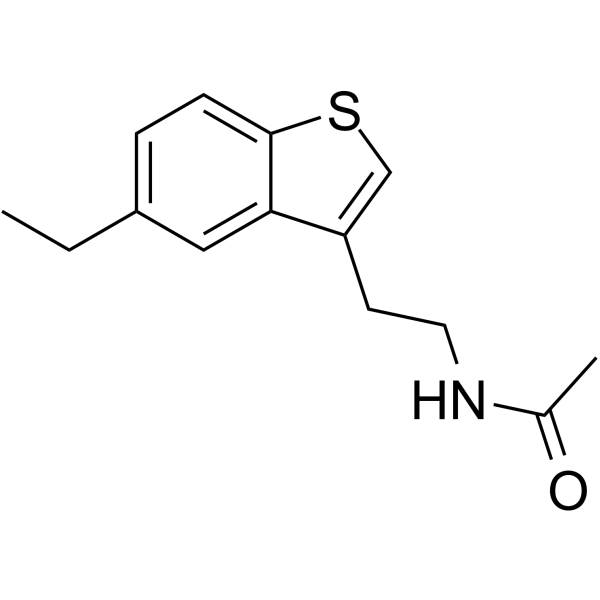 0 ImagesS-22153 is a potent melatonin receptor antagonist with EC50 values of 19 nM, 4.6 nM for hMT1 and hMT2 melatonin receptor, respectively. S-22153 has Ki values of 8.6 nM (CHO cells) and 16.3 nM (HEK cells) for hMT1, and 6.0 nM (CHO cells) and 8.2 nM (HEK cells) for hMT2. S-22153 is a specific ligand of MT1 and MT2 melatonin receptors subtypes.
 -
loading...loading...
-
-
2-Iodomelatonin
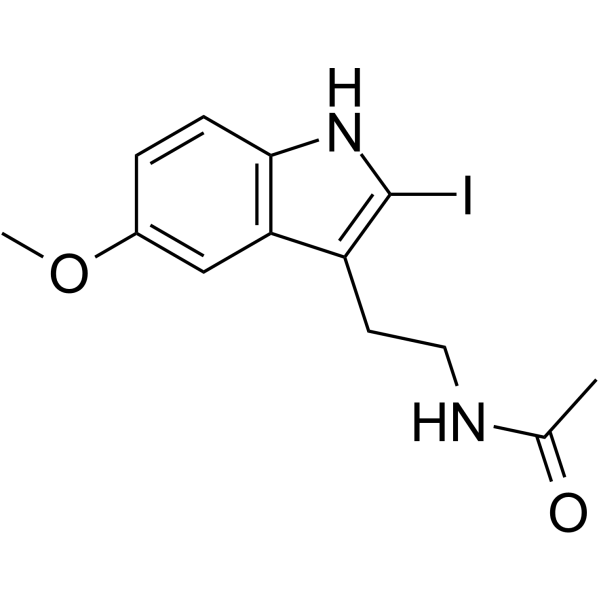 0 Images2-Iodomelatonin is a potent agonist of melatonin receptor 1 (MT1) with a Ki value of 28 pM, it is more 5-fold selective for MT1 over MT2. 2-iodomelatonin can be used to identify, characterize and localize melatonin binding sites in the brain and peripheral tissues.
 -
loading...loading...
-
-
ACH-000143
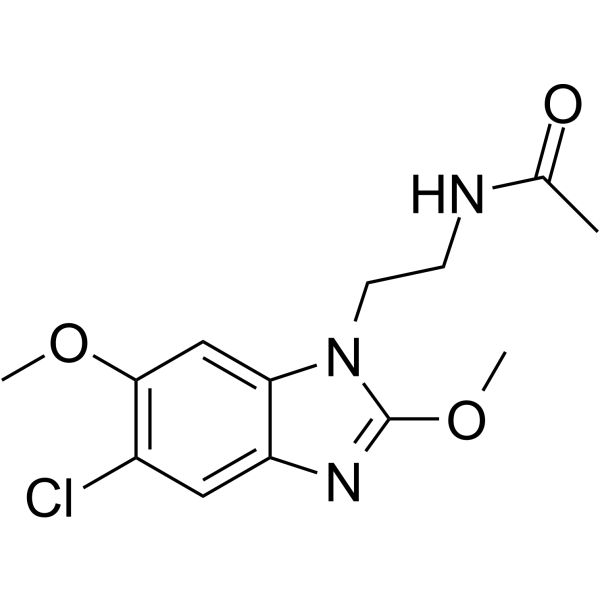 0 ImagesACH-000143 is a potent and orally active melatonin receptor agonist, with EC50 values of 0.06 nM and 0.32 nM for MT1 and MT2, respectively.
 -
loading...loading...
-
-
Piromelatine
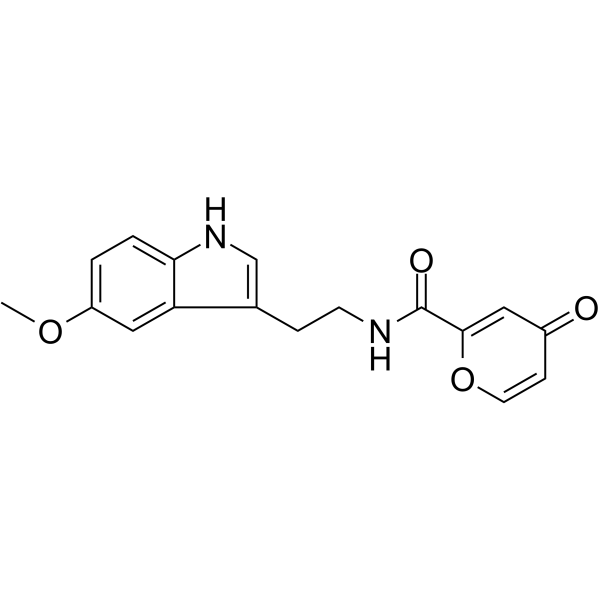 0 ImagesSynonyms: Neu-P11Piromelatine (Neu-P11) is a melatonin MT1/MT2 receptor agonist, serotonin 5-HT1A/5-HT1D agonist, and serotonin 5-HT2B antagonist. Piromelatine (Neu-P11) possesses sleep promoting, analgesic, anti-neurodegenerative, anxiolytic and antidepressant potentials. Piromelatine (Neu-P11) also possesses pain-related P2X3, TRPV1, and Nav1.7 channel-inhibition capacities.
 -
loading...loading...
-
-
UCM1400
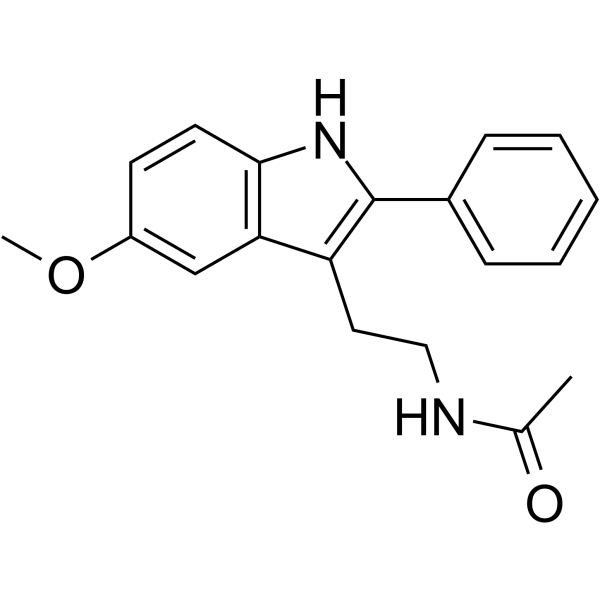
 0 ImagesCat. No.: HY-180198UCM1400 is a melatonin receptor (MT) subtype-selective modulator. UCM1400 shows agonistic effect for MT1 and antagonistic effect for MT2 with pKi values of 7.94 and 8.11. UCM1400 can inhibit the decrease in cAMP mediated by the MT2 receptor with a pIC50 of 7.87. UCM1400 exhibits anti-proliferative activity against human glioma cells and inhibit tumor growth. UCM1400 can be used for the research of cancer, such as glioma.
 -
loading...loading...
-
-
Agomelatine-d6
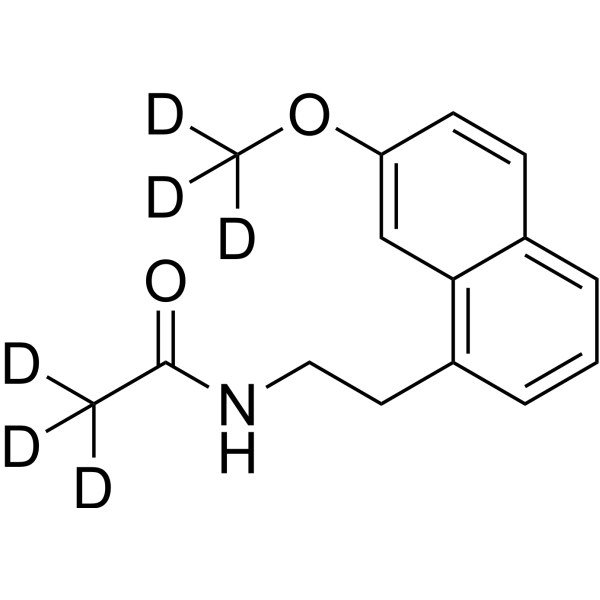 0 ImagesSynonyms: S-20098-d6
 -
loading...loading...
-
-
Ramelteon-d5
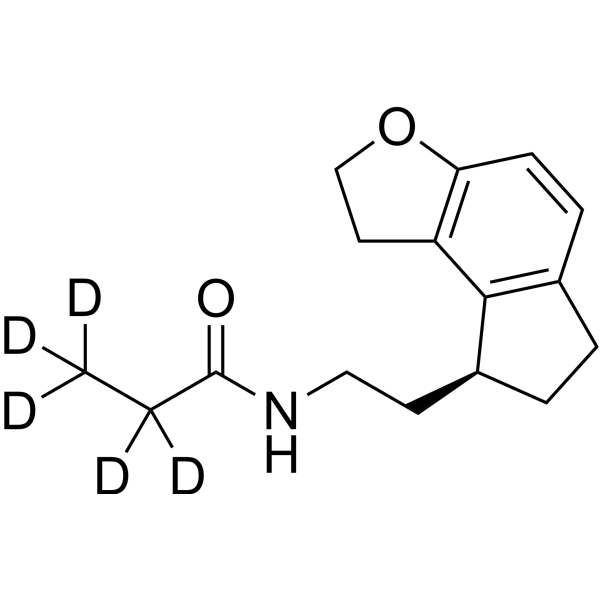 0 ImagesCat. No.: HY-A0014SCAS No.: 1134159-63-9Synonyms: TAK-375-d5Ramelteon-d5 is deuterium labeled Ramelteon. Ramelteon is a potent, highly selective, and orally active agonist of MT1/MT2 with Ki values of 14 and 112 pM, respectively. Ramelteon has the potential for the research of insomnia. Ramelteon consistently reduces sleep onset after long-term treatment, with no next-morning residual effects or rebound insomnia or withdrawal symptoms upon discontinuation.
 -
loading...loading...
-
-
Agomelatine-d3
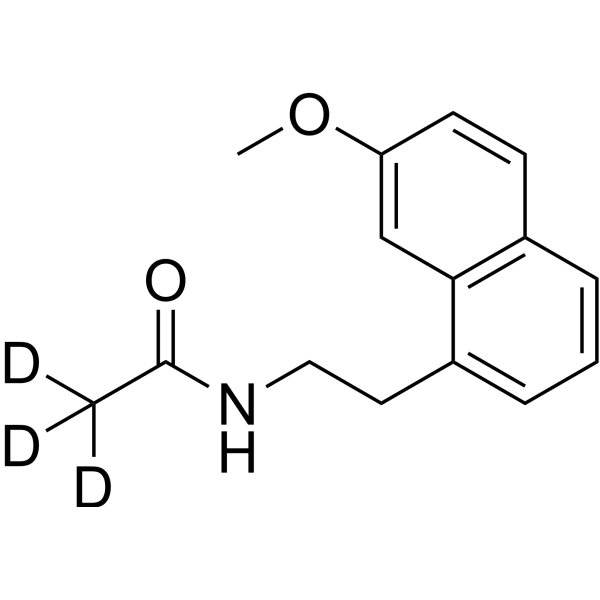 0 ImagesSynonyms: S-20098-d3Agomelatine-d3 is the deuterium labeled Agomelatine. Agomelatine (S-20098) is a specific agonist of MT1 and MT2 receptors with Kis of 0.1, 0.06, 0.12, and 0.27 nM for CHO-hMT1, HEK-hMT1, CHO-hMT2, and HEK-hMT2, respectively. Agomelatine is a selective 5-HT2C receptor antagonist with pKis of 6.4 and 6.2 at native (porcine) and cloned, human 5-HT2C receptors, respectively.
 -
loading...loading...
-
-
N-Pentanoyl 2-benzyltryptamine
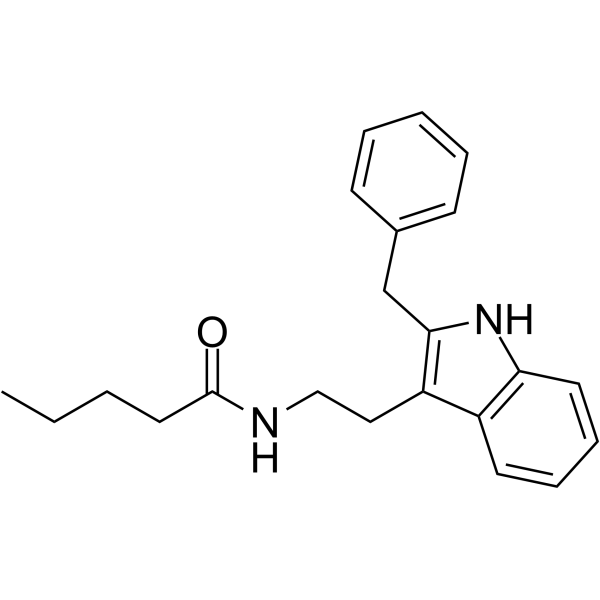 0 ImagesN-Pentanoyl 2-benzyltryptamine is a potent and selective antagonist of MT2 melatonin receptor, with a pKi of 8.03 for human MT2. N-Pentanoyl 2-benzyltryptamine shows 89- and 229-fold selectivity for human MT2 over human mt1 and Xenopus mel1c receptor subtypes. N-Pentanoyl 2-benzyltryptamine can inhibit melatonin-induced enhancement of electrically-evoked responses.
 -
loading...loading...
-
-
Agomelatine-d4
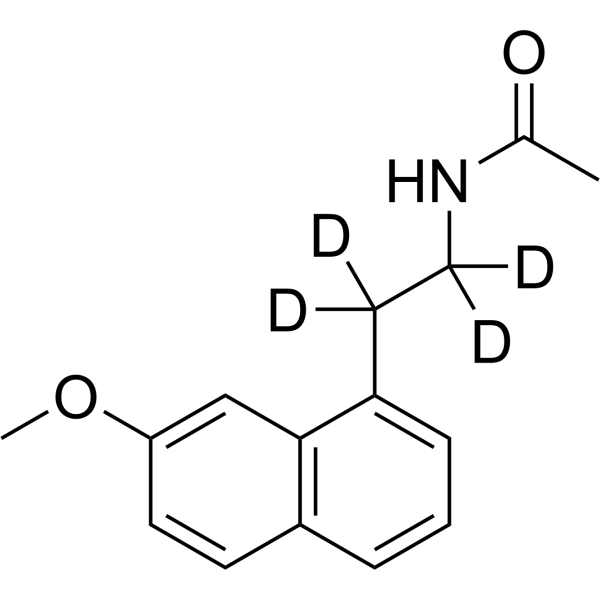 0 ImagesCat. No.: HY-17038S1CAS No.: 1079389-44-8Synonyms: S-20098-d4Agomelatine-d4 is the deuterium labeled Agomelatine. Agomelatine (S-20098) is a specific agonist of MT1 and MT2 receptors with Kis of 0.1, 0.06, 0.12, and 0.27 nM for CHO-hMT1, HEK-hMT1, CHO-hMT2, and HEK-hMT2, respectively. Agomelatine is a selective 5-HT2C receptor antagonist with pKis of 6.4 and 6.2 at native (porcine) and cloned, human 5-HT2C receptors, respectively.
 -
loading...loading...
-
-
Melatonin receptor agonist 1
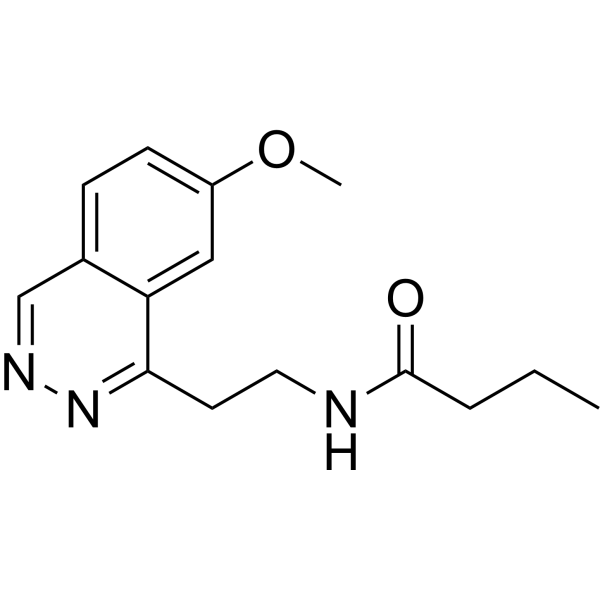 0 ImagesCat. No.: HY-147542CAS No.: 2411150-76-8Melatonin receptor agonist 1 (compound 20c) is a potent melatonin receptor (MT) agonist, with Ki values of 108 nM (MT2) and 1140 nM (MT1).
 -
loading...loading...
-
-
7-Desmethyl-3-hydroxyagomelatine
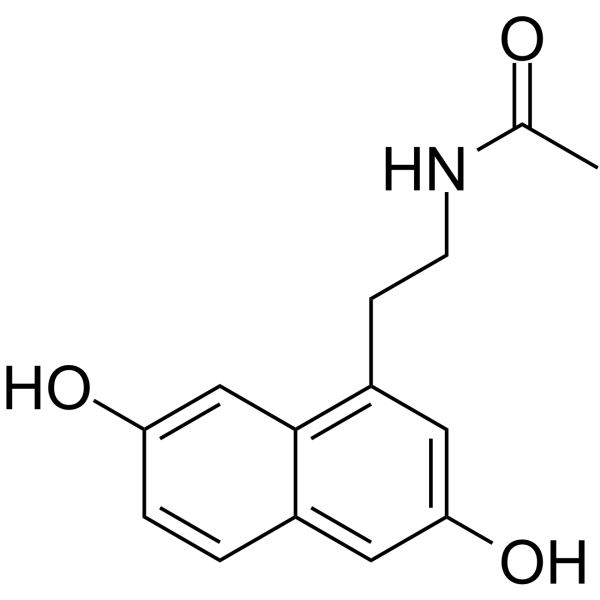 0 ImagesCat. No.: HY-133112CAS No.: 166527-00-0Synonyms: 3-Hydroxy-7-desmethyl agomelatine
 -
loading...loading...
-
-
UCM 793
 0 ImagesCat. No.: HY-115304CAS No.: 101374-18-9UCM 793 is a non-selective MT1/MT2 receptor agonist (pKis: 9.09 (MT1 receptor); 9.19 (MT2 receptor)). UCM793 increases the number of episodes and decreases the length of the episodes of wakefulness. UCM 793 influences quality of the vigilance states. UCM 793 decreases sleep onset without having an effect on NREM sleep maintenance.
 -
loading...loading...
-
-
TIK-301
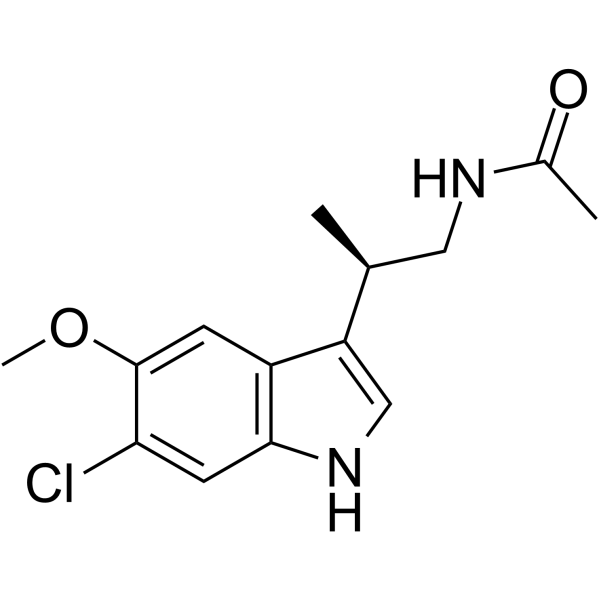 0 ImagesCat. No.: HY-106136CAS No.: 118702-11-7Synonyms: PD-6735; LY-156735TIK-301 (PD-6735) is a chlorinated melatonin derivative and a potent, high-affinity and orally active melatonin MT1 and MT2 receptors agonist with Kis of 0.081 nM and 0.042 nM, respectively. TIK-301 is also a 5-HT2B/5-HT2C receptors antagonist with antidepressant action. TIK-301 has the potential for sleep disorders and other circadian rhythm disorders treatment.
 -
loading...loading...
-
-
DH97-7
 0 ImagesCat. No.: HY-131947CAS No.: 343263-95-6DH97 is a potent melatonin receptor 2 (MT2) antagonist with Ki values of 252 nM and 1100 nM for MT2 and MT1, respectively.
 -
loading...loading...
-
-
6-Chloromelatonin
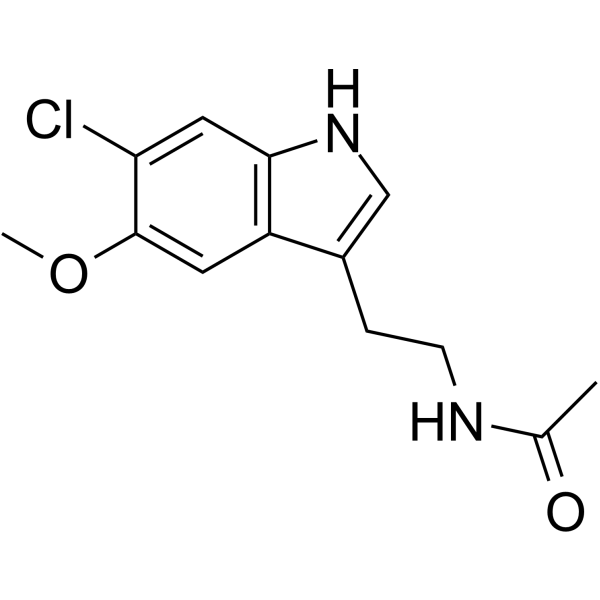 0 ImagesCat. No.: HY-100940CAS No.: 63762-74-36-Chloromelatonin is a potent melatonin receptor agonist with greater metabolic stability than melatonin. 6-Chloromelatonin compete for [3H]-melatonin and 2-[125I]-iodomelatonin binding to MT1 receptors (pKi=8.9 and 9.1, respectively). 6-Chloromelatonin compete for [3H]-melatonin binding to MT2 receptors (pKi=9.77).
 -
loading...loading...
-
- 1



