



Carvacrol
Based on 11 publication(s) in Google Scholar
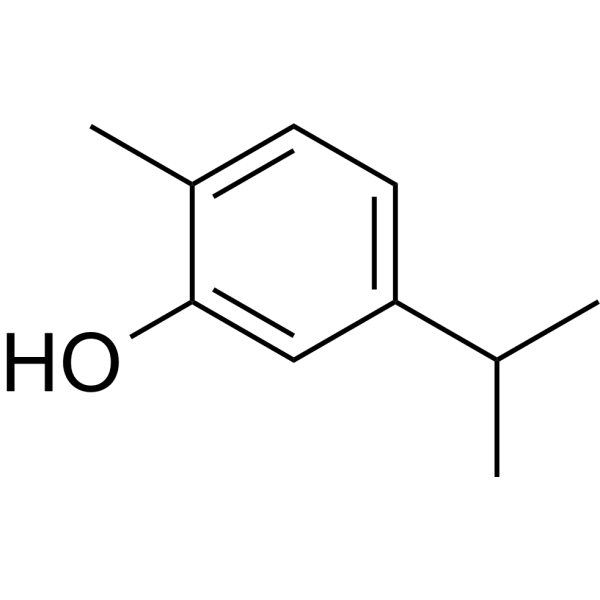
Carvacrol is an orally active and blood-brain barrier-permeable monoterpenic phenol that can be extract from an abundant number of aromatic plants, including thyme and oregano, possessing antioxidant, antibacterial, antifungal, anticancer, anti-inflammatory, hepatoprotective, spasmolytic, and vasorelaxant properties. Carvacrol also causes cell cycle arrest in G0/G1, downregulates Notch-1, and Jagged-1, and induces apoptosis. Carvacrol is used in low concentrations as a food flavoring ingredient and preservative, as well as a fragrance ingredient in cosmetic formulations.
For research use only. We do not sell to patients.
- Purity : 99.96%
- CAS No.: 499-75-2
- Formula: C10H14O
- Molecular Weight:150.22
-
Storage:Pure form -20°C, 3 years , 4°C, 2 years ; In solvent -80°C, 6 months , -20°C, 1 month

To place orders, for customer services and technical support, please contact: MedChemExpress USA
Tel: 609-228-6898 E-mail: [email protected] [email protected]


-
 Biological Activity
-
Chemical Information
-
Solvent & Solubility
- Protocols
- Purity & Documentation
- References
-
 Help & FAQs


-
HY-N6810
ThymolBacterial Inhibitor -
HY-W009724
2-Aminoethyl diphenylborinateIP3R Inhibitor -

HY-N0711R
Carvacrol (Standard)Antioxidant/Antibacterial/Anticancer Agent -
HY-Y0320
Dimethyl sulfoxide, meets analytical specification of Ch.P.Aprotic Solvent -
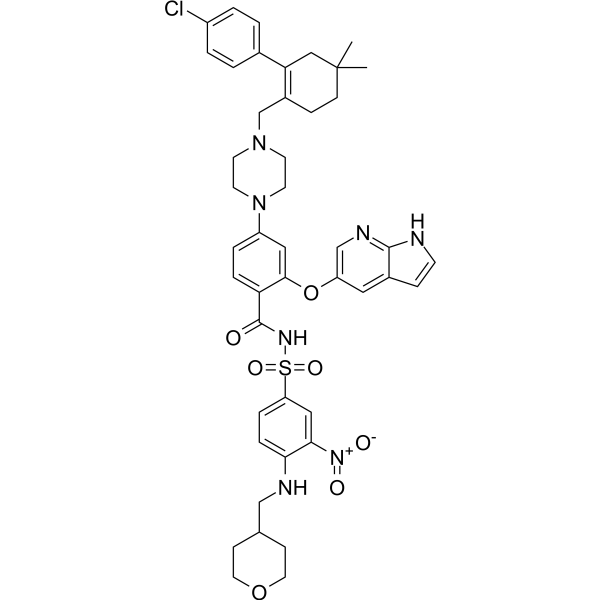
HY-15531
VenetoclaxBCL-2 Inhibitor -
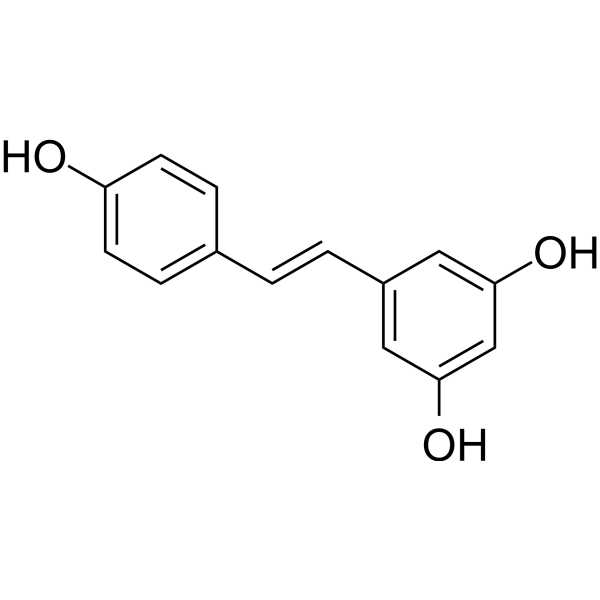
HY-16561
ResveratrolPolyphenolic Phytoalexin -
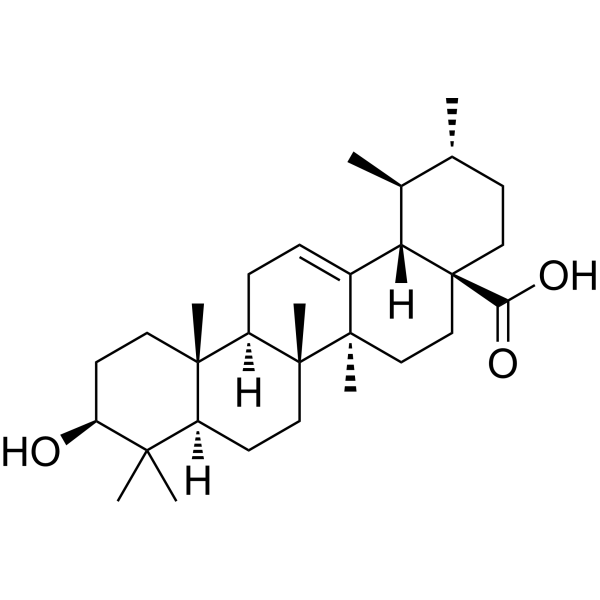
HY-N0140
Ursolic acidAutophagy Inducer -
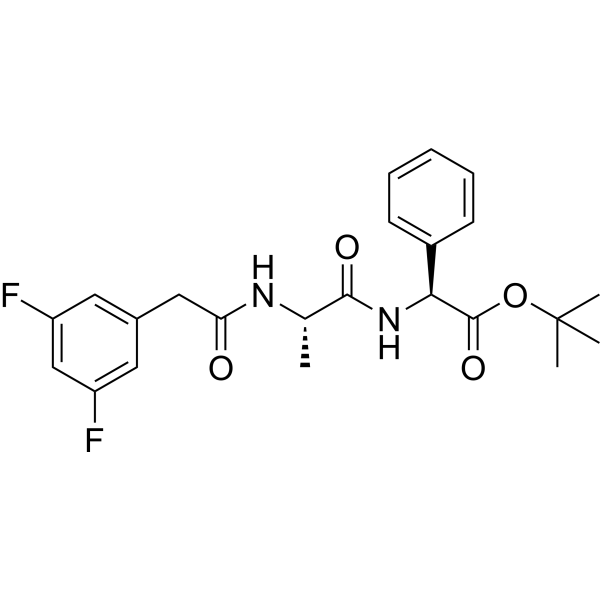
HY-13027
DAPTγ-secretase Inhibitor -
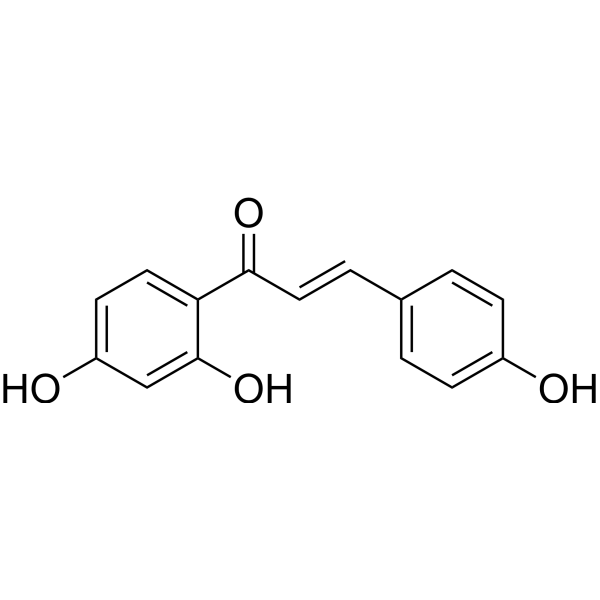
HY-N0102
IsoliquiritigeninAutophagy Inducer -

HY-N6810R
Thymol (Standard)Bacterial Inhibitor -
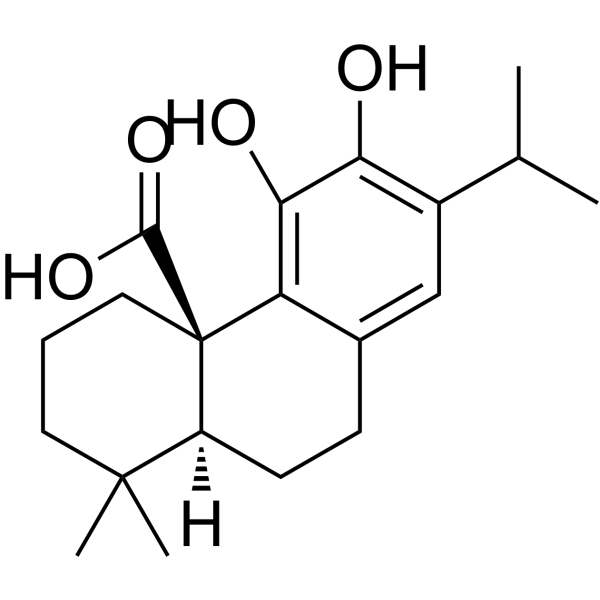
HY-N0644
Carnosic acidLipid Absorption Inhibitor -
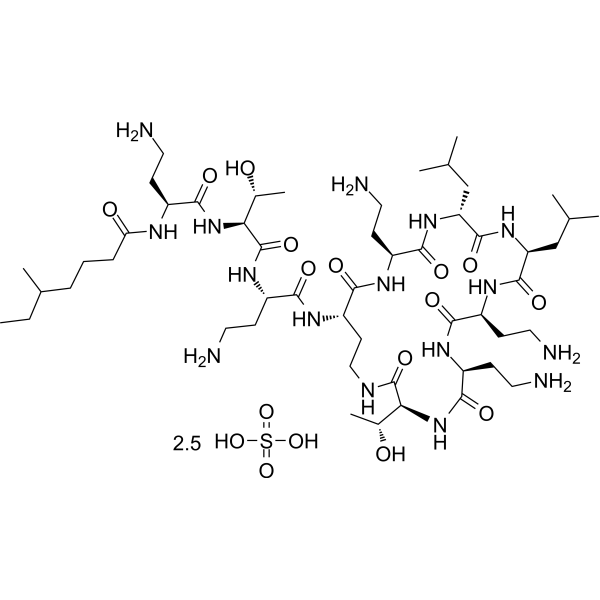
HY-A0089
Colistin sulfateAntibiotic
Publications Citing Use of MedChemExpress (MCE) Carvacrol
More- Nat Immunol. 2026 May;27(5):949-960. [Abstract]
- Adv Sci (Weinh). 2026 Jul 7:e20994.
- Adv Sci (Weinh). 2024 Sep;11(35):e2310126. [Abstract]
- J Invest Dermatol. 2024 Dec;144(12):2695-2705.e8. [Abstract]
- PLoS Biol. 2024 Jun 27;22(6):e3002672. [Abstract]
- Front Microbiol. 2025 Sep 3:16:1648467. [Abstract]
- Front Pharmacol. 2025 Sep 29:16:1671461. [Abstract]
- Transl Oncol. 2025 Aug:58:102431. [Abstract]
- Toxicol In Vitro. 2025 Dec:109:106128. [Abstract]
- bioRxiv. 2024 Apr 3:2023.06.02.542933. [Abstract]
- Elife. 2021 Apr 20:10:e68128. [Abstract]
 Customer Validation & Images

-
Cell Imaging/Staining
-
In Vivo Efficacy Study
-
Histological Imaging/Staining
-
IHC
-
RT-PCR
All Endogenous Metabolite Isoforms
More

Biological Activity
Description
Cellular Effect
|
Cell Line

|
Type | Value | Description | References |
|---|---|---|---|---|
| HEK293 | EC50 |
17 μM
Compound: Carvacrol
|
Agonist activity at human TRPA1 expressed in HEK293 cells assessed as increase in calcium influx by Fluo-4-AM dye based fluorescence assay
Agonist activity at human TRPA1 expressed in HEK293 cells assessed as increase in calcium influx by Fluo-4-AM dye based fluorescence assay
|
[PMID: 30878828] |
| HEK293 | EC50 |
7 μM
Compound: 24
|
Agonist activity at human TRPA1 channel expressed in HEK293 cells assessed as increase in intracellular calcium influx
Agonist activity at human TRPA1 channel expressed in HEK293 cells assessed as increase in intracellular calcium influx
|
[PMID: 20356305] |
In Vivo
Carvacrol (20, 40, and 80 mg/kg, intragastric gavage, during six days before LPS injection) reduces inflammation (reduces serum proinflammatory molecules) in rats[3].
MedChemExpress (MCE) has not independently confirmed the accuracy of these methods. They are for reference only.
- Research Protocol for Infectious Diseases
- Detection of Apoptosis
- TUNEL staining for apoptotic DNA fragmentation
- Flow cytometric DNA-content cell-cycle staining
- Annexin V plus membrane-impermeant dye apoptosis staining
- BrdU Incorporation Assay
- Apoptosis Solutions
- Protocol for Cell Cycle
- Notch Pathway Solutions
- Research Protocol for Inflammation-related Diseases
Clinical Trial
| NCT Number | Sponsor | Condition | Start Date |
Phase
|
|---|---|---|---|---|
| NCT01329991 | Plexxikon| | 2011-05 | PHASE1 |


Chemical Information
-
CAS No. 499-75-2
-
Appearance Liquid (Density: 0.976 g/cm3)
-
Molecular Weight 150.22
-
Formula C10H14O
-
Color Colorless to light yellow
-
SMILES
OC1=CC(C(C)C)=CC=C1C
-
Synonyms
Cymophenol
-
Structure Classification
-
Shipping
Room temperature in continental US; may vary elsewhere.
-
Storage
Pure form -20°C 3 years 4°C 2 years In solvent -80°C 6 months -20°C 1 month


Publications (11)
-
Journal Impact Factor
-
Most Recent
-
Nat Immunol
Lipid asymmetry disruption by XKR8 orchestrates neutrophil extracellular trap formation and inhibits fungal infection. [Abstract]2026 May;27(5):949-960. PMID: 41781710 -
-
Adv Sci (Weinh)
Targeting Transient Receptor Potential Melastatin-2 (TRPM2) Enhances Therapeutic Efficacy of Third Generation EGFR Inhibitors against EGFR Mutant Lung Cancer. [Abstract]2024 Sep;11(35):e2310126. PMID: 39044361 -
J Invest Dermatol
TRPV3-Activated PARP1/AIFM1/MIF Axis through Oxidative Stress Contributes to Atopic Dermatitis. [Abstract]2024 Dec;144(12):2695-2705.e8. PMID: 38823435 -
PLoS Biol
2024 Jun 27;22(6):e3002672. PMID: 38935621 -
Front Microbiol
Ire1 inhibitors attenuate Candida albicans pathogenicity and demonstrate potential for application in antifungal therapy. [Abstract]2025 Sep 3:16:1648467. PMID: 40969430 -
Front Pharmacol
Desensitization of TRPA1 by dimethyl itaconate attenuates acute and chronic pain in mice. [Abstract]2025 Sep 29:16:1671461. PMID: 41089843
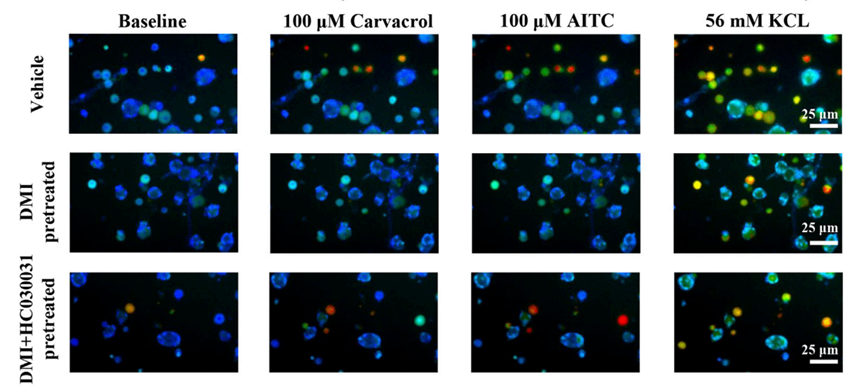
Carvacrol purchased from MedChemExpress. Usage Cited in: Front Pharmacol. 2025 Sep 29:16:1671461. [Abstract]
Representative images of DRG neurons in response to 100 μM Carvacrol and 100 μM AITC after pretreatment with vehicle, DMI (100 μM), or DMI + HC-030031 (100 μM).
-
Transl Oncol
Carvacrol attenuates mucosal barrier impairment and tumorigenesis by regulating gut microbiome. [Abstract]2025 Aug:58:102431. PMID: 40424934
Carvacrol purchased from MedChemExpress. Usage Cited in: Transl Oncol. 2025 Aug:58:102431. [Abstract]
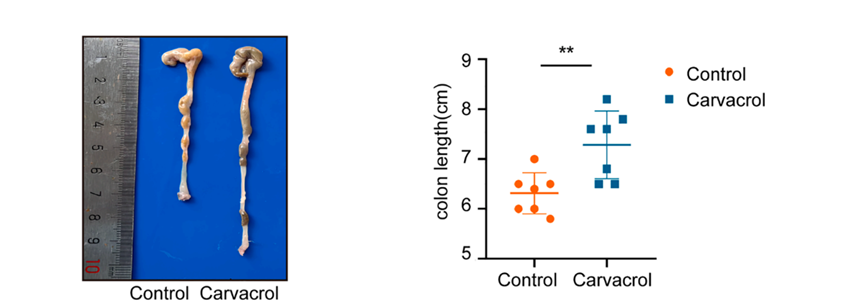
The shortening of colon length, indicative of colitis severity induced by DSS, was significantly alleviated in the Carvacrol group.
Carvacrol purchased from MedChemExpress. Usage Cited in: Transl Oncol. 2025 Aug:58:102431. [Abstract]
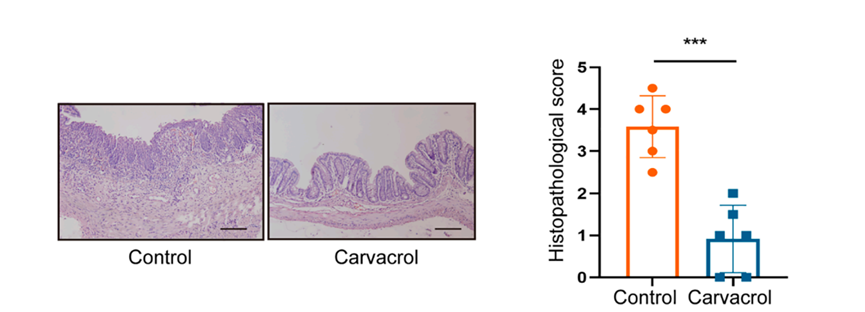
Carvacrol markedly reduced the histopathological damage in DSS-induced colitis.
Carvacrol purchased from MedChemExpress. Usage Cited in: Transl Oncol. 2025 Aug:58:102431. [Abstract]
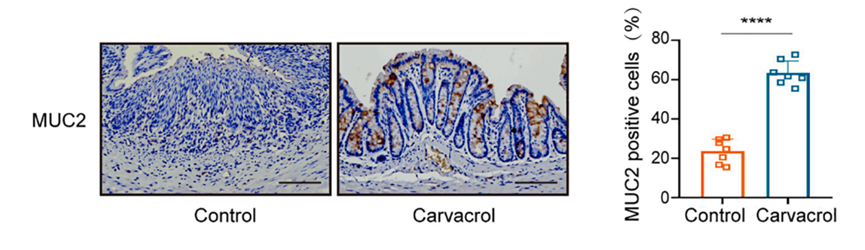
Tissue immunohistochemistry results showed a reduction in MUC2 expression in DSS-induced colitis mice, which was significantly restored by Carvacrol treatment.
Carvacrol purchased from MedChemExpress. Usage Cited in: Transl Oncol. 2025 Aug:58:102431. [Abstract]
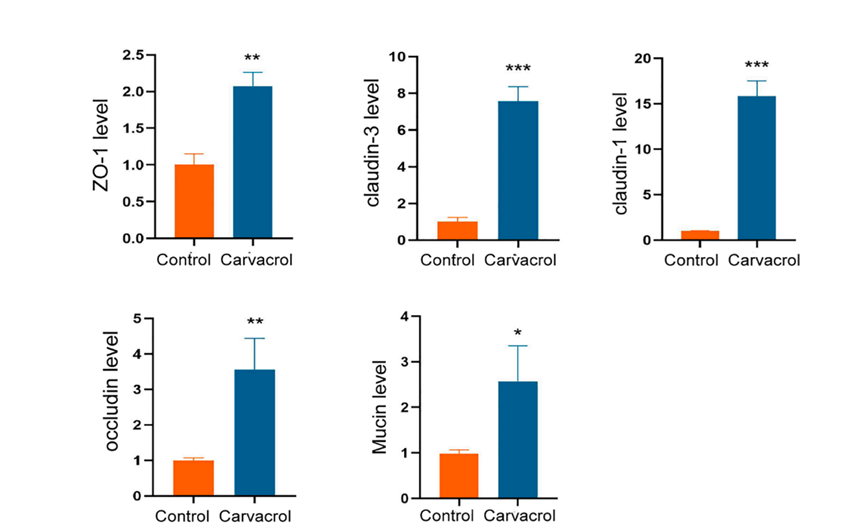
qPCR analysis revealed that the expression levels of ZO-1, Claudin3, Claudin1, Occludin, and Mucin were significantly increased in the Carvacrol group compared to the DSS group.
-
Toxicol In Vitro
Inhibitory potential of phytochemicals on species-specific breast cancer resistance protein transport activity. [Abstract]2025 Dec:109:106128. PMID: 40796067 -
bioRxiv
An efficient behavioral screening platform classifies natural products and other chemical cues according to their chemosensory valence in C. elegans. [Abstract]2024 Apr 3:2023.06.02.542933. PMID: 37333363 -
Elife
Therapeutic inhibition of keratinocyte TRPV3 sensory channel by local anesthetic dyclonine. [Abstract]2021 Apr 20:10:e68128. PMID: 33876725


Solvent & Solubility
In Vitro:
DMSO : 100 mg/mL (665.69 mM; Need ultrasonic; Hygroscopic DMSO has a significant impact on the solubility of product, please use newly opened DMSO)
Please refer to the solubility information to select the appropriate solvent. Once prepared, please aliquot and store the solution to prevent product inactivation from repeated freeze-thaw cycles.
Storage method and period of stock solution: -80°C, 6 months; -20°C, 1 month. When stored at -80°C, please use it within 6 months. When stored at -20°C, please use it within 1 month.
Please refer to the solubility information to select the appropriate solvent. Once prepared, please aliquot and store the solution to prevent product inactivation from repeated freeze-thaw cycles.
Storage method and period of stock solution: -80°C, 6 months; -20°C, 1 month. When stored at -80°C, please use it within 6 months. When stored at -20°C, please use it within 1 month.
Concentration (start) × Volume (start) = Concentration (final) × Volume (final)
In Vivo:
Select the appropriate dissolution method based on your experimental animal and administration route.
- For the following dissolution methods, please ensure to first prepare a clear stock solution using an In Vitro approach and then sequentially add co-solvents:
- To ensure reliable experimental results, the clarified stock solution can be appropriately stored based on storage conditions. As for the working solution for In Vivo experiments, it is recommended to prepare freshly and use it on the same day.
- The percentages shown for the solvents indicate their volumetric ratio in the final prepared solution. If precipitation or phase separation occurs during preparation, heat and/or sonication can be used to aid dissolution.
Add each solvent one by one: 10% DMSO 40% PEG300 5% Tween-80 45% Saline
Solubility: ≥ 2.5 mg/mL (16.64 mM); Clear solution
This protocol yields a clear solution of ≥ 2.5 mg/mL (saturation unknown).
Taking 1 mL working solution as an example, add 100 μL DMSO stock solution (25.0 mg/mL) to 400 μL PEG300, and mix evenly; then add 50 μL Tween-80 and mix evenly; then add 450 μL Saline to adjust the volume to 1 mL.
Preparation of Saline: Dissolve 0.9 g sodium chloride in ddH₂O and dilute to 100 mL to obtain a clear Saline solution.
Add each solvent one by one: 10% DMSO 90% (20% SBE-β-CD in Saline)
Solubility: ≥ 2.5 mg/mL (16.64 mM); Clear solution
This protocol yields a clear solution of ≥ 2.5 mg/mL (saturation unknown).
Taking 1 mL working solution as an example, add 100 μL DMSO stock solution (25.0 mg/mL) to 900 μL 20% SBE-β-CD in Saline, and mix evenly.
Preparation of 20% SBE-β-CD in Saline (4°C, storage for one week): 2 g SBE-β-CD powder is dissolved in 10 mL Saline, completely dissolve until clear.
In Vivo Dissolution Calculator
Please enter the basic information of animal experiments:
-
-
-
-
Recommended: Prepare an additional quantity of animals to account for potential losses during experiments.
Please enter your animal formula composition:
-
%DMSO +
Recommended: Keep the proportion of DMSO in working solution below 2% if your animal is weak.
-
%+
-
+%Tween-80 + +
-
%Saline +
The co-solvents required include: DMSO, . All of co-solvents are available by MedChemExpress (MCE). , Tween 80. All of co-solvents are available by MedChemExpress (MCE).
Working solution concentration: 0.22 mg/mL
Method for preparing stock solution: mg drug dissolved in μL DMSO. Stock solution concentration: mg/mL.
1. Take μL DMSO stock solution;
2. Add μL .
μL , mix evenly;
3. Then add μL Tween 80, mix evenly;
4. Then add μL
Please ensure that the stock solution in the first step is dissolved to a clear state, and add co-solvents in sequence. You can use ultrasonic heating (ultrasonic cleaner, recommended frequency 20-40 kHz), vortexing, etc. to assist dissolution.


Purity & Documentation
-
Data Sheet (273 KB)
-
SDS (759 KB)
- English - EN (759 KB)
- Français - FR (759 KB)
- Deutsch - DE (759 KB)
- Norwegian - NO (759 KB)
- Español - ES (759 KB)
- Swedish - SV (759 KB)
- Italian - IT (759 KB)
- Korean - KR (759 KB)
- Portuguese - PT (759 KB)
-
Handling Instructions (2659 KB)
References
[1]. Khan F, et al. Carvacrol Induced Program Cell Death and Cell Cycle Arrest in Androgen-Independent Human Prostate Cancer Cells via Inhibition of Notch Signaling. Anticancer Agents Med Chem. 2019 Jul 31. [Content Brief]
[2]. Suntres ZE, et al. The bioactivity and toxicological actions of carvacrol. Crit Rev Food Sci Nutr. 2015;55(3):304-18. [Content Brief]
[3]. Kara M, et al. Supplemental carvacrol can reduce the severity of inflammation by influencing the production of mediators of inflammation. Inflammation. 2015;38(3):1020-7. [Content Brief]


Complete Stock Solution Preparation Table
Please refer to the solubility information to select the appropriate solvent. Once prepared, please aliquot and store the solution to prevent product inactivation from repeated freeze-thaw cycles.
Storage method and period of stock solution: -80°C, 6 months; -20°C, 1 month. When stored at -80°C, please use it within 6 months. When stored at -20°C, please use it within 1 month.
| Optional Solvent | Concentration Solvent Mass | 1 mg | 5 mg | 10 mg | 25 mg |
|---|---|---|---|---|---|
| DMSO | 1 mM | 6.6569 mL | 33.2845 mL | 66.5690 mL | 166.4226 mL |
| 5 mM | 1.3314 mL | 6.6569 mL | 13.3138 mL | 33.2845 mL | |
| 10 mM | 0.6657 mL | 3.3285 mL | 6.6569 mL | 16.6423 mL | |
| 15 mM | 0.4438 mL | 2.2190 mL | 4.4379 mL | 11.0948 mL | |
| 20 mM | 0.3328 mL | 1.6642 mL | 3.3285 mL | 8.3211 mL | |
| 25 mM | 0.2663 mL | 1.3314 mL | 2.6628 mL | 6.6569 mL | |
| 30 mM | 0.2219 mL | 1.1095 mL | 2.2190 mL | 5.5474 mL | |
| 40 mM | 0.1664 mL | 0.8321 mL | 1.6642 mL | 4.1606 mL | |
| 50 mM | 0.1331 mL | 0.6657 mL | 1.3314 mL | 3.3285 mL | |
| 60 mM | 0.1109 mL | 0.5547 mL | 1.1095 mL | 2.7737 mL | |
| 80 mM | 0.0832 mL | 0.4161 mL | 0.8321 mL | 2.0803 mL | |
| 100 mM | 0.0666 mL | 0.3328 mL | 0.6657 mL | 1.6642 mL |


Carvacrol Related Classifications
HY-N0711 Related Classifications
 Powered by Bioz