



Derris elliptica (Roxb.) Benth.
-
Derris elliptica (Roxb.) Benth. (8)

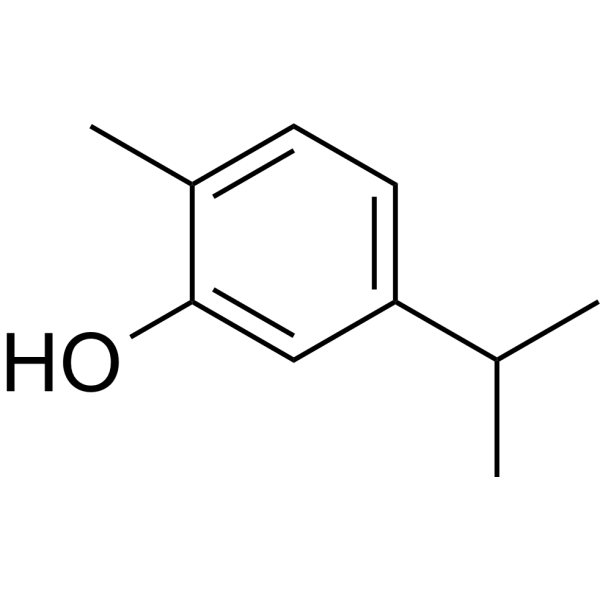
- Formula: C10H14O
- Molecular Weight: 150.22
Carvacrol is an orally active and blood-brain barrier-permeable monoterpenic phenol that can be extract from an abundant number of aromatic plants, including thyme and oregano, possessing antioxidant, antibacterial, antifungal, anticancer, anti-inflammatory, hepatoprotective, spasmolytic, and vasorelaxant properties. Carvacrol also causes cell cycle arrest in G0/G1, downregulates Notch-1, and Jagged-1, and induces apoptosis. Carvacrol is used in low concentrations as a food flavoring ingredient and preservative, as well as a fragrance ingredient in cosmetic formulations.
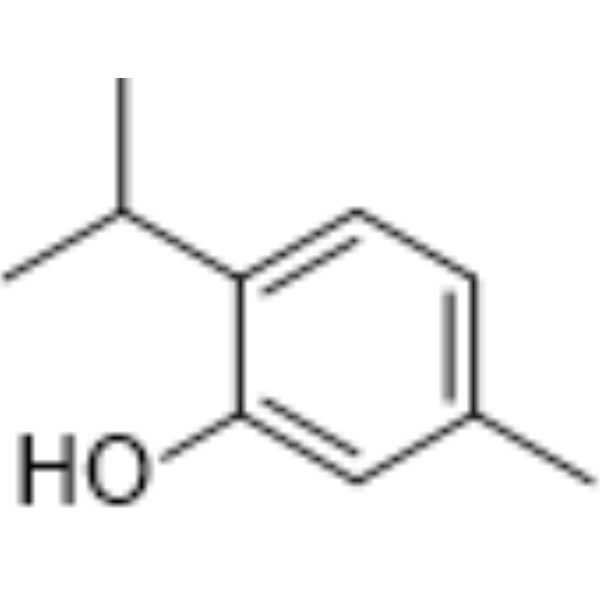
- Formula: C10H14O
- Molecular Weight: 150.22
Thymol is a TRPA1 agonist. Thymol induces cancer cell apoptosis. Thymol is the main monoterpene phenol occurring in essential oils isolated from plants belonging to the Lamiaceae family, and other plants such as those belonging to the Verbenaceae, Scrophulariaceae, Ranunculaceae and Apiaceae families. Thymol has antioxidant, anti-inflammatory, antibacterial and antifungal effects.

- Formula: C₁₀H₁₄O
- Molecular Weight: 150.22
Carvacrol (Standard) is the analytical standard of Carvacrol. This product is intended for research and analytical applications. Carvacrol is an orally active and blood-brain barrier-permeable monoterpenic phenol that can be extract from an abundant number of aromatic plants, including thyme and oregano, possessing antioxidant, antibacterial, antifungal, anticancer, anti-inflammatory, hepatoprotective, spasmolytic, and vasorelaxant properties. Carvacrol also causes cell cycle arrest in G0/G1, downregulates Notch-1, and Jagged-1, and induces apoptosis. Carvacrol is used in low concentrations as a food flavoring ingredient and preservative, as well as a fragrance ingredient in cosmetic formulations.


- Formula: C16H28O6
- Molecular Weight: 316.39
(1S,2R,4S)-Borneol β-D-glucopyranoside (Compound 10) is a monoterpenoid glucoside.(1S,2R,4S)-Borneol β-D-glucopyranoside can be found in the leaf of Thymus vulgaris.
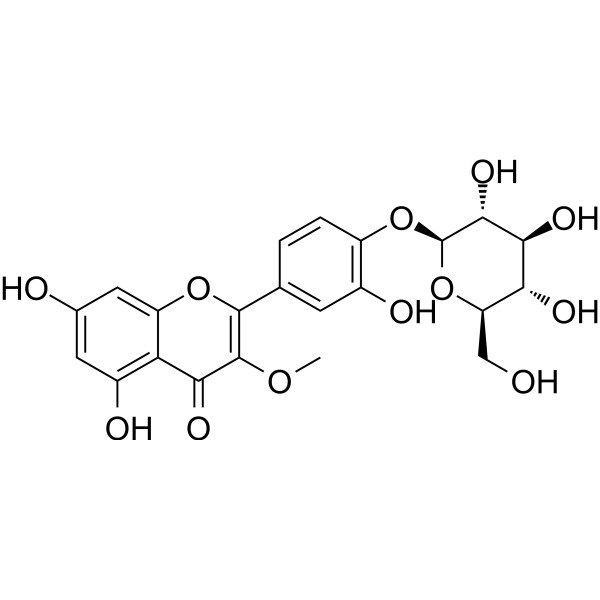
- Formula: C22H22O12
- Molecular Weight: 478.40
Neochilenin (3-O-Methylquercetin 4 '-O-glucoside) is a glycoside of 3-O-methylquercetin, which can be isolated from the sub-family Cereoideae (Cactaceae). .
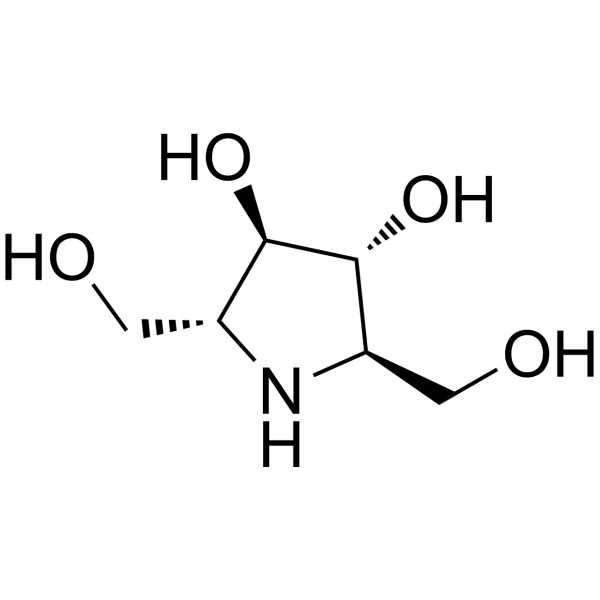
- Formula: C6H13NO4
- Molecular Weight: 163.17
α-GLU stands for α-glucosidase. α-GLU hydrolyzes starch and disaccharides via targeting to terminal, non-reducing (1→4)-linked α-D-glucose residues to produce α-glucose. α-GLU is substrate selective.



