



ACAT
Acyl-CoA:cholesterol acyltransferase (ACAT/SOAT) converts cholesterol to cholesteryl esters and regulates cellular cholesterol homeostasis[1]. Mechanistically, ACAT uses cholesterol and long-chain fatty-acyl-CoA to form cholesteryl esters, thereby supporting intracellular cholesterol storage, hepatic and intestinal lipoprotein assembly, and neutral lipid metabolism[2][3]. In atherosclerosis biology, ACAT-derived cholesteryl ester accumulation in macrophages contributes to foam cell formation, while ACAT inhibition retards foam cell formation in aortic smooth muscle cells without significant cytotoxicity in that model[2][4]. Disease models further separate isoform functions: ACAT2 deficiency limits cholesterol absorption in cholesterol-fed mice, reduces atherosclerosis in LDL receptor-deficient mice, and reduces esterified cholesterol sequestration in lysosomal acid lipase-deficient mice[5][6][7]. Compared with ACAT1, which shows broad tissue expression and supports cholesterol esterification in many cells, ACAT2 is emphasized in enterocytes, hepatocytes, liver, and small intestine, making ACAT2 a distinct target for intestinal absorption, hepatic cholesterol handling, and apoB-lipoprotein cholesteryl ester production[3][5][8]. For experimental applications, pyripyropene A shows strong ACAT2 selectivity, beauveriolide derivative BVD327 reduces atherosclerotic lesions in Apoe knockout mice, and newer selective ACAT2 antagonists provide scaffolds for ACAT2-centered inhibitor design[9][10][11].
参考文献:
- [1]. Rogers MA, et al. Acyl-CoA:cholesterol acyltransferases (ACATs/SOATs): Enzymes with multiple sterols as substrates and as activators. J Steroid Biochem Mol Biol. 2015 Jul;151:102-7. [Content Brief]
- [2]. Chang C, et al. Human acyl-CoA:cholesterol acyltransferase (ACAT) and its potential as a target for pharmaceutical intervention against atherosclerosis. Acta Biochim Biophys Sin (Shanghai). 2006 Mar;38(3):151-6. [Content Brief]
- [3]. Jiang R, et al. Effectiveness of exercise on perinatal depression and anxiety symptoms: A network meta-analysis and dose-response analysis. Int J Gynaecol Obstet. 2026 Jun;173(3):1308-1324. [Content Brief]
- [4]. Rong JX, et al. Acyl-coenzymeA (CoA):cholesterol acyltransferase inhibition in rat and human aortic smooth muscle cells is nontoxic and retards foam cell formation. Arterioscler Thromb Vasc Biol. 2005 Jan;25(1):122-7. [Content Brief]
- [5]. Repa JJ, et al. ACAT2 deficiency limits cholesterol absorption in the cholesterol-fed mouse: impact on hepatic cholesterol homeostasis. Hepatology. 2004 Nov;40(5):1088-97. [Content Brief]
- [6]. Lee RG, et al. Plasma cholesteryl esters provided by lecithin:cholesterol acyltransferase and acyl-coenzyme a:cholesterol acyltransferase 2 have opposite atherosclerotic potential. Circ Res. 2004 Nov 12;95(10):998-1004. [Content Brief]
- [7]. Lopez AM, et al. Deletion of sterol O-acyltransferase 2 (SOAT2) function in mice deficient in lysosomal acid lipase (LAL) dramatically reduces esterified cholesterol sequestration in the small intestine and liver. Biochem Biophys Res Commun. 2014 Nov 7;454(1):162-6. [Content Brief]
- [8]. Hai Q, et al. Acyl-Coenzyme A: Cholesterol Acyltransferase (ACAT) in Cholesterol Metabolism: From Its Discovery to Clinical Trials and the Genomics Era. Metabolites. 2021 Aug 14;11(8):543. [Content Brief]
- [9]. Ohshiro T, et al. Selectivity of microbial acyl-CoA: cholesterol acyltransferase inhibitors toward isozymes. J Antibiot (Tokyo). 2007 Jan;60(1):43-51. [Content Brief]
- [10]. Ohshiro T, et al. The Anti-atherogenic Activity of Beauveriolide Derivative BVD327, a Sterol O-Acyltransferase 2-Selective Inhibitor, in Apolipoprotein E Knockout Mice. Biol Pharm Bull. 2020;43(6):951-958. [Content Brief]
- [11]. Liu Y, et al. Discovery of selective ACAT2 antagonist via a combination strategy based on deep docking, pharmacophore modelling, and molecular dynamics simulation. J Enzyme Inhib Med Chem. 2024 Dec;39(1):2403736. [Content Brief]
All Product Categories
-
ACAT 関連製品 (11)
関連製品 (11)

- 1
-
Glabrol
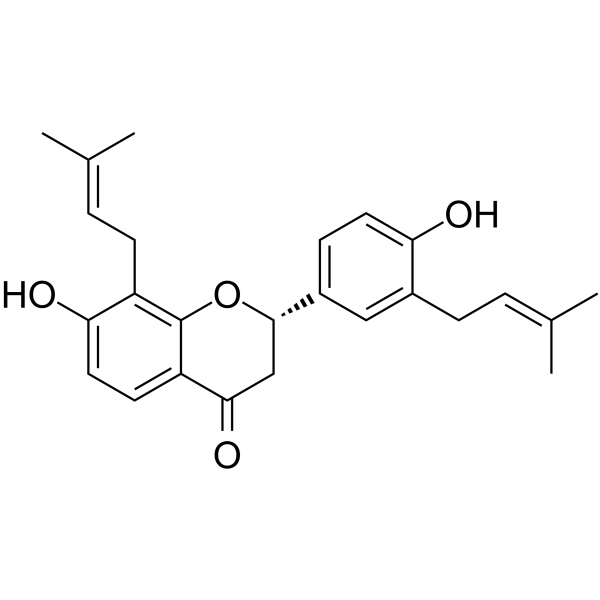 0 ImagesGlabrol (Compound 1), One isoprenyl flavonoid was isolated from ethanol extract of licorice roots, is a potent and non-competitive Acyl-coenzyme A: cholesterol acyltransferase (ACAT) inhibitor with an IC50 value of 24.6 μM for rat liver microsomal ACAT activity.
-
Enniatin B1
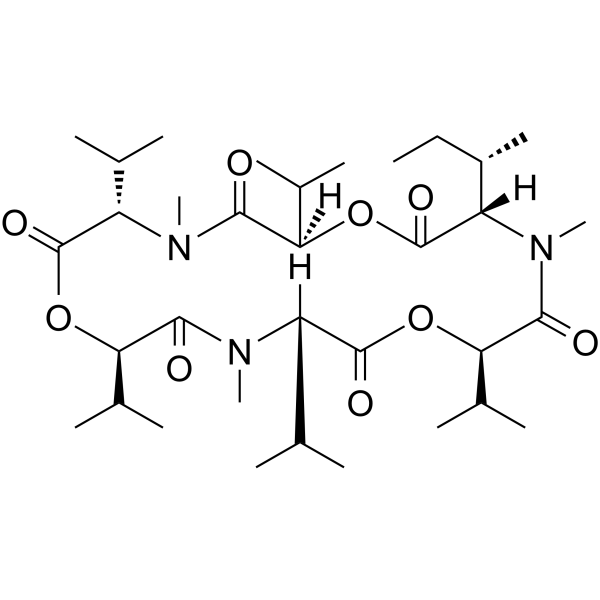 0 ImagesEnniatin B1 is a Fusarium mycotoxin. Enniatin B1 inhibits acyl-CoA: cholesterol acyltransferase (ACAT) activity with an IC50 of 73 μM in an enzyme assay using rat liver microsomes. Enniatin B1 crosss the blood-brain barrier. Enniatin B1 decreases the activation of ERK (p44/p42). Enniatin B1 inhibits moderately TNF-α-induced NF-κB activation.
-
Pactimibe
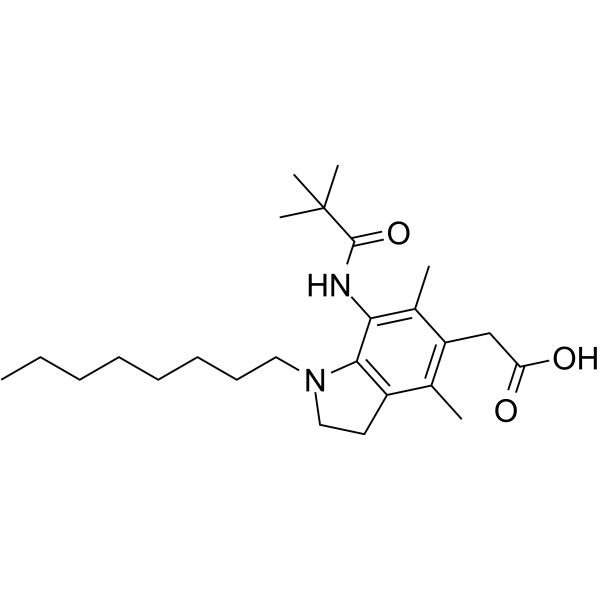 0 Images別名: CS-505 free basePactimibe (CS-505 free base) is a dual ACAT1/2 inhibitor with IC50s of 4.9 μM and 3.0 μM, respectively. Pactimibe (CS-505 free base) inhibits ACAT with IC50s of 2.0 μM, 2.7 μM, 4.7 μM in the liver, macrophages and THP-1 cells, respectively. Pactimibe (CS-505 free base) noncompetitively inhibits oleoyl-CoA with a Ki value of 5.6 μM. Moreover, Pactimibe (CS-505 free base) obviously inhibits cholesteryl ester formation with an IC50 of 6.7 μM. Pactimibe (CS-505 free base) possesses anti-atherosclerotic potential with lowering plasma cholesterol activity.
-
VULM 1457
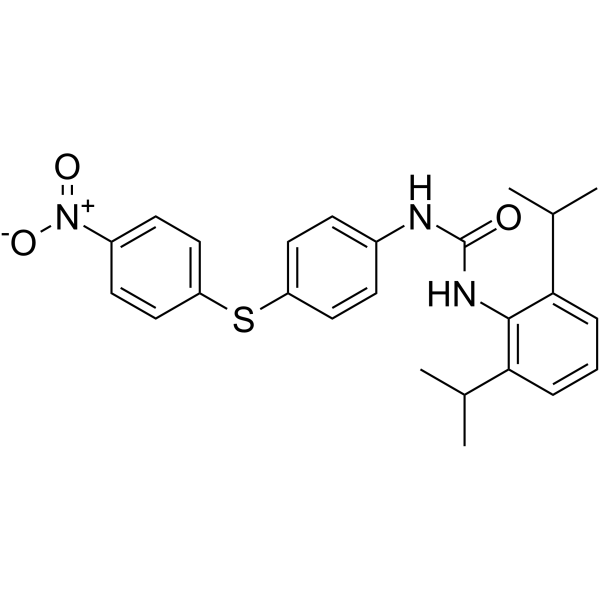 0 ImagesVULM 1457 is a potent inhibitor of cholesterol acyltransferase (acyl-CoA). VULM1457 significantly reduces production and secretion of adrenomedullin (AM) and down-regulates AM receptors on human hepatoblastic cells. VULM 1457 has remarkable hypolipidaemic activity and improves the overall myocardial ischaemia-reperfusion injury outcomes. VULM 1457 has the potential for the research of diabetes mellitus and hypercholesterolaemia.
-
Pactimibe sulfate
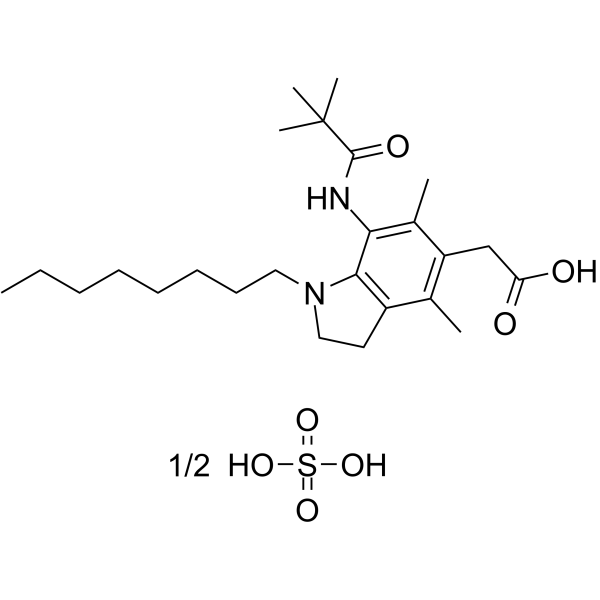 0 Images別名: CS-505Pactimibe sulfate (CS-505) is a dual ACAT1/2 inhibitor with IC50s of 4.9 μM and 3.0 μM, respectively. Pactimibe sulfate (CS-505) inhibits ACAT with IC50s of 2.0 μM, 2.7 μM, 4.7 μM in the liver, macrophages and THP-1 cells, respectively. Pactimibe sulfate (CS-505) noncompetitively inhibits oleoyl-CoA with a Ki value of 5.6 μM. Moreover, Pactimibe sulfate (CS-505) obviously inhibits cholesteryl ester formation with an IC50 of 6.7 μM. Pactimibe sulfate (CS-505) possesses anti-atherosclerotic potential with lowering plasma cholesterol activity.
-
Ilekudinol B
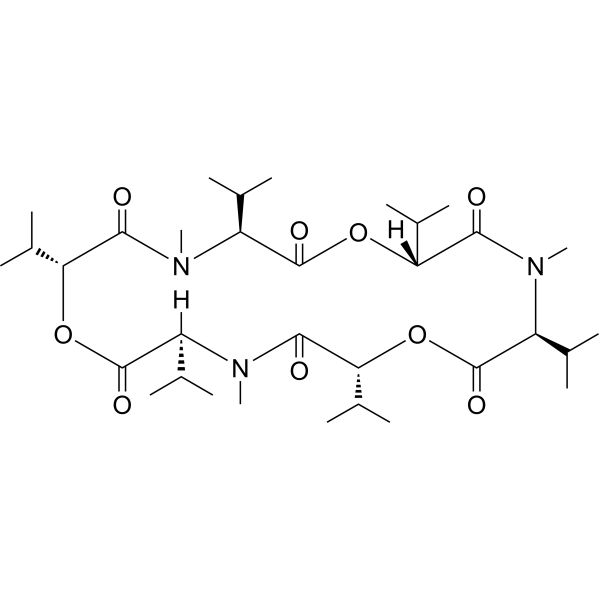
 0 Images製品番号: HY-N17326CAS 番号: 242794-72-5Ilekudinol B is an inhibitor of ACAT and PTP1B, with an IC50 of 5.3 μM and a Ki of 11.6 μM against human PTP1B. Ilekudinol B inhibits the classical pathway of the complement system, with an IC50 of 51 μM. Ilekudinol B inhibits TNF-α-induced cellular IL-8 secretion, promotes glucose uptake in skeletal muscle myotubes, and acts as an insulin mimetic and insulin sensitizer. Ilekudinol B can be used in research related to type 2 diabetes, obesity, and inflammatory diseases.
-
447C88
 0 Images製品番号: HY-19112CAS 番号: 130400-16-7447C88 is an acyl-coenzyme A cholesterol acyltransferase (ACAT) inhibitor with an IC50 of 23 nM. 447C88 can reduce plasma cholesterol levels and can be used in the research of endocrine and metabolic diseases such as hyperlipidemia.
-
CL-283796
 0 Images製品番号: HY-19251CAS 番号: 107376-72-7CL-283796 is a potent and orally active acyl-CoA:cholesterol acyltransferase (ACAT) inhibitor. CL-283796 reduces low-density lipoprotein (LDL) cholesterol without affecting cholesterol absorption in African green monkeys. CL-283796 can be used for hypercholesterolemia research.
-
Phenylpyropene C
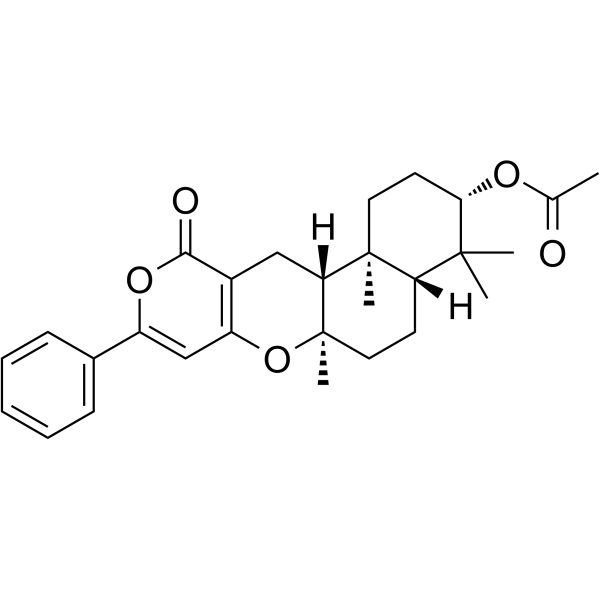 0 Images製品番号: HY-115734CAS 番号: 419532-92-6別名: S14-95Phenylpyropene C (S14-95), a JAK/STAT pathway inhibitor, can inhibit IFN-γ mediated expression of the reporter gene (IC50=5.4~10.8 μM). Phenylpyropene C also is an inhibitor of acyl-CoA, with an IC50 of 16.0 μM.
-
Enniatin A
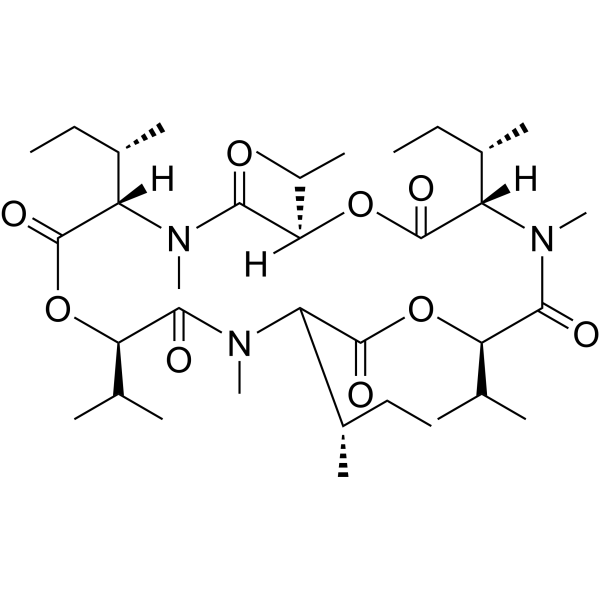 0 ImagesEnniatin A is a Fusarium mycotoxin. Enniatin A inhibits acyl-CoA: cholesterol acyltransferase (ACAT) activity with an IC50 of 22 μM in an enzyme assay using rat liver microsomes.
- 1



