



Sarsasapogenin
Based on 5 publication(s) in Google Scholar
Sarsasapogenin is a sapogenin from the Chinese medical herb Anemarrhena asphodeloides Bunge, with antidiabetic, anti-oxidative, anticancer and anti-inflamatory activities.
연구목적의 판매만을 진행합니다. 환자를 대상으로 한 판매는 하지 않습니다.
- Purity : 99.93%
- CAS No.: 126-19-2
- 화학식: C27H44O3
- 분자량:416.64
-
보관:Powder -20°C, 3 years , 4°C, 2 years ; In solvent -80°C, 2 years , -20°C, 1 year

To place orders, for customer services and technical support, please contact: MedChemExpress USA
Tel: 609-228-6898 E-mail: [email protected] [email protected]


-
 Biological Activity
-
Chemical Information
-
용액&용해도
- 순도&문서
- References
-
 Help & FAQs


-
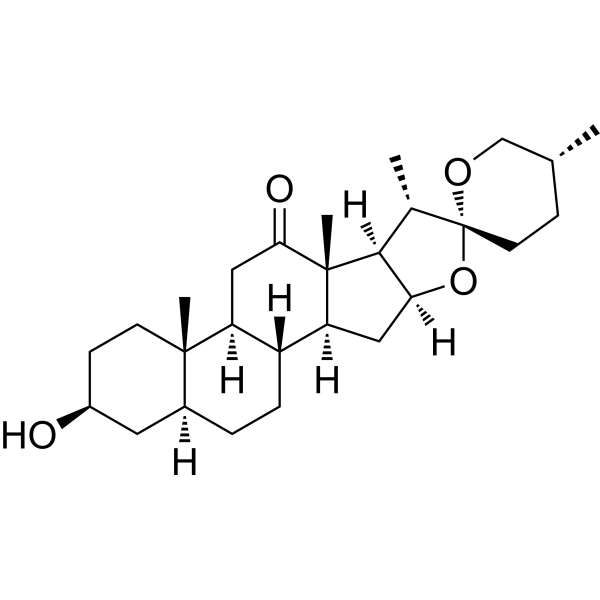
HY-N1422
HecogeninFungal Inhibitor -
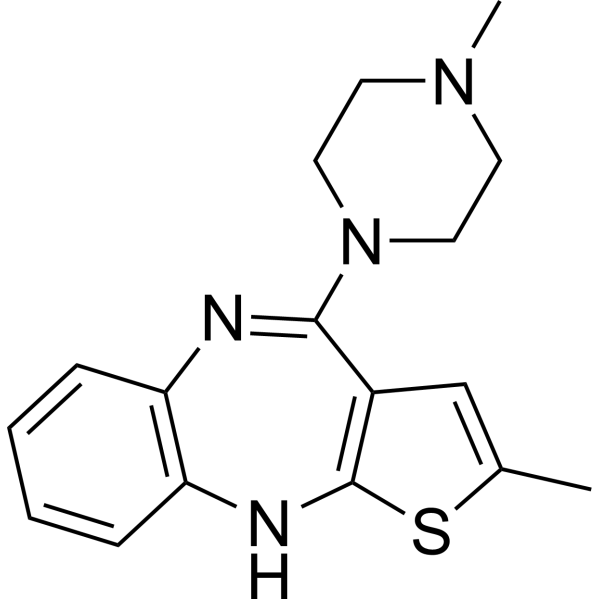
HY-14541
Olanzapine5-HT2/D1/D2 Antagonist -
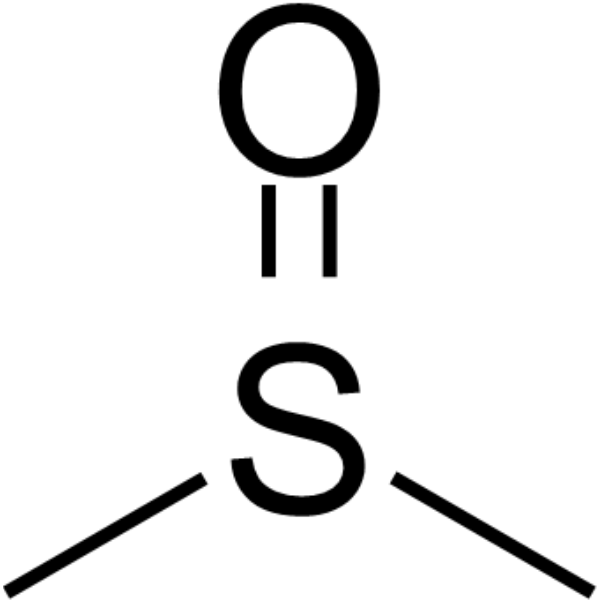
HY-Y0320
Dimethyl sulfoxide, meets analytical specification of Ch.P.Aprotic Solvent -

HY-N0073R
Sarsasapogenin (Standard)Steroidal Sapogenin -
HY-Y0703
Sodium carboxymethyl cellulose (Viscosity:800-1200 mPa.s)Biochemical Assay Reagent -
HY-N4000
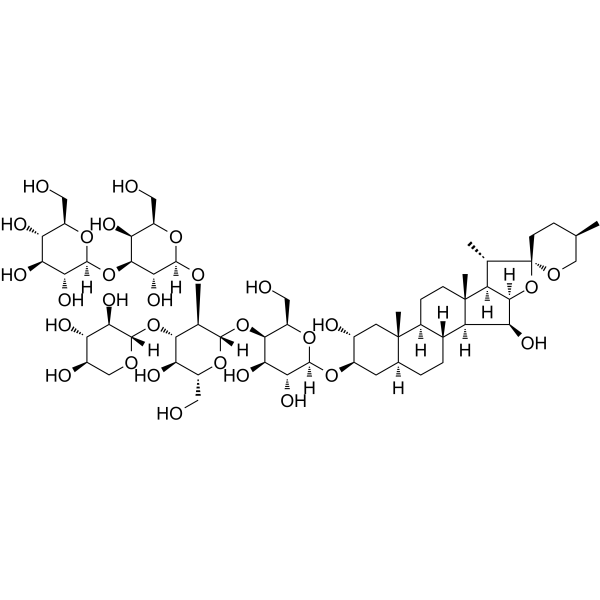
DigitoninDetergent -
HY-N0328
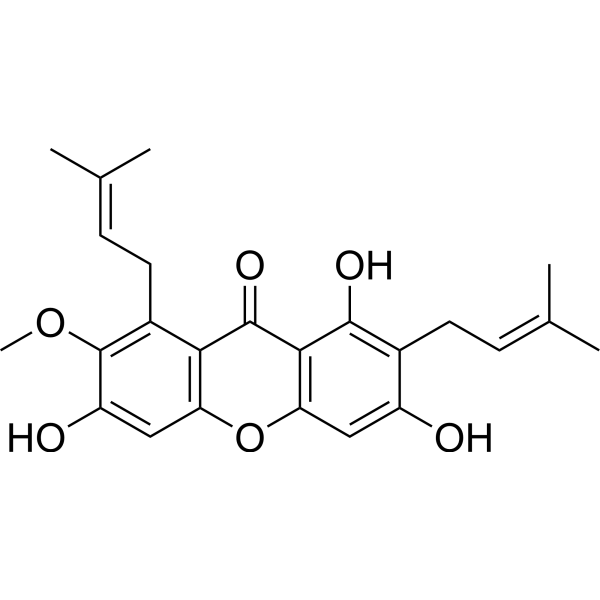
alpha-MangostinIDH1-R132H Inhibitor -
HY-N0474
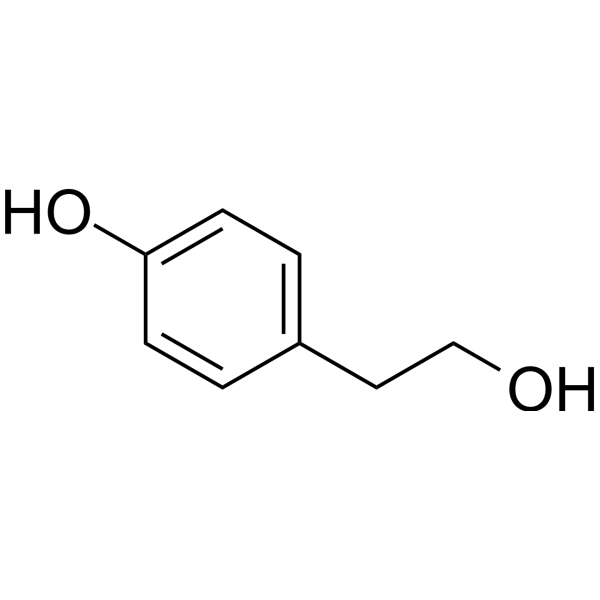
TyrosolEndogenous Metabolite -
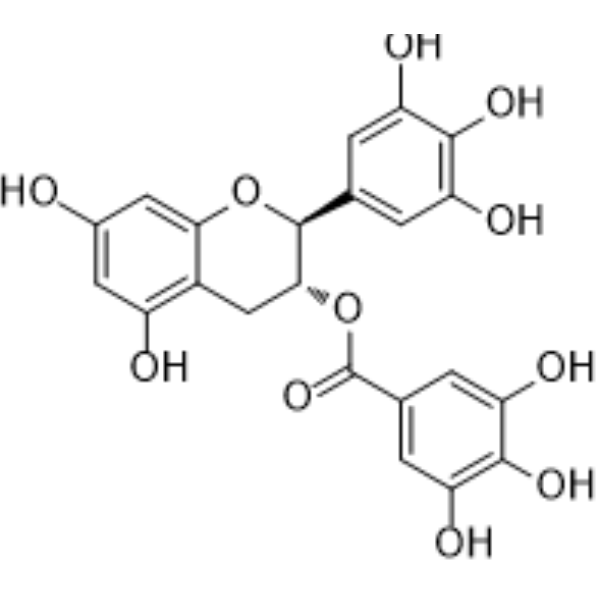
HY-N0522
(-)-Gallocatechin gallateAnticancer Agent -
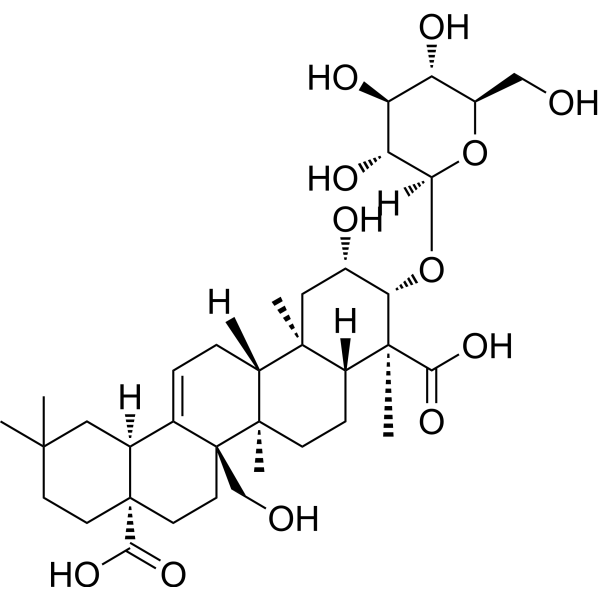
HY-N0702
Tenuifolinβ-Secretase Inhibitor -
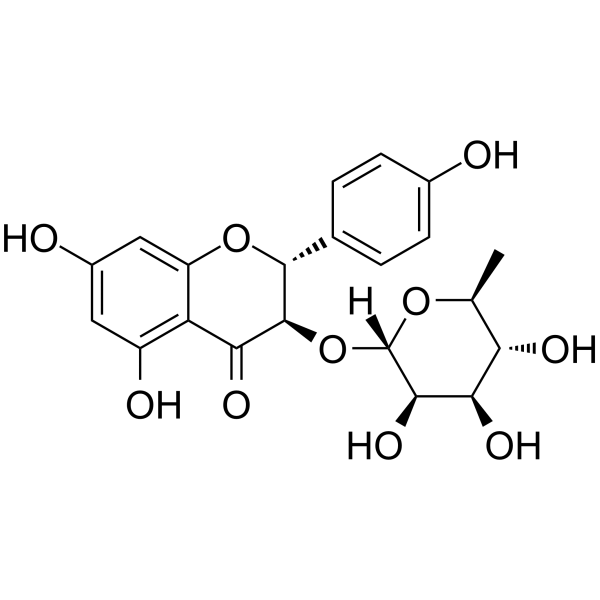
HY-N0436
EngeletinNF-κB Inhibitor -
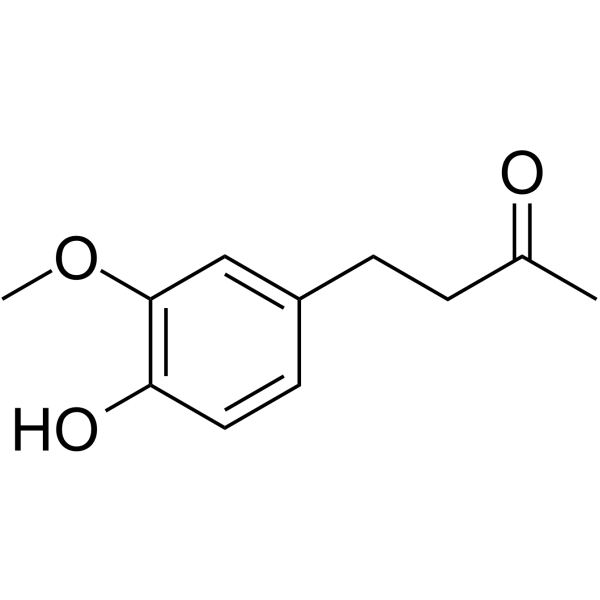
HY-14621
ZingeronePhenolic Ketone
Publications Citing Use of MedChemExpress (MCE) Sarsasapogenin
MoreAll Endogenous Metabolite Isoforms
More

Biological Activity
제품 설명
IC50 & Target
[3]|
NF-κB |
Cellular Effect
|
Cell Line

|
Type | Value | Description | References |
|---|---|---|---|---|
| A549 | IC50 |
38.15 μM
Compound: Sarsasapogenin
|
Cytotoxicity against human A549 cells assessed as decrease in cell proliferation after 48 hrs by MTT colorimetric assay
Cytotoxicity against human A549 cells assessed as decrease in cell proliferation after 48 hrs by MTT colorimetric assay
|
[PMID: 28038327] |
| Bcap37 | IC50 |
>100 μM
Compound: Sarsasapogenin
|
Cytotoxicity against human Bcap37 cells assessed as decrease in cell proliferation after 48 hrs by MTT colorimetric assay
Cytotoxicity against human Bcap37 cells assessed as decrease in cell proliferation after 48 hrs by MTT colorimetric assay
|
[PMID: 28038327] |
| Hep 3B2 | IC50 |
>100 μM
Compound: Sarsasapogenin
|
Cytotoxicity against human Hep3B cells assessed as decrease in cell proliferation after 48 hrs by MTT colorimetric assay
Cytotoxicity against human Hep3B cells assessed as decrease in cell proliferation after 48 hrs by MTT colorimetric assay
|
[PMID: 28038327] |
| HepG2 | IC50 |
40.34 μM
Compound: Sarsasapogenin
|
Cytotoxicity against human HepG2 cells assessed as decrease in cell proliferation after 48 hrs by MTT colorimetric assay
Cytotoxicity against human HepG2 cells assessed as decrease in cell proliferation after 48 hrs by MTT colorimetric assay
|
[PMID: 28038327] |
| MCF7 | IC50 |
49.23 μM
Compound: Sarsasapogenin
|
Cytotoxicity against human MCF7 cells assessed as decrease in cell proliferation after 48 hrs by MTT colorimetric assay
Cytotoxicity against human MCF7 cells assessed as decrease in cell proliferation after 48 hrs by MTT colorimetric assay
|
[PMID: 28038327] |
| THP-1 | IC50 |
3.3 μM
Compound: 3
|
Anticoagulant activity in human THP1 cells assessed as inhibition of TNF-alpha-stimulated tissue factor expression incubated 1 hr before TNFalpha challenge measured after 5 hrs
Anticoagulant activity in human THP1 cells assessed as inhibition of TNF-alpha-stimulated tissue factor expression incubated 1 hr before TNFalpha challenge measured after 5 hrs
|
[PMID: 20561785] |
| U-251 | IC50 |
>100 μM
Compound: Sarsasapogenin
|
Cytotoxicity against human U251 cells assessed as decrease in cell proliferation after 48 hrs by MTT colorimetric assay
Cytotoxicity against human U251 cells assessed as decrease in cell proliferation after 48 hrs by MTT colorimetric assay
|
[PMID: 28038327] |
In Vitro
Sarsasapogenin (20-80 μM) induces apoptosis via caspase-dependent mitochondrial pathway in heLa cells. Sarsasapogenin also induces apoptosis via the caspase-dependent mitochondrial apoptotic pathway. Sarsasapogenin (60 μM)-induced ROS generation triggers ER stress and mitochondrial dysfunction[1]. Sarsasapogenin potently inhibits NF-κB and MAPK activation, as well as IRAK1, TAK1, and IκBα phosphorylation in LPS-stimulated macrophages. Moreover, Sarsasapogenin inhibits the binding of LPS to macrophage Toll-like receptor 4, and polarization of M2 to M1 macrophages[3].
MedChemExpress (MCE) has not independently confirmed the accuracy of these methods. They are for reference only.
In Vivo
MedChemExpress (MCE) has not independently confirmed the accuracy of these methods. They are for reference only.


Chemical Information
-
CAS No. 126-19-2
-
Appearance Solid
-
분자량 416.64
-
화학식 C27H44O3
-
Color White to off-white
-
SMILES
C[C@@H]1[C@]2(OC[C@@H](C)CC2)O[C@@]3([H])C[C@@]4([H])[C@]5([H])CC[C@]6([H])C[C@@H](O)CC[C@]6(C)[C@@]5([H])CC[C@]4(C)[C@]31[H]
-
Synonyms
Parigenin; Sarsagenin
-
Structure Classification
-
선적
Room temperature in continental US; may vary elsewhere.
-
보관
Powder -20°C 3 years 4°C 2 years In solvent -80°C 2 years -20°C 1 year


Publications (5)
-
Journal Impact Factor
-
Most Recent
-
Phytother Res
Sarsasapogenin ameliorates diabetes-associated memory impairment and neuroinflammation through down-regulation of PAR-1 receptor. [Abstract]2021 Jun;35(6):3167-3180. PMID: 33885189 -
Drug Des Devel Ther
Sarsasapogenin Suppresses RANKL-Induced Osteoclastogenesis in vitro and Prevents Lipopolysaccharide-Induced Bone Loss in vivo. [Abstract]2020 Aug 24:14:3435-3447. PMID: 32943842 -
J Biochem Mol Toxicol
Sarsasapogenin Inhibits HCT116 and Caco-2 Cell Malignancy and Tumor Growth in a Xenograft Mouse Model of Colorectal Cancer by Inactivating MAPK Signaling. [Abstract]2025 Mar;39(3):e70189. PMID: 40009047 -
PLoS One
2020 Dec 31;15(12):e0244654. PMID: 33382809 -


용액&용해도
In Vitro:
DMSO : 3.57 mg/mL (8.57 mM; ultrasonic and warming and heat to 60°C; Hygroscopic DMSO has a significant impact on the solubility of product, please use newly opened DMSO)
Ethanol : 1 mg/mL (2.40 mM; Need ultrasonic)
Please refer to the solubility information to select the appropriate solvent. Once prepared, please aliquot and store the solution to prevent product inactivation from repeated freeze-thaw cycles.
Storage method and period of stock solution: -80°C, 2 years; -20°C, 1 year. When stored at -80°C, please use it within 2 years. When stored at -20°C, please use it within 1 year.
Please refer to the solubility information to select the appropriate solvent. Once prepared, please aliquot and store the solution to prevent product inactivation from repeated freeze-thaw cycles.
Storage method and period of stock solution: -80°C, 2 years; -20°C, 1 year. When stored at -80°C, please use it within 2 years. When stored at -20°C, please use it within 1 year.
Concentration (start) × Volume (start) = Concentration (final) × Volume (final)
In Vivo:
For the following dissolution methods, please prepare the working solution directly:
It is recommended to prepare fresh solutions and use them promptly within a short period of time.
The percentages shown for the solvents indicate their volumetric ratio in the final prepared solution. If precipitation or phase separation occurs during preparation, heat and/or sonication can be used to aid dissolution.
Add each solvent one by one: 0.5% CMC-Na/saline water
Solubility: 5 mg/mL (12.00 mM); Suspended solution; Need ultrasonic


순도&문서
-
Data Sheet (292 KB)
-
SDS (396 KB)
- English - EN (396 KB)
- Français - FR (396 KB)
- Deutsch - DE (396 KB)
- Norwegian - NO (396 KB)
- Español - ES (396 KB)
- Swedish - SV (396 KB)
- Italian - IT (396 KB)
- Korean - KR (396 KB)
- Portuguese - PT (396 KB)
-
Handling Instructions (2659 KB)
References
[2]. Feng B, et al. Sarsasapogenin reverses depressive-like behaviors and nicotinic acetylcholine receptors induced by olfactory bulbectomy. Neurosci Lett. 2017 Feb 3;639:173-178. [Content Brief]
[3]. Lim SM, et al. Timosaponin AIII and its metabolite sarsasapogenin ameliorate colitis in mice by inhibiting NF-κB and MAPK activation and restoring Th17/Treg cell balance. Int Immunopharmacol. 2015 Apr;25(2):493-503. [Content Brief]


Complete Stock Solution Preparation Table
Please refer to the solubility information to select the appropriate solvent. Once prepared, please aliquot and store the solution to prevent product inactivation from repeated freeze-thaw cycles.
Storage method and period of stock solution: -80°C, 2 years; -20°C, 1 year. When stored at -80°C, please use it within 2 years. When stored at -20°C, please use it within 1 year.
| Optional Solvent | Concentration Solvent Mass | 1 mg | 5 mg | 10 mg | 25 mg |
|---|---|---|---|---|---|
| Ethanol / DMSO | 1 mM | 2.4002 mL | 12.0008 mL | 24.0015 mL | 60.0038 mL |
| DMSO | 5 mM | 0.4800 mL | 2.4002 mL | 4.8003 mL | 12.0008 mL |


Sarsasapogenin Related Classifications
HY-N0073 Related Classifications
 Powered by Bioz