



Linuron
Based on 1 publication(s) in Google Scholar
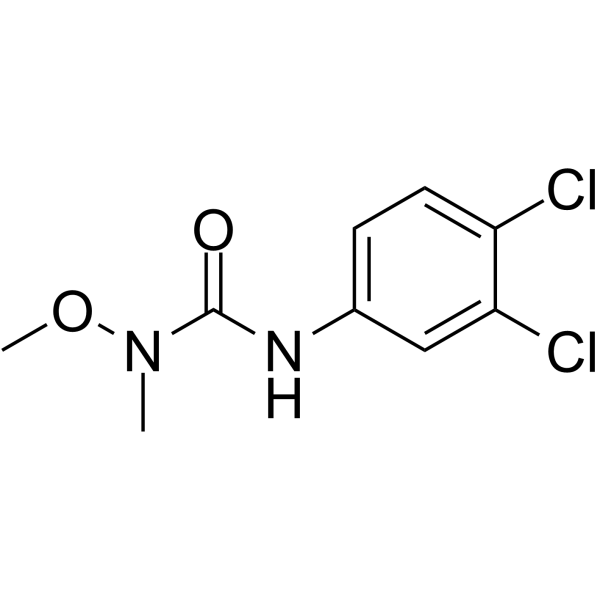
Linuron is a phenylurea herbicide widely used to control the growth of grasses and weeds in various crops and orchards. Linuron acts as a photosystem II inhibitor. It also functions as a competitive androgen receptor (AR) antagonist, with an EC50 of 200 μM and a Ki of 100 μM against rat AR, and an EC50 of 20 μM against human AR. Linuron exhibits reproductive toxicity in animals and acts as an endocrine disruptor.\n
For research use only. We do not sell to patients.
- Purity : 99.88%
- CAS No.: 330-55-2
- Formula: C9H10Cl2N2O2
- Molecular Weight:249.09
-
Storage:Powder -20°C, 3 years , 4°C, 2 years ; In solvent -80°C, 6 months , -20°C, 1 month

To place orders, for customer services and technical support, please contact: MedChemExpress USA
Tel: 609-228-6898 E-mail: [email protected] [email protected]


-
 Biological Activity
-
Chemical Information
-
Solvent & Solubility
- Protocols
- Purity & Documentation
- References
-
 Help & FAQs


-

HY-B1866R
Linuron (Standard)Phenylurea Herbicide -
HY-137448
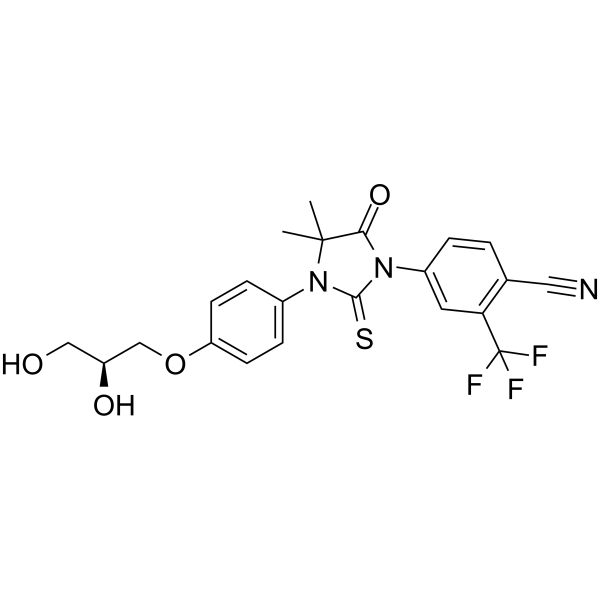
RezvilutamideAndrogen Receptor Antagonist -
HY-107480
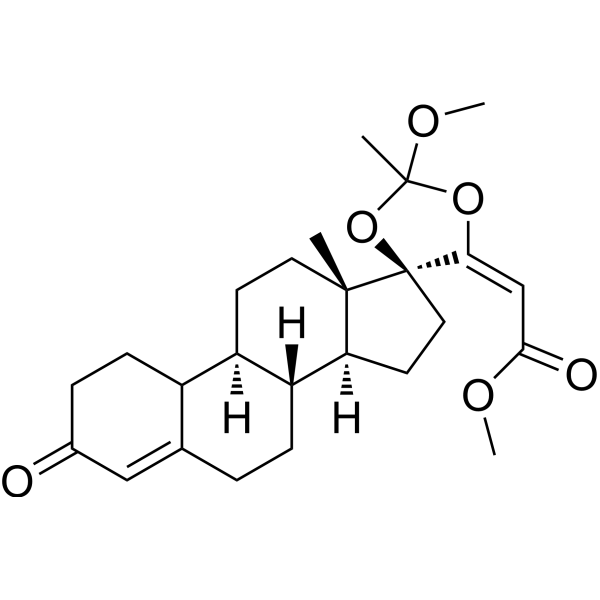
YK11Androgen Receptor Partial Agonist -
HY-138641
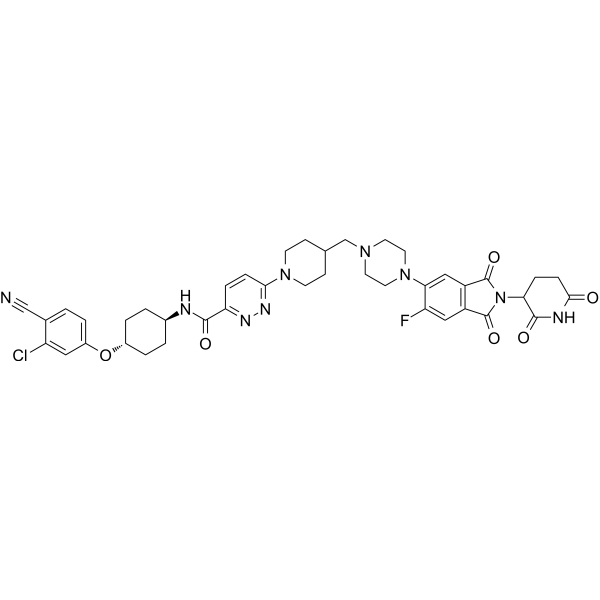
BavdegalutamideAR PROTAC Degrader -
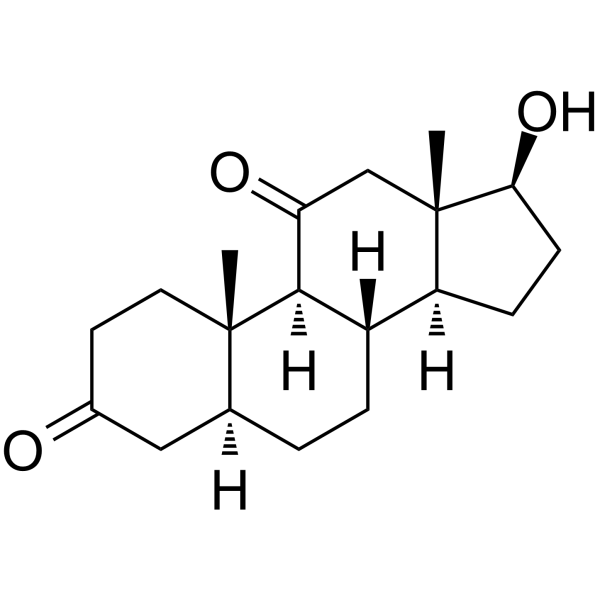
HY-135794
11-KetodihydrotestosteroneAndrogen Receptor Agonist -
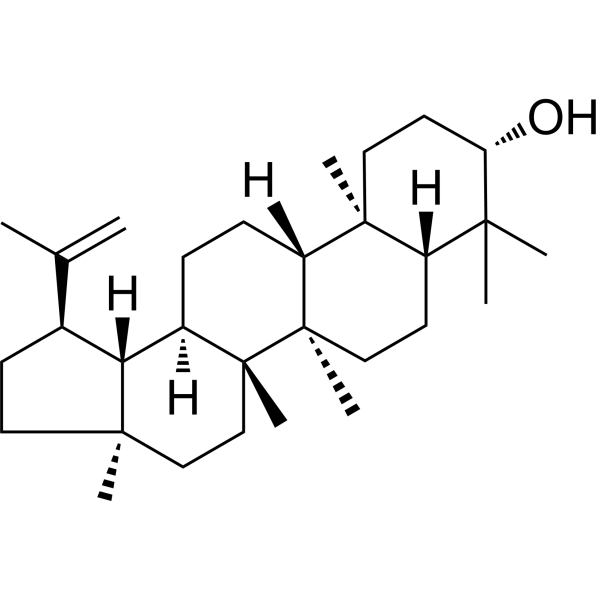
HY-N0790
LupeolAndrogen Receptor Inhibitor -
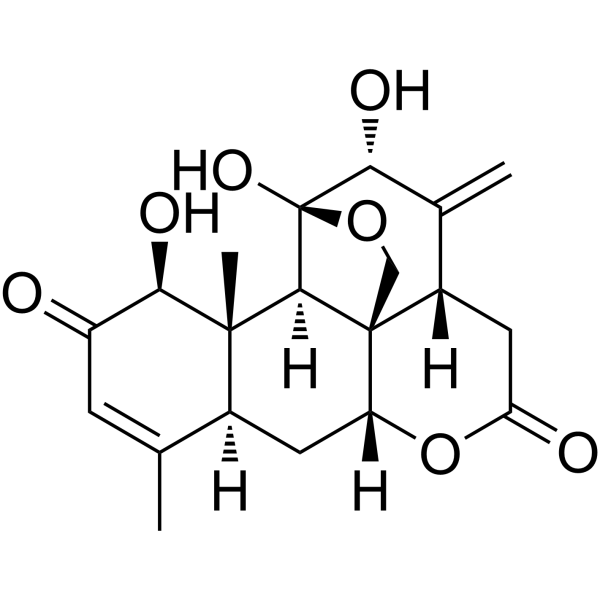
HY-N1943
AilanthoneAndrogen Receptor Inhibitor -
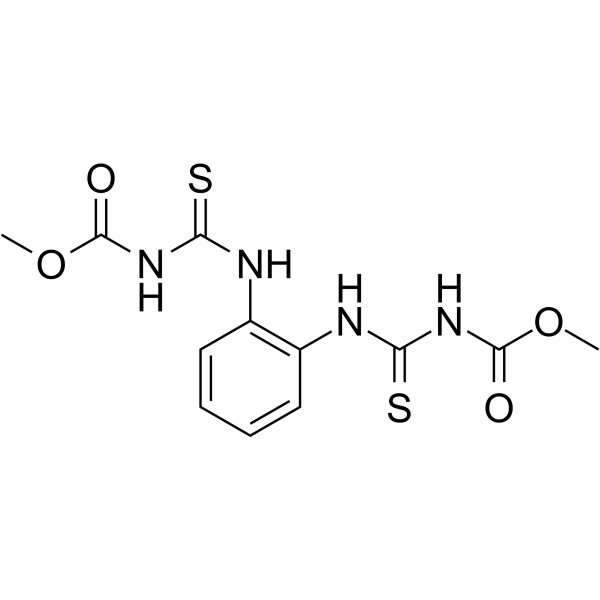
HY-B0842
Thiophanate-Methylpesticide residue/fungicide -
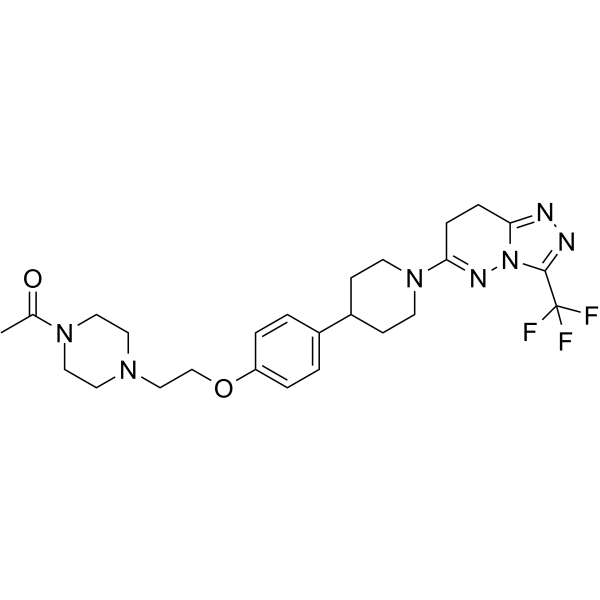
HY-16079
AZD3514AR Inhibitor -
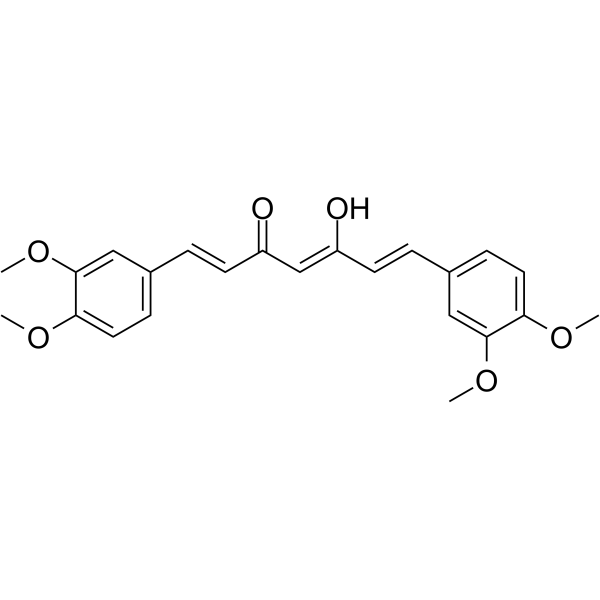
HY-15194
DimethylcurcuminAndrogen Receptor Inhibitor -

HY-N0790R
Lupeol (Standard)Androgen Receptor Inhibitor -

HY-103576
LGD-3303
Publications Citing Use of MedChemExpress (MCE) Linuron
More

Biological Activity
Description
IC50 & Target
In Vitro
Linuron (10 mg/L; 5 days) inhibits growth of green and etiolated Secale cereale L. cv. Dankowskie Zlote seedlings at 22 °C, but increases seedling biomass at 15 °C and 29 °C, while reducing seedling moisture content at 22 °C[4].
Linuron (10 mg/L; 5 days) increases alkylresorcinol content in green and etiolated Secale cereale L. cv. Dankowskie Zlote seedlings at 29 °C, decreases content at 22 °C, and has no significant effect at 15 °C[4].
Linuron (10 mg/L; 5 days) alters the alkylresorcinol homolog composition of green and etiolated Secale cereale L. cv. Dankowskie Zlote seedlings in a temperature-dependent manner, with major impacts on the dominant AR C17:0 and AR C19:0 homologs[4].
MedChemExpress (MCE) has not independently confirmed the accuracy of these methods. They are for reference only. Further protocols information, click here.
In Vivo
Linuron (100 mg/kg/day; oral administration; once daily for 7 consecutive days) induces reproductive malformations in male rats[3].
MedChemExpress (MCE) has not independently confirmed the accuracy of these methods. They are for reference only.
-
Animal Model:Sprague-Dawley (pregnant dams; male fetal and postnatal offspring; dams 9 weeks old, 180 ± 10 g at study start)[1]
-
Dosage:50 mg/kg; 100 mg/kg; 150 mg/kg; 200 mg/kg
-
Administration:i.g.; once
daily; 5 consecutive days (GD13-GD18) -
Result:Caused dose-dependent developmental reproductive toxicity in male rat offspring, including reduced serum testosterone (up to 58.8% reduction at 200 mg/kg), shortened anogenital distance (up to 24.6% reduction at 200 mg/kg), structural damage to reproductive organs, and reduced expression of testosterone synthesis enzymes and proliferation markers in fetal testes
-
Animal Model:Sprague-Dawley (SD) (male) [3]
-
Dosage:100 mg/kg/day
-
Administration:p.o.; daily; 7 days
-
Result:Significantly reduced weights of androgen-dependent seminal vesicle, ventral prostate, and LABC tissues, increases adrenal weight, and reduces body weight gain.


Chemical Information
-
CAS No. 330-55-2
-
Appearance Solid
-
Molecular Weight 249.09
-
Formula C9H10Cl2N2O2
-
Color White to off-white
-
SMILES
O=C(NC1=CC=C(Cl)C(Cl)=C1)N(OC)C
-
Shipping
Room temperature in continental US; may vary elsewhere.
-
Storage
Powder -20°C 3 years 4°C 2 years In solvent -80°C 6 months -20°C 1 month


Publications (1)
-
Journal Impact Factor
-
Most Recent
-
Anal Chem
Exposome-Scale Investigation of Cl-/Br-Containing Chemicals Using High-Resolution Mass Spectrometry, Multistage Machine Learning, and Cloud Computing. [Abstract]2025 Jun 3;97(21):11099-11109. PMID: 40401576


Solvent & Solubility
In Vitro:
DMSO : 100 mg/mL (401.46 mM; Need ultrasonic; Hygroscopic DMSO has a significant impact on the solubility of product, please use newly opened DMSO)
Please refer to the solubility information to select the appropriate solvent. Once prepared, please aliquot and store the solution to prevent product inactivation from repeated freeze-thaw cycles.
Storage method and period of stock solution: -80°C, 6 months; -20°C, 1 month. When stored at -80°C, please use it within 6 months. When stored at -20°C, please use it within 1 month.
Please refer to the solubility information to select the appropriate solvent. Once prepared, please aliquot and store the solution to prevent product inactivation from repeated freeze-thaw cycles.
Storage method and period of stock solution: -80°C, 6 months; -20°C, 1 month. When stored at -80°C, please use it within 6 months. When stored at -20°C, please use it within 1 month.
Concentration (start) × Volume (start) = Concentration (final) × Volume (final)
In Vivo:
Select the appropriate dissolution method based on your experimental animal and administration route.
- For the following dissolution methods, please ensure to first prepare a clear stock solution using an In Vitro approach and then sequentially add co-solvents:
- To ensure reliable experimental results, the clarified stock solution can be appropriately stored based on storage conditions. As for the working solution for In Vivo experiments, it is recommended to prepare freshly and use it on the same day.
- The percentages shown for the solvents indicate their volumetric ratio in the final prepared solution. If precipitation or phase separation occurs during preparation, heat and/or sonication can be used to aid dissolution.
Add each solvent one by one: 10% DMSO 90% (20% SBE-β-CD in Saline)
Solubility: ≥ 2.5 mg/mL (10.04 mM); Clear solution
This protocol yields a clear solution of ≥ 2.5 mg/mL (saturation unknown).
Taking 1 mL working solution as an example, add 100 μL DMSO stock solution (25.0 mg/mL) to 900 μL 20% SBE-β-CD in Saline, and mix evenly.
Preparation of 20% SBE-β-CD in Saline (4°C, storage for one week): 2 g SBE-β-CD powder is dissolved in 10 mL Saline, completely dissolve until clear.
In Vivo Dissolution Calculator
Please enter the basic information of animal experiments:
-
-
-
-
Recommended: Prepare an additional quantity of animals to account for potential losses during experiments.
Please enter your animal formula composition:
-
%DMSO +
Recommended: Keep the proportion of DMSO in working solution below 2% if your animal is weak.
-
%+
-
+%Tween-80 + +
-
%Saline +
The co-solvents required include: DMSO, . All of co-solvents are available by MedChemExpress (MCE). , Tween 80. All of co-solvents are available by MedChemExpress (MCE).
Working solution concentration: 0.22 mg/mL
Method for preparing stock solution: mg drug dissolved in μL DMSO. Stock solution concentration: mg/mL.
1. Take μL DMSO stock solution;
2. Add μL .
μL , mix evenly;
3. Then add μL Tween 80, mix evenly;
4. Then add μL
Please ensure that the stock solution in the first step is dissolved to a clear state, and add co-solvents in sequence. You can use ultrasonic heating (ultrasonic cleaner, recommended frequency 20-40 kHz), vortexing, etc. to assist dissolution.

Protocols
-
Reproductive and Developmental Toxicity Study
Reproductive and developmental toxicity studies detect adverse effects of prenatal or peri/postnatal exposure on maternal condition, pregnancy maintenance, embryo-fetal survival, fetal growth, structural development, and offspring reproductive or developmental endpoints; classic rat protocols generate readouts by comparing treated groups with vehicle, pair-fed, or untreated controls for implantation, resorption, fetal weight, crown-rump length, external morphology, visceral morphology, skeletal ossification, anogenital distance, nipple/areola retention, and postnatal cohort outcomes.
-
Research Protocol for Endocrine Diseases
Endocrine diseases often arise from disrupted hormone production, hormone signaling, or target-tissue responsiveness; for diabetes-focused endocrine disease models, insulin signaling regulates glucose uptake, hepatic glucose output, lipid metabolism, and β-cell compensation. Type 2 diabetes develops through interacting defects in insulin resistance, β-cell dysfunction, adipose inflammation, hepatic glucose overproduction, altered incretin signaling, and ectopic lipid metabolism. A major unresolved question is whether endocrine dysfunction is driven primarily by target-tissue insulin resistance, intrinsic β-cell failure, immune/inflammatory stress, or combined multi-organ failure that differs by disease stage.


Purity & Documentation
-
Data Sheet (277 KB)
-
SDS (761 KB)
- English - EN (761 KB)
- Français - FR (761 KB)
- Deutsch - DE (761 KB)
- Norwegian - NO (761 KB)
- Español - ES (761 KB)
- Swedish - SV (761 KB)
- Italian - IT (761 KB)
- Korean - KR (761 KB)
- Portuguese - PT (761 KB)
-
Handling Instructions (2659 KB)
References
[1]. Ding H, et al. Reproductive toxicity of linuron following gestational exposure in rats and underlying mechanisms. Toxicol Lett. 2017;266:49-55. [Content Brief]
[2]. Horemans B, et al. Functional Redundancy of Linuron Degradation in Microbial Communities in Agricultural Soil and Biopurification Systems. Appl Environ Microbiol. 2016;82(9):2843-2853. Published 2016 Apr 18. [Content Brief]
[3]. Lambright C, et al. Cellular and molecular mechanisms of action of linuron: an antiandrogenic herbicide that produces reproductive malformations in male rats. Toxicol Sci. 2000;56(2):389-399. [Content Brief]
[4]. Magnucka EG, et al. Various effects of the photosystem II--inhibiting herbicides on 5-n-alkylresorcinol accumulation in rye seedlings. Pestic Biochem Physiol. 2014;116:56-62. [Content Brief]


Complete Stock Solution Preparation Table
Please refer to the solubility information to select the appropriate solvent. Once prepared, please aliquot and store the solution to prevent product inactivation from repeated freeze-thaw cycles.
Storage method and period of stock solution: -80°C, 6 months; -20°C, 1 month. When stored at -80°C, please use it within 6 months. When stored at -20°C, please use it within 1 month.
| Optional Solvent | Concentration Solvent Mass | 1 mg | 5 mg | 10 mg | 25 mg |
|---|---|---|---|---|---|
| DMSO | 1 mM | 4.0146 mL | 20.0731 mL | 40.1461 mL | 100.3653 mL |
| 5 mM | 0.8029 mL | 4.0146 mL | 8.0292 mL | 20.0731 mL | |
| 10 mM | 0.4015 mL | 2.0073 mL | 4.0146 mL | 10.0365 mL | |
| 15 mM | 0.2676 mL | 1.3382 mL | 2.6764 mL | 6.6910 mL | |
| 20 mM | 0.2007 mL | 1.0037 mL | 2.0073 mL | 5.0183 mL | |
| 25 mM | 0.1606 mL | 0.8029 mL | 1.6058 mL | 4.0146 mL | |
| 30 mM | 0.1338 mL | 0.6691 mL | 1.3382 mL | 3.3455 mL | |
| 40 mM | 0.1004 mL | 0.5018 mL | 1.0037 mL | 2.5091 mL | |
| 50 mM | 0.0803 mL | 0.4015 mL | 0.8029 mL | 2.0073 mL | |
| 60 mM | 0.0669 mL | 0.3346 mL | 0.6691 mL | 1.6728 mL | |
| 80 mM | 0.0502 mL | 0.2509 mL | 0.5018 mL | 1.2546 mL | |
| 100 mM | 0.0401 mL | 0.2007 mL | 0.4015 mL | 1.0037 mL |


Linuron Related Classifications
HY-B1866 Related Classifications
 Powered by Bioz