



Photosystem II Inhibitor
- 1
-
Tenuazonic acid
 0 Images
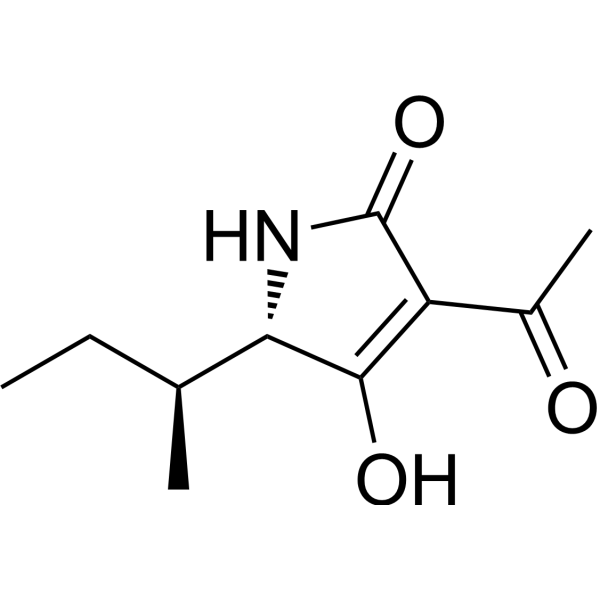
Tenuazonic acid is a nonhost-selective mycotoxin belonging to the tetramic acids family. Tenuazonic acid inhibits protein biosynthesis on ribosomes by suppressing the release of new protein. Tenuazonic acid is acutely toxic, and oral LD50 is set between 81-186 mg/kg in rats and mice. Tenuazonic acid blocks electron transport beyond the primary quinone receptor (QA) by interacting with the D1 protein and is a photosystem II (PSII) inhibitor. In addition, Tenuazonic acid has antiviral effects on measles virus, enterovirus, respiratory virus and so on. Tenuazonic acid has an inhibitory effect on skin cancer.
-
Bentazone-d7
 0 Images
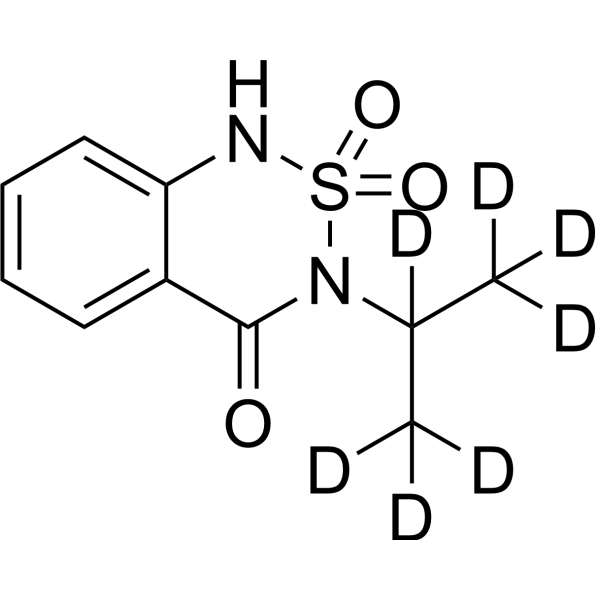
Bentazone-d7 is the deuterated-labeled Bentazone (HY-B2039). Bentazone is a selective post-emergence herbicide and a Photosystem II inhibitor targeting the quinone B binding site, with activity against broadleaf weeds. Bentazone interferes with photosynthetic electron transport, blocks sunlight-dependent energy production, and acts as a phytotoxin to induce leaf damage, growth inhibition, lipid peroxidation, and reduced chlorophyll content.
-
Tenuazonic acid-d13
 0 Images
Tenuazonic acid-d13 is deuterium labeled Tenuazonic acid. Tenuazonic acid is a nonhost-selective mycotoxin belonging to the tetramic acids family. Tenuazonic acid inhibits protein biosynthesis on ribosomes by suppressing the release of new protein. Tenuazonic acid is acutely toxic, and oral LD50 is set between 81-186 mg/kg in rats and mice. Tenuazonic acid blocks electron transport beyond the primary quinone receptor (QA) by interacting with the D1 protein and is a photosystem II (PSII) inhibitor. In addition, Tenuazonic acid has antiviral effects on measles virus, enterovirus, respiratory virus and so on. Tenuazonic acid has an inhibitory effect on skin cancer.
-
Bentazone (Standard)
 0 Images
Bentazone (Standard) is the analytical standard of Bentazone (HY-B2039). This product is intended for research and analytical applications. Bentazone is a selective post-emergence herbicide and a Photosystem II inhibitor targeting the quinone B binding site, with activity against broadleaf weeds. Bentazone interferes with photosynthetic electron transport, blocks sunlight-dependent energy production, and acts as a phytotoxin to induce leaf damage, growth inhibition, lipid peroxidation, and reduced chlorophyll content.
-
Bentazone
 0 ImagesCat. No.: HY-B2039CAS No.: 25057-89-0
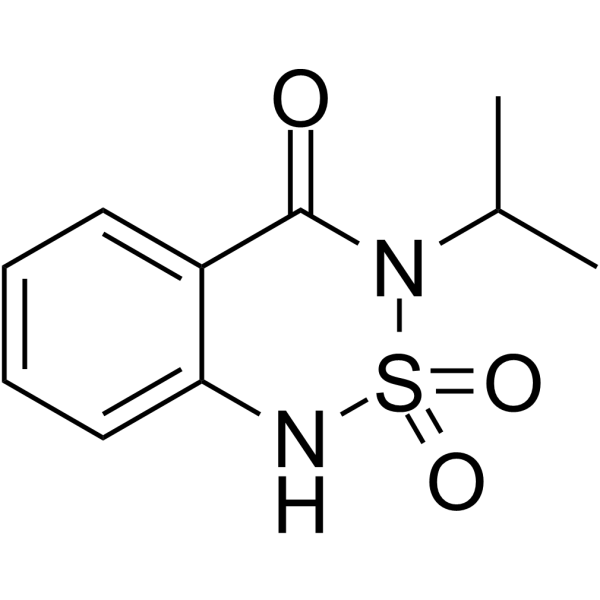
Bentazone is a selective post-emergence herbicide and a Photosystem II inhibitor targeting the quinone B binding site, with activity against broadleaf weeds. Bentazone interferes with photosynthetic electron transport, blocks sunlight-dependent energy production, and acts as a phytotoxin to induce leaf damage, growth inhibition, lipid peroxidation, and reduced chlorophyll content.
-
Sarmentine-d8
 0 ImagesCat. No.: HY-W778649CAS No.: 1795136-21-8
Sarmentine-d8 is the deuterium labeled Sarmentine. Sarmentine is a broad-spectrum contact herbicide and PSII inhibitor, with an IC50 of 3.0 μM and a Ki of 1.5 μM against spinach, an IC50 of 1.72 μM against wild-type Amaranthus retroflexus, and an IC50 of 0.97 μM against triazine-resistant Amaranthus retroflexus. Sarmentine competitively binds to the QB binding site of plastoquinone on PSII, thereby blocking photosynthetic electron transport. Sarmentine inhibits enoyl-ACP reductase in Arabidopsis thaliana by targeting the early fatty acid synthesis process, with an IC50 of 18.3 μM. Sarmentine induces light-independent loss of plasma membrane integrity and electrolyte leakage. Sarmentine also exhibits antiplasmodial, antimycobacterial, antituberculous, and antiplatelet aggregation activities.
-
Sarmentine
 0 ImagesCat. No.: HY-W099725CAS No.: 78910-33-5
Sarmentine is a broad-spectrum contact herbicide and PSII inhibitor, with an IC50 of 3.0 μM and a Ki of 1.5 μM against spinach, an IC50 of 1.72 μM against wild-type Amaranthus retroflexus, and an IC50 of 0.97 μM against triazine-resistant Amaranthus retroflexus. Sarmentine competitively binds to the QB binding site of plastoquinone on PSII, thereby blocking photosynthetic electron transport. Sarmentine inhibits enoyl-ACP reductase in Arabidopsis thaliana by targeting the early fatty acid synthesis process, with an IC50 of 18.3 μM. Sarmentine induces light-independent loss of plasma membrane integrity and electrolyte leakage. Sarmentine also exhibits antiplasmodial, antimycobacterial, antituberculous, and antiplatelet aggregation activities.
-
Dimidazon
 0 ImagesCat. No.: HY-W725574CAS No.: 3295-78-1Synonyms: BAS 29095
Dimidazon (BAS 29095) is a weak electron transport inhibitor targeting photosystem II (PSII). Dimidazon inhibits electron transfer from the primary electron acceptor Q in PSII to photosystem I. Dimidazon is promising for research of photosynthesis regulation and weed control.
-
Sorgoleone
 0 ImagesCat. No.: HY-150033CAS No.: 105018-76-6
Sorgoleone is a photosystem II inhibitor found in sorghum. Sorgoleone binds to the QB niche of the D1 protein, inhibits photosynthetic electron transport, and does not affect photosystem I reactions. Sorgoleone reduces radicle elongation and stunts growth. Sorgoleone inhibits CO2-dependent oxygen evolution, photosynthetic O2 evolution, and mitochondrial respiration. Sorgoleone can be used as a herbicide.
-
Tenuazonic acid (Standard)
 0 Images
Tenuazonic acid (Standard) is the analytical standard of Tenuazonic acid. This product is intended for research and analytical applications. Tenuazonic acid is a nonhost-selective mycotoxin belonging to the tetramic acids family. Tenuazonic acid inhibits protein biosynthesis on ribosomes by suppressing the release of new protein. Tenuazonic acid is acutely toxic, and oral LD50 is set between 81-186 mg/kg in rats and mice. Tenuazonic acid blocks electron transport beyond the primary quinone receptor (QA) by interacting with the D1 protein and is a photosystem II (PSII) inhibitor. In addition, Tenuazonic acid has antiviral effects on measles virus, enterovirus, respiratory virus and so on. Tenuazonic acid has an inhibitory effect on skin cancer.
-
Buthidazole
 0 ImagesCat. No.: HY-121242CAS No.: 55511-98-3Synonyms: VEL-5026
Buthidazole is a selective herbicide for weed control in corn. Buthidazole inhibits photosynthetic electron transport at two distinct sites in the photosynthetic electron transport chain. The major site of inhibition was on the reducing side of photosystem II. Another site of electron transport inhibition is on the oxidizing side of photosystem II. Buthidazole inhibits corn photosynthesis and prevents starch accumulation in bundle sheath chloroplasts and some ultrastructural disruption of mesophyl chloroplasts of corn plants.
- 1



