



Lactones
- 1
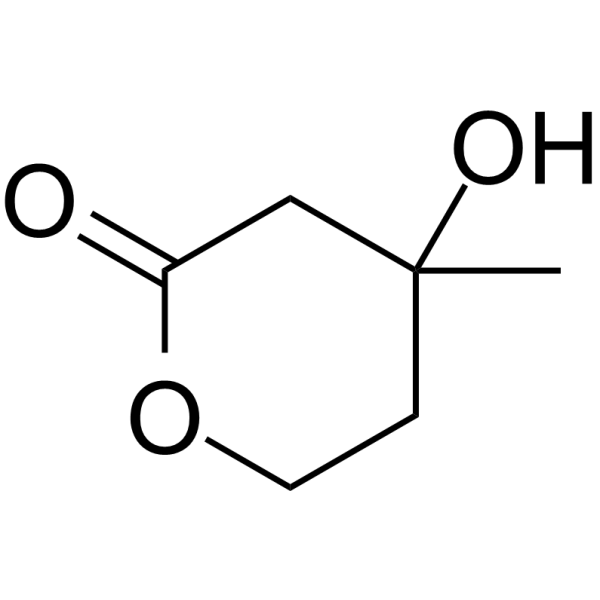
- Formula: C6H10O3
- Molecular Weight: 130.14
DL-Mevalonolactone ((±)-Mevalonolactone;Mevalolactone) is the δ-lactone form of mevalonic acid, a precursor in the mevalonate pathway. DL-Mevalonolactone is orally active against HMGCR mutation and statin caused myopathy. DL-Mevalonolactone induces inflammation and oxidative stress response with decreased mitochondrial membrane potential (MMP) and induces mitochondrial swelling[2][4].
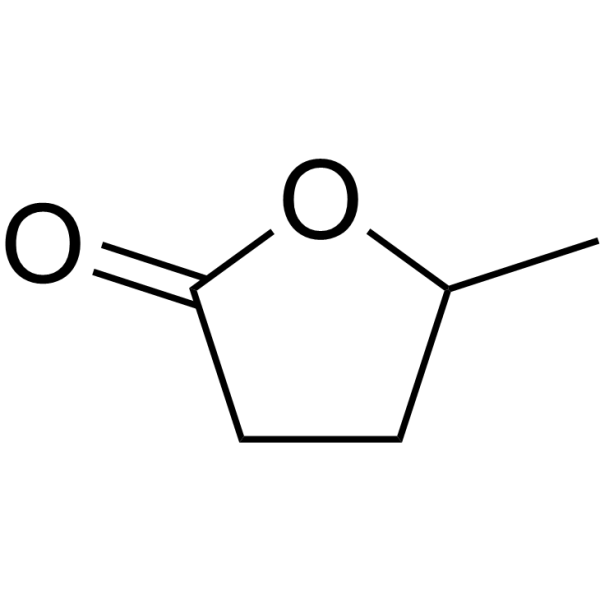
- Formula: C5H8O2
- Molecular Weight: 100.12
5-Methyldihydrofuran-2(3H)-one is a biochemical reagent that can be used as a biological material or organic compound for life science related research.
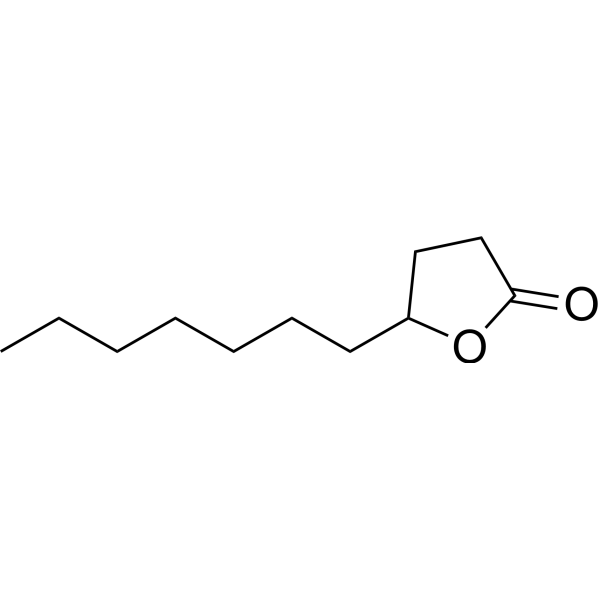
- Formula: C11H20O2
- Molecular Weight: 184.28
Gamma-undecalactone consists of a five-membered dihydrofuran ring with an ester group and a heptyl chain. This compound has a fruity smell and is commonly used as a flavor additive in various food and beverage products such as coffee, tea and baked goods.
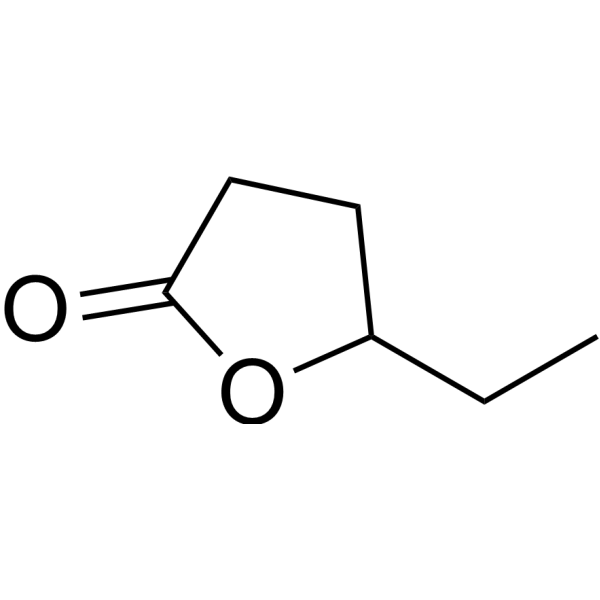
- Formula: C6H10O2
- Molecular Weight: 114.14
γ-Hexalactone (γ-Caprolactone) is a gamma-lactone found in ripe fruits. γ-Hexalactone induces DNA damage in human lymphocytes and HepG2 cells, modulates cytokine secretion in human lymphocytes, and reduces recombinant PON1 activity. γ-Hexalactone serves as a dose-dependent oviposition inhibitor against Bactrocera oleae. γ-Hexalactone can be used for the research of Bactrocera oleae pest management.
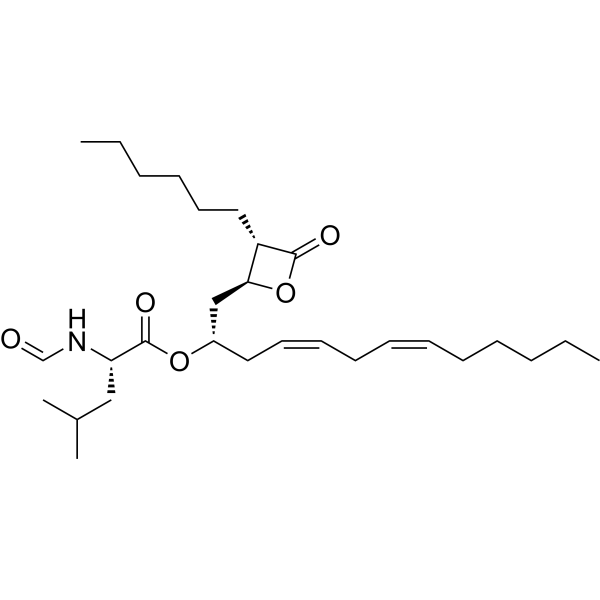
- Formula: C29H49NO5
- Molecular Weight: 491.70
Lipstatin is a pancreatic lipase inhibitor (IC50=0.14 μM), whose structure is closely related to the known inhibitor, Esterastin. Lipstatin inhibits the absorption of triglycerides without affecting the absorption of oleic acid. Lipstatin has no inhibitory effects on other pancreatic enzymes, such as phospholipase A2 and trypsin (<200 μM).
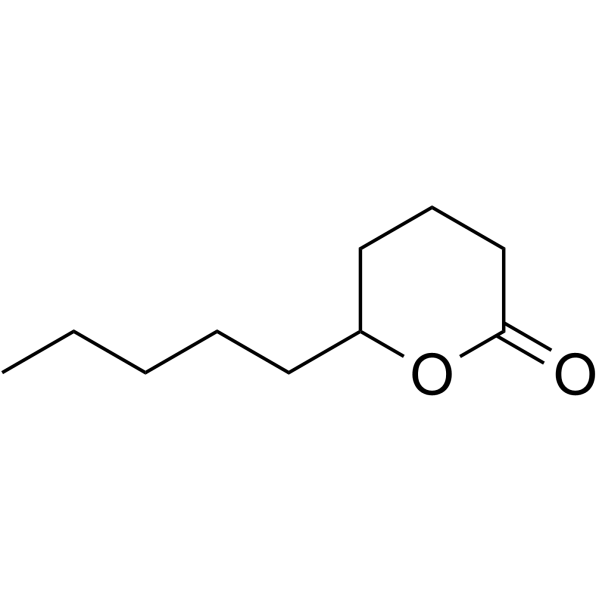
- Formula: C10H18O2
- Molecular Weight: 170.25
δ-Decalactone is a hydrophobic natural cyclic lactone aroma compound with a creamy-coconut-peach aroma. It serves as a flavoring agent and a renewable monomer for ring-opening polymerization to prepare homopolymers and amphiphilic block copolymers, and it can self-assemble into degradable micelles for the encapsulation of hydrophobic molecules. δ-Decalactone is used in food flavoring and polymer materials research.

- Formula: C9H16O2
- Molecular Weight: 156.22

- Formula: C12H22O2
- Molecular Weight: 198.30

- Formula: C7H12O2
- Molecular Weight: 128.17
Gamma-heptalactone (γ-Oenantholacton) is a selective cytochrome P450 2B6 (CYP2B6) inhibitor with an IC50 of 2400 μM.

- Formula: C8H14O2
- Molecular Weight: 142.20
γ-Octalactone is an aromatic lactone compound. γ-Octalactone has a strong fruity (similar to coconut) aroma and a sweet taste, and is commonly used in food, cosmetics and fragrances. γ-Octalactone is highly safe.

- Formula: C18H32O5
- Molecular Weight: 328.44
Sch725674 is a macrolide compound with antimicrobial activity against brewer's yeast and Candida albicans, with MICs of 8 and 32 μg/ml.

- Formula: C10H20O3
- Molecular Weight: 188.26
Methyl 3-hydroxynonanoate is an ester product.

- Formula: C12H22O2
- Molecular Weight: 198.31
δ-Dodecalactone can be obtained from L. plantarum AF1. δ-Dodecalactone exhibits potent antifungal activity against molds Aspergillus flavus, A. fumigatus, A. petrakii, A. ochraceus, A. nidulans, and Penicillium roqueforti. δ-Dodecalactone is a flavoring compound.

- Formula: C14H26O2
- Molecular Weight: 226.36
δ-Tetradecalactone (δ-Myristolactone; Delta-Tetradecalactone) is a flavoring agent. δ-Tetradecalactone can be used in the production of biodegradable materials.


- 1



