



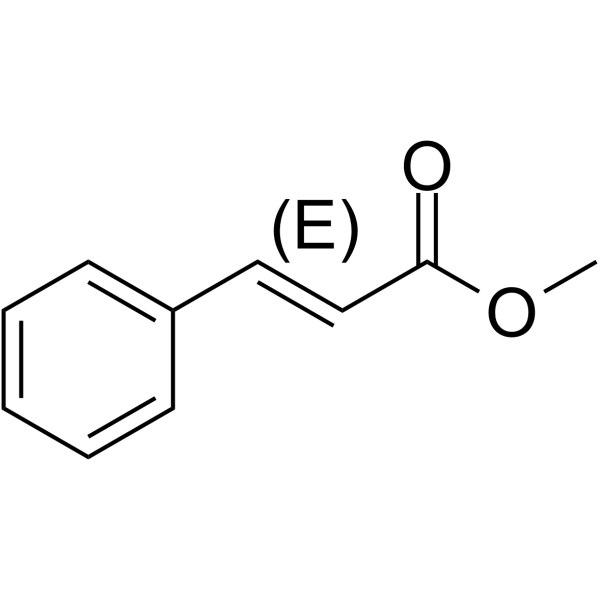
Methyl (E)-cinnamate

Based on 1 Customer Validation
Methyl (E)-cinnamate (Methyl (E)-3-phenylpropenoate) is a natural flavor compound with anti-inflammatory properties found in Alpinia katsumadai Hayata. Methyl (E)-cinnamate induces apoptosis via reduced anti-apoptotic protein expression, increased TUNEL-positive cells, and apoptotic morphological changes. Methyl (E)-cinnamate can be used for the research of abnormalities of osteoblast function in bone diseases.
For research use only. We do not sell to patients.
- Purity : 99.87%
- CAS No.: 1754-62-7
- Formula: C10H10O2
- Molecular Weight:162.19
-
Storage:
Store at room temperature 3 years.
In solvent -80°C, 2 years , -20°C, 1 year

To place orders, for customer services and technical support, please contact: MedChemExpress USA
Tel: 609-228-6898 E-mail: [email protected] [email protected]


-
 Biological Activity
-
Chemical Information
-
Solvent & Solubility
- Protocols
- Purity & Documentation
- References
-
 Help & FAQs


-
HY-117215
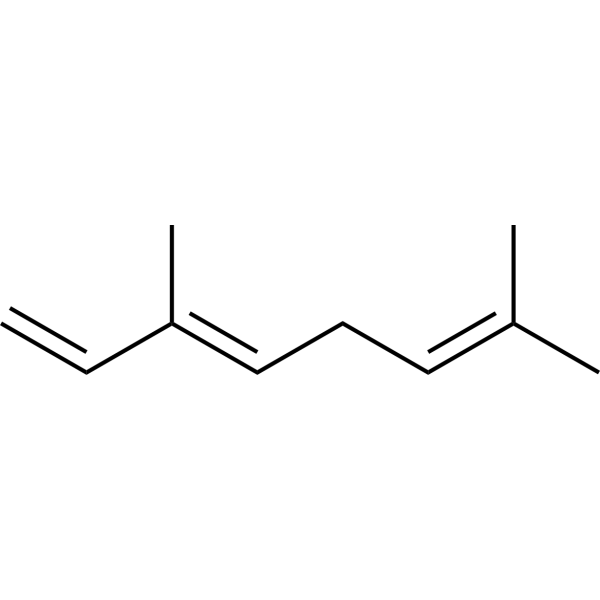
β-OcimeneBiochemical Assay Reagent -
HY-W003972
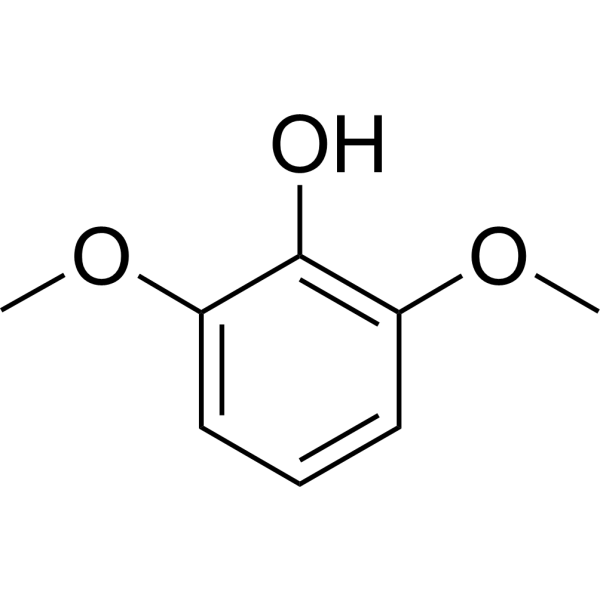
2,6-DimethoxyphenolLaccase Substrate -

HY-N1953
Clove oilAntibacterial/Anti‑inflammatory/Antioxidant -

HY-W145661
Gum storaxBiochemical Assay Reagent -

HY-W003972R
2,6-Dimethoxyphenol (Standard)Standard of 2,6-Dimethoxyphenol -
HY-W015307
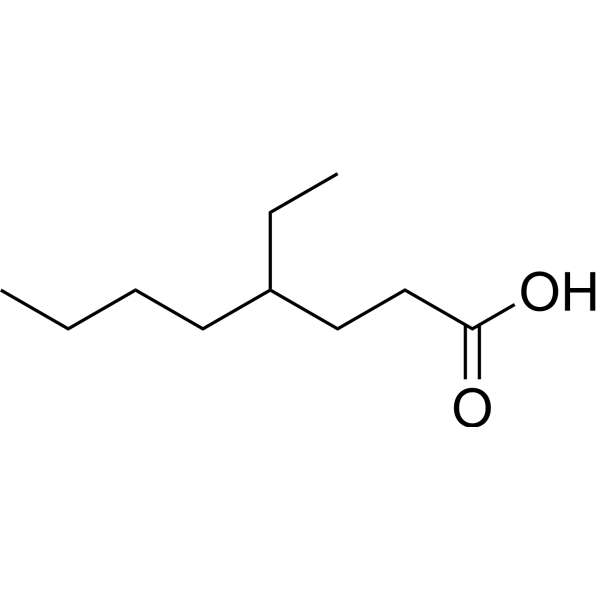
4-Ethyloctanoic acidFragrance Ingredient -
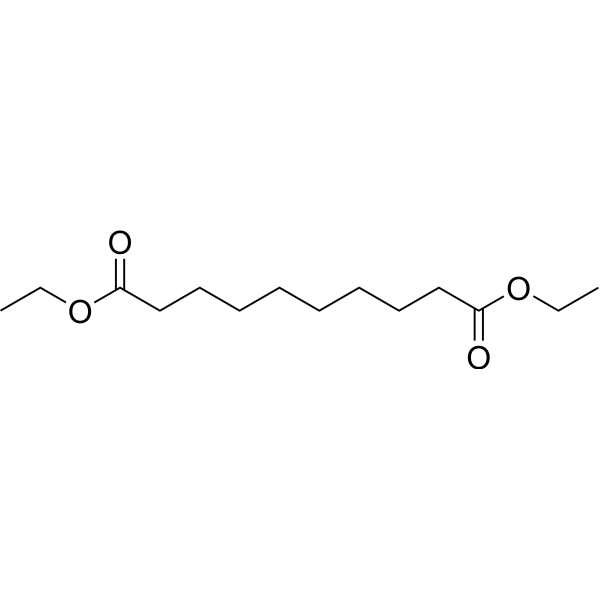
HY-W009443
Diethyl decanedioateBiochemical Assay Reagent -
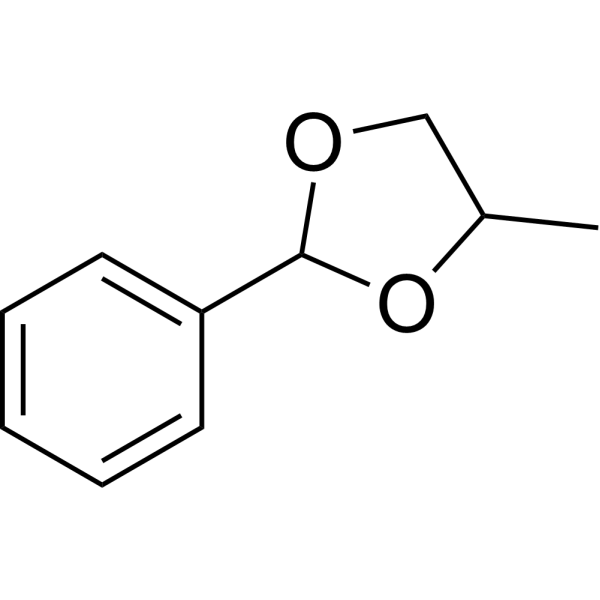
HY-W010119
4-Methyl-2-phenyl-1,3-dioxolaneBiochemical Assay Reagent -
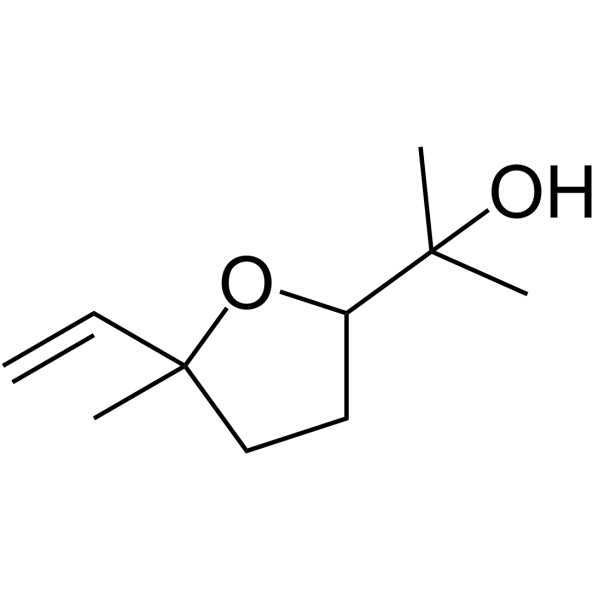
HY-N9502
Linalool oxideMonoterpene -

HY-126070
N-Butyl cinnamateBiochemical Reagent


Biological Activity
Description
In Vitro
Methyl (E)-cinnamate (1-100 μM; 24-48 h) reduces cell viability and induces dose-dependent morphological shrinkage in pre-osteoblast MC3T3-E1 cells[1].
Methyl (E)-cinnamate (10-30 μM; 24 h) upregulates cleaved PARP and cleaved caspase-3, and downregulates Survivin and Bcl-2, in pre-osteoblast MC3T3-E1 cells[1].
Methyl (E)-cinnamate (10-30 μM; 24 h) dose-dependently inhibits ERK1/2 phosphorylation, and inhibits JNK and p38 phosphorylation at 30 μM, in pre-osteoblast MC3T3-E1 cells after 24 h of treatment[1].
Methyl (E)-cinnamate (10-30 μM; 24 h) induces dose-dependent DNA fragmentation, measured as increased TUNEL-positive cells, in pre-osteoblast MC3T3-E1 cells[1].
Methyl (E)-cinnamate (10-30 μM; 24 h) dose-dependently reduces cell migration rate in pre-osteoblast MC3T3-E1 cells[1].
Methyl (E)-cinnamate (10-30 μM; 7 days) dose-dependently suppresses osteoblast differentiation[1].
Methyl (E)-cinnamate (10-30 μM; 7 days) dose-dependently downregulates mRNA expression of osteogenic markers ALP, OCN, and OPN in pre-osteoblast MC3T3-E1 cells[1].
MedChemExpress (MCE) has not independently confirmed the accuracy of these methods. They are for reference only.
-
Cell Line:MC3T3-E1
-
Concentration:1 μM; 10 μM; 30 μM; 100 μM
-
Incubation Time:24 h; 48 h
-
Result:Significantly inhibited cellular proliferation in a time- and dose-dependent manner, with statistically significant reductions in viability observed at 10, 30, and 100 μM after 24 h, and at 10, 30, and 100 μM after 48 h.
Induced dose-dependent morphological changes, including cell shrinkage into small, protruding shapes.
-
Cell Line:MC3T3-E1
-
Concentration:10 μM; 30 μM
-
Incubation Time:24 h
-
Result:Significantly increased the levels of cleaved PARP and cleaved caspase-3 in a dose-dependent manner, with 10 μM and 30 μM both producing statistically significant increases relative to control.
Significantly reduced the expression of anti-apoptotic proteins Survivin and Bcl-2 in a dose-dependent manner, with both 10 μM and 30 μM producing statistically significant decreases relative to control.\nSignificantly inhibited the phosphorylation of ERK1/2 in a dose-dependent manner, with statistically significant reductions observed at both 10 μM and 30 μM relative to control.
Significantly reduced phosphorylation of JNK and p38 only at the 30 μM concentration, with statistically significant decreases relative to control.
-
Cell Line:MC3T3-E1
-
Concentration:10 μM; 30 μM
-
Incubation Time:24 h
-
Result:Significantly suppressed cell migration rate in a dose-dependent manner, with 10 μM reducing migration to ~80% of control and 30 μM reducing migration to ~55% of control, both statistically significant relative to control.
-
Cell Line:MC3T3-E1
-
Concentration:10 μM; 30 μM
-
Incubation Time:7 days
-
Result:Significantly decreased OS-induced osteoblast differentiation, as shown by reduced ALP staining intensity and reduced ALP activity in a dose-dependent manner.
Reduced ALP activity to ~9 nmol at 10 μM and ~7 nmol at 30 μM, compared to ~15 nmol in OS-treated control cells, with both concentrations showing statistically significant reductions relative to OS control.
-
Cell Line:MC3T3-E1
-
Concentration:10 μM; 30 μM
-
Incubation Time:7 days
-
Result:Significantly suppressed the mRNA levels of early and late osteogenic markers ALP, OCN, and OPN in a dose-dependent manner, with statistically significant reductions observed relative to OS control for all markers at both 10 μM and 30 μM.
Parmacokinetics


Chemical Information
-
CAS No. 1754-62-7
-
Appearance <34°C Solid,>38°C Liquid
-
Molecular Weight 162.19
-
Formula C10H10O2
-
Color Colorless to off-white
-
SMILES
O=C(OC)/C=C/C1=CC=CC=C1
-
Synonyms
Methyl (E)-3-phenylpropenoate
-
Structure Classification
-
Initial Source
-
Shipping
Room temperature in continental US; may vary elsewhere.
-
Storage
Store at room temperature 3 years
In solvent -80°C 2 years -20°C 1 year


Solvent & Solubility
In Vitro:
DMSO : 100 mg/mL (616.56 mM; Need ultrasonic; Hygroscopic DMSO has a significant impact on the solubility of product, please use newly opened DMSO)
Please refer to the solubility information to select the appropriate solvent. Once prepared, please aliquot and store the solution to prevent product inactivation from repeated freeze-thaw cycles.
Storage method and period of stock solution: -80°C, 2 years; -20°C, 1 year. When stored at -80°C, please use it within 2 years. When stored at -20°C, please use it within 1 year.
Please refer to the solubility information to select the appropriate solvent. Once prepared, please aliquot and store the solution to prevent product inactivation from repeated freeze-thaw cycles.
Storage method and period of stock solution: -80°C, 2 years; -20°C, 1 year. When stored at -80°C, please use it within 2 years. When stored at -20°C, please use it within 1 year.
Concentration (start) × Volume (start) = Concentration (final) × Volume (final)
In Vivo:
Select the appropriate dissolution method based on your experimental animal and administration route.
- For the following dissolution methods, please ensure to first prepare a clear stock solution using an In Vitro approach and then sequentially add co-solvents:
- To ensure reliable experimental results, the clarified stock solution can be appropriately stored based on storage conditions. As for the working solution for In Vivo experiments, it is recommended to prepare freshly and use it on the same day.
- The percentages shown for the solvents indicate their volumetric ratio in the final prepared solution. If precipitation or phase separation occurs during preparation, heat and/or sonication can be used to aid dissolution.
Add each solvent one by one: 10% DMSO 40% PEG300 5% Tween-80 45% Saline
Solubility: ≥ 5 mg/mL (30.83 mM); Clear solution
This protocol yields a clear solution of ≥ 5 mg/mL (saturation unknown).
Taking 1 mL working solution as an example, add 100 μL DMSO stock solution (50.0 mg/mL) to 400 μL PEG300, and mix evenly; then add 50 μL Tween-80 and mix evenly; then add 450 μL Saline to adjust the volume to 1 mL.
Preparation of Saline: Dissolve 0.9 g sodium chloride in ddH₂O and dilute to 100 mL to obtain a clear Saline solution.
Add each solvent one by one: 10% DMSO 90% (20% SBE-β-CD in Saline)
Solubility: ≥ 5 mg/mL (30.83 mM); Clear solution
This protocol yields a clear solution of ≥ 5 mg/mL (saturation unknown).
Taking 1 mL working solution as an example, add 100 μL DMSO stock solution (50.0 mg/mL) to 900 μL 20% SBE-β-CD in Saline, and mix evenly.
Preparation of 20% SBE-β-CD in Saline (4°C, storage for one week): 2 g SBE-β-CD powder is dissolved in 10 mL Saline, completely dissolve until clear.
In Vivo Dissolution Calculator
Please enter the basic information of animal experiments:
-
-
-
-
Recommended: Prepare an additional quantity of animals to account for potential losses during experiments.
Please enter your animal formula composition:
-
%DMSO +
Recommended: Keep the proportion of DMSO in working solution below 2% if your animal is weak.
-
%+
-
+%Tween-80 + +
-
%Saline +
The co-solvents required include: DMSO, . All of co-solvents are available by MedChemExpress (MCE). , Tween 80. All of co-solvents are available by MedChemExpress (MCE).
Working solution concentration: 0.22 mg/mL
Method for preparing stock solution: mg drug dissolved in μL DMSO. Stock solution concentration: mg/mL.
1. Take μL DMSO stock solution;
2. Add μL .
μL , mix evenly;
3. Then add μL Tween 80, mix evenly;
4. Then add μL
Please ensure that the stock solution in the first step is dissolved to a clear state, and add co-solvents in sequence. You can use ultrasonic heating (ultrasonic cleaner, recommended frequency 20-40 kHz), vortexing, etc. to assist dissolution.


Purity & Documentation
-
Data Sheet (285 KB)
-
SDS (393 KB)
- English - EN (393 KB)
- Français - FR (393 KB)
- Deutsch - DE (393 KB)
- Norwegian - NO (393 KB)
- Español - ES (393 KB)
- Swedish - SV (393 KB)
- Italian - IT (393 KB)
- Korean - KR (393 KB)
- Portuguese - PT (393 KB)
-
Handling Instructions (2659 KB)
References


Complete Stock Solution Preparation Table
Please refer to the solubility information to select the appropriate solvent. Once prepared, please aliquot and store the solution to prevent product inactivation from repeated freeze-thaw cycles.
Storage method and period of stock solution: -80°C, 2 years; -20°C, 1 year. When stored at -80°C, please use it within 2 years. When stored at -20°C, please use it within 1 year.
| Optional Solvent | Concentration Solvent Mass | 1 mg | 5 mg | 10 mg | 25 mg |
|---|---|---|---|---|---|
| DMSO | 1 mM | 6.1656 mL | 30.8280 mL | 61.6561 mL | 154.1402 mL |
| 5 mM | 1.2331 mL | 6.1656 mL | 12.3312 mL | 30.8280 mL | |
| 10 mM | 0.6166 mL | 3.0828 mL | 6.1656 mL | 15.4140 mL | |
| 15 mM | 0.4110 mL | 2.0552 mL | 4.1104 mL | 10.2760 mL | |
| 20 mM | 0.3083 mL | 1.5414 mL | 3.0828 mL | 7.7070 mL | |
| 25 mM | 0.2466 mL | 1.2331 mL | 2.4662 mL | 6.1656 mL | |
| 30 mM | 0.2055 mL | 1.0276 mL | 2.0552 mL | 5.1380 mL | |
| 40 mM | 0.1541 mL | 0.7707 mL | 1.5414 mL | 3.8535 mL | |
| 50 mM | 0.1233 mL | 0.6166 mL | 1.2331 mL | 3.0828 mL | |
| 60 mM | 0.1028 mL | 0.5138 mL | 1.0276 mL | 2.5690 mL | |
| 80 mM | 0.0771 mL | 0.3854 mL | 0.7707 mL | 1.9268 mL | |
| 100 mM | 0.0617 mL | 0.3083 mL | 0.6166 mL | 1.5414 mL |


Methyl (E)-cinnamate Related Classifications
HY-W067056 Related Classifications
 Powered by Bioz