456 Results for "

O2

" in MedChemExpress (MCE) Product Catalog:
Products (456)

456 Results for "O2" in MCE Product Catalog:

Cat. No.: HY-13610B
CAS No.: 1384898-58-1
Target:  

Caspase

Research Areas:  

Cancer

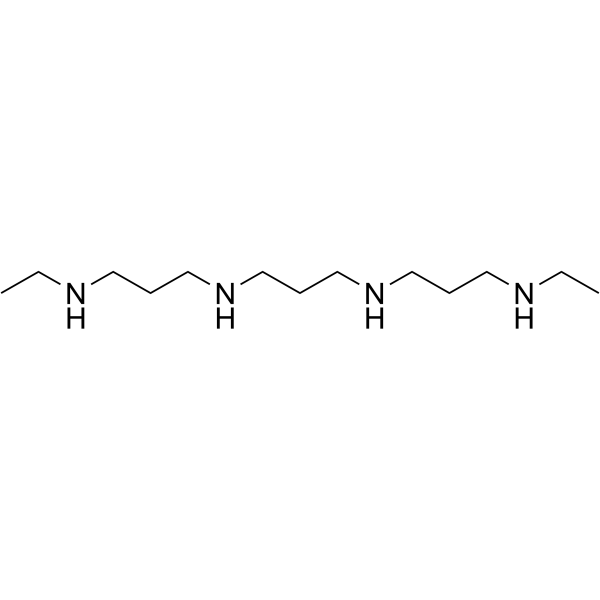
N1,N11-Diethylnorspermine hydrobromide is a potent anticancer agent. N1,N11-Diethylnorspermine hydrobromide is a spermine analog that activates polyamine catabolism. N1,N11-Diethylnorspermine hydrobromide induces the release of cytochrome c from mitochondria, resulting in activation of caspase 3. N1,N11-Diethylnorspermine hydrobromide kills glioblastoma multiforme (GBM) cells through induction of SSAT (spermidine/spermine N1-acetyltransferase) coupled with H2O2 production [2] .
loading...
    loading...
Cat. No.: HY-D0185R
CAS No.: 312693-72-4
2'-Deoxyguanosine monohydrate (Standard) is the analytical standard of 2'-Deoxyguanosine monohydrate. This product is intended for research and analytical applications. 2'-Deoxyguanosine monohydrate is a nucleoside composed of guanine and deoxyribose, and is one of the basic building blocks of DNA. In the oxidation reaction mediated by singlet oxygen 1O2, the guanine base of 2'-Deoxyguanosine is easily oxidized to generate two major products, 4,8-dihydro-4-hydroxy-8-oxodG and 7,8-dihydro-8-oxodG. The oxidation products of 2'-Deoxyguanosine monohydrate may participate in DNA damage, which may affect gene expression or induce cancer .
loading...
    loading...
Cat. No.: HY-173619
CAS No.: 2172879-84-2
Research Areas:  

Cancer

EGFR-IN-160 (Compound R12) is an EGFR inhibitor (IC50 values are 1.62, 0.49 and 0.98 μM for EGFR WT, EGFR T790M and EGFR L858R/T790M/C797S, respectively). EGFR-IN-160 induces G2/M and S phase arrest and apoptosis in NCI-H522 cells, and has anticancer activity. EGFR-IN-160 has antioxidant effects against DPPH (IC50: 12.11 µM) and H2O2 (IC50: 8.89 µM) .
loading...
    loading...
Cat. No.: HY-174262
CAS No.: 3082703-49-6
Target:  

Interleukin Related

Research Areas:  

Inflammation/Immunology Cancer

IL4I1-IN-1 (Compound Ex 232 pg 200) is a selective interleukin 4-induced protein 1 (IL4I1) inhibitor with an EC50 of 2 nM. IL4I1-IN-1 inhibits IL4I1-mediated oxidative deamination of phenylalanine, reducing the production of phenylpyruvate, H2O2 and NH3. IL4I1-IN-1 is promising for research of cancers with high IL4I1 expression, such as endometrial carcinoma, ovarian cancer, and triple-negative breast cancer .
loading...
    loading...
Cat. No.: HY-W768213
2'-Deoxyguanosine monohydrate- 13C5 is the 13C-labeled 2'-Deoxyguanosine monohydrate (HY-D0185). 2'-Deoxyguanosine monohydrate is a nucleoside composed of guanine and deoxyribose, and is one of the basic building blocks of DNA. In the oxidation reaction mediated by singlet oxygen 1O2, the guanine base of 2'-Deoxyguanosine is easily oxidized to generate two major products, 4,8-dihydro-4-hydroxy-8-oxodG and 7,8-dihydro-8-oxodG. The oxidation products of 2'-Deoxyguanosine monohydrate may participate in DNA damage, which may affect gene expression or induce cancer .
loading...
    loading...
Cat. No.: HY-13610
CAS No.: 121749-39-1
Synonyms: Diethylnorspermine; BENSPM; DENSPM; BE-333
Target:  

Caspase mTOR

Research Areas:  

Cancer

N1,N11-Diethylnorspermine is a synthetic analog of the naturally occurring polyamine spermine, can induce polyamine depletion and inhibit tumor cell growth. N1,N11-Diethylnorspermine activates polyamine catabolism and downregulates mTOR protein. N1,N11-Diethylnorspermine induces the release of cytochrome c from mitochondria, resulting in activation of caspase 3. N1,N11-Diethylnorspermine tetrahydrochloride kills glioblastoma multiforme (GBM) through induction of SSAT (spermidine/spermine N1-acetyltransferase) coupled with H2O2 production [2] .
loading...
    loading...
Cat. No.: HY-175869
CAS No.: 3096878-87-1
Target:  

Ferroptosis

Ferroptosis-IN-22 is a selective ferroptosis inhibitor by targeting NCOA4 and disrupting its interaction with ferritin with an EC50 of 520 nM and a Kd of 0.78 μM. Ferroptosis-IN-22 has a strong inhibitory activity against ferroptosis induced by multiple ferroptosis inducers (RSL3 (HY-100218A), Erastin (HY-15763), ML210 (HY-100003), FIN56 (HY-103087)), but does not inhibit necrosis induced by H2O2 or apoptosis induced by STS (HY-15141). Ferroptosis-IN-22 effectively ameliorates Concanavalin A (HY-P2149)-induced acute liver injury. Ferroptosis-IN-22 can be used for the study of ferroptosis-related diseases .
loading...
    loading...
Cat. No.: HY-105111
CAS No.: 93426-60-9
P-536 is a ACE inhibitor that also inhibits herpes simplex virus HSV-1 thymidine kinase and Trypanosoma cruzi RNA polymerase. By inhibiting the renin-angiotensin system, downregulating the expression of AT1R and NOX4, and reducing oxidative stress (decreasing plasma hydrogen peroxide (H2O2) and 8-isoprostaglandin levels), P-536 effectively reduces systolic blood pressure and improves vascular reactivity. P-536 also inhibits the replication of DNA/RNA viruses such as HSV-1 by blocking nucleotide metabolism and nucleic acid synthesis, competitively inhibits RNA synthesis in Trypanosoma cruzi, and inhibits amastigote replication, thereby impeding its growth. P-536 is suitable for research on hypertension, insulin resistance, and Chagas disease [2] .
loading...
    loading...
Cat. No.: HY-121970
CAS No.: 27031-00-1
iGP-1 is a cell-permeable, selective mixed inhibitor of mitochondrial sn-glycerol-3-phosphate dehydrogenase (mGPDH), with IC50s of 6.3 μM and 13.6 μM for rat mGPDH activity and H2O2 production, respectively. iGP-1 specifically blocks the mitochondrial component of the glycerophosphate shuttle without affecting cytosolic GPDH. iGP-1 not only inhibits cell proliferation and glutaminolysis, and enhances glycolysis, but also significantly alters key cellular physiological processes such as apoptosis, ROS production, HIF-1α stability and mitochondrial membrane potential. iGP-1 remains active in neutrophil cultures under both normoxic and hypoxic conditions, and serves as an ideal probe for glycerol-3-phosphate metabolic mechanisms. iGP-1 has been applied to studies on prostate cancer and related metabolic pathways [2] .
loading...
    loading...
Cat. No.: HY-12761
CAS No.: 959746-77-1
Purity:  99.84%
A-836339 is a selective CB2 receptor agonist, with Ki values of 0.4 nM and 0.8 nM in humans and rats, respectively. A-836339 exhibits multiple effects such as analgesia, gastric protection, anti-inflammation, and antioxidant activity. A-836339 produces antinociceptive and analgesic activities by activating CB2 receptors in the dorsal root ganglia and spinal cord. A-836339 can also exert gastric protective effects through anti-inflammatory mechanisms (reducing TNF-α and IL-1β) and antioxidant mechanisms (enhancing the activities of CAT and SOD, and reducing H2O2). Radioactively labeled A-836339 can serve as a CB2-specific radioligand for autoradiography and PET imaging. A-836339 can be used in research on inflammatory pain, neuropathic pain, gastric ulcers, cerebral ischemia, etc [2] .
loading...
    loading...
Cat. No.: HY-13610AR
CAS No.: 156886-85-0
Synonyms: Diethylnorspermine tetrahydrochloride (Standard); DENSPM tetrahydrochloride (Standard); BENSPM tetrahydrochloride (Standard)
Research Areas:  

Cancer

N1,N11-Diethylnorspermine (tetrahydrochloride) (Standard) is the analytical standard of N1,N11-Diethylnorspermine (tetrahydrochloride). This product is intended for research and analytical applications. N1, N11-Diethylnorspermine tetrahydrochloride (DENSPM tetrahydrochloride) is a potent anticancer agent. N1,N11-Diethylnorspermine tetrahydrochloride activates polyamine catabolism and downregulates mTOR protein. N1,N11-Diethylnorspermine tetrahydrochloride induces the release of cytochrome c from mitochondria, resulting in activation of caspase 3. N1,N11-Diethylnorspermine tetrahydrochloride kills glioblastoma multiforme (GBM) through induction of SSAT (spermidine/spermine N1-acetyltransferase) coupled with H2O2 production [2] .
loading...
    loading...
Cat. No.: HY-W127434A
CAS No.: 1466461-81-3
Synonyms: (12R)-Octadecane-1,12-diol
Research Areas:  

Others

(12R)-1,12-Octadecanediol ((12R)-Octadecane-1,12-diol) is a compound characterized by a linear chain of 18 carbon atoms with two hydroxyl groups (C18H38O2). This colorless substance has unique properties owing to the presence of two hydroxyl groups in its molecular structure. Whether derived from natural sources or synthesized chemically, 12-Octadecanediol finds applications in various industries. It is often utilized in the formulation of cosmetics, personal care products, and pharmaceuticals due to its emollient properties, enhancing moisturization and conditioning effects in different formulations. The compound's distinctive structure may make it suitable for specific uses in research or industrial processes. In industrial contexts, 12-Octadecanediol serves as a valuable chemical intermediate for synthesizing other compounds. Its specialized structure and adaptability in formulations make it a significant component across diverse industries, contributing to the development of products for various purposes.
loading...
    loading...
Cat. No.: HY-180155
CAS No.: 3105470-83-2
Keap1/Nrf2/ARE activator 2 is an activator of Keap1/Nrf2/ARE pathway and non-competitively inhibits AChE with an IC50 of 14.79 μM and a Ki of 1.35 μM. Keap1/Nrf2/ARE activator 2 promotes Nrf2 nuclear translocation, leading to antioxidant gene upregulation and enhanced cellular defense against oxidative stress. Keap1/Nrf2/ARE activator exhibits robust neuroprotection against both H2O2- and Scopolamine (SCA) (HY-N0296)-induced injury in PC12 cells. Keap1/Nrf2/ARE activator 2 ameliorates memory impairment and the neuro-inflammation associated with SCA-initiated cognitive dysfunction in a zebrafish model. Keap1/Nrf2/ARE activator 2 can be used for the research of Alzheimer's disease .
loading...
    loading...
Cat. No.: HY-N20682
CAS No.: 2866266-56-8
1-Hydroxy-4αH-1,10-secoeudesma-5(6),10(14),11(13)-trien-12,8β-olide is a neuroprotective agent. 1-Hydroxy-4αH-1,10-secoeudesma-5(6),10(14),11(13)-trien-12,8β-olide reduces the protein expression levels of iNOS and COX-2, blocks the DNA-binding activity of NF-κB, and inhibits nitric oxide production. 1-Hydroxy-4αH-1,10-secoeudesma-5(6),10(14),11(13)-trien-12,8β-olide promotes the polarization of microglia to the M2 phenotype by inducing the production of Arg-1, and alleviates cell damage induced by H2O2 and 6-Hydroxydopamine (HY-B1081) .
loading...
    loading...
Cat. No.: HY-N1677
CAS No.: 530-55-2
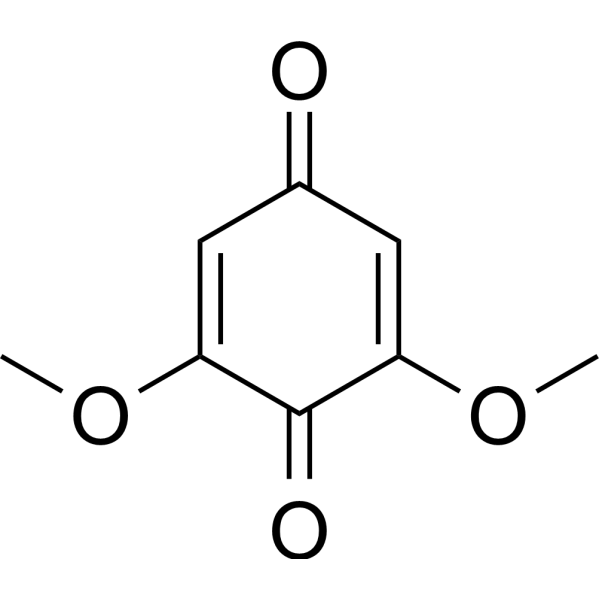
2,6-Dimethoxy-1,4-benzoquinone is a 1,4-benzoquinone derivative. 2,6-Dimethoxy-1,4-benzoquinone promotes phosphorylation of AKT, S6K, mTOR, 4E-BP1, and AMPK, and attenuates mTORC1 activity as part of the AKT/mTOR pathway. 2,6-Dimethoxy-1,4-benzoquinone stimulates myoblast differentiation, increases myotube size, elevates MHC protein expression, enhances mitochondrial biogenesis, respiration, and DNA content, and increases skeletal muscle weights, fiber size, grip strength, and treadmill performance. 2,6-Dimethoxy-1,4-benzoquinone exerts anti-cancer, anti-inflammatory, anti-adipogenic, antibacterial, and antimutagenic effects, inhibits adipogenic transcription factors, nitric oxide production, skin tumor development, Magnaporthe oryzae growth, spore germination, appressorium formation, and growth of select bacterial species, induces H2O2 generation and rice defense gene expression, and reduces rice blast lesion formation. 2,6-Dimethoxy-1,4-benzoquinone can be used for the research of obesity, skin tumorigenesis, rice blast disease, and food-borne illness [2] .
loading...
    loading...
Cat. No.: HY-N1677R
CAS No.: 530-55-2
2,6-Dimethoxy-1,4-benzoquinone (Standard) is the analytical standard of 2,6-Dimethoxy-1,4-benzoquinone (HY-N1677). This product is intended for research and analytical applications. 2,6-Dimethoxy-1,4-benzoquinone is a 1,4-benzoquinone derivative. 2,6-Dimethoxy-1,4-benzoquinone promotes phosphorylation of AKT, S6K, mTOR, 4E-BP1, and AMPK, and attenuates mTORC1 activity as part of the AKT/mTOR pathway. 2,6-Dimethoxy-1,4-benzoquinone stimulates myoblast differentiation, increases myotube size, elevates MHC protein expression, enhances mitochondrial biogenesis, respiration, and DNA content, and increases skeletal muscle weights, fiber size, grip strength, and treadmill performance. 2,6-Dimethoxy-1,4-benzoquinone exerts anti-cancer, anti-inflammatory, anti-adipogenic, antibacterial, and antimutagenic effects, inhibits adipogenic transcription factors, nitric oxide production, skin tumor development, Magnaporthe oryzae growth, spore germination, appressorium formation, and growth of select bacterial species, induces H2O2 generation and rice defense gene expression, and reduces rice blast lesion formation. 2,6-Dimethoxy-1,4-benzoquinone can be used for the research of obesity, skin tumorigenesis, rice blast disease, and food-borne illness.
loading...
    loading...

