
1057 Results for "

Ca(2+)

" in MedChemExpress (MCE) Product Catalog:
Products (1057)

1057 Results for "Ca(2+)" in MCE Product Catalog:

Cat. No.: HY-B0380R
CAS No.: 39133-31-8
Trimebutine (Standard) is the analytical standard of Trimebutine (HY-B0380). This product is intended for research and analytical applications. Trimebutine is a multi-target inhibitor and opioid receptor agonist with antimuscarinic activity. Trimebutine inhibits L-type Ca 2+ channels and large-conductance calcium-activated potassium channels (BKCa channels), thereby inhibiting extracellular calcium influx and potassium ion efflux. Trimebutine also targets Toll-like receptors, inhibits Toll-like receptor 2/4/7/8/9 signals, and inhibits LPS-induced IRAK1 activation, as well as ERK1/2, JNK and NF-κB activation, thereby exerting anti-inflammatory effects. Trimebutine also induces tumor cell apoptosis by inhibiting the AKT/ERK pathway. Trimebutine also inhibits excessive contraction of smooth muscle and can be used in the study of gastrointestinal disorders such as irritable bowel syndrome (IBS) [2] .
Cat. No.: HY-P5142
CAS No.: 193981-10-1
Synonyms: ω-ACTX-Hv1; ω-Atracotoxin-HV1
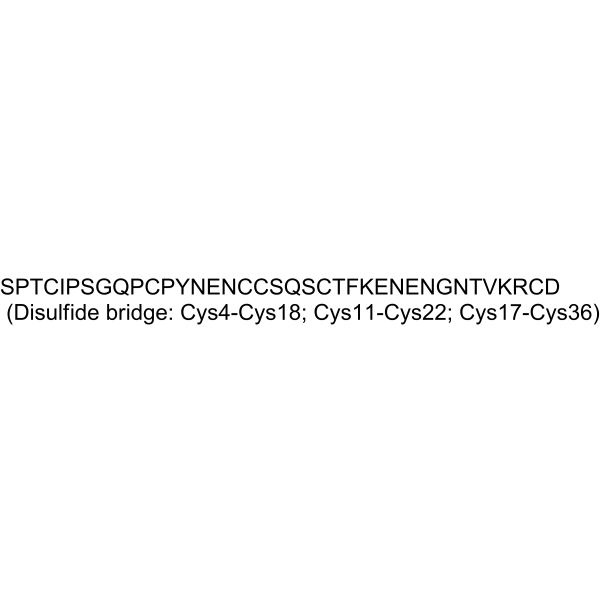
ω-Hexatoxin-Hv1a (ω-ACTX-Hv1; ω-Atracotoxin-HV1) is an orally active insecticidal neurotoxin containing an inhibitor cystine knot motif and a selective calcium channel inhibitor. ω-Hexatoxin-Hv1a blocks L-type voltage-dependent Ca 2+ channels and reduces intracellular calcium ion concentration, thereby decreasing apoptosis, necroptosis and oxidative stress, and promoting cell recovery and energy level elevation. ω-Hexatoxin-Hv1a causes larval paralysis and death by impairing neurotransmission in the central nervous system of insects. It shows high injectable toxicity against insects of multiple orders, but exhibits weak oral toxicity. ω-Hexatoxin-Hv1a is widely applicable to studies related to ischemia-reperfusion injury, atopic dermatitis, and ischemic injury of cardiomyocytes and neurons [2] .
Cat. No.: HY-P5142A
Synonyms: ω-ACTX-Hv1 TFA; ω-Atracotoxin-HV1 TFA
ω-Hexatoxin-Hv1a (ω-ACTX-Hv1; ω-Atracotoxin-HV1) TFA is an orally active insecticidal neurotoxin containing an inhibitor cystine knot motif and a selective calcium channel inhibitor. ω-Hexatoxin-Hv1a TFA blocks L-type voltage-dependent Ca 2+ channels and reduces intracellular calcium ion concentration, thereby decreasing apoptosis, necroptosis and oxidative stress, and promoting cell recovery and energy level elevation. ω-Hexatoxin-Hv1a TFA causes larval paralysis and death by impairing neurotransmission in the central nervous system of insects. It shows high injectable toxicity against insects of multiple orders, but exhibits weak oral toxicity. ω-Hexatoxin-Hv1a TFA is widely applicable to studies related to ischemia-reperfusion injury, atopic dermatitis, and ischemic injury of cardiomyocytes and neurons [2] .
Cat. No.: HY-P87013
Synonyms: Ca(2+)/calmodulin-dependent protein kinase phosphatase N antibody; CaMKN antibody; CaMKP-N antibody; CaMKP-nucleus antibody; KIAA1072 antibody; Nuclear calmodulin dependent protein kinase phosphatase antibody; Partner of PIX 1 antibody; Partner of PIX-alpha antibody; Partner of PIXA antibody; POPX1 antibody; Ca(2+)/calmodulin-dependent protein kinase phosphatase N antibody; CaMKN antibody; CaMKP-N antibody; CaMKP-nucleus antibody; KIAA1072 antibody; Nuclear calmodulin dependent protein kinase phosphatase antibody; Partner of PIX 1 antibody; Partner of PIX-alpha antibody; Partner of PIXA antibody; POPX1 antibody; PP2CH antibody; Ppm1e antibody; PPM1E_HUMAN antibody; Protein phosphatase 1E antibody; Protein phosphatase Mg2+/Mn2+ dependent 1E antibody;

Host:  

Rabbit

Application:  

WB

Reactivity:  

Human

Cat. No.: HY-N0392
CAS No.: 882664-74-6
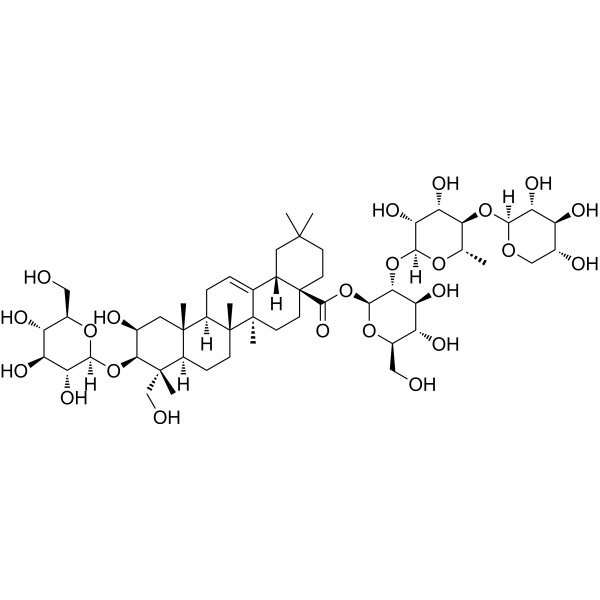
Polygalasaponin F is an orally active triterpenoid saponin monomer. Polygalasaponin F downregulates the expression of Bax, p53, caspase-3, NF-κB p65 and MEK1; restores and upregulates the expression of Bcl-2; activates the PI3K/Akt signaling pathway; inhibits the phosphorylation of p38 MAPK, nuclear translocation of NF-κB, TLR4-mediated signaling pathway, mitophagy (Mitophagy) and ROS production; enhances cell viability and suppresses apoptosis (Apoptosis). Polygalasaponin F maintains mitochondrial function, alleviates Ca 2+ overload, upregulates pCREB and BDNF, preserves cell viability and inhibits the release of inflammatory cytokines. Polygalasaponin F alleviates lung injury induced by influenza A H1N1 and cerebral ischemia-reperfusion injury. Polygalasaponin F is applicable to researches related to Parkinson's disease, cerebral ischemia, pneumonia induced by influenza A H1N1, stroke and Alzheimer's disease [2] .
Cat. No.: HY-N4267
CAS No.: 13060-14-5
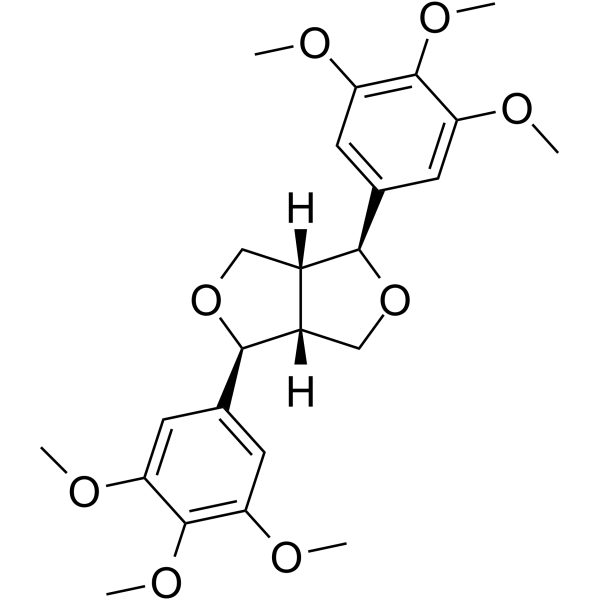
Yangambin is a PAF receptor antagonist and UGT1A1/UGT1A3 inhibitor, with an IC50 of 29.7 μM and a Ki of 17.1 μM against human UGT1A1, and an IC50 of 56.5 μM and a Ki of 66.8 μM against human UGT1A3. Yangambin blocks PAF-mediated responses, inhibits LTB4-mediated neutrophil infiltration, and suppresses inflammatory events and anaphylactic contraction. Yangambin acts as a central nervous system inhibitor to reduce spontaneous activity, and also exhibits analgesic, anticonvulsant, antileishmanial, vasodilatory and hypotensive effects. Yangambin blocks voltage-gated Ca 2+ channels, reduces the production of NO, TNF-α, IL-6 and PGE2 in cells, increases the production of IL-10, and exerts a protective effect against cardiovascular injury. Yangambin can be used in research related to allergies, cutaneous leishmaniasis, central nervous system diseases and cardiovascular diseases [2] .
Cat. No.: HY-P89686
Synonyms: APC3, KIAA1896, MCSC3, SCAMC2, UNQ549/PRO1106, SLC25A25, Mitochondrial adenyl nucleotide antiporter SLC25A25, Mitochondrial ATP-Mg/Pi carrier protein 3, Mitochondrial Ca(2+)-dependent solute carrier protein 3, Short calcium-binding mitochondrial carrier protein 2, Solute carrier family 25 member 25, SCaMC-2

Host:  

Mouse

Application:  

WB, IP, ELISA

Reactivity:  

human, mouse, rat

Cat. No.: HY-N0392R
CAS No.: 882664-74-6
Polygalasaponin F (Standard) is the analytical standard of Polygalasaponin F. This product is intended for research and analytical applications. Polygalasaponin F is an orally active triterpenoid saponin monomer. Polygalasaponin F downregulates the expression of Bax, p53, caspase-3, NF-κB p65 and MEK1; restores and upregulates the expression of Bcl-2; activates the PI3K/Akt signaling pathway; inhibits the phosphorylation of p38 MAPK, nuclear translocation of NF-κB, TLR4-mediated signaling pathway, mitophagy (Mitophagy) and ROS production; enhances cell viability and suppresses apoptosis (Apoptosis). Polygalasaponin F maintains mitochondrial function, alleviates Ca 2+ overload, upregulates pCREB and BDNF, preserves cell viability and inhibits the release of inflammatory cytokines. Polygalasaponin F alleviates lung injury induced by influenza A H1N1 and cerebral ischemia-reperfusion injury. Polygalasaponin F is applicable to researches related to Parkinson's disease, cerebral ischemia, pneumonia induced by influenza A H1N1, stroke and Alzheimer's disease.
Cat. No.: HY-P1341
CAS No.: 343268-91-7
Synonyms: Orexin A (17-33) (human, mouse, rat, bovine)
OXA (17-33) (Orexin A (17-33) (human, mouse, rat, bovine)) is the shortest active orexin peptide that selectively targets OX1 (EC50=8.29 nM), with 23-fold selectivity for the OX1 receptor over the OX2 receptor. The activity of OXA (17-33) depends on the Tyr17, Leu20, Asn25, His26 residues and the spatial conformation of the α-helix. OXA (17-33) activates signaling pathways involving inositol-1,4,5-trisphosphate receptor (IP3R), phospholipase D (PL-D) and choline-Sigma-1R, thereby increasing the cytoplasmic Ca 2+ level in nucleus accumbens neurons, an effect that is blocked by Sigma-1R antagonists. OXA (17-33) serves as an important biological probe for investigating the function of the OX1 receptor. OXA (17-33) can be modified via incorporation of mixed disulfide bonds of homocysteine and cysteamine, and is widely used in studies related to insomnia and narcolepsy [2] .
Cat. No.: HY-W795960
CAS No.: 108340-81-4
D-myo-inositol 1,4,5-trisphosphate sodium salt is a widely distributed intracellular second messenger. D-myo-inositol 1,4,5-trisphosphate sodium salt acts as a potent agonist of the Ins (1,4,5) P3 receptor with an EC50 of 0.12 μM and inhibits bovine PLC-δ1, with an IC50 of 5.4 μM for binding and an IC50 of 12.4 μM for hydrolysis. D-myo-inositol 1,4,5-trisphosphate sodium saltis metabolized into Ins (1,4) P2 and Ins (1,3,4,5) P4. D-myo-inositol 1,4,5-trisphosphate sodium salt mediates various cellular processes, including growth, development, fertilization, secretion, contraction and neuromodulation. D-myo-inositol 1,4,5-trisphosphate sodium salt inhibits PIP2 hydrolysis and Ca 2+-ATPase activity. D-myo-inositol 1,4,5-trisphosphate sodium salt is used for cardiac preconditioning, exerts cardioprotective effects and mimics ischemic preconditioning. D-myo-inositol 1,4,5-trisphosphate sodium salt is applied in studies related to intracellular calcium and phosphoinositol signaling pathways [2] .
Cat. No.: HY-108659
CAS No.: 202982-98-7
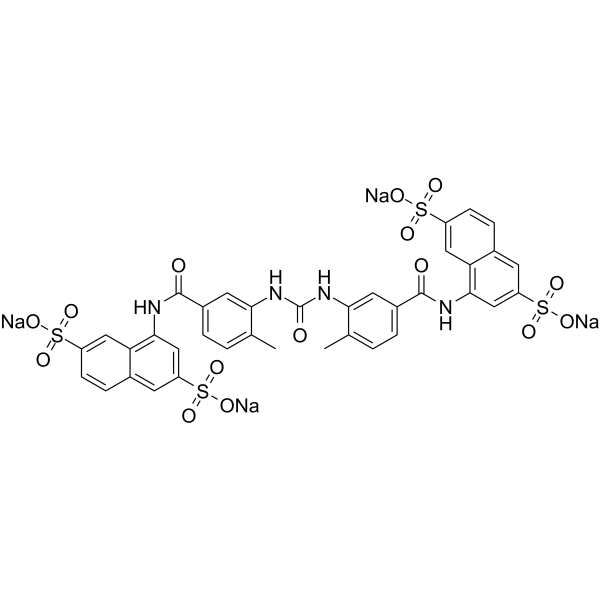
NF340 is a P2Y11 receptor inhibitor with a pIC50 of 7.3-7.7 against human P2Y11 receptor, and it exhibits high selectivity over other P2Y family receptors. NF340 binds to the ATP-binding amino acid residues of the P2Y11 receptor to inhibit its activity, block nociceptive activity, and reduce spinal dorsal horn P2Y11 receptor upregulation induced by spinal nerve injury. NF340 attenuates the NFκB signaling pathway activated by IL-1β by decreasing IκBα phosphorylation, nuclear p65 accumulation, and NFκB promoter activity. NF340 inhibits IL-1β-induced pro-inflammatory cytokine expression, reduces intracellular ROS and 4-HNE levels, and suppresses IL-1β-induced matrix metalloproteinase expression in primary fibroblast-like synoviocytes. NF340 inhibits ATP-induced elevation of intracellular Ca 2+ concentration and cell migration in human hepatocellular carcinoma cells. NF340 can be used in the research of neuropathic pain, myocardial ischemia/reperfusion injury, inflammatory pain, rheumatoid arthritis, and hepatocellular carcinoma [2] .
Cat. No.: HY-12292G
CAS No.: 1129669-05-1
IM-12 GMP is IM-12 (HY-12292) produced by using GMP guidelines. GMP small molecules works appropriately as an auxiliary reagent for cell therapy manufacture. IM-12 is an orally active anti-inflammatory agent that targets and inhibits the NF-κB and STAT3 signaling pathways. IM-12 activates the Wnt signaling pathway and promotes the nuclear translocation of β-catenin by inhibiting GSK3β, while also blocking the tyrosine kinase activity of p210BCR/ABL. IM-12 reduces the levels of IL-6, IL-17, NO, prostaglandin E2, iNOS and COX-2, and induces ER stress, Ca 2+ release, autophagy and apoptosis. IM-12 is heat-sensitive and does not induce autophagy in IM-resistant p210BCR/ABL T315I mutant cells. IM-12 is also a component of the 5iLA medium used for naive pluripotent stem cell research. IM-12 has been applied in studies related to carrageenan (HY-125474)-induced hind paw edema, TNBS-induced colitis, and acute and chronic myeloid leukemia [2] .
Cat. No.: HY-103544
CAS No.: 96736-12-8
Purity:  98.48%
[D-Arg1,D-Phe5,D-Trp7,9,Leu11]-Substance P, a Substance P derivative, is a biased agonist toward neuropeptide and chemokine receptors. [D-Arg1,D-Phe5,D-Trp7,9,Leu11]-Substance P activates G12. [D-Arg1,D-Phe5,D-Trp7,9,Leu11]-Substance P binds to IL-8 and GRP receptors. [D-Arg1,D-Phe5,D-Trp7,9,Leu11]-Substance P inhibits ERK-2 activation, activates JNK activity. [D-Arg1,D-Phe5,D-Trp7,9,Leu11]-Substance P stimulates an increase in neutrophil migration and Ca 2+ mobilization. [D-Arg1,D-Phe5,D-Trp7,9,Leu11]-Substance P is also a bombesin antagonist, and inhibits the growth of small cell lung cancer [2]
Cat. No.: HY-P705719
Purity:  ≥ 85%, as determined by reducing SDS-PAGE.
Synonyms: Phosphatidylinositol 4,5-bisphosphate 3-kinase catalytic subunit alpha isoform; Phosphatidylinositol 4,5-bisphosphate 3-kinase 110 kDa catalytic subunit alpha; PtdIns-3-kinase subunit p110-alpha; p110alpha; Phosphoinositide 3-kinase alpha; Phosphoinositide-3-kinase catalytic alpha polypeptide; Serine/threonine protein kinase PIK3CA; 2.7.11.1; PIK3CA; Homo sapiens; Human; PI3-kinase subunit alpha; Kinase; Serine/threonine-protein kinase; Transferase; 2.7.1.137
Species:  
Source:  
Cat. No.: HY-P706084
Purity:  ≥ 85%, as determined by reducing SDS-PAGE.
Synonyms: Phosphatidylinositol 4,5-bisphosphate 3-kinase catalytic subunit alpha isoform; Phosphatidylinositol 4,5-bisphosphate 3-kinase 110 kDa catalytic subunit alpha; PtdIns-3-kinase subunit p110-alpha; p110alpha; Phosphoinositide 3-kinase alpha; Phosphoinositide-3-kinase catalytic alpha polypeptide; Serine/threonine protein kinase PIK3CA; 2.7.11.1; Phosphatidylinositol 3-kinase regulatory subunit alpha; Phosphatidylinositol 3-kinase 85 kDa regulatory subunit alpha; PI3-kinase subunit p85-alpha; PtdIns-3-kinase regulatory subunit p85-alpha; GRB1
Species:  
Source:  
Cat. No.: HY-P706085
Purity:  ≥ 85%, as determined by reducing SDS-PAGE.
Synonyms: Phosphatidylinositol 4,5-bisphosphate 3-kinase catalytic subunit alpha isoform; Phosphatidylinositol 4,5-bisphosphate 3-kinase 110 kDa catalytic subunit alpha; PtdIns-3-kinase subunit p110-alpha; p110alpha; Phosphoinositide 3-kinase alpha; Phosphoinositide-3-kinase catalytic alpha polypeptide; Serine/threonine protein kinase PIK3CA; 2.7.11.1; Phosphatidylinositol 3-kinase regulatory subunit alpha; Phosphatidylinositol 3-kinase 85 kDa regulatory subunit alpha; PI3-kinase subunit p85-alpha; PtdIns-3-kinase regulatory subunit p85-alpha; GRB1
Species:  
Source:  
Cat. No.: HY-P72109
Purity:  ≥ 90%, as determined by reducing SDS-PAGE.
Synonyms: CA2D1_HUMAN; CACN A2; CACNA2; Cacna2d1; CACNL2A; Calcium channel L type alpha 2 polypeptide; Calcium channel voltage dependent alpha 2/delta subunit 1; CCHL2A; Dihydropyridine receptor alpha 2 subunit; Dihydropyridine sensitive L type calcium channel alpha 2/delta subunit; Dihydropyridine sensitive L type calcium channel subunits alpha 2/delta; L type calcium channel subunit alpha 2; MHS 3; MHS3; Voltage dependent calcium channel subunit alpha 2/delta 1; Voltage gated calcium channel subunit alpha 2/delta 1; Voltage-dependent calcium channel subunit delta-1; Voltage-gated calcium channel subunit alpha-2/delta-1
Species:  
Source:

