



Polygalasaponin F

Based on 1 Customer Validation
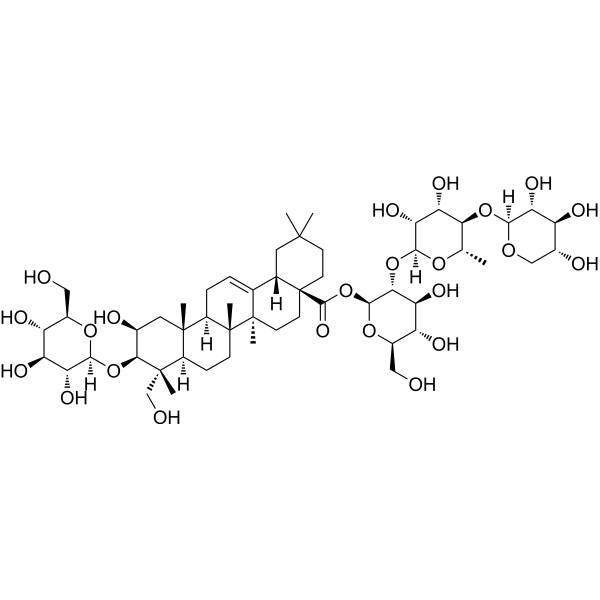
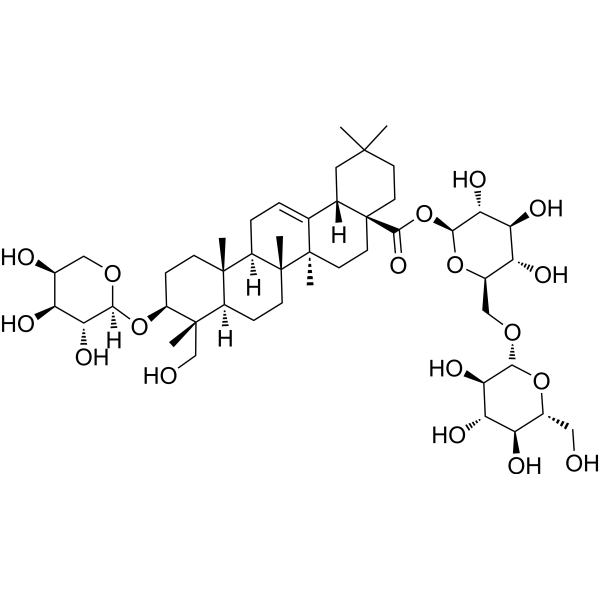
Polygalasaponin F is an orally active triterpenoid saponin monomer. Polygalasaponin F downregulates the expression of Bax, p53, caspase-3, NF-κB p65 and MEK1; restores and upregulates the expression of Bcl-2; activates the PI3K/Akt signaling pathway; inhibits the phosphorylation of p38 MAPK, nuclear translocation of NF-κB, TLR4-mediated signaling pathway, mitophagy (Mitophagy) and ROS production; enhances cell viability and suppresses apoptosis (Apoptosis). Polygalasaponin F maintains mitochondrial function, alleviates Ca2+ overload, upregulates pCREB and BDNF, preserves cell viability and inhibits the release of inflammatory cytokines. Polygalasaponin F alleviates lung injury induced by influenza A H1N1 and cerebral ischemia-reperfusion injury. Polygalasaponin F is applicable to researches related to Parkinson's disease, cerebral ischemia, pneumonia induced by influenza A H1N1, stroke and Alzheimer's disease.
For research use only. We do not sell to patients.
- Purity : 99.85%
- CAS No.: 882664-74-6
- Formula: C53H86O23
- Molecular Weight:1091.24
-
Storage:
4°C, protect from light
* In solvent : -80°C, 6 months; -20°C, 1 month (protect from light)

To place orders, for customer services and technical support, please contact: MedChemExpress USA
Tel: 609-228-6898 E-mail: [email protected] [email protected]


-
 Biological Activity
-
Chemical Information
-
Solvent & Solubility
- Purity & Documentation
- References
-
 Help & FAQs





Biological Activity
Description
IC50 & Target
[1]|
TLR4 |
PI3K |
NF-κB |
In Vitro
Polygalasaponin F (0.1-10.0 μM; 24-48 h) increases the survival rate of PC12 cells damaged by Rotenone (HY-B1756), reduces cell apoptosis, inhibits intracellular ROS production, preserves mitochondrial membrane potential, reverses cellular ATP depletion, suppresses the release of cytochrome c from mitochondria to the cytoplasm, regulates the expression of apoptotic proteins, decreases p53 levels, restores the normal Bax/Bcl-2 ratio, and inhibits the activation of caspase-3[1].
Polygalasaponin F (0.1-10 μM) significantly increases the viability of PC12 cells and primary rat cortical neurons treated with oxygen-glucose deprivation/reoxygenation (OGD/R), and upregulates the Bcl-2/Bax ratio in the cells[2].
Polygalasaponin F (0.1-10 μM) downregulates the expression of activated caspase-3 in primary rat cortical neurons treated with OGD/R, suggesting a reduction in the level of cellular apoptosis[2].
Polygalasaponin F (1-10 μM) activates the PI3K/Akt signaling pathway in OGD/R-treated PC12 cells[2].
Polygalasaponin F (0.1-10 μM; 1 h pre-treatment followed by 24 h incubation with LPS) dose-dependently inhibits LPS (HY-D1056)-induced TNF-α secretion in BV-2 microglia, suppresses the production of NO and iNOS protein in cells, inhibits p38 MAPK phosphorylation, and increases cell viability[3].
Polygalasaponin F (0.1-10 μM; 1 h pretreatment, 24 h LPS co-incubation) inhibits LPS-induced NF-κB activation in BV-2 microglia in a dose-dependent manner by reducing p65 nuclear translocation and increasing cytoplasmic p65 and IkB-α levels[3].
Polygalasaponin F (10-5 M; 24 h) inhibits LPS-induced nuclear translocation of the NF-κB p65 subunit in BV-2 microglia and reduces the phosphorylation level of AKT in cells via a PI3K/AKT-dependent mechanism[4].
Polygalasaponin F exerts anti-inflammatory effects in LPS-stimulated RAW264.7 macrophages and BV2 microglia by inhibiting the production of nitric oxide and prostaglandin E2, reducing the mRNA expression levels of pro-inflammatory cytokines, and suppressing the activation of the NF-κB pathway[5].
Polygalasaponin F (2-10 μM; 30 min pre-incubation followed by 24 h co-treatment with 100 μM glutamate) concentration-dependently increases the survival rate of primary cultured rat embryonic hippocampal neurons subjected to glutamate-induced cytotoxicity[6].
Polygalasaponin F (10 μM; 24 h co-treatment with 100 μM glutamate) inhibits glutamate-induced apoptosis of primary cultured rat embryonic hippocampal neurons and increases the count of caspase-3-positive cells[6].
Polygalasaponin F (10 μM; 4 h co-treatment with 100 μM glutamate) inhibits glutamate-induced intracellular Ca2+ overload in primary cultured rat embryonic hippocampal neurons by blocking extracellular Ca2+ influx[6].
Polygalasaponin F (10 μM) partially blocks NMDAR-mediated currents in primary cultured rat embryonic hippocampal neurons, inhibiting the current amplitude by 47.7%. It reverses the dysregulated expression of NMDAR subunits induced by glutamate in neurons, restores the levels of NR2A and NR2B to near those of the control group, and reverses the downregulated expression of pCREB and BDNF[6].
Polygalasaponin F (40 μM; 6 h) protects HT22 mouse hippocampal neurons against OGD/R injury by alleviating oxidative stress, preserving mitochondrial function, inhibiting excessive mitophagy, and attenuating apoptosis[7].
MedChemExpress (MCE) has not independently confirmed the accuracy of these methods. They are for reference only.
-
Cell Line:PC12 cells
-
Concentration:0, 0.1, 1, 10.0 μM
-
Incubation Time:48 h
-
Result:Increased the viability of rotenone-treated PC12 cells to 68.34%, 77.25%, and 84.91% (relative to control), respectively, in a dose-dependent manner.
-
Cell Line:PC12 cells
-
Concentration:0, 0.1, 1, 10.0 μM
-
Incubation Time:24 h
-
Result:Decreased the rotenone-induced apoptosis rate of PC12 cells to 33.45%, 28.99%, and 20.59%, respectively, in a dose-dependent manner.
-
Cell Line:PC12 cells
-
Concentration:0, 0.1, 1, 10.0 μM
-
Incubation Time:24 h
-
Result:Dose-dependently blocked rotenone-induced cytochrome c release into the cytosol, reducing the relative intensity of cytosolic cytochrome c (normalized to β-actin) to levels significantly lower than rotenone-only treated cells.\nDose-dependently decreased rotenone-induced p53 overexpression, reduced the Bax/Bcl-2 ratio, and attenuated rotenone-induced cleaved caspase-3 activation, with all changes showing significant dose-dependent reductions relative to rotenone-only treated cells.
-
Cell Line:BV-2 cells
-
Concentration:0, 0.1, 1, 10.0 μM
-
Incubation Time:1 h (pretreatment); 24 h (LPS co-incubation)
-
Result:Significantly reduced LPS-induced TNF-α release in a dose-dependent manner.
Almost completely inhibited LPS-induced TNF-α generation at 10 μM.
-
Cell Line:BV-2 cells
-
Concentration:0, 0.1, 1, 10.0 μM
-
Incubation Time:1 h (BV-2 pretreatment); 24 h (BV-2 LPS incubation); 24 h (PC12 culture with conditioned medium)
-
Result:Significantly reduced PC12 cell death caused by LPS-conditioned BV-2 medium in a dose-dependent manner.
Increased PC12 cell viability.
-
Cell Line:BV-2 cells
-
Concentration:0, 0.1, 1, 10.0 μM
-
Incubation Time:1 h (pretreatment); 24 h (LPS co-incubation)
-
Result:Significantly inhibited LPS-induced iNOS protein expression in a dose-dependent manner.\nSignificantly inhibited LPS-induced p38 MAPK phosphorylation in a dose-dependent manner.
Showed no significant effect on phosphorylated JNK or ERK1/2 levels.
In Vivo
Polygalasaponin F (i.p., once daily for 10 days, 15-30 mg/kg) dose-dependently alleviates cerebral ischemia-reperfusion injury in male KM mice; at the dose of 30 mg/kg, it reduces cerebral infarct volume by approximately 55% compared with the model group, while inhibiting neuronal apoptosis and blocking excessive mitophagy[7].
MedChemExpress (MCE) has not independently confirmed the accuracy of these methods. They are for reference only.
-
Animal Model:BALB/c (female, specific-pathogen-free, 6-8 weeks old, intranasal infection with influenza H1N1 virus)[5]
-
Dosage:50 mg/kg; 100 mg/kg; 200 mg/kg
-
Administration:p.o.; once daily; 5 days (starting 2 hours post-infection)
-
Result:Relieved clinical symptoms.
Reduced body weight loss.
Prolonged survival time.
Significantly lowered lung histopathology scores and lung index.
Inhibited influenza virus M gene expression in lung tissue.
Significantly reduced lung tissue levels of IL-1β, TNF-α, IL-4, IFN-γ, TXA2, and PGE2.
Significantly decreased the lung tissue expression of NF-κB p65, IκBα, and MEK1 proteins relative to the untreated infected control.\n
Resulted in higher survival rates.
Reduced body weight loss.
Significantly prolonged survival time compared to the untreated infected control group.
-
Animal Model:KM (male, 6 weeks old, 30-35 g, middle cerebral artery occlusion followed by reperfusion)[7]
-
Dosage:15 mg/kg; 30 mg/kg
-
Administration:i.p.; daily; 10 consecutive days (7 days pre-surgery, 3 days post-surgery)
-
Result:Reduced modified Neurological Severity Score (mNSS) relative to model group at 15 mg/kg and to a greater extent at 30 mg/kg.
Improved wire-hanging test performance (increased score and hanging time) and balance beam test performance (decreased score) relative to model group at 15 mg/kg and to a greater extent at 30 mg/kg.
Reduced cerebral infarct volume from ~33% to ~28% relative to model group at 15 mg/kg, and from ~33% to ~15% (a ~55% reduction) at 30 mg/kg.
Attenuated hippocampal neuronal damage (preserved cellular architecture, reduced vacuolation, maintained Nissl body integrity) relative to model group at 15 mg/kg and to a greater extent at 30 mg/kg.
Reduced TUNEL-positive cells in hippocampal CA1 (from ~70% to ~50%), CA3 (from ~70% to ~35%), and DG (from ~80% to ~35%) regions relative to model group at 15 mg/kg; reduced TUNEL-positive cells in hippocampal CA1 (from ~70% to ~20%), CA3 (from ~70% to ~10%), and DG (from ~80% to ~20%) regions relative to model group at 30 mg/kg.
Normalized Bax and Bcl-2 protein expression (reduced Bax/β-actin ratio, increased Bcl-2/β-actin ratio) relative to model group at 15 mg/kg and to a greater extent at 30 mg/kg.
Reduced LC3-TOM20 colocalization from ~80% to ~60% relative to model group at 15 mg/kg, and from ~80% to ~45% at 30 mg/kg.
Reduced LC3II/LC3I ratio, increased TOM20/β-actin ratio, and increased p62/β-actin ratio relative to model group at 15 mg/kg and to a greater extent at 30 mg/kg.


Chemical Information
-
CAS No. 882664-74-6
-
Appearance Solid
-
Molecular Weight 1091.24
-
Formula C53H86O23
-
Color White to off-white
-
SMILES
OC[C@H]1O[C@@]([H])(O[C@@H]2[C@@](C)(CO)[C@@](CC[C@]3(C)[C@]4([H])CC=C5[C@@]3(C)CC[C@]6(C(O[C@@H]7O[C@H](CO)[C@@H](O)[C@H](O)[C@H]7O[C@@]8([H])[C@H](O)[C@H](O)[C@@H](O[C@]9([H])OC[C@@H](O)[C@H](O)[C@H]9O)[C@H](C)O8)=O)[C@@]5([H])CC(C)(C)CC6)([H])[C@]4(C)C[C@@H]2O)[C@H](O)[C@@H](O)[C@@H]1O
-
Structure Classification
-
Initial Source
-
Shipping
Room temperature in continental US; may vary elsewhere.
-
Storage
4°C, protect from light
* In solvent : -80°C, 6 months; -20°C, 1 month (protect from light)


Solvent & Solubility
In Vitro:
DMSO : 100 mg/mL (91.64 mM; Need ultrasonic; Hygroscopic DMSO has a significant impact on the solubility of product, please use newly opened DMSO)
Please refer to the solubility information to select the appropriate solvent. Once prepared, please aliquot and store the solution to prevent product inactivation from repeated freeze-thaw cycles.
Storage method and period of stock solution: -80°C, 6 months; -20°C, 1 month (protect from light). When stored at -80°C, please use it within 6 months. When stored at -20°C, please use it within 1 month.
Please refer to the solubility information to select the appropriate solvent. Once prepared, please aliquot and store the solution to prevent product inactivation from repeated freeze-thaw cycles.
Storage method and period of stock solution: -80°C, 6 months; -20°C, 1 month (protect from light). When stored at -80°C, please use it within 6 months. When stored at -20°C, please use it within 1 month.
Concentration (start) × Volume (start) = Concentration (final) × Volume (final)
In Vivo:
Select the appropriate dissolution method based on your experimental animal and administration route.
- For the following dissolution methods, please ensure to first prepare a clear stock solution using an In Vitro approach and then sequentially add co-solvents:
- To ensure reliable experimental results, the clarified stock solution can be appropriately stored based on storage conditions. As for the working solution for In Vivo experiments, it is recommended to prepare freshly and use it on the same day.
- The percentages shown for the solvents indicate their volumetric ratio in the final prepared solution. If precipitation or phase separation occurs during preparation, heat and/or sonication can be used to aid dissolution.
Add each solvent one by one: 10% DMSO 40% PEG300 5% Tween-80 45% Saline
Solubility: ≥ 2.5 mg/mL (2.29 mM); Clear solution
This protocol yields a clear solution of ≥ 2.5 mg/mL (saturation unknown).
Taking 1 mL working solution as an example, add 100 μL DMSO stock solution (25.0 mg/mL) to 400 μL PEG300, and mix evenly; then add 50 μL Tween-80 and mix evenly; then add 450 μL Saline to adjust the volume to 1 mL.
Preparation of Saline: Dissolve 0.9 g sodium chloride in ddH₂O and dilute to 100 mL to obtain a clear Saline solution.
In Vivo Dissolution Calculator
Please enter the basic information of animal experiments:
-
-
-
-
Recommended: Prepare an additional quantity of animals to account for potential losses during experiments.
Please enter your animal formula composition:
-
%DMSO +
Recommended: Keep the proportion of DMSO in working solution below 2% if your animal is weak.
-
%+
-
+%Tween-80 + +
-
%Saline +
The co-solvents required include: DMSO, . All of co-solvents are available by MedChemExpress (MCE). , Tween 80. All of co-solvents are available by MedChemExpress (MCE).
Working solution concentration: 0.22 mg/mL
Method for preparing stock solution: mg drug dissolved in μL DMSO. Stock solution concentration: mg/mL. * In solvent : -80°C, 6 months; -20°C, 1 month (protect from light)
1. Take μL DMSO stock solution;
2. Add μL .
μL , mix evenly;
3. Then add μL Tween 80, mix evenly;
4. Then add μL
Please ensure that the stock solution in the first step is dissolved to a clear state, and add co-solvents in sequence. You can use ultrasonic heating (ultrasonic cleaner, recommended frequency 20-40 kHz), vortexing, etc. to assist dissolution.


Purity & Documentation
-
Data Sheet (293 KB)
-
SDS (252 KB)
- English - EN (252 KB)
- Français - FR (252 KB)
- Deutsch - DE (252 KB)
- Norwegian - NO (252 KB)
- Español - ES (252 KB)
- Swedish - SV (252 KB)
- Italian - IT (252 KB)
- Korean - KR (252 KB)
- Portuguese - PT (252 KB)
-
Handling Instructions (2659 KB)
References
[1]. Wu MM, et al. Polygalasaponin F against rotenone-induced apoptosis in PC12 cells via mitochondria protection pathway. J Asian Nat Prod Res. 2014 Jan;16(1):59-69. [Content Brief]
[2]. Xie W, et al. Polygalasaponin F inhibits neuronal apoptosis induced by oxygen-glucose deprivation and reoxygenation through the PI3K/Akt pathway. Basic Clin Pharmacol Toxicol. 2020;127(3):196-204. [Content Brief]
[3]. Wei W, et al. Polygalasaponin F inhibits secretion of inflammatory cytokines via NF-κB pathway regulation. J Asian Nat Prod Res. 2014;16(8):865-75. [Content Brief]
[4]. Yan WF, et al. The molecular mechanism of polygalasaponin F-mediated decreases in TNFα: emphasizing the role of the TLR4-PI3K/AKT-NF-κB pathway. J Asian Nat Prod Res. 2015;17(6):662-70. [Content Brief]
[5]. Ye Y, et al. Polygalasaponin F treats mice with pneumonia induced by influenza virus. Inflammopharmacology. 2020;28(1):299-310. [Content Brief]
[6]. Sun C, et al. Polygalasaponin F protects hippocampal neurons against glutamate-induced cytotoxicity. Neural Regen Res. 2022;17(1):178-184. [Content Brief]
[7]. Quan S, et al. Polygalasaponin F alleviates cerebral ischemia-reperfusion injury through inhibiting mitophagy. Metab Brain Dis. 2025;40(8):296. Published 2025 Oct 24. [Content Brief]


Complete Stock Solution Preparation Table
Please refer to the solubility information to select the appropriate solvent. Once prepared, please aliquot and store the solution to prevent product inactivation from repeated freeze-thaw cycles.
Storage method and period of stock solution: -80°C, 6 months; -20°C, 1 month (protect from light). When stored at -80°C, please use it within 6 months. When stored at -20°C, please use it within 1 month.
| Optional Solvent | Concentration Solvent Mass | 1 mg | 5 mg | 10 mg | 25 mg |
|---|---|---|---|---|---|
| DMSO | 1 mM | 0.9164 mL | 4.5819 mL | 9.1639 mL | 22.9097 mL |
| 5 mM | 0.1833 mL | 0.9164 mL | 1.8328 mL | 4.5819 mL | |
| 10 mM | 0.0916 mL | 0.4582 mL | 0.9164 mL | 2.2910 mL | |
| 15 mM | 0.0611 mL | 0.3055 mL | 0.6109 mL | 1.5273 mL | |
| 20 mM | 0.0458 mL | 0.2291 mL | 0.4582 mL | 1.1455 mL | |
| 25 mM | 0.0367 mL | 0.1833 mL | 0.3666 mL | 0.9164 mL | |
| 30 mM | 0.0305 mL | 0.1527 mL | 0.3055 mL | 0.7637 mL | |
| 40 mM | 0.0229 mL | 0.1145 mL | 0.2291 mL | 0.5727 mL | |
| 50 mM | 0.0183 mL | 0.0916 mL | 0.1833 mL | 0.4582 mL | |
| 60 mM | 0.0153 mL | 0.0764 mL | 0.1527 mL | 0.3818 mL | |
| 80 mM | 0.0115 mL | 0.0573 mL | 0.1145 mL | 0.2864 mL |


Polygalasaponin F Related Classifications
HY-N0392 Related Classifications
 Powered by Bioz
Keywords
- Polygalasaponin F
- 882664-74-6
- Toll-like Receptor (TLR)
- PI3K
- Akt
- NF-κB
- MDM-2/p53
- Caspase
- MEK
- Bcl-2 Family
- p38 MAPK
- Mitophagy
- Reactive Oxygen Species (ROS)
- Apoptosis
- Calcium Channel
- triterpenoid saponin monomer
- BV-2 cells
- PC12 cells
- primary rat cortical neurons
- RAW264.7 macrophages
- BALB/c mice
- KM mice
- Parkinson's disease
- cerebral ischemia
- pneumonia induced by influenza A H1N1
- stroke
- Alzheimer's disease
- Inhibitor
- inhibitor
- inhibit