10 Results for "

DF 1681Y

" in MedChemExpress (MCE) Product Catalog:
Products (10)

10 Results for "DF 1681Y" in MCE Product Catalog:

63
63 Cited Publications
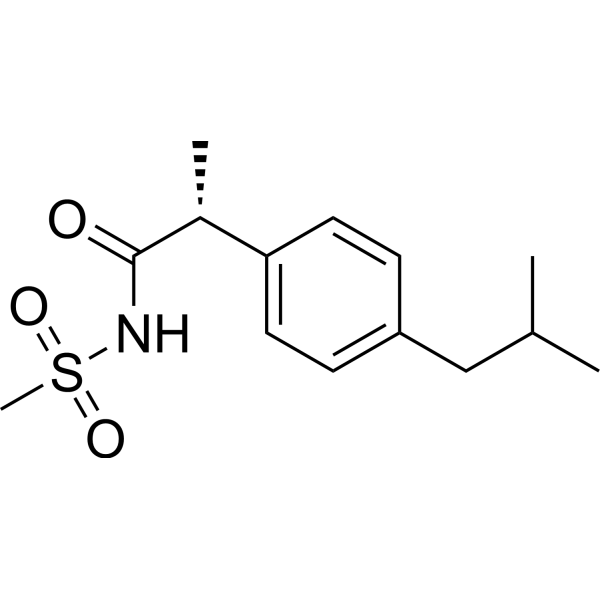
Cat. No.: HY-15251
CAS No.: 266359-83-5
Purity:  99.99%
Synonyms: Repertaxin; DF 1681Y
Target:  

CXCR

Reparixin is a non-competitive allosteric inhibitor of the chemokine receptors CXCR1 and CXCR2 activation with IC50s of 1 and 100 nM, respectively.
loading...
    loading...
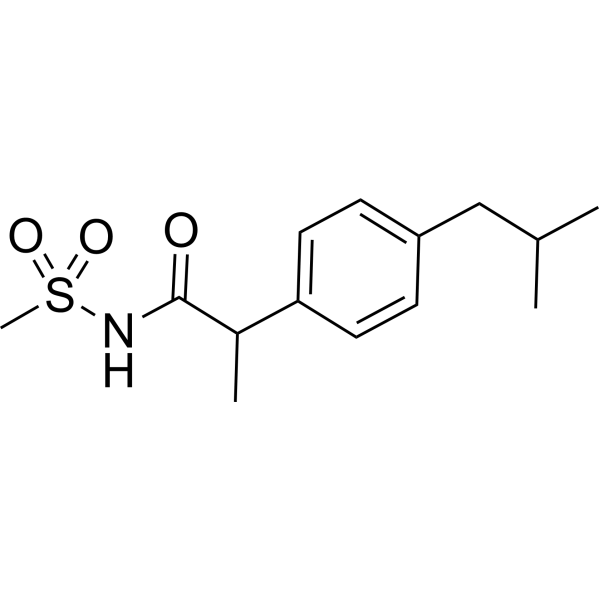
Cat. No.: HY-15251A
CAS No.: 957407-64-6
Purity:  99.82%
Synonyms: (Rac)-Repertaxin; (Rac)-DF 1681Y
Target:  

CXCR

(Rac)-Reparixin is the isomer of Reparixin (HY-15251), and can be used as an experimental control. Reparixin is a non-competitive allosteric inhibitor of the chemokine receptors CXCR1 and CXCR2 activation with IC50s of 1 and 100 nM, respectively.
loading...
    loading...
Cat. No.: HY-15251R
CAS No.: 266359-83-5
Synonyms: Repertaxin (Standard); DF 1681Y (Standard)
Reparixin (Standard) is the analytical standard of Reparixin. This product is intended for research and analytical applications. Reparixin is a non-competitive allosteric inhibitor of the chemokine receptors CXCR1 and CXCR2 activation with IC50s of 1 and 100 nM, respectively.
loading...
    loading...
Cat. No.: HY-15251AR
CAS No.: 957407-64-6
Synonyms: (Rac)-Repertaxin (Standard); (Rac)-DF 1681Y (Standard)
(Rac)-Reparixin (Standard) is the analytical standard of (Rac)-Reparixin. This product is intended for research and analytical applications. (Rac)-Reparixin is the isomer of Reparixin (HY-15251), and can be used as an experimental control. Reparixin is a non-competitive allosteric inhibitor of the chemokine receptors CXCR1 and CXCR2 activation with IC50s of 1 and 100 nM, respectively.
loading...
    loading...
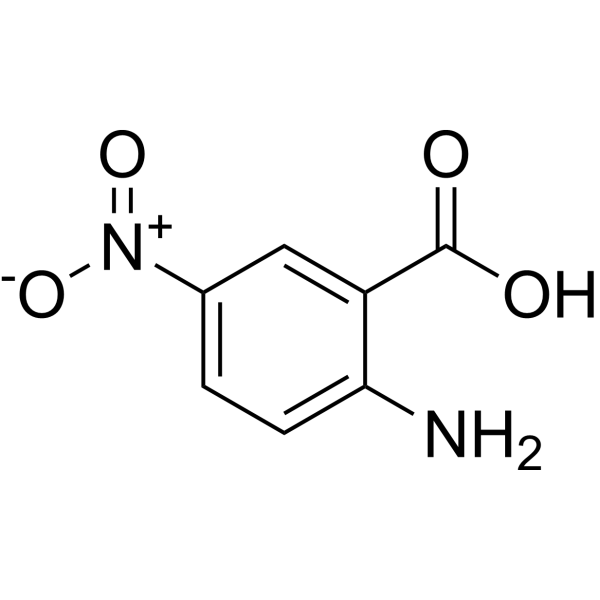
Cat. No.: HY-Y1681
CAS No.: 616-79-5
2-Amino-5-nitrobenzoic acid is a biochemical reagent that can be used as a biological material or organic compound for life science related research.
loading...
    loading...
Cat. No.: HY-P1681A
Target:  

Sodium Channel

Research Areas:  

Neurological Disease

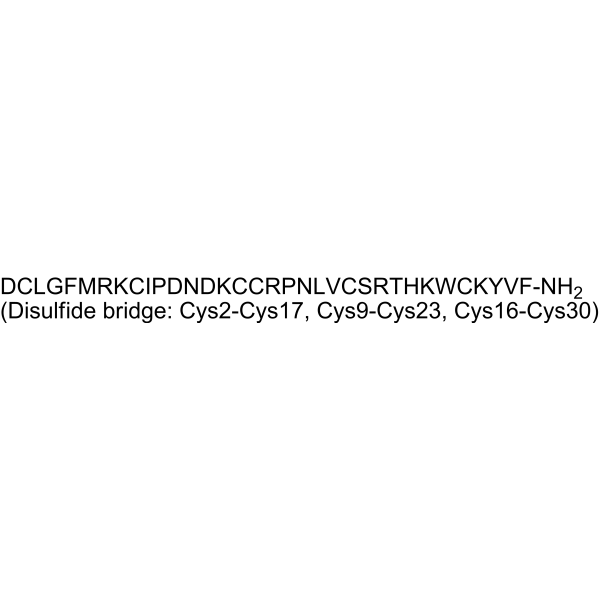
GpTx-1 TFA is a peptide-based NaV1.7 sodium channel antagonist isolated from the venom of the Chilean spider Grammostola porter. GpTx-1 TFA demonstrates potent inhibitory activity against the NaV1.7 channel with an IC50 value of 10 nM, while exhibiting excellent selectivity for NaV1.4 (IC50 = 0.301 μM) and NaV1.5 (IC50 = 4.20 μM), showing >20-fold and >950-fold selectivity respectively .
loading...
    loading...
Cat. No.: HY-P1681
CAS No.: 1661050-12-9
Target:  

Sodium Channel

Research Areas:  

Neurological Disease

GpTx-1 is a peptide-based NaV1.7 sodium channel antagonist isolated from the venom of the Chilean spider Grammostola porter. GpTx-1 demonstrates potent inhibitory activity against the NaV1.7 channel with an IC50 value of 10 nM, while exhibiting excellent selectivity for NaV1.4 (IC50 = 0.301 μM) and NaV1.5 (IC50 = 4.20 μM), showing >20-fold and >950-fold selectivity respectively .
loading...
    loading...
Cat. No.: HY-D1681
Target:  

Fluorescent Dye

Research Areas:  

Others

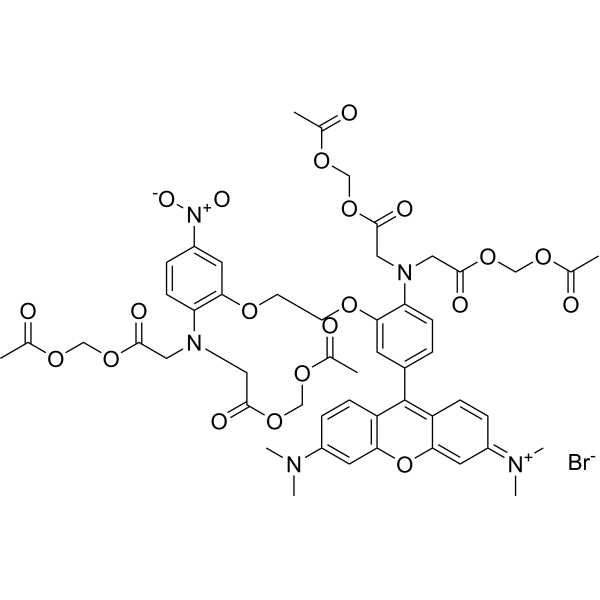
Rhod-590 AM Ester is a fluorescent dye. Rhod-590 AM Ester can be used as a fluorescent indicator for calcium determination .
loading...
    loading...
Cat. No.: HY-B1681
CAS No.: 552-38-5
Synonyms: Salicylic acid lithium; 2-Hydroxybenzoic acid lithium
Target:  

Tau Protein

Research Areas:  

Neurological Disease

Lithium salicylate (Salicylic acid lithium) is an orally active lithium salt. Lithium salicylate (Salicylic acid lithium) attenuates tau phosphorylation, mitigates associated pathologies in Alzheimer’s mice. Lithium salicylate (Salicylic acid lithium) can be used for Alzheimer’s research .
loading...
    loading...
Cat. No.: HY-N1681
CAS No.: 51095-85-3
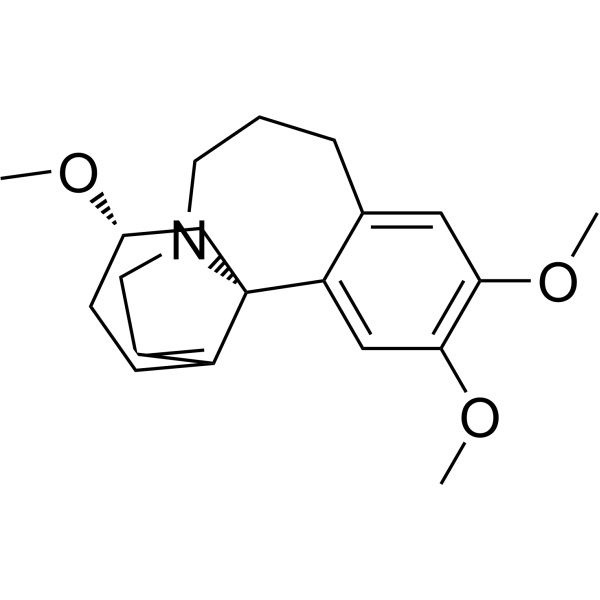
2,7-Dihydrohomoerysotrine is an alkaloid that can be found in Dysoxylum .
loading...
    loading...

