129 Results for "

ATR

" in MedChemExpress (MCE) Product Catalog:
Products (129)

129 Results for "ATR" in MCE Product Catalog:

  • Isoforms Recommended:
  • Targets Recommended:
  • Recombinant Proteins Recommended:
72
72 Publications Verification
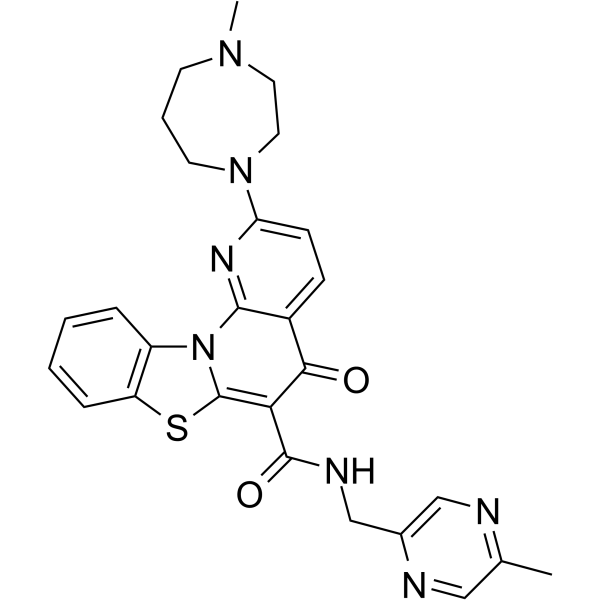
Cat. No.: HY-13323
CAS No.: 1138549-36-6
Purity:  99.49%
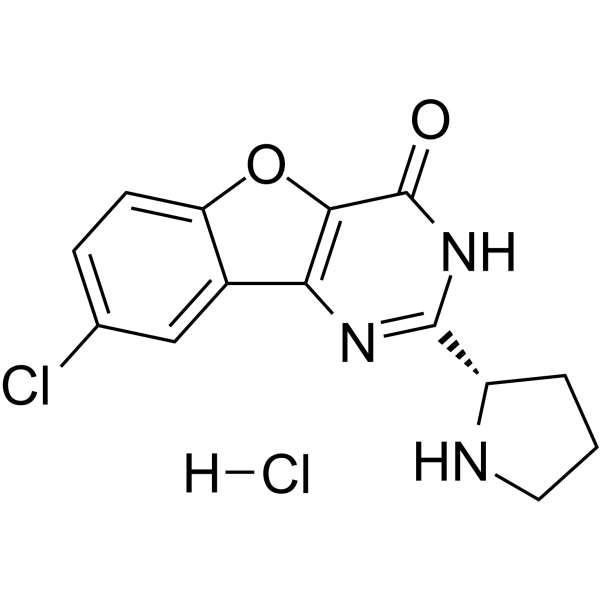
CX-5461 is a selective, orally active RNA polymerase I inhibitor. CX-5461 disrupts the formation of the SL1-rDNA complex, thereby blocking the transcription initiation of ribosomal RNA without altering the activity of RNA polymerase II, DNA replication, or protein translation processes. CX-5461 upregulates the expression of p21, MDM2, Sestrin1/2, and phosphorylated AMPKα, and reduces the level of phosphorylated Akt. CX-5461 induces G2/G2/M cell cycle arrest, Autophagy, Apoptosis, and cellular senescence, and activates CHK1, CHK2, and RPA. CX-5461 can be used in research related to osteosarcoma, cervical cancer, hematologic malignancies, high-grade serous ovarian cancer, and solid tumors .
loading...
    loading...
72
72 Publications Verification
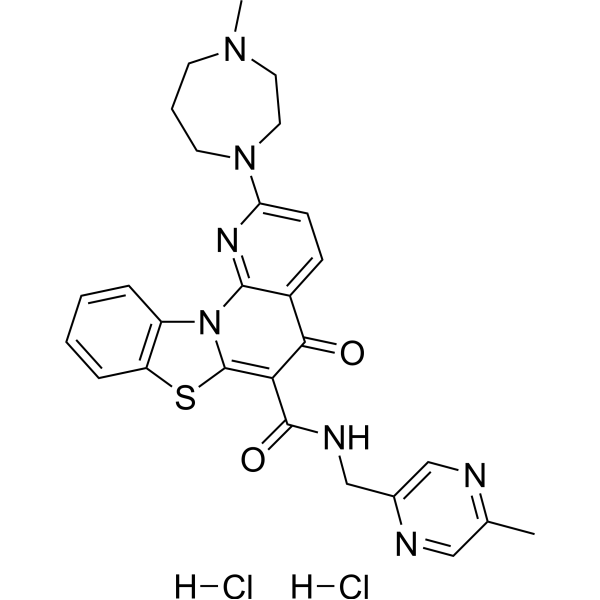
Cat. No.: HY-13323A
Purity:  99.41%
CX-5461 dihydrochloride is a selective, orally active RNA polymerase I inhibitor. CX-5461 dihydrochloride disrupts the formation of the SL1-rDNA complex, thereby blocking the transcription initiation of ribosomal RNA without altering the activity of RNA polymerase II, DNA replication, or protein translation processes. CX-5461 dihydrochloride upregulates the expression of p21, MDM2, Sestrin1/2, and phosphorylated AMPKα, and reduces the level of phosphorylated Akt. CX-5461 dihydrochloride induces G2/G2/M cell cycle arrest, Autophagy, Apoptosis, and cellular senescence, and activates CHK1, CHK2, and RPA. CX-5461 dihydrochloride can be used in research related to osteosarcoma, cervical cancer, hematologic malignancies, high-grade serous ovarian cancer, and solid tumors .
loading...
    loading...
71
71 Cited Publications
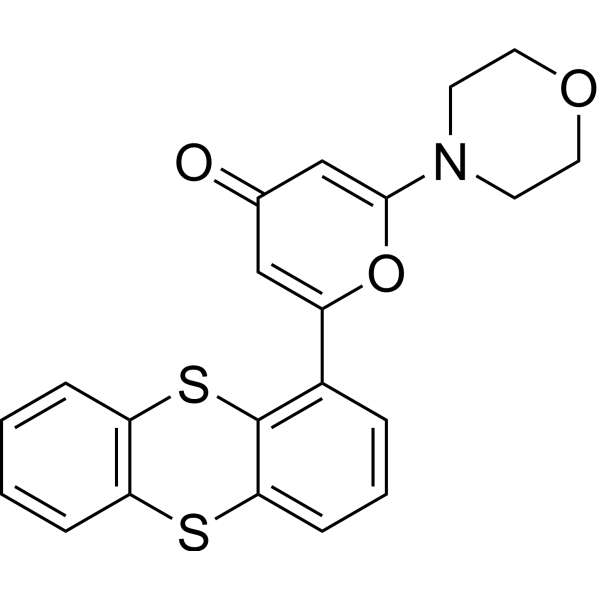
Cat. No.: HY-19323
CAS No.: 1352226-88-0
Synonyms: AZD6738
Target:  

ATM/ATR

Research Areas:  

Cancer

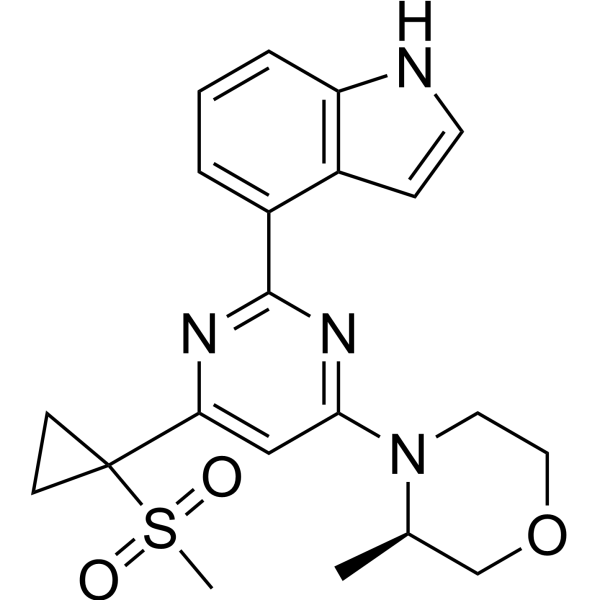
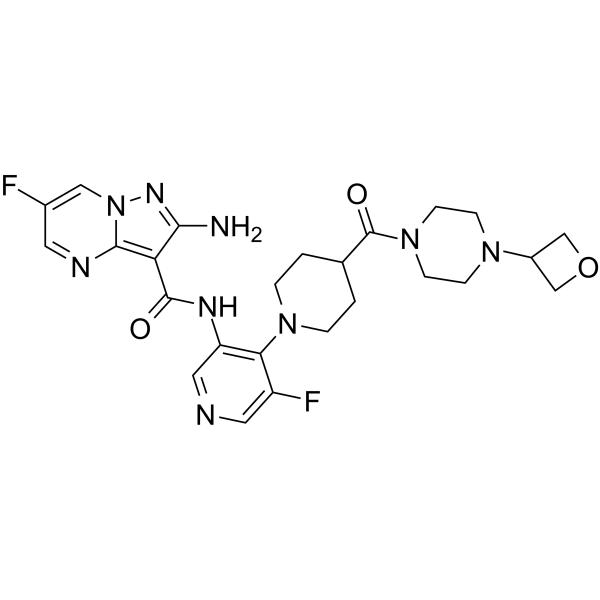
Ceralasertib (AZD6738) is an orally active and bioavailable inhibitor of ATR kinase with an IC50 of 1 nM.
loading...
    loading...
67
67 Cited Publications
Cat. No.: HY-12016
CAS No.: 587871-26-9
Purity:  99.92%
Target:  

ATM/ATR Autophagy

Research Areas:  

Cancer

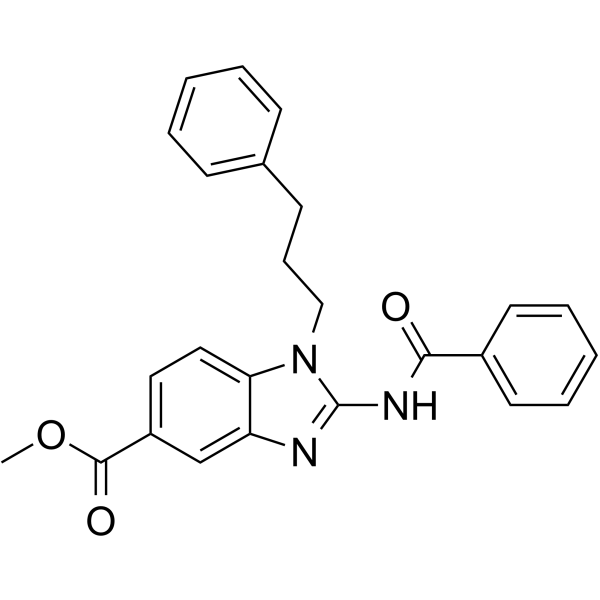
KU-55933 is a potent ATM inhibitor with an IC50 and Ki of 12.9 and 2.2 nM, respectively, and is highly selective for ATM as compared to DNA-PK, PI3K/PI4K, ATR and mTOR.
loading...
    loading...
57
57 Cited Publications
Cat. No.: HY-14731
CAS No.: 1232410-49-9
Purity:  99.67%
Target:  

ATM/ATR

Research Areas:  

Cancer

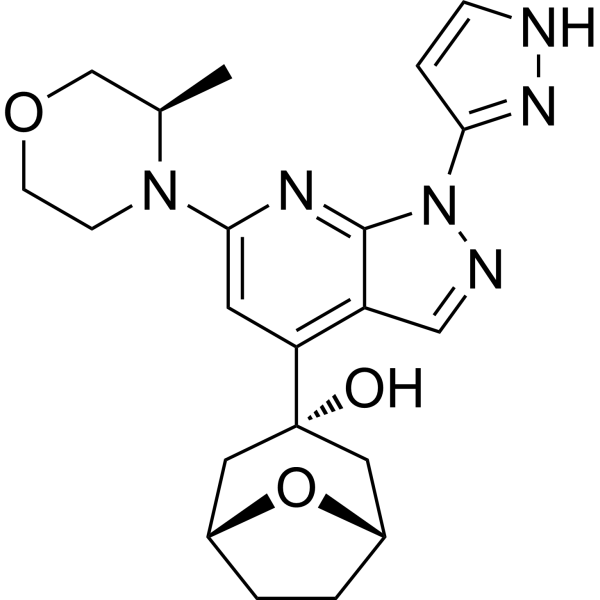
VE-821 is a potent ATP-competitive inhibitor of ATR with Ki/IC50 of 13 nM/26 nM.
loading...
    loading...
27
27 Cited Publications
Cat. No.: HY-13902
CAS No.: 1232416-25-9
Purity:  99.70%
Synonyms: VE-822; VX-970; M6620
Research Areas:  

Infection Metabolic Disease Cancer

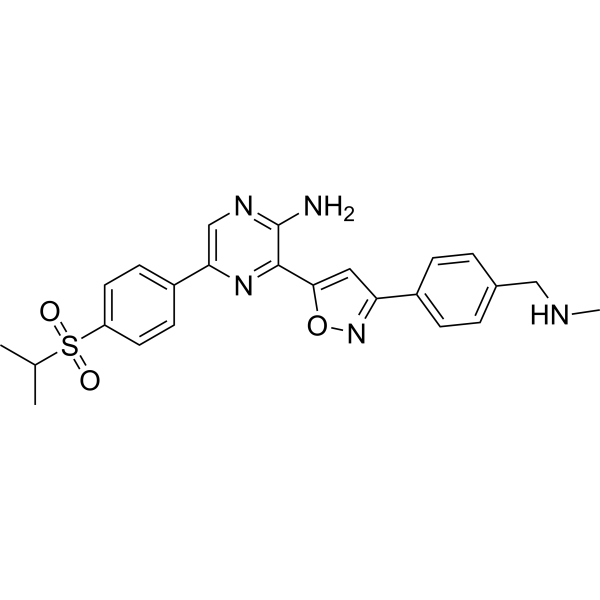
Berzosertib (VE-822) is an orally active, CNS-penetrant, and selective ATR kinase inhibitor. Berzosertib blocks ATR kinase activity, abrogates G2/M cell cycle checkpoint, impairs DNA damage repair. Berzosertib induces apoptosis, inhibnits conlony migration, inhibits cell proliferation, and activates cGAS-STING axes in cancer cells. Berzosertib can be used for the research of cancers, such as head and neck squamous cell carcinoma, and colorectal cancer .
loading...
    loading...
27
27 Cited Publications
Cat. No.: HY-13902A
CAS No.: 1428935-04-9
Synonyms: VE-822 hydrochloride; VX-970 hydrochloride; M6620 hydrochloride
Research Areas:  

Neurological Disease Cancer

Berzosertib (VE-822) hydrochloride is an orally active, CNS-penetrant, and selective ATR kinase inhibitor. Berzosertib hydrochloride blocks ATR kinase activity, abrogates G2/M cell cycle checkpoint, impairs DNA damage repair. Berzosertib hydrochloride induces apoptosis, inhibnits conlony migration, inhibits cell proliferation, and activates cGAS-STING axes in cancer cells. Berzosertib hydrochloride can be used for the research of cancers, such as head and neck squamous cell carcinoma, and colorectal cancer .
loading...
    loading...
19
19 Cited Publications
Cat. No.: HY-B0097
CAS No.: 50-91-9
Synonyms: 5-Fluorouracil 2'-deoxyriboside
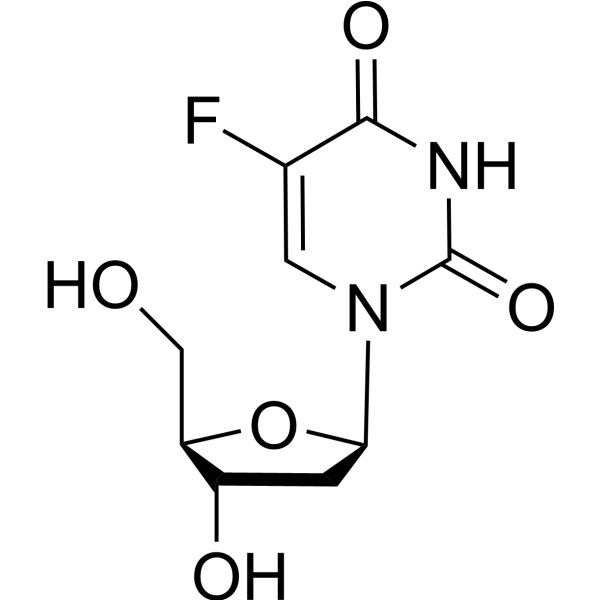
Floxuridine (5-Fluorouracil 2'-deoxyriboside) is a pyrimidine analog and known as an oncology antimetabolite. Floxuridine inhibits Poly(ADP-Ribose) polymerase and induces DNA damage by activating the ATM and ATR checkpoint signaling pathways in vitro. Floxuridine is a extreamly potent inhibitor for S. aureus infection and induces cell apoptosis . Floxuridine has antiviral effects against HSV and CMV .
loading...
    loading...
18
18 Cited Publications
Cat. No.: HY-101566
CAS No.: 1876467-74-1
Purity:  99.99%
Synonyms: BAY 1895344
Target:  

ATM/ATR

Research Areas:  

Cancer

Elimusertib (BAY-1895344) is a potent, orally active and selective ATR inhibitor with an IC50 of 7 nM. Elimusertib has anti-tumor activity . Elimusertib can be used for the research of solid tumors and lymphomas .
loading...
    loading...
18
18 Cited Publications
Cat. No.: HY-101566A
Purity:  99.85%
Synonyms: BAY 1895344 hydrochloride
Target:  

ATM/ATR

Research Areas:  

Cancer

Elimusertib (BAY 1895344) hydrochloride is a potent, orally active and selective ATR inhibitor with an IC50 of 7 nM. Elimusertib hydrochloride has anti-tumor activity . Elimusertib hydrochloride can be used for the research of solid tumors and lymphomas .
loading...
    loading...
11
11 Cited Publications
Cat. No.: HY-15557
CAS No.: 1233339-22-4
Purity:  99.40%
Target:  

ATM/ATR

Research Areas:  

Cancer

AZ20 is a potent and selective inhibitor of ATR with an IC50 of 5 nM, and has 8-fold selectivity against mTOR (IC50=38 nM).
loading...
    loading...
8
8 Cited Publications
Cat. No.: HY-15520
CAS No.: 905973-89-9
Purity:  99.83%
Target:  

ATM/ATR

Research Areas:  

Cancer

CGK733 is a potent ATM/ATR inhibitor, used for the research of cancer.
loading...
    loading...
8
8 Cited Publications
Cat. No.: HY-15260
CAS No.: 1169558-38-6
Purity:  99.76%
Synonyms: BMS-863233
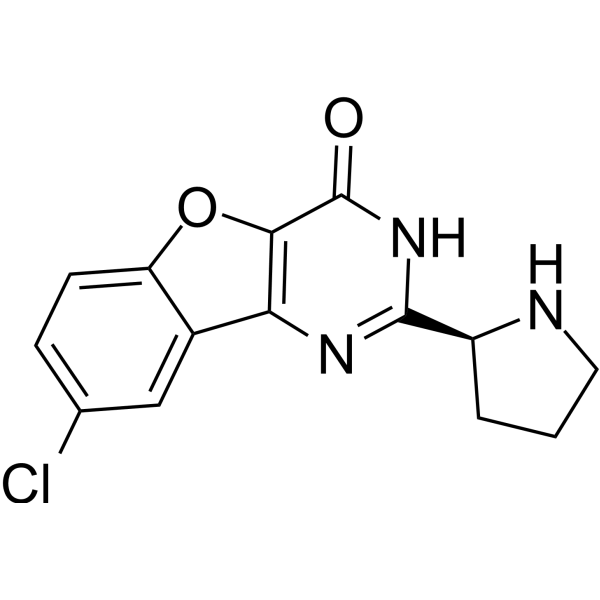
XL413 (BMS-863233) is an orally active, ATP-competitive, selective CDC7 kinase inhibitor. XL413 reduces MCM2 phosphorylation levels, decreases DNA replication origin activation, and inhibits CD69 upregulation in stimulated lymphocytes. XL-413 possesses cell-dependent antiproliferative and pro-apoptotic activities. XL413 attenuates ATR inhibitor-induced excessive origin activation, altered replication fork speed, and antiproliferative effects in sensitive cancer cells. XL413 inhibits SARS-CoV-2 infection. XL413 can be used for research related to cancer and SARS-CoV-2 infection .
loading...
    loading...
8
8 Cited Publications
Cat. No.: HY-15260A
CAS No.: 2062200-97-7
Purity:  99.65%
Synonyms: BMS-863233 monohydrochloride
XL413 monohydrochloride (BMS-863233 monohydrochloride) is an orally active, ATP-competitive, selective CDC7 kinase inhibitor. XL413 monohydrochloride reduces MCM2 phosphorylation levels, decreases DNA replication origin activation, and inhibits CD69 upregulation in stimulated lymphocytes. XL-413 possesses cell-dependent antiproliferative and pro-apoptotic activities. XL413 monohydrochloride attenuates ATR inhibitor-induced excessive origin activation, altered replication fork speed, and antiproliferative effects in sensitive cancer cells. XL413 monohydrochloride inhibits SARS-CoV-2 infection. XL413 monohydrochloride can be used for research related to cancer and SARS-CoV-2 infection .
loading...
    loading...
6
6 Cited Publications
Cat. No.: HY-136270
CAS No.: 1613191-99-3
Purity:  99.77%
Synonyms: VX-803; M4344; ATR inhibitor 2
Target:  

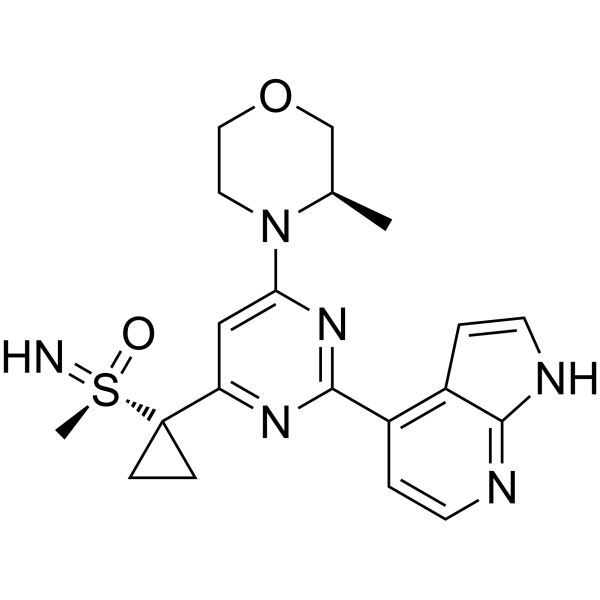
ATM/ATR

Research Areas:  

Cancer

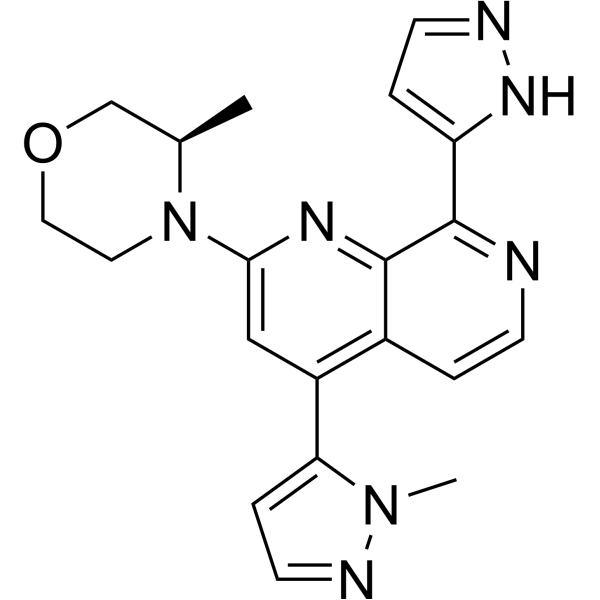
Gartisertib (VX-803) is an ATP-competitive, orally active, and selective ATR inhibitor, with a Ki of <150 pM. Gartisertib potently inhibits ATR-driven phosphorylated checkpoint kinase-1 (Chk1) phosphorylation with an IC50 of 8 nM. Antitumor activity .
loading...
    loading...
5
5 Cited Publications
Cat. No.: HY-16705
CAS No.: 1374601-40-7
Research Areas:  

Cancer

BRD4770 is a histone methyltransferase G9a inhibitor. BRD4770 reduces di- and trimethylation of lysine 9 on histone H3 (H3K9) with an EC50 of 5 μM, and has less or little effect toward H3K27me3, H3K36me3, H3K4me3, and H3K79me3. BRD4770 can activate the ataxia telangiectasia mutated (ATM) pathway and induce cell senescence .
loading...
    loading...
4
4 Cited Publications
Cat. No.: HY-139609
CAS No.: 2417489-10-0
Purity:  99.75%
Synonyms: RP-3500; ATR inhibitor 4
Target:  

ATM/ATR mTOR

Research Areas:  

Cancer

Camonsertib (RP-3500) is an orally active, selective ATR kinase inhibitor (ATRi) with an IC50 of 1.00 nM in biochemical assays. Camonsertib shows 30-fold selectivity for ATR over mTOR (IC50=120 nM) and >2,000-fold selectivity over ATM, DNA-PK, and PI3Kα kinases. Camonsertib has potent antitumor activity .
loading...
    loading...
4
4 Cited Publications
Cat. No.: HY-100399
CAS No.: 133825-80-6
Synonyms: PD-132301; ATR-101
Research Areas:  

Cancer

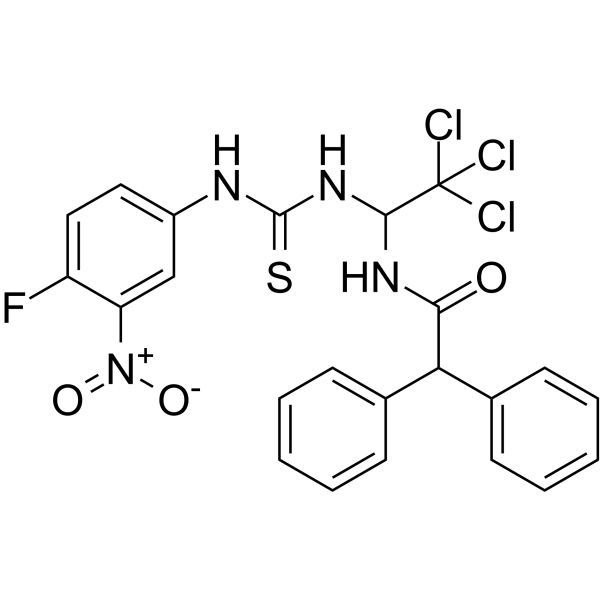
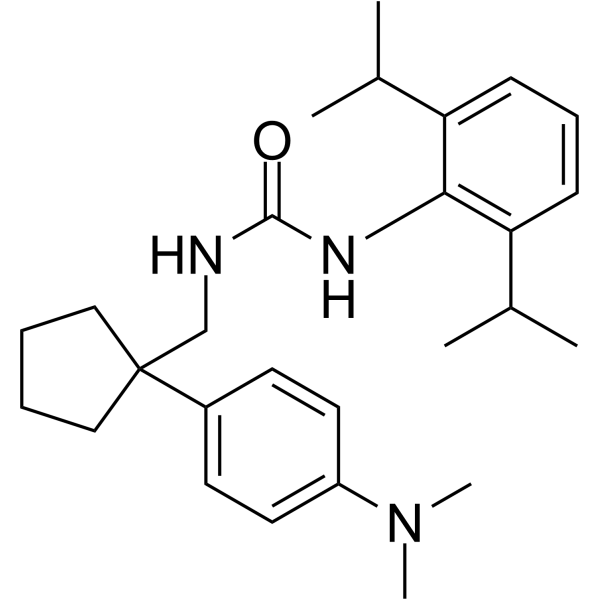
Nevanimibe (PD-132301) is an orally active and selective acyl-coenzyme A:cholesterol O-acyltransferase 1 (ACAT1) inhibitor with an EC50 of 9 nM. Nevanimibe inhibits ACAT2 with an EC50 of 368 nM. Nevanimibe induces cell apoptosis and has the potential for adrenocortical cancer .
loading...
    loading...
4
4 Cited Publications
Cat. No.: HY-100399A
CAS No.: 133825-81-7
Purity:  99.49%
Synonyms: PD-132301 hydrochloride; ATR101 hydrochloride
Research Areas:  

Cancer

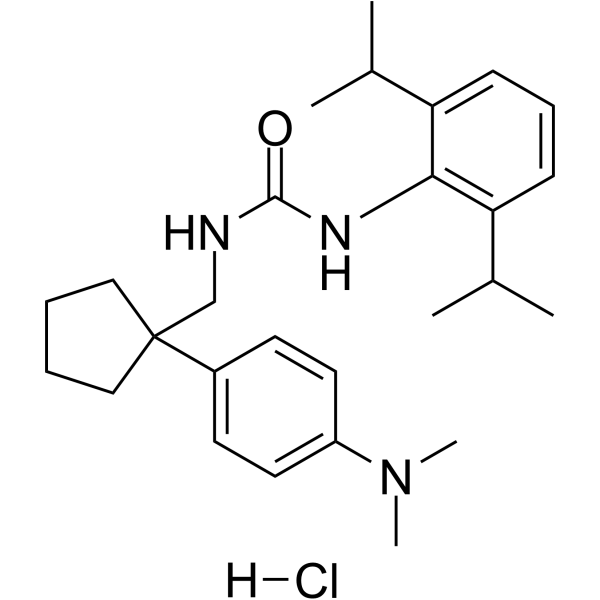
Nevanimibe hydrochloride (PD-132301 hydrochloride) is an orally active and selective acyl-coenzyme A:cholesterol O-acyltransferase 1 (ACAT1) inhibitor with an EC50 of 9 nM. Nevanimibe hydrochloride inhibits ACAT2 with an EC50 of 368 nM. Nevanimibe hydrochloride induces cell apoptosis and has the potential for adrenocortical cancer .
loading...
    loading...
4
4 Cited Publications
Cat. No.: HY-150617
CAS No.: 2495096-26-7
Purity:  99.94%
Synonyms: M4076; ATM Inhibitor-5
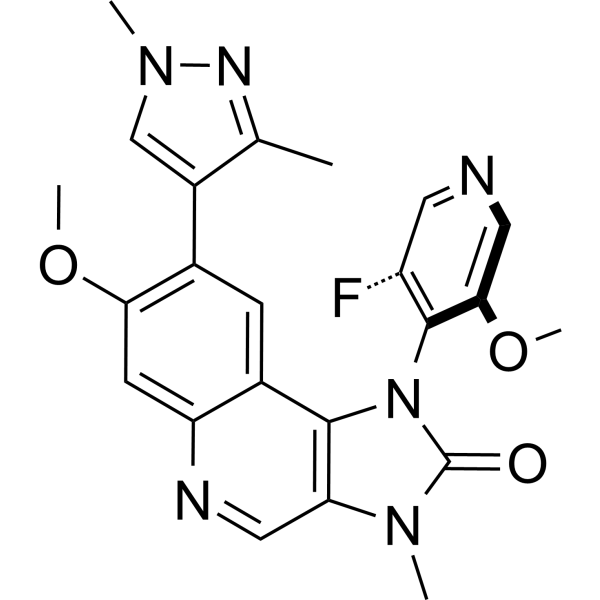
Lartesertib (M4076) is an inhibitor of the serine/threonine protein kinase ATM with high potency. Lartesertib can inhibit the growth of multiple hematopoietic cell lines. Additionally, when combined with the ATR inhibitor Tuvusertib (HY-111451), Lartesertib can promote the death of tumor cells, activate the immune signaling pathway, and exhibit anti-tumor activity .
loading...
    loading...

