


54 Results for "

Aldolase

" in MedChemExpress (MCE) Product Catalog:
Products (54)

54 Results for "Aldolase" in MCE Product Catalog:

9
9 Cited Publications
Cat. No.: HY-148189
CAS No.: 2904601-67-6
Purity:  99.37%
Synonyms: LXY-05-029
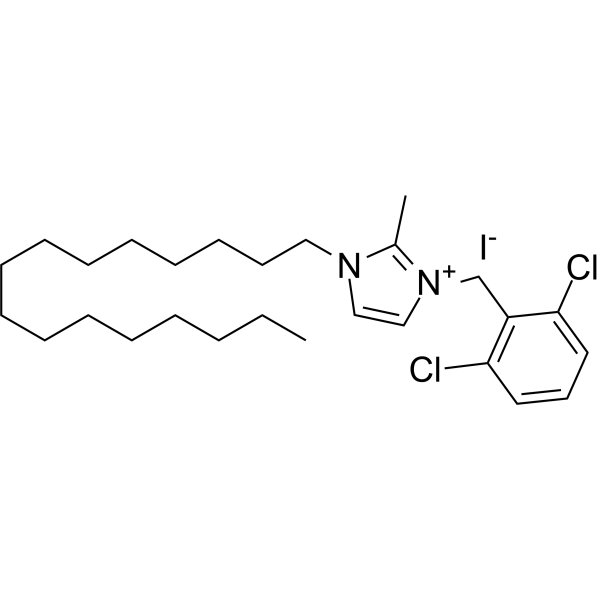
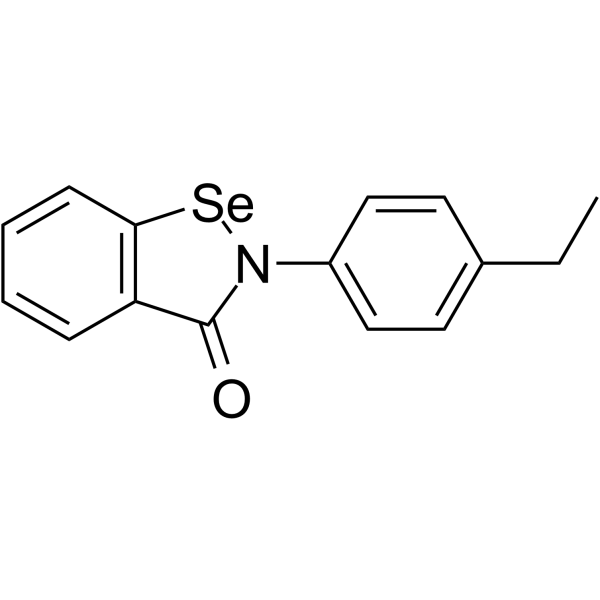
Aldometanib (LXY-05-029) is an orally active aldolase inhibitor. Aldometanib can activate lysosomal adenosine monophosphate-activated protein kinase (AMPK) and decreases blood glucose. Aldometanib can be used for the research of metabolic homeostasis .
loading...
    loading...
1
1 Cited Publications
Cat. No.: HY-151223
CAS No.: 591-57-1
Purity:  99.84%
Synonyms: Triose phosphate
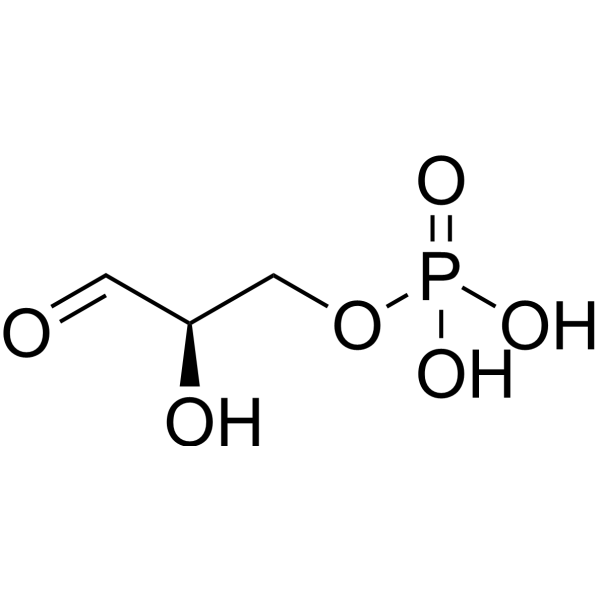
D-Glyceraldehyde 3-phosphate (Triose phosphate) is a common molecule in living organisms and is an important intermediate in glycolysis and gluconeogenesis, as well as a sugar product of the Calvin cycle. D-Glyceraldehyde 3-phosphate is involved in the biosynthesis of tryptophan and thiamin. D-Glyceraldehyde 3-phosphate is released as aldehyde by aldolase or triose phosphate isomerase. D-Glyceraldehyde 3-phosphate forms adducts with thiols .
loading...
    loading...
Cat. No.: HY-P2726
CAS No.: 9024-52-6
Synonyms: Fructose-diphosphate Aldolase
Aldolase, Rabbit muscle (Fructose-diphosphate aldolase) is a glycolytic enzyme and glucose availability sensor. Aldolase, Rabbit muscle catalyzes the reversible carbon-carbon cleavage of fructose-1,6-bisphosphate to produce dihydroxyacetone phosphate and glyceraldehyde 3-phosphate. Aldolase, Rabbit muscle is an essential component for v-ATPase activity. Aldolase, Rabbit muscle participates in processes such as gluconeogenesis, the Calvin cycle and glycolysis .
loading...
    loading...
Cat. No.: HY-148077
CAS No.: 51528-59-7
Purity:  ≥98.0%
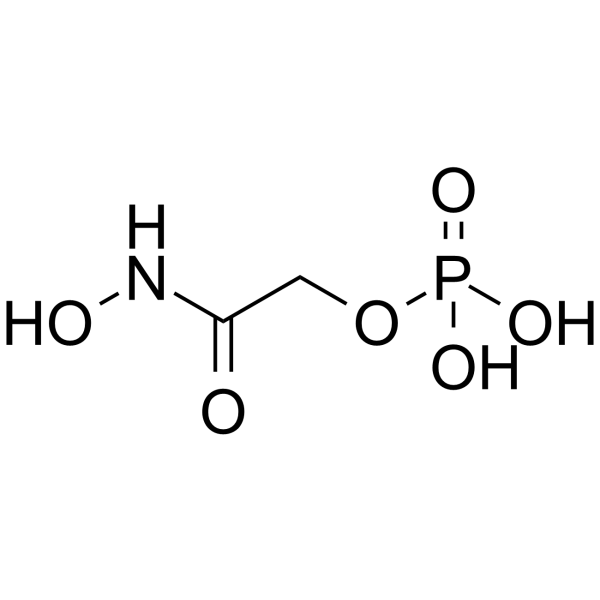
Phosphoglycolohydroxamic acid is a potent aldolase and triose-phosphate isomerase inhibitor. Phosphoglycolohydroxamic acid can be used in the research of antibacterial and antifungal area .
loading...
    loading...
Cat. No.: HY-W041994
CAS No.: 80307-12-6
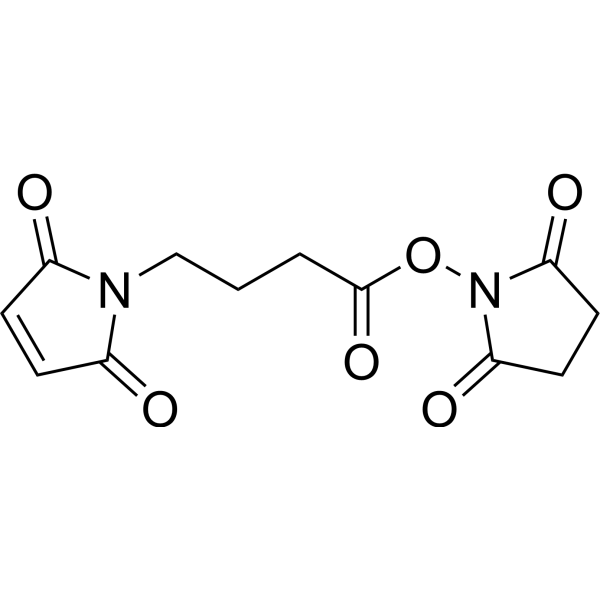
GMBS is a heterobifunctional crosslinker targeting primary amines and sulfhydryl groups. GMBS can be used for chemical crosslinking of proteins and crosslinking mass spectrometry (CXMS) to study protein folding and map interfaces between interacting proteins .
loading...
    loading...
Cat. No.: HY-147061
CAS No.: 102916-66-5
Purity:  ≥95.0%
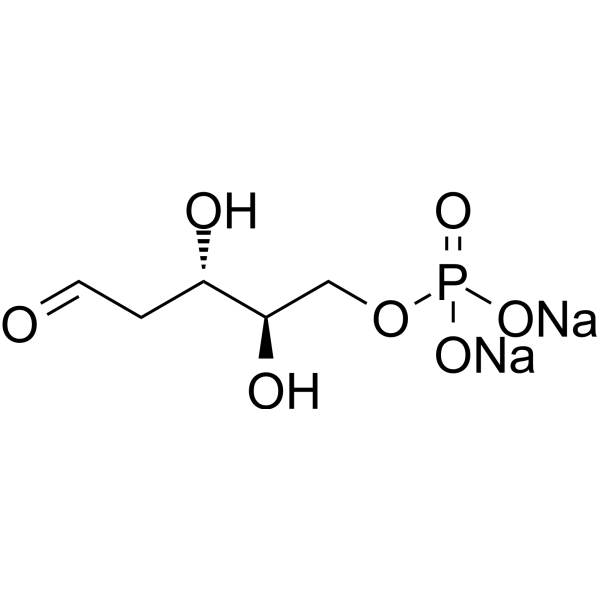
2-Deoxyribose 5-phosphate disodium is a substrate of 2-deoxyribose-5-phosphate aldolase (DERA). DERA belongs to class I aldolases, catalyzes reversible aldol reactions, and does not require any cofactors .
loading...
    loading...
Cat. No.: HY-W012874
CAS No.: 632-20-2
Synonyms: H-D-Thr-OH
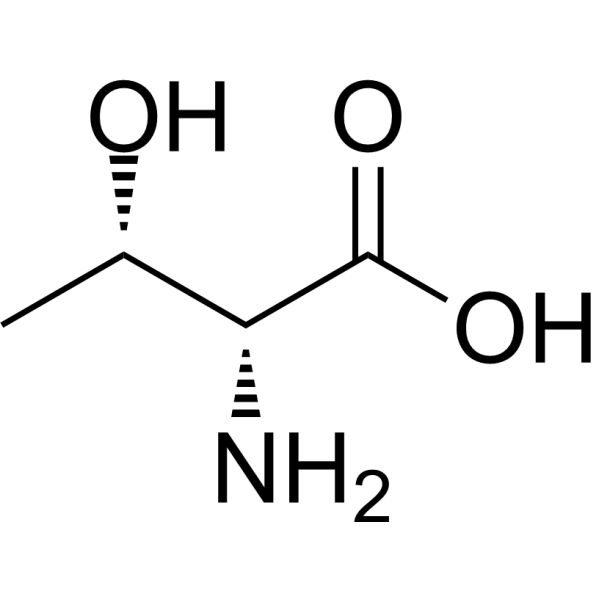
D-Threonine (H-D-Thr-OH) is an important non-natural amino acid. D-Threonine serves as a chiral building block for the asymmetric synthesis of compounds. D-Threonine is a metabolite of Saccharomyces cerevisiae. D-Threonine is cleaved into glycine and acetaldehyde under the catalysis of D-threonine aldolase .
loading...
    loading...
Cat. No.: HY-143899
CAS No.: 2605897-57-0
Purity:  98.79%
Research Areas:  

Infection

FBA-IN-1 (compound 2a11) is a first-in-class, covalent and allosteric inhibitor of fructose-1,6-bisphosphate aldolase from Candida albicans (CaFBA). FBA-IN-1 inhibits the growth of Azole-resistant strains 103 with the MIC80 of 1 μg/mL .
loading...
    loading...
Cat. No.: HY-E70075
Synonyms: GDH-TIM; GDH-TPI
Target:  

Others

Research Areas:  

Metabolic Disease

α-Glycerophosphate Dehydrogenase-Triosephosphate (GDH-TIM) is a bifunctional enzyme with activity toward glyceraldehyde 3-phosphate and dihydroxyacetone phosphate. α-Glycerophosphate Dehydrogenase-Triosephosphate catalyzes the conversion of glyceraldehyde 3-phosphate to dihydroxyacetone phosphate. α-Glycerophosphate Dehydrogenase-Triosephosphate can utilize NADH to catalyze the reduction of dihydroxyacetone phosphate to glycerol-1-P .
loading...
    loading...
Cat. No.: HY-P2977
CAS No.: 9027-60-5
Synonyms: Sialic acid Aldolase (CgNal)
N-Acetylneuraminate lyase (CgNal) (Sialic acid aldolase (CgNal)) is a rate-limiting enzyme in bacteria metabolism that catalyzes the reversible aldol cleavage of sialic acid, and it regulates the overall metabolism of the bacterial sialic acid catabolic pathway. N-Acetylneuraminate lyase (CgNal) catalyzes the reversible condensation reaction of pyruvate and N-acetyl-d-mannosamine (ManNAc) to produce sialic acid N-acetylneuraminic acid (Neu5Ac). The protein expression of N-Acetylneuraminate lyase is downregulated at the translational level under the regulation of methyl methanesulfonate, and this change significantly impairs the adhesion and invasion abilities of bacteria to eukaryotic cells. N-Acetylneuraminate lyase is a key virulence-related protein in various pathogenic bacteria and is considered an antibiotic drug target. N-Acetylneuraminate lyase (CgNal) can be used in studies of invasive (extraintestinal) infectious diseases, Crohn's disease, and methicillin-resistant Staphylococcus aureus infections .
loading...
    loading...
Cat. No.: HY-147064A
CAS No.: 1187-99-1
DL-4-Hydroxy-2-ketoglutarate is one of the metabolites that is characteristically elevated in the urine of patients with type 3 primary hyperoxaluria (PH3), and it is produced by the accumulation of substrates of mitochondrial 4-hydroxy-2-oxoglutarate aldolase (HOGA). DL-4-Hydroxy-2-ketoglutarate can be used in studies related to PH3 .
loading...
    loading...
Cat. No.: HY-N13363
CAS No.: 27244-54-8
2-keto-3-deoxy-6-phosphogluconate is an endogenous metabolite found in Escherichia coli, and a key intermediate in the Entner-Doudoroff (ED) pathway, as well as in the degradation pathways of sugar acids and sugar polymers in human and plant pathogens. It is produced by the catalytic action of KDPG aldolase.
loading...
    loading...
Cat. No.: HY-147064
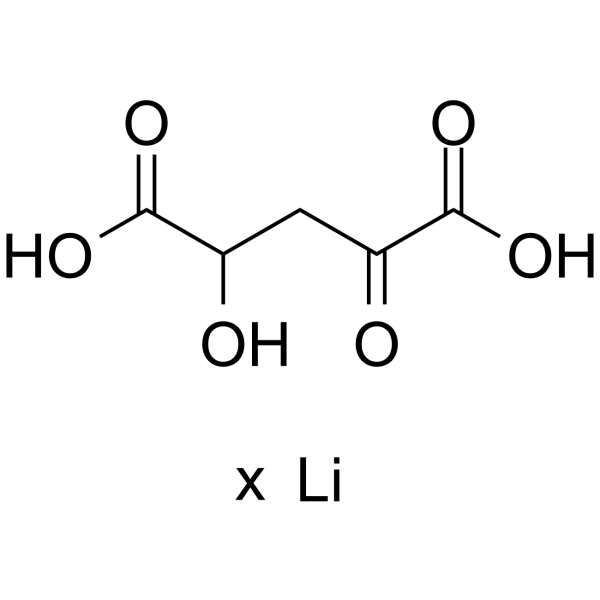
DL-4-Hydroxy-2-ketoglutarate lithium is one of the metabolites that is characteristically elevated in the urine of patients with type 3 primary hyperoxaluria (PH3), and it is produced by the accumulation of substrates of mitochondrial 4-hydroxy-2-oxoglutarate aldolase (HOGA). DL-4-Hydroxy-2-ketoglutarate lithium can be used in studies related to PH3 .
loading...
    loading...
Cat. No.: HY-E70621
Sialic acid aldolase (Pm NaNa) (EC 4.1.3.3) is a type I aldolase that catalyze the reversible aldol cleavage of N-acetylneuraminic acid (Neu5Ac) to form pyruvate and N-acetyl-D-mannosamine (ManNAc) with the equilibrium favoring the Neu5Ac cleavage .
loading...
    loading...
Cat. No.: HY-W012874S
Synonyms: H-D-Thr-OH-d2
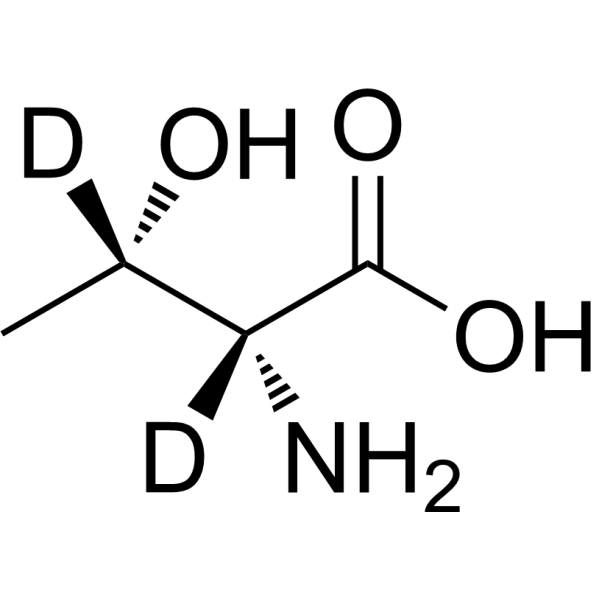
D-Threonine-d2 (H-D-Thr-OH-d2) is the deuterium labeled D-Threonine (HY-W012874). D-Threonine (H-D-Thr-OH) is an important non-natural amino acid. D-Threonine serves as a chiral building block for the asymmetric synthesis of compounds. D-Threonine is a metabolite of Saccharomyces cerevisiae. D-Threonine is cleaved into glycine and acetaldehyde under the catalysis of D-threonine aldolase .
loading...
    loading...
Cat. No.: HY-E71030
Aldolase A, Human (EC 4.1.2.13) is a glycolytic enzyme that catalyzes the reversible conversion of fructose-1,6-bisphosphate to glyceraldehyde 3-phosphate and dihydroxyacetone phosphate. Aldolase A, Human (EC 4.1.2.13) , fused to His-tag at N-terminus, was expressed in E.coli.
loading...
    loading...
Cat. No.: HY-E71513
Research Areas:  

Others

2-Dehydropantoate aldolase (EC 4.1.2.12) belongs to the lyase family and can cleave carbon-carbon bonds.
loading...
    loading...
Cat. No.: HY-P2726A
Aldolase, Spinach (EC 4.1.2.13) is an enzyme catalyzing a reversible reaction that splits the aldol, fructose 1,6-bisphosphate, into the triose phosphates dihydroxyacetone phosphate (DHAP) and glyceraldehyde 3-phosphate (G3P). Aldolase, Spinach (EC 4.1.2.13) can also produce DHAP from other (3S,4R)-ketose 1-phosphates such as fructose 1-phosphate and sedoheptulose 1,7-bisphosphate.
loading...
    loading...
Cat. No.: HY-E71744
Research Areas:  

Others

3-Hydroxy-D-aspartate aldolase (EC 4.1.3.41) is a pyridoxal-phosphate protein.
loading...
    loading...
Cat. No.: HY-E71071
(4S)-4-Hydroxy-2-oxoglutarate aldolase (EC 4.1.3.42) is specific for the (S) enantiomer.(4S)-4-Hydroxy-2-oxoglutarate aldolase (EC 4.1.3.42) catalyses the reactions of EC 4.1.1.3, oxaloacetate decarboxylase and EC 4.1.2.14, 2-dehydro-3-deoxy-phosphogluconate aldolase.
loading...
    loading...

